LOOK before you jump, boys. Before smoking the first cigarette, ascertain where it may land you. I know where it has landed some boys. I have seen the prospects of many a boy ruined by the cigarette. Promising boys by the hundred have made a failure of life because they took the first smoke.
The cigarette habit, when taken up by boys before the brain is fully developed, brings about a degeneracy of the brain cells, and may produce a moral insanity. It tends to develop criminal tendencies.
Ninety-eight per cent of the inmates of the Whittier Reform School in California are cigarette smokers. All cigarette smokers do not become criminals, but practically all youthful criminals are cigarette smokers. These facts are known to judges of all our juvenile courts. It is practically certain that the boy who lands in the police court smokes; and it is equally certain that many a boy would never have been there if he had not smoked.
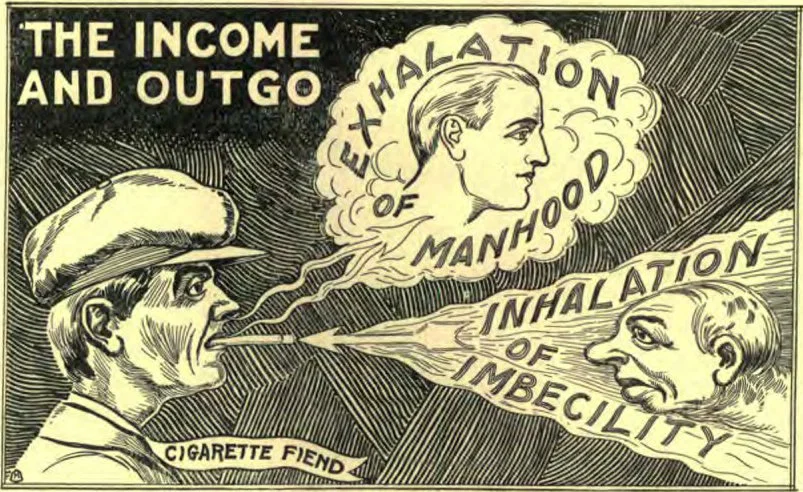
If all boys could be made to know that with every breath of cigarette smoke they inhale imbecility and exhale manhood; that they are tapping their arteries as surely and letting their life's blood out as truly as though their veins and arteries were severed! and that the cigarette is a maker of invalids, criminals, and fools, not men,—it ought to deter them some.—Hudson Maxim.
I said to a Chicago detective during the time when the city was being terrorized by youthful automobile bandits, “Haven’t you found that in nearly every case these young criminals are cigarette fiends?” He looked at me a moment, and then replied, “In every case.” One of these cases, Teddy Webb, who was then arrested and is now serving a life sentence for murdering a policeman, was a fine, promising boy at the age of ten years. At that age he began to use cigarettes with the boys in the alleys. His downward career began at that point. At the age of eleven he robbed an old woman on the street, and began to figure in the police court. His downward career continued until he reached his present low estate.
The boy who has an ambition to excel in life, whose aim is to climb to the top, cannot afford to take chances. He will leave cigarettes alone. The cigarette has never yet placed a boy in the chair of the President of this nation. Lincoln was a poor boy, and had few advantages educationally, but he is said to have been “a man of no vices.” He did not use tobacco in any form. Had he at the age of ten or eleven or even fifteen become addicted to the use of cigarettes, he would not have reached the President’s chair. No cigarette smoker ever has succeeded, or ever will succeed, in reaching the topmost round in the ladder of progress.
Boys, do not be grasshoppers. Look where you expect to land before you jump. ’If you have high ideals and noble aspirations, have nothing to do with the cigarette.
Boys who smoke cigarettes but who are not fiends may sometimes be led to renounce smoking. I talked with two who gave evidence in their lives of the degenerating influence of the smoke. After pointing out the downward career of boys who smoked, I made an appeal to them, and knelt with them in prayer. When we arose, I placed their hands together and asked them to be a help and support to each other, and reminded them that while one could chase a thousand, two could put ten thousand to flight. One year later I was walking along the street of another city when two young men met me and said, “How do you do, Doctor.” I looked at them, and they said, “Do you not remember the two young men you prayed with at such a place?” I answered, “Yes, I remember.” “Well, we are the young men. We have not smoked since, and are both here attending school and fitting ourselves to go to a foreign field as missionaries.”
While some smokers may be reclaimed, and no case should be regarded as hopeless, yet because it is so difficult to persuade the smoker to see his danger, we should put forth every effort to prevent boys from reaching the border line, or taking even the first step toward it.
Thoughts for the Thoughtful Lad
TWO of the brightest lads in my medical class are heavy cigarette smokers," said a young man. “But they are not likely to remain so to the end of the course,” remarked his hearer. “That may be true, for one of them has already begun to fail; but I do not know whether it is his cigarettes or his interest in social activities that is the cause. It may be the latter is partly responsible for his failure; but undoubtedly cigarette smoking must bear the larger share. Will you note how these young men stand at graduation time, two years from now? I am sure you will find evidences that tobacco has seriously lessened their efficiency. Observations of this kind have been made many times, and always with the conclusion that smoking injures scholarship.”
Said another: “I saw an artist smoking while at his work. He could draw without rule, and with one sweep of his hand, a line across the page as straight as others could with a rule. How could he do this if tobacco is so injurious?”
This artist’s natural ability may be so superior that he can have this command of his hand and yet not be at his best. He may not be able to do what he otherwise could have done if he had not subjected his system to the poison. One’s own best is what one should give the world. Then again, the poison may be affecting him in a way which will become plainly apparent later in life.
Doubtless this man did not begin smoking until after his brain had been trained to precision. We must never forget that the earlier one begins to smoke the greater the injury wrought by the habit, other circumstances being the same.
Why You Cannot Smoke
How seriously a moderate use of tobacco may affect you depends upon your age, physical temperament, hereditary tendencies, state of health, work, and home conditions. Even your general knowledge may lend itself to your undoing. Any one of these things may of itself make even a very moderate use of tobacco a serious evil to you, physically, mentally, and spiritually.
Another boy with a less refined ancestry, of a more vigorous hereditary stock, with a different temperament,
(Concluded on page twelve)
Non-Smokers’ Protective League of America
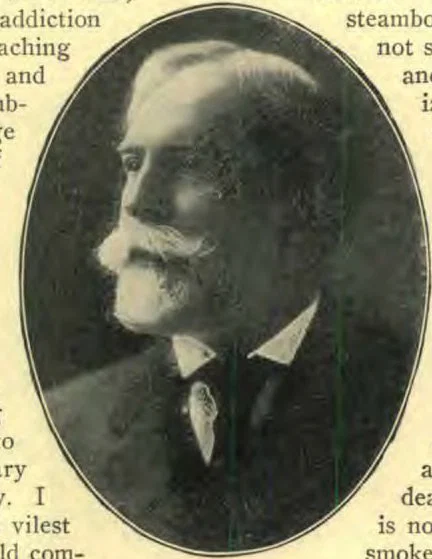
By Charles G. Pease
DR. CHARLES G. PEASE
Most great movements have their origin in the faithfulness of one person or a few persons to right principles, to a definite course of action in relation to a condition or need, without counting the cost in labor or in disadvantages,—the outcome of antagonism on the part of those opposed,—or, if they have counted the cost, are willing to meet the demand without wavering.
Such movements have had small beginnings. Of such origin was the Non-Smokers’ Protective League of America, which I shall briefly recite for the encouragement of those who falter.
Charles G. Pease, M. D., President of the Non-Smokers' Protective League of America
In the year 1907 I began to write upon the subject of the wrong and of the injurious effects of tobacco addiction, giving much attention to the members of the clergy and of the medical profession addicted to the use of this drug, holding them to be more responsible for the enslavement of the race than any other class of men, by reason of the elevation of tobacco addiction by these men to the highest points of teaching and example—relating to spirituality and to health. My fearless writings, published in the public press, created a large number of enemies, with some of whom I measured swords in the columns of the press; but many strong men came to my support, notably Prof. Burt G. Wilder, of Cornell University, and William Lloyd Garrison, of Boston, Massachusetts, since deceased. In 1910 I began my work in the subway of New York City for the stamping out of the smoking nuisance there, making many arrests, and carrying the cases to conviction under a section of the Sanitary Code prohibiting smoking in the subway. I received many letters consisting of the vilest language the most degenerate mind could command, threatening to take my life if I did not desist. I paid no attention to the threats, except that they brought forcibly to mind the realization that a sweet, wholesome, and noble practice would have no such defenders. I also received a number of commendatory letters.
Up to April, 1910, I was doing this work alone, not supposing that any one would unite with me in any way to prosecute or support such a work. I was simply doing my duty regardless of consequences. In the third week of the month named, two gentlemen, Mr. F. B. King and Mr. Twyman O. Abbott, of the New York bar, both strangers to me and to each other, telephoned and also called upon me. Both asked the same question: “Doctor, do you not think the time is ripe for doing an organized work?” I answered both gentlemen in the affirmative, and sent out a call for a meeting which was held at my home on the evening of May 8, 1910, at which time we effected a temporary organization. And on Aug. 2, 1911, our organization was incorporated under the Membership Act of the laws of the State of New York.
The league, at present, is a men’s organization. All members abstain from the use of tobacco, although this is not a requirement for membership. The league’s membership is large, not only including the membership of the parent organization, but also of branch leagues.
The league has met an urgent need in the crystallization of the opinion of educators, lawyers, medical men, and women, and men of state, finance, and commerce, who are advocates of the rights of non-smokers and opposed to the violation of said rights by tobacco smokers.
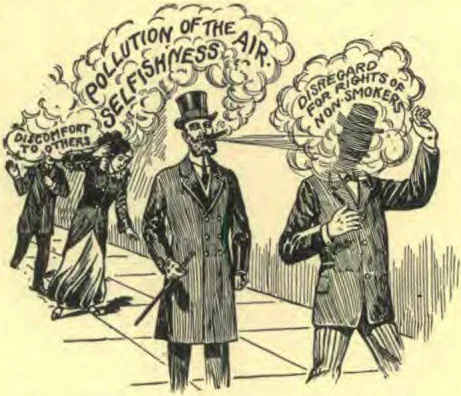
The right to breathe fresh and pure air—air uncontaminated by unhealthful and disagreeable odors and fumes—is a natural right, is one of the “inalienable rights” guaranteed by the Declaration of Independence and the Constitution and laws of the land. This right cannot be taken away by legislatures or courts, much less by individuals pursuing their own thoughtless or selfish indulgence.
Tobacco smoking and carrying lighted or partly consumed tobacco in places where nonsmokers are present or have a right to be, or where the fumes or odor of tobacco can reach those who do not indulge in the habit, is a flagrant invasion of the constitutional rights of others. We have succeeded in having smoking prohibited or restricted on various railway lines and in stations, on steamboats, and elsewhere, and although we have not succeeded in restricting smoking in hotels and restaurants, the influence of the organization is far-reaching, and is helping to shape public sentiment in this direction.
That tobacco smoke is irritating to normal mucous membrane of the eyes and air passages is well known. That tobacco smoke is a deadly poison is not so well understood; neither does the average person realize that because tobacco smoke is tolerated by the chronically poisoned, it is not, therefore, separated from the rest of this class of violent poisons which become equally tolerated by the chronically poisoned, such as opium, which, however, is not nearly so deadly as tobacco; and the smoke from opium is not so destructive of animal life as is the smoke from tobacco. Because of its poisonous character, the florist incurs the expense of burning tobacco in his greenhouses for the destruction of the animal life upon the plants. If it were merely smoke he required, he would burn the leaves of trees and ordinary plants and weeds that cost nothing.
In the case of Hadley vs. Harrison, 26 So. Rep., 294; 123 Ala., 292, a tobacco dry house was declared a nuisance because the evidence showed that it was detrimental to the health and comfort of the occupants of a near-by building, because the tobacco odors polluted the air and produced headache and other nervous disorders. Would a dry house containing the leaves of trees or filled with hay, so poison the atmosphere that people in a near-by building would be made ill?
The people need to be aroused from the lethargy, the indifference, that has permitted this great injury to the human family—this poison industry—to gain such an enslaving financial and political control of our public and official and legislative bodies. We see the political power of the manufacturers and venders of this poison exerted everywhere. As individuals we should continually demand of our official bodies the protection of the highest interests of the people, and the honoring of the principles upon which this government is founded.
There is strength in union; therefore we have organizations. But the individual members should act as committees of one, taking a fearless and positive stand; demanding the right and denouncing the wrong. The consciousness that others are united with us in a common5cause should be a stimulus to greater fearlessness and determined effort; but if the individual is lacking in positive conviction and has not the quality of fearlessness, then that one adds little to the strength of an organization.
We need to look away from self-interest, and to seek the highest interests of the race, the community, the organization that has for its purpose the good of the people, and thereby advance our own interests in the proper way.
The Non-Smokers’ Protective League of America has been organized to protect the air we have to breathe, from the poison, the malodor, and the irritating quality of tobacco smoke, and we ask the coöperation of all persons who have the highest interests of all mankind at heart.
If it is a crime to pollute the atmosphere with the poison of tobacco smoke, then it is a crime to keep silent and thus give protection to this needless and grossly sensuous practice, that is obtruded upon those of us who desire to be and to remain unpoisoned, not only for our own sake, but also for the sake of posterity. The legal rights of the non-smokers must be defended and maintained; therefore the Non-Smokers’ Protective League of America has been brought into being.
Educators and Tobacco
“To cure is the voice of the Past; to prevent is the divine whisper of Today.”
SENTIMENT among many of the educational leaders of today is that cigarette smoking should have no place among the teaching force of our country. But why discriminate against the cigarette? If boys see their teachers smoking cigars, that in itself gives them the permission and sanction of the teachers to smoke their own little cigars.
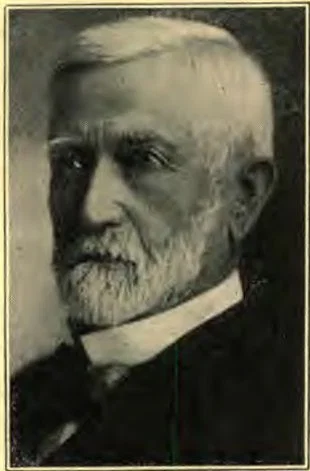
Teachers should be total abstainers. There is no other safe rule. All agree with Mr. Hiram Hadley, president of the New Mexico Anti-Tobacco League, that “in forming sentiment for life no force is greater than that of the teacher.” If he uses tobacco in any form whatever, his instruction against tobacco, however scientific or enthusiastic, will have little weight with his pupils.
Hiram Hadley, President of the New Mexico Anti-Tobacco League
When Mr. Hadley thought to organize the Anti-Tobacco League, he wrote to the educators of the State to ascertain their views on the subject. Many of these sanctioned the movement and promised their coöperation. The following testimonials were in response to Mr. Hadley’s letter:
R. W. Twining, superintendent of the Las Cruces schools, says: “I believe that all who are truly interested in educating the youth will, without exception, welcome the day when tobacco will receive as violent and general condemnation as whisky is receiving today.”
Dr. Frank H. H. Roberts, president of Normal University, Las Vegas, says: “The Normal University does not employ men who use tobacco. I am convinced that the tobacco habit is responsible for a great many deaths.”
W. O. Hall, superintendent of schools, Roswell: “I have fought tobacco all my life and am still at it. I am convinced that a few years hence there will be the same fight against tobacco that there now is against liquor. It is time schoolmen took a stand in this matter.”
Prof. T. C. Rodgers, of Normal University, in speaking of the anti-tobacco campaign, says: “It has come to be considered a part of the teacher’s business to be on that side of the question.”
R. S. Tipton, superintendent of schools, Otero County: “I have refused to recommend for the schools of this county any teacher who I know is given to the use of tobacco in any form.”
C. F. Miller, of Las Cruces: “I know of nothing else which is doing so much harm to the youth of our fair land as is the cigarette habit, and I am only too anxious to battle against it.”
Walter B. McFarland, superintendent of schools, Silver City: “I think it would not be going too far to say that a teacher who uses tobacco should get out of the profession.”
New Mexico is doing a good work against the tobacco habit; so is Kansas, and other States. But the educators are hampered in their effort to coöperate with the leaders of the various anti-tobacco leagues, inasmuch as there are no public funds that can be used in the purchase of anti-tobacco literature for distribution among the pupils of the schools.
David Starr Jordan, of Leland Stanford Junior University, says: “Put me down as one of those who detests tobacco, and sees no redeeming good in any of its manifestations. It stunts the growth of the young; it takes off the keen edge of courtesy from the adult; and it musses up the atmosphere which most of us are compelled to breathe.”
Prof. Arville O. DeWeese, superintendent of public schools of Harrison County, Indiana, issued the following notice to the teachers under his direction:
“No teacher will be licensed, and the licenses of all licensed teachers will be revoked, who, after the publication and general distribution of this notice, are known to smoke a cigarette either privately or publicly in such a manner that any school child in Harrison County might directly or indirectly know of the same.”
An examination of more than two thousand New York school children disclosed a remarkable prevalence among them of the use of tobacco. Not only boys but girls use the weed, and many begin its use at a very early age. This is true in every large city.
When all educators become abstainers from tobacco in all forms, their example, with the definite and weighty instruction they can then give, will do much toward eliminating the evil habit from the young.
Working, Playing, and Smoking
RECENT experiments concerning the effect of smoking upon athletes are of special interest. The first of the new experiments tested body control before and after smoking. Two groups of young men were used,—those who were in the habit of smoking and those who were not,—and the number of experiments justifies two interesting conclusions:
Both groups showed a loss in physical precision immediately after smoking.
Smokers showed a greater lack of muscular control after exercise than nonsmokers showed.
The most satisfactory results came from a long series of carefully supervised experiments in baseball pitching. The experimenters found the average loss of accuracy after smoking to be about 15 per cent, whereas the average gain when the men waited between the two tests without smoking for the same length of time that they were allowed for smoking the cigars showed an increased accuracy of 9 per cent. In a few cases, to test the effect of smoking still further, two cigars were used, and it was found that the loss of accuracy was very much greater than when the pitcher smoked a single cigar.
Another series of experiments indicated that what holds good for throwing baseballs holds good also for shooting a rifle—smoking impairs a boy's physical condition and makes him less able to control his body.—Selected.
The Wood Engraver’s Advice
BOYS, with all the rest of mankind, like pictures. Never were magazines and books more profusely illustrated than at the present time. This is due to the cheaper reproductive process now in use. The oldest method of engraving was the woodcut. It was slow and expensive. The cheaper and newer processes, however, “can never surpass the old where sharpness of outline and artistic feeling rather than economy is concerned.”
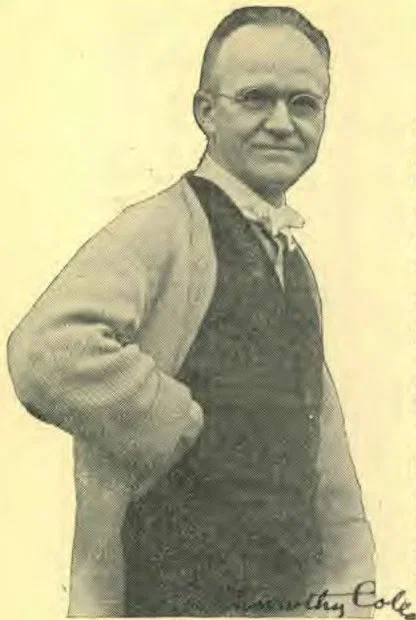
The dean of present-day wood engravers is Timothy Cole, of Poughkeepsie, New York. His work has long adorned Harper’s Magazine. Not long ago an ambitious and capable young wood engraver, Nicholas Quirk, Jr., of Chicago, sent a sample of his work to Mr. Cole, who wrote the young man a letter in which he gave him sound counsel as to the best way of perfecting himself in his chosen art. Among other things Mr. Cole said: “Study drawing seriously, and read good books. By all means avoid all strong drink, with smoking and overeating.”
Mr. Cole himself is an abstainer, and he knows tobacco would rob the artist’s work of precision and feeling. What is true of the engraver is true of all other worthwhile work, especially if it be of a sedentary character.
The following letter, written on June 11 to the editor of the INSTRUCTOR, by Mr. Cole, states comprehensively his opinion of the evils of tobacco smoking:
“I never contracted the habit of smoking tobacco, and from my youth I always regarded as a pitiful object an engraver endeavoring to engrave with a pipe in his mouth, or dividing his attention between his cigarette and his burin. Our nerves are undoubtedly our most precious possession, and in proportion as we realize this will we abstain from anything that tends, even remotely, to affect them deleteriously.
“I am now over sixty-five years of age, and can work as strenuously as when I was twenty. I can detect no difference. My friend John Burroughs is nearly eighty. He never touches the narcotic weed, and is hale and hearty. I cannot see how any one really interested in his work can find time or inclination for the indulgence of so foolish and barbarous a habit as smoking.
“Very sincerely yours,
“Timothy Cole.”
Charles and His Cigarettes
By E. R. Numbers
E. R. NUMBERS
Years ago in an Ohio town there lived a bright, energetic young man with pleasing manners and an attractive personality, whom we shall call Charles.
He was the pride of his mother, and a general favorite in the great store where he was employed, and the country folk for miles around would call for him when they came to attend to their shopping at the end of the week. His employers placed every confidence in him, and few young men have had brighter prospects than did Charles. But the cigarette habit early began to fasten itself upon him.
This habit, once begun, grew upon him rapidly. In a short time he seemed to be completely under the control of the deceptive narcotic, and a great change came over him. Finally, becoming restless and dissatisfied, he gave up his position and went to driving a hack, where he was thrown among companions who were only too ready to aid him in his downward course.
In time he left his old home town, and for years I lost all trace of him. However, one day in a great city we met on the street car; and what a sight! He was not at all the Charles I had known in our boyhood days. At that time he was an example of neatness, and diligence in business; now he was slovenly in appearance, careless in manner, profane in speech, and the inevitable cigarette was ever between his lips. In his dealings he was shiftless and unreliable, and was constantly harassed by his many creditors in their vain attempts to collect honest bills.
This complete change in one upon whom I had once looked with admiration deeply impressed me with the baneful effects of the cigarette; but the worst was yet to come.
We were again separated for years, and I heard nothing of him. Eventually I returned to the old home town, and I learned that Charles also had returned. I longed to do something to win him to the right, so I appointed a day to visit him. I found the home, if such it might be called, in one of the poorest sections of the town. His wife met me at the door. She wore a look of sadness and despair such as I had seldom seen. As I listened to her heart-rending story, I learned that the cigarette had led to drink and to all the miseries of a drunkard's home. His old friends and acquaintances had forsaken him, and he could not secure steady employment. If he obtained work for a few days, it was only to spend on drink what he had earned. His wife pleaded with me to do what I could to help him, for she could not endure the burden of living with him longer if he did not reform. His only7child, a girl of eleven years, came in during the visit. Neglect was evident, as might be expected with a drunkard for a father. Charles was not at home, but I found him loafing at the corner hotel, where such characters congregate. I returned to my home, and my heart was heavy as my thoughts ran back to brighter days, and then over the downward steps which had culminated in what I had just witnessed.
Boys, this is a true story, and it is not an isolated or exaggerated case. Evidences of blasted hopes and ruined prospects are on every hand. Therefore I hope that any boy or young man who reads this life sketch, if he is ever tempted to take his first smoke, will give no place to the “little white slaver,” lest his life be a repetition of the sad story of Charles.
A Smokeless Dinner
WHEN several men dine together, the after-dinner smoke has come to be the expected procedure. But there are exceptions, and one of these is of special interest. It occurred last summer on the dining car of the Great Northern Railway, between the cities of Fargo and Grand Forks, North Dakota, when the Hon. Charles E. Hughes was touring the United States.
Mr. H. F. Emery, one of the diners, says of the incident:
“After we had finished our dinner, the porter passed cigars, which, to the surprise of all, were refused by each one present. Upon investigation it was found that each had refused solely for the reason that he did not smoke.
“The party consisted of Mr. Charles E. Hughes, nominee for President of the United States; Charles A. Pollock, judge of this district; P. J. McCumber, U. S. Senator from North Dakota; Gunder Olson, National Committeeman from North Dakota; Lynn Frazier, Republican nominee for governor of North Dakota, afterward elected; and H. F. Emery, mayor of the city of Fargo.
“Mrs. Hughes, who was accompanying her husband on the trip, remarked that it was a notable gathering, and one probably seldom to be found, as the group represented widely separated persons who had come together without thought of anything connected with smoking.”
Things to Remember
REMEMBER, boys, that tobacco is a poison, that it is always injurious to the delicately constructed human body.
REMEMBER that the younger one begins the use of tobacco, the greater the injury produced.
REMEMBER that exceedingly injurious poisons are produced by the burning of cigarette paper, though the paper itself be pure. These poisons are not found in the smoke of pipe and cigar.
REMEMBER, therefore, that the cigarette is the most harmful form of smoking.
REMEMBER that smoking makes a boy unmanly rather than manly. Every thinking person pities the boy who is so ignorant or so silly as to smoke.
REMEMBER that while many men smoke, few of them begin when boys, and they choose the less objectionable form of smoking,—the pipe or cigar.
REMEMBER that smoking unfits you for athletics, business, or social life.
REMEMBER that smoking is a criminal waste of money at any time, especially in war time.
REMEMBER that if you smoke you may influence some one else to follow your example, and it may be some one with less self-control than yourself, who will become a cigarette fiend, and later, in consequence, become an inmate of the hospital for the insane, or a human derelict of some other character.
REMEMBER that as the man should shun the bottle, so should the boy shun tobacco.