I KILLED a little rattler this morning,” said my friend, the ranger, as we met on the cañon trail. “Not over ten inches long. No rattle, hardly a button.”
“Didn’t need to be so careful of him, then?” I said.
“Didn’t, eh?” was the quick reply. “Why, the little ones have more poison to the amount of snake, and they have no rattle to call attention to them. You see it isn’t the rattle that hurts; it’s the other end.”
He was right. And the same thing is true of sin. Little sins, white lies; the first drink of “punch with a stick in it,” perhaps at a school function; the first cigarette rolled on a dare; the first nasty novel. No rattle to them, no fuss, but they have the poison. And “it isn’t the rattle that hurts; it’s the other end.”
A professor in a Western high school saw one of his pupils smoking. At a favorable opportunity he said to him: “How’s work going? You’re pretty keen in mathematics. I hear you’ve taken to smoking. I was a little afraid you’d be pushing me out of my chair one of these days; but if you’ve taken to smoking, no fear of that.”
A man who needed dental work done hunted up a friend whom he had met socially. As he sat in the chair and the drill began to work, the dentist said to him, “Don’t key yourself up so. I’m not going to hurt you.” “But you are working toward a nerve.” “Yes,” was the reply, “but I can tell when I am coming near a nerve, and I will stop in time.” The patient became interested. “How can you tell?” “Well,” said the dentist, “I used to drink a little just as you do. I noticed that the days after I had been drinking I could not tell; but the days after I had kept from drink I noticed that my hand was sensible to the decreasing pressure of the drill as the tooth softened near the nerve. So in the interest of my patients I stopped. I didn’t want to hurt them, you see.” Booze always dulls the perception. “Touch not; taste not; handle not.”
As the district agent for a large company stepped from the train in a California city in company with the Pacific Coast agent for the same company, the first man said to his chief, “Let’s have a drink before we go and close that big contract.”
The chief looked at him a minute, and finally said, “I’ve quit. Since I saw you last I contracted for an auto, ‘future delivery.’ The firm notified me that I could have the car some time before they had counted on getting it for me. I really was not able to handle the payments, but was too proud to tell them so. It so pinched me to meet the payments that I had to save every way, and I cut out the drinks. I couldn’t afford them. I soon noticed a change in my work. I could think more quickly, figure more accurately, and see through a deal more clearly; so I decided to let it go altogether.”
The physician had done fine work in the case. A friend said to him, “Will, do you know of one thing that would help you?” Without waiting for an answer from the physician, the friend touched the two cigars which were sticking out of the doctor’s vest pocket, and said: “I happen to know that in the case you have just treated the patient was very sensitive to the odor of tobacco. This is true of many other persons. It tends to nauseate, especially when one is sick.” The doctor did not hesitate a minute, but said: “I had never thought of it that way. Got in the habit in medical school. I see it now. I’m through.”
A florist who uses one hundred dollars’ worth of tobacco yearly, but not for himself, is a Sunday school teacher of a class of boys. When he knows of any of them smoking, he asks them to come on a visit to his greenhouse, and they come, for there are acres under glass.
In the course of the walk he shows them how he kills insect pests. “Some of them we kill by laying the stems of tobacco by the pots. The exuding of the smell kills those under the leaves. In other houses where there is no bloom to hurt, we make a smudge fire in a pot, put tobacco on it, and drag the smoking pot through the house.”
“Or we mix the essence of nicotine in a spray, and spray the plants, or daub it here and there on the steam pipes. It always kills the young insects first. Here and there an old one stands it. But even then they are so tobacco soaked that they can seldom propagate young, or if they do the young soon succumb. Our final way to fix them is to take a little alcohol and a camel’s hair brush— one drop, and he curls up. That ends him.”
The moral needs not to be pointed. The wide-eyed boy will see it.
Rainy Days and Lost Tobacco Business in New York
A RAINY day in New York means a loss of $4,000 in the day's business to one tobacco company owning a chain of stores in the city; for in the rain and wind many cigars, pipes, and cigarettes must go unlighted.
For the Sake of the Boy
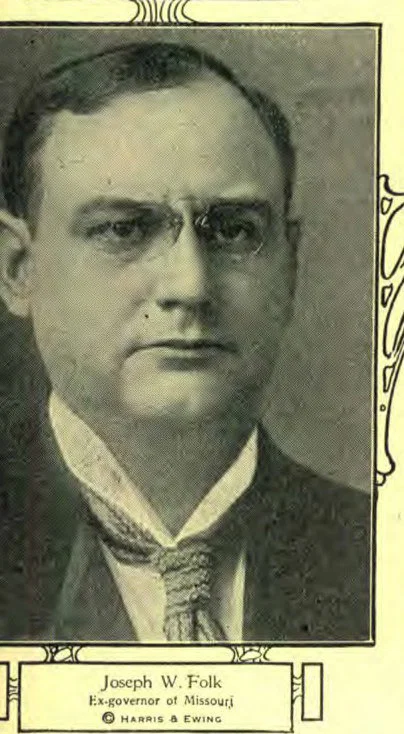
EX-GOVERNOR FOLK of Missouri gave up smoking lest his example lead some boy to take up the cigarette habit. Another prominent official recently wrote the editor of the INSTRUCTOR that while he used tobacco in a limited way, he was seriously considering whether he did not owe it to the youth of the country to give up even the limited use he makes of it. It is refreshing thus to see the scales dropping from the eyes of men in prominent positions. For herein lies the hope of the solution of the cigarette problem. It is not in legislation nor exhortation, but in example. Many graves have been dug for youthful victims of the tobacco habit, every one of whom had his life blighted because men had set him the example of smoking. A prominent editor of New York City decries the use of the cigarette by boys. This is praiseworthy. But he himself smokes freely. He should not forget that his cigar invites the boys to try the cigarette. Dr. Charles M. Sheldon says:
“In one of the State legislatures last winter, in an atmosphere heavy with smoke, one of the representatives stood pleading for an anti-cigarette bill, while in the hand which eloquently gesticulated for the passage of the bill was a cigar! The bill went through, and became a law. And that legislator and scores of others smoked their cigars and pipes in complacent satisfaction as they read the papers next morning recording the victory of the anti-cigarette bill. Yet the legislator’s boy feels a little queer to think that it is a crime for him to use what ‘dad’ calls a physical necessity for himself! He does not see the logic of it, and he never will, for there isn’t any.”
The Missionary World puts the following pertinent questions to all such illogical fathers:
“Why beholdest thou the cigarette that is in thy son’s mouth, and considereth not the cigar that is in thine own mouth? Or wilt thou say to thy son, ‘Let me pull out the cigarette out of thy mouth,’ and behold a cigar is in thine own mouth? Thou hypocrite! First cast out the cigar out of thine own mouth, then shalt thou be prepared to cast out the cigarette out of thy son’s mouth.”
In view of the situation throughout the belligerent world, and in view of the sacrifices of boy life being annually made by the cigarette, it is highly in order for all fathers and brothers who smoke the pipe and cigar, to renounce forever the smoking habit, that their abstinence may count for conservation, and their influence for a healthy, wholesome American boyhood.
A Builder of Men, Not of Autos
By F. D. McCune
F. D. McCUNE
The Boy Scouts of Washington, D. C., have a well-cared-for garden plot of one hundred acres or more in Potomac Park. They early set about the task of helping the government provide food for hungry folk. Mr. Henry Ford gave the boys necessary machinery for preparing the ground, and sent representatives to help in directing the work. This is the kind of work Mr. Ford is doing all the while. Many think of him only as an automobile manufacturer; but he claims that this is not his business, his real business being to build men, not autos. He does the latter to provide the means for his life work. He builds men by giving work to ex-convicts, and encouraging them to right living; by improving the condition of workingmen; by paying his men extraordinarily high wages; by paying women workers the same as men receive for the same work; by allowing employees to share in the profits of the business; by waging an energetic and expensive campaign against the cigarette habit, besides performing many private philanthropies.
The first John Jacob Astor died in 1848, leaving a fortune of $20,000,000. This unheard-of wealth made the name of Astor famous throughout the world as a synonym for countless wealth. Yet this early fortune represents just about six months’ income for Mr. Ford, the builder of men. No small sum of this money is used in trying to persuade boys not to smoke. His wise and effective campaign against the cigarette makes for him many friends. He publishes and distributes gratis expensive pamphlets on the tobacco evil. In his cigarette bulletin, “The Case Against the Little White Slaver,” No. 4, he says:
“Pliny, the Elder, one of the wisest men of ancient Rome, laid down this precept: ‘The best plan is to profit by the folly of others.’”
“That rule holds just as good today as it did when first given utterance to; and it is particularly true in its relation to the cigarette evil.
“The boy or the young man whose brain is fogged by the use of cigarettes finds himself hopelessly handicapped. His services are accepted only as a last resort; and if there is any one else available, he is not intrusted with important matters or considered for future possibilities.
“This is the testimony of men in every walk of life, . . . men who have made good, and who know exactly why some boys succeed and why others make a sorry failure of anything they attempt.
“But the most any one can do is to point out the dangers that confront you. You must avoid them if you play safe.
“If you are not already enslaved, the safest and easiest way to escape the danger is to follow the advice of Pliny, the Elder, who is wise in our generation as well as in his own, and ‘profit by the folly of others,’ by avoiding cigarettes.”
Cigarette Smokers Lead Their Class at the Foot
CIGARETTE smokers often “lead their class at the foot.”
Thoughts for the Thoughtful Lad
(Concluded from page three)
and whose outdoor life and home conditions are such as to offset to a degree the evil effects of the nicotine poisoning, may smoke apparently with much less serious injury. I do not say without injury; for it is impossible for one to be continually taking a strong poison like nicotine into the system without its producing a decidedly ill effect. But it may attack some internal organs which year by year grow less capable of doing their work though they are not entirely disabled, and may not disclose their real condition until in some time of special strain or illness.
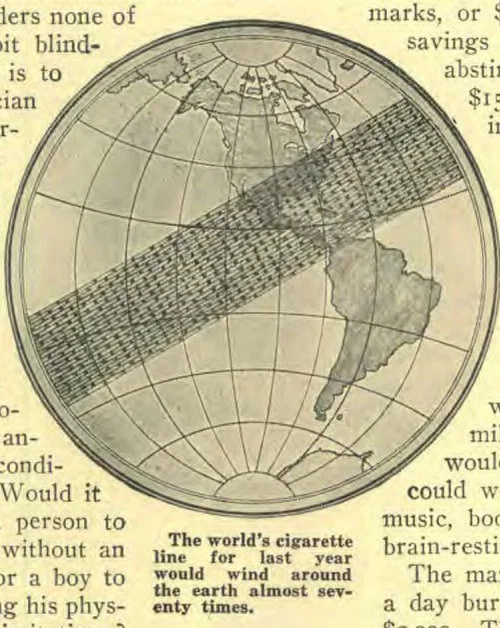
The world's cigarette line for last year would wind around the earth almost seventy times.
The boy who begins smoking considers none of these things. He takes up the habit blindfolded, as it were. When a person is to have a serious operation, the physician tests his heart, kidneys, and other organs to discover whether they are in a condition to be affected unfavorably by the anesthetic. Some persons undergoing a simple operation have died on the operating table because the physician failed to give a thorough examination. The ether or chloroform is no more poisonous at one time than at another; but it proves fatal to one patient, and produces no permanent ill effect upon another, simply because the physical conditions of the two are not the same. Would it not be unwise, even criminal, for a person to insist on taking a strong anesthetic without an examination? Is it not as unwise for a boy to take up smoking without understanding his physical condition and other personal limitations?
One of the most serious phases of the cigarette problem is that it continually tightens its grip upon one, and continually demands more and more of one. Having once made friends with it, it fastens itself like a leech upon one, and will not be shaken off without energetic effort. But the boy who really means to make a place for himself worth while in the world, must be free from any such serious handicap as the “little white slaver.”
Happy is the boy who has enough good sense to refuse absolutely to begin a habit that is denounced by states, churches, educators, judges, business men, and business firms. In fact, there is not a man or woman of true worth in all the land who would advise a boy to begin smoking. Then why do half a million boys take up the habit every year? It is only because of ignorance, or because the spirit of evil which is in the world desires the destruction of humanity, and boys do not resist the evil tendency. John B. Gough, one of the world’s greatest temperance orators, said: “A man who overcomes an evil habit is a hero.” This is true; but we are even more willing to grant the gold medal to the boy who refuses to acquire an evil habit. He is the real hero.
Tobacco Habit Is Expensive
THE men and boys of the United States who smoke, burned up last year more than $1,200,000,000, more than two thirds of the great war tax first levied by the government in the form of liberty bonds.
The Wall Street Journal says that 100,000,000 cigarettes a day is the sales record of the British-American Tobacco Company. This means 36,500,000,000 a year. Every cigarette contains enough poison to kill two bullfrogs. If the tobacco company was using its products for the slaughter of frogs, the world might allow it to prosecute its business unchallenged; but it is using them to slaughter the world's boys.
The Journal says further that the company “is unable to fill its orders, notwithstanding its factories encircle the globe.” The sales now are more than five times what they were ten years ago. If the next ten years witness the same phenomenal rate of increase, the coffin lid will have been nailed down for millions of unthinking boys.
Soldiers’ Widows and Orphans Helped
A dispatch from Dresden last August says: “The general Committee for the Relief of War Sufferers recently appealed to the smokers of Saxony not to use tobacco for one day, and to contribute the money thus saved to the fund for the support of widows and orphans of soldiers. The committee announced that it had received 290,000 marks, or $72,500. This amount represents the savings of the smokers in a single day of abstinence. In the city of Dresden alone, $15,000 was saved.”
Because the Men Smoke
The amount spent in America annually for tobacco would buy every man, woman, and child fifteen dollars’ worth of clothing. The Washington Post says that the British-American Company received an order from the French government last March for 7,000,000,000 cigarettes, enough, if laid end to end, to encircle the globe almost eight times. And this in time of war! and when the government has to borrow millions of dollars! If the poor man would save what he spends on tobacco, he could with this amount afford the luxury of music, books, travel, games, sports, and other brain-resting and body-building pleasures.
The man who uses only two five-cent cigars a day burns up every twenty-five years nearly $2,000. The interest on this sum would support continuously an evangelist in any heathen country. Does it pay to smoke?
The nation of men spend for tobacco eighty-five times as much as is spent for foreign missions. What will the men say when the Lord of the harvest asks for their sheaves?
A Fire Menace
The cigarette is expensive as a fire menace. Some months ago an automobile fire engine was sent through the streets of New York, displaying a large sign reading, “Throwing away lighted cigars and cigarettes, and so endangering life and property, is now a misdemeanor and will be prosecuted.”
The great Equitable fire in New York was due probably, says the Christian Advocate, to a cigarette thrown carelessly into a pile of inflammable material. County Fire Marshal Thomas E. Pfarr says that the fire which destroyed the Pittsburgh Union Paper Box Company factory, with its toll of thirteen lives and the arrest of the company’s officials on the charge of neglect, was caused by a smoker throwing a lighted cigarette into a pile of straw. According to the police captain, the fire of John A. Roebling’s Sons Company, in Trenton, New Jersey, was started by a cigarette carelessly thrown into a pile of hemp. This fire destroyed the wire shop, twenty-nine dwellings on adjacent streets, a barn, and many freight cars. These are a few of the concrete examples of the waste caused by the cigarette.
An average of one fire every minute was our fire record for 1916. The daily property loss caused by these fires was $600,000; or $214,530,885 for the entire year. But the loss caused by the tobacco users equals that of six such fires every minute, or $3,600,000 a day. Surely this does not represent the spirit of conservation that should characterize the present time. The women of the country are endeavoring, by various reforms, to redeem their reputation as wasteful housewives. Should not the men relinquish their extravagant tobacco habit? We think so.
Test Yourself
THE pulse of a normal boy who does not smoke will average seventy heartbeats a minute, 4,200 an hour, or 100,800 every twenty-four hours. But a boy of eighteen who smokes from ten to twenty cigarettes a day will probably have a pulse of ninety to one hundred a minute. Thus in a day cigarettes will cause the heart to beat perhaps 43,200 extra times, a gain of more than ten hours’ work—more than the law allows a man to do for a day’s work. “The reserve power of the heart is thus used up every day; so the boy has no reserve strength to draw upon in case of sickness, no strength to grow old on, no strength to exert himself on.” This is why comparatively simple accidents, operations, and acute diseases often prove fatal to smokers.
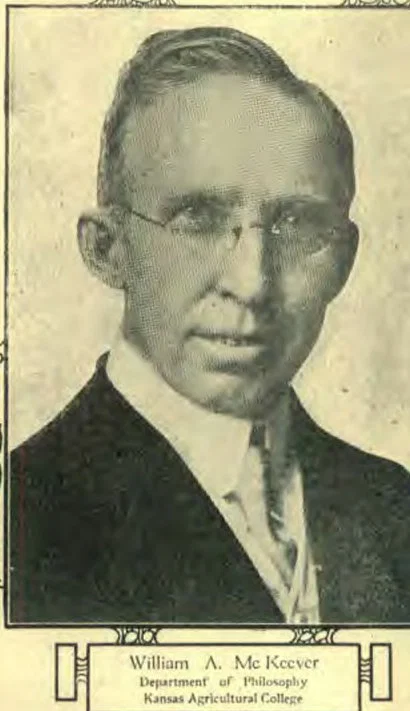
Now if you smoke, test your pulse and see how it compares with what it should be. If you find it high, you may know that your heart is being overtaxed. Dr. K. Grassman, of Munich, says that nicotine causes a thickening and hardening of the blood vessels. Of fifty cigarette-smoking boys examined at the Kansas Agricultural College, twelve or nearly twenty-five per cent, had the tobacco heart.
Too many men of wide observation and experience have denounced the cigarette as an unmitigated evil, for ambitious, intelligent, well-meaning boys to make friends with it.
You pity the drunkard as he stumbles along on the street or wallows in the gutter; you pity the heathen Chinese who smokes his life away in an opium den; you turn in disgust from the Indian fakir who tortures and mutilates his body because of a mistaken religious idea; but you make friends with the cigarette, which is doing as much as, or more than, any one of the other evils to wreck human life.
Well-informed, intelligent, thoughtful people pity the boy who smokes, just as sincerely and deeply as they pity the habitual drunkard; for they know the little white “coffin nail” wrecks the boy the same as the wine cup and the whisky bottle do the man.
Walking in Heaven, or Chained to the Dead.
By E. F. Collier
ONE day I stood on the site of the old slave market in Washington, and listened to the conversation of a Civil War veteran who had seen hundreds of slaves herded and marketed in this same place. Afterward I had an intense desire to see and talk to one who had been a real old-time slave. Later, in a city of Ohio, such an opportunity was afforded me. He was a white-haired old Negro who had been freed by the war of the sixties. When I asked him how he had felt on discovery of his emancipation, he showed me scars,—deep, cruel scars,—attesting to the merciless hand of iron that once ruled his black body. “Those wa’ ha’d days fo’ me,” he said as he covered up again those pathetic evidences of former mistreatment. “But,” he continued, his face lighting up with reminiscent smiles, “when we became free it wa’ jes’ like yo’ wa’ walkin’ in he’ben.”
This no doubt was a fitting simile to one who had suddenly found himself delivered from a cruel bondage into a glorious liberty, with the world smiling a welcome to his new estate. His had been an involuntary servitude, but how much greater is the ignominy of deliberate, cultivated service to sin! It is probably safe to say that ninety-nine per cent of hurtful habits and wicked practices are cultivated ones. The desire for tobacco and other narcotics is almost invariably the result of deliberate forethought and action in first tasting those things and then acquiring the habit.
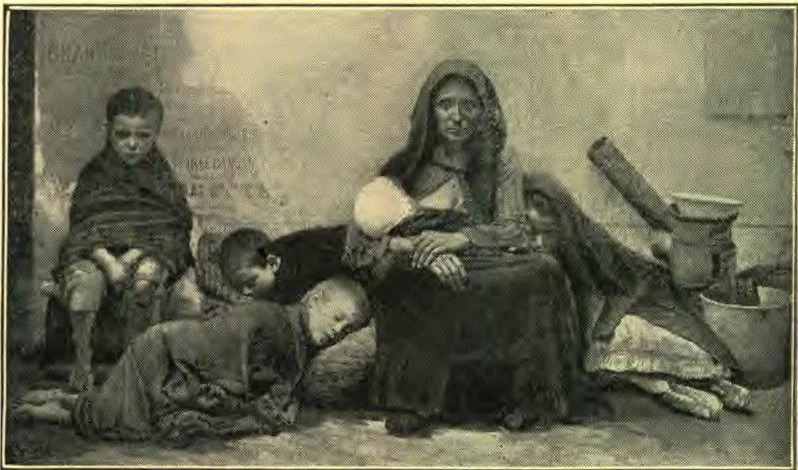
The world's tobacco bill would go far toward supplying the needs of Europe's homeless and starving millions.
I have a friend who for years has been addicted to the use of tobacco. Ten years ago I asked him to leave off the habit. Then he laughed and told me that he could do it with little effort. But he did not, and recently he told me with shamefacedness that it was now impossible for him to give it up. He has serious heart trouble, his whole physical condition is bad, and he expects to die a slave to that abominable thing which he once courted.
This experience—there are innumerable others just like it—is a crying argument against the first use of narcotics and intoxicants. No one who finds himself fettered by any questionable habit or evil acquirement is free to think or believe himself a hopeful candidate for eternal life. The way to heaven is barred except to freemen. Self-imposed slavery never cheers itself in the hour of awakening. Ultimate dejection and ruin stalk at its side until the grave offers it a covering, but never a hope. Far better for the youth never to put himself in the way of entanglement in the meshes of these debasing habits, which always grow, for in the end the sin of years becomes a veritable “body of death” to which he is chained. On the other hand, to know that one is free and in subjection to nothing but the Spirit of Christ, is, in the words of the old ex-slave, “jes’ like yo’ wa’ walkin’ in he’ben.”