Your ShelfYour Projects

Signs of the Times, Vol. 23, No. 46.

Editorial
Earlier text: “THE MOST HIGH RULETH.” NO. 5.

The Liver

A GIN LIVER.
A GIN LIVER.
THE liver is a wonderful organ which lies close up under the ribs at the right side of the body. It is remarkable as being the largest gland in the body. In a full-grown man, it usually weighs about three and a half pounds. It is of a dark brown chocolate color, and when healthy has a perfectly smooth and even surface. By pressing the fingers up under the ribs of the right side, one can just feel the smooth lower border of the liver, about an inch above the lower edge of the last rib. Notwithstanding the inexcusable and abusive manner in which the liver is treated by many persons, it is a most obliging and useful organ, and it does a vast deal of work for us. The chief business of the liver seems to be to make bile, a golden yellow fluid, which is stored up in the gall bladder, during the interval between the meals, and is poured out into the small intestines through a little duct soon after the digestion of the food begins.
The bile differs from every other vital fluid in the body in being at one and the same time both an excretion and a secretion. It is formed for a double purpose, each feature of which seems to be equally as important as the other. The bile contains a large amount of waste matter, which the blood has gathered up from the various parts of the body, and which the liver has strained out of the blood for the purpose of removing it from the body. In the disposal of these waste and poisonous substances, nature's disposition to economize is exhibited in the highest degree of perfection. Instead of being sent out the shortest possible route, they are poured into the intestine a few inches below the stomach, and made to travel nearly the whole length of the alimentary canal, being mingled with the food and aiding greatly in the
process of digestion. Indeed, there is abundant reason for believing that if the bile were not supplied, not only would certain elements of the food go undigested, but those elements which were digested would not be properly absorbed, and so would fail to nourish the body. The bile also acts as an antiseptic to preserve the food from decomposition while it is undergoing digestion, and is a natural laxative which excites to activity the muscles by which the food is moved along, and brought in contact successively with each portion of the alimentary canal. The usefulness of the bile is so great that even the lowest forms of animal life can not manage to get along without a liver, tho they may be wholly destitute of every other one of the viscera, except the heart and the stomach.
But the liver does other important work besides making bile. It takes an active part in the digestion of certain elements of food. All the starch and sugar which we eat is worked over by the liver, and is converted into liver starch, and afterwards changed into a kind of sugar which can be utilized by the system. Without the liver we could make no use of either one of these important elements of food, and if it becomes disabled, the system at once suffers, through its inability to do its ordinary amount of starch and sugar-making. But the liver has still other important work. It is a sort of rendering establishment, in which many of the waste matters of the body are taken from the blood, and worked over into such shape that they can be removed by the intestines and other organs, which, from their inability to do this preparatory work, without the liver, would be almost totally unable to serve the body to any useful purpose.
Now that we know something about the liver, let us see what alcohol does to it. When alcohol is taken into the stomach, it is sooner or later absorbed, and before going to any other portion of the body, is, by this provision of nature, carried directly to the liver. The liver, in its self-sacrificing devotion to the interests of the body, not only undertakes to remove so much of the poisonous elements as possible, but in addition absorbs into itself as much of the alcohol as it can dispose of in this way, only allowing to escape into the rest of the body such portions as it can neither eliminate nor absorb. This arrangement of matters, while fortunate for the body in general, subjects the liver to greater danger of immediate and serious injury from alcohol than any other organ. This is true, not only of alcohol, but of metallic poisons, and other poisonous substances. The first effect of alcohol upon the liver is that of a paralyzer. When alcohol is applied to the tongue, it benumbs the nerves of taste and feeling, so that the tongue becomes numb and loses its ability to distinguish flavors. When alcohol comes into contact with the liver it lessens the activity of the little cells, stupefying them so they can not perform their proper work, thus leaving the whole body to suffer in consequence. Even a moderate drinker always has a torpid liver. It is this which gives to the white of the eye its dingy hue, and to the skin its dead and leathery appearance. The tippler complains of a brassy taste in his mouth, because his liver is half paralyzed, and can not remove from the blood the impure matters which should be filtered out in the form of bile. Topers are always hunting after some new form of bitters with which to relieve their habitual biliousness. But we have not yet seen the most serious effects wrought upon the liver by alcohol. Here is the liver of a beer-drinker, or of a "moderate" whisky drinker. Notice how enormously it is enlarged.
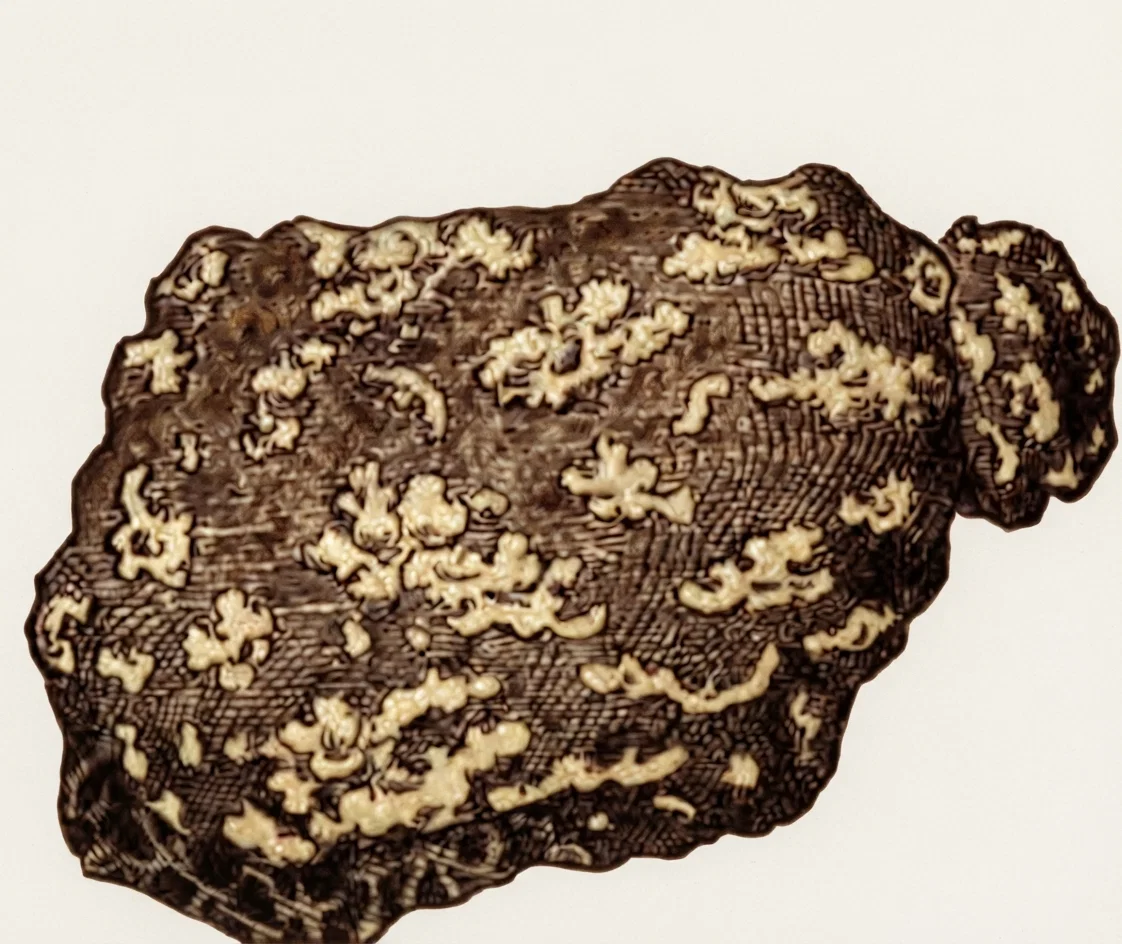
It is half as large again as it ought to be, or perhaps double its proper size. Its dark brown color has given place to a dirty yellow. The once healthy liver, capable of doing a vast deal of work for the body, has been, through the baneful influence of alcohol, converted into an inert and almost useless mass of fat. This is what the doctors call fatty degeneration of the liver. Enlarged and fatty livers are exceedingly common in wine and beer drinking countries, and are found with great frequency among all classes of spirit drinkers. Here is another liver, the relic of a man who committed suicide by means of the whisky habit. If we cut off a slice, the surface looks exactly like that of a half-grated nutmeg. This is the result of a diseased process set up in the liver by the long-continued use of alcoholic drinks. There are thousands of such livers buried in drunkards' graves every year. It is only now and then that the anatomist finds them, when a drunkard happens to meet with death in a street brawl, or by some accident which makes a post-mortem examination necessary. We have one other sort of gin liver to look at. Here is a regular old bloated sot who has drunk his hogshead of Jamaica rum, besides barrels of liquor, beer, and other drinks too numerous to mention.
The doctors have given him up to die of dropsy. They say that his liver is hardened, and that there is no remedy for his disease. If we make him lie down and push the fingers far up under the ribs of the right side, we may feel the lower portion of his liver, so far up as to be almost out of reach, as it has shrunken down to half its proper size. Instead of the smooth feeling of health, we find irregularly scattered around its surface, nodules, indicating a rough surface. When he dies, some curious doctor will want to inspect his liver more closely, and will take it out. He will find something which looks very much like the picture. The naturally smooth surface of the liver is scattered all over with noles, giving it such a rough, uneven appearance that it has been compared to the sole of an English cartman's shoe, which is filled with hob nails, and so has been called a hob-nailed liver. A man who "takes his whisky straight," and on an empty stomach, is certain to get this sort of a liver, sooner or later, if he lives long enough. If you have a good liver, that attends to its business of bile making, and starch and sugar making, etc., and if you appreciate and respect it sufficiently to care to keep it in good working order during your lifetime, shun alcohol in every form as you would strychnine, or any other poison. J. H. KELLOGG.

The Outlook

"I will stand upon my watch, and set me upon the tower, and will look forth to see what He will speak with me."

THE GOLDEN RULE IN BUSINESS.

WE are glad that not all capitalists and employers of labor are cold, selfish, cruel. In the race for wealth, in the worship of Plutus, men forget men. The laboring men are but as so many phonographs, pins, axles, levers, pistons—parts of a great system or machine for the piling up of colossal fortunes. Yet not all are such. There are men who regard their fellows as more than mere machines, and treat them as such. A noble instance of that kind is Hon. Samuel M. Jones, the present mayor of Toledo, Ohio. Having seen it stated in an uncertain way that Mr. Jones employed his men on the co-operative system, and that the governing influence among them was the Golden Rule hanging on the wall, we wrote Mayor Jones as to the facts, and received from him the following, which speaks for itself:—
"EXECUTIVE DEPARTMENT OF THE CITY OF TOLEDO, O. SAMUEL M. JONES, MAYOR. Sept. 23, 1897. "DEAR SIR: Replying to your note of inquiry, I will say that we have a small factory, employing from twenty to thirty men, in the manufacture of oil-well supplies. The principal article is protected by a patent which enables us to ignore the 'destructive competitive system.' Having an opportunity in this way to do business on a more scientific basis than generally prevails, we hung the Golden Rule on the wall some three years ago, and have since endeavored to apply it in our shop; the testimony of those who have observed the experiment is to the effect that it has been a great success. We are simply trying to deal with men who work with their hands on a basis of brotherhood,—trying to LIVE instead of merely believing. We believe Christianity affords a scientific solution of all the vexed problems of society, from top to bottom. It only needs to be applied. The day when it will be universally applied, however, seems to be a long distance in the future, as even the church that professes to teach it is only apologetically 'Christian,' as I understand it.
"Our profit sharing has been limited to the payment of a percentage dividend on the wages paid during the year. This has been 5 per cent., and our wage scale for unskilled labor is 20 cents per hour; our average for mechanics has been 32 cents per hour. We are also engaged in the oil-producing business, and have adopted the eight-hour day on day and night work, employing three crews of men, where our competitors only employ two. In our factory we have the fifty-hour week, nine hours a day and five hours on Saturday. We have made some money and I am more than pleased to say that we have done what is of infinitely more importance,—we have HELPED TO MAKE MEN. "Very sincerely yours, S. M. JONES."
"M. C. Wilcox, Oakland, Cal., "Dictated."
Jesus Christ died for men. In his sight one soul was worth more than all the riches of earth. Would that employers like the above were more numerous. But Christianity will never be applied by those who do not possess it; but those who possess it will show they possess it by applying it.

Extravagance and Worldliness

Extravagance and Worldliness.—Louis A. Banks, D.D., in the N. Y. Voice, thus notes an instance of the worldliness in the professed Christian: "A big steam yacht has just arrived in America on its first trip, which cost its owner, an American citizen, over $600,000. There seems to be no end to the wild race of extravagance among those who are piling up the added millions. One of the hardest foes the church has to contend against to-day is the fact that men who call themselves Christian, taking the name of the ever-loving, self-denying, burden-bearing, burden-sharing Christ, will spend a half million of dollars on a yacht built for their own indolent pleasure, while they give grudgingly to carry Christlike help and sympathy to the weak and the overborne."

A Solace for Smokers

A Solace for Smokers.—The Pacific Ensign says: "Dr. Spencer, of San Francisco, a noted bacteriologist, finds tubercle bacilli in the cigars manufactured at factory 32, No. 729 Sacramento Street, San Francisco. The paste, the dry filth from the floors, and the tobacco fragments, showed the presence of great numbers of bacteria, and the absence of even ordinary hygienic principles in the use and care of materials used in making cigars. Yet men will sell, buy, and smoke the poisonous weed."

CONSOLATION.

WHEN the storm-clouds seem to gather In the sky, And the hopes we fondly cherished Droop and die, Then the angels up in heaven, Looking down, Go prepare for each one constant Golden crown.
For the tears that now are falling By and by Shall be diamonds, crowns bedecking In the sky.
O, there's always silver lining To the cloud, And the sun will soon be shining To the bowed.
So if thou art sad and weary, Wishing rest, Just forget the cloud has dreary, Darkened crest; Just look up a little higher, For a view Of the Father, drawing nighter, Ope's to you.
R. A. GILSTRAP. Coalinga, Cal.

HE KEPT HIS SEAT.

DURING one of the naval engagements of the late war, a sailor by the name of John Davis performed an act of bravery that has rarely been equaled. While the battle was at its height a shell entered the Valley City, of which ship Davis was gunner's mate, and exploded on the berth deck, setting it on fire.
Captain Chaplin, the commander of the vessel, jumped down into the magazine, and, while directing his men to extinguish the flames, passed up with his own hands the loose cylinders of powder. The fireworks on board became ignited. Rockets whizzed, and blue lights blazed up in the very midst of the ammunition. The shell-room caught fire, and it seemed as if the Valley City must be blown to pieces.
John Davis, appreciating the danger and desirous of doing all in his power to avert it, jumped up on an open barrel of gunpowder, and sat down on the head, covering it with his person as well as he could, to protect it from the showering sparks.
Captain Chaplin, seeing him quietly seated, while everybody else was at work, ordered him, in peremptory tones, to "get down and help put out the fire."
The young gunner's mate stayed where he was, and replied calmly:—
"Don't you see, sir, I can't; for if I do, the sparks will fall into the powder. If I get down, captain, we shall all go up."
Notwithstanding the terrible danger, Captain Chaplin could not repress a smile, and Davis' heroic action was rewarded after the battle by immediate promotion.—Youth's Companion.

ABOUT EARTHQUAKES.

EARTHQUAKE science, which attracts little attention in the United States, has made great strides during the last few years. Prof. John Milne observes that only very recently an earthquake was looked upon as a transient phenomenon lasting a few seconds, or at most two or three minutes, while now, by the aid of the seismograph, it is possible to discover and record all the tremors preliminary to and following an earthquake. From his residence in the Isle of Wight, Professor Milne was last year able to take records of two of the most destructive earthquakes in Japan, and in one case to predict that the occurrence of an earthquake at a certain time in Japan would be reported, the only inaccuracy in his prediction proving to be an error of one minute in time.
The earthquakes now recorded in Japan, which is pre-eminently the land of such phenomena, exceed 1,000 a year. Seismology is being taken up in that country with great eagerness, making it certain that earthquake study throughout the world will be revolutionized very soon, and the Japanese have already profited by the work done, to the extent of entirely altering the character of their buildings, and thus greatly reducing the loss from earthquakes. A committee of the British Association for the Advancement of Science is seeking cooperation in an effort to extend and systematize the observation of earth movements.—N. Y. World.

Appointed by God

I LOVE to think that God appoints My portion day by day; Events of life are in His hand, And I would only say: Appoint them in Thine own good time And in Thine own best way. —Marcia Howard.

God Works Through Human Means

I THINK God works on human lives Through human means; And what men call "but kindly acts" God's movement screens. —Sarah Wolverton.

A LADY'S REASONS FOR NOT DANCING.

1. DANCING would lead me into crowded rooms and late hours, which are injurious to health and usefulness.
2. Dancing will lead me into very close contact with pernicious company; and evil communication corrupts good manners.
3. Dancing would require me to use and permit freedom with the other sex, of which I should be heartily ashamed, and which I believe to be wrong.
4. My parents and friends would be anxious about me if I were out late, keeping company with they knew not whom.
5. Ministers and good people generally disapprove of dancing, and I think it is not safe to set myself up against them. If a thing be even looked upon as doubtful, I wish to be on the safe side.
6. Dancing has a bad name, and I mean to study things that are pure and lovely and of good report.
7. Dancing is generally accompanied with drinking, and I see drinking produces most of the evils of the present time.
8. I am told that drinking is a very great temptation and snare to young men, and I do not wish to have anything to do with leading them astray.
9. Dancing unfits the mind for serious reflection and prayer, and I mean to do nothing to estrange me from my God and Saviour.

NOTES OF SCIENCE AND DISCOVERY.

A NEW MOUSE-TRAP.—Professor Alsnel says that sticky fly-paper used in summer to catch flies is said to make an excellent mouse-trap. Lay a sheet of it in front of the hole from which the mice emerge, and it will hold them fast until you capture them. The same paper can be used again and again. This is better than poisoning them, allowing them to retreat into their holes and there decay offensively.
XYLOLITH.—Dr. Otto Lehnig has produced a substance which he calls "xylolith," or "wood-stone," which he thinks will prove a very useful building material in the near future. It is made of a mixture of magnesia and sawdust, subjected to a high temperature and great pressure. It can be cut with tools, but does not burn or absorb moisture.
A MUSICAL SPARROW.—An interesting account of the musical accomplishments of a sparrow is given in La Revue Scientifique by M. Mingaud. He captured the sparrow soon after it had been hatched, and fed it by hand until it could care for itself. Then he placed it in a cage containing a chaffinch, a goldfinch, and two canaries. After a time the sparrow learned to warble like the finches and to trill like the canaries, the imitations being so perfect as to deceive the ear. Some crickets having been placed near the cage containing the sparrow, the latter began to imitate their cry, and even after the crickets had long been dead the sparrow remembered its lesson and continued to repeat the cry. Singularly enough the sparrow never utters the peculiar squalling cry of its own species, having been removed from its nest too early apparently to have learned it.
THE WONDERFUL HUMAN MACHINE.—The human body is an epitome in nature of all mechanics, all hydraulics, all architecture, all machinery of every kind. There are more than 310 mechanical movements known to mechanics to-day, and all of these are but modifications of those found in the human body. Here are found all the bars, levers, joints, pulleys, pumps, pipes, wheels and axles, ball and socket movements, beams, girders, trusses, buffers, arches, columns, cables, and supports known to science. At every point man's best mechanical work can be shown to be but adaptations of processes of the human body, a revelation of first principles used in nature.

Extracts of Meat

“EXTRACTS of meat, according to Professor Von Volt, of Munich, Germany, have very little, if any, nutritive value. Their action is almost entirely a stimulating one, being due to their contents of alkaloids, such as creatine and creatinine.”

WHAT CONVERSION DOES.

Only by the Word of the Gospel.

IN that most excellent series of articles on India which the Cosmopolitan has furnished its readers by the facile charming pen and observant eyes of Julian Hawthorne, is one on "Beauty and Charm in India." From that we take the following observation, which clearly presents a truth worthy of consideration by religionists and religio-political reformers. In speaking of the cheerfulness of the people in their cheerless country, Mr. Hawthorne says:—
But, as I may have said before, there are two persons in every Hindu—the hereditary one, complicated with all the traditions and anomalies of his immemorial race; and the individual one, who, if you can detach him, is little more than a child. This truth becomes conspicuous in the converted Hindu. The curse of the Hindu is his caste superstition; to free him from that is like filtering water or oxygenating air—he becomes a different creature, a most gentle and lovable one, transparent as infancy itself. You would say that he had just been created [and so he has, 2 Cor. 5:17], and knew no law but love and obedience. It is conceivable that India may become the great Christian stronghold of the future; but there are comparatively few native Christians there now. Multitudes of them desire to embrace the faith, but are prevented by caste fear. The white invasion has done India good just in measure as it has been accompanied by genuine religious influence; so far as it has been commercial or indifferent merely, it has done harm. England has unselfishly done for India more, I think, than any other nation would do; but they have failed to give her an upward impulse, because they have feared to meddle with caste, which is the root of the whole trouble. Of course it would be much worse than useless to attempt to suppress caste by violent methods; the only way is to show the Hindus, by example, even more than by precept, something higher and better to supplant it."
But this England or any other nation can not do; it is only the power of the Gospel which can accomplish this.

GOD IS EVERYWHERE.

ALTHO God has a local habitation, where abides the throne of the universe, yet he is not localized. His spirit of life flows out to all the universe, responsive to every prayer and need of his creatures. His children need not to turn their faces toward the sun or toward Mecca; for he is not far from every one of us. The folly of being bound by set human forms is illustrated by the following from George Kennan in a paper on the River Volga, in a recent number of the Independent. He is writing of the little steamer which took him down the great river:—
Religious exercises of some kind are going on almost constantly. Five times a day a mullah (mool-lah), or Mohammedan priest, used to climb up on the bridge of our steamer and call the faithful to prayers. In less than five minutes the whole hurricane-deck would be covered with the prostrate forms of praying Moslems, all lying with their heads toward Mecca, the North Pole of their religious faith. But the river, at times, was very crooked, and the followers of the prophet had a good deal of difficulty in keeping themselves accurately adjusted with reference to the holy city. Every one of them would take off his hat, boots, and weapons, get out his pocket compass, ascertain the direction of Mecca, spread down his prayer-rug, and then kneel, shut his eyes, and begin to pray. In the meantime the steamer would go around a sharp bend in the river, and the next time the worshiper opened his eyes he would find himself, to his horror and amazement, with his back to Mecca and his arms stretched out toward the steppes of Siberia. Of course, God could not be expected to pay the least attention to a prayer that was breathed out in a northeasterly direction when it ought to have been headed southwest by south-half-south. So the disgusted Mohammedan, with a muttered curse upon the crooked rivers and the erratic steamers of the Russian infidel, would get up, consult his pocket compass, turn around his rug, and begin again on a new tack, keeping one eye open meanwhile to see that the man at the wheel did not take an unfair advantage of him and scatter his prayer all over the Russian Empire.

OUR WORK AND WORKERS.

A GENERAL meeting is to be held at Milton Junction, Wis., November 29 to December 5.
At the close of the late Oklahoma camp-meeting, Brethren R. W. Parmele and W. H. White were ordained to the Gospel ministry.
ELDER E. E. FRANKE reports as the visible results of his season's tent effort, amid great opposition, in Brooklyn, N. Y., fifty-one converts, and many others much interested in the truths presented.
THE church at Buffalo, N. Y., was favored on the 30th ult. by the presence of a number of ladies who were in attendance at the National W. C. T. U. Convention in that city. They were Mrs. S. M. I. Henry and several Seventh-day Baptist sisters. Mrs. Henry, by request, addressed the company, and others of the visitors took part in the services.
The Baptist Argus, of Louisville, Ky., of date the 11th inst., says that Dr. J. H. Kellogg, of Battle Creek, Mich., addressed the missionary meeting of the Southern Baptist Theological Seminary on the previous Monday evening. The reporter says, "His simple narrative of how God leads him in his wonderful work, was one of the most impressive talks we ever heard."
SINCE going to Trinidad, W. I., two years ago, Elder E. W. Webster has baptized sixty-six persons. There are two organized churches on the island, one at Couva and one at Port of Spain, with a total membership of seventy-two. There are a few others of the faith located at other points. There is need of a few faithful families, with moderate means, to engage in some self-supporting business and be a help to these churches.
FROM Field Echoes we clip this report by Sister Alice McEwen, of Chatham, Ontario: "Three of my readers have begun to keep the Sabbath, and there are others who I expect will take their stand soon. We usually sell a number of SIGNS Saturday night. We called the sisters together, and joined ourselves into a Christian Help Band, with Sister Wellman as our president. We are having sewing, kindergarten, and literature departments. Last week we were kept busy making over clothing for the needy."
DURING the recent institute at Allegan, Mich., five persons were baptized. At this meeting a practical test was made of the work of selling the SIGNS and canvassing for subscriptions, and the result was very encouraging. Several of those who were in attendance from other places decided to go to work near their own homes. Herein is a leading point in the question of the general circulation of this pioneer messenger. A discouraging feature of the work in the past has been that so many people think they can not do anything near home.
OF the condition at Graysville (Tenn.) Academy, Elder R. M. Kilgore, after an absence of six months, says: "Some changes are seen here. Several new houses have been built, the meeting-house has been enlarged to more than double its former size, and the academy is well patronized with a fine class of students from different States both north and south. About seventy are enrolled, and others are coming. In this climate, among the mountains, we have no fears of Yellow Jack, while the cities and towns in States south of us are shielding themselves by quarantine regulations."
CONCERNING the special meetings which have been held in the church at Battle Creek, Mich., Elder A. F. Ballenger says in the Review: "The Lord is still searching Jerusalem with the lighted candle of his Word, and those who are waiting for the promise of his Spirit are putting away one sin after another as fast as they are brought to light. The sins of unhealthful and extravagant dress, pride, and self-esteem have been pointed out and repented of. A very noticeable thing connected with the meetings is the plain attire worn by those who attend during the week, and who are seeking the Lord earnestly, as compared with that of those who attend on Sabbath only. The line is being clearly drawn on every point of truth."

SUPREMACY OF LOVE.

JESUS, Lamb of Calvary, Who didst die to set us free, Saviour, gathered to Thy name, We Thy promised presence claim.
Here these peaceful walls within, Free from fear and care and sin, We would muse on Thy great love, Every other love above;
Love which brought Thee down to earth, Bethlehem's Babe of lowly birth, God's dear Son in human guise, Known to none but opened eyes.
Thou the Holy One of God, His delight by heaven adored, Thou didst lay Thy glory by, Stooped to earth for men to die.
Thine those words of agony, "Why hast Thou forsaken Me," Bowed beneath sin's heavy load, Thus to make us nigh to God.
As we muse on all Thy grace To our ruined rebel race, Deep desire doth fill our heart To behold Thee as Thou art,
As Thou art in glory now, Many crowns upon Thy brow, Highest name in earth or heaven, By Thy Father to Thee given.
JESUS, Lord, we Thee adore, At Thy feet our praises pour; Passing knowledge is Thy love Every other theme above. CHARLES D. WELLS.

THANKS.

DEAR EDITOR: Please thank those who so promptly sent me SIGNS. I have enough for a while, and am very, very thankful for their kindness.
E. P. AUGER.
Burnsville, Miss.

This Rock, or the Foundation of the Church

"This Rock, or the Foundation of the Church." (Spanish.) Showing that the Rock of Matt. 16:18 is Christ, and not Peter; 4 pp.; 50 cents per 100. Address, PACIFIC PRESS PUBLISHING Co., Oakland, Cal.

The Sabbath School

International Series.

LESSON XI.—SABBATH, DECEMBER 11, 1897.

THE GOSPEL PREACHED AT ANTIOCH (PISIDIA).

Lesson Scripture, Acts 13:14-33, R. V.
14 "But they, passing through from Perga, came to Antioch of Pisidia; and they went into the synagog on the Sabbath 15 day, and sat down. And after the reading of the law and the prophets the rulers of the synagog sent unto them, saying, Brethren, if ye have any word of exhortation for the people, 16 say on. And Paul stood up, and beckoning with the hand said: 17 "Men of Israel, and ye that fear God, hearken. The God of this people Israel chose our fathers, and exalted the people when they sojourned in the land of Egypt, and with a high 18 arm led he them forth out of it. And for about the time of forty 19 years suffered he their manners in the wilderness. And when he had destroyed seven nations in the land of Canaan, he gave them their land for an inheritance, for about four hundred and 20 fifty years; and after these things he gave them judges until 21 Samuel the prophet. And afterward they asked for a king; and God gave unto them Saul the son of Kish, a man of the 22 tribe of Benjamin, for the space of forty years. And when he had removed him, he raised up David to be their king; to whom also he bare witness, and said, I have found David the 23 son of Jesse, a man after my heart, who shall do all my will. Of this man's seed hath God according to promise brought unto Israel a Saviour, Jesus."

QUESTIONS.

  1. To what place did Paul and Barnabas first come when they left Cyprus?
  2. Where did they next go? What did they do there?
  3. To what did they listen? After the regular service of the day, what invitation was extended to them?
  4. Who accepted it? How did he address the congregation?
  5. To what did he refer them? At what time did God exalt Israel? How did he bring them out of Egypt?
  6. What is said about the experience in the wilderness?
  7. What took place afterward?
  8. How long did God give them judges?
  9. Why did he give them a king? Whom did he give them first? For how long?
  10. How did Saul cease to be king? After his removal, who was raised up? What testimony was given concerning him?
  11. What had God promised him? How had God fulfilled this promise?
  12. At what time was the Seed of David manifested?
  13. What reference was made to John the Baptist?
  14. What was his testimony concerning Christ?
  15. What did Paul say was sent to these Israelites in Antioch?
  16. To what Jews had it previously been sent? What had those Jews done? Why had they condemned Christ?
  17. What excuse had they for not knowing Christ and the prophets? Why?
  18. What did Paul say that God had done?
  19. What evidence of Christ's resurrection did Paul cite?
  20. What did he say that he was declaring unto them?
  21. What was fulfilled in the resurrection of Jesus?

SUGGESTIVE QUESTIONS.

  1. "And with an high arm brought he them out of it." How has God promised to deliver his people in the last days? Compare statements in Isaiah and the Psalms concerning the arm of the Lord.
  2. What was the object of Paul's brief outline of the history of Israel to the time of David? Note the readiness, the simplicity, and the directness of Paul's address.
  3. How much good did the Jews at Jerusalem get from their church-going and reading of the Scriptures? What was their trouble?
Continue reading: The Sunday School