“1 And Jacob dwelt in the land of his father’s sojournings, in 2 the land of Canaan. These are the generations of Jacob. Joseph, being seventeen years old, was feeding the flock with his brethren; and he was a lad with the sons of Bilhah, and with the sons of Zilpah, his father’s wives; and Joseph brought 3 the evil report of them unto their father. Now Israel loved Joseph more than all his children, because he was the son of his old age; and he made him a coat of many colors. And 4 his brethren saw that their father loved him more than all his brethren; and they hated him, and could not speak peaceably 5 unto him. And Joseph dreamed a dream, and he told it to his 6 brethren; and they hated him yet the more. And he said unto them, Hear, I pray you, this dream which I have 7 dreamed; for, behold, we were binding sheaves in the field, and, lo, my sheaf arose, and also stood upright; and, behold, your sheaves came round about, and made obeisance to my 8 sheaf. And his brethren said to him, Shalt thou indeed reign over us? or shalt thou indeed have dominion over us? And they hated him yet the more for his dreams, and for his words. 9 And he dreamed yet another dream, and told it to his brethren, and said, Behold, I have dreamed yet a dream; and, behold, the sun and the moon and eleven stars made obeisance 10 to me. And he told it to his father, and to his brethren; and his father rebuked him, and said unto him, What is this dream that thou hast dreamed? Shall I and thy mother and thy brethren indeed come to bow down ourselves to thee to 11 the earth? And his brethren envied him; but his father kept the saying in mind.” 18 “And they saw him afar off, and before he came near unto 19 them, they conspired against him to slay him. And they said 20 one to another, Behold, this dreamer cometh. Come now therefore, and let us slay him, and cast him into one of the pits, and we will say, An evil beast hath devoured him; and 21 we shall see what will become of his dreams. And Reuben heard it, and delivered him out of their hand; and said, Let us 22 not take his life. And Reuben said unto them, Shed no blood; cast him into this pit that is in the wilderness, but lay no hand upon him: that he might deliver him out of their hand, to restore him to his father. 23 “And it came to pass, when Joseph was come unto his brethren, that they stript Joseph of his coat, the coat of many 24 colors that was on him; and they took him, and cast him into 25 the pit; and the pit was empty, there was no water in it. And they sat down to eat bread; and they lifted up their eyes and looked, and, behold, a traveling company of Ishmaelites came from Gilead, with their camels bearing spicery and balm and 26 myrrh, going to carry it down to Egypt. And Judah said unto his brethren, What profit is it if we slay our brother and 27 conceal his blood? Come, and let us sell him to the Ishmaelites, and let not our hand be upon him; for he is our brother, our flesh. And his brethren hearkened unto him. And there passed by Midianites, merchantmen; and they drew and lifted up Joseph out of the pit, and sold Joseph to the Ishmaelites for twenty pieces of silver. And they brought Joseph into Egypt. 29 “And Reuben returned unto the pit; and, behold, Joseph 30 was not in the pit; and he rent his clothes. And he returned unto his brethren, and said, The child is not; and I, whither shall I go? And they took Joseph’s coat, and killed a he goat, 31 and dipped the coat in the blood; and they sent the coat of 32 many colors, and they brought it to their father; and said, This have we found; know now whether it be thy son’s coat or not. And he knew it, and said, It is my son’s coat; an evil beast hath devoured him; Joseph is without doubt torn in 34 pieces. And Jacob rent his garments, and put sackcloth upon 35 his loins, and mourned for his son many days. And all his sons and all his daughters rose up to comfort him; but he refused to be comforted; and he said, For I will go down to the grave to my son mourning. And his father wept for him. 36 And the Midianites sold him into Egypt unto Potiphar, an officer of Pharaoh’s, the captain of the guard.”
SUGGESTIVE OUTLINE.
I. CAUSES:
1. Preliminary. (a) Jacob’s dwelling-place. V. 1. (b) Joseph’s age and occupation. V. 2.
2. Joseph told evil deeds of his brethren to his father. V. 2.
3. Loved his father, and the costly coat. Vs. 3, 4.
4. His dreams. (a) Of the sheaves. Vs. 5–8. (b) Of the sun, moon, and stars. Vs. 9–11. Note 1.
II. RESULTS:
1. Conspiracy to kill him. Vs. 18–20. Note 2.
2. Reuben’s entreaty. Vs. 21–24.
3. The interval. (a) Eating bread. (b) Passing of the Ishmaelites. V. 25.
4. Suggestion of Judah. Vs. 26–28.
5. Reuben’s terror. Vs. 29, 30.
6. Concealment of their guilt. Vs. 31, 32.
7. Father’s grief. Vs. 33–35.
8. Joseph sold into Egypt. V. 36.
Suggestive Readings.—“Patriarchs and Prophets,” pp. 208–212.
NOTES.
1. His brethren envied him.—As the lad stood before his brethren, his beautiful countenance lighted up with the spirit of inspiration, they could not withhold their admiration; but they did not choose to renounce their evil ways, and they hated the purity that reproved their sins. The same spirit that actuated Cain was kindling in their hearts.”
2. Let us slay him.—Stephen says that the “patriarchs, moved with envy, sold Joseph into Egypt.” Acts 7:9. Envy signifies: (1) “Malice; ill-will; spite.” (2) “Chagrin, mortification, discontent, or uneasiness at the sight of another’s excellence or good fortune; a repining at the prosperity or good of another.” Who can stand before envy? Prov. 27:4. The beginning of the history of the children of Israel was marked with envious hatred against their younger brother, just as the end of their history was characterized by the most intensely bitter hatred, even unto death, against their Elder Brother. Joseph was the tender and most-beloved son of his father, through whom he desired communication with his children; but his brethren sold him for twenty pieces of silver; Jesus was the only-begotten Son of God, through whom He emptied His heart of infinite love upon His fallen sons of earth; but they sold him for thirty pieces of silver.
ADDITIONAL STUDY.
(1) Note the downward steps on the part of Joseph’s brethren: (a) Envy, (b) hatred, (c) scheme of murder, (d) deceit, (e) a fearful expectation of wrath to be visited upon them. (2) Show from this chapter that Jacob understood and believed Joseph’s dreams. (3) What mistakes are recorded in this chapter? (a) Of Jacob? (b) Of Joseph? (c) Of Joseph’s brethren? (4) Who inherited Isaac’s earthly possessions, and who inherited the enduring substance? Chapter 35. What was the end of the birthright for which Jacob longed? Esau? Which did each receive? See “Patriarchs and Prophets,” page 208. (5) Show from this chapter that Jacob was a wanderer like his fathers. How old was he at his death? (6) Look up the history of Jacob’s well. What did Joseph’s coat signify? (7) Who was the chief instigator in the crime against Joseph? Gen. 42:24; 43:23; 24:36. See “Patriarchs and Prophets,” page 226. (8) What is the inevitable result of partiality in the family or in the school? (9) Note that the divine plan concerning the children of Israel is, in this chapter, being developed. See chapter 15:13.
THE ASSYRIAN INVASION
Lesson VII.—Sunday, November 13, 1898.
THE ASSYRIAN INVASION.
Note.—In the fourteenth year of the reign of King Hezekiah of Judah, Sennacherib, king of Assyria, came against him with a great army. The Assyrians had taken all the principal cities of Judah excepting Jerusalem. On demand of Sennacherib for tribute, Hezekiah had given him “all the silver that was found in the house of the Lord, and in the treasures of the king’s house.” He had also cut off all the gold from the doors of the temple, and from the pillars which the king had overlaid, and given it to the Assyrian king. But Sennacherib was not satisfied with this. He demanded a surrender of Jerusalem, and sent messengers to tell the rulers and the people that it was useless to contend with the Assyrian host, as no power could stand against them. Then Hezekiah prayed earnestly to God for relief, and sent word to the prophet Isaiah for counsel.
20 “Then Isaiah the son of Amos sent to Hezekiah, saying, Thus saith the Lord, the God of Israel, Whereas thou hast prayed to Me against Sennacherib king of Assyria, I have heard thee. This is the word that the Lord hath spoken concerning him: The virgin daughter of Zion hath despised thee and laughed thee to scorn; the daughter of Jerusalem hath shaken her head at thee. Whom hast thou reproached and blasphemed? and against whom hast thou exalted thy voice and lifted up thine eyes on high? even against the Holy One of Israel.”
28 “Because of thy raging against Me, and for that thine arrogance is come up into Mine ears, therefore will I put My hook in thy nose, and My bridle in thy lips, and I will turn thee back by the way by which thou camest. And this shall be the sign unto thee: ye shall eat this year that which groweth of itself, and in the second year that which springeth of the same; and in the third year sow ye, and reap, and plant vineyards, and eat the fruit thereof. And the remnant that is escaped of the house of Judah shall again take root downward, and bear fruit upward. For out of Jerusalem shall go forth a remnant, and out of Mount Zion they that shall escape; the zeal of the Lord shall perform this. Therefore thus saith the Lord concerning the king of Assyria, He shall not come unto this city, nor shoot an arrow there, neither shall he come before it with shield, nor cast a mount against it. By the way that he came, by the same shall he return, and he shall not come unto this city, saith the Lord. For I will defend this city, to save it, for Mine own sake, and for My servant David’s sake.
35 “And it came to pass that night, that the angel of the Lord went forth, and smote in the camp of the Assyrians an hundred fourscore and five thousand; and when men arose early in the morning, behold, they were all dead corpses. So Sennacherib king of Assyria departed, and went and returned, and dwelt at Nineveh. And it came to pass, as he was worshiping in the house of Nisroch his god, that Adrammelech and Sharezer smote him with the sword; and they escaped into the land of Ararat. And Esar-haddon his son reigned in his stead.”
Golden Text.—“God is our refuge and strength, a very present help in trouble.”Ps. 47:1.
SUGGESTIVE QUESTIONS.
(1) What word did Isaiah send to Hezekiah? V. 20. (2) Whose word was it that the prophet sent? Concerning whom? Notwithstanding her apparent weakness, how did the Lord regard the position of Jerusalem before the Assyrians? V. 21. Note 1. (3) Against whom were Sennacherib’s boastful messages and blasphemies really directed? V. 22. (4) Because of the rage and tumult of the Assyrians, what would the Lord do? V. 28. Note 2. (5) What sign did the Lord give to Hezekiah? V. 29. Note 3. (6) What blessing was promised to the remnant of Judah that had escaped the Assyrian assault? Who would accomplish all this? Vs. 30, 31. (7) How completely would the Lord protect Jerusalem? V. 32. (8) By what way should the king of Assyria return? V. 33. (9) Why would the Lord thus defend the city? V. 34. Note 4. (10) How was the word of the Lord verified that night? V. 35. (11) Then what did Sennacherib do? V. 36. Note 5. (12) To what tragic end did he come? To what land did his murderers escape? Who reigned in his place? V. 37.
NOTES.
1. “The Lord hath spoken.”—That settled the matter. It made no difference if the king of Assyria had conquered all other nations around, and had taken all the fenced cities of Judah, and had frightened Hezekiah into giving him all the available gold and silver; it mattered not if the heathen king had blasphemed the God of Israel; Hezekiah had prayed, and the Lord had spoken; therefore the doom of the praying man’s enemy was sealed. What need have the people of God to fear any other power when the Lord has spoken in their favor?
2. “My hook in thy nose.”—Referring to one of the ways in which the Assyrians treated captives, as shown on some of their own historical tablets. “My bridle in thy lips.”—Showing that, notwithstanding the boasted power of the Assyrian Government, God could lead it about at His will, as a man leads a horse. Though all the opposing armies had failed to turn back Sennacherib’s conquering hosts, yet the God of Israel could turn them back.
3. “This shall be a sign unto thee.”—The Assyrian invasion had cut off agricultural operations for two years, but in the third year they could sow and reap, and eat the fruit. Thus the Lord tells His people through His prophets (that is, He makes known to those who believe the spirit of prophecy) the prominent things pertaining to their welfare and His intentions. “Surely the Lord God will do nothing, but He revealeth His secret unto His servants the prophets.” Amos 3:7.
4. “For Mine own sake.”—The city where He had planted His name was threatened, and God would demonstrate His ability to defend it, and would do so as long as there was any disposition on the part of the rulers and the people to put their trust in Him and maintain His worship. “For My servant David’s sake.”—God had promised David that “of the fruit of his loins, according to the flesh, He would raise up Christ to sit on his throne.” Acts 2:30. David was of the tribe of Judah, of whom a like prophecy had been uttered. Gen. 49:10. Therefore a “remnant” of Judah must be spared. See verse 30 of the lesson.
5. “And it came to pass.”—There was completeness in the victory. The Assyrian army was so utterly vanquished that the terrible disaster, without visible hands, was clearly the work of the God of Israel. Altho Sennacherib lived twenty years afterward, he never attempted another campaign against Judah.
A SAMPLE WICK FREE.
By Editor
We are pleased to inform our readers that arrangements have been made with the New Jersey Wick Co., Newark, N. J., by which they have agreed to mail free, to every one of our subscribers who will apply for the same, one of their “Marshall Process Wicks.”
This wick is the most marvelous invention in artificial lighting, since the adoption of electricity to this purpose. It will not clog or creep, and requires but little care. It is indorsed by the Standard Oil Co., the first time this immense corporation has ever given its indorsement to an outside product.
MOST FAMOUS OF VOLCANOES.
[From Thrice-a-Week World.]
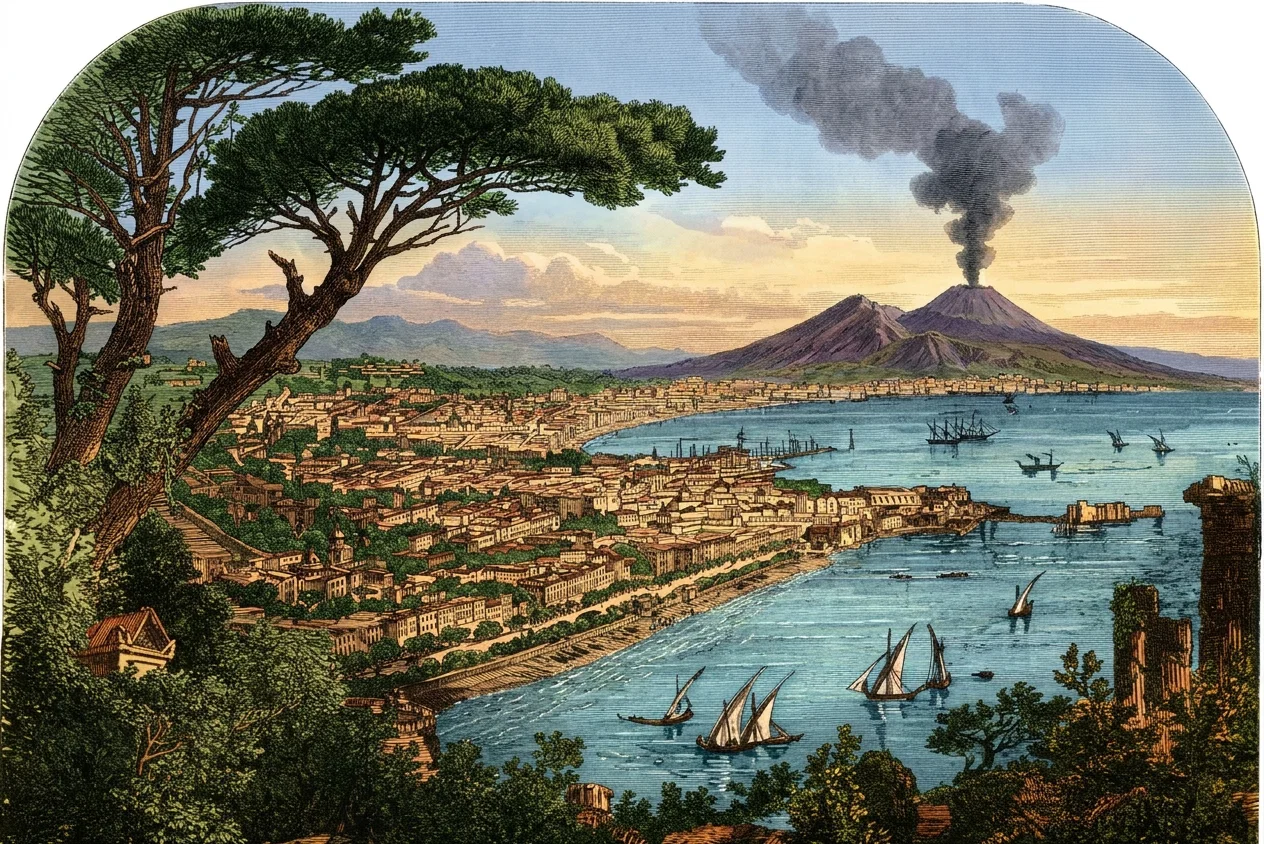
VESUVIUS is the most celebrated volcano in the world—and there are 350 active great volcanoes. It is most uncertain, and has been since the earliest times.
Since 1841 it has been under constant observation by scientists, who have been able to predict eruptions but unable to foretell the extent of the eruptions.
Vesuvius is eight miles from Naples, whose bay it overlooks, at the eastern extremity of a chain extending to the island of Ischia. It is believed that the whole gulf of Naples was once an immense crater, the northern end of a great rent in the earth’s crust, Ætna being the southern end and Stromboli about the middle.
At its base Vesuvius is thirty miles in circumference. Its height varies after its eruptions, but the average is about 4,000 feet. Its great crater is some 2,000 feet in diameter and about 500 feet deep.
It consists of two distinct parts. The north side is a lofty, semicircular cliff, called Monte Somma, which has a prehistoric crater. It is separated from the active volcano by a deep valley several hundred feet wide.
Where Spartacus Fought Claudius.
The Vesuvius of the ancients was a truncated cone with a base of eight or nine miles and a height of 4,000 feet. At its summit was a depressed plain, three miles in diameter. On this plain Spartacus, the gladiator, fought Claudius Pulcher.
There is no record of an eruption of Vesuvius prior to A.D. 79, altho the latter-day scientists have proved that it must have been active before that time. At the beginning of the Christian era the sides of Vesuvius were covered with fields and vines and its crater was overgrown with wild grapes.
It is certain that the people living near it at that time had not the slightest idea that it was an active volcano; for the writings of Pliny the Younger and Tacitus show that it gave warning for thirteen years before the great eruption. There were a series of earthquakes and tremendous seismic disturbances.
Buried Herculaneum and Pompeii.
The great historic eruption took place in August. The steam was condensed and poured down in torrents of rain, making the lava dust a pasty substance that poured down the mountain-side, and buried Herculaneum, at the west base; Pompeii, on the southeast side; Stabiæ, on the south side, and Castellamare, which was beyond Stabiæ. These cities were inundated and forgotten, so that centuries after, when the remains were dug up, moderns could gain a perfect insight into the manners and customs of the time of the great eruption.
For centuries Vesuvius was quiet. People who lived about it forgot that it had once buried cities and killed thousands. Again did vines cover the crater, and its sides were cultivated fields. There had been six months of earthquakes, but these were not accepted as a warning.
Eighteen Thousand Lives Lost.
Vesuvius burst forth in mighty fury on Dec. 16, 1631, suddenly and unexpectedly. It continued until February, 1632. There was a tremendous flow of lava, mingled with water, resulting from the melting of the snow and mud. Torre Annunziata, Torre del Greco, Resina, and Portia were almost wholly destroyed, and it is estimated that 18,000 people lost their lives. There was another eruption in 1660, but only ashes and steam, which formed mud torrents, came forth.
THE CITY AND BAY OF NAPLES, WITH VESUVIUS IN THE DISTANCE.
One of the very grand eruptions occurred in 1779. Huge stones were projected several thousand feet into the air in a cloud of white vapor, with large masses of molten rock. Huge streams of lava poured down the mountain-side, carrying death and destruction.
Vesuvius was quiet for a few years, but in 1794 it burst forth again. Torre del Greco was again destroyed by lava, which flowed down in a fiery stream nearly a quarter of a mile wide at its base and fifteen feet thick.
The outbreak which began in October, 1822, lasted nearly a month, rupturing the top of the cone and making a crater three miles in circumference and 1,000 feet deep. From that time Vesuvius has never been wholly quiet.
In 1841 Ferdinand II. established an observatory on the volcano for the purpose of giving warning of probable eruptions. When the eruption of May, 1855, came, the people had fled in time. The cone was again rent asunder, and the flow of lava continued for twenty-seven days, destroying miles of cultivated fields and many houses.
In 1858 there was another eruption, when lava poured from the crater. But it was slow-moving, progressing only a few inches a day.
The eruption of 1861 was violent for seven hours, and Torre del Greco was overwhelmed for the third time. The intense cold, which rapidly cooled the lava, was of immense advantage in protecting property.
Two Huge Rivers of Lava.
In the middle of November, 1867, a cone seventy feet in diameter, which had been forming in the crater during the preceding two years, poured forth a great amount of lava. Besides the main stream from the great crater there was a flow from an outside orifice twenty feet in diameter, which formed a stream twenty-five feet wide. The two streams poured down the mountain-side in a fiery torrent. Above the crater was a great cloud of white vapor, into which were projected huge stones with a mighty roar. This eruption continued until June, 1868.
The eruption of 1872 was preceded by slight premonitory symptoms. Early in 1871 the seismograph became unquiet and Professor Palmieri prophesied an outburst, which gradually increased in intensity until April 24, 1872. Two days later there was a rent in the cone 1,000 feet wide. Molten rocks, lava, and ashes gushed forth from the crater. Two fiery torrents rushed down the mountain on either side of the observatory, joining at the base with a third stream. In the words of Professor Palmieri, the volcano “sweated fire.”
Air White with Crystals.
The atmosphere was white with crystals. The streams of lava gave forth dense clouds of steam and formed miniature volcanoes as they sped downward. The earth trembled and heaved like the ocean in a storm. There was vivid lightning from the intense electrical excitement, and a heavy downpour of rain. The streets of13Naples were covered inches deep with a black sand. The flow of lava was three-fifths of a mile wide.
There have been other eruptions since that time which have done more or less damage, but none has been of great importance.
THREE PARABLES.
By Elizabeth Waterhouse
I WAS not resolute in heart and will
To rise up suddenly and seek Thy face,
Leaving the swine husks in the desert place,
And crying, “I have sinned, receive me still!”
I could not even at the Shepherd’s voice
Startle and thrill, with yearnings for the fold,
Till He should take me in His blessed hold,
And lay me on His shoulder and rejoice.
But lying silent, will-less in the dark,
A little piece of silver, lost from Thee,
I only knew Thy hands were seeking me,
And that I bore through all Thy heavenly mark.
• —Elizabeth Waterhouse.
THE LAWS OF HEALTH.
By M. E. Olsen
IN our article last week we considered the subject of health in the light of the Gospel, and found to our satisfaction that health of body, as well as health of mind, belongs to the Christian, is among the definite blessings provided for him. We wish now to direct attention to the manner in which health is bestowed, and the fixed laws governing the same.
The human body may fitly be compared to a piece of complicated machinery. Now every machine made by men runs according to certain laws, determined by the maker. These laws must be observed if the machine is kept intact, and is to do good work. Just so with our bodies. The Creator made their health and efficiency dependent upon their being treated and worked in harmony with the laws He has Himself laid down for their government.
Now the question may arise in the reader’s mind: “If health is one of the blessings of the Gospel, and a direct gift from God, then why talk about the laws of health? Must that which is a free gift be earned by the works of the law?” The answer is that all blessings, spiritual as well as temporal and physical, come to us from our heavenly Father, through His Son Jesus Christ. “Every good gift and every perfect gift is from above, and cometh down from the Father of lights; with whom is no variableness, neither shadow of turning.” James 1:17. “He that spared not His own Son, but delivered Him up for us all, how shall He not with Him also freely give us all things?” Rom. 8:32. But they also come in certain channels, which may be called God’s way or manner of working,—in other words, His laws.
Man’s part in carrying out the plan of salvation is to make himself acquainted with these laws so far as they affect him, and conscientiously obey them. Only in this way can he intelligently co-operate with God. It is by the righteousness of Christ that the sinner is justified, but in the very act of receiving this justification, he admits that the law is holy, just, and good, and promises in the future to be guided by it. His future happiness and continuance in that state depend on constant recognition of God’s law. Oneness with God implies a mind and a body in harmonious relations with him.
As soon as the Christian violates divine law, whether natural or spiritual, he has in that very act placed himself in the attitude of a rebel toward his Commander-in-chief, and only by confessing and forsaking the sin can he be restored. Or, putting it in slightly different words, violation of the law throws the violator out of the channel through which the blessings flow. Thus there is nothing arbitrary in God’s dealing with men. He longs to give His richest blessings to all, but can not in consistency do so until men will place themselves in a proper attitude for receiving them.
What are some of the laws governing the health and well-being of our bodies?—First, the bodies must be nourished. A locomotive, in order to pull a train of cars must be supplied with air, water, and fuel to generate steam—the motive power. The locomotive is giving off energy continually; hence must receive continually new supplies of energy. Likewise the human body is giving off energy in a variety of forms, and must receive new supplies in the form of air, water, and food. Here, then, is the first and greatest law of health,—the proper nourishment of the body.
A second law, in close connection with this, is the exclusion from the body of poisonous substances, which irritate and destroy the cell life and otherwise interfere with the bodily functions.
The third law of our being, no less important, requires that perfect freedom of movement be given each organ. Who would think of tying up the piston or other parts of a locomotive supposed to be in action? Yet women will persist in inclosing their bodies in corsets, which greatly hamper the lungs in their work of aerating the blood, and injure the liver, stomach, and other delicate organs.
The fourth law is that of activity, both mental and physical. A piece of machinery will rust if it is not used. The human body is still more dependent on healthful activity. Its very life is dependent on action. The energies of mind and body must be taxed if they are to be kept in a healthful condition.
Next week we will consider some more of the laws of health. While we are studying these laws, let us ever keep in mind that they are divine. Let us also remember that man is created in the image and after the likeness of God Himself. Thus the subject is one of sacred importance, and is not to be lightly regarded and ignored. M. E. OLSEN.
PACIFIC PRESS PUB. CO
Heralds OF HIS COMING, by Milton C. Wilcox, shows conclusively that Christ’s coming is very near. 25,000 already sold. Price, $1.50 per 100.
PACIFIC PRESS PUB. CO
Oakland, Cal. 39 Bond St., New York City 18 W. 5th St., Kansas City, Mo.
“Marshall Process” WICK
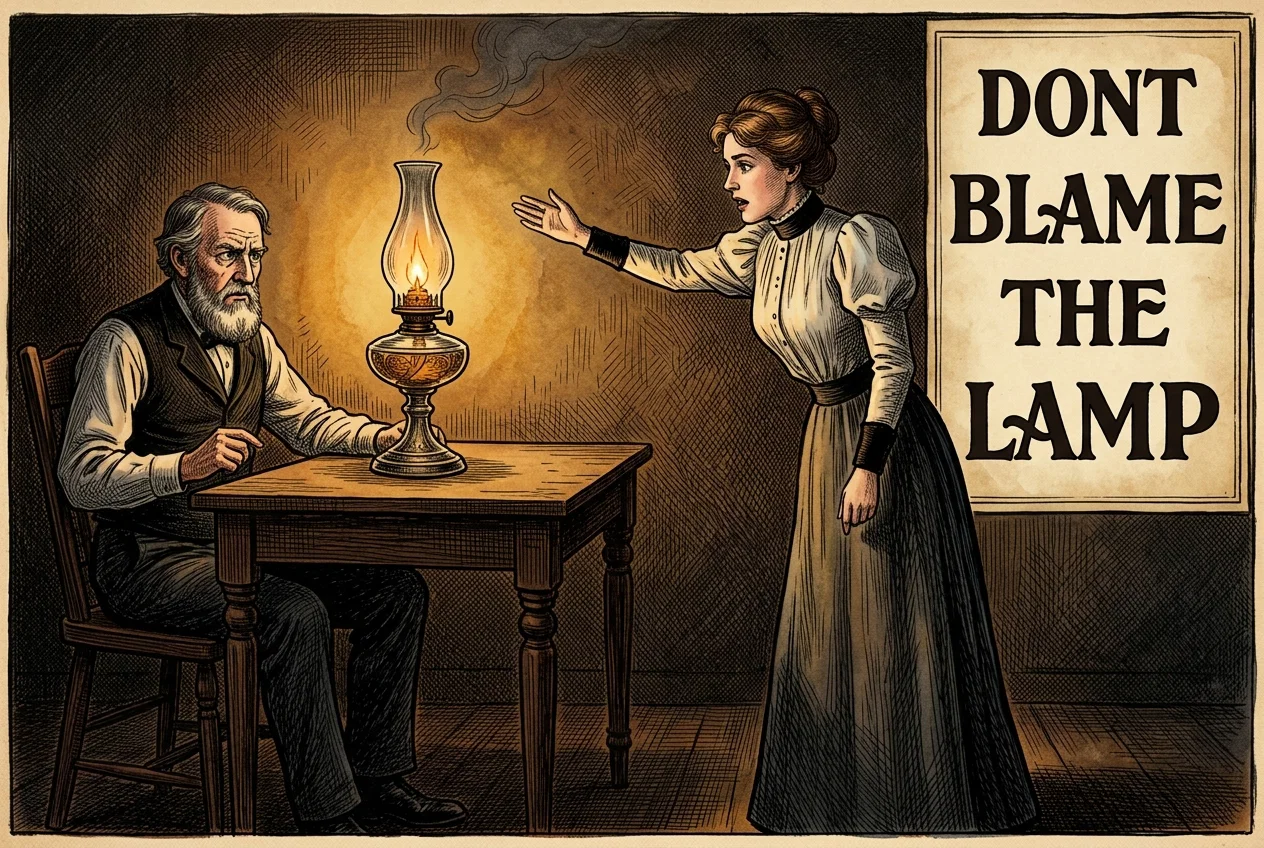
when the wick is the culprit. “The Brown Wick” does not clog or creep, needs little trimming or care. Send your name for a free sample.
“Marshall Process” WICK
is wick perfection; insuring a steady brilliant flame. Used by the leading lamp, stove and heater manufacturers, and made for every kind of burner known. For sale by dealers everywhere. NEW JERSEY WICK CO., Newark, N. J.
When you write, please mention the SIGNS OF THE TIMES.
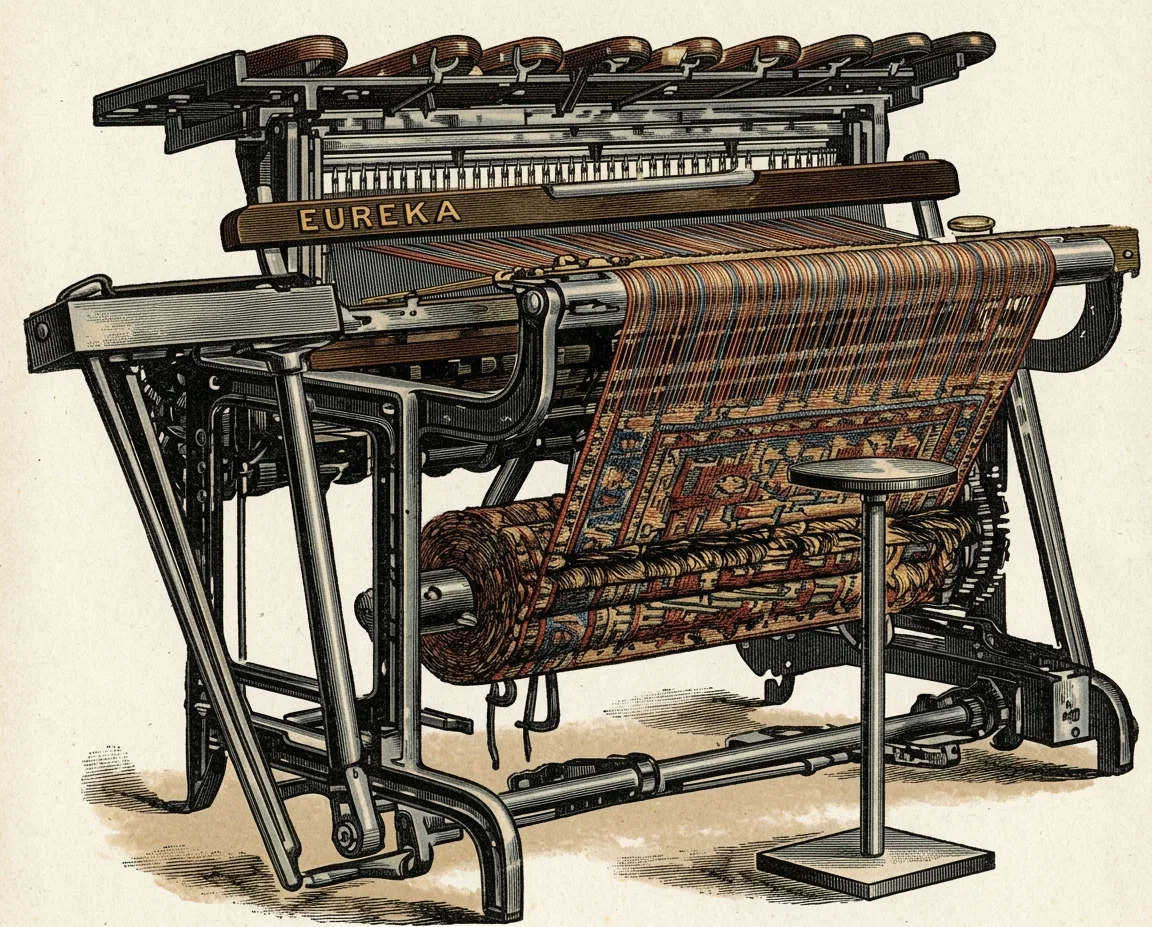
FLY SHUTTLE CARPET LOOM
The best, handiest, easiest running, cheapest, and most durable
FLY SHUTTLE CARPET LOOM
In the world,—100 yards a day. Catalogue free.
EUREKA LOOM CO.
5018 Main St., Battle Creek, Mich.
When you write, please mention the SIGNS OF THE TIMES.
Lessons by Mail on Medical Electricity or How to Use the Battery
By G. L. Abell
By Prof. G. L. Abell
Member of the Board of Directors of the Electro-Medical Society of San Francisco.
Learn how to use the battery and treat yourself. Many diseases are quickly cured by the proper application of electricity. The course embraces the treatment of every organ and part of the body. The lessons are written in plain language and are illustrated. Course, five dollars. Send for circular. Address,
PROF. G. L. ABELL, School of Chemistry and Electro-Therapeutics. 22½ Geary St., San Francisco, Cal.
Sunset Limited
will be
Resumed November 29
between
San Francisco and New Orleans
SUNSET ROUTE—SOUTHERN PACIFIC COMPANY
LEAVE SAN FRANCISCO TUESDAYS AND SATURDAYS
LEAVE LOS ANGELES WEDNESDAYS AND SUNDAYS
Commencing November Fifth a Limited Train, similar in equipment and character to Sunset Limited, will be run semi-weekly between Los Angeles, St. Louis and Chicago, through El Paso, Fort Worth and Texarkana. A through San Francisco-Chicago car will be a part of this train’s equipment.
Ask S. P. Co. Agents for more complete information
When you write, please mention the SIGNS OF THE TIMES.