At the Children’s Aid Society’s industrial school in West Fifty-third Street, Manhattan, a dental clinic has been provided, where any school-child of Greater New York who can not afford the luxury of a dentist can go and have aching teeth attended to. Dr. H. L. Wheeler, of the committee on physical welfare of school-children, has organized a staff of twenty dentists, who have volunteered their services in this attempt to provide competent dental treatment specifically for school-children.25
A little more than a year ago the New York Throat, Nose, and Lung Hospital opened a dental clinic for schoolchildren in connection with its regular dental clinic, and has a staff of ten dentists, who have treated on an average from ten to twelve children daily. Other clinics where dental treatment was given have treated schoolchildren along with the regular applicants for attention, but the clinic at the Fifty-third Street School represents the first attempt at a clinic that will care exclusively for the teeth of schoolchildren.
This movement is the result of an awakening to the fact that a large percentage of public schoolchildren’s teeth are in a wretched condition, and that such condition has a decided influence on their mental activity. This awakening is chiefly the result of the investigations of the committee on physical welfare of schoolchildren, which was formed in March of 1906, and which, since its organization, has made some vital investigations into the physical conditions of New York’s schoolchildren, and has entered upon work that is already beginning to show big results.
One medical inspector in the city schools announced that ninety per cent of the children he examined have some serious defect of eye, ear, nose, or throat. It is only recently that people are beginning to realize that so-called small troubles with the teeth and throat, nose and eye, have close relation to the general health of the child. An aching tooth, a few cavities in the teeth of children, have been looked upon with little thought by parents to whom dentist bills are not reckoned in the regular expenses, and the small ills have been neglected, with no thought that bad teeth render the child more liable to any infection, that they interfere with the mastication of food, and bring on indigestion and malnutrition, retarding the physical and mental activity of the child, and seriously interfering with the benefits of his schooling.
In inaugurating this movement to care for the teeth of schoolchildren, New York is following the lead of Germany. In various cities of that country for the past few years there have been dental clinics that cared for the teeth of children without charge. Extensive investigations have been made into the condition of schoolchildren, and the percentage of diseased teeth found to be alarmingly high.
In Berlin ninety per cent of the children were found to have defective teeth. In a Brookline, Mass., public school a year or two ago, investigations were made into the dental conditions of the children and out of seven hundred children examined, two hundred fifty-five were reported to have bad teeth, one hundred seventy-nine fair, and only one hundred sixty-six good teeth.
At Andover, Mass., a comparison was made between the children with good teeth and children with bad teeth, and those with good molars were found to outweigh the children with bad teeth by an average of two pounds and seven ounces. The examining dentist advised that all grammar-school children be examined yearly by a dentist, and that there should be short talks on the proper care and treatment of the teeth, which should be supplemented by talks from the teachers.—Brooklyn Eagle.
Not Work, But Worry
By Inez May Felt
It is not the work, but the worry,
That wrinkles the smooth, fair face;
That blends gray hairs with the dusky,
And robs the form of its grace;
That dims the luster and sparkle
Of eyes that were once so bright,
But now are heavy and troubled,
With a weary, despondent light.
It is not the work, but the worry
That drives all sleep away,
As we toss and turn and wonder
About the cares of the day.
Do we think of the hands’ hard labor,
Or the steps of the tired feet?
O no! but we plan and ponder
How to make both ends meet.
It is not the work, but the worry,
That makes us sober and sad;
That makes us narrow and sordid
When we should be cheery and glad.
There’s a shadow before the sunlight,
And ever a cloud in the blue;
The scent of the roses is tainted;
The notes of the song are untrue.
It is not the work, but the worry,
That makes the world grow old;
That numbers the years of its children
Ere half their story is told;
That weakens their faith in heaven,
And the wisdom of God’s great plan.
Ah! ’tis not the work, but the worry,
That breaks the heart of man.
—Inez May Felt.
Methods
The Schools and Tuberculosis
The recent congress on tuberculosis, held in Washington, D. C., emphasized particularly the necessity of education of the people, through the schools, concerning the dangers of tuberculosis. We quote extracts from a number of speeches on this subject.
Said A. E. Winship, editor of the Journal of Education, Boston:—
“If the teacher and the pupils in the grades are so overworked that there is no time to save human lives by specific instruction as to the prevention of tuberculosis, a most important need of the present time is to see if any part of the work can be eliminated to advantage.
“I have never seen an elementary school program from which much could not be eliminated without perceptible loss to any child. There is always much of rubbish in processes and in methods. There is no pretense on the part of any teacher that all of the teaching is of direct value to the children, and the excuse offered for taking so much time with it is that it is good discipline. The disciplinary value may be conceded, and then it can be shown that neither arithmetic nor grammar, spelling nor geography, discipline the mind more than the earnest study of so much physiology and biology, chemistry and physics, geography and civics, domestic science and architecture, as are needed for the elimination of tuberculosis.
“A teacher or a superintendent who will deliberately say that the disciplinary value of any subject now taught is greater than that which could be gained from teaching about tuberculosis, is wanting in a knowledge of educational values.”
Said Dr. Henry B. Ward, dean of Omaha Medical College, University of Nebraska, Lincoln:—
“The organized school system of the land is the natural educational agency, and is far more extensive and effective than any other special agency which might be created. Every school course provides for the study of hygiene. In this the prevention of disease, especially of tuberculosis, should have much greater emphasis. Tuberculosis is in many ways a special menace to our schools. A strong national commission should be appointed by the United States Bureau of Education and the National Association for the Study and Prevention of Tuberculosis to prepare for use in the schools proper synopses so as to insure general respect and exert the maximum influence.”
Prof. William Harmon Norton, Cornell College, Iowa, said:—
“With the help of the colleges we shall gain over the secondary schools, whose teachers they supply. We shall enlist in the campaign hundreds of thousands of young men and women who go out from college to become citizens of exceptional influence in their communities. The harvest sown in the colleges may be some years in ripening, but it is no less sure.”
Dr. Howard S. Anders, of Philadelphia, said:—
“Anti-tuberculosis instruction of a well-balanced type should receive as much time and care as anti-alcoholic instruction in public schools and academies and colleges.”
Dr. Henry Barton Jacobs, of Baltimore, Md., said:—
“Until the schools make provision for this kind of teaching, it can not be hoped to cope successfully with tuberculosis and the other infectious diseases. The teaching for the younger classes should be directed largely to the formation of automatic habits of hygiene, a love for cleanliness and neatness and the things of out-of-doors, and should proceed in daily lessons until every pupil at graduation should have as complete mastery of the fundamental rules of health as he has of spelling, reading, and arithmetic. New text-books must be written, and teachers and school authorities with these new ideas found.”
As a result of his investigations in the South, Dr. Charles Wardell Stiles, Ph.D., proposes the introduction of a “Public Health Week” into the public schools, in order to teach the following three great hygienic principles to the children:—
“1. Do not spit on the floor; for this habit spreads tuberculosis and diphtheria.
“2. Do not pollute the soil; for this habit spreads typhoid fever, and ground itch, with its resulting hookworm disease.
“3. Protect against mosquitoes; for mosquitoes spread malaria, yellow fever, dengue, and elephant foot.”
Dr. Helen C. Putnam, A. B., of Providence, R. I., chairman of the committee to investigate the teaching of hygiene in the public schools, appointed by the American Academy of Medicine, said:—
“This congress should demand practical training in hygiene and sanitation in schools and colleges by competent instructors, and equally insist upon efficient industrial training: (a) to eventually raise architecture, building trades, and housewifery to sanitary standards, and physicians and health officers to higher efficiency; (b) to create an intelligent public opinion requiring and enforcing legislation controlling building, rentals, and political measures in the interest of health.”
Dr. G. A. Heron, F. R. C. P., delegate of the Royal Society of Medicine of London to the Congress, said:—
“In England and Wales a great step has been gained in the cause of school education in hygiene. On Aug. 1, 1908, ended the evil system which, till that date, allowed the study of hygiene to be optional with those who meant to become school-teachers. On that date it was included among the subjects which an ‘intending teacher’ is obliged to study during his years of special instruction in the training college. In the course of a year or two there should, by this means, be available a considerable and increasing number of young men and women with some knowledge of the subject, and of how it should be taught to school-children.
“An admirable new departure has also been made by the board of education in issuing, for the first time, syllabuses for the teachers of children who are blind, deaf, or mentally defective.”
Said Dr. Luther H. Gulick, of New York:—
“The importance of attacking this problem through the agency of the public schools, is indicated by the fact that ten out of eleven of all the children26of the United States come under the jurisdiction of the public-school system for approximately seven years; namely, from seven to fourteen.
“Health and education must go hand in hand. This can not be done by making the subject of health a subdivision of some relatively smaller topic which is not considered as a primary matter, with reference to promotions, diplomas, or the granting of licenses. It is a fundamental matter with reference to the protection of the state, and must so appear in the education of those individuals who have to do with the education of our future citizens.”
Manual Training for Our Primary Grades—No. 3
Model No. 8
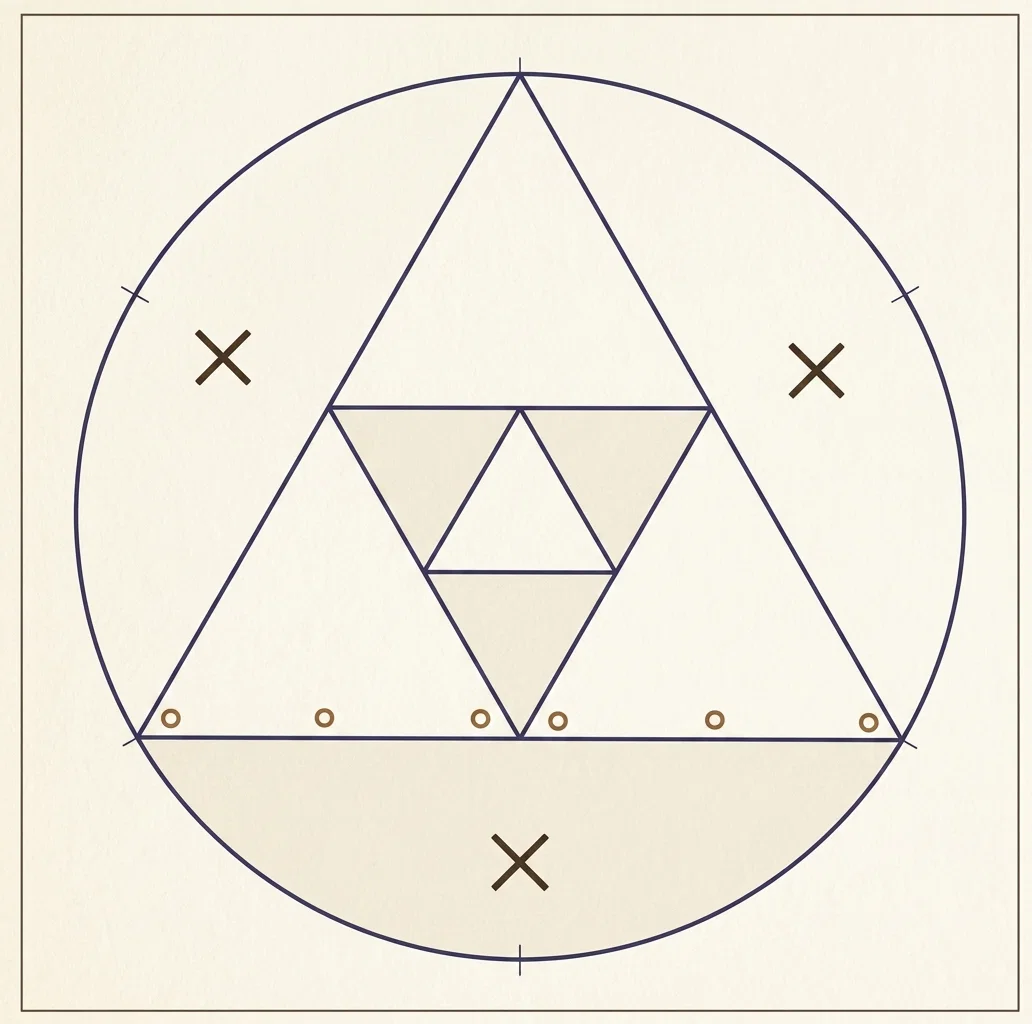
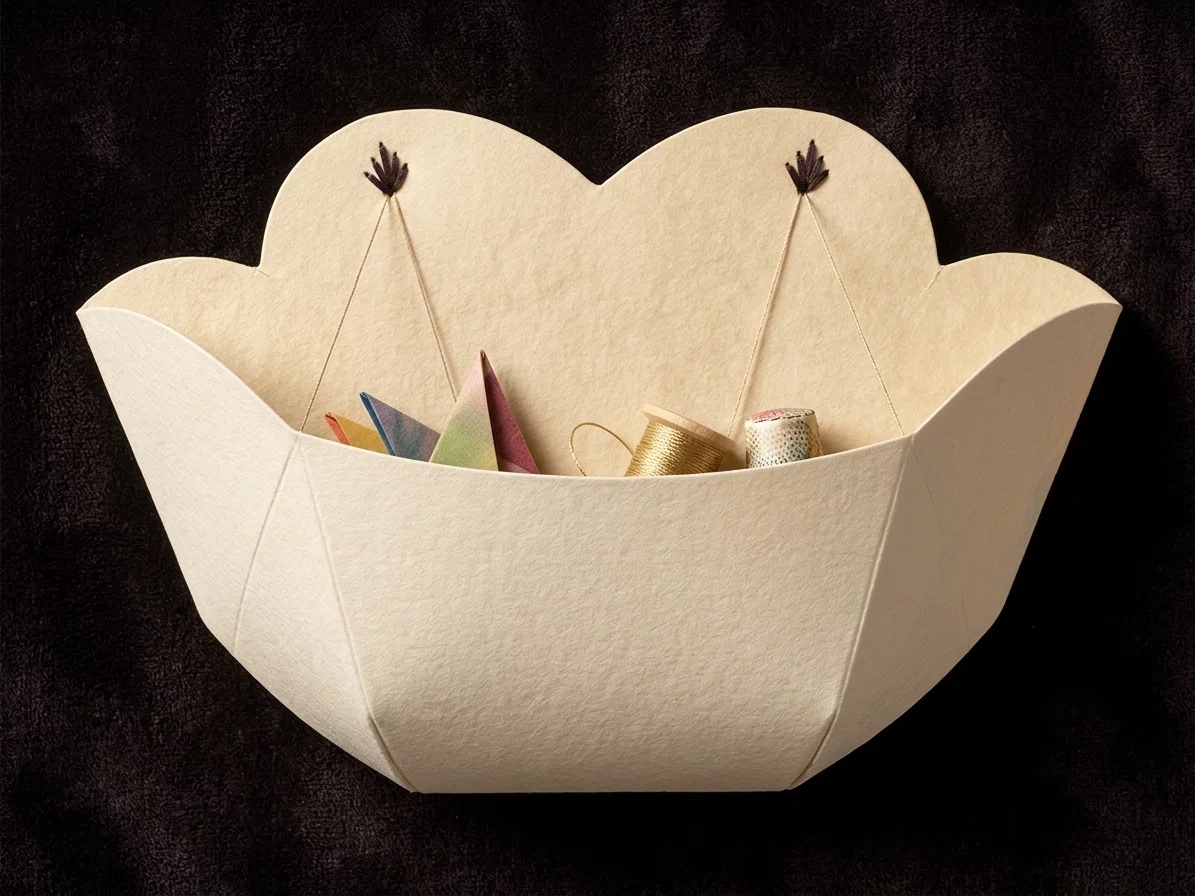
THIS is a wall-pocket. With a three-and-one-half-inch radius, draw a circle in the center of the paper, and divide it into six parts, as before. Connect alternate points, thus forming a triangle. Each side of the triangle must be divided in the center. A better way is to place the edge of the ruler against one point of the triangle, and the opposite point in the circle. It must also touch the center of the circle. Make a point where the ruler crosses one side of the triangle. This will be the center. Find the center of the two other sides in the same way.
MODEL NO. 8
Connect these three center points as shown in Figure 1. Cut out the large triangle. Fold and tie as usual. Of course you will understand that the small cross made in finding the center never means that that part is to be cut away.
FIGURE 1
Model No. 9
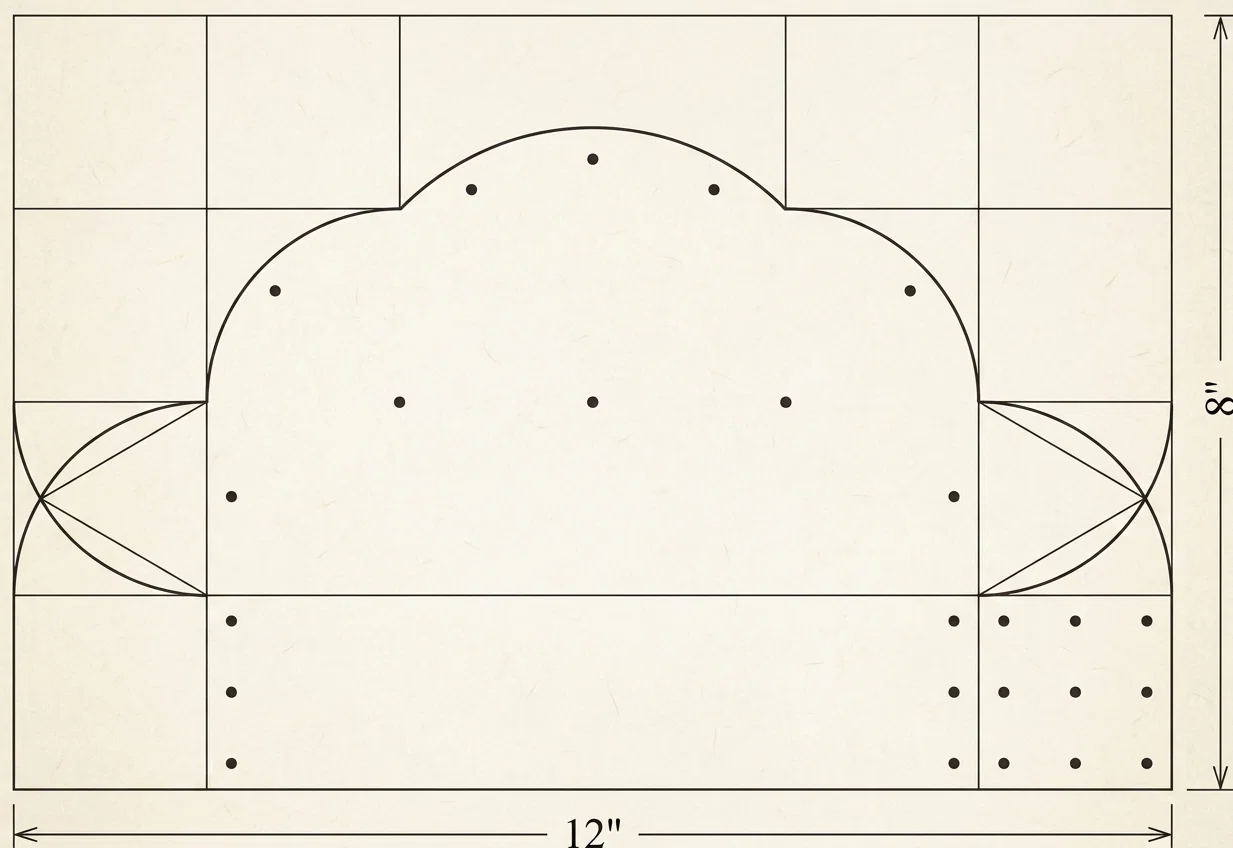
A comb-case. Locate straight lines (Fig. 2) with two-inch measurements. Draw the upright lines first. With a two-inch radius, and the point of the compasses placed at the point in the center of the paper, draw the half-circle which forms the back of the comb-case. See that each end of the curved line just meets the end of one of the short, horizontal lines. With the same radius, and the point of the compasses placed successively at the points where the horizontal lines meet the upright ones, draw the curved lines which locate the ends of the comb-case. Draw the slanting lines as indicated. In tying, one knot at each end is sufficient.
FIGURE 2
If desired, a comb-case for actual use may be made of a piece of heavy cardboard eight inches wide and twelve long. (Fig. 3.) The same measurements and radius are used as for the small comb-case, except for the center curve of the back. For this the radius is the distance from the center of cardboard to the point where the curved line begins. Cut as indicated for the small comb-case. Score the lines that are left (scoring is cutting with a sharp-pointed knife half-way through the cardboard, so that it will bend with-out breaking); bend away from the cut. For this size it is better to mark three places for tying, and either lace or tie separately.
FIGURE 3
Model No. 10
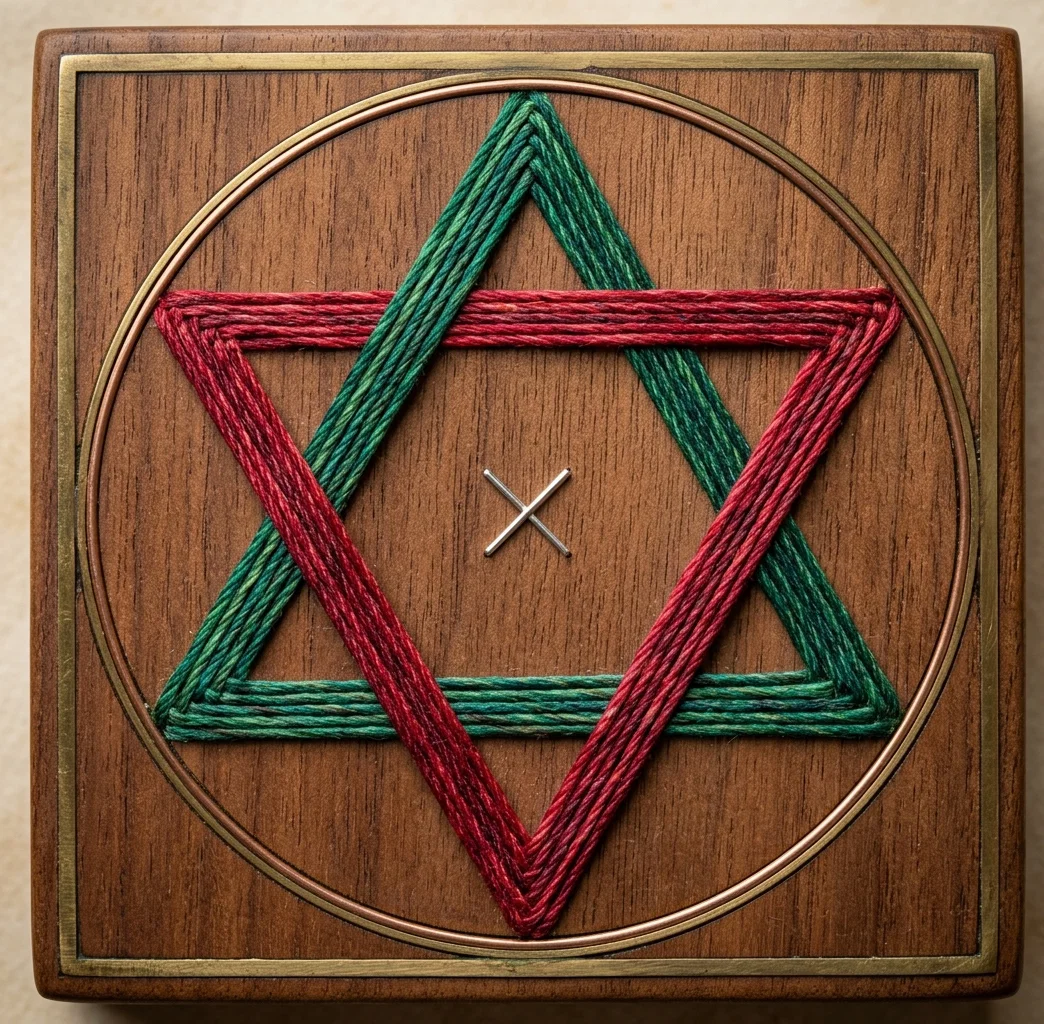
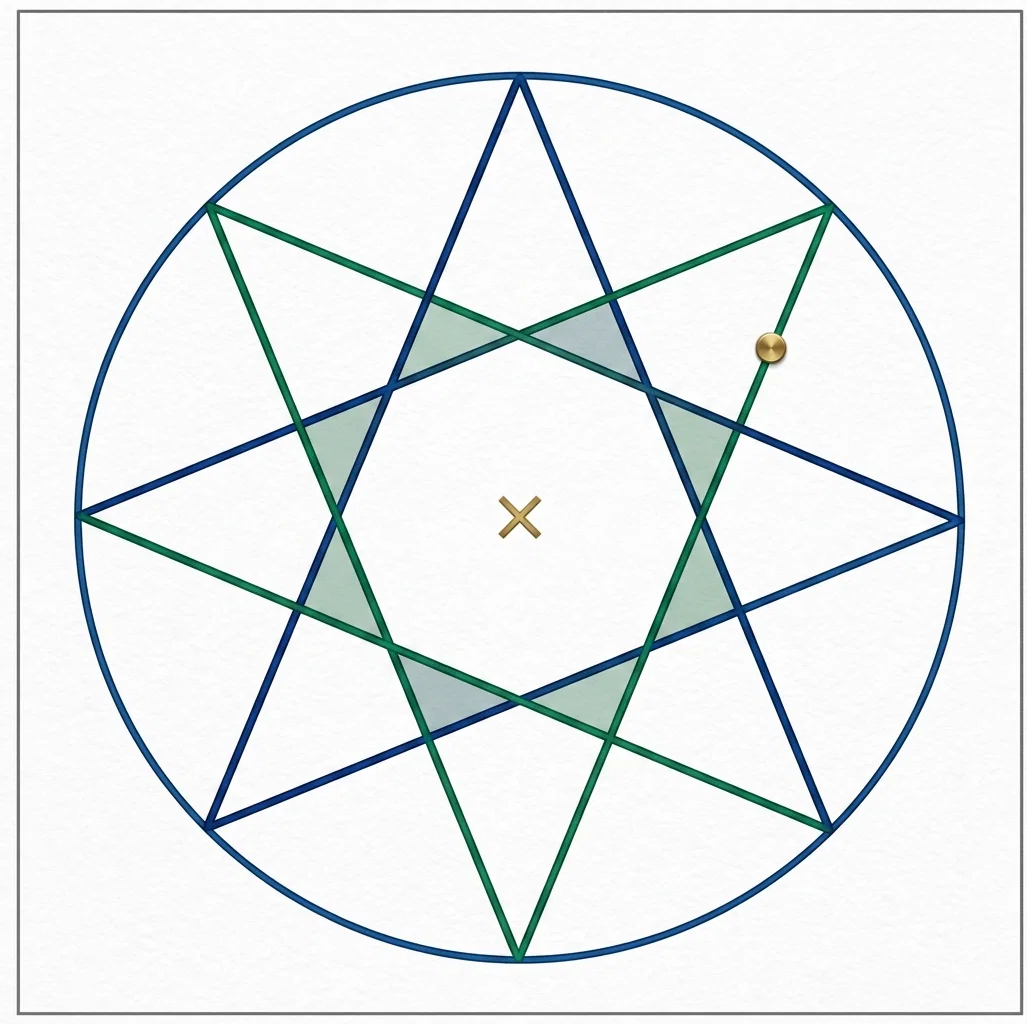
This is a star mat. For the drawing (Fig. 4), use a three-and-one-half-inch radius. Divide the circle into six equal parts as in previous drawings. Connect alternate points, thus forming two triangles, crossing each other. Cut the outline of the star. Figure 5 shows an eight-pointed star. Use a three-and-one-half-inch radius for the circle. Place the ruler across diagonally in both directions, also across opposite points in the center of the sides of the square, and make points in the circle. This gives eight points, one pointing toward each corner, and one toward the center of each side. In connecting these points to form the star, skip two each time on the outside of the ruler.
FIGURE 4
Model No. 11
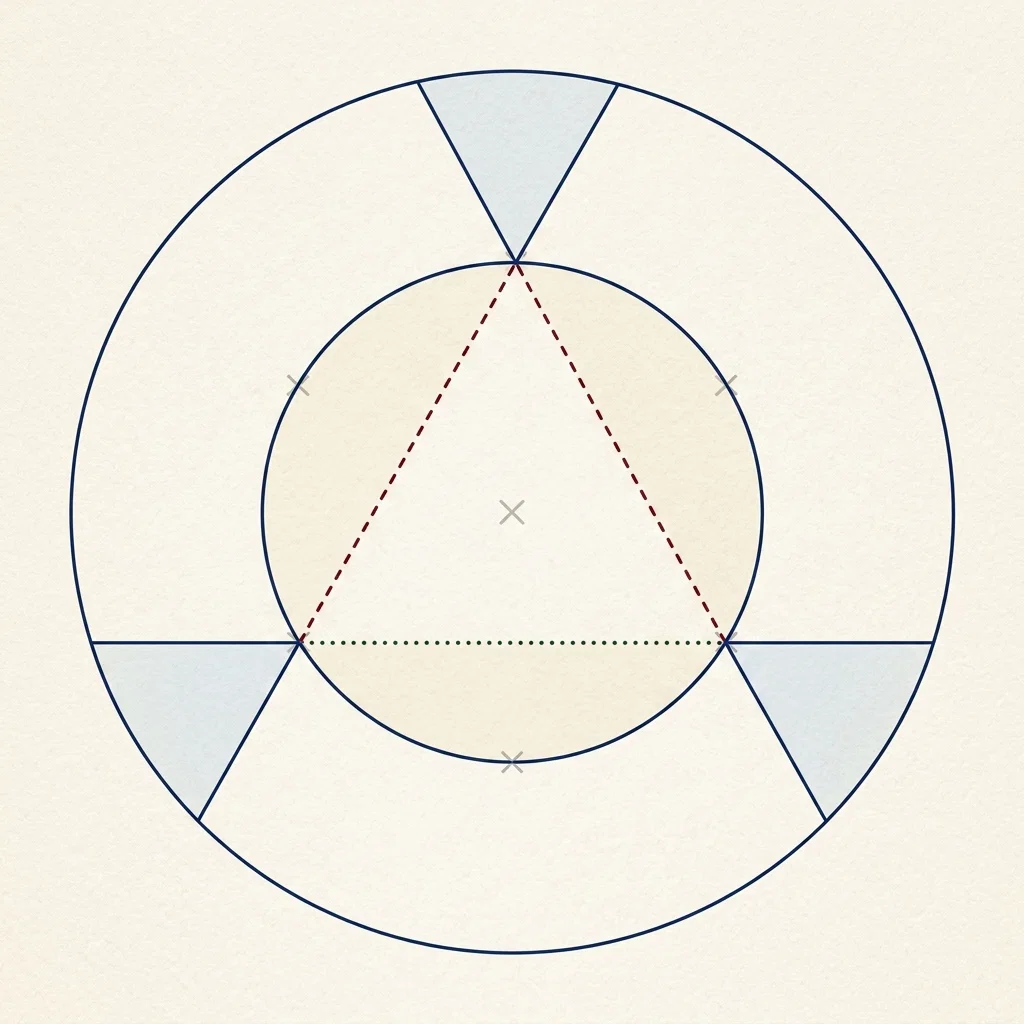
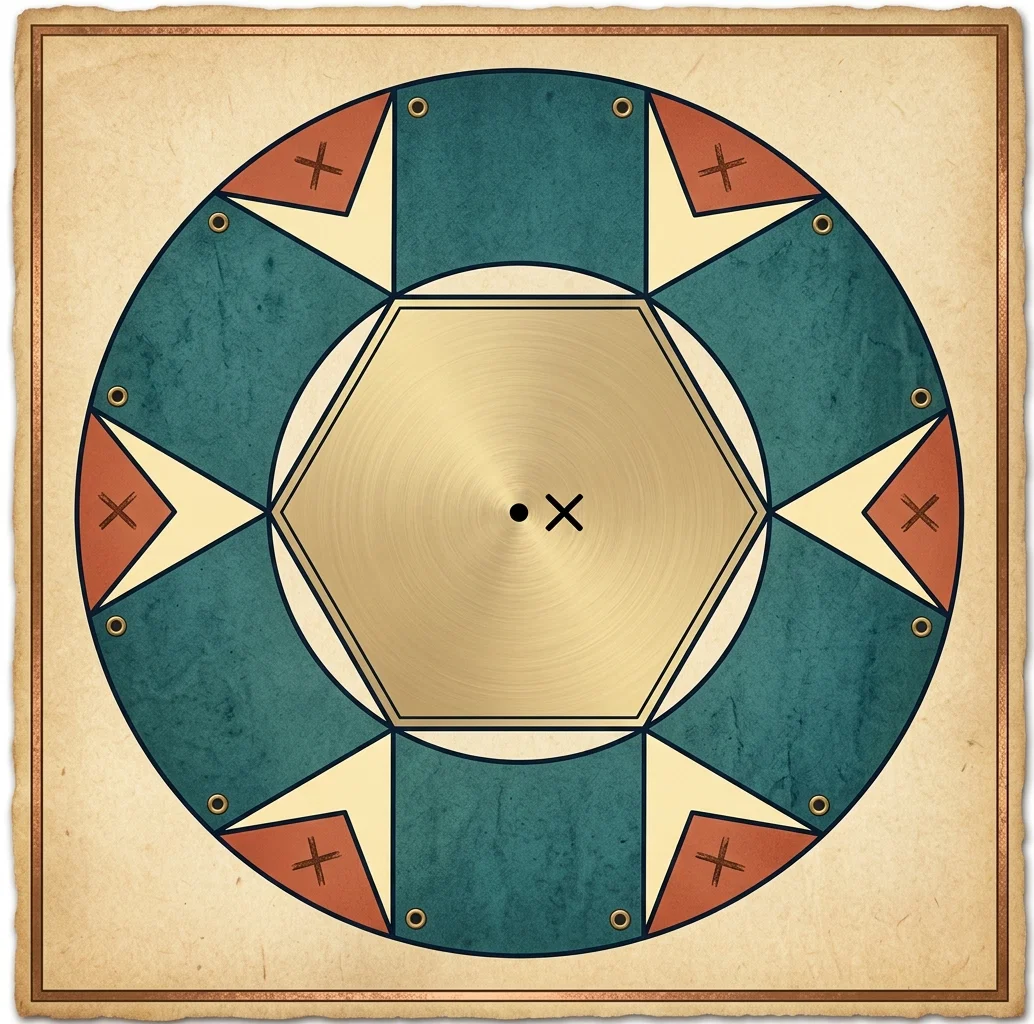
Is a hexagonal box. With a radius of two inches draw a circle in the center of the paper. Divide it into six equal parts. With a radius of three and one-half inches, draw another circle, using the same center. This circle need not be divided. Place the ruler across alternate points in the small circle, and draw lines from the small circle to the large one, on each side. (Fig. 6.) The dotted lines show where the ruler is to be placed. Repeat until each point in the small circle has been used twice, thus forming a V at each one. (Fig. 7.) Be sure that the V’s are the same size and shape. Connect adjoining points in the small circle with straight lines. Cut the circle, and cut out the V’s. Be sure that the cuts stop exactly at the points in the small circle. Fold the straight lines and tie.
FIGURE 5
Model No. 12
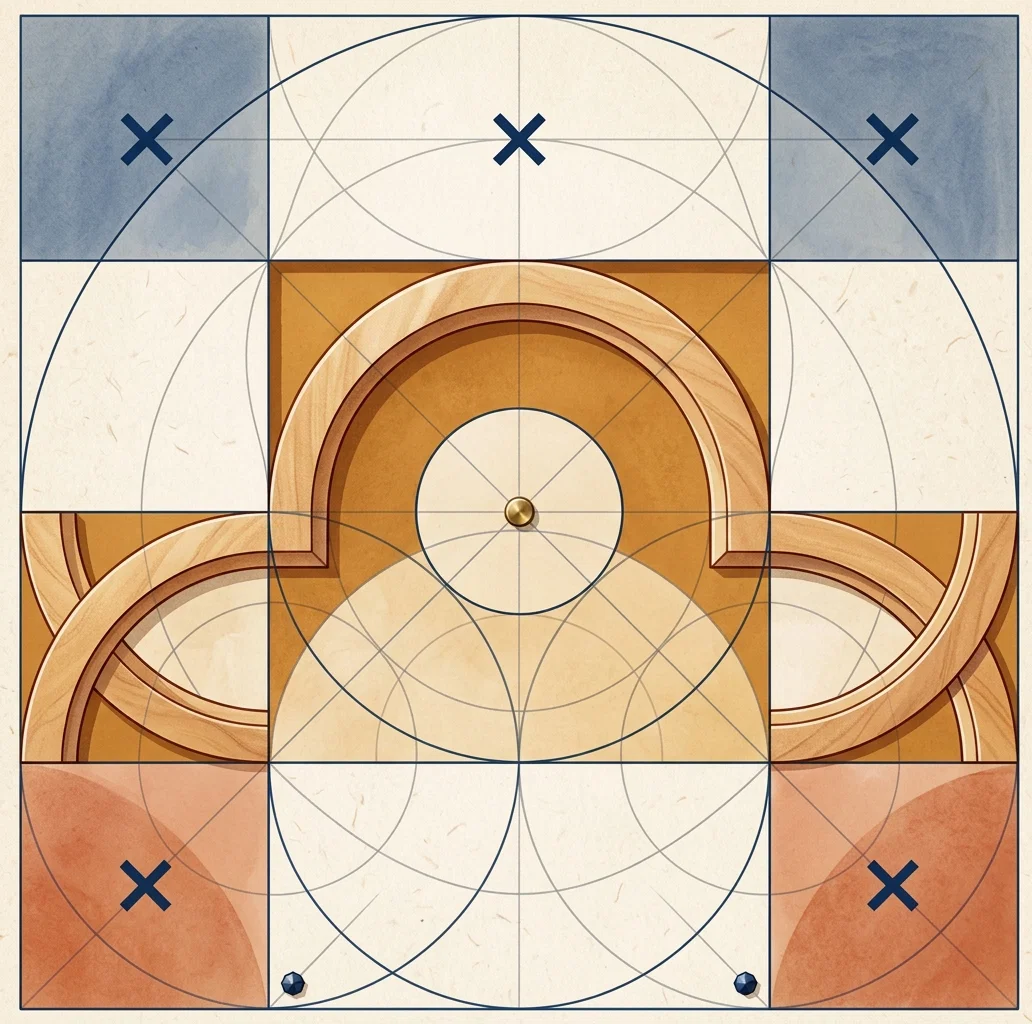
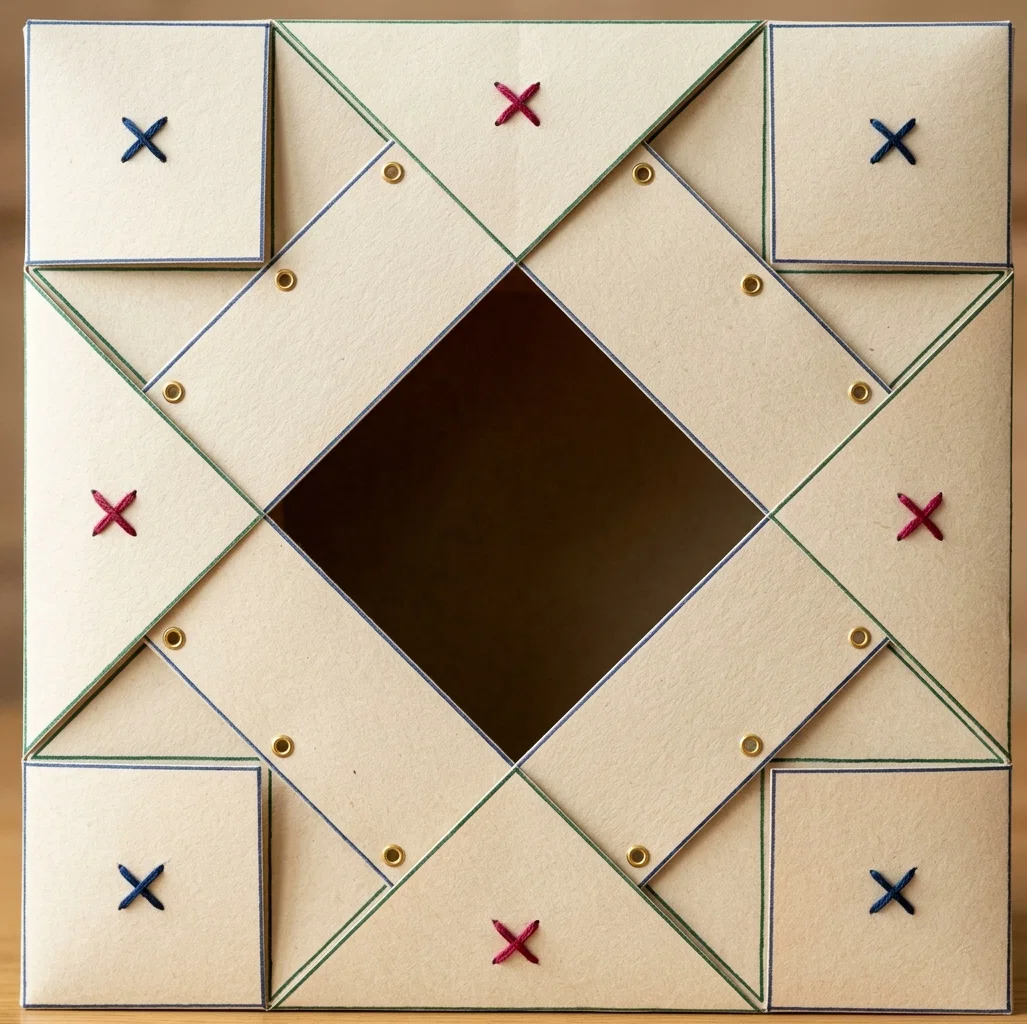
Is a May-basket. Make a point two inches from each corner, and in the center of each side of the paper. Draw the long, slanting lines by using the two-inch points, as shown in Figure 8. Draw the short, slanting lines by placing the ruler across the central points of adjoining sides. To form the square in each corner, place the ruler across opposite two-inch points, and draw a line from each to meet the nearest short, slanting line. Mark the places for tying, and cut out the parts marked X. The triangular points around the top should be folded outward. To do this prick the short, slanting lines near each end, turn the paper over, lay the ruler along the pricked points, and fold. The extra places for tying are for attaching a handle.
MODEL NO. 11
FIGURE 6
Model No. 13
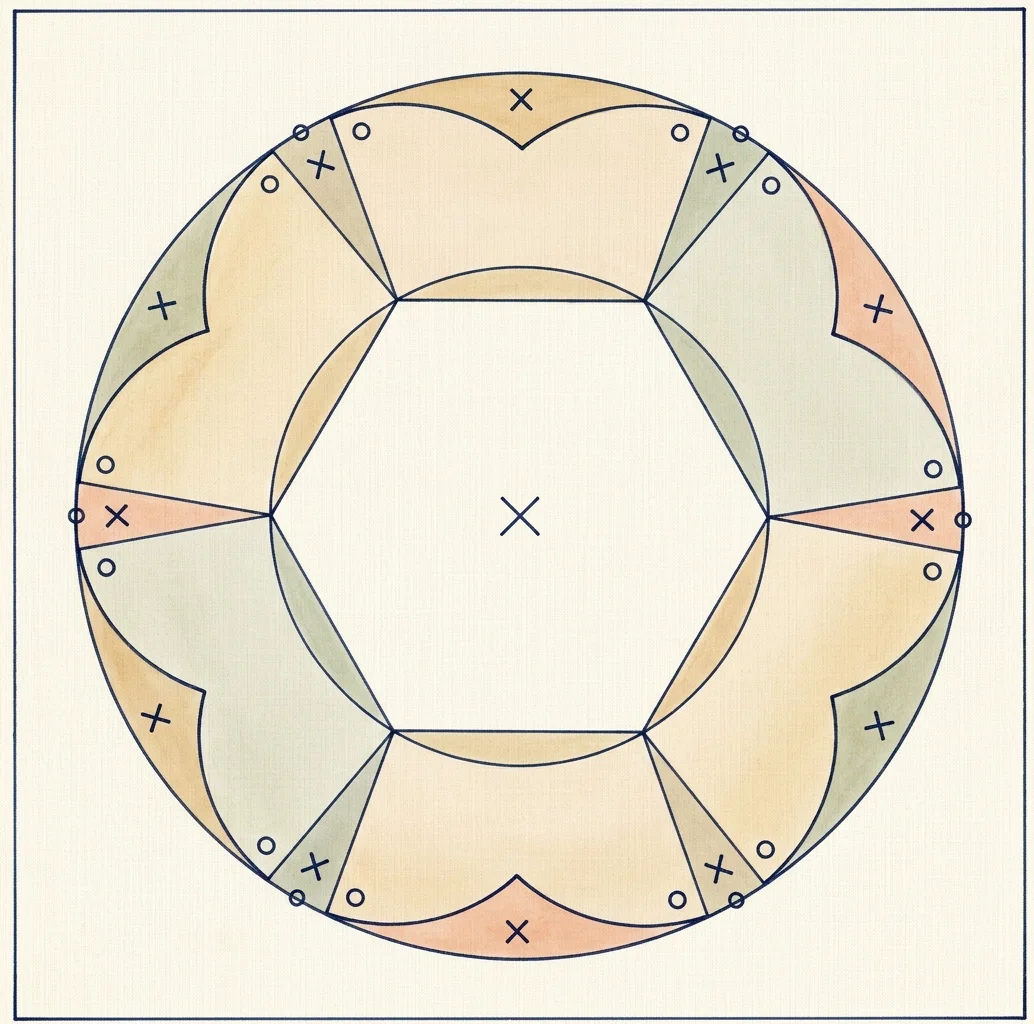
A hexagonal card-tray is shown in this model. Let the children follow, as far as the work is a review, by watching your work on the board. In every way encourage observation and attention. Open your compasses two inches for the inner circle; hold them up, and let the children see if they can tell the distance between the points. Draw the circle, and divide it with ruler and compasses as usual. The radius for the large circle is three and one-half inches. Let the children guess this also. Divide the large circle so that the points will coincide with those in the small circle; that is, they must be so placed that when the ruler is laid across, touching the center and two points in the small circle, it will touch two points in the large circle also. Locate the first two with the ruler in this way, and the remaining four with the compasses as usual. Then make a point one fourth of an inch each side of each point in the large circle. Either ruler or compasses may be used to locate them. Connect each two of the points last made with the nearest point in the small circle. (Fig. 9.) Now open your compasses the length of one of these lines. Place the point in turn at each point in the small circle, and draw the curved lines which form the top of the tray. Ask the children to try to measure so correctly with their eyes that the curved lines will just meet in the center of each side, not cross. Connect the points in the small circle with straight lines. Cut the curved lines which form the top of the tray, and cut out the V’s. Fold the straight lines.
FIGURE 7
MODEL NO. 12
FIGURE 8
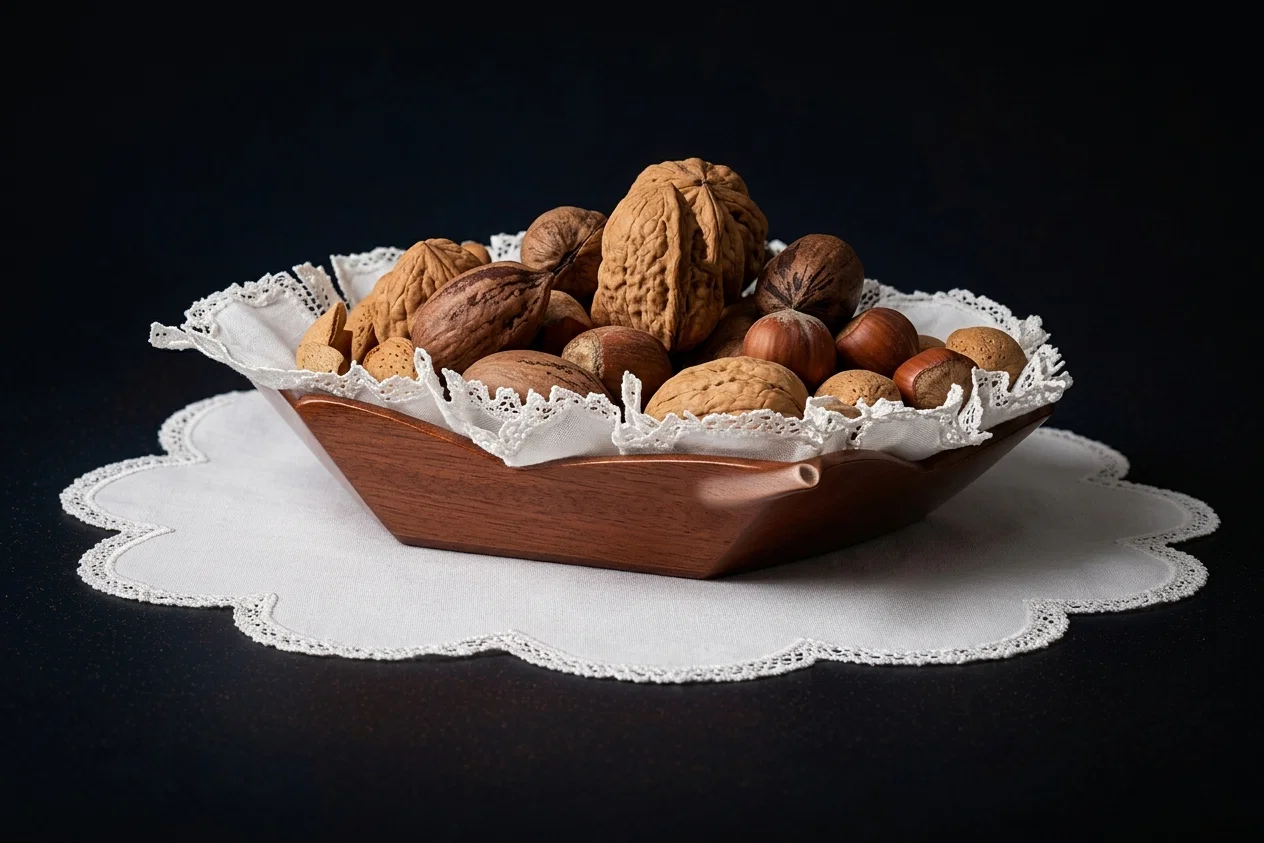
This tray may be lined, and used for fruit, nuts, or popcorn.
For the lining cut two circles of white tissue-paper the size of the large circle used for the tray. Fold the two together in the center, and in the center again, thus quartering them. Slash the cut edge nearly an inch deep, and about one-sixteenth of an inch apart, for a fringe. Open the folds, and press into the tray.