News Roundup: Suffrage, Missions, Paper Trust, Sunday Baseball
Page 2
The Youth’s Instructor
May 15, 1917
Review and Herald Publishing Assn. · Takoma Park Station, Washington, D. C. · May 15, 1917
News Roundup: Suffrage, Missions, Paper Trust, Sunday Baseball
An effort is being made to have the Bureau of Education made a department, with representation in the Cabinet.
The Woman Suffrage Amendment which recently passed the New York State Senate, will be submitted to the voters next November.
Dr. Andrew Murray, a minister of the Dutch Church in South Africa, and the author of many well-known devotional books, died recently at the age of eighty-eight.
The Bull Moose, or Progressive, Party, at its national convention in St. Louis, went on record on April 12 as in favor of national woman suffrage, national prohibition, the establishment of a national food commission, government ownership of all public utilities, and a universal eight-hour work day.
“American Protestant Christians gave $28,000,000 for foreign missions last year. That is encouraging, because it is an increase over the preceding year, yet we are told that Great Britain is spending for war over $28,000,000 a day. For missions, $28,000,000 in a year; for war, $28,000,000 in a day!”
Six paper manufacturers and a banker prominent in financing news-print paper companies were recently indicted by the federal grand jury of New York State, charged with controlling fifty-five per cent of the news-print paper production of the country, and using their power in restraint of trade, in violation of the Sherman antitrust law.
After Chattanooga’s first Sunday baseball game, which the locals won from Atlanta, warrants charging President Shepherd, Secretary Foster, and Manager Elberfeld of the local club, and Manager Frank of the Atlanta Club, with doing business on Sunday and creating and maintaining a nuisance, were served by the sheriff. They were allowed to make a bond of $250 each.
Mr. Rockefeller offered to give to the people of Pocantico Hills, his home town, the use of all the land they want to till. Nearly every family in the village has made application for land. Mr. Thomas W. Lawson, of frenzied finance fame, has offered the use of his estate, comprising 250 acres under cultivation, to the governor of Massachusetts for the production of food.
“The old Chateau de Chavagniac de Lafayette has been recently purchased by a group of patriotic Americans, that it may become a French prototype of Mount Vernon. The château was built in the fourteenth century, burned to the ground in 1701, and rebuilt as nearly as possible like the early structure. It stands in the upland country of the Haute-Loire, sometimes called the “French Siberia,” where the harsh physical climate and the bleak natural surroundings tend to draw out the qualities of independence and individuality in the young. From this birthplace came the great lover of freedom and champion of American liberties, the Marquis de Lafayette, whose life has been eloquently retold for the young by Martha Foote Crow. Many of us forget that at the age of nineteen Lafayette was a general in the American army and the trusted friend of Washington.”
“Le Temps,” Paris, says that the enemy is starving the population of the towns of northern France “through the enormous prices of all provisions. Meat is more than two dollars a pound, one egg thirty cents, a pair of shoes fifteen dollars, a French newspaper costs ten dollars a copy, when sold by the Germans.” The inhabitants of certain zones are not allowed to keep in their houses more than two days’ supply of food; all excess of that is confiscated under the pretext of feeding those who have nothing. In reality it is the enemy who utilizes it.
Mrs. Wilson, Miss Margaret Wilson, and the wives of the members of the President’s Cabinet have voluntarily entered upon an economic régime. They have pledged themselves to buy simple food and inexpensive clothing, and to prevent all possible waste. They urge the cultivation of all available land for the production of food, so that this country out of its abundance, may be able to assist other nations in need. Surely every one who has any sense of the meaning of the conflict before us will join heartily in this effort to conserve our resources.
“The American government is reported to have spent $200,000,000 during the last year for the armed expedition into Mexico and the protection of the border. This is ten times the amount spent for evangelical Christian missions in Mexico, in one hundred years. The money spent for the military expedition would have put a church, a school, and a hospital, with the necessary equipment, and with salaries of workers included, in one thousand cities and towns in Mexico.”
As a means of extending prohibition because of the war, Senator Kenyon introduced a bill into the United States Senate increasing the internal revenue tax on distilled liquors to ten dollars a gallon; and Senator Jones offered resolutions prohibiting liquor sales within twenty miles of any military training camp, sale of liquor to uniformed soldiers or sailors, or knowingly to them when not in uniform.
Prohibition Now
DRINK does not make good fighters. It does not turn out good work. Its manufacture uses up good foodstuffs. A nation at war has no use for drink. Russia learned it, France learned it, England learned it. Shall we learn it first—or last?—The Independent.
Sowing the Seed of Truth and Hope
“To sow the seed of truth and hope and peace,
And take the root of error from the sod,
To be of those who make the sure increase
Forever growing in the lands of God.”
A Jewish Boy Who Became a Christian Missionary
By A. B. E.
A HUNDRED years ago there were not so many books in the world as there are now; but some of those which were printed had very long titles. Here is the name of one which was published in 1822 on the nearness of Jesus’ coming: “He Will Come Again, the Son of Man in the Clouds of Heaven.”
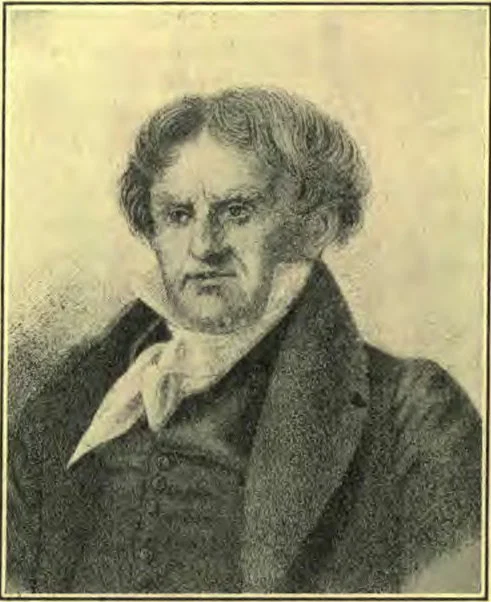
The man who wrote this book was a converted Jew, Joseph Wolff. He was born in Germany, but while yet a young boy he left home, and started out to make his own way in the world. In early manhood he joined the Catholic Church, but later he left that church and became a Protestant missionary to the Jews.
As Mr. Wolff read his Bible, and studied the prophecies, he saw that the time was near when Jesus would come the second time. He began to preach this doctrine, and to write it in books.
JOSEPH WOLFF
He also taught it in many lands in the Old World and also in the New. For Joseph Wolff was a great traveler. He went about from one place to another so much, especially in the old Bible lands, that the people called him a “dervish,” which means wanderer.
Before beginning his missionary travels, Mr. Wolff had studied many languages. Of course he learned Hebrew in his home when he was a boy, but he added to this Greek and Latin and Chaldee, besides Arabic, Syrian, Persian, and English. Thus he was able to speak to the people in the lands where he traveled, and make himself partly understood by them.
To understand what led Mr. Wolff to make these hard and dangerous journeys, we must go back a long way in Jewish history. You remember that after the death of Solomon the kingdom of Israel was divided. Two of the tribes had one king, and the other ten tribes had another king. These separate kingdoms were kept up for many years; in fact, the people were never reunited.
At last, in the days when Ahaz was king in Jerusalem over the two tribes, and Hoshea was king in Samaria over the ten tribes, a heathen king called Shalmaneser came against Samaria, and besieged it. Hoshea gave presents to Shalmaneser, and tried to buy his favor; but it was all in vain. The Assyrian king shut Hoshea up in prison, and finally subdued his kingdom, and took great numbers of the people away captive. Not content with this, he brought a large number of his own heathen subjects into Samaria, and gave them the lands and houses that belonged to the Jews.
Do you wonder what became of the ten tribes who were carried off? Where did they go? How did they live? Did they like their new home?
A great many persons have asked these questions, and Joseph Wolff was one who was very much interested in the ten lost tribes, as they are sometimes called. He thought that if he should travel all through those ancient Eastern lands, he might find some trace of them; but he never did, though he had many interesting adventures, and wherever he went, he told the people that the second coming of the Lord was near at hand. Though he did not know it, the Lord raised this man up to do this special work at this very time.
Two special expeditions or visits to Bokhara, in Turkestan (locate it on your map), were made by Mr. Wolff in 1830 and 1843.
Met by a Band of Robbers
On the first trip, he went by way of Armenia and Persia. Near one village a band of robbers met the caravan with which he was traveling, and stripped the men of all their clothes, and tied each by a long rope to a horse’s tail. Some of the men were also beaten, Mr. Wolff among them; but after a time he was allowed to ride, and a few rags were given him to shield him from the bitter cold.
“After traveling some time along a road covered with snow and ice they encamped in a forest, where they made a large fire. Then the robbers, reckoning up the value of their booty, proceeded to set a price on the prisoners they had taken. Wolff’s servant was valued at ten tomans (equal to about $25); but when they came to Wolff and looked at him, they said, ‘We don’t like this fellow at all; he stares at us so.’ On examining his effects, they found several important letters addressed on Wolff’s behalf to Abbas Mirza, the governor of Khorasan. This frightened them, and they debated whether it would not be better to kill him and put him out of the way.
“But before setting out on this stage of his journey, Wolff, foreseeing that something of the kind might happen, had taken the precaution of writing to Abbas Mirza at Nishapur, so that if he should fail to arrive there, he might be inquired for. Accordingly, he went up to the robbers, and said: ‘I have understood all you have said, and the resolution to which you have come. Your reasoning is very good, but it has one fault, and that is, you are too late; I also knew how to calculate, and have laid my plans accordingly.’ He then told them of his having written beforehand to Abbas Mirza, and promised that if they would let him write to the principal Jews in Torbad-Hydarea, whose acquaintance he had made on a former journey, he would be ransomed for one hundred tomans.”
Of course the robbers wanted more money; so “they let him write to the chief Jews in Torbad-Hydarea, whither they were journeying. In the meanwhile,4Wolff had succeeded in making six of the robbers his firm friends by promising to recommend them (if they remained faithful to him) to Abbas Mirza, whose soldiers they wished to become.
“Thus they arrived safely at the gates of Torbad-Hydarea. Wolff’s Jewish friends came out to meet him, but strongly objected to his paying any ransom. All the robbers had had dealings with them, and owed them money, and they insisted that Wolff should be allowed to go to the house of one of them for the night, leaving everything else to be settled in the morning.
“Such a crowd of Jews came round Wolff and his friends that they adjourned to the synagogue, where, although in rags and shivering with cold, the dauntless missionary preached to them, and was listened to with profound attention.”
Cast into a Dungeon
“In the morning, however, the robber chief seized him again, and put him in a miserable dungeon, chained with fifty other captives. The chief seemed to have formed the design of starving him to death, for he passed Wolff over when apportioning bread to the other captives. However, after he had been about two hours in the dungeon, the thunder of cannon was heard, and a voice exclaimed, ‘Muhammad Izhak Khan has arrived!’ This was the khan of Torbad-Hydarea, and a Persian officer of his took summary measures with the robbers, and, coming to the door of the dungeon, inquired if there was not an Englishman there? Wolff shouted, ‘Yes, yes!’ and was forthwith released, along with his companions, who gratefully attributed their escape to him.”
The “Justice” of the Khan
“He was now brought to the palace of the khan, where he saw hundreds of miserable wretches with their eyes put out, and their ears and noses cut off. Muhammad Izhak was a tyrant of great bodily strength, and was said to have killed with his own hand his father, mother, brother, sister, and son-in-law. The khan, who was eating his dinner when Wolff was brought into his presence, said, ‘Abbas Mirza has written to me that thou goest about to show the nations the way of truth. For my part, I have no religion. I have one good quality, and that is, I am a man of justice; and therefore tell the truth, and you shall see my justice. How much money have these rascals taken from you?’”
“Wolff said: ‘They have taken from me eighty tomans.’”
“He repeated, ‘Eighty tomans?’”
“Wolff said, ‘Yes!’ and he answered, ‘Now thou shalt see my justice.’”
“So he ordered the robber chief and his followers to be flogged until they paid the whole sum. This he counted, and said again, ‘Now thou shalt see my justice.’ Then he put the whole into his own pocket, and, turning to the unfortunate missionary, said, ‘Now, you may go in peace.’”
“I Will Not Tell a Lie”
“Wolff remained a few days longer with the Jews, and then set out with a large caravan for Meshhed. On the way he had an unpleasant adventure with one of his companions, a bigoted Mohammedan, who took hold of Wolff’s foot, and beat it with his stick, saying, ‘Infidel! say, “God is God, and Mohammed is the Prophet of God.”’”
“Wolff replied, ‘I will not tell a lie!’”
“The man put his arms akimbo, and exclaimed, ‘Imagine the boldness of this infidel, who, in the midst of Mohammedans, and before the city of Meshhed the Holy, declares our religion to be a lie! What a fool he is!’”
“A respectable Mohammedan who heard this, said, ‘Well, let the fool alone.’ This quieted the man, who went on his way without molesting Wolff any further.”
“At Meshhed Wolff lodged with one of the principal Jews, and had prolonged religious discussions both with Jews and Mohammedans. He arrived at Bokhara without further mishap, but during an examination before the ameer’s prime minister, he was brought into some danger by a Jew who accused him of being a Russian spy. Wolff, however, succeeded in disproving the charge, and the prime minister informed him that he might hold religious discussions with the Jews in Bokhara, but not with the Mohammedans. He accordingly did so, with the happy result that he was able to baptize twenty converts, whom, on his return fourteen years later, he found steadfast in their discipleship.”
Mr. Wolff spent three months in Bokhara, and then set out on his journey homeward. He had many narrow escapes, and was often in peril of his life; but he finally reached home safely. Not long after this he spent some time in the United States. In 1843, hearing that two Englishmen had been imprisoned in Bokhara, he decided to revisit that distant city, and to preach to the Jews and Mohammedans whom he should meet on the way.
A Warning
As he neared Bokhara, some of his friends came to him, and said, “Joseph Wolff, Joseph Wolff, you are the son of death as soon as you enter Bokhara.”
But Mr. Wolff had not come so far, only to turn back now. Even when told that the men whom he had come to help had been shot, he said: “I shall go on. I must be more certain as to this.”
A few days later he reached the city. Here is what he says about his arrival:
“Shouts of ‘Salaam Aleikoon’ (Peace be to you) rang upon my ear. It was a most astonishing sight; people from the roofs of houses, the Nogai Tartars of Russia, the Cossacks and Girghes from the deserts, the Tartars from Yarkand or Chinese Tartary, the merchants of Kashmir, the grandees of the ameer on horseback, the Afghans, the numerous water carriers, stopped still, and looked at me; Jews with their little caps—the distinguishing mark of the Jews of Bokhara, the inhabitants of Khokand politely smiling at me, the mullahs from Shikarpur and Sind looking at me and saying, ‘Inglese Sahib;’ veiled women screaming to each other, ‘Inglese eljee’ (English ambassador); others coming by them and saying: ‘He is not an eljee but the grand dervish of Englistau.’”
The ameer, or ruler of the city, who was a wicked and cruel man, received Wolff kindly, and listened to him read and explain the Bible. After Wolff went away, the ameer said:
“How wonderful! I have in my empire two hundred thousand Persian slaves, and no soul ever came from Persia to ask after any one of them; and here I have killed a few Englishmen, and Joseph Wolff comes with a Bible in his hand, and enters my capital without a sword and without a gun, and demands those two Englishmen. I wish Wolff could make them alive again; his coming here has inflicted on me a wound which will never be healed.”5
Brave in the Face of Danger
However, the ameer was not a true friend to Wolff, who was finally shut up in the very room the two Englishmen had occupied before their execution. The Jews were allowed to visit him, and they told him all about the two Englishmen who had been killed.
One day a mullah, or learned man, came to Wolff from the ameer, and asked him if he would become a Mohammedan.
“Tell the ameer, Never, never, never!” said Wolff. “Have you not a more polite answer for the ameer?” asked the mullah.
“No,” replied the fearless missionary.
So the mullah went away, and by and by the executioner who had killed the two Englishmen came to the room, and said: “Joseph Wolff, to thee it shall happen as it did to them.”
Saved from Death
But almost by a miracle the life of Wolff was saved. That very day a message came from the Persian ambassador, asking the ameer to release Wolff. This he finally did, saying, “Well, I make a present to you of Joseph Wolff. He may go.”
So, guarded by an escort, Mr. Wolff went to the Persian embassy, and laid plans to return to England. Before leaving Bokhara, however, he must, according to the custom, call again on the ameer—though we may be sure he did not enjoy the prospect of visiting this man who was so eager to take his life. The Persian ambassador went with Wolff, and the ameer gave him “a robe of honor, fifty ducats, and a Persian manuscript with the ameer’s autograph.”
When Wolff came to leave the city, the people crowded the narrow streets, and said, “Thou hast been born again!” to show their surprise at his narrow escape from death. “He was not yet altogether out of danger, however. The caravan in which he traveled was a large one, and before he left Bokhara his Jewish friends informed him that it included ten assassins who had been hired to murder him. But the Persian ambassador, who accompanied the caravan and was friendly to Wolff, kept a vigilant watch over him, and baffled the conspirators.”
When Wolff reached England this time, he settled down as pastor in a quiet little village, and made no more journeys.
With thousands of other men, not so well known as he, Joseph Wolff did his part in giving the great message, “Fear God, and give glory to him; for the hour of his judgment is come.” Let us not forget that we today have each a part to do in giving the second advent message to the world. A. B. E.
Christian Help Work at Washington, D. C.
By Edward Quinn, Jr.
“INASMUCH as ye have done it unto one of the least of these my brethren, ye have done it unto me.” Matt. 25:40.
The Saviour took especial interest in those who were discouraged or in trouble. No sinner had sunk too low in sin for Jesus to help him. As Christ’s ambassadors, we should follow his example, and visit those who need loving service.
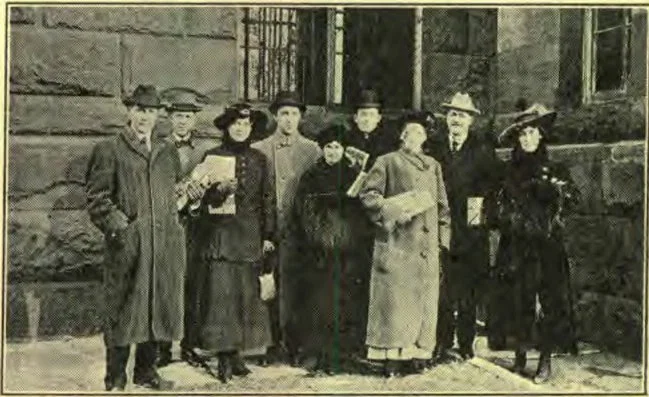
The members of the Takoma Park Missionary Volunteer Society are having many helpful experiences in doing this work. They regularly visit the District jail, charity hospital, Home for Incurables, Home for the Blind, and other hospitals. In each institution they are welcomed by inmates and officials. The superintendent of the jail is especially friendly toward our work. He asks for our literature, and appears much interested.
The Review and Herald Band has given concerts at the jail. These do much to make friends of the prisoners. Last Christmas the superintendent arranged a program and the band was requested to take part. Although the superintendent could have obtained other ministers from the city, he requested our Elder F. W. Paap to give the address. Prisoners have been helped spiritually, and some have been aided in obtaining their release in cases of first offense.
The value of being faithful regardless of weather conditions was emphasized by one Sabbath’s experience. The day was disagreeably cold and rainy. Nevertheless the Christian Help Band determined to make its usual visit—a trip of nine miles from Takoma Park. When they went into the hospital, a man who had been there for some time and who looks forward to the visits, said: “Well, I was afraid you were not coming today, it is so disagreeable; but you must have a real interest to come over here on such a day.” The other patients also seemed impressed by this evidence of interest in them.
THE TAKOMA PARK CHRISTIAN HELP BAND—IN FRONT OF THE DISTRICT OF COLUMBIA JAIL
An annual temperance program is given at the jail, and each prisoner is furnished with a copy of the TEMPERANCE INSTRUCTOR. This paper makes an especial appeal to these men and women, because a large number of them are in the jail as the result of intemperance.
This letter has been received from a former prisoner, who is now happy in the light of present truth:
“I am now free from that horrible place, and I am a new creature in Christ Jesus. All old things have passed away and everything has become new, even my very life has become new. I thank you for what you have been to me and for all your good reading. That is what made my life a new one. I am now a Sabbath-truth believer, and I thank you for sending me reading matter while I was in prison, which revealed to me the truth. If you have any more Italian reading matter, will you please send me some? I hope to get an answer from you. May God bless and keep you. Remember me in your prayers.”
There is real joy in working for the unfortunate, and few are more appreciative.
EDWARD QUINN, JR.
The Bankrupt Man of Fame and Fortune
I PITY the man of fame or fortune who comes to the court of final accounting a bankrupt in service to his fellows. I pity him because he has missed the sweetest joy of living. I pity him as he stands before his God stripped of his fine raiment and self-conceit, with nothing in his hands but the itch for gold which he can no longer clutch, and nothing in his heart but the hunger for applause which he can no longer hear. —Clarence N. Ousley, in “Winning Declamations and How to Speak Them.”
Lloyd-George, England’s New Prime Minister
“LLOYD-GEORGE was reared in a land of frowning crags and lovely dales, of mingled snow and sunshine, of poetry and passion. About him love of liberty clashed with vested tyranny. These conflicting things shaped his character, and made him temperamentally a creature of magnificent ironies.”
In a single life we do not often find so many episodes suggesting violent contrast. He was once a pacifist and a pro-Boer; he has become England’s greatest war chief. He was a radical, having nothing in common with British aristocracy, and to him the peers of England now look for protection. “No wonder,” says Mr. Marcosson, “he stands today as the most picturesque, compelling, and challenging figure of the English-speaking race. Only one man—Theodore Roosevelt—vies with him for this many-sided distinction.”
The son of a village schoolmaster who died when the boy was scarcely three; the ward of a shoemaker who was also an inspired lay preacher; the political protégé of a militant nationalist whose heart bled at the oppression of the Welsh, Lloyd-George early looked out upon a life smarting with grievance and clamoring to be free. Knowing this, one can understand that his dominant characteristic is to rebel against established order. Swaddled in democracy, he became its embodiment and its voice.
The world knows about the Lloyd-George childhood spent amid poverty in a Welsh village. The big-eyed boy ate, thought, and dreamed in Welsh, “the language that meant a daily fare of barley bread.” When he learned English, it was like acquiring a foreign tongue. He grew up amid a great revival of Welsh art, letters, and religion that stirred his soul. He missed the pulpit by a narrow margin, yet he has never lost the evangelistic fervor which is one of the secrets of his command of people.
Lloyd-George was a natural orator, and his oratory brought him leadership, but it is not so generally known—at least, in this country—that in his early political campaigns he made full use of newspaper publicity. He made reporters his confidants, often rehearsing his speeches before them.
After he got into Parliament, he was always, as before, a sort of human lightning rod that attracted the bolts of abuse. He was always the center of controversy, and was stronger in attack than defense. He was a pacifist who wanted peace so much that he was ready to fight for it, and he staked his career on his championship of the Boers.
The dreaming pacifist of 1900 was Chancellor of the Exchequer when the storm broke in the summer of 1914. It was he who found the weak spot in England’s armor, and who saw more clearly than any other man in high place that if the war was to be won by the Allies, the need of the hour was not only men but munitions. A new cabinet post—the Ministry of Munitions—had to be created, and Lloyd-George was immediately drafted as the man to fill it. How he approached the unprecedented task, and how he converted England into an arsenal, has been many times told. “Lloyd-George was no business man, but he knew how business affairs should be conducted. He knew, too, that America had reared the empire of business on a close-knit and efficient organization. He did what Andrew Carnegie or any other captain of capital would do. He called together the Schwabs, the Edisons, the Garys, and the Westinghouses, and made them his workfellows.”
Mr. Marcosson has endeavored to reduce Lloyd-George to a formula that would be intelligible to Americans. He finds that he is “50 per cent Roosevelt in the virility and forcefulness of his character, 15 per cent Bryan in the purely demagogic phase of his make-up, while the rest is canny Celt opportunism.” Still, it is with Roosevelt that the most pat comparison can be drawn. According to Mr. Marcosson, Lloyd-George is the British Roosevelt—the imperial Rough Rider. Instead of using the big stick, Lloyd-George employs the big voice.—The American Review of Reviews.
Bagdad, the City of Wonders
By F. D. C.
BAGDAD, an old Arab city, lies in the heart of Mesopotamia. The Tigris River flows through the city; and across the plain from the site of the ancient Bagdad lay Nebuchadnezzar’s great city, and on the other side stood Shushan, the palace where Queen Esther disclosed to the Persian king the wicked plots of Haman. Not far from the city of Bagdad, Jonah sounded his warning to Nineveh. The ancient city was founded in 762 A. D. by Al-Mansur. It quickly rose to prominence, and “seven hundred years before Cortez conquered the land of the Montezumas, Bagdad was the capital of the Mohammedan world, at a time when Islam bore a similar relation to civilization that Christendom does today.”
Bagdad was also the capital of Oriental Judaism. For a long time it was the richest and most splendid city of the world. “In literature, art, and science,” says the Britannica, “it divided the supremacy of the world with Cordova; in commerce and wealth it far surpassed that city.” It was the city of the famous caliph, Harun-al-Rashid, the hero of the “Arabian Nights.” Once “an embassy from Harun-al-Rashid led before the startled gaze of unbelievers the first elephant ever seen in the land of the Franks. When Nicephorus, emperor at Constantinople, wrote an insulting letter to the great caliph of Bagdad, it was returned with the terse comment, ‘Thou shalt not hear, but see my answer!’ This was not an Oriental boast. The commanders of the faithful entered Asia Minor at the head of a great army, carried fire and destruction almost to the walls of Constantinople, and the emperor Nicephorus was soon glad to accept humiliating terms of peace and promise annual payment of tribute to the victorious Harun-al-Rashid.”
The fact that the city lay at the center of the lines of communication between India and Persia on the one hand, and the West on the other hand, both by land and by water, gave it its great importance; but owing to a change in the method of transportation, India communicating with the West by means of the Suez Canal, and Persia by the ports of the Persian Gulf or over a northern route, the city lost its early prestige. Though Bagdad is about five hundred miles above the Persian Gulf, it maintains steam connection with its ports, there being both British and Turkish steamers on the Tigris.
National Geographic Magazine
“Situated in a region where there is no stone, and practically no timber, Bagdad was built, like all the cities of the Babylonian plain, of brick and tiles. Its buildings depended for their effect principally on mass and gorgeous coloring. Like old Babylon, also, Bagdad was celebrated throughout the world for its brilliant-colored textile fabrics. So famous was the silk of Bagdad, manufactured in the Attabieh quarter (named after Attab, a contemporary of the Prophet), that the place-name passed over into Spanish, Italian,7French, and finally into English in the form of ‘tabby,’ as the designation of a rich-colored watered silk. Depending on colored tiles and gorgeous fabrics for their rich effects, nothing of the buildings of the times of Harun-al-Rashid or Mamun, once counted so magnificent, have come down to us. All have perished in the numerous sieges and inundations which have devastated the city.”
The glory of Bagdad long since departed. While the ancient city supported a population of 2,000,000, the present city has a population of less than 200,000.
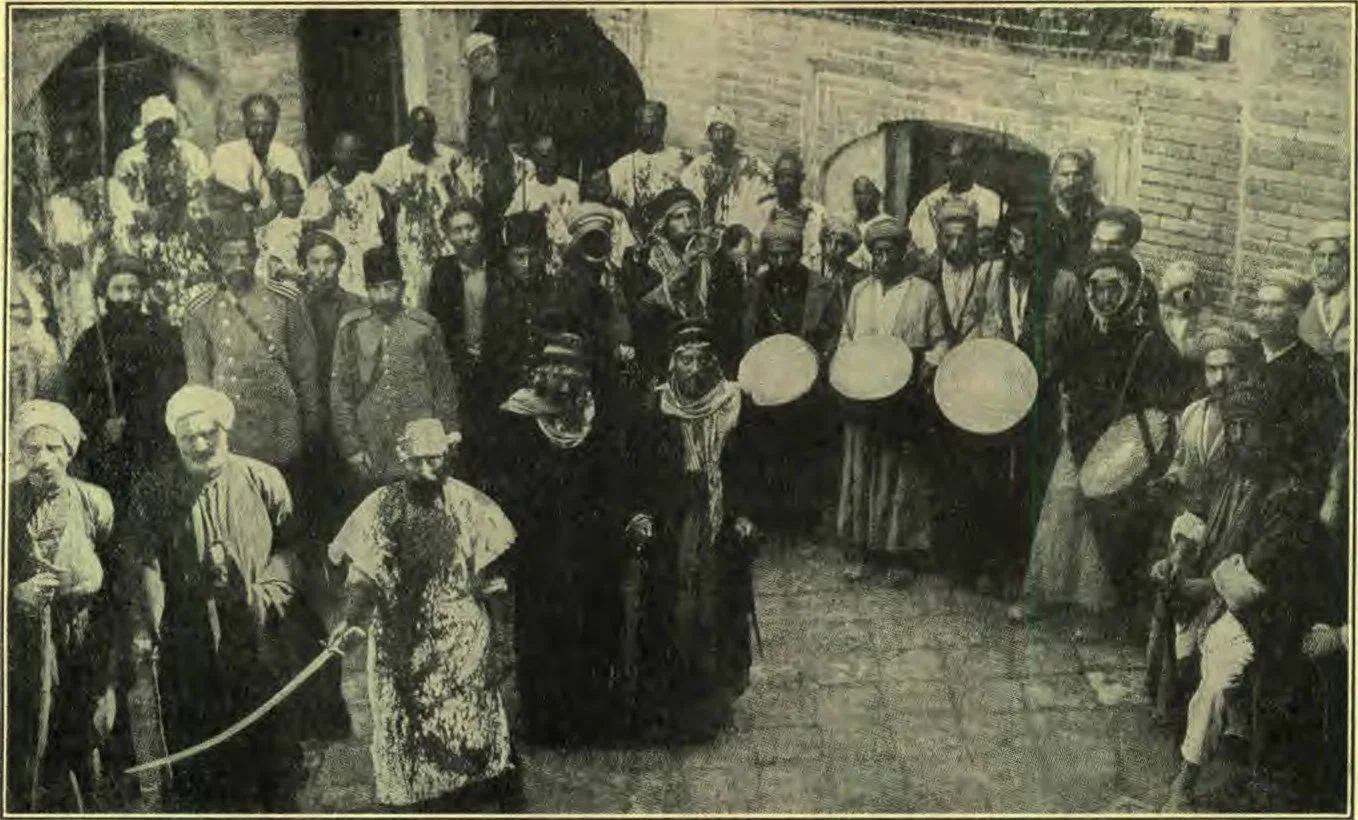
“The Jews constitute the wealthiest and most intelligent portion of the [present] population. A large part of the foreign trade is in their hands, and at the season of the sheepshearing their agents and representatives are found everywhere among the Bedouins and Madan Arabs of the interior, purchasing the wool and selling various commodities in return. They are the bankers of the country, and it is through their communications that the traveler is able to obtain credit. They are also the dealers in antiquities, both genuine and fraudulent. Next to them in enterprise and prosperity are the Persians. The porters of the town are all Kurds, the rivermen Chaldean Christians. Every nation retains its peculiar dress. The characteristic, but by no means attractive, street dress of the Moslem women of the better class comprises a black horsehair visor completely covering the face and projecting like an enormous beak, the nether extremities being encased in yellow boots reaching to the knee and fully displayed by the method of draping the garments in front.
Though the Turks have long ruled Bagdad, they are not popular among the Arab population.
“The ancient city in its prosperity became a ‘maelstrom of vice, and so weakened by its own excesses that when Hulagu swooped down upon its carousing nobles they fell stupid victims to his Tartar ax.’”
A recent writer in the National Geographic Magazine, said in 1914:
“Modern Bagdad is in safer hands; no dissipated royalty guards its gates. Sober, clear-headed men, drilled in the best schools of modern Europe, able to hold their own anywhere, administer the affairs of this important Turkish province of Bagdad.”
But in these times it is not wise to prophesy too broadly. Bagdad may have seemed able to defend itself against any enemy; but the fact is that on March 12, 1917, it fell into the hands of the British. This meant much to Germany, whose great ambition was to possess a port on the Persian Gulf. The Literary Digest speaks of the loss of Bagdad as the “death stroke to the kaiser’s ambitions.” “It blocks the plan for a German empire in the southeast, and competition with England for the rich trade of the Orient.” Another writer says that Bagdad has tenfold the importance to the world today of Verdun. Both within the last few months have been lost to Germany.
The fall of Bagdad delays at least the execution of the cherished plans for the Berlin-Constantinople-Bagdad railroad, which “with a tunnel under the Bosporus and the Bagdad railway pushed to Busra, one might go from Hamburg, Germany, without change of car, to a deep-water port of the Persian Gulf.” “It is not impossible,” says one, “that the future historian will say that the ‘turning point of the war came not in France, or on the Carpathian front, or at Saloniki, but far away in semidesert Mesopotamia,’” Abraham’s native land. F. D. C.
Were Half the Power That Fills the World With Terror
“WERE half the power that fills the world with terror,
Were half the wealth bestowed on camp and court,
Given to redeem this world from error,
There would be no need of arsenal and fort.”
Good Out of War Through the Spirit of God
By Newell Dwight Hillis
The spirit of evil caused this war, but the Spirit of God may bring good out of it, just as the summer can repair the ravages of winter.—Newell Dwight Hillis.