We have now reached the turning-point in our story, where, after the first and second messages had sounded, the message of the third angel is taken up in one grand, threefold message, that is to ring out until Jesus comes.
First, cite scriptures showing that the final message of the judgment hour calls to loyalty to God’s law and Sabbath.
Second, trace the rise of this reform, as sketched in chapters XI and XII of “Rise and Progress.”
This covers an intensely interesting period, when the little band was forming that has grown into the Seventh-day Adventist people. One person might present the scriptures indicating this reform in the last days, while another studies these chapters, and prepares to give the story in brief. The experiences of Joseph Bates and of Elder and Mrs. White in their first steps in the way of this message are full of lessons to us who find a work all ready to our hand. We must learn to believe on the evidence of God’s witness alone, and not because we see many others walking in this way, with conferences and institutions, and many facilities. When that same loyalty and confidence stir thousands to action again, with that old-time burden to build up the work and carry it into new fields, truly there will be a mighty movement forward.
“Subsequent Visions,” on page 25 of “Early Writings,” makes a good selection to read in the meeting this week.
In order not to make the study too long, the person in charge must fasten the facts well in mind, so as to present the story briefly and clearly. W. A. S.
Question Hints
(To be given to different members, and answered in the meeting)
REPEAT from memory the third angel’s message. What shows the extent of its proclamation? Is it the last message to the world? Prove it.
From what has the professed Christian world departed? Toward what, then, is the third angel’s message directed?
What is meant by the worship of the beast and his image? What is his mark? (See “Great Controversy,” chapter XXV.) Who receives this mark?
Where are recorded the names of those who keep the commandments of God and the faith of Jesus? What mark, or seal, do they receive?
Indiana Societies: Winamac and Indianapolis Reports
Indiana
In addition to the four reports from Indiana Societies recently published, two others have now been received. The Society at Winamac has eighteen members. Four dollars has been collected by the members, and has been used in the work of the Society. The INSTRUCTOR lessons are used in the meetings. The members are engaged in Christian Help work. The secretary writes: “We are of good courage, and all take an interest in the meetings and lessons.”
The Indianapolis Society has eighteen members, two having been added the last quarter. Five dollars and twenty-eight cents has been collected to buy supplies for missionary work.
GARDEN-MAKING
By Frank Walcott Hutt
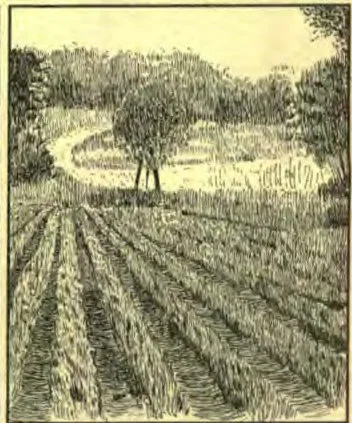
When garden-making season’s here,
There is no busier time of year.
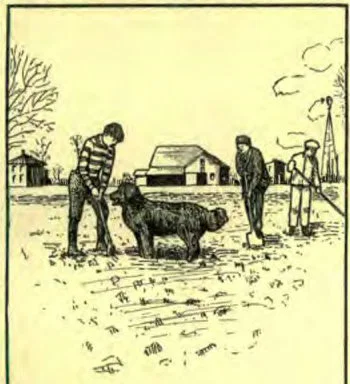
The boys are out, without a doubt,
To help to put the frosts to rout,
For garden-making’s in the air,
And gardeners are everywhere-
A shovel here, and a shovel there-
Hurrah for garden-making!
Go where you may, up-hill and down,
By meadow-path and through the town,
Boys have a way that’s widely known;
Of garden-making, all their own;
And gardens big and gardens small
Spring up by every hedge and wall-
There surely are enough for all.
Hurrah for garden-making!
FRANK WALCOTT HUTT
Dipping Candles Fifty Years Ago
“I MUST get the wicks ready to-night, to dip candles to-morrow, Prudy.”
“O grandma! Can’t I stay at home and see you? I never saw anybody dip candles in all my life.”
Prudy was ten years old.
“No, dearie. Don’t ever stay out of school unless it’s necessary; for when you’re grown up, you’ll be glad of every bit of learning you have.”
Prudy watched with great interest the putting of the wicks on the candle-rods. In her grandmother’s lap lay a narrow piece of board about the length of a candle, with a small hole in the farther end. In this hole she set up a rod, and put seven or eight lengths of wicking around it, cutting them off at the end of the board nearest her, then deftly twisted each pair of wicks together.
“How many are you going to dip?” asked Prudy.
“About sixty dozen—enough to last a year.”
When Prudy came down-stairs next morning, two stout strips of board were laid, about a foot apart, across one end of the kitchen, their ends resting on chairs turned down on their sides. The rods, with the wicks hanging from them, had been laid across these, and underneath were boards placed to catch the tallow drippings. On the stove was the big brass kettle, full of melting tallow.
Prudy always washed the breakfast dishes before she went to school. On this morning, as she turned on the icy door-step after emptying the dish-pan, her foot slipped, and she came down with a bang, bumping her nose so that it bled, and twisting her ankle so she could not rise.
Grandma helped her up, but Prudy couldn’t go to school that day.
“But I can see you dip candles,” smiled Prudy through her tears.
Grandma had set the kettle of hot tallow on a board near the turned-down chairs, and she sat comfortably by it, and dipped the wicks in regular order. She always took two rods at once, holding them well apart, dipped in the whole length of the wicks, and took them out with a sort of dragging motion, letting the tallow drip off into the kettle.
“It’s more work to do them the first time than a half-dozen other times,” she said: “for the wicks must all be straightened, and set at equal distances apart.”
“Why must you straighten them?” asked Prudy.
“To have the candle straight, dear. A little crook in a wick now would be a big one when it’s coated with tallow.”
“It’s some like bringing up children,—isn’t it?” remarked Prudy, wisely. “If they aren’t started right, they may be just awful when they are grown up.”
Presently grandma arose, and poured some boiling water into the tallow.
“Oh,” cried Prudy, “you can’t make candles of water,—can you?”
Grandma laughed.
“I pour in hot water occasionally to keep the tallow warm enough, and to melt some of it off the lower part of the candles, so they won’t be too tapering.”
“I should love to dip candles,” said Prudy. “Mayn’t I try?”
“Not now. It takes a good deal of judgment to dip candles well.”
Grandma set the kettle of tallow on the stove to reheat while she got dinner.
“Hallo, Prudy!” said grandpa, when he came in. “How happens it you aren’t at school? What’s the matter with your nose?”
“I slipped down on the door-step, and bumped my nose and twisted my ankle. So I couldn’t go to school.”
“Too bad, little girl. But you can see grandma dip candles,—can’t you?”
“Yes. Isn’t it lucky it happened to-day?”
Grandpa and Prudy ate dinner, but grandma drank only a cup of hot water.
“My head aches pretty hard,” she said.
“I’ll sit on a high chair and wash the dishes,” said Prudy, after dinner. And she did so, to help what she could.
“The smell of the tallow seems to make my headache worse,” said grandma, presently. “I’ll have to lie down for a little while, I’m so sick.”
She went into the bedroom, and threw herself on the bed. Prudy was used to grandma’s headaches, and she hobbled around and filled two bottles with hot water,—one for her feet, and one for the back of her neck. Putting them carefully in place, she covered her warmly, put down the curtain, hobbled out as softly as she could, and shut the door.
“I do believe I might help with the candles,” she said, to herself. “I’ll try a few, anyhow. Here’s where grandma left off.”
She sat down in grandma’s chair, and imitated her every movement. Prudy was what grandma called “a handy child,” and she seemed to get the knack very soon. She went all over them once, then again, and she could see she was making them grow.
Grandma was so still, she was surely asleep, and Prudy kept on, pouring in hot water occasionally, just as grandma did.
Two hours passed, and the clock struck four.
“For the land’s sake!” she heard grandma say. “If I haven’t slept two mortal hours! My candles!”
Out she came hastily, and there sat Prudy dipping candles like a veteran.
“Prudentia Bigelow, what are you doing?”
“Dipping candles for you. Haven’t I done them well? How’s your headache?”
“The sleep cured it, dear child. And I don’t see but the candles look just as nice as if I’d done them myself. You’ve made them grow masterly, and they’re about big enough for common use.”
“Sha’n’t I finish them, grandma?”
“No, thank you, dear. Can you go and get a brass candlestick from the spare bedroom, and a glass one from the parlor? I’ll make a few candles larger,—just to fit them.”
Before dark the candles were all dipped, and that evening grandma let Prudy help cut the points off the bottoms of them, so they would stand firm in the candlesticks.
“I might help do that,” said grandpa, laying down the Tribune and taking out his knife.
“You’ve got as nice a lot of candles as I ever saw you dip.”
“That’s because Prudy helped,” said grandma.
“We never had candles at home,” said Prudy. “We used whale-oil lamps, and they always seemed oily, no matter how clean they were washed.”
“Disagreeable-smelling things,” said grandma. “We tried lamp oil one winter, and I never could wash it out of anything it was spilled on.”
“I remember,” said grandpa. “That was the year our fatting cow got choked to death in the night, so we had no tallow, and tried lamp oil. They say whales are getting so scarce now that oil is high, and I reckon folks will have to go back to candles. And taken by and large,” he continued, sagely, “you’ll never get hold of a nicer6light than good candles give, if you keep them snuffed well.”
“Some folks are trying camphene and burning-fluid,” said grandma, “but I think they’re dangerous.”
“I heard Squire Smith telling in the store, one day,” said grandpa, “about a new kind of oil he heard about in Boston. They call it ‘karryseen,’ or some such name, and pretend it comes out of a crack in a rock, somewhere out West. Likely story! They say it’s nice to burn, but it costs twenty-five cents a pint, so we won’t go to burning ‘karryseen’ while these candles last.”
“No, nor ever,” added grandma.
The next day Prudy’s ankle was better, so she went to school, and was proud to tell the girls: “Grandma and I dipped sixty dozen candles yesterday!”—Sunday School Times.
ELLA CORNISH
By Ella Cornish
Dandelion! Dandelion!
DANDELION! dandelion! do you dread the hour When you'll be a round, white ball, and not a golden flower?
“I fear not, though well I know that age draws on apace; For gray hair is a glorious crown, and old age a grace. Grieve not for me, though breezes shall bear me on their wings: I'll come, not one, but many, to gladden other springs.”
ELLA CORNISH
The Revocation of the Edict of Nantes
SHORTLY after Henry IV came to the throne of France, he abjured Protestantism, and formally accepted the Roman Catholic faith. Subsequently, realizing that his Protestant subjects were too important to be despised or estranged, he issued the Edict of Nantes, “the Magna Charta of Protestant liberty in France.” It guaranteed to professors of the “so-called reformed religion,” commonly known as Huguenots, complete liberty of conscience; the right of public worship, except in certain cities named; admission to all schools, colleges, and hospitals, with the right to found and maintain such institutions; the privilege of publishing religious books in the places where their religion was authorized; and eligibility to public offices on equal terms with the Catholics. By an appended agreement, they were, for eight years, confirmed in the possession of the “cautionary,” or defensive cities granted them by the treaty of 1577.
While the political strength of the Huguenots was gradually crushed by Richelieu and others, their religious privileges were not seriously infringed until the reign of Louis XIV. That dissolute monarch, in intervals of “penitence,” conceived the idea of purging his sins, and meriting divine favor, by converting his Protestant subjects to the true faith. His hideous propaganda began with the “dragonade,” which consisted in the billeting of dragoons in the homes of the Protestants, with full license to work their own will. Property was wantonly destroyed, money appropriated, and the victims, regardless of age, condition, or sex, were subjected to every humiliation and outrage that cruelty could invent. The refined atrocities of Nero and Caligula and Elagabalus scarcely equaled the foul and bloody deeds of this crusade in the name of the Christian religion. The details are unspeakable. Reduced to partial insanity by various tortures, many were led to sign recantations. Erelong the paralysis of an awful fear fell on whole communities of Protestants, and “conversions” by thousands were reported to the king, who was overjoyed with the success of his “pious” scheme.
Thus encouraged, and prompted by Louvois, Madame de Maintenon, and the Jesuits behind them, the king proceeded to take another step designed to complete the sacred work of unifying the church. This was nothing less than the Revocation of the Edict of Nantes. Some of his wisest counselors ventured to question the prudence of this step, but the king cheerfully faced all possible contingencies; and so, October 18, 1685, he affixed his signature to the deadly act, whereby not only the Edict of Nantes, but “every concession to the Protestants, of whatever nature,” was revoked.
All Protestant houses of worship were ordered to be destroyed; all Protestants were prohibited from assembling for worship in private houses; all ministers were banished from the kingdom; all children hereafter born were required to be baptized by Catholic curates; all Protestants were forbidden to quit the country under penalty of the galleys for men and imprisonment for women, with confiscation of property. By a supplemental act, all children from five to sixteen years of age were ordered to be taken from Protestant parents and given to Catholics.
The effect of this act was, at one stroke, to deprive the Protestants of every legal claim to protection. They were outlawed, exposed to outrage, spoliation, and death, save upon the one condition of apostasy. The dragonade was resumed with added fury, while other agencies of the government lent their aid in inflicting torments so brutal, so loathsome, so widespread, and so prolonged, as scarcely to be paralleled in human history. The horrors of St. Bartholomew’s pale before those of the dragonades and the Revocation. St. Bartholomew’s witnessed seven days of slaughter, while the later horrors endured for seven years.
The frontiers and coasts were closely guarded, and whoever assisted a victim to escape was exposed to life-imprisonment or death; yet some four hundred thousand fugitives, representing the most industrious, skilled, intelligent, and moral people of France, found refuge in other lands, carrying with them the secrets of industries in which France heretofore had had no rivals.
Meanwhile, despite all terrors and sufferings, many of the persecuted met in secret for worship, and banished pastors returned to lead them. Meetings were also held in mountains and secluded spots; but such assemblies were often discovered by the dragoons, who ruthlessly slaughtered the worshipers. If to the four hundred thousand emigrants we add the slain, the galley-slaves, the maimed, the impoverished, and the mentally crushed, we may conceive the extent of the injury inflicted on France by this inhuman persecution.
These enormities, perpetrated in the name of religion, were influential in producing the skepticism that erelong dominated French thought; and that revolt from religion, combined with the uprising against royal despotism, made possible the bloody Revolution of 1789, whose sickening orgies did not, however, equal those attending the Revocation of the Edict of Nantes.
When the Chancellor Le Tellier countersigned the Revocation, he joyously repeated the Nunc Dimittis, “Now lettest thou thy servant depart in peace.” “He did not know,” says Voltaire, “that he was signing one of the great calamities of France.” Yes, the greatest; nor has France yet ceased to feel its effects.
Mr. Seebohm significantly observes that there is “a middle term wanting—a missing link”—between the religious and republican elements of France. “The Puritans—the religious republicans—were that middle term in England.”
The want of such an element of sobriety and solidity in France is frequently observable. The political as well as the religious interests of the country have, therefore, largely turned on that fateful Revocation whereby, in the words of Professor Fisher, “Louis XIV endeavored to quiet his own fear of hell by making a hell for his unoffending subjects.”—Young People.
Samuel Crowther, the First Black Bishop of the Niger
Samuel Crowther, the black bishop of the Niger, was born in the Yoruba country, Africa, and when eleven years old, was sold as a slave. After many sufferings he found himself on a slave ship, which fortunately was taken by a British man-of-war sent out to capture slavers. He was educated in the missions of Liberia and Sierra Leone, and determined to devote his life to the uplifting of his own people in the Niger country. It was while he was engaged in this work that he was reunited, providentially, to his mother, brother, and sisters, who also had been sold into slavery. His mother became a Christian, and took the name of Hannah. In 1864 Mr. Crowther was consecrated first bishop of the Niger before an immense audience in Canterbury Cathedral. Until his death, in 1891, at the age of eighty-two, his labors were unceasing, both as an evangelist and organizer of missions and as a translator, for he had extraordinary skill in languages. His work was done under the auspices of the Church Missionary Society.
Alexander Mackay (1849-1890) was the great Mechanic Missionary. The son of a Scotch minister, when he was only a three-year-old, he could easily read the New Testament. The workmen on the manse would greet him: “Weel, laddie, gaen to gie’s a sermon the day?” And always he would answer: “Please give me trowel. I can preach and build, same time!” When four years old, he was sent after a small pick, but misunderstood, and was later discovered struggling with an enormous six-foot lever, which he had brought fifty yards by dint of swinging it around end for end, two yards gained at every turn. His old nurse, on leaving, threw a leather strap into the mill-race, saying, “I’m nae gaen to let onybody whip my bairn when I’m awa.” The boy plunged in after it, and was almost drowned. “How can I be good without a whip?” he explained. At seven, his reading lesson was the leading article in the newspaper; his reward for proficiency, to be told a missionary story; his choicest plaything, a printing-press.
Mackay became an engineer, and received the best training in Edinburgh and Berlin. It was in Germany that he had what he described as “a new conversion,” the call to be an engineer-missionary. Stanley’s appeal for missionaries for the Dark Continent met his eye, and promptly in April, 1876, he sailed for Zanzibar, as pioneer of the Church Missionary Society to Uganda.
Through all the fiery trials of the infant mission, under that Felix king, Mtesa, and the cruel Mwanga, Mackay was the mainstay of the work. He opened up communication with the coast. While making the first road into the interior, he came one day to a deep stream too rapid to swim, flowing through an immense swamp. Sending an attendant after a rope by which he could lasso the opposite bank and pull himself over, he composedly sat down in the mire to master Haeckel’s theory of molecules! At one time, suffering terribly with fever, he was robbed of many of his stores, including the invaluable fever specific, quinine. This loss would have compelled his retreat had he not providentially met an Arab trader, and obtained some quinine from him.
In Uganda, Mackay became, as he described himself, “engineer, builder, printer, physician, surgeon, and general artificer to Mtesa, Kabaka of Uganda and over-lord of Unyoro.” He built a wonderful house, introduced a cart, made a magic lantern, set up a printing-press, constructed a mighty coffin for the king’s mother, was tailor, boat-maker, school-teacher, baker, sawyer, weaver, bridge-builder. “Man,” wrote Mackay,7“was made to be like his Maker, who made not one kind of thing, but all things.” He taught the natives to work, telling them that God, when he made them with one stomach and two hands, implied that they should work twice as much as they ate. Winning attention by his mechanical marvels, he soon won hearts to Jesus Christ. Persecutions came. Converts were burned to death, chanting in the fire a Christian hymn, “Daily, daily sing the praises.” The missionary was driven out of the country to a very unhealthy region, where, always feeble, he did not long live. On February 8, 1890, this “modern Livingstone,” as Stanley called him, passed from the scene of his manifold toils.
Something Done for the World's Good
“I LOVE to feel, when sinks the sun,
That there is something I have done
For which the world is better;
However small the deed may be,
If something good has gone from me,
The world remains my debtor.”
MEMORY VERSE: “Who art thou, that thou shouldest be afraid of a man that shall die, and of the son of man which shall be made as grass; and forgettest the Lord thy Maker?” Isa. 51: 12, 13.
The journey of the Israelites from Egypt to Canaan was very much longer than it need have been if they had trusted in God. They might have been only a few days on the way, but because of unbelief and discontent and sin they were kept in the wilderness.
When at last they reached the borders of Canaan, God told them to go up and take possession of it, because he had given it to them. Then they came to Moses and asked him to send some men before them to spy the land, and see what sort of country it was—whether the people were strong or weak (Deut. 1: 21, 22). So God told Moses that he might do this.
Now God had already told them that he went before them to prepare the way, and that the land to which he was leading them was a goodly land, flowing with milk and honey. So when they wanted men to go and “spy the land,” they showed that they did not believe God’s word.
Besides this, God told them not to be afraid of the people of the land, for he had given all their enemies into their hands. They had seen what he did to the Egyptians, and so they ought to have trusted in him to overthrow all their enemies. But they sent spies to see if the people were stronger or weaker than themselves, and opened the way for all the trouble that followed.
Then men who were chosen found a most beautiful and fruitful land, just as God had promised. But there was one great drawback—there were giants in the land. But what of that, when God had given them all into their hands? They might have gone against them in the name of the Lord, as David afterward went against Goliath, and gained an easy victory over them all. The spies brought back to the camp “an evil report,” because they magnified the difficulties—the strong cities walled up to heaven, and the giants they had seen, so great that they themselves had seemed like grasshoppers beside them. But they forgot the great God, who was on their side, before whom all the inhabitants of the earth are as grasshoppers. Isa. 40: 22.
There were only two men who remembered this—Caleb and Joshua—and they brought a good report of the land, and tried to encourage the people to go up and take it, because God had given it to them. But the people wanted to stone them for their good advice.
It was not the will of God that his people should wander about in the wilderness for forty years. He wanted them to go right into the goodly land; but “we see that they could not enter in because of unbelief.” It was only by believing God’s promise that they could go up and take the land; and as they did not believe, they could not go in. How this must have grieved the Lord, after all he had done for them to bring them to Canaan.
While seeking to escape from the giants in Canaan, the children of Israel fell into the clutches of a much worse giant than any of those of whom they were so much afraid.
God has promised to give to all who believe and will let him lead them, a goodly land, a heavenly country, far better than any that there is now upon this earth. But there are giants in the way, who will try to keep us out of that happy land, and make an end of us—Giant Pride, Giant Anger, Giant Selfishness, and many others. But we need not fear any of these; for in the strength of the Lord we can overcome every one of them, and go in and possess the land.
“Many giants great and tall,
Stalking through the land,
Headlong to the earth would fall,
If met by Daniel’s band,”
the band of those who fear and trust the Lord only.
Questions
1. When the Israelites drew near to Canaan, what message did God send them? Deut. 1: 21. What did the people propose to do? Verse 22.
2. What did they want to find out about the land? Num. 13: 18-20. What had God told them about it? Ex. 3: 8. And what had he shown them about the people? Tell of the fate of the Egyptians and what befell Amalek.
3. What did the Israelites show by wanting to have the land searched?
4. What sort of country did the spies find? Num. 13: 23, 27. What sort of report did they bring? Verse 32. Why was it “evil”? was it not true? Of what did they talk, and what did they forget?
5. What effect did their words have on the people? Num. 14: 1-4. Were there none to encourage them? Verses 6-9. How did they treat the two faithful ones? Verse 10.
6. What did God say because of their unbelief and murmuring? Verses 22-24. How long were they to remain in the wilderness? Verses 30-34.
7. Was it God who kept the people out of Canaan? Heb. 3: 18, 19. Was it the giants in Canaan? What giant was it that kept them in the wilderness and made an end of them there? What will save us from this deadly foe?
MEMORY VERSE: “And the very God of peace sanctify you wholly; and I pray God your whole spirit and soul and body be preserved blameless unto the coming of our Lord Jesus Christ.” I Thess. 5: 23.
But we would not have you ignorant, brethren, concerning them that fall asleep; that ye sorrow not, even as the rest, who have no hope. For if we believe that Jesus died and rose again, even so them also that are fallen asleep in Jesus will God bring with him. For this we say unto you by the word of the Lord, that we that are alive, that are left unto the coming of the Lord, shall in nowise precede them that are fallen asleep. For the Lord himself shall descend from heaven, with a shout, with the voice of the Archangel, and with the trump of God; and the dead in Christ shall rise first; then we that are alive, that are left, shall together with them be caught up in the clouds, to meet the Lord in the air; and so shall we ever be with the Lord. Wherefore comfort one another with these words.—American Standard Revised Version.
Questions
On what special subject would the Lord have his children intelligent? Why?
What is the condition of the individual who has no hope? Eph. 2: 12.
What is the “blessed hope” of the Christian? Titus 2: 13.
What is the basis of our faith that the dead in Christ shall rise again? When will they be brought from their graves?
What assurance is given that those who are alive when Jesus comes will have no preference over those who sleep? Upon what is this assurance based?
Who will come to this earth the second time? In what manner will he come? See also Acts 1: 11; Rev. 1:7.
What will then take place? What will be the condition of the righteous thus raised? I Cor. 15: 52. Will this change also take place with the living?
Of what have these been accounted worthy? Luke 20: 35. What does this show concerning the judgment?
Who will join the risen ones? Whom will they all meet in the air? How long will they be with the Lord?
What are we to do with these precious words? How can these words bring comfort?
Notes
Do not fail to commit the lesson Scripture.
“Satan has endeavored to blind the world to the nature of death, to make men believe that it is something which it is not. To the child of God it is a dreamless sleep, which were it not for Christ’s power would know no waking. To those who know not Jesus, there is no hope of seeing again those who have died in him.” But simple faith in the death and resurrection of Jesus for each one personally brings that hope beyond the grave which knows no disappointment.
The fact that Jesus died and rose again is all the evidence we need that those who sleep in him shall come again from the land of the enemy. “But now is Christ risen from the dead, and become the first-fruits of them that slept. . . . For as in Adam all die, even so in Christ shall all be made alive.” “The righteous dead do not arise from the grave, then to be judged and changed. They come up immortal (I Cor. 15: 52), showing that judgment has already passed upon their cases, and that they are accounted worthy to obtain a resurrection out from among the dead ones (Luke 20: 35).”
To those without faith in Christ, these words bring little of comfort and consolation. Their condition is truly described in Eph. 2: 12. But to these very ones, without God and without hope, comes the invitation, “Come unto me.” Accept him as your Saviour, simply taking his promises for face value, and this comfort will be yours. The promise of Christ’s second coming and the resurrection of the dead is the blessed hope of all who love him. And, praise to his name, he reaches his great arm of love to the one in whose heart the least spark of that love has been kindled and kept aglow.
A Child, a Flower, and the Clouds
By H. D. Lowry
A LITTLE child he took for sign
To them that sought the way divine;
And once a flower sufficed to show
The whole of that we need to know.
Now here we lie, the child and I,
And watch the clouds go floating by,
Just telling stories, turn by turn—
Lord, which is teacher, which doth learn?
— H. D. Lowry.
The Value of Time
By W. H. Button
TIME may be compared to an eternal, flowing stream, in which all of God’s creation is being carried forward at the same rate of speed. Every moment which comes to us brings with it an opportunity to fashion and mold character. Whatever we do, feel, think, or utter, is recorded in the books of heaven.
Time belongs to God, and its value can not be estimated; it is beyond computation. When we neglect to obey or fulfil a call to duty we owe to him, we commit sin; for sin comprehends not actions only, but neglect of known duty, all evil thoughts, purposes, words, and desires,—whatever is contrary to God’s commands.
The spare moments of our lives are most fruitful in good or evil; they are the gaps by which temptations find easiest access. Idleness is the foster parent of vice, and it is the greatest evil that affects the world to-day. It has been truthfully said that “an idle brain is the devil’s workshop;” therefore, time well employed is Satan’s deadliest foe. It was God’s decree that man should not idle time away. “And the Lord God took the man, and put him into the garden of Eden to dress it and to keep it.” God well knew that man’s time and mind must be employed in honest labor and righteous thoughts, or Satan would, by his craft, allure that mind into dishonoring God, by selfish pleasures, idle talking, and evil thinking and doing.
It must not be understood that man must be either toiling with the hands continually or reading all the time, in order to refrain from idleness; not so, he should learn, as Solomon did, from all the handiwork of God. Those who have accomplished the most in the advancement of this world’s enterprise, and the uplifting of the moral sentiments of man, are not men who have had their heads in books all the time. One must not think he can become wiser by always reading, any more than he can become stronger by always eating. Too much reading and too little reflection will satiate the mind, the same as too much eating and too little exercise will tend to overcharge the system, and produce disease rather than increased strength.
How often has it been said by those who have grown to manhood, and looked back over an ill-spent life, “If I could live my life over again, I would do differently than I have done.” Now those same complainers would do just as they did before, were they to live their past over, unless they were to be inwardly quickened and actuated by divine influence. Now is the established time to live as you would wish to live if your youth could return to you. The laborer who was put to work in the vineyard at the eleventh hour received as great compensation for his toil as he who worked all day. ’Tis not how long, but how well, we live that will merit God’s approval.
We have only a short time, a few days of probation, in which to prepare for eternity. Our present life is a moral trial, in which we have the opportunity of proving our character to God, and becoming qualified for a happier life. “We are all probationers, candidates for heaven.”
W. H. BUTTON.
Behold, the Bridegroom Cometh: Verses on Watchfulness
By Gerard Moultrie
BEHOLD, the Bridegroom cometh in the middle of the night,
And blest is he whose loins are girt, whose lamp is burning bright;
But woe to that dull servant whom the Master shall surprise
With lamp untrimmed, unburning, and with slumber in his eyes.
Beware, my soul! Take thou good heed lest thou in slumber lie,
And, like the five, remain without, and knock and vainly cry;
But watch and bear thy lamp undimmed, and Christ shall gird thee on
His own bright wedding-robe of light—the glory of the Son.