DANIEL'S vision of chapter 7 was given in the first year of Belshazzar, B.C. 540. Babylon was still a great empire. Two years later another vision is given the prophet, recorded in the 8th chapter of his prophecy. That vision has a twofold aspect,—that which pertains to the kingdoms themselves as kingdoms, and the spiritual aspect, which affects the people of God. The first of these we consider in this study. Let us learn —
The Answer of the Text
1. What came to Daniel in the last year of Babylon?
In the third year of the reign of King Belshazzar a vision appeared unto me, even unto me, Daniel, after that which appeared unto me at the first. And I saw in the vision; now it was so, that when I saw, I was in Shushan the palace, which is in the province of Elam; and I saw in the vision, and I was by the river Ulai. Verses 1, 2.
2. What did he see?
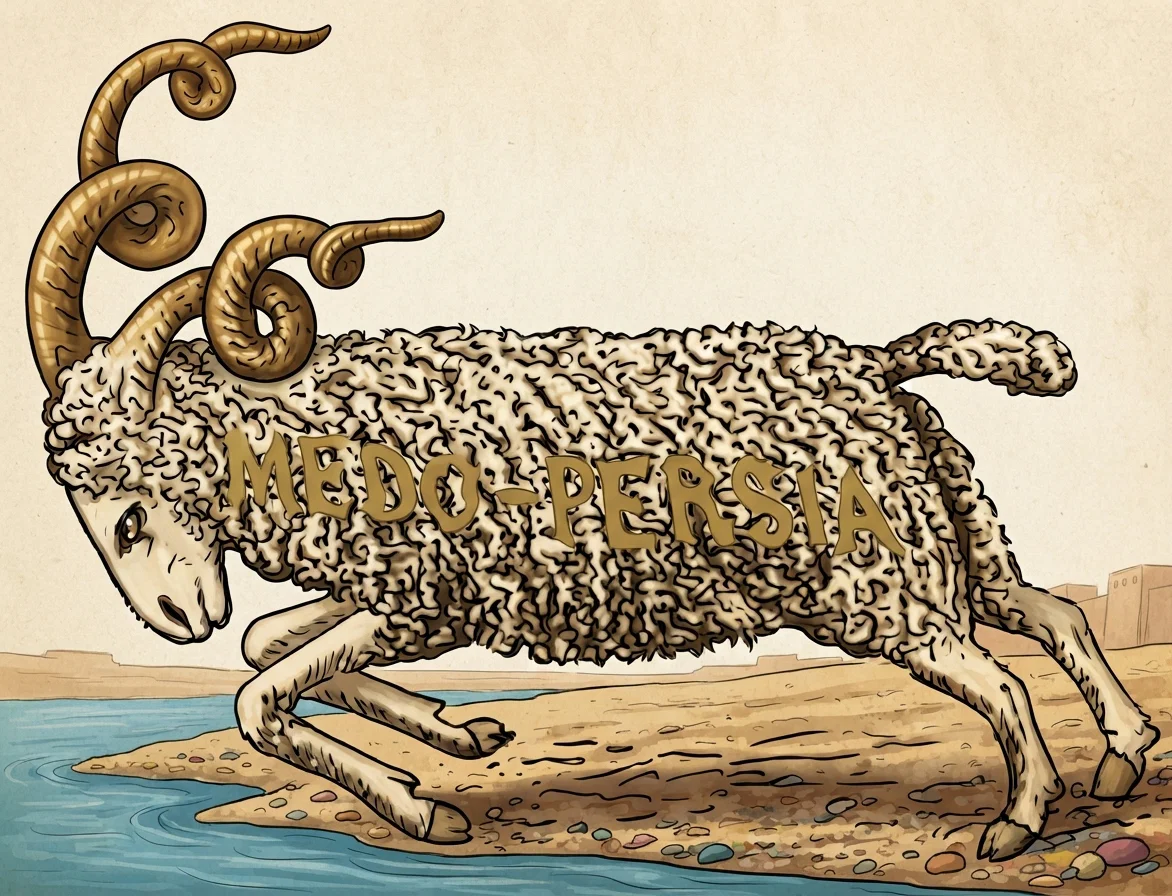
Then I lifted up mine eyes, and saw, and, behold, there stood before the river a ram which had two horns: and the two horns were high; but one was higher than the other, and the higher came up last. Verse 3.
3. What is said of the power of the ram?
I saw the ram pushing westward, and northward, and southward; and no beasts could stand before him, neither was there any that could deliver out of his hand; but he did according to his will, and magnified himself. Verse 4.
4. What is the next scene described?
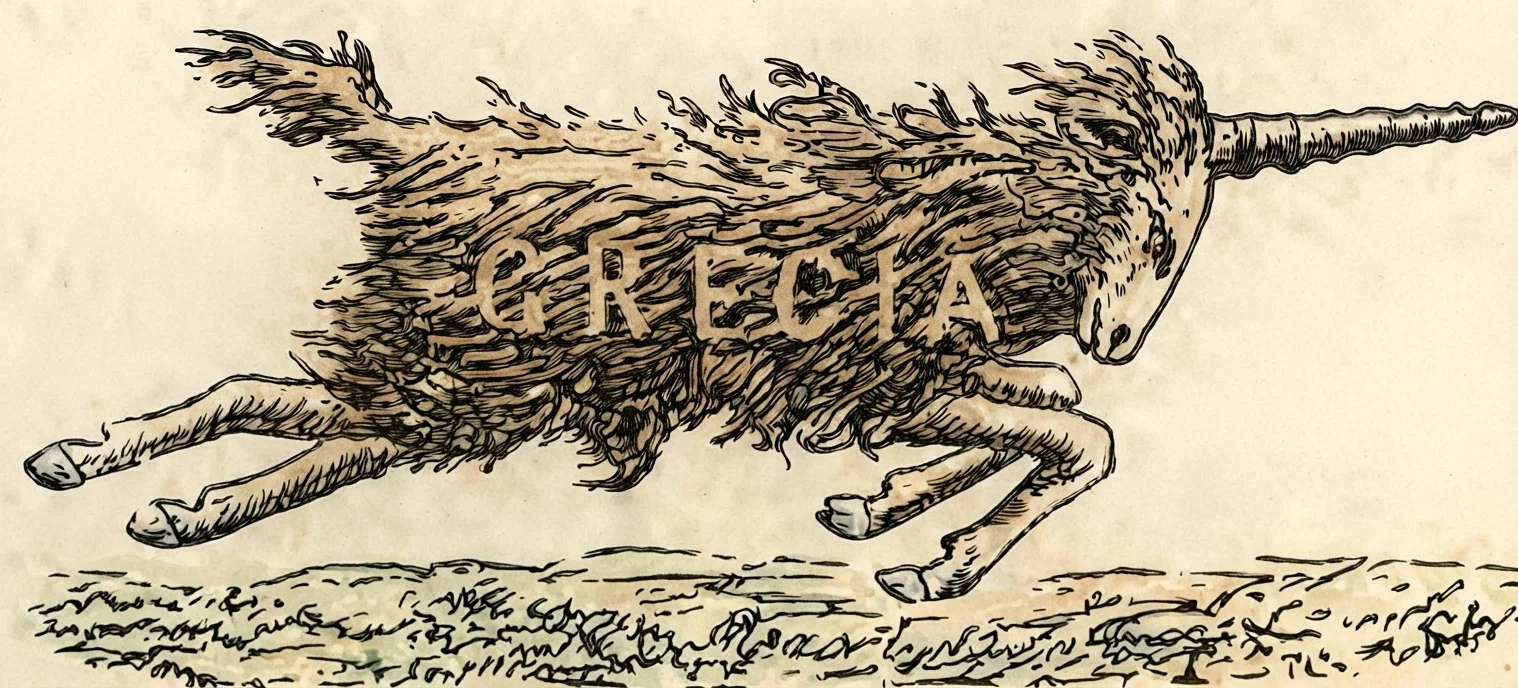
And as I was considering, behold, a he goat came from the west over the face of the whole earth, and touched not the ground: and the goat had a notable horn between his eyes. And he came to the ram that had the two horns, which I saw standing before the river, and ran upon him in the fury of his power. Verses 5, 6.
5. What is said of the comparative power of the goat?
And I saw him come close unto the ram, and he was moved with anger against him, and smote the ram, and brake his two horns; and there was no power in the ram to stand before him; but he cast him down to the ground, and trampled upon him; and there was none that could deliver the ram out of his hand. Verse 7.
6. What is the sequel of this symbol?
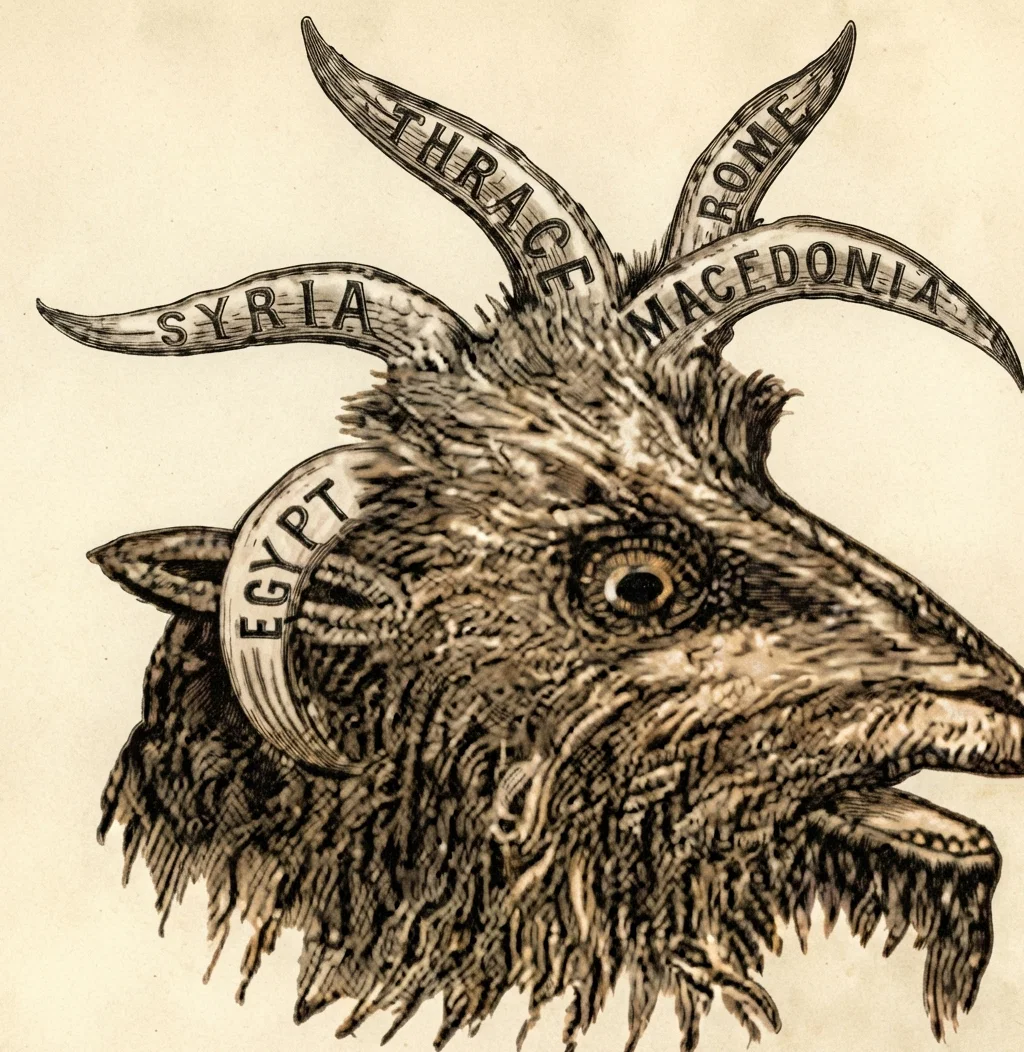
And the he goat magnified himself exceedingly: and when he was strong, the great horn was broken; and instead of it there came up four notable horns toward the four winds of heaven. Verse 8.
7. What divine command was given the angel Gabriel?
And I heard a man's voice between the banks of the Ulai, which called, and said, Gabriel, make this man to understand the vision. Verse 16.
8. What did the angel tell Daniel?
And he said, Behold, I will make thee know what shall be in the latter time of the indignation; for it belongeth to the appointed time of the end. Verse 19.
9. What did the angel declare was symbolized by the ram?
The ram which thou sawest, that had the two horns, they are the kings of Media and Persia. Verse 20.
10. What was the explanation of the rough he goat?
And the rough he goat is the king of Greece: and the great horn that is between his eyes is the first king. Verse 21.
11. What was symbolized by the four horns?
And as for that which was broken, in the place whereof four stood up, four kingdoms shall stand up out of the nation, but not with his power. Verse 22.
Note and Comment
The explanation of this part of the prophecy is neither difficult to make, nor hard to understand. The great outlines are given in the prophecy itself, and the Bible student needs only to add a few facts of history, and the meaning is clear. It is well to note that no symbol of Babylon appears in this vision, tho the throne of Babylon was still standing, and the wonderful city was still untouched by the hand of the spoiler; yet the great fact remained that the “glory of kingdoms” was near the close of her career. Only a few more months, at most, and the Chaldean monarchy would be ended, “the beauty of the Chaldees' excellency” overthrown.
Babylon has run a pitiful career since Nebuchadnezzar, her great king, laid down the scepter. Her present king, Nabonidus, is building heathen temples, and worshiping at heathen shrines; the affairs of the empire are in the hands of his son, the pleasure-loving, lust-loving, inexperienced Belshazzar. The outposts in the greater part of Chaldea were already in the hands of the conqueror, Cyrus, and the city of Babylon was practically the only thing that remained. Her citizens laughed at the foe from within her impregnable walls, forgetting that God had spoken of her destruction and successor.
In his vision Daniel was carried to Shushan (Susa), then of little account, destined afterward to become the capital of the empire of Persia. The province of Elam was south of Media, east of Chaldea, and northwest of Persia proper. The river Ulai is now called Karasu, or Kerah. It was called by the Greeks, Choaspes, and by Pliny, Euloeus. The angel Gabriel, the one through whom God gives revelations, explains the two-horned ram to the prophet. “The ram which thou sawest, that had the two horns, they are the kings of Media and Persia.” Verse 20. The lower horn represented Media. After Babylon was conquered, Darius the Mede (Cyaxares II) took the united kingdom of Medo-Persia, and reigned two years.
When Darius the Mede died, Cyrus the Great came to the throne. He it was that elevated the empire to its commanding position. The use of the ram is most appropriate. It is said that the king of Persia wore a jeweled ram's horn of gold instead of a diadem. The Hebrew for “ram” springs from the same root as “Elam,” or Persia. “Pushing westward” refers to Persia's conquering career toward the west, including the conquered kingdoms of Babylonia, Mesopotamia, Syria, and Asia Minor. “Northward” over Coictus, Armenia, Iberia, and to the Caspian Sea, Persia pushed her conquests. “Southward,” Judea, Egypt, Ethiopia, and India submitted to Persian arms. The ram wrought his will and magnified himself, or became GREAT. After Cyrus, ruled Cambyses his son (B.C. 529 to 521). Smerdis the impostor followed, reigning less than a year, and therefore not noted in the chronological lists. Then came Darius Hystaspes (521 to 485), Xerxes (485 to 465), Artaxerxes Longimanus (465 to 425). This last king is followed by Xerxes II, who after a few months is assassinated by his half-brother, Sogdianus, a usurper. He is deposed by Darius II, or Darius Nothus, who reigns 424 to 405. Artaxerxes II, or Mnemon, reigns to 359, succeeded by Artaxerxes III, who kills all his relatives and rules to 338. Arses, the son of Artaxerxes III, is placed upon the throne by Bagoas, the king's murderer, and he occupies it until 336. Then Bagoas slays him, and makes Darius III (Codomanus) king, the last of the Medo-Persian monarchs, who slays Bagoas. And yet the Persian monarchy reached its highest elevation under Darius Hystaspes. Xerxes, the wealthiest of all, was a weak monarch, and from his day the empire began to decline.
The Grecian Empire
The symbol of the fierce he goat is also explained by the angel: “And the rough he goat is the king of Greece: and the great horn that is between his eyes is the first king. And as for that which was broken, in the place whereof four stood up, four kingdoms shall stand up out of the nation, but not with his power.” Verses 21, 22. These are the words of inspiration more than 200 years before Grecia came to world empire. The first ruler of that empire was the renowned son of Philip of Macedon, Alexander the Great, who first met the forces of Darius at the river Granicus in B.C. 334, and there threw against the Persian forces the Greek phalanxes, led by his own unbounded ambition and indomitable energy. With 30,000 infantry and 5,000 horse, Alexander attacks the Persian host of 600,000 foot and 20,000 horse, and utterly defeats them. In November of the following year Darius, with an army of 400,000 foot and 100,000 horse, is again defeated at Issos in Cilicia, and 40,000 are made prisoners. The final battle is fought October 31, 331, at Arbela. Here Darius has 1,000,000 men on foot and 40,000 cavalry. Against7him is Alexander, with 40,000 footmen and 7,000 cavalry; but Persia is utterly routed, and the remainder of the empire soon yields to the victorious Macedonian. Darius demonstrated the truthfulness of Ps. 33: 16: “There is no king saved by the multitude of a host.” God's time had come for a change in world empire. “The Most High ruleth in the kingdom of men, and giveth it to whomsoever He will.” Just as long as He could use Persia, He did; but when the time came that Persia could no longer be used of God for the furtherance of His Gospel in the earth, the Lord sets Persia aside, and brings Macedonia, or Greece, to world dominion. Alexander died of fever, after a prolonged debauch, at Babylon, in B.C. 323, at the age of thirty-two. He had accomplished more than many great men had wrought in a lifetime. The great and notable horn was broken in its strength.
The heirs of the throne were Alexander's half-brother, Philip Arrhideus, and his posthumous son by Roxane. The regency in behalf of these was given to Perdiccas, one of Alexander's generals. Antipater of Craterus received the regency of the west, or Macedon; Ptolemy that of the south, or Egypt; Antigonus that of Pamphylia, Phrygia, and Lycia; Eumenes, Alexander's secretary, that of Paphlagonia and Cappadocia, yet unsubdued; Cassander that of Caria in Asia Minor; and Leonatus part of Syria. These satrapies were presumably held for Alexander's legitimate successor, his son by Roxane, as soon as that son was old enough; but many ambitions and little loyalty lurked behind these positions. The next year Perdiccas, having married an ambitious sister of Alexander, planned to make himself king, whereupon the other generals formed a league against him, and he was slain, and Antipater was made regent. A new division of the provinces ensued, and Babylon was given to Seleucus in B.C. 317. Lysimachus, another general, became master of Thrace, and the next year Eumenes was put to death by Antigonus. Five years later Cassander marries a half-sister of the dead emperor, and builds the city of Thessalonica, named after his wife. He is made regent of Macedonia until Alexander IV (called also Alexander Aegus) is of age; but the same year he murdered both Roxane and her son, and became master of Greece; and three years later (B.C. 308) Cleopatra, the sister of Alexander and the last of the royal house, was assassinated by Cassander's order. Various battles and changes followed.
The year 306 marks a change in the affairs of the empire. Antigonus and his son Demetrius assume the title of king. Seleucus, Cassander, Ptolemy, and Lysimachus follow the example. There are at this date five great rulers,—Antigonus, Seleucus, Cassander, Lysimachus, and Ptolemy. War follows, Ptolemy, with allies, is defeated by Demetrius in a great naval battle at Salamis the same year. In the next three years Demetrius has conquered Rhodes, and driven Cassander out of Greece. In B.C. 301 Lysimachus and Seleucus, at the battle of Ipsus, completely overthrow Antigonus and his son, Antigonus being slain, and divide his dominions between them. This leaves what is contemplated in the prophecy, four great kings in Alexander's empire—Ptolemy in Egypt; Cassander in Macedon and Greece, with also the provinces of Cilicia in Asia Minor; Lysimachus a part of Thrace and the greater part of Asia Minor, including Lydia, Mysia, Caria, Lycia, Phrygia, Lycaonia, and a part of Cappadocia. His capital at first was at Lysimachia, west of Byzantium in Thrace. Later it was at Ephesus, but it never was at Byzantium, where now stands Constantinople.
Seleucus, whose kingdom extended to India on the east and the Caspian Sea on the north, including Bithynia, Paphlagonia, part of Phrygia, a part of Cappadocia, Asia Minor, and Syria on the west, with his capital at Antiochea on the Orontes in Syria (see Mahaffy, “Alexander's Successors,” Larned's History of Ready Reference, maps, etc.). In this year are developed the four heads of the leopard, therefore the four horns of the goat. Previous to 306 these were only satraps, or division leaders, of Alexander's empire, holding their positions for the coming king; but in 301 they were each of them independent kings, having separate territory. Thus, precisely, was the prophecy of God's Word fulfilled.
But another power is predicted, another symbol is yet to be considered. Unlike the former, it is not named by the angel, but descriptive details of its work are made much fuller, and we believe that the logical explanation is equally clear. This is reserved for future studies.
Our Bible Reading
By H. W. Cottrell
What Christ's Coming Means to the Righteous
1. Will the righteous dead be raised at Christ's coming?
For the Lord Himself shall descend from heaven with a shout, with the voice of the Archangel, and with the trump of God: and the DEAD IN CHRIST SHALL RISE first. 1 Thess. 4: 16.
2. Will the living righteous join this throng and meet Christ in the air?
Then WE WHICH ARE ALIVE and remain SHALL BE CAUGHT UP TOGETHER WITH THEM in the clouds, TO MEET THE LORD in the air: and so shall we ever be with the Lord. 1 Thess. 4: 17.
3. Will the saints then be immortalized?
Behold, I show you a mystery; We shall not all sleep [die], but we shall all be changed, in a moment, in the twinkling of an eye, at the last trump: for the trumpet shall sound, and the DEAD SHALL BE RAISED INCORRUPTIBLE, and WE SHALL BE CHANGED. For this corruptible must put on incorruption, and this mortal must put on IMMORTALITY. So when this corruptible shall have put on incorruption, and this mortal shall have put on immortality, then shall be brought to pass the saying that is written, Death is swallowed up in victory. 1 Cor. 15: 51-54.
4. When did Christ say He would receive His children and remain with them ever?
And if I go and prepare a place for you, I will COME AGAIN, AND RECEIVE YOU UNTO MYSELF; that WHERE I AM, there ye may be also. John 14: 3.
5. What is the consummation of the Christian's hope?
Looking for that BLESSED HOPE, and the GLORIOUS APPEARING OF THE GREAT GOD AND OUR SAVIOUR JESUS CHRIST. Titus 2: 13.
6. Will the new-born nation enter in through the gates into the city of God?
Who hath heard such a thing? who hath seen such things? Shall the earth be made to bring forth in one day? or shall a nation be born at once? for as soon as Zion travailed, she brought forth her children. Isa. 66: 8.
Open ye the gates, that the righteous nation which keepeth the truth may enter in. Isa. 26: 2.
7. Will their voices then be attuned to heaven's melody?
And after these things I heard A GREAT VOICE OF MUCH PEOPLE IN HEAVEN, saying, Alleluia; Salvation, and glory, and honor, and power, unto the Lord our God: for true and righteous are His judgments. Rev. 19: 1, 2.
8. When, therefore, will all men receive their reward?
I have fought a good fight, I have finished my course, I have kept the faith: henceforth there is LAID UP for ME a CROWN of RIGHTEOUSNESS, which the Lord, the righteous Judge, shall GIVE ME AT THAT DAY: and not to me only, but UNTO ALL THEM ALSO THAT LOVE HIS APPEARING. 2 Tim. 4: 7, 8.
9. Does Christ reassure us of the reward at His Coming?
Behold, I COME QUICKLY; and MY REWARD IS WITH ME, to GIVE EVERY MAN according as his work shall be. Rev. 22: 12.
10. Can this eternal gift ever be marred by sin?
The gift of God is ETERNAL LIFE through Jesus Christ our Lord. Rom. 6: 23.
They which shall be accounted worthy to obtain that world, and the resurrection from the dead, neither marry, nor are given in marriage: NEITHER CAN THEY DIE ANY MORE. Luke 20: 35, 36.
H. W. COTTRELL.
As God Will
Why should I murmur? for the sorrow
Thus only longer lived would be;
Its end may come, and will, to-morrow,
When God has done His work in me.
So I say, trusting, "As God will!"
And trusting to the end, hold still.
He kindles for my profit purely
Affliction's glowing, fiery brand;
And all His heaviest blows are surely
Inflicted by a Master's hand.
So I say, praying, "As God will!"
And hope in Him, and suffer still.
—From the German.
Prediction Fulfilled
FREDERICK SIMPICH, United States consul at Bagdad, who has been investigating the ruins in Mesopotamia, writes that the Biblical prediction to the effect that "wild beasts shall roam through Babylon," is fulfilled to-day, when one sees countless jackals, and now and then a lion of the desert, prowling about the crumbling walls of the once famous city, which perished in pride and vainglory. A portion of a tower, identified as the Tower of Babel, has been unearthed; also a vast palace in ruins, with its mural decorations and great pillars—even some of the great halls themselves. What is supposed to be the banquet hall, where the "hand" appeared and wrote on the wall, "Mene, mene, tekel, upharsin," in letters of light to a wicked and boastful king, has been located.
The excavation of "Nebuchadnezzar's Palace" has been partly accomplished by the German Oriental Society. It measures 1,200 feet by 1,500 feet, and, from all signs that are left, it must have been put up at prodigious cost. The extent of old Babylon, according to Mr. Simpich, is amazing. For miles and miles its mounds and ruins stretch along the Euphrates, as that river winds through the Arabian desert, which was once the most fertile country in the world.—Young People's Weekly.
The Testimony of Jesus
By George W. Reaser
By George W. Reaser
VII—The True Church Identified by Prophecy
THE latest United States Bulletin of religious statistics gives the number of denominations in this country as 186. There never was a time in the history of the world, when there were so many different religious bodies. To many honest souls it is a matter of real perplexity to decide where to place their church-membership. To undertake a diligent search of all of the creeds of all of the denominations, in order to settle the question as to which is the true church, would be almost a hopeless task. Until a comparatively recent date in the world's history, denominations had not multiplied to any considerable extent. In view of the great multiplication of religious bodies in the last days of the world's history, would it not be a happy thing for those who are honestly searching for the true church, if Jesus, by the “sure word of prophecy,” had designated and clearly identified the church in the very last generation, which has the approval of Heaven? Does it not appeal to you, reader, that this very thing ought to have been foretold by “the testimony of Jesus?”
One church is brought to view in the field of prophecy as “drunken with the blood of the saints,” and it is further stated that this fallen church has numerous daughters (Rev. 17:3-6). To reject the call and to be found identified with any of these false bodies, after God issues the call to “come out” of them, would mean eternal death (chapter 18:4).
Prophetic Characteristics of the True Church
If the great, corrupt church is identified by prophecy, have we not reason to expect the identification of the true church by the same agency? Can any church in the last days consistently claim to be the true church, unless it is preannounced as such by “the testimony of Jesus”? If we are living near the end of time, and if we are seeking for the true church, we must continue our search until we have found the one that Jesus has preannounced by the spirit of prophecy. Is there a vital difference between the denominations of Christendom? And if so, what does the spirit of prophecy declare that difference to be? If Jesus has designated the special point of distinction by which we may recognize His church in the last days, and we should find that the great false church points to the special distinguishing mark or sign specified by Jesus more than 1,800 years ago, when we discover this point of distinction, we may be confident that we have located the church of the First-born. Now for the distinction: A recent Catholic journal, in commenting upon the authority for Sunday observance, makes the following statement:
If our authority for keeping Sunday be the fourth commandment, . . . the whole Christian world lies convicted of a serious breach of God's law. Stay! This is not true. There is a curious sect, called, I believe, Seventh-day Adventists, which literally obeys. They alone, then, of all Christians, keep the whole of God's commandments.
Now let us see how this corresponds with the identification of the last church, given by Jesus, through the spirit of prophecy. He said, “And the dragon was wroth with the woman, and went to make war with the remnant of her seed, which keep the commandments of God, and have the testimony of Jesus Christ” (Rev. 12:17); and again, “Here is the patience of the saints: here are they that keep the commandments of God, and the faith of Jesus” (chapter 14:12). Our search, fellow Christian, was not long; we were not compelled to make an exhaustive study of all the creeds of Christendom. Two verses of prophecy, if we read their connection, settle the whole question. Another glance at these texts will reveal other points of identification. The church that keeps the commandments is not popular; it is persecuted by the dragon, Satan; it is waiting patiently for the return of our Lord to give it the final victory; it keeps “the faith of Jesus,” and it has “the testimony of Jesus Christ,” and “the testimony of Jesus is the spirit of prophecy.” Rev. 19:10.
Jesus' final effort in all Scripture, was to leave for mankind the strongest possible basis for faith, by inspiring or dictating the book of Revelation, which is one of the most distinctive prophetic books in the entire Scripture canon. In this book He prophetically promised to witness in His “remnant”—His very last church in the earth, by “the spirit of prophecy” (Rev. 12:17). If the witness of Jesus is by “the spirit of prophecy,” then the church that has the true gift of the spirit of prophecy manifested in it, has the witness of Jesus.
Christ Will Not Witness Through a Fallen, a Corrupt Church
What constitutes a fallen church?—One that is persistently disobedient to the requirements of God; one that violates His Word, and that does not keep His commandments.
What constitutes a true church?—One that is loyal and obedient to God's Word; one that keeps His commandments and His truth.
Then when we discover a church which is prophetically pointed out as obedient to the commandments of God, and that has “the testimony of Jesus,” what must we conclude concerning such a church?—Surely that it has the characteristics of the true church, for this twofold evidence is Heaven's own witnessing to God's true church in the last generation.
Apply the Test, Then Stand on the Side of Safety
What, then, is the strongest twofold evidence of the true church in the last days?—The keeping of the commandments of God and the manifestation of the gift or spirit of prophecy in the Heaven-approved church (Rev. 12:17; 19:10). You can apply this test to any church. There can be but one result. Wherein, then, does safety lie in seeking church affiliation? There can be but one answer, and this answer must be apparent to the reader: for if the testimony, the witnessing, of Jesus, is the spirit of prophecy, it follows that the church which has the testimony of Jesus—the spirit of prophecy—has the strongest evidence that Heaven can supply that it is “the church of the First-born,” of which Christ is the living Head.
From the quotation above given, I am driven to the conclusion, by the overwhelming weight of evidence, that the last Heaven-approved church in the world's history will not only have strong faith in the spirit of prophecy, but the true spirit of prophecy will be manifested in said church.
If the church, walking in the light of God's revealed truth, shall find its constituency less than others, and its doctrines unpopular, wherein shall its membership assure themselves that they are in the right and are God's true people? There is one unfailing guide; it is the testimony of Jesus, the spirit of prophecy.
If the Lord has placed the true spirit of prophecy in the Seventh-day Adventist Church, He has thereby placed the strongest possible evidence in that church that it is His own true church.
One Church Has Favorable Mention in Prophecy
So far as the writer has been able to discover, there is but one church in the last days that receives favorable mention in prophecy, and this would indicate that it holds the credentials of Heaven as being God's true church. There are doubtless many individuals in all of the so-called Christian churches whom God recognizes as His children; but laying aside all prejudice, and accepting the Bible statement of the situation, there is but one church that can consistently lay claim to the honored distinction of having the characteristics which Inspiration points out, and hence as having the approval of Heaven.9Therefore if we are convinced, by the array of prophecy on the subject, that we are living near the close of time, near the event of our Lord's second coming, would it not be the part of wisdom to seek out and identify ourselves with the church which, according to Christ's specifications through the spirit of prophecy, has the recognition of Heaven as “the church of the First-born”?
The church whose whole system is built upon prophecy, and whose every doctrine and tenet of faith is interwoven with prophecy, and which has the true spirit of prophecy manifested within its fold, is most surely built upon the strongest and safest possible foundation. I repeat, The true spirit of prophecy manifested in the church is His witness to His own true church. He can not deny Himself; therefore He can not witness through a false church.
The other church, styled “Babylon,” is brought to view in the same prophetic outline; but this great false church is never brought into the field of prophecy except as under the curse of God; never as having His approval. A brief statement of Jesus' prophetic description of her is that she “is become the habitation of devils, and the hold of every foul spirit, and a cage of every unclean and hateful bird.” What a striking contrast Inspiration makes between these two latter-day churches! Recognition of this contrast, this vast difference, will lead the wise to make the right choice.
Again, let us observe that whenever the true spirit of prophecy is manifested, it is the strongest effort of Jesus to witness to His people. How important, then, is the gift! The church or the individual that ignores or denies the spirit of prophecy, repudiates the testimony of Jesus; for “the testimony of Jesus is the spirit of prophecy.” And to repudiate prophecy is to deny Jesus Christ; for it is His voice, speaking through the prophets (1 Thess. 5:20).
In view of all this, let us gladly listen to the voice of God, intonated with divine love, ringing down through the ages, and appealing to every honest heart: “Believe in the Lord your God, so shall ye be established; believe His prophets, so shall ye prosper.” 2 Chron. 20:20. “I Jesus have sent Mine angel to testify unto you these things in the churches.”
The Smoking Flax and Bruised Reed
By Rev. W. B. Robertson
"A bruised reed shall He not break, and smoking flax shall He not quench."
When evening choirs the praises hymned
In Zions courts of old,
The high priest walked his rounds, and trimmed
The shining lamps of gold;
And if, perchance, some flame burned low,
With fresh oil vainly drenched,
He cleansed it from its socket, so
The smoking flax was quenched.
But Thou who walkest, Priest most high,
Thy golden lamps among,
What things are weak, and near to die,
Thou makest fresh and strong;
Thou breathest on the trembling spark
That else must soon expire,
And swift it shoots up through the dark
A brilliant spear of fire.
The shepherd that to streams and shade
Withdrew his flock at noon,
On reedy stop soft music made
In many a pastoral tune;
And if, perchance, the reed were crushed,
It could not more be used—
Its mellow music marred and hushed,
He broke it, when so bruised.
But Thou, Good Shepherd, who dost feed
Thy flock in pastures green,
Thou dost not break the bruised reed
That sorely crushed hath been:
The heart that dumb in anguish lies,
Or yields but notes of wo,
Thou dost retune to harmonies
More rich than angels know.
Lord, once my love was all ablaze,
But now it burns so dim!
My life was praise, but now my days
Make a poor broken hymn!
Yet ne'er by Thee am I forgot,
But helped in deepest need—
The smoking flax Thou quenchest not,
Nor break'st the bruised reed.
—Rev. W. B. Robertson.
Prophecy Is Jesus' Effort to Save His People
The manifestation of the spirit of prophecy in the church at any time is the witness of Jesus to His own true church; and as a rule, whenever He has had a true church in the world willing to obey the truth and "walk in love," He has borne witness to its integrity, and to its being His own recognized church, by the manifestation of the gift of the spirit of prophecy in such a church. And this fact is worthy of taking into account in the identification of the Lord's true church in the earth at any point of time.
The true manifestation of the spirit of prophecy is always the direct effort of Jesus Christ to reach His people, individually or collectively, with messages of love in the way of reproof, warning, guidance, counsel, safeguards, and knowledge of impending events, which, if heeded, will prove to be for their "good always," and will finally result in their eternal salvation. Who, therefore, can spurn "the spirit of prophecy"?
To concede that God has ever spoken to His church by the gift of prophecy, is to admit the possibility of His speaking to His church in this manner at any time when the church is walking in the light of His truth.
It is a matter capable of the fullest proof, that for more than threescore years the spirit of prophecy has been manifested in the church that is keeping the commandments of God and the faith of Jesus, or, in other words, the Seventh-day Adventist Church, not in a general sense, but in a very definite sense.
How blessed the thought that "in the time of the end," when "every wind of doctrine" is blowing, and amidst the confusion of a multitude of voices inviting mankind to fasten their hopes for eternity to man-made creeds, Jesus should have foreseen the dangers and the perplexities, and should have employed His strongest witnessing power to identify His remnant church! And how infinite is His love, how tender His watch-care, when we recognize that at the very time when Satan works with "all power and signs and lying wonders" to deceive, He witnesses in His church by that Spirit which alone can detect and point out all errors and deceptions, even "the spirit of prophecy"!
Be Saved
By J. W. Craig
O Moon, thou wondrous thing!
How rid'st thou far beyond the highest cloud,
With naught to which canst cling!
Lest, dropping earthward 'gainst some mount, dark-browed,
And granite-filled, and strong,
Thy crystal mold should, crushed and broken, strew
His rock-ribbed sides along
With glinting fragments strange to human view!
How'rt held, O wondrous orb?
Hast wings unseen which give thee equipoise?
Which gravity absorb?
Do ghostly arms herculean, rejoice
To fold thee safe, secure
From fate so dire, so terrible, so sad?
Or art thou anchored sure
By link or line to fortress Heaven-had?
We know how clouds are formed
Which sail beneath thee, bathed in glorious light,
Or drive when earth is stormed,
In blackened fury raging, dark as night.
They come; they fret their time;
Then dissipate mid rays of jovial heat,
And leave serene that clime
O'er which they rolled and tossed in wrath and heat.
But thou, amazing disk,
Whose bulging forefront, rounding edge, proclaim
Thee globe, immense, at risk—
Altho reducing distance would of shame
Belittle thee—dost still
In grandeur swing, nor swerving aught aside
At noisy, blustering will
Of tempest howling 'neath, dost yet abide!
By science firm, 'tis said
Thou'rt ponderous! Thy weight in meted pounds—
Unerring digit laid—
Is greater far than comprehension rounds!
That miles on miles, inert
Thy deadened surface lies in chasms rent,
While silence doth engirt
Thee round in dreadful, awful, frightful bent!
Still, art thou there just now,
And hast been, ages gone, immutable
In route, nor falling slow
In gait, doing His will, inscrutable,
Who flung thee into space
By His creative word, and marked thy way—
Which thou dost yet embrace,
And will, whilst He survive or heavens stay!
Yet, doubt'st thou, puny man!
Thou creature of His breath who Monarch is
Of all these realms which span
The skies, star-gemmed, where earth, thy home, is His,
And thou but finite be,
And canst not therefore grasp His awful might,
Nor Infinite canst see,
Presumptuously thou say'st, There be no sight!
O, foolish, swollen thing!
O, rash, conceited being, bubble-filled!
Thy God with puncturing sting
Of senseful lancet, could, if He so willed,
Quick empty, flatten thee,
And leave thee shamed anent thy proselytes!
But, loving, pitying, He
Doth suffer thee, doth bear in hope thy plights.
Why longer stand arrayed
In mail of thread, of gauze, infatuate,
Deeming so thou art stayed
In panoply of steel, impenetrate?
His genesis thou need'st—
No more. Naught less can shield, defend thy soul—
'Gainst Satan, whom thou heed'st;
Who's leading thee fast on to ruin's shoal.
Then shalt thou know the joy,
The ecstasy there be in simple faith,
Childlike, without alloy
Of fear or dread which dark rebellion payeth.
Thy wealth, position, fame
Of polished, erudition's prideful trim,
Shall pall, and, waxen tame,
Discarded be for restful peace in Him.
O brother, sister fair,
Pray doubt no more! For doubt is sneaking sire
To raving, wild despair.
Give pride no place. To Christ alone aspire.
He loves thee much and well,
And fain would heal—forgive thee all thy past;
Would save thy soul from hell,
And give thee home with Him in heaven at last.
When He appear, whose right
And skill to judge thee—sentence thee at need—
Thou'll own and praise—despite
Thy present boastful will to shirk that meed—
'Tis then thou'll learn thy loss,
Too late! Hence yield to Him whom thou hast braved.
Take up thy willing cross,
Atone by sweet obedience. Be saved.
The Fight Within
By Browning
When the fight begins within himself, a man's worth something.
Reason for Belief
"A good old Highlander gave Claudius Buchanan the following reason for believing the Bible to be from God: 'I know nothing about what the learned men call the external evidences of revelation; but I will tell you why I believe it to be from God; I have a most depraved and sinful nature; and, do what I will, I find I can not make myself holy. My friends can not do it for me, nor do I think all the angels in heaven could. One thing alone does it—the reading and believing what I read in that blessed book; that does it. Now, as I know that God must be holy, and a lover of holiness, and as I believe that book to be the only thing in creation that produces and increases holiness, I conclude that it is from God, and that He is the author of it.'"