The college is a sort of microcosm in itself, and life to the student resolves itself, as does real life, into a succession of “do’s” and “don’ts.” Most people are trying to do the best they know how; but unless they see themselves occasionally as others see them, there may be some little things they forget. With a view to mutual improvement, the students of Emmanuel Missionary College were asked to write the thing they most wished others would not do, in the form of a “don’t,” and pass it on to other students. Here is the result:—
Don’ts in the Dormitory
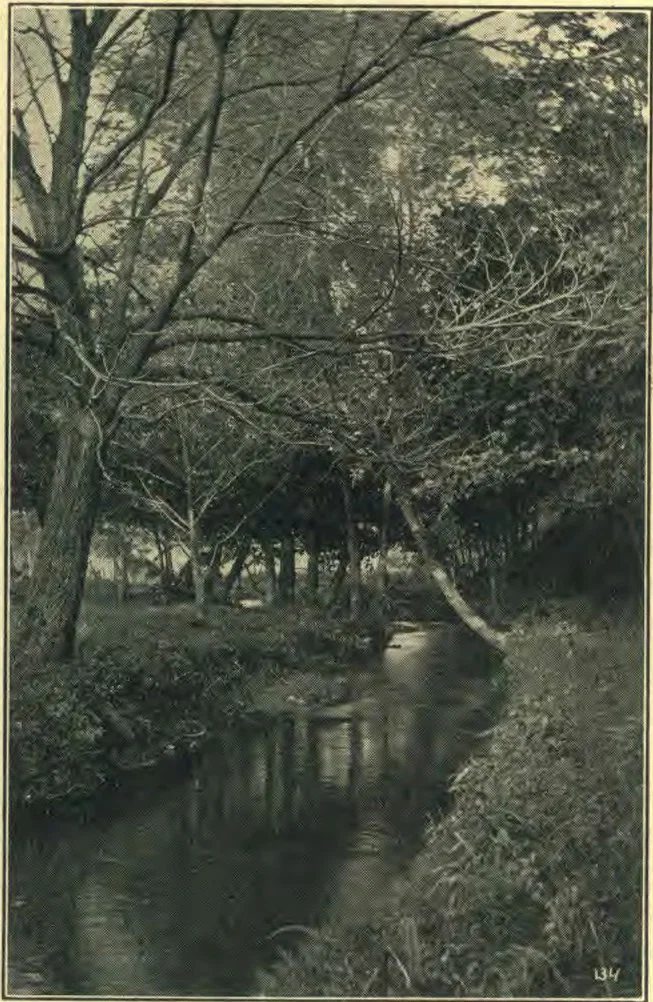
Lemon Creek, Berrien Springs, Michigan
Don’t be a gossip.
Don’t be exclusive; be a mixer.
Don’t come to conclusions too soon.
Don’t let some one else develop your character if you can do it yourself.
Don’t be hyphenated; be one or the other.
Don’t be a sulker.
Don’t leave your things where they don’t belong.
Don’t be a sleepyhead.
Don’t forget the courtesies due your fellow students.
Don’t get angry when the lights go out.
Don’t brag about yourself.
Don’t forget the golden rule.
Don’t be a mule.
Don’t forget the little things.
Don’t steal time belonging to others.
Don’ts for Roommates
Don’t borrow your roommate’s last clean collar, nor wear his favorite tie.
Don’t keep your roommate from studying because you don’t feel like it yourself.
Don’t lose your roommate’s pencil.
Don’t borrow your roommate’s meal ticket.
Don’t burden your roommate with all your woes.
Don’t expect more of your roommate than of yourself.
Don’t expect your roommate to do all the tidying.
Don’t clean up while your roommate is studying.
Don’t impose on your roommate’s good nature.
Don’t borrow without permission.
Don’t be dismal in your room.
Don’t sleep on both sides of the bed.
Don’t expect others to be friendly unless you are friendly.
Don’t visit during study period.
Don’t have your roommate run your errands.
Don’t decorate your room without consulting your roommate.
Don’t call your roommate your “man” or “wife.”
Don’ts for the Dining-Room
Don’t argue with the matron.
Don’t be late to meals; be on time or stay away.
Don’t be a pessimist; if there isn’t enough salt on the potatoes, there is plenty on the table.
Don’t put your neighbor on the dissecting table and leave him to the mercy of others.
Don’t talk so much that others must wait for you.
Don’t pick your teeth in public.
Don’t use anything but your best English.
Don’t say you can find nothing you like to eat.
Don’t read the newspaper at the dinner table.
Don’t talk over matters at the table which all present do not understand.
Don’t dissect, masticate, and digest reputations at the table.
Don’t laugh at the peculiarities of others.
Don’t monopolize either the conversation or the silence.
Social Don’ts
Don’t skate with the same girl all the time. She might like a change.
Don’t say you haven’t time to get your lessons after an afternoon on the ice.
Don’t beg the chaperon to stay longer than he promised; you might want him to go again.
Don’t be a wallflower.
In Public Meetings
Don’t laugh at the mistakes of those on the rostrum.
Don’t fill the back seats first.
Don’t “tat” in meeting, nor “tattle” any time.
Don’t “borrow” from the cloakroom.7
Don’t turn to look at late comers.
Don’t whisper during piano recitals.
Don’t hold seats for those not present. The early comer has the first right, and your friend may not come at all.
Don’ts for the Village
Don’t be loud on the village streets.
Don’t make so much noise anywhere that people notice it.
Don’ts for the Classroom
Don’t try to rob the teacher of his job.
Don’t study other lessons in class.
Don’t contradict your teacher.
Don’t try to bluff; it can’t be done.
Don’t forget your deportment lesson.
Don’t borrow knowledge from your seatmate.
Don’t leave your most difficult study until last.
Don’t come late.
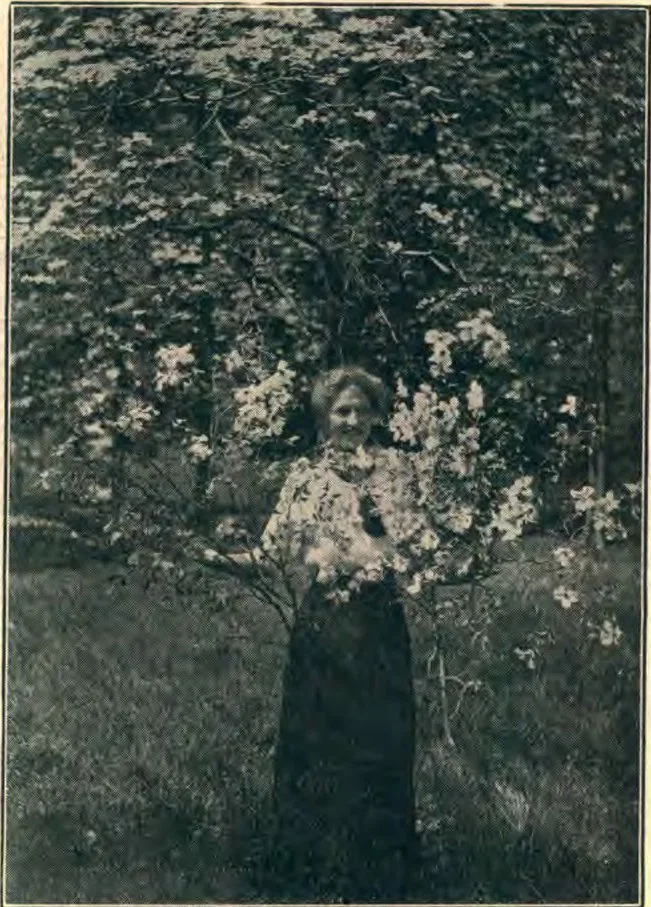
Photo by F. O. Rathbun
Dogwood blossoms
On General Topics
Don’t go to prayer bands to take a nap.
Don’t make loud noises because you feel like it.
Don’t expect the other fellow to do it all.
Don’t let your neighbor’s misbehavior trouble you; take care of your own.
Don’t put off doing what you know you must do soon.
Don’t be discouraged.
Don’t be thoughtless.
Don’t forget that to be great you must be the servant of all.
Don’t forget that God is counting on you.
Don’t rely on others.
Don’t forget a smile’s worth while.
Don’t be neglectful.
Don’t keep others waiting.
Don’t talk for the sake of talking.
Don’t cheat yourself.
Don’t sit in a slouchy attitude.
Don’t think or say anything you would not say if Christ were present.
Don’t go around with a chip on your shoulder.
Don’t disturb students studying by walking heavily on your heels, especially in the chapel.
Don’t write your name everywhere. You will be known if you are worth it.
Don’t steal your neighbor’s time by whispering in the library.
A Lesson in Faith
By H. B. Lundquist
“Well, John, I have made up my mind that I am going canvassing with you, no matter what turns up,” said William Beltman to his roommate one evening. The determination with which he said this made John Kratzer happy.
“William,” rejoined John feelingly, “I am glad to hear you say that. I know we shall both succeed.”
This conversation took place between two boys in an academy. They were dear friends, and had intended to canvass together the previous year, but their plans were disarranged by an offer of a good position with full Sabbath privileges, which William unfortunately received at the critical moment. Now William’s renewed determination to do what he had run away from the previous year was pleasing to his friend.
About three weeks after this conversation, William found on his study table a letter. Hastily tearing it open, he scanned the contents, and throwing it down before his roommate, exclaimed:— “There! Read that. I tell you I’ll not let the devil beat me out of a blessing this year.”
The letter contained an offer of one hundred dollars a month in a line of work with which William was thoroughly familiar, and which he enjoyed very much. It was the same old struggle to fight over again; but William’s ringing determination indicated that the victory had been won.
Two months later found the two boys out in the canvassing field, both far away from home. They had only ten dollars between them, but their hearts were full of courage.
The first three weeks, in spite of working hard, they had poor success. One night, after working hard all day with only meager success, poor William sobbed himself to sleep. But his partner’s indomitable courage kept him from becoming completely discouraged.
What was to be done? Already nearly a third of the summer had sped, with no prospects of realizing their ambition to return to school. The camp meeting being in session, they decided to spend a few days in camp, and if possible secure new territory.
Another week the boys found themselves amid new surroundings, and courage slowly returned. The first two and a half weeks’ work was among Americans of German descent. They were a hospitable, large-hearted folk, eager for truth. And how they did buy books! In just fifteen working days in this section, William had secured his scholarship, and John’s efforts were similarly rewarded.
Finally, however, the German territory became exhausted; and, alas, all that remained was Roman Catholic. But William’s fears proved groundless. These people were a thrifty class of truck and dairy farmers, who seemed even more eager for William’s book than the Lutherans. They were well supplied with churches, having two within a radius of ten miles.
One evening, William, having had a hard time to secure accommodations for the night, finally decided to retrace his steps to a little village. Here in the village, almost under the eaves of an imposing Catholic8church, and next door to the priest’s house, he received a hospitable reception in a lovely Catholic home. That evening, just before retiring, his host, anxious that nothing be left undone to prove his hospitality, assured him that his quarters were fully equipped to give him a good night’s rest, except that he was completely out of holy water!
Another day soon after, as he was walking along the road, a team suddenly pulled up in front of him, and to his dismay William recognized the Catholic priest as one of the occupants of the carriage. His anxiety was relieved when the other occupant of the carriage, a chance acquaintance of the day before, pleasantly inquired as to his success.
It seemed now as if nothing could stop the success of his work. About every second house for miles around had been successfully canvassed. God surely had his hand over the work for good.
It’s a long lane that has no turning, however, and so one bright Monday morning William found himself suddenly face to face with a class of people as indifferent, unappreciative, and inhospitable as his previous customers had been eager, appreciative, and hospitable. Seventeen homes without a single order was a great change from selling in every second house.
Finally the climax of this eventful week was reached. William, upon calling at a comfortable home, found the mother uninterested in his work. However, she suggested that her son might be interested. At this juncture the young man came in. He was perhaps twenty years of age, and appeared to be of more than average intelligence. He granted William the privilege of canvassing him. After the canvass, William showed the young man the names of his customers, among them the names of many Catholics, and the young man inquired:—
“Have you sold that book to all those people?”
“Certainly,” answered William. “Why do you ask?”
“I noticed,” replied the young man, “that your book is written by Mrs. E. G. White, and we Catholics are not allowed to read books by that author.”
“Why?” asked William. “Aren’t you allowed to read authentic history? All the historical data can be verified by referring to the original histories, a reference to which is given at the bottom of the pages.”
“Yes,” rejoined the young man, “I understand that. But that book contains principles which are opposed to the principles of our faith. If those people to whom you sold the books had known this, they would never have purchased.”
As William left the premises, a thousand thoughts sped through his brain. His dismay was only intensified when he ascertained at a neighbor’s that the young man was studying for the priesthood, and was a special friend of the priest whose flock he had canvassed for the book. Would the young man tell the priest, and the priest the people? The young man did not know William, but he did know that William’s book was not one that would make better Catholics of his friends. With success almost within his grasp, the thought of possible failure in the soon-coming delivery unnerved William. But in the midst of his perplexity and fear, one thought came to his relief. The book told God’s truth, and God could keep the young man from telling. And so he began to pray that God would keep him from hindering the work, and in every letter he wrote his friends, he asked them to pray also. So he prayed, and hoped for the best.
Finally the day which was to decide so much for William arrived,—delivery day. His delivery among the Lutherans was gratifying. But finally he reached the first Catholic home. His heart beat fast, and he literally held his breath for fear the book would be refused, yet with feelings of mingled hope and fear he approached the house. He could scarcely believe he was awake when the woman handed him three dollars in payment for the book. Then he got safely past the second Catholic home, then a whole community.
When he finished his delivery, he found that not a single customer among the Catholics had refused his book on grounds that would lead him to believe that it was due to the young man’s influence.
A month later, when the students had returned to the academy, it would have been hard to find two happier boys than William Beltman and John Kratzer. Their brightest hopes had been more than realized. William had learned that God will never disappoint one who trusts in him. H. B. LUNDQUIST.
Unanswered Prayers
By Ella Wheeler Wilcox
LIKE some schoolmaster, kind in being stern,
Who hears the children crying o’er their slates,
And calling, “Help me, master,” yet helps not,
Since in his silence and refusal lies
Their self-development; so God abides,
Unheeding many prayers. He is not deaf
To any cry sent up from earnest hearts;
He hears and strengthens when he must deny.
He sees us weeping over life’s hard sums;
But should he dry our tears and give the key,
What would it profit us when school were done
And not one lesson mastered?
What a world
Were this if all our prayers were granted; not
In famed Pandora’s box were such vast ills
As lie in human hearts. Should our desires,
Voiced one by one in prayer, ascend to God,
And come back as events, shaped to our wish,
What chaos would result!
— Ella Wheeler Wilcox.
The Alphabet of Success
Always mind your own business.
Be wise in all decisions.
Consider and then decide.
Dare to do right in the face of all opposition.
Expect to be treated as you treat others.
Forget and forgive freely.
Gain the respect of your superiors.
Hold honesty sacred.
Insure your reputation by being a “foursquare” person.
Judge yourself before judging others.
Keep a memorandum of your expenses; it will enable you to keep within your means.
Live on the surface what you are beneath.
Make good use of your spare moments.
Never touch a glass of intoxicating liquor; the first leads to the second.
Observe with eyes open, and mouth shut.
Pay your debts promptly.
Quit saying, “I can’t,” and start saying, “I will.”
Remember to make mother and father comfortable while you may. They will not live always.
Stop your swearing. What good do you get out of it?
Tell your troubles to no one. All have enough of their own.
Under no circumstances tell a lie.
Vileness and wrong-doing never “bridged a stream.”
Wear your heart on your coat sleeve.
Xtend a helping hand to the needy.
You are the divisor, life the dividend, the quotient rests with you.