The Youth’s Instructor, Vol. 64, No. 15.

Miscellaneous Notes on Science and Industry
Earlier text: The President’s Working Habits

IV — Gethsemane

(April 22)
LESSON SCRIPTURE: Matt. 26: 36-46.

Questions

1. Where did Jesus now go with his disciples? Matt. 26: 36, first part. Note 1.
2. What did he say to them? Verse 36, last part.
3. Whom did Jesus take with him as he went to pray? Verse 37, first part.
4. How did he begin to feel? Verse 37, last part.
5. What did he say to the three disciples with him? Verse 38.
6. What did Jesus then do? Verse 39, first part.
7. Repeat the words of his prayer. Verse 39, last part.
8. On coming and finding the disciples asleep, what question did he ask Peter? Verse 40.
9. What did he say further to them? Verse 41.
10. On going away a second time, what did he pray? Verse 42. Note 2.
11. On returning to the three disciples, what did he find? Verse 43.
12. What did he then do? Verse 44.
13. How was Jesus strengthened as he prayed? Luke 22: 43. Note 3.
14. With what intensity did he pray? Verse 44.
15. On coming back to the disciples, what did he say to them? Matt. 26: 45, first part.
16. What event was about to take place? Verse 45, second part. Note 4.
17. What did Jesus say further to the disciples? Verse 46.

Notes

1. Over the dark Kidron passed David in sorrow and agony in his flight from Jerusalem a thousand years before, over the Kidron to his awful agony for a lost world passed David's Son, the promised Seed. Gethsemane was an inclosure at the foot of the Mount of Olives. Here our Lord was accustomed to go with his disciples for prayer and instruction. Little did they realize the meaning of this last journey across the historic brook.
2. The humanity of our Lord shrank from the awful agony before him; not the physical suffering alone; not the mocking, the shame, the anguish; but from the awful sense of sin which hid the Father's face, and weighed upon the Son of man like the agony of a lost soul. No wonder he prayed that if possible the cup be removed. God did not condemn him for that. He does not condemn us when we, in human weakness, pray for deliverance from some terrible trial. God pities and loves us still; for “he knoweth our frame; he remembereth that we are dust.” He loved not less his Son in dark Gethsemane than on the shining mount of transfiguration.
3. The angel could not lessen the load, could not take the burden upon the Saviour's heart, could not bear the cross, though he would willingly have done so; but he brought strengthening grace and cheer from the throne. Even so with us. For our own good there may be burdens, heavy to bear, laid upon us, that we may draw needed strength from the infinite Source.
4. “The hour is come.” Mark 14: 41. The long-delayed hour had come, the crisis of the world, when divinity, compassed about with the infirmities of humanity, met its supreme test. The Saviour had anticipated the struggle before; he had talked of it with Moses and Elijah; he had poured out his soul in prayer during entire night seasons concerning it; now the reality had come.
“Yet a third time he left them to pray as before. And now he returned victorious. After three assaults had the tempter left him in the wilderness; after the threefold conflict in the garden he was vanquished. Christ came forth triumphant. No longer did he bid his disciples watch. They might, nay, they should, sleep and take rest, ere the near terrible events of his betrayal; for the hour had come when the Son of man was to be betrayed into the hands of sinners.”—Edersheim's “Life and Times of Jesus,” Vol. II, p. 541.

Prayer Signals

NEVER has the need for prayer been more imperative than at present. Possibly we intend to pray during the day, but our days are filled up, and no one reminds us to pray. Consequently we forget.
We are commanded to “pray without ceasing.” This does not mean that we should pray audibly all day long, but that a Christian should keep his heart lifted to God perpetually. This we cannot do unless we pray many times a day. But what is to remind us to pray? Each day has plenty of signals to prayer. When we hear the ringing of a bell, what should it bring to our memory? Let us resolve that every time we hear a bell,—a clock, telephone, doorbell, trolley car,—it shall remind us of God, and we will commune a moment with him. How many times a day do you climb a flight of stairs? Let each ascent or descent be a prayer signal. If we choose our own prayer signals, some commonplace of daily life, and persevere in using them, we shall thus direct our lives to God.
John R. Mott tells of a friend living in Montclair, a suburb of New York, who passes through the Bergen Tunnel twice a day. As the train plunges into the darkness, he stops reading and lifts his heart to God. He says he “never enjoyed more precious seasons of communion than there in the heart of the hills.” Not many of us pass through tunnels, but there are moments in every day that we can use as periods of prayer.
Have you ever thought that you can pray as you walk from one place to another? This is a literal walking with God that has become very precious to some Christians.
Robert E. Speer, at a convention, once asked a congregation how many had prayed on the way to church. As but few hands were raised, he spoke of the lost opportunity. “God has commanded us to pray the Lord of the harvest to send forth laborers into his harvest,” he said, “and you forgot all about it even when you were on your way to a missionary meeting. Who knows what the result might have been, with all these young people assembled in Boston, if you had obeyed?”
Thus many of God’s children are “buying up opportunities” for prayer. “How wonderful it would be,” said a pastor in Ohio, “if prayer were visible, and we could see it as it goes up to God! We should find people praying in places where we least expect. There goes an old man driving a cart. He seems almost asleep, but do you see that stream of sweet incense going up from the cart? It is the old man’s prayer, for he is talking with God as he slowly moves along. And look at that crowded trolley car! Three streams are going up from it as it rushes along! Three passengers are praying—a pastor, a business man, and a woman; yet no one guesses it, save themselves and God.”
ARABELLA JAMES.

Do It Now

CAN you speak a cheering word? Do it now. Or correct some falsehood heard? Do it now. Don't put off until “some day” All the good things you might say, But begin now, right away— Do it now.
Can you help some one in need? Do it now. Though it be a trifling deed, Do it now. Though it seems so small to you, It may help somebody through Sore distress, and hope renew— Do it now.
Can you rectify a wrong? Do it now. For the right stand firm and strong, Do it now. As you journey through the years, Grasp each chance as it appears, Quick, before it disappears— Do it now.
— Mary Leoline Hill.

An Explanatory Note

THE students and the teacher of the journalism class at Emmanuel Missionary College wish to thank the editor of the YOUTH'S INSTRUCTOR for the opportunity of furnishing the material for this issue of that paper.
Although for several years in the past Emmanuel Missionary College students have contributed news notes, stories, and other articles for the INSTRUCTOR, this is the first time that a class has undertaken to furnish all the material for an issue. With the exception of the Missionary Volunteer and Sabbath school lessons, all articles and pictures were contributed or selected by the class in journalism, with Mr. A. P. Heflin and Miss Olive Woodard as editors.
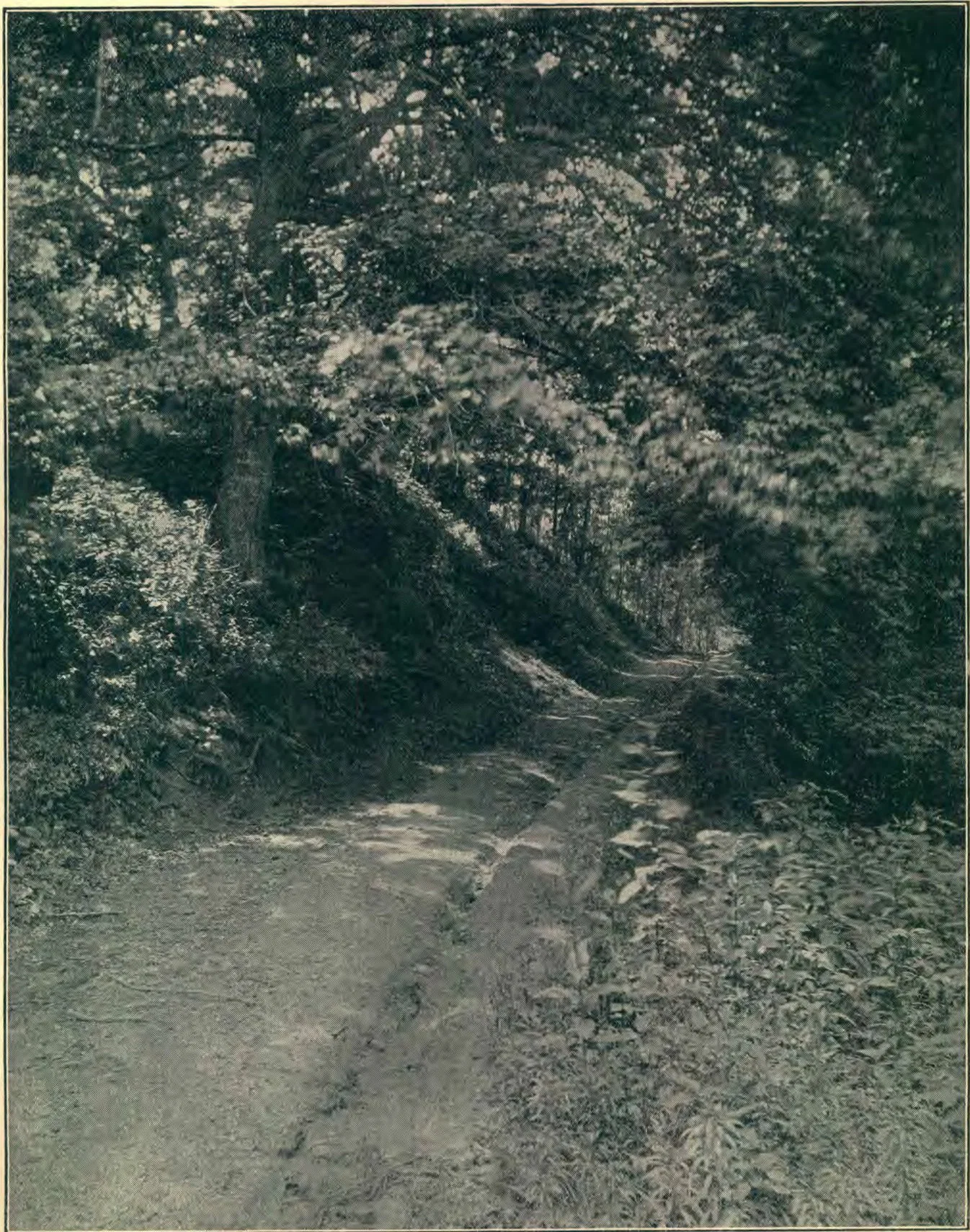
The stories were selected from the college rhetoric notebooks, the poems from exercises by the literature classes, and the reports from foreign lands came from the alumni. With the exception of the Cuban picture, the photographs were all taken on the college farm.
The students have endeavored to represent not only the English department, but the interests of the college as a whole. The work has given the class a valuable experience, and they appreciate the excellent models they have had to guide them, in previous numbers of the INSTRUCTOR. LAURA FOSTER RATHBUN.

Friendship

FRIENDSHIP is a strong and habitual inclination in two persons to promote the good and happiness of each other.—Addison.
The warmth of true friendship, the love that binds heart to heart, is a foretaste of the joys of heaven.—Mrs. E. G. White.
Friendship is the shadow of the evening, which strengthens with the setting sun of life.—La Fontaine.
LOOKING TOWARD “THE POINT” AT EMMANUEL MISSIONARY COLLEGE
THE EARLY MORNING OFTEN FOUND JESUS IN SOME SECLUDED PLACE, MEDITATING, SEARCHING THE SCRIPTURES, OR IN PRAYER.

You have reached the end of this edition.

The Youth’s Instructor · Apr 11, 1916