MEMORY VERSE: “The fear of man bringeth a snare; but whoso putteth his trust in the Lord shall be safe.” Prov. 29: 25.
STUDY HELPS: “Patriarchs and Prophets,” pp. 649-654; “Bible Lessons,” McKibbin, Book Two, pp. 67-70.
“In his hands we are safe.
We falter on through storm and mire;
Above, beside, around us
There is One will never tire.”
Questions
1. How did Jonathan, the crown prince, come to regard David? How did Saul honor him? How did Jonathan show his friendship for David? 1 Sam. 18: 1-4.
2. What position of trust did Saul give to David? What circumstances aroused the jealousy of the king? Verses 5-9.
3. What did the evil spirit in Saul lead him to do? Verses 10, 11.
4. What caused Saul to feel afraid of David? What change did Saul then make in David’s work? What caused Saul to continue to fear him? How did the people regard David? Verses 12-16.
5. What further step did Saul’s hatred and jealousy lead him to take? What evidence of true friendship did Jonathan now give to David? 1 Sam. 19: 1-3.
6. How did Jonathan plead for David? What was the effect of this plea? Verses 4-7.
7. What service did David again give against the enemies of Israel? What did Saul’s evil heart lead him again to attempt? How did David escape? Verses 8-10.
8. What danger threatened David even in his own home? How did his wife assist him to escape? Verses 11, 12.
9. How did David’s wife manage to delay those who would have taken him? Verses 13-17.
10. With whom did David seek refuge? Verses 18, 19.
11. What caused the failure of Saul’s attempt to capture David while he was with Samuel? Verses 20-24.
Topics for Thought and Discussion
The evils that spring from jealousy.
The fine qualities of character shown by David.
The fine qualities shown by Jonathan.
Tests of friendship.
Notes
Drug Traders Flood China
ALL the civilized powers contributed to rid China of the blight of opium, which had sapped the energy and the strength of her 400,000,000 people for centuries. That was a big achievement. But while the Great War has been in progress and the vigilance of the Western powers has been relaxed, advantage has been taken thereof to flood the country with morphia and with cocaine.
These drugs are being manufactured by the ton in Korea, in Formosa, in the Philippines, and in certain districts of Japan, especially around Osaka, in defiance of the prohibition of her government, and are being disseminated all over China. The European and American managers of the huge Kailan mines and of those of Tong-shan complain that the output of the mines and of the workshops, also of the workshops of the Peking-Mukden Railroad, is suffering very seriously from the morphia curse. There is hardly a native shop in China where morphine and cocaine cannot be purchased over the counter, while an enormous trade is being carried on by peddlers.
Missionaries of all denominations, foreign merchants, consular officials, mine managers, etc., are all alive to the phenomenally rapid growth of the evil, which is completely taking the place of the opium curse, and is infinitely more injurious in its effects. The Chinese government is in such a condition of confusion and chaos that it is hopeless to rely upon it to do anything efficacious to arrest the evil, no matter how much it may deplore it. The only way in which to deal with it is to impose drastic penalties upon those caught illicitly manufacturing these drugs in Korea, Formosa, the Philippines, in Japan, and in the Dutch possessions, and to confiscate every vestige of the drug openly imported or smuggled into China, where the great customs service founded by Sir Robert Hart is still officered by foreign officials, is well-managed and far-reaching in its activities and operation.—Washington Post.
Excuses
By F. D. C.
HOW easy it is to make excuses — for ourselves! Were we half so ready to excuse others, the world would be far brighter. This proneness of the human heart to excuse itself is depicted by Amos R. Wells in the following simple illustration:
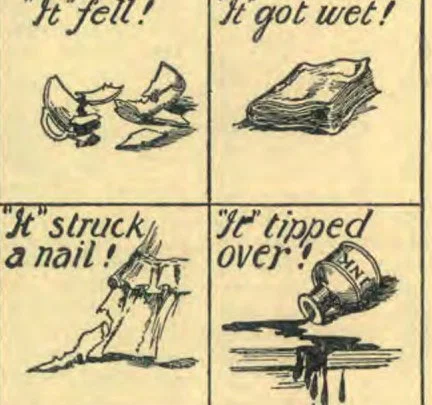
“We say, ‘It fell,’ when we ourselves let it fall and broke a cup. We say, ‘It got wet,’ when our carelessness leaves a book out in the rain and it is spoiled. We say, ‘It struck a nail,’ when our dress is torn because of our heedlessness; and we say, ‘It tipped over,’ when we ourselves tipped over the ink bottle. We blame inanimate objects and the impersonal ‘it’ for what is our own fault.”
We do all this, and much more. Perhaps you do not, but can you produce bona fide witnesses to that effect?
Excuses are not a product of the twentieth century, but came with the first breath of sin. The two have since been inseparable.
If once we could get our own consent to the truth that “excuses are the patches with which we seek to repair the garment of failure,” we would see that the patch does not help in the least, but makes the unsightly garment all the more unpleasing.
Failure cannot be repaired with excuses. Let us then determinedly divorce ourselves from the excuse habit. If we do not, some day we shall attempt to give the great God of heaven an excuse for not heeding his invitations and commands. Herein the futility of excuses reaches its climax. Excuses from another are unsavory to us; they must be an abomination to Him who comprehends all things. F. D. C.
More Fires Needed
By F. D. C.
THE recent destructive fire at Beechwood Academy burned up many belongings of the students; but the losers were none the poorer for the fire. There is a withholding that tendeth to poverty, and there is a giving that does not impoverish; so there are fires that enrich while they destroy. Such was the Beechwood fire. It was of incendiary origin, the students themselves setting fire to “their light popular music, useless magazines, their frivolous books and games.”
With this unique burning, ascended the prayer of the students for strength to remain true to the high ideals that were responsible for the cleansing fire.
We are told that the basis for separation of the good music from the bad was their choice of what they would play to Jesus were he their guest, desiring to hear them play and sing. And I suppose a similar standard separated the wheat from the chaff in the case of books and magazines. It is not a bad basis for division, do you think? Why not try it yourself?
F. D. C.
Everybody's Lonesome: A Poem
“WAY down deep within their hearts
Everybody’s lonesome;
Far within their secret parts
Everybody’s lonesome;
Makes no difference how they smile,
How they live or what their style;
Once in every little while
Everybody’s lonesome.”
Queen of the World
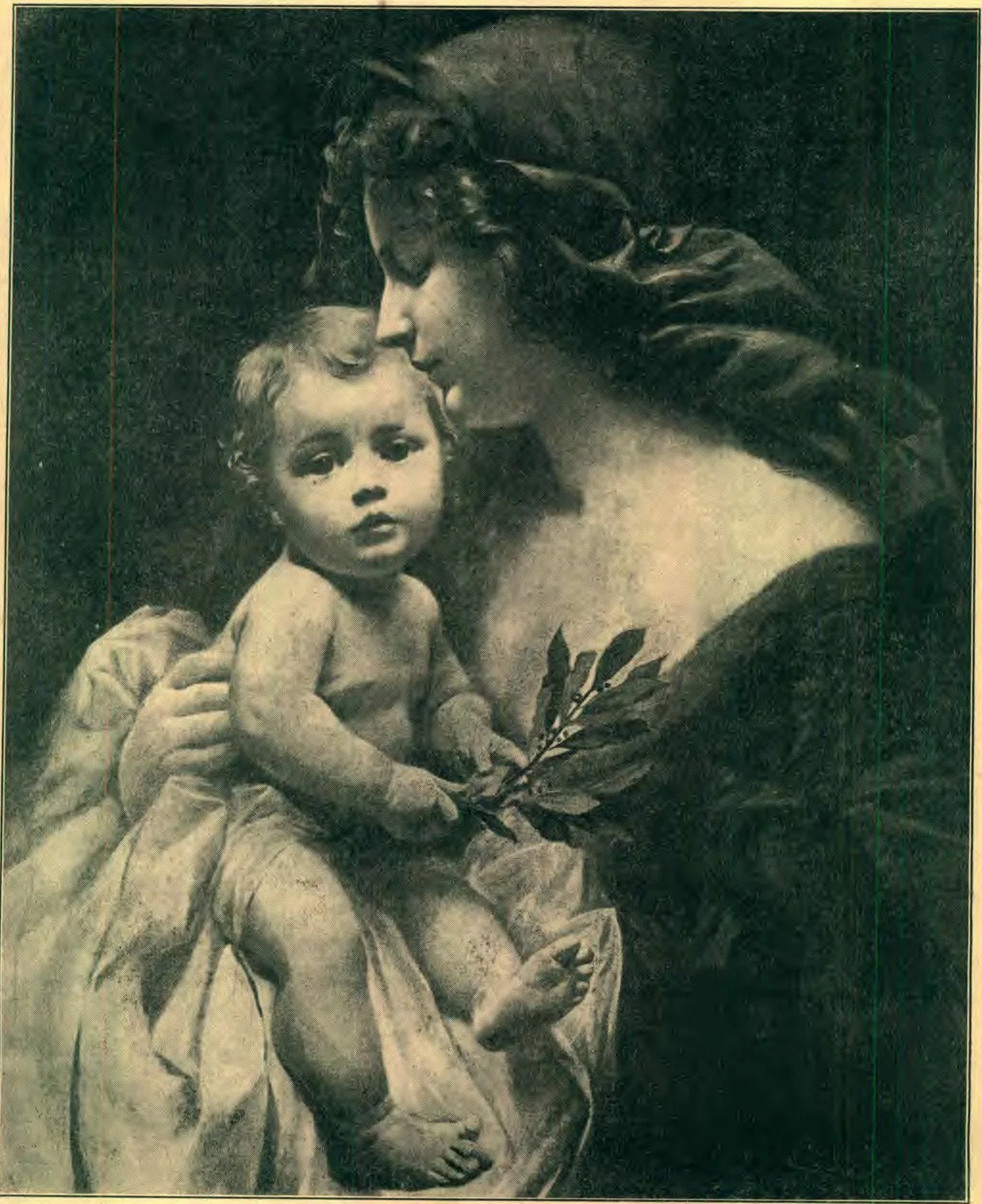
“THE mother, in her office, holds the key
Of the soul; and she it is who stamps the coin
Of character, and makes the being who would be a savage
But for her gentle cares, a Christian man:
Then crown her queen of the world.”
God Sends Angels in Sorest Affliction
By Mary Howitt
God always sends his angels, in some form, in one's sorest affliction.—Mary Howitt.
“The ideal mother is the product of a civilization that rose from the manger of Bethlehem.”