Your ShelfYour Projects

Signs of the Times, Vol. 36, No. 36.

True Christian Ministry
Earlier text: Our London Letter

Sleep as an Enemy

SLEEP is often one of the worst enemies we have. Because it has a rightful and important place in life, the devil uses this fact to hoodwink us and thereby to plunder us of some of our choicest blessings. He persuades us that the few minutes’ “overtime” sleep in the morning, or the drowsy indifference of the afternoon or evening, is a demand made upon us by duty alone. We are ready enough to agree with him. By yielding to the inviting temptation of sleep or drowsiness, we lose time and opportunity that will never come back,—and we are the poorer for every such loss, all through life.
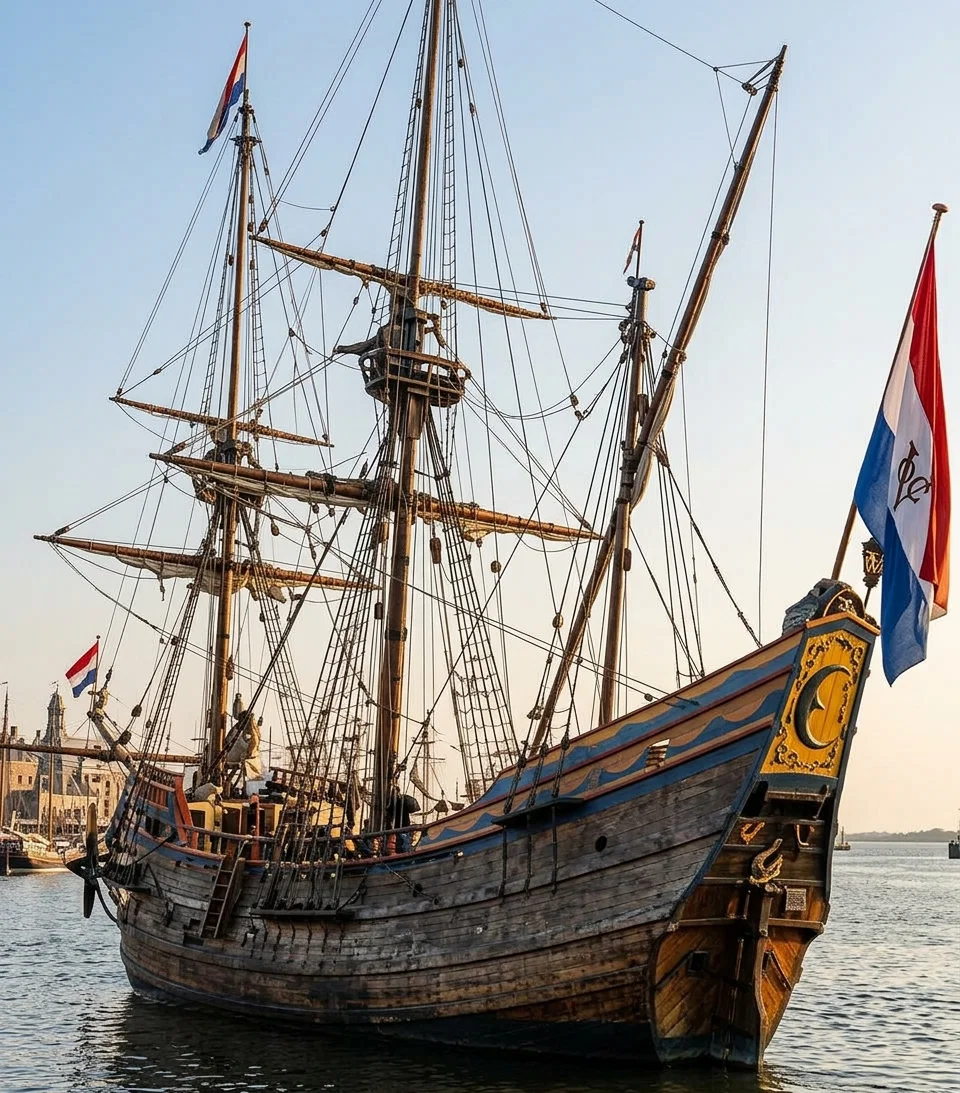
Hudson's "Half Moon"
One of the cruelest burdens laid on Christ Himself was caused by the failure of His dearest friends in this very thing, when they yielded to sleep rather than watch with Him one hour, in that night before His crucifixion. We may well believe that their sleep-caused failure was one of the bitterest memories of their lives. The men who have learned to fight and conquer the inclination to sleep when they ought to be awake are the men who stand out head and shoulders above their fellows in ability and accomplishment.—Sunday School Times.

Rice versus Beef

“While they dwarf their trees and shrubbery,” says a writer, “the Japanese have made a race of giant men—a race of wrestlers. These wrestlers often weigh 200, 300, or 400 pounds. At the Imperial Hotel, in Tokyo, they brought a champion wrestler to my room. He was prodigious in size and as fat and fair as a baby. He was a Hercules in strength, but looked like an overgrown cherub of Correggio.
“What do you eat?” I asked.
“Rice—nothing but rice.”
“Why not eat meat?”
“Meat is weakening. Beef is 70 per cent water. Rice is 80 per cent food. I ate lean beefsteak once, and my strength left me. The other man ate rice and threw me down.”
“My courier said, ‘This wrestler is the Sullivan of Japan. No one can throw him.’”
— Omaha Weekly Bee.

EMMA PARISA NULTON

Life

“Be not deceived; God is not mocked: for whatsoever a man soweth, that shall he also reap.” Gal. 6: 7.
LIFE is not a fairy bubble To be filled with fancies gay; ’Twas not given us to squander On vainglory and display. Life is given for a purpose, And the hours now flitting past Mean for us eternal blessing, Or eternal loss at last.
Passing quickly! O how fleeting, How uncertain are our days! There is nothing in profession, ’Tis the work of life that pays. Weighed in God’s eternal balance Are our purposes and plans; Character alone is valued; It is precious in His hands.
Nothing can be hidden from Him; Secret sins and motives vile Must be given up and pardoned Ere we win the Master’s smile. Life is real, yes, and earnest; ’Tis the planting of the grain That in God’s eternal harvest Will be meted us again.

EMMA PARISA NULTON

Two Noted Events

SEPTEMBER 2, 1609, Henry Hudson, in his good ship De Halve Maen (“The Half Moon”) entered New York Harbor. He wrote in his log-book, “This is a very good land to fall in with, and a pleasant land to see.” A celebration in honor of that event, and of Fulton’s steamboat achievement, will be held September 27 to October 3. There will be a parade of 800 vessels on the Hudson; navies of this country and foreign powers will participate; but the center of interest will be the little craft, the reproductions of Hudson’s “Half Moon,” and Fulton’s “Clermont.” The new “Half Moon” is sent by Holland, equipped within and without as the original is supposed to have been equipped. The New York Herald gives this description: “The ‘Half Moon’ is built of heavy oak-timber with the high poop and long-nosed prow now seen only in prints of Dutch and Spanish galleons. She is of eighty tons displacement, sixty-three feet long, eighteen feet beam, and draws seven and one-half feet of water. Her crew consists of twenty men. The vessel is rigged with hand-woven sails, will carry hand-worked flags, and is antique enough in her fittings to confuse the best seaman afloat.” The new “Clermont” is 130 feet long.

A Wise Distinction

“We can do without cake, Mary, but we can not do without education,” was the reply a German-American mother made when her daughter asked for more table luxuries than had been provided. That was a far-seeing distinction to make, but it resulted in sending out sons and daughters as workers whose names are world-famous to-day. Learning to know the difference between dispensables and indispensables has helped a great many people to success. When you find yourself saying, “I can not do without this,” or “I must have that,” look into the matter closely, and try to know what sorts of choices you are really making, whether for temporary or lasting good. It will make a great difference to you some day. Phillips Brooks once said that he thought it far preferable to be able to go without a breakfast or a good dinner than to be without a desire to help on a good cause, or to lend a hand to a needy brother.—Kind Words.

Womanly Love

A WOMAN who could always love would never grow old; and the love of mother and wife would often give or preserve many charms if it were not too frequently combined with parental and conjugal anger. There remains in the faces of women who are naturally serene and peaceful, and of those rendered so by religion, an after-spring, and later an after-summer, the reflex of their most beautiful bloom.—Richter.

“Try Again”

If at first you do succeed, Try again! Life is more than just one deed; Try again! Never stop with what you've done, More remains than you have won, Full content's vouchsafed to none; Try again!
If you've won on lower plane, Try again! Life is more than one campaign; Try again! Send your gridirons to the fore, Strive to seize one standard more, Still ungained are palms galore; Try again!
If at first you do succeed, Try again! For future harvest sow the seed, Try again! Rise with sacred discontent, Realize that life is lent On highest searches to be spent; Try again!
— Exchange.

“The Doorless House”

A RECENT periodical has an article on “The Doorless House,” meaning houses which have only portieres or screens and no doors, and therefore no privacy. Not only doors, but also the old-fashioned family room has disappeared from modern houses, and home life in the old intimate sense has largely disappeared. Most modern families have homeless homes, especially if they live in cities. Family life is waning, family prayer is rare, and home training of children in religion is found in but very few families to-day.—Detroit Tribune.

Life and Health

A PRACTICAL health journal, published with a view of meeting hygienic needs in every home; teaching how to care for the health and how to preserve life; prescribing simple home treatments to assist nature in throwing off diseases rather than adding more poison by using drugs or unnatural stimulants as remedies; teaching how to avoid disease as far as possible, how to manage in the home when sickness does come, and how to combat the disease by simple remedies which nature provides.
Send for sample copy and special rates to agents.
Price 10 cents per copy or $1.00 per year.
Address, LIFE & HEALTH, Takoma Park, D. C.

LIBERTY

THE OFFICIAL ORGAN OF
THE RELIGIOUS LIBERTY BUREAU
An illustrated, 48-page, quarterly magazine, published as an exponent and advocate of true religious liberty; defending Christianity and the rights of conscience; upholding the Bible as the infallible word of God; recognizing the church and state as ordained of Heaven for specific and distinct purposes, but vigorously protesting against the alliance of the church with the state in the attempt to advance religion and to promote the state.
Price 25 cents per year. Liberal terms to agents.
Address, LIBERTY, Takoma Park, D. C.

Our Little Friend

An Illustrated Paper for the Smaller Men and Women, for the Children and Little Ones
Instructive and entertaining, clean, wholesome, sensible. It is a character builder, a helper to father and mother. Our Little Friend would plant seed in the joyous life of the children in the Present, that it may bear blessed fruitage in the Harvest of the Future. Respect your child's individuality. Take the paper for him or her. Only 50 cents a year.
Address, OUR LITTLE FRIEND, Mountain View, Cal.

Thoughts from the Mount of Blessing.

— An exposition of Christ’s Sermon on the Mount. It has 218 pages and six chapters: On the Mountainside, The Beatitudes, The Spirituality of the Law, The True Motive in Service, The Lord’s Prayer, Not Judging but Doing. A new edition just printed on fine enameled paper, new type, and reillustrated with 27 beautiful half-tone engravings specially prepared for the book by eminent New York artists. It will be found full of comfort and blessing by all fortunate enough to obtain and read it. A beautiful gift book. In paper covers, 35 cents. Address this office.

Seventh-day Adventist Hymn and Tune Book.

The best selected and arranged hymn and tune book ever issued. Contains 1,413 hymns and 568 of the choicest tunes and sacred songs ever written. 640 large pages. Cloth, plain edges, 75 cents; half leather, marbled edges, $1.50; Russia, marbled edges, $2.00; Turkey morocco, gilt edges, $2.25; Levant, round corners, gilt edges, leather lined, $3.25. Address this office.

Civil and Religious Liberty

Does the Constitution of the United States need “reforming”?

We have secured a few copies of that rare pamphlet, VIEWS OF NATIONAL REFORM, which we are selling at the original price.
There are more than a dozen splendid articles in this collection of Views, all right to the point. One of them contains that stirring speech by Senator Crockett of Arkansas, and is well worth the price of the entire series.
As this valuable pamphlet has long been out of print, we can fill orders only as long as our limited stock will last.
Price, post-paid, 15 cents

Pacific Press Publishing Association

Mountain View, California

Women’s Revengeful Feeling in the Pittsburg Strike

One of the bad elements in the Pittsburg strike is the feeling of the women. The foreign women are said to be much more implacable and revengeful than the men. One woman explained it: “We won't let our men act as pall-bearers, because men forget too readily. Women never forget.” It has been a bloody, cruel struggle thus far, with the probability that there may be much more bloodshed before it is over.

A New Oceanic Canal.

The New York World has a despatch from Panama, dated August 14, stating that the Republic of Colombia will not sign the tri-partite treaty with the United States and the Republic of Panama, relating to the Panama Canal. On the other hand, Colombia is determined to dig a canal of her own, or rather let England do it. It is stated that a much easier place has been discovered east of the present Panama Canal, and wholly on Colombian territory. The route is forty-seven miles long, and only half a mile divides the head waters of a stream flowing into the Atlantic, from the source of a stream flowing into the Pacific. That spot is 147 feet above the sea level, and the digging would all be in alluvial soil. The estimated cost is $100,000,000, considerably less than the United States has already expended on the Panama Canal. The query is whether the Republic of Panama, under the United States, will enlarge its boundary so as to take in the new route. In such case international complications would probably follow.

A New School Site.—

The California Conference Association has purchased the large Angwin Hotel property near St. Helena for school purposes. A fuller account with illustrations will be given next week.

The Safest Place.

Not long since we heard a woman who purported to be a Christian lecture on a recent calamity. She mentioned the fact that so many were lost in accidents in theaters and other public places of amusement, and also stated that when she attended playhouses she saw to it that she was near a safe exit, where she would be safe! It is somewhat surprising that a Christian would feel safe at all in such a place. It is doubtful whether angels of heaven accompany one past the doors, and surely where angels do not go, no follower of Christ can safely go.

Mysterious Poison Fumes Aboard the Buffalo

A strange tale comes from the sea. The cruiser “Buffalo,” which reached San Francisco August 29, tells of a tremendous typhoon which stove in the bulkheads of the steel-plated ship, stripped bodies naked, and released poison fumes which struck the captain blind and caused the death of five other men. These fumes, which came from the paint locker, are regarded as mysterious by the United States Naval experts, now investigating the matter at Hongkong, for it was in the China Sea where the typhoon struck the ship.

Children’s Health in London

From a medical examination of 40,000 children in London, it is learned that thirteen per cent suffer from defective vision; one per cent from heart disease; one per cent from lung disease; and two per cent from bodily deformity. One writer declares that more care is taken in England for the breeding of horses than for the raising of sound and healthy children, and that is presumably true everywhere in civilized countries. The same investigation in other great cities would probably show the same deterioration of the human race.

North Pole Discovered.

Dr. Frederick Cook, not having been heard from for a year and a half, given up for lost or dead, the object of a special search party, announces from Lerwick, Shetland Islands, that he has discovered the North Pole, and that he planted there the flag of the United States April 21, 1908. It was a cheerless spot that he found at the pole to have so aroused the ambition of men for so many years—an unbroken sea of ice for hundreds of miles, no land, and no life! The temperature on the journey dropped at one time to over eighty degrees below zero. It was over a year from the time he left the pole until he reached Upernavik, May 21, 1909.

Poor Mexico Has Had a Fearful Time

Poor Mexico has had a fearful time. Almost immediately upon the heels of the awful earthquake disaster in the southwest, come the fearful floods in the northeast in and around the city of Monterey. The heavy fall of rain in the mountains gorged the mountain streams until they swept through the city, and it is said that 1,500 persons have been destroyed and property to the amount of $12,000,000. More than 400 bodies had been taken from the water August 29, and the last news from there was that the Santa Catarina River was still rising and the rain still falling in torrents.

Spiritualism Is Not Christianity

Almost everything is religious nowadays. For instance, from a city in Manitoba comes this information of a notice upon a church: “Christian Spiritualist Church, Services Sunday at 3:00 and 7:00 P.M., Tuesday and Thursday at 8:00 P.M., for the exercise of spiritual gifts. All are welcome. Pastor, Rev. ——. Prof. ——, Clairvoyant, sittings daily, 10:00 A.M. to 7:30 P.M. Entrance at back of church.” But let our readers forever understand that there is no Christianity in a church based on the revelation or principles of modern Spiritualism.

Women Outnumber Men in Church Attendance

The new census bulletin has come to hand, upon which we will make further remarks in the future. We note this one point, that a far larger number of women go to church than men. Out of the church-membership in the United States, of nearly thirty-three millions, the males form 43.1 per cent of the attendance, against 56.9 per cent females. In the Roman Catholic Church it is nearly one half, the male per cent being 49.3, the female, 50.7 per cent. Among the Protestants alone there were 39.3 per cent male; 60.7 per cent female. Of Christian Scientists only 27.6 per cent were males; among the Shakers 21.3 per cent males; while in the Greek Orthodox Church 93.9 per cent were males. Church-members in 1900 formed 39.1 per cent of the population, as against 32.7 per cent in 1890. The Roman Catholic increase was far greater than that of the Protestants.

Things Not So.

At the tenth annual session of the Astronomical and Astrophysical Society of America at Green Bay, Wis., Prof. C. Pickering, the president, with a good deal of rough emphasis struck against some of the popular beliefs with which the daily papers delight to regale their readers. “The public,” he tells us, “should not be deceived into believing that we will ever be able to signal to or talk with Mars. It is the veriest rot.” He also declares that those who fear the earth will be destroyed in a collision with some hobo comet, are indulging in pure idiocy. Another wild suggestion that was placed in the impossible class was going up in a balloon with telescopes in order to make observations. The only reason Prof. Pickering could give why scientists would write of these things is “the lure of gold.” As professional scientists they are not very well paid, while the big sensational newspapers pay princely sums for their articles. The information in regard to this earth’s destruction is found in the word of God. That gives us a knowledge that is far above that of science.

The Aerial Torpedo

Now that the conquest of the air has been achieved, the men of war seem to be monopolizing the opportunity of its service, and a despatch from Washington, dated August 14, declares that a weapon of destruction more effective than the submarine torpedo and more far-reaching than the heaviest gun, is the aerial torpedo invented by Emile Berliner at Washington. It is a winged engine of warfare. It will be provided with aeroplanes and motors, with gyroscopes for keeping it in balance, and would be directed against the upper parts of a ship. A small aeroplane, Mr. Berliner tells us, would carry a charge of cordite of from 150 to 250 pounds, and no ship could move fast enough to escape its attack. The cost of construction would be small. Thousands could be built for the amount that covers a single battle-ship, and the speed of a hundred miles an hour is possible.

The Worst City

“The Worst City.”—Sometimes New York is called “the worst city in the world.” This is simply because it is bigger. The New York World well puts it: “We have more kindness and more crime, more selfishness and more sacrifice, more heroism and more cowardice, more luxury and more squalor, than any other place in America, because there are more people; but the proportions are about the same as in any average village;” and this is true. Unregenerate human nature is about the same everywhere, and a great mass of people, congested as they are in New York City, made up in part of the criminal cast-offs of the Old World, have a great opportunity to show more of crime and more of the uncontrolled passions of the human heart.

Germany’s Plans for Invasion

Gen. W. W. Wetherspoon, acting Chief of the Staff of the United States Army, President of the Army War College, in Washington, is quoted as saying that every great power of the world has compiled in the private records of its general staff a series of plans, some of them complete, and even to the most apparently non-essential details, for the invasion of the territory of practically every other nation of like class. The plans of the Germans are supposed to be the most complete of all. It is the German way of doing things. Consequently it is no news to the American Government that Germany has plans for the landing of an invading force of 165,000 men.

You have reached the end of this edition.

Signs of the Times · Sep 15, 1909