NOTE.—It is thought by most commentators that this epistle was written when John was an old man, on account of the form of expression used in addressing those to whom he wrote. The exact date is uncertain, as is also the place from which it was written; but the epistle itself is the embodiment of certainty. John knows whereof he speaks. He knew God and his Son Jesus Christ. He had been with the Lord during his years of earthly ministry, suffered with him the scoffs and jeers of Jew and Gentile, leaned upon him, learned of him, loved him and was loved by him. Now he tells us what he knows of the Lord and his will concerning us. He has given us a divine commentary upon the law of God, and answers in no uncertain way any charges that might be made in regard to its abolition. The whole epistle should be read in connection with the study of the lesson. Learn the following texts: 1 John 2: 4, 12, 15; 3: 1-3, 16, 18, 24; 4: 7, 10, 11; 5: 3, 4, 11, 12.
5 "And this is the message which we have heard from him, and announce unto you, that God is light, and in him is no 6 darkness at all. If we say that we have fellowship with him, 7 and walk in the darkness, we lie, and do not the truth; but if we walk in the light, as he is in the light, we have fellowship one with another, and the blood of Jesus his Son cleanseth us 8 from all sin. If we say that we have no sin, we deceive our 9 selves, and the truth is not in us. If we confess our sins, he is faithful and righteous to forgive us our sins, and to cleanse us 10 from all unrighteousness. If we say that we have not sinned, we make him a liar, and his Word is not in us.
1 "My little children, these things write I unto you, that ye may not sin. And if any man sin, we have an Advocate with 2 the Father, Jesus Christ the righteous; and he is the propitiation for our sins; and not for ours only, but also for the whole 3 world. And hereby know we that we know him, if we keep 4 his commandments. He that saith, I know him, and keepeth not his commandments, is a liar, and the truth is not in him; 5 but whoso keepeth his Word, in him verily hath the love of 6 God been perfected. Hereby know we that we are in him; he that saith he abideth in him ought himself also to walk even as he walked."
Golden Text: "If we confess our sins, he is faithful and just to forgive us our sins." 1 John 1:9.
SUGGESTIVE QUESTIONS.
(1) Who is the source of the message which John gives? Verse 5. (2) What is that message? Same verse. Note 1. (3) What is said of him who claims fellowship with God while walking in darkness? Verse 6. (4) What relation do our deeds then have to the truth? Same verse. Note 2. (5) What relationship do those sustain to one another who walk in the light? Verse 7. (6) What is the result to those who do this? Same verse. (7) What is the true condition of those who claim to be without sin? Verse 8. (8) What will the Lord do for us if we confess our sins? Verse 9. (9) What are we doing if we claim that we have not sinned? Verse 10. Note 3. (10) What then is our condition? Same verse. (11) For what purpose did John write these things? Chapter 2, verse 1. (12) But what provision was here for those who had sinned? Same verse. (13) How complete is the atonement he has made for sin? Verse 2. Note 4. (14) How may we know that we know God? Verse 3. Note 5. (15) What does God through John say of those who claim to know him and do not keep his commandments? Verse 4. (16) What does the same authority say of the relation between the truth of God and such a person? Same verse. (17) In whom is the love of God truly perfected? Verse 5. (18) What knowledge does this keeping of the commandments give us? Same verse. (19) What is incumbent upon him who claims to abide in Christ? Verse 6. Note 6.
NOTES.
1. God is light.—"The expression is not a metaphor. Light is immaterial [in the sense of the gross material that mortals know], diffusive, pure, and glorious. It is the condition of life. Physically, it represents glory; intellectually, truth; morally, holiness. As immaterial, it corresponds to God as a Spirit; as diffusive, to God as love; as the condition of life, to God as life; as pure and illuminating, to God as holiness and truth."—Vincent. He who lets into his life this light of God will see in the Word of God beauties of whose existence he had never dreamed. In him is no darkness at all.—This whole epistle is written to counteract, by teaching the truth, the false doctrines and practices which were coming into the church in John's time. Paul alludes to these in 2 Thess. 2:7 in speaking of the "mystery of iniquity," which was working in the church in his day. Many of the mysteries of the old heathen worship, were brought into the church in its early history only slightly modified, and the church has not rid herself of them to this day. The object in bringing them in as they did was to make the step from heathenism to Christianity appear not so great or so hard to take, thereby bringing more into the fold of the church. The result proved the correctness of their view as far as it regarded increase in numbers; but the church was fairly swamped with the heathenism they brought with them, and the culmination was the great apostate church, whose material warfare against true Christianity ceased only when Rome lost her power to persecute. Her theological and polemic warfare is still waged, and when against unscriptural Protestantism, with success.
2. Do not the truth.—With God's light shining in our heart we may teach the truth; but if our life is consistent with that teaching, we will do the truth. Without that light, we must necessarily walk in darkness; we can not teach the truth, we can not walk in harmony with it, and therefore can not do the truth. By our words we may teach the truth; by our lives we may do the truth. To claim fellowship with God while13we are walking in darkness is to accuse God of having fellowship with darkness, and every wicked act we perform while making such claim gives the enemies of God an opportunity to reproach him.
3. If we say that we have not sinned.—The fact that Christ gave his life, shed his blood, for us, proves that in God's sight we have sinned. The sacrifice of Christ means that we have sinned. God's call for repentance, and his offer to forgive our sins if we repent, would be deceitful if we had not sinned. "For all have sinned, and come short of the glory of God." Rom. 3:23.
4. For the whole world.—The disciples had not learned this when they began to preach the Gospel of Christ. It is recorded of those who went from Jerusalem to Antioch at the time of Stephen's death that they preached to none but to the Jews only, and various other instances are recorded which show that they had not grasped at that time the fact that the Gospel was to go to every "nation, kindred, tongue, and people." They had heard the "whosoever" in the Saviour's teachings, but did not then understand its significance as they learned it in later years—that Christ died for the sins of the whole world.
5. If we keep his commandments.—There is no uncertainty about this. John's trumpet was not one which gave an uncertain sound. He is positive, and he gives us a rule by which we may be positive, that we know God. It is not a few of his commandments, some of them, nor most of them, but all of God's commandments that are to be kept. How do we know he means all? "Till heaven and earth pass, one jot or one tittle shall in nowise pass from the law, till all be fulfilled. Whosoever therefore shall break one of these least commandments, and shall teach men so, he shall be called the least in the kingdom of heaven." Matt. 5:18, 19. See James 2:10. He who would know God must keep his commandments, the whole ten; and who keeps the whole ten must keep the fourth, the Sabbath commandment, and the day which it designates.
6. Ought himself also to walk even as he walked.—The discussion in the latter part of note 2 will also apply to this verse. Those whom we claim to represent are judged according to our representation of them. If we claim to be Christians and are doing what Christ never did or sanctioned, we are wronging him and deceiving ourselves and our neighbors. How does our relationship to the law of God compare with his as shown in the reference given in note 5? Do we rest upon the day upon which he rested?
News and Notes
FOREIGN.
—There is now under contemplation a project for building a railroad from the Red Sea to the top of Mount Sinai.
—The expedition which King Oscar sent into the Arctic Ocean to search for Professor Andrée has returned, finding no trace of him or his balloon.
—The Competitor prisoners were released at Havana on November 18, by order of the Spanish Government, and are now in the United States.
—The German Government is planning to send a fleet of war vessels to Chinese waters to reinforce the fleet now holding the port of Kao Chau, on the Shantung peninsula.
—A disastrous cyclone swept through Melbourne, Australia, on November 19, destroying a large amount of property. Many churches and prominent buildings were ruined, and several persons seriously injured.
—Paris and Berlin now have a pneumatic-tube mail service connecting the two cities. The distance between the cities is 750 miles, but mail matter is shot through the tube from one city to the other in thirty-five minutes.
—The British expedition recently sent against the slave-trading prince of Idau in west Africa has been successful in its mission, having captured and burned the stronghold of the prince and dispersed his followers, with heavy loss.
—The powers of Europe are now discussing the advisability of blockading Constantinople or making a naval demonstration in the Dardanelles, in order to force the sultan to grant autonomy to Crete, and withdraw the Turkish soldiers from the island.
—China has appealed to Russia to oust Germany from the fortifications which she has seized on the Shantung peninsula. It is said that at the time of the landing of the German forces China had already taken steps to make reparation for the murder of German missionaries, and that those guilty of the crime were then under arrest.
—On September 1 three murders were perpetrated by the Solomon islanders upon foreign traders. The traders promptly organized an expedition and punished the natives by burning two of their villages, killing some of them, and taking a number captive.
—The trial of the Mexican city officials for the collusive killing of President Diaz' assailant closed on November 22. Ten of them were condemned to death, one to eleven months' imprisonment, and one was set free. The cases of the condemned have been appealed.
—Dr. Henry Frank, pastor of the Metropolitan Independent Church, preached a sermon to his congregation in New York recently, in which he took for his texts one quotation from the Gospel by John and one from the forty-sixth chapter of Buddha, giving each equal prominence with the other.
—Professor Falb's prediction that the earth would come into collision, on Nov. 13, 1899, with Tempe's comet, has been disproved by the computations of the astronomers of the Vienna observatory. When nearest the earth the comet will still be 18,000,000 kilometers away, or about 11,000,000 miles.
—The Spanish governor of the Philippines has reported to his government that the rebellion there has been subdued, two of the three principal leaders with their followers having surrendered. Rizal, the brother of the one who planned the rebellion, is still in the field with his followers, refusing to submit.
—The situation in India does not improve with the prospects of a winter campaign. There is a considerable increase in the activity of the tribesmen. They seem to be well supplied with food, and have no lack of ammunition. The British troops sent to operate against them are said to be suffering from the cold.
—A mutiny has occurred in the British expedition that was ordered into the lake country in central Africa. The mutineers, assisted by 150 Mohammedan tribesmen, attacked the camp at Usoga, killing 18 officers and men, and wounding 30. They were finally beaten off with a loss of about one hundred.
—The Mexican Government has despatched a company of troops to Tiburon Island in the Gulf of California, to punish the natives for the recent massacre of two Americans. It is reported that a military station will be established on the island for the purpose of compelling the Indians to sign a permanent treaty of peace.
—A New York Sun cable from London states that a radical change has taken place in the foreign policy of the British Government; that no more concessions are to be granted to the United States; that France is to be dealt with rigorously in Africa; and that vigorous independence is henceforth to mark the course of England in the politics of the world.
—Bishop William Taylor, the well-known missionary to central Africa, has signified his intention of returning to America. This is due principally to his failing voice. Last year Bishop Taylor was retired, at the age of seventy-five, but soon after made another journey to the scene of his labors, during which he was instrumental in the conversion of 1,400 natives.
—The republic of Uruguay finds itself in much the same condition as that of Brazil. The trouble in both republics is due to plots by the vice-presidents against the lives of the presidents. In both cases these conspiracies have been unsuccessful. President Cuestas, of Uruguay, is president ad interim, having taken the place of Señor Borda, who was assassinated some months ago.
—General Weyler arrived in Barcelona, Spain, on November 23, and was greeted by large crowds. Disclaiming political aspirations, he declared his aim now should be the amelioration of the condition of the laboring men of Spain. It is reported that he will hold aloof from both Republicans and Carlists, and pose as the champion of national production. So far no demonstrations dangerous to the established government of Spain have occurred in connection with Weyler's return.
—The greatest fire that London has experienced since that which followed the plague in 1666 occurred on November 19 in what is known as the Manchester district, near the general post-office. Conservative estimates place the losses at $10,000,000. Nearly six acres were burned over, which was covered by closely-packed warehouses. On the following day, November 20, about two acres were burned over in Paris, entailing a loss which is placed at $800,000. On November 21 a fierce fire visited Melbourne, Australia, causing a loss upon which the insurance companies are required to pay $3,650,000.
—Marshal Blanco has been authorized by the Spanish Government to sign a credit for $100,000 to be devoted to the immediate relief of the suffering peasants of Cuba who have been gathered into the towns by the troops. Blanco has also offered large sums of money and positions of honor in the Spanish army to Cuban officers who will use their influence in bringing about peace in the island. All the English prisoners held in Cuba have now been released, and it is reported that all American and French prisoners will be liberated within a few days. A Spanish official report states that during the last ten days the insurgents have lost 225 men killed, including a major and a colonel. The report of Spanish losses for the same time gives the number killed as two officers and thirty-five soldiers.
DOMESTIC.
—It is reported that another arbitration treaty is being negotiated between England and the United States.
—The latest trust now in process of formation is that of the piano manufacturers of America, which will include all the large manufacturers in the country.
—The Mississippi River steamer Bluff City was burned in the river at Chester, Illinois, on November 18. The passengers and crew escaped, but the loss is placed at $100,000.
—The Chinese Equal Rights League of America has been organized in Chicago, and will begin at once the work of agitating for the granting of suffrage rights to Chinese.
—Miss Evangelina Cisneros, the young woman recently rescued from a Cuban prison, has been placed under the guardianship of Mrs. John A. Logan by decree of the court of the District of Columbia.
—An alderman of the city of Minneapolis has been sentenced to six and one-half years at hard labor in the state penitentiary for demanding a bribe of $10,000 on behalf of a combination of aldermen for the passage of a certain measure.
—In the event that Canada and Great Britain agree to a suspension of pelagic sealing for one year, it is stated that the United States agrees to suspend all killing of seals on the Pribylof Islands or within the three-mile limit for that length of time.
—The greatest mining syndicate in the world is now in process of formation. It will be composed of the most wealthy financiers of England and America, and will buy up all available mining property in the Klondike and other mining regions.
—The Humbert Alaskan exploring expedition claims to have discovered and surveyed a route into the Yukon valley through a pass which is 2,000 feet lower than either Chilkat or Chilcoot Pass, and over which it will be possible to build a railway.
—The advance party of the Nicaragua Canal Commission has departed for the scene of the commission's investigations along the route of the proposed canal. The remainder of the party will soon follow to take up the work assigned it by Congress.
—The commission which has in charge the revision of the criminal and penal laws of the United States and Territories is now at work upon a new code of laws for the government of Alaska, which will be ready within a month. All other work of this commission has been suspended in order that the new code may be forthcoming as soon as possible.
—The Naval Board appointed to inquire into the cost of making armor for war vessels, and to investigate the feasibility of the government operating its own armor plant, has designed the details of a plant which it will recommend to Congress for establishment by the government. This plant will cost over $3,000,000, and will produce 6,000 tons of armor per annum.
—Father Ducey, of St. Leo's Church, New York, in his sermon on November 1, predicted a social revolution throughout the world, a revolution of the masses against wealth and aristocracy, and stated that in the United States the Catholic Church would lead in this emancipation of the people. He claimed to have the authority of Leo XIII. for the statements which he made.
—A despatch from Larned, Kansas, states that the railroad station of Rozel entirely disappeared on the night of November 17, leaving an oblong-shaped hole, about an acre and a half in extent, with almost perpendicular walls. The hole is said to be filled to within seventy feet of the top with dark, stagnant-looking water. No casualties are reported, as no one remained at the station overnight.
—The reply of the postal authorities at Washington to the query of the German Government in regard to the efficiency of women as postmasters and assistants, shows that there are in the United States 7,670 women postmasters, and about 30,000 women to whom the oath of office has been administered as assistants in postal business. The report states that the services of women have proven almost if not equally satisfactory with those of men, and that they are not debarred by rule or regulation from entering any branch of the service.
THE ATONEMENT.
By Ellet Joseph Waggoner
AN EXAMINATION OF
A REMEDIAL SYSTEM, IN THE LIGHT OF
NATURE AND OF REVELATION.
BY ELD. J. H. WAGGONER.
THIRD EDITION, REVISED AND GREATLY ENLARGED.
THIS work is a critical and exhaustive treatise on the plan of salvation as revealed in the Scriptures, showing its harmony with the principles of justice and mercy, its consistency with reason, and its final results as affecting the destiny of the human race. 368 pp.; cloth, $1.00.
Address. PACIFIC PRESS, Oakland, Cal.
DON'T WAIT UNTIL TOO LATE
By Sir Charles Wilson
DO YOU WANT THE BIBLE? DO YOUR FRIENDS WANT IT? ORDER THIS WEEK
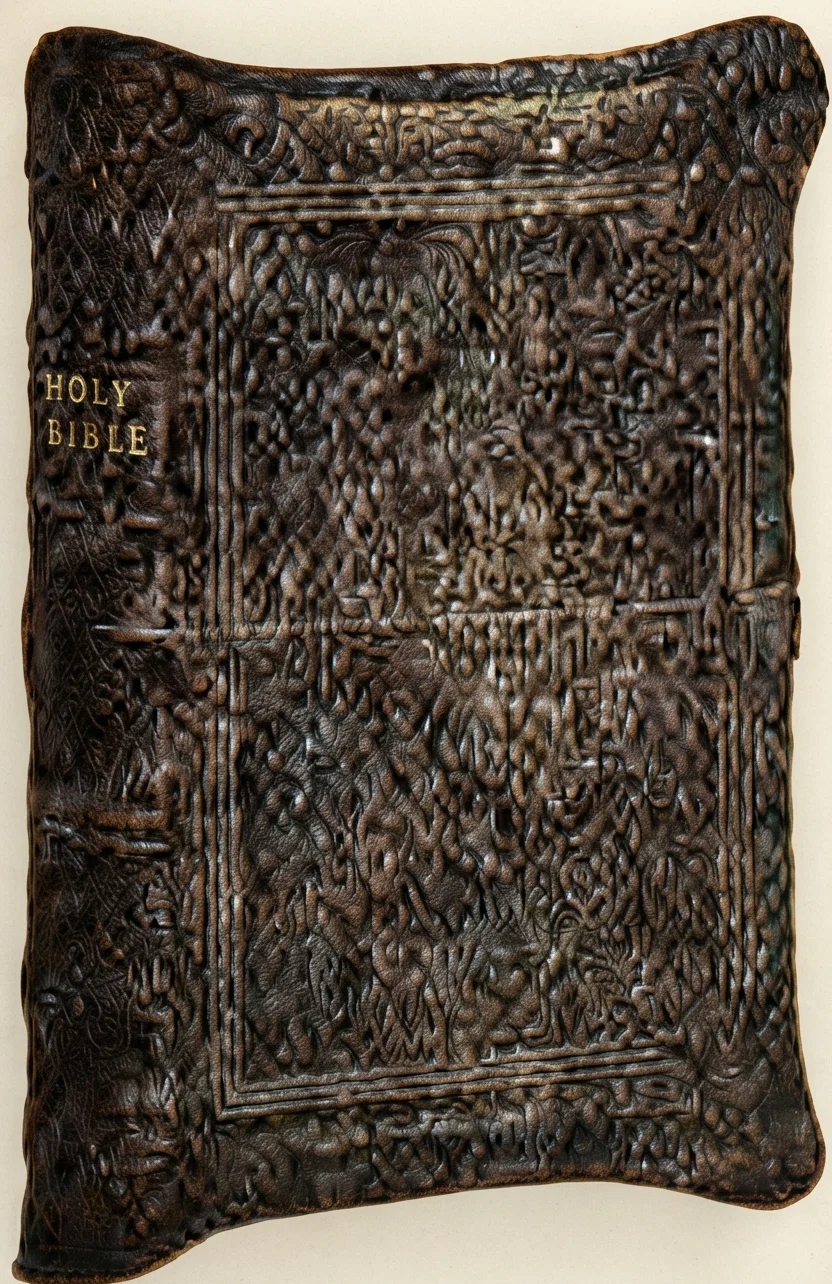
Not alone a clearly printed, conveniently arranged Bible with handy, center-column references, but, in addition, a fund of useful and valuable information concerning Bible customs, manners, history, geography, weights, measures, etc., with side lights from recent explorations, with
More than 350 Fine Illustrations
scattered through the helps, making really two volumes in one cover, of convenient size. The Bible has round corners, red-under-gold edges, minion type, and cover leather lined to edge (an important feature), divinity circuit. Size of page, 8x5½ inches.
Under One Alphabet —
A new Concordance combined with a Subject Index and a Pronouncing Dictionary of Scripture
Proper Names Diacritically Marked
For their pronunciation, with meaning. In addition to the carefully compiled Concordance of passages in the common version, there are given over 10,000 REFERENCES TO THE REVISED VERSION. Thus for the first time Bible students may, at a glance, see all the principal changes of the Revised Version placed side by side with the passages according to the common or Authorized Version. Every change of proper names made by the revisers is given. Most of the important changes suggested by the American Revisers are also given, and thus an important additional explanation of the original text is furnished to all Bible readers.
Special Features of the Treasury.....
A LIFE OF JESUS, AND HARMONY OF THE GOSPELS
PARABLES AND MIRACLES OF JESUS
LIFE AND TRAVELS OF PAUL
SACRED CHRONOLOGY
HISTORY OF THE PATRIARCHS, ETC., ETC.
Twelve Colored Maps with Index. In all
Over 650 Pages of Valuable Helps
to the Bible student.
We have no hesitancy in saying with every one else that this is AN EXCEPTIONAL OFFER FOR THE MONEY.
JUST THINK OF IT!
A sixteen-page, weekly, illustrated paper for one year—800 pages—and this SPLENDID BIBLE for only
= $ 3.00 =
To Those Who Renew, or to New Subscribers: For the SIGNS One Year
Read the SPECIAL TERMS in the first column, next page, and secure a few subscribers at the regular rate, $1.00. The commission will help you get the Bible.
Add $2.00 for the Bible to the prices there given.
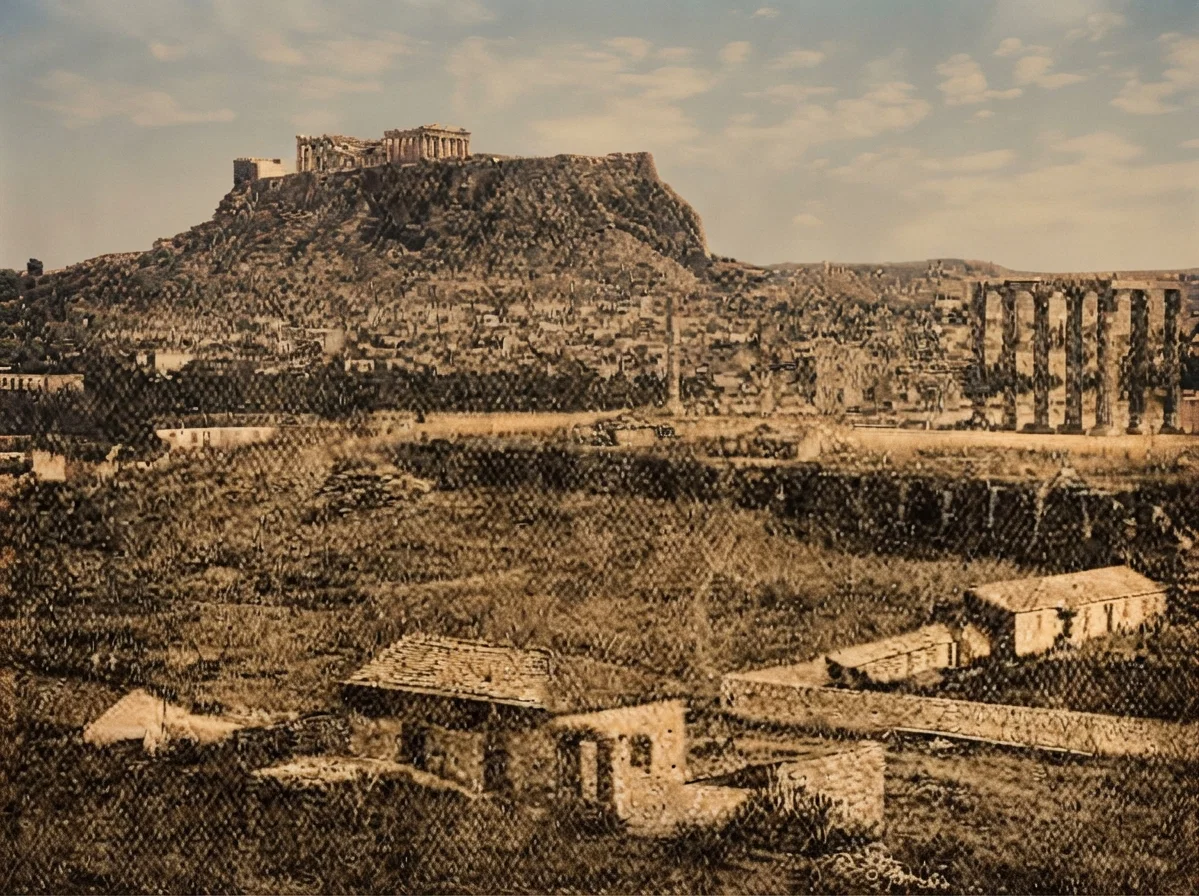
ATHENS. (From a Photograph by BONFILS.)
Specimen Page from the ILLUSTRATED BIBLE TREASURY
— Portion of Our Bible —
Copyrighted by Thos. Nelson & Sons, 1886
## THE TRAVELS OF ST. PAUL.
ANTIOCH, the metropolis of the Greek kings of Syria, and afterwards the residence of the Roman governors of the province of the same name, stood on the left bank of the Orontes, which a little lower down separates the range of Mount Amanus from the chain of Lebanon. Built partly on its island, partly on the ground, and partly on the rocky slopes of Mount Silpius, it was a city of singular beauty, adorned with magnificent temples, palaces, and colonnades. Its delightful climate, and the close proximity of the sanctuary of Apollo—with its fountains, its groves, and its licentious rites—attracted pleasure-seekers from all parts of the Roman Empire. But a large majority of its population was a worthless rabble of Greeks and Orientals, which passed its time in the theatres or in faction fights on the race-course. There was also a large Jewish colony dating from the time when, under the Seleucid monarchs, and especially during the reign of Antiochus Epiphanes, Antioch was closely connected with Jewish history. How far the Antiochian Jews had been able to resist the Greek influence to which they were exposed is uncertain; but many of the Greeks appear to have become “God-fearing proselytes,” or “Proselytes of the Gate.”
On the dispersion that followed the martyrdom of Stephen, certain Jews of Cyprus and Cyrene, who had been brought up in Greek lands, came to Antioch, and addressed both Jews and Greek proselytes in the synagogue. Their preaching was successful. A mixed body of Jews and Greek proselytes formed a primitive congregation, which gradually increased in numbers until it attracted the attention of the church in Jerusalem. In accordance with a former precedent (Acts 11, 22), Barnabas, “a good man, and full of the Holy Ghost and of faith,” was sent by the church to encourage the new congregation. After exhorting them to “cleave unto the Lord,” he went to Tarsus to seek for Saul, whose sponsor he had been before the apostles at Jerusalem, and whose special qualifications for work amongst the Gentiles he knew. They returned together (43 A.D.), and henceforth Antioch becomes the centre of progress and of historical interest in the church. Here the brethren were first called Christians, or “they that are connected with Christos”—a title that could not have originated with the Jews. Whether Christos were a god or a leader the Antiochians have not, and popular fancy changed the name to Chrestos (“good, useful”), a term which occurs in the form Christians in inscriptions.
Agabus having foretold a dearth, the congregation sent Barnabas and Saul with relief to the brethren in Judea. The visit, probably that referred to in Gal. 2. 2 as due to a revelation, marks an important stage in the development of the church. The older apostles recognized the apostleship of Barnabas and Saul (Gal. 2. 9), and their special mission to “preach Him among the Gentiles.” Saul was also able to confer privately
We Will Send the Bible Free
Post-paid, for Seven New Names and $7.00.
Solicit the subscriptions and make it free for yourself. The price of the SIGNS is $1.00 per year. The Bible will be sent to any of these subscribers for $2.00 extra.
The Bible and papers will be sent to different addresses if desired.
Your name on the cover for twenty-five cents extra.
We Want Agents. Write at Once for Special Terms.
Address, SIGNS OF THE TIMES, Oakland, California
OUR GENERAL AGENTS.
General Eastern Agency.—Pacific Press Pub. Co., 39 Bond St., N. Y. City, N. Y.
General Central Agency—Pacific Press Pub. Co., 14-18 W. 5th St., Kansas City, Mo.
Argentine—Señor N. Z. Town, Casilla del Correa, 481 Buenos Ayres, Argentine Republic, S. A.
Arkansas Tract Society—Fayetteville, Ark.
Atlantic Tract Society—39 Bond St., New York City, N. Y.
Australia—Echo Publishing House, North Fitzroy, Victoria.
Australian Tract Society—251 St. George's Road, North Fitzroy, Australia.
California Tract Society—1059 Castro St., Oakland, Cal.
Utah Tract Society—Box 1058, Salt Lake City, Utah.
Vancouver Island—B. Robb, 231 Pandora St., Victoria, B. C.
Vermont Tract Society—190 N. Winooski Ave., Burlington, Vt.
Virginia Tract Society—2504 E. Clay St., Richmond, Va.
West Virginia Tract Society—Newburg, W. Va.
Wisconsin Tract Society—Milton Junction, Wis.
NOTICE THE LIST.
Christ Our Saviour, Three bindings, 50c, 75c, and $1.25.
Gospel in Creation, Two bindings, 25c, and 40c.
Gospel Primer, Two bindings, 35c, and 50c.
Gospel Reader, Two bindings, 50c, and 75c.
His Glorious Appearing, Two bindings, 25c, and 40c.
Sketches of Bible Child Life, One binding, 50c.
Steps to Christ (ten languages), One binding, 60c.
Story of Pitcairn, One binding, $1.00.
Thoughts from the Mount of Blessing, Two bindings, 75c, and $1.00.
The holidays are nearly here, therefore write at once.
THE GREAT DAY OF THE LORD. By M. C. Wilcox. This tract of 40 pages sets forth in brief some of the more important events of the Great Day of God Almighty. It discusses the character of that day, shows when it begins, the coming of the Lord, the events in connection with that coming, the Millennium, the Saints in Judgment, when the Day of the Lord Ends, and the Eternal Home of the Redeemed. Bible Students' Library No. 65. Price, 5 cents.
DO YOU THINK SO?
By Editor
WE quote the following kind words from an editorial in the Review and Herald of Nov. 16, 1897:—
"There has come to our table No. 47 of the Apples of Gold Library, issued by the Pacific Press Pub. Co., Oakland, Cal. Its subject is 'True Christian Citizenship.' It is a most excellent discussion of that very important question. The utterly false views of Christian citizenship that are the very life of the National Reform movement, and which are so widely disseminated by the Christian Citizenship League, the Catholic and Protestant churches, etc., etc., make especially timely a statement of the principles of true Christian citizenship. This leaflet—eight pages, of a size easy to insert in an envelope—ought to be scattered by the millions in the United States." Price, ½ cent.
Pacific Press Pub. Co., Oakland, Cal.
39 Bond St., 14 to 18 West Fifth St.,
New York City. Kansas City, Mo.
FAMILY BIBLES.
THE Pacific Press Publishing Company carries full and varied lines of family Bibles. Descriptive catalog free.