Respect the Boys and Girls and They Will Respect You
By MRS. C. C. LEWIS
MRS. C. C. LEWIS
Sometimes parents fail to realize the importance of treating their boys and girls with due respect. We hear much said about respect being shown to parents by their children, but like most questions there are two sides to this one.
O. S. Marden, in American Motherhood, recently said: “If parents would treat their company as they sometimes do their boys and girls, how long would they retain their confidence and friendship?”
The boys and girls have rights as really and truly as their parents, and if the parents will recognize these it is quite likely they will receive the same treatment from their children. Certain it is that it will create in the hearts of the children a desire to live up to the position assigned them. Let a boy feel that his father honors his opinion about the work on the farm or in the shop, and you can almost see that boy square up his shoulders and stand a bit straighter. He will be more observing after that, and next time his father asks his opinion likely as not he will be prepared to give a more intelligent answer than before.
Mr. Marden in another paragraph says, “Sometimes parents will introduce their grown-up sons or daughters to guests, while the boys and girls are ignored or asked to leave the room without any ceremony.” Such treatment is well calculated to make a child appear awkward and self-conscious. While it is unwise to push a child forward and make him conspicuous, it is also a mistake to ignore him altogether. He should be treated with due courtesy.
Occasionally even yet you will find fathers who seem to feel that their children16belong to them to manage, and to dispose of as the old Romans did their children. If they enjoy their professions or trades, they think their sons must follow in their footsteps. Many of our splendid literary men would have been lost to the world if they had followed the paths marked out for them by their fathers.
Every child has an individuality of his own, and no one has a right to compel him to follow a calling for which he has no natural liking or talent. On this point Mr. Marden says:—
“Do not try to compel a boy to follow your chosen profession unless he has some natural taste for it himself.
“Fathers should not try to make their boys mere ‘juniors,’ mere second editions, but independent, self-reliant, individual beings. A copy, whether of a picture or of a man, always lacks the strength of the original. There may be an infinitely greater man in a man’s son than in the man himself.”
A Beautiful Tribute to Motherhood
THE emperor of Germany, who speaks of his wife as a “pearl of great price,” once said: “I could wish no better for the men of my country than that the girls of Germany should follow the example of their empress and devote their lives, as she does her life, to the cultivation of the three great K’s, ‘Kirche, Kinder, Kueche’—church, children, cookery.” Speaking of her husband, she once said sweetly, “He is the emperor of Germany, but I am empress of the nursery.”
Jean Paul Richter writes: “Men govern and earn the glory, and the thousand watchful nights and sacrifices by which a mother purchases a hero or poet for the state are forgotten—not once counted; and so, one century after another, do mothers, unnamed and unthanked, send forth the arrows, the suns, the storm birds, and the nightingales of time.” One good mother is worth a hundred schoolmasters. Her influence has been called “the divinity of infancy.” Her smile is its sun’s hive, her word its mildest law, until the world has steeled the heart.—Selected.
Conducted by Mrs. C. C. Lewis, Takoma Park, Washington, D. C
Through the columns of this department, hints will be given on all matters pertaining to the home life. Short articles and letters are solicited from home makers, telling of their everyday experiences,—their joys and sorrows, their failures and successes.
For Parents
By PHENA MOREY
PHENA MOREY
From what I have observed, and from my experience in bringing up children, I find that to make a child happy, thoughtful, and hopeful, we must talk of the beautiful. We must write upon the mind with indelible ink, as it were, Col. 3:8: “But now ye also put off all these; anger, wrath, malice, blasphemy, filthy communication out of your mouth.” If we follow this counsel, our children will grow up pure-minded and sincere.
We must not only live carefully, but we must speak kindly at the table, around the fireside, when we sit down, and when we rise up.
When our older boy was small, I was determined that the shows, the girl question, etc., should not be brought to his attention; so when a show was advertised in town, he knew nothing of it. He could not read then, and I kept him at home. It was not mentioned in the family; so it was all blank to him. We went to see the animals parade when he was older, but that was as much as he knew of the show.
Instead of talking about which girl was his, etc., we discarded such conversation altogether. Such thoughts will come soon enough without parents’ continually bringing them before their children.
There are enough good, lovely, honest, and true traits of character to look at; and if not, why look at all? See 2 Cor. 3:18. Your influence does not stop with your own children, but they talk to their associates on the subjects they hear in their home. It is like throwing a pebble into the water — one ripple, and then another, and still another, until the last ripple widens out beyond our vision.
“It is the work of parents to train their children to proper habits of speech: . . . They should be taught that only words of gentleness, truth, and purity must pass their lips. . . . Then by precept and example they can teach their children the use of ‘sound speech, that cannot be condemned.’ This is one of the greatest and most responsible of their duties.”—“Christ’s Object Lessons,” pages 337, 338.
Wichita, Kans.
Truth Telling
By Cecelia Farwell
“I CANNOT understand,” said a dear young mother who was calling upon us one afternoon, “why Francis will tell me such stories. He is only five, you know, and he simply will not tell the truth. Only last night I had to punish him severely, and I sent him to bed without his supper, too; but nothing seems to do any good.”
Just then little Marion, three years old, leaning against her mother’s knee, said, “Musser, I’se tired. I want to go home.”
“Now, Marion,” said her mother, “we are not going home yet; and if you do not sit still and be quiet, Mrs. Smith has a great big dog shut up in that room yonder, and he catches little girls. She will open the door and let him out if you are not a good little girl.”
Marion glanced at the door indicated and then pleadingly at me, fear and apprehension written in her face. Then she sat down obediently, clinging close to her mother’s skirt.
I saw my sister draw her arms a little more tightly about her four months’ babe, and my own heart beat hard with indignation. I rose to my feet and held out my hand to the child.
“Come here, Marion,” I said, gently. She came to me willingly, but when I turned toward the closed door, she held back.
“Come,” I said, “I am going with you.” As I opened the door, she caught hold of my skirt and clung behind me. Her mother, who had gone on talking about the delinquencies of Francis, and had apparently forgotten her own remark to the child, stopped a moment to say impatiently: “Go on, Marion. Don’t be naughty! Mrs. Smith does not like naughty little girls.”
I entered the room and closed the door behind me. It was my own bedroom. In it were my treasures. A little child’s rocking chair stood on one side of the room, and in it sat a big blue-eyed, flaxen-haired dolly that had been loved by a little girl just Marion’s age. She had left it there one day just a few months ago when she had come to me with flushed face and hot little hands, and said: “Muvver, me wants you to take se baby. Me hurts.”
The measles, unquarantined in our little town, had taken all that I had, my only one.
Marion stopped just inside the door, and her eyes swept the room. They fell upon the dolly, and after the manner of children, she forgot everything else. Her lips framed a delighted, “Oh!” as she went down on the floor beside it.
I watched her for a minute, and then went back into the other room, leaving the door open.
“Mrs. Weston,” I said, “there is no dog in the other room. Look at Marion.” She glanced toward the child, and exclaimed: “Oh, what a lovely doll! Marion,” she called, sharply, “be careful! If you break the dolly, Mrs. Smith will punish you.”
In sheer desperation I got up and shut the door. My sister half frowned and half smiled, as she shook her head at me. But I would not be warned.
“Mrs. Weston,” I said, sitting down near her, “you say that Francis tells you untruths. Do you know that you have twice told Marion untruths in the last five minutes?”
She flushed, whether with anger or shame I could not tell. I refused to hear my sister’s rebuking, “Why, Ruth!” and went on with my self-appointed task, determined that if word of mine might make it possible Francis and Marion should have a chance to grow up truthful children. She defended herself weakly, with, “Oh, well, it is such a nuisance to have them always bothering me so!”
“Mrs. Weston,” I said, “I would give all the years of peace and quiet that I expect to have if my own little girl could ‘bother me’ again. But I would rather have her where she is now than to have her grow up to tell untruths—lies—that I had taught her.
“You sent Francis to bed without his supper,” I went on, feeling that now it was win or lose, “when after a day of play and exercise he needed the physical nourishment, and his little body was made to suffer because of a wrongdoing for which you were responsible. Just now you not only told Marion an untruth, but you put into her heart a sense of fear, which should be a thing absolutely unknown in a child of her age. Her quick response to the suggestion proved that it was not the first time that she had been quieted in that way, and you have probably already had trouble with her in the way of nervousness and needless crying at night when she wakens in the dark. When she gets a little older, she will find that the black dogs and the bears are not where you have said; she will realize that you have told her untruths in order to gain your own end, and the perfectly logical conclusion that the telling of untruths is not wrong will affect her whole life and character. Or perhaps the result will be one that will make great sorrow for you; she will realize the wrong, and will put her mother down on the wrong side of the scale. More than that, you have overdeveloped the instinct of fear, and the effect will remain with her. Often when I see a child timid, and perhaps in consequence made unhappy under the taunt of a comrade, who, in the ignorance and scorn of childhood, calls, ‘Coward, coward,’ I think, ‘That child’s mother told him lies.’”
We talked long and earnestly. Marion was happy with the doll, and my sister had slipped away to lay her babe on the bed for the afternoon nap, when Mrs. Weston rose, and said: “I am very grateful to you, Mrs. Smith. My children shall not learn to lie from me.”—Mrs. Cecelia Farwell, in American Motherhood.
A Good Sabbath Service
By Carrie A. Howland
I AM sure the readers of the dear old REVIEW will enjoy hearing about a delightful Sabbath day, and an inspiring service held in the little white church of Santa Monica, by the western sea, in sunny California. A few days before, the loving Heavenly Father had sent copious showers of rain to gladden our hearts, and we responded with songs of praise to the Giver of all good things. It made us think of the resurrection morning, when the saints of all the past ages shall be called forth clad in bright robes of immortality.
We were expecting a feast of good things at the church, and were not disappointed. The previous Sabbath Miss M. Bilz, a National W. C. T. U. lecturer, whom we in California have learned to love for her noble and unselfish work in the cause of temperance and her devotion to the third angel's message, had promised to speak to us. After the opening song, and prayer by Elder Mathwig, those who were present listened to a most helpful address on the theme of God's majesty and goodness. Surely we appreciated as never before the great love and care the Master has for his children, and that erelong he is coming to gather his loved ones home. The homecoming is almost here, only a few more days of patient waiting and watching than and Christ will come.
At the conclusion of the discourse nearly all took part in the ordinances of the Lord's house, among whom was one dear old mother who told us that she was one hundred and four years old. She witnessed the falling of the stars in 1833, and now at this advanced age, is about her Father's business, most of the time selling papers and tracts in and around Los Angeles, and telling the people of Jesus' soon coming.
After singing “We praise thee, O God, for the Son of thy love,” we all felt that the last Sabbath of the old year had been well spent, exemplifying the precepts of our Master.
CARRIE A. HOWLAND.
Bermuda
By Eugene Leland
THE work here is progressing. A spirit of unity and brotherly love is manifested in the church, and a strong desire to engage in missionary work. The tithes and offerings are coming in better than one would expect, considering the financial depression caused by the war. Over twenty-five dollars has been collected from the Harvest Ingathering, and we are expecting to double this amount. The Sabbath school and young people's society are in good working condition, and there are several awaiting baptism. The Sunday evening meetings are well attended by a good class of people, and the stirring events which are taking place in fulfillment of prophecy are awakening a deep interest, which we trust will result in an abundant ingathering of souls. Plans are laid to pay off the remaining debt on the church at Christmas, so that we can begin the new year without debt.
The people here are almost wholly dependent upon the tourist trade for a livelihood; but since the war began, this trade has almost wholly dropped off. Every week during the tourist season there were three boats; but since the war began, we have only one boat every ten days. We are all of good courage, and expect to see the work go with power in Bermuda.
We have had one article from the REVIEW Extra published entire in one of the local papers, and we are planning to secure the publication of other articles as soon as possible. The church here has sent for twelve hundred of the last REVIEW Extra, and the young people are selling the Protestant Magazine and other literature.
Bermuda is certainly a beautiful place, with its well-kept gardens, banana orchards, and winding roads, with hedges of flowers in full bloom almost the whole year; and it should be represented by a larger company who are looking for the soon-coming Saviour.
EUGENE LELAND.
Dedication of the Portland (Maine) Church
By Daniel H. Kress
THE dedicatory services of the Portland church took place on January 2. Elder R. D. Quinn delivered the address. The meeting was an impressive one. God's Spirit was poured out upon those who were assembled. The church was dedicated free from debt.
In the afternoon eleven persons were baptized by Elder Sanderson, the pastor of the church. The message is swelling into the loud cry. This is made more manifest in every meeting that is held in Portland, by the unity, brotherly love, and liberality among the brethren. God has wrought a great work for his people in Portland.
Much has been said by Sister White in regard to this city. It was in Portland that she received her call to her work. It was also here where William Miller, Joshua V. Himes, and their associates first proclaimed the first angel's message. Great power attended the work of these godly persons, and multitudes were converted. The same power attended the work of Sister White, Elder Haskell18and other pioneers in this work later. It was not uncommon to have gatherings of from five thousand to ten thousand listening attentively to the proclamation of the message. We are looking forward to a similar movement to reap the harvest of the seed sown in Portland.
D. H. KRESS.
New York City
By CHARLES T. EVERSON
I HAVE been in New York City more than a year. During this time my work has been carried on in one of the best parts of the residence district, known as Washington Heights. The name is derived from the campaigns that George Washington carried on here during the War of the American Revolution.
Our people have been zealous in supporting the efforts put forth, and have aided in every way possible. Brother Klebahn, elder of the First Seventh-day Adventist Church, although busy at his office all day, has not missed a meeting, but night after night has led the singing and helped in other ways to make the services a success. His wife also helped in the music. The conference, with the limited funds at its disposal, has given generous cooperation, and thousands have heard the message during our campaign on Washington Heights.
The meetings have been well attended, and the collections good, sometimes running as high as seventy-five dollars for a single service. Dr. P. H. Wolfram, of Chicago, who was with us part of the time, sang the songs of Zion with such an earnest desire to reach hearts that many were helped and comforted by his messages. Our force of workers has been rather small, but at present it includes four Bible workers. They are laboring earnestly and prayerfully for the advancement of the message among these people.
The Lord has blessed us with the baptism of eighty-four persons, and according to present indications many others will soon be ready to take part in this with those that keep the commandments of God and the faith of Jesus in New York City. CHARLES T. EVERSON.
The Work in Mexico City
By G. W. CAYINESS
ON our return to the City of Mexico we found that there had crept in some differences between some of our brethren, and it seemed for a while that this situation might cause us considerable trouble; but we are glad to say that by careful and faithful work and the blessing of the Lord, the matter has been cleared up, and we had excellent meetings during the week of prayer. The most of the time since our return, our place of meeting has been filled on the Sabbath, sometimes not a single seat vacant. Last Sabbath it was my privilege to baptize six candidates, three men and three women. We are sure that the influence on the large company present was good. Others are interested, and we expect the work will continue to grow.
While visiting an aged woman who desired to unite with our church, I learned a very interesting fact which shows that the truth was not entirely unknown in Mexico quite a number of years ago. This woman, who is eighty-two years old, said that when she was forty years old the widow of a count by the name of Penyasco called her attention to the gospel, and told her, among other things, that it is not necessary to confess to a priest, but that one can confess directly to God; that the seventh day is the Sabbath of the Bible, not Sunday. The countess did not use pork or lard, and talked much about the coming of the Lord. I asked our sister if the countess was not a Jewess, and she said, "No, she was a Mexican woman." From this we see that more than forty years ago at least one Mexican had quite an understanding of the truth as we hold it.
Reports from Torreon and San Luis Potosi indicate that there is a good interest in each of these places, and the work is growing. In Matehuala and La Visnaga eight or ten are asking for baptism.
We certainly hope that peace may come to revolution-torn Mexico soon, so that we shall be able to visit all our brethren in different parts of the country. G. W. CAYINESS.
Personal Work in Union College
By M. E. ELLIS
THE YOUNG MEN'S PERSONAL WORK Band of the College View (Nebr.) Missionary Volunteer Society has about fifty members, with one or two members being added each week. About seventy-five per cent of these young men are students of Union College.
The band is composed of live, energetic, Christian young men who believe in earnestly praying for the things they need and the blessings they want, and then just as earnestly working to help answer their own prayers. A weekly meeting is held on Sabbath afternoon, and if any of the members are absent it is usually because they are actually engaged in some personal effort for some one who needs help.
The band is subdivided into four auxiliary working committees, but we endeavor to keep in sight and in mind that personal, soul-winning efforts are the object of our banding together, that no auxiliary line of home missionary work can fill the place of that, and that we must be before we can do. The auxiliary committees are: the prayer and cottage meeting committee, a band of young men who attend the district prayer meetings in the village each Wednesday evening; the country meeting committee, whose work is not yet fully organized; the junior committee, who join with a similar band from the Young Lady Personal Workers in studying junior methods and holding weekly meetings with the junior young people; and the literature committee.
One aggressive move by the last-named committee was the raising of $100 for tracts, and the placing of two tracts on the Armageddon and Turkish question in each home in the city of Lincoln. This received notice by the editor of one of the Lincoln dailies, who wrote an eight-inch editorial on the “peace and safety” order, referring to the “flooding” of the city with our pamphlets. About a quarter of a million pages of tracts were used in this effort, and we are having inquiries from several who received them, for other reading along the same line. This of course is being supplied, and the interest is being followed up.
An interesting series of Testimony studies is just beginning in the band, on intensely practical subjects, and there is every prospect that each member will be profited by this practical study.
Week by week, as the opportunities come to us to be of service to those near us and those far away, we are realizing the truth of the statement, “A thousand doors of usefulness are open before us,” and by our lives and our efforts we want to experience the truth of another statement in the same paragraph: “Were we thoroughly in earnest, even now we could multiply the resources a hundred-fold.”
M. E. ELLIS.
The Week of Prayer in Our Schools
FROM PRES. H. A. Morrison of Union College:—
“The Lord has greatly blessed us this year by sending us a very earnest, devoted class of students. Throughout the year we have endeavored to carry on our work in such a manner that every one would be placed in the most favorable condition for spiritual growth. Weeks before the week of prayer we began to pray and work for those students who we knew needed help. At an early date we organized our forces so that no one would be missed in our campaign to help others. The great majority of the members of the school have been having good experiences since the very opening days, and from time to time others have joined their ranks by making their peace with God.
“During the week of prayer, we carried only thirty-minute recitations, with half work. This gave us thirty minutes each day for the prayer bands, and an hour or more for the chapel period. At this time we had either a Bible study or a consecration service. Then we came together again in the evening for the reading and for prayer. In the morning, while the students’ prayer bands were in session, the faculty came together to plan and pray for the work. During the last half of the week Elder J. W. Christian was with us, and his labors were appreciated.
“Thursday morning at the chapel hour, the Spirit of God came in with mighty power, and many were led to seek their Lord anew, and some found their Saviour for the first time. Again on Friday evening sixty or seventy-five quietly withdrew from the main meeting and went to an assigned room, and there sought God for deliverance from sin. Peace came into their hearts as they were led to put their trust in the Lord’s blessed promises. Many said that this was the most precious meeting they had ever attended. There are only a very few who have not fully yielded their hearts to God.
“At the church, on the last Sabbath, eighteen or twenty were baptized, most of whom were from the school. Others wish to be baptized at the earliest opportunity. The college took up the annual offering on Friday evening, which amounted to over $140.
“Brethren, pray that God’s Spirit may continue with us in a marked way until every member of our school has found peace in Christ. Pray that this institution, which has so markedly led in preparing workers for this cause, may be specially blessed during these closing years, and that the number of efficient workers going from her doors may be doubled and trebled from year to year.”
FROM PRIN. B. F. MacNlan of South Lancaster Academy (Dec. 13, 1914):—
“We are just entering upon the week of prayer. Last Friday evening we had the Sunday’s reading, and a sweet spirit of service came into the meeting. After the regular service, which lasted more than the usual time, there was an invitation for those to remain for special help who wished to do so, and about two thirds of the company remained. I think I never enjoyed a meeting more. A definite work seemed to be going on. The first few minutes were given to testimonies, which spoke of definite answer to prayer during the past week, and definite victories gained; then opportunity was given for those who wished to tell of their definite needs. It was indeed inspiring to hear the young people confess and get clear of the sins that had beset them. We are praying that God will greatly bless us during this season of prayer. For three weeks we have been having aftermeetings, and the company has been growing until, as I stated, on last Friday evening nearly two thirds of the audience remained.”
From Prin. Thomas W. Steen of Adelphian Academy:—
“We greatly appreciated the help of Professor Kern during the week of prayer. He was with us from Sunday evening until after the evening service Tuesday night. His work with the students was of an intensely practical nature, and we have seen some splendid results of his efforts. There was no excitement nor anything of that kind, but we do believe that a deep Christian growth is taking place in the hearts of many of the young people here. In fact, practically all the students in school have taken part in the meetings, and apparently have thoroughly consecrated their lives to the service of the Lord. There seems to be a deep realization that time is short, and that it behooves all of us to get a speedy but thorough preparation for the work that God would have us do.”
Prin. J. G. Lamson of Cedar Lake Academy:—
“We have just concluded our week of prayer, and we have had a most remarkable experience. We had the reading in the afternoon and the sermon in the evening, and the real spirit of devotion came into our services. A number of those who had never accepted the truth—whole families—have taken their stand, and a number of those, by families, who had drifted away and totally apostatized, have returned; and these, together with some who bring letters, will increase our church membership twenty-five per cent for just this week’s work. The country round about is somewhat interested, and we plan on holding meetings after the new year begins.”
From Prin. C. B. Hughes of Keene Academy (Dec. 16, 1914):—
“We had a very remarkable meeting in the school chapel yesterday. There was a general move among the students, with a special burden on their part to put away all harsh criticism and to use their energy in the work of God. All but a few of our students are professed Christians. Of these, some came forward yesterday. Today is a special day for the young people, and we hope for good results tonight.”
Connecticut
By F. G. Lane
NEW HAVEN.—At the beginning of 1914 our church membership numbered sixty-five. In harmony with the recommendation of the General Conference we entered upon a vigorous missionary campaign, visiting the homes of the people with tracts and other literature. The Lord blessed our efforts, and during the year thirty-one new believers have been added to our number. Twelve or thirteen others are preparing to unite with us soon. We have erected a new church building, which we hope soon to dedicate, and have more than reached our goal of twenty cents a week per member for missions. We enter the new year with courage and a determined purpose to push on in the finishing of the work.
F. G. LANE.
Educational Department
J. L. SHAWGeneral Secretary
F. GREGG,N. Am. Div. Secretary
W. E. HOWELLN. Am. Div. Asst. Secretary
Subscriptions for the “Signs” (Weekly)
By F. W. Paap
Now that we have increased our Signs subscription list to more than double what it was (this has been largely accomplished by the ordering of large clubs), we feel that we must turn our attention in the direction of securing regular yearly subscriptions. Those who have been reading the Signs for the past few months, will want to have this bright, up-to-date periodical come regularly to their homes.
There are several advantages in such a plan: It will serve to complete the good work done and develop the interest already aroused. It will enable you to begin with some one else—another neighbor or friend—with your limited supply of this good paper. It will put the work on a paying basis, the regular subscription price being above the club rates.
This plan was in the minds of the brethren when they decided to make the Signs a special feature in this great home missionary campaign. The Pacific Press Publishing Association, in handling this periodical, has devoted all the profits to missions; but the profits are available only as a large number of yearly subscriptions are secured.
We believe that our people everywhere could do a splendid work by soliciting subscriptions for the Signs; and if you will study the following subscription rates, you will see that there is a good profit, a good commission, to those who will send four or more subscriptions at one time:—
Three months . . . . . . . . . . . . $ .50
Six months . . . . . . . . . . . . . . . . . . . . . . .90
One year (50 numbers) . . . . . . . . . . 1.75
One new yearly subscription and one renewal, or two new subscriptions, sent at one time, $3.
Two new yearly subscriptions and one renewal, or three new subscriptions, sent at one time, $4.
Three new yearly subscriptions and one renewal, or four new subscriptions, sent at one time, $5.
Five or more copies to one person, six months, each 60 cents.
Five or more copies to separate addresses, six months, each 65 cents.
Get four subscriptions at $1.75 each, and your commission is $2. Thousands of our people can do this if they will only try. We prefer to see you take up this work, however, from the soul-winning standpoint. The other will come as a natural consequence. If each one will make an earnest effort to secure four yearly subscriptions to the Signs weekly, we shall reach a still higher goal, and place this good periodical on a solid basis. We would suggest that preparatory to this subscription campaign a little instruction be given in all our churches with the view of greater efficiency.
Here is an excellent opportunity. With confidence in God, with a true love for sinners, and with a full appreciation of the value of this soul-winning agency, won't you put on the armor and go forth to do your best? God will surely bless.
F. W. PAAP.
Publishing and Home Missionary Convention for the South
By R. L. Pierce
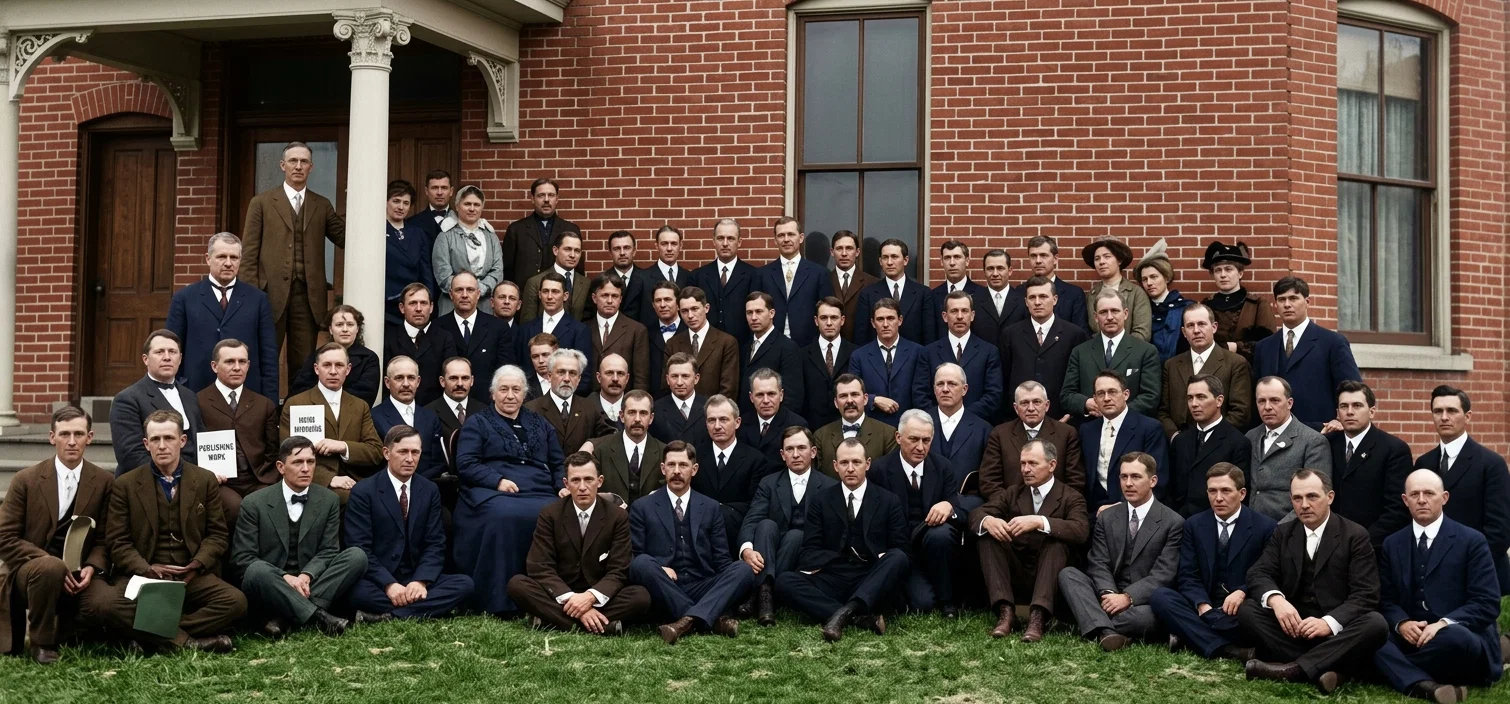
THE publishing and home missionary convention for the Southeastern, Southern, and Southwestern Union Conferences was held in the chapel of the Southern Publishing Association, Nashville, Tenn., December 24 to January 2.
From these unions there were present the three union conference presidents, the three general agents, the three auditors, all the field missionary agents and tract society secretaries, and eleven local conference presidents. Elders N. Z. Town, W. W. Eastman, and F. W. Paap, and Miss E. M. Graham, of the General and North American Division Conferences, were in attendance during the entire convention, while Elder I. H. Evans and Brother J. J. Ireland, of Washington, D. C., were present a portion of the time. The help and instruction of these workers were appreciated, and did much toward making this the best and most practical convention of its kind ever held in the South. Elder W. W. Eastman acted as chairman, and Brethren L. D. Randall and R. W. Parmele as secretaries.
DELEGATES TO THE PUBLISHING AND HOME MISSIONARY CONVENTION,
NASHVILLE, TENN.
During the past five months the conditions confronting our colporteur work in the South have been most trying and perplexing. A conservative estimate of the loss to the South on account of the foreign market for cotton being shut off by the war, has been placed at seven hundred million dollars. As can be imagined, this greatly hampered our fall deliveries, especially so as nearly all these orders were taken before it was known what would befall the cotton market, and many of them even before the war broke out. Our workers have had difficulties to meet during these few months which they have never had to meet before, and therefore those who attended the convention keenly felt the need of all the instruction and help they could receive. The result was that there was practically a full attendance at every session. Meals were served near the office, while lodging for the delegates was also secured in the homes of our brethren convenient to the publishing20house. No pleasure-seeking trips were made about the city, every one seeming to sense the solemnity of the times and the need of receiving a better preparation for the great work before us.
The convention was conducted on the order of round-table discussions. A suggestive program of topics had been prepared in advance, which, with the question box, furnished ample work for the convention. This plan enabled the delegates promptly to get at the kernel of the various questions considered, and in this way much valuable time was saved. The instruction and counsel of Elders Town and Eastman in behalf of the colporteur work, and the help rendered by Elder Paap and Sister Graham on the tract society and home missionary work, were very timely and beneficial. Both union and local conference presidents took a lively part in the discussions, and manifested the keenest interest in all that was done. This was appreciated by the field agents, tract society secretaries, and others upon whom this part of the work directly rests.
One of the questions considered was the following: “What shall be our attitude in times of drought, political campaigns, money panics, wars, etc.?” An intensely interesting discussion of this topic showed that hard times and forbidding conditions can be used as levers to attain success; that they drive worldly agents from the field, leaving it clear for our workers; and that workers should not take sides in discussions of wars and political campaigns. Later the committee on plans brought in the following resolution, which was enthusiastically passed, and which shows the courageous spirit and determination of our workers as they again take up their work in the field under the present trying conditions:—
“Resolved, That in times of drought, war, and other difficulties, these calamities be used as a means of obtaining orders; and that the deliveries be made at shorter intervals than is usually the case.”
One very important feature of the convention was the morning devotional meetings, one of which was conducted by Elder I. H. Evans, and the others by the three union conference presidents and Elder Paap. These services proved to be seasons of refreshing. As the workers unitedly sought a deeper experience, the Spirit of the Lord came in in rich measure. These meetings really served to prepare the delegates for the day’s work.
The Watchman male quartet rendered a number of appropriate selections, which seemed to be thoroughly enjoyed by all present. This feature added much to the interest of the convention. All who attended the convention felt that it was a grand success, and that the Spirit of the Lord met with us in a special way. It was the firm conviction of every one that the results which will be seen in our work the coming year will many times repay the cost of the convention. It was indeed an occasion of genuine refreshing, and the workers returned to their respective fields of labor with renewed courage and determination.
We trust that the readers of the REVIEW will not forget to pray for the workers in the South; for surely at times like this it needs the prayers of God’s people.