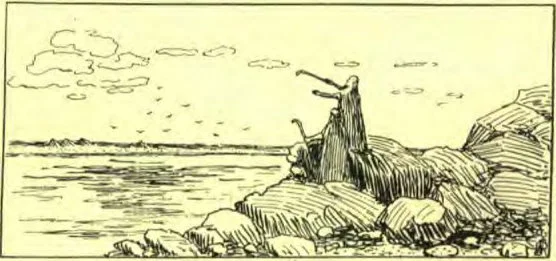
THE prophet with uplifted hand
Beside the River stood;
He spoke a word at God’s command,
And all the stream ran blood.
And he who came to worship there,
Sat, sullen, by its side,
Untouched his heart by love or fear,
Nor humbled was his pride.
His flocks and herds had crossed the flood,
His family had gone,
And by the River-ford he stood,
Sad, fearful, and alone.
His brother came, on vengeance bent,
Armed, and four hundred strong;
While he, with fear and watching spent,
Yet wrestled all night long.
Before the priests’ advancing feet
The River parted wide;
Then passed the host with footsteps fleet,
Dry-shod, from side to side.
And where the people that night lay
Twelve stones their children see,
To keep the wonders of the way
Within their memory.
Across the Stream the people went,
Sad, and with heads bowed down;
With them the King, with sorrow spent,—
A King without a crown.
His son, who should have been his stay,
His disobedient son,
Sat in the city, that sad day,
Upon his father’s throne.
They that have carried us away
About their captives stand;
“Sing us of Zion’s songs,” say they;
But in this stranger’s land
We can not sing the songs we sang;
We can but sit and weep;
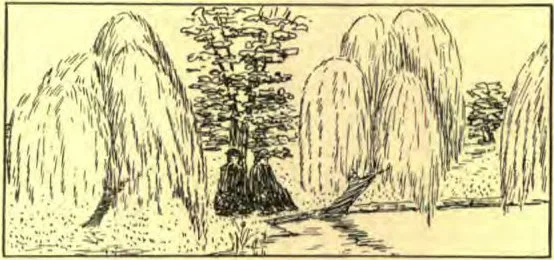
Our harps upon the willows hang
Beside the River deep.
There is a River whose fair tide,
Beyond the toil and strife,
Shall gladden those who walk beside
Its banks, the heirs of Life.
Along its shores of fadeless green
No mortal foot hath trod;
Nor mortal eye hath ever seen
The River of our God.
ELIZABETH ROSSER.
What One Burmese Sister Did
By Thekla Black
DURING my recent visit to Rangoon, Burma, which is three and one-half days' journey from Calcutta, I became acquainted with an old woman eighty-six years of age. She was baptized by Judson, the first Protestant missionary to Burma, about seventy years ago. Her children are all Christians; one of them kept the Lord's Sabbath two years before she knew of any Seventh-day Adventists. Her name is Mah May. She believes all the truth our people have taught her, and is a zealous worker among her own people. She loves every branch of the Lord's work, as the following incident shows:—
During the recent festivities in honor of King Edward's coronation, our Burmese sister planned in some way to do something to bring before the people the grand principles we teach in regard to healthful living. She sent to Calcutta for a supply of our foods, including malted nuts, caramel cereal, granola, granose, etc., etc. While others were busy decorating their small stalls for the festivity, Mah May in her quiet way made preparation for (as she said to me joyfully) a stall five times as large as any of the others.
She lives at Moulmein, a beautiful town near the mouth of the Salwin, known for its large timber trade. What Mah May called her "coronation booth" was a large veranda facing the river. She fixed it up in a charming way, with colored lanterns, fancy signs, and lovely flowers. Two large signs decorated the front, one green with silver letters, the other red with gold-and-black letters, on which the beholder noticed the following, in English and Burmese:—
“Coronation Sanitarium. Eat Health Foods and Be Happy.”
Mah May then prepared her caramel cereal, and served it at the price of one anna a cup. Notwithstanding the fact that tea is sold everywhere for half this amount, she was kept very busy during the four days of the festival. During that time our faithful sister sold one hundred and seventy rupees' worth of health foods,— a considerable amount for her little town. As the result of her work, I found, on my visit to Moulmein, that many had adopted the use of cereal instead of tea, and there was a general interest in health principles.
I must tell you that our native sister used the proceeds of the stall to help a poor widow.
Dear young readers, if you are ready for service, the Lord is going to use you, even if you are in the most secluded places on earth. Let us be up and doing; each day brings its opportunities. Watch for them! THEKLA BLACK.
Bran Bread
By S. Roxana Wince
A True Story
THERE was nothing in the house but bran and a few vegetables. Poor Widow McQuigg thought with dismay of her nine children. How were they to tide over this time of storm and desperate cold? The eldest boy was only sixteen, and the mill was so far away! Not even a man could reach it and live. She must make the bran do. With a thankful heart for having even this, she molded it into bread, and with the culinary skill for which she was famed among her neighbors, prepared her vegetables, and gathered her flock around the table, and reverently asked the usual blessing. Healthy, and with unhampered appetites, the hungry little ones enjoyed the meal, and even John, “the big brother,” seemed to think it was all right.
But Simon,—what was the matter with him? He would not eat bran bread, not he! He scornfully pushed it back and left the table. The poor mother’s explanations availed nothing. Her heart ached that her boy must go hungry; but it ached the more because of his treatment of her.
Her husband had died suddenly, and she and her family were living in a traveler’s inn, in Spencer County, New York; and though the country was becoming quite well settled, there were still bears in the woods, so new was that region at the beginning of the last century.
The cold continued for days; and the bran bread was kept on the table, warm, sweet, and fresh from the oven. But Simon would not taste it. He could live, he thought, on potatoes and turnips.
At last a warm spell came; and John, with a sack of wheat thrown across old Dolly’s back, went to mill and returned safely with the precious flour, and Simon was satisfied.
But the widow could not support so large a family single-handed, not even with the help of her sons; so she married again, thinking to keep her children together. But the stepfather soon6demurred, and all were put out except two boys.
Then came hard times for Simon. It was hard for a child of twelve or fourteen to find work, and the pay was very small. How often he wished he could be back with his mother again, even if he did have to eat bran bread! He had had such merry times in the old-fashioned inn, in gathering apples from the orchard on the hillside, and in chasing his brothers and sisters in merry play across Mud Creek.
If he could only have his mother, he would never speak scornfully again. He humbly asked her forgiveness, but he could not be taken back. He lived to be an aged man; but he never forgot the bran bread, nor ceased to regret that he had spoken irreverently to his good, kind mother.
S. Roxana Wince.
Washing the Dishes
By Hannah G. Fernald
OUR Polly goes a-fishing, be the weather what it may,
Not less than twice, and often thrice, on every holiday;
She always starts right after meals, and singing merrily,
She fishes and she fishes in her little Soapy Sea.
She’ll catch the best pink china cups, and play that they are trout,
And when she drops her line again, she’ll draw spoon-minnows out;
The plates, of course, are flounders (so round and flat, you know),
The kitchen knives are hungry sharks out watching for a foe;
Each saucepan is a polliwog, with handle for a tail,
And—“There she blows!”—the frying-pan! how very like a whale!
There’s nothing left—pour out the sea, and put the fish away,
All high and dry, and waiting to be caught another day.
—Hannah G. Fernald.
Trust in Jesus
By Mrs. P. Alderman
QUIETLY, steadfastly trust in his mercy,
Weak, poor, and trembling, a sinner so vile;
What though the tempest is raging around thee,
He stilleth the tempest; just trust him the while.
He knoweth our frame, and pities our weakness,
And loves us, forgiving our follies and sin.
Come, O my soul! for his wonderful mercy
Kindly invites all the erring to him.
Stay not away, though the tempter allure thee,
Peace to thy heart only Jesus can give;
Hope in his promise and rest in his mercy,
Maker, Redeemer, in him we can live.
MRS. P. ALDERMAN.
Lessons from the Life of Daniel—V
By Ellen G. White
Daniel’s Temperance Principles
(Concluded)
Daniel was subjected to temptations as severe as any that can assail the youth of to-day; yet he was true to the religious instruction received in early life. He was surrounded with influences calculated to subvert those who would vacillate between principle and inclination; yet the word of God presents him as a faultless character. Daniel dared not trust to his own moral power. Prayer was to him a necessity. He made God his strength, and in all the transactions of his life, the fear of the Lord was before him.
Daniel possessed the grace of genuine meekness. He was true, firm, and noble. He sought to live in peace with all, but wherever principle was involved, he was as unbending as the lofty cedar. In everything that did not come in collision with his allegiance to God, he was respectful and obedient to those who had authority over him; but he had so high a sense of the claims of God that the requirements of earthly rulers were held subordinate. By no selfish consideration could he be induced to swerve from his duty.
The character of Daniel is presented to the world as a striking example of what God’s grace can make of men fallen by nature and corrupted by sin. The record of his noble, self-denying life is an encouragement to our common humanity. From it we may gather strength nobly to resist temptation, and firmly, and in the grace of meekness, to stand for the right under the severest trial.
Daniel might have found a plausible excuse to depart from his strictly temperate habits; but the approval of God was dearer to him than the favor of the most powerful earthly potentate,—dearer even than life itself. Having by his courteous conduct obtained favor with Melzar, the officer in charge of the Hebrew youth, Daniel made a request that they might not eat of the king’s meat, or drink of his wine. Melzar feared that by complying with this request, he might incur the displeasure of the king; and thus endanger his own life. Like many at the present day, he thought that an abstemious diet would render these youth pale and sickly in appearance, and deficient in muscular strength, while the luxurious food from the king’s table would make them ruddy and beautiful, and would promote physical and mental activity.
Daniel requested that the matter be decided by a ten days’ trial, the Hebrew youth during this time being supplied with simple food, while their companions ate of the king’s dainties. The request was granted, and Daniel felt assured that he had gained his case. Although but a youth, he had seen the injurious effects of wine and luxurious living upon physical and mental health.
At the end of the ten days the result was found to be quite the opposite of Melzar’s expectations. Not only in personal appearance, but in physical activity and mental vigor, those who had been temperate in their habits showed a marked superiority over their companions who had indulged appetite. As a result of this trial, Daniel and his associates were permitted to continue their simple diet during the whole course of their training for the duties of the kingdom.
The Lord regarded with approval the firmness and self-denial of these Hebrew youth, and his blessing attended them. He “gave them knowledge and skill in all learning and wisdom: and Daniel had understanding in all visions and dreams.” At the expiration of the three years of training, when their ability and acquirements were tested by the king, he “found none like Daniel, Hananiah, Mishael, and Azariah: therefore stood they before the king. And in all matters of wisdom and understanding, that the king inquired of them, he found them ten times better than all the magicians and astrologers that were in all his realm.”
The life of Daniel is an inspired illustration of what constitutes a sanctified character. It presents a lesson for all, and especially for the young. A strict compliance with the requirements of God is beneficial to the health of the body and the mind. In order to reach the highest standard of moral and intellectual attainments, it is necessary to seek wisdom and strength from God, and to observe strict temperance in all the habits of life. In the experience of Daniel and his companions we have an instance of the triumph of principle over temptation to indulge the appetite. It shows us that through religious principle young men may triumph over the lusts of the flesh, and remain true to God’s requirements, even though it costs them a great sacrifice.
What if Daniel and his companions had made a compromise with those heathen officers, and had yielded to the pressure of the occasion, by eating and drinking as was customary with the Babylonians? That single instance of departure from principle would have weakened their sense of right and their abhorrence of wrong. Indulgence of appetite would have involved the sacrifice of physical vigor, clearness of intellect, and spiritual power. One wrong step would probably have led to others, until, their connection with Heaven being severed, they would have been swept away by temptation.
God has said, “Them that honor me I will honor.” While Daniel clung to his God with unwavering trust, the spirit of prophetic power came upon him. While he was instructed of man in the duties of court life, he was taught of God to read the mysteries of future ages, and to present to coming generations, through figures and similitudes, the wonderful things that would come to pass in the last days.
Mrs. E. G. White.
A Little Gentleman
By Hannah G. Fernald
I know a well-bred little boy who never says “I can't;”
He never says “Don’t want to,” or “You’ve got to,” or “You shan’t;”
He never says “I’ll tell mama,” or calls his playmates “mean;”
A lad more careful of his speech, I’m sure was never seen.
He’s never ungrammatical; he never mentions “ain’t;”
A single word of slang from him would make his mother faint!
And now I’ll tell you why (lest this should seem absurd):
He’s now exactly six months old, and can not speak a word!
— Hannah G. Fernald.
Weeds in the Corners
By Dart Fairthorne
THE wheat was cut, and the corn laid by,
The ricks in the stack-yard towered high,
The tall hay-shed and the deep barn bay
Were filled with the richest, choicest hay;
The cows stood full knee-deep in the creek,
Lazy, contented, fat, and sleek;
The stubble shone brightly as cloth of gold,
The well-trimmed hedges were fair to behold,
And everywhere, far as the eye could see,
The farm was tidy as farm could be;
Save that, by fences and low creek banks,
The tall weeds towered in stately ranks,
In uniforms of dark-green arrayed,
Like soldiers out upon dress parade.
Farmer John stood in the big barn door,
Viewing the whole scene o’er and o’er,
And then, with never an uttered word,
But as deep a sigh as ever you heard,
He took the scythe from the apple-tree,
And slowly, but surely started he,
To mow down the weeds in the corners.
With every sweep of the well-swung scythe,
See them topple, and fall, and writhe;
In solid phalanx, and serried row,
Rank upon rank, swift down they go,
Till an army vast lies scattered round,
Like French hussars on a battle-ground,
So rod after rod, for a full half-mile,
With often a sigh, but never a smile,
He smote those weeds in the corners.
He rolled up his sleeves, and he bared his breast,
He paused but a moment, e’en now, to rest,
Though his legs were weak, and his back was lame,
Though his breath, like bellows’ wind, went and came.
With strokes as steady and strong as before,
He bent his back for a half mile more,
Cutting the weeds in the corners.
Again he pauses and wipes his brow;
But starts he out on the “homestretch” now,
And strong and sure and relentlessly
He “smites the Philistines, hip and thigh,”
Till there is never one left to show
How large and how strong a weed can grow;
He left not a weed in the corners.
He hung up the scythe in the apple-tree,
And smiled in a way that was good to see,
And said, as he took a resting spell,
“Though I farm but little, I’ll farm that well,
I’ll leave no dock nor thistles to grow,
Their seeds, in the fall, broadcast to sow,
I’ll have no weeds in the corners.”
Ah! while we are filling life’s fields so fair
With all that is beautiful, rich, and rare,
With blossoms of beauty, in every hue,
Let us mindful be of the corners, too.
The crops that we sow, spring up and yield,
One season brief in the well-tilled field,
Not so the weeds in the corners;
Through all mischances, their germs live on
When every seed of good grain is gone,
Befouling the fields we thought so clear,
More and more with each coming year;
So little faults flourish, and nobody knows
How fast and how far their influence grows,
Those noxious weeds in the corners.
A fretful manner, or grumbling tone,
Dissatisfaction with what we own,
Failing to give a neighbor his due,
Or to keep the “Golden Rule” in view,
Neglecting to speak a comforting word,
When another’s heart is by sorrow stirred,
Failing by word, look, act, to prove
That “our own” we tenderly, truly love,
Are wicked weeds in the corners.
But mindfully, prayerfully, day by day,
For the “hidden sins” let us watch alway;
Till like a beautiful, well-tilled farm
There never is left a weed to harm,
And no weeds are left in the corners.
Memory Verse: “Blessed be the God and Father of our Lord Jesus Christ, who hath blessed us with all spiritual blessings in heavenly places in Christ.” Eph. 1:3.
Paul, an apostle of Christ Jesus through the will of God, to the saints that are at Ephesus, and the faithful in Christ Jesus: Grace to you and peace from God our Father and the Lord Jesus Christ. Blessed be the God and Father of our Lord Jesus Christ, who hath blessed us with every spiritual blessing in the heavenly places in Christ: even as he chose us in him before the foundation of the world, that we should be holy and without blemish before him in love: having foreordained us unto adoption as sons through Jesus Christ unto himself, according to the good pleasure of his will, to the praise of the glory of his grace, which he freely bestowed on us in the Beloved: in whom we have our redemption through his blood, the forgiveness of our trespasses, according to the riches of his grace, which he made to abound toward us in all wisdom and prudence, making known unto us the mystery of his will, according to his good pleasure which he purposed in him unto a dispensation of the fulness of the times, to sum up all things in Christ, the things in the heavens, and the things upon the earth; in him, I say, in whom also we were made a heritage, having been foreordained according to the purpose of him who worketh all things after the counsel of his will: to the end that we should be unto the praise of his glory, we who had before hoped in Christ.—American Standard Revised Version.
Questions
1. Who is the author of this epistle? What does he call himself? Through whom was he made the apostle of Christ?
2. What was Paul’s condition at the time this epistle was written? Chap. 4:1.
3. To whom is the epistle written? With what words does it open?
4. What is grace? What is peace? Who is the only Source of these blessings?
5. What wonderful provision has been made for us? Who has thus blessed us? Through whom do these blessings come?
6. What else has he done for us equally as great?
7. In whom are we chosen? What is his plan for us? What will be the condition of those who meet the Lord when he comes? Chap. 5:27; Rev. 14:5.
8. Unto what has God foreordained or called us? How many will enjoy this privilege? John 1:12. Through whom do we enjoy this blessing? Does the Father take pleasure in bestowing this privilege upon us?
9. What more do we receive freely through the Beloved?
10. Through whom only does redemption come? How freely does he forgive our trespasses through Jesus?
11. How fully does this grace abound toward us?
12. What has he revealed to us? What is this mystery?
13. What more are we to share through this same Jesus? What assurance have we that he will fulfil his purpose in us? See also Phil. 2:13.
14. What is the object of the Lord in all these purposes and blessings?
Notes
We begin this week the study of the book of Ephesians. This was no doubt written by the apostle Paul while a prisoner at Rome. The book is full of the liberty and blessing which comes only from an acquaintance with the Lord. No prisoners’ chains nor iron bars can shut out such an experience. As we read these precious truths, let us make them our own, for truly they are ours. “Blessed be the God and Father of our Lord Jesus Christ, who hath blessed us with all spiritual blessings in heavenly places in Christ.”
It does not mean a long struggle or a labored effort on our part to enjoy these blessings. As we take from our parents the food they give us to satisfy our physical hunger, so we are to take these things that our Heavenly Father gives to satisfy our spiritual hunger, remembering that the greater the hunger, the greater the supply in store for us. “Blessed are they which do hunger and thirst after righteousness: for they shall be filled.” Only receive what he has given, and give him thanks.
“According to.” O, what a message of hope is this to the sinner! Not according to our deserts does God forgive, else would we never hope again. Not according to our conception, not according to any measure man can conceive, but according to “the riches of his grace.” And that is as boundless as infinity, as endless as eternity. It is all free, if we will but take it—“grace to cover all my sin,” abounding “in all wisdom and prudence.” He does not throw it away, but it is always all-sufficient.—Lesson Pamphlet.
MEMORY VERSE: “This is the victory that overcometh the world, even our faith.” 1 John 5:4.
Our past lessons have taught us that God never destroys the wicked without warning them, and giving them opportunity to repent. The people of Jericho had heard all about the wonders that God did for Israel at the Red Sea, and in their journeyings through the wilderness. This we learn from the second chapter of Joshua.
Joshua sent two spies to Jericho, and they came to the house of Rahab, which was built on the broad wall that surrounded the city. She hid them from their pursuers, and told them: “We have heard how the Lord dried up the water of the Red Sea for you, when ye came out of Egypt; and what ye did unto the two kings of the Amorites, that were on the other side Jordan, Sihon and Og, whom ye utterly destroyed. And as soon as we heard these things, our hearts did melt, neither did there remain any more courage in any man, because of you: for the Lord your God, he is God in heaven above, and in earth beneath.” These words show how easily the children of Israel might have gone into Canaan, without any fighting, if only they had trusted the Lord when he first brought them out of Egypt. The people of the land either would have joined themselves to them, as Rahab afterwards did, or else would have melted away before them, even as Moses sang on the shores of the Red Sea: “All the inhabitants of Canaan are melted away.”
The visit of the spies to Jericho was before the crossing of the Jordan. This gave the people an opportunity to see that the same God who divided the Red Sea and overthrew the Egyptians was now working among them in the same wonderful manner.
Rahab put her trust in the God of Israel, and she asked the spies to give her a token that when Jericho should be overthrown, they would save her family. So they gave her a scarlet thread to bind in her window, and told her to gather all her family into her house, and they should all be preserved. Of what in our past lessons does this remind you?
By the saving of Rahab from this city devoted to destruction, God showed that all the people might have been saved if only they had put their trust in him as she did; for he is no respecter of persons.
Day after day the hosts of Israel marched round the city, unheeding the taunts and mockery of the watchers on the walls of Jericho. The only sound heard from the marching company was the blast of the trumpets that were blown by the priests. The trumpet is “the alarm of war,” the call to prepare for battle. The daily trumpet blast outside the walls of Jericho was to the citizens the signal of their approaching doom; while to the Israelites it was the joyful assurance that God had given them the victory over their enemies.
God told Joshua that he had given Jericho into the hands of the Israelites, yet not a stone had fallen. God was trying the faith of Israel, and it did not fail. It was their shout of victory that brought down the walls of Jericho. God had given them the city, but they had to take it by faith. When they shouted, “the host of the Lord” under their heavenly Leader threw down the walls. Notice that our memory verse tells us what it is that overcomes. It is “the victory that overcometh the world.”
In the midst of the falling walls and houses, and the destroying host of Israel, Rahab and her family were safe, because they put their trust in God. So in the last great time of trouble, when the earth is removed and the mountains are carried into the midst of the sea, we need not fear, for God will be the refuge and defense of all who put their trust in him.
Questions
I. What does God always do before he destroys any people? Tell how the people of Jericho had been warned before the city was destroyed. Joshua 2:9-11.
2. Who only were saved from among the inhabitants of Jericho? Joshua 6:25. By what token were they saved? Joshua 2:18. By saving this one family, what did God show about all the others?
3. How did the nations round about feel when they heard how Israel had crossed the Jordan? Joshua 6:1. Yet what did they not do?
4. Who was the leader of Israel against Jericho? Joshua 5:14. What did God tell Joshua about the city? What were the people commanded to do?
5. Tell the order in which the Israelites marched round Jericho. What did the priests carry with them? What was the only sound to be heard?
6. How many times each day did the people walk round Jericho? What difference was made on the seventh day?
7. What command did Joshua give to the people on the seventh day? Tell what happened when they shouted. Was it their shouting that threw down the great walls of Jericho?
8. How was this great victory gained? Is there any other way by which we may conquer evil? What is it that gives us the victory? 1 Cor. 15:57, and Memory Verse.
9. What was done with the city and everything in it? Why was God so particular that everything should be destroyed? Deut. 7:23-26.
The Power of a Sweet Temper
The man who keeps sweet himself, will keep or make others sweet around him. The man who speaks his mind freely when things go wrong is taking a sure way to make things go still more wrong. To be sure, the self-controlled, sweet-tempered man, whose presence clears the atmosphere and is itself a benediction, usually is such from a higher motive than a merely selfish one. But his refusal to lose his temper reacts in his favor as surely as flowers unfold in the rays of the sun.
Caribbean Watchman: New Monthly Periodical Received
The first number of The Caribbean Watchman, published monthly by the International Tract Society, Port-of-Spain, Trinidad, and Kingston, Jamaica, and devoted to heralding the third angel's message in the West Indies, has been received. The magazine is creditably edited and printed, and we trust it may be a power for good in the field it is designed to fill.
Colfax, Iowa Camp-Meeting Brings Revival Among Youth
A most encouraging report concerning the Colfax, Iowa, camp-meeting has been received. About twenty-five young people made a start for the first time, fifty who had become cold and indifferent came back to God, and twenty-five children gave their hearts to the Lord. Some of the young people’s meetings lasted till far into the night. “It seemed as if we could not stop them,” says one who was there. “The young people themselves took hold to help others yield their hearts and find Jesus.” Young people can do this work. Will not those who “really love Jesus” seek to win other young hearts to him, just where they are?
A Faithful Worker Fallen
By Editor
INSTRUCTOR readers will receive with sadness the news of the death of our Brother La Rue, who has labored for fifteen years in the Chinese empire. The greatest part of this time he was the only representative of the third angel's message in that vast field. He was laid to rest in the Protestant cemetery in Hong-kong.
Although eighty years of age, he was active in the work until a few days before his death, selling, since the first of January, eighteen of our bound books, besides distributing tracts and papers.
We are glad that a few workers had joined Brother La Rue, so that these are there in the field to take up the work that has fallen from his hands. But this vast empire, with its four hundred and twenty-six millions of people, sends a mute appeal to us for more help. We can not be free until we have done our utmost to give the light to its darkened multitudes.
The Millionaire's Fear of Death
In a certain Eastern State lives a millionaire whose name and fame are known, it is safe to say, in every village in the land, and in almost every home. Many a boy has read with kindling ambition of the rich man’s early struggles, of the mammoth business he has founded, of his well-advertised benevolences, and of his vast fortune, and has no doubt thought him happy and very fortunate.
But happiness comes from within, never from without — a well-worn maxim, but one that can not be stated too often. And when we learn that this man, already old, has an unspeakable dread and terror of death, it is easy to see how all his money, with all the power and luxury it can purchase, yet fails to buy for its owner one hour’s real peace. The Advance is authority for the
Peace and Trust of the Christian's Hope
statement that “just before his mother died, he called a friend to his own sick-bed, and simply said: ‘When mother goes, I don’t want to be told about it. You attend to everything.’ And to this day he does not know how or when she died, although he was within a dozen feet of her at the time. It was the same a few days before, when his brother Tom died. To break the news gently, I told him that Tom was sick with pneumonia. ‘Then he’ll never get over it,’ he replied, and turned his face to the wall. There was no need to tell him anything more, and he never asked.”
Surely no one who has ever known the blessed peace and trust of the Christian’s hope would exchange it for all this man’s millions.