Your ShelfYour Projects

Review and Herald, Vol. 82, No. 2.

Publishers' Page

Review and Herald

Jan 12, 1905

Review and Herald Publishing Association · Washington, D.C. · Jan 12, 1905

Publishers' Page

Conducted by the Department of Circulation of the Review and Herald Publishing Association
THE January Life and Health contains much important information on the Significance of Fever, the Girl of Ten, Starving Colds, Practical Suggestions on the Treatment of Colds, Whooping-cough, Headaches, Burns, etc., Causes of Infant Mortality, Divergent Dietetics, Useful Hints on Settling Down, Dried Fruits and Their Preparation, Vegetarianism, Meat and the Poison Hunger, Theorizing, Ventilation, Tuberculous Patients, and the discussion of practical health topics in the general articles and the Editorial Department.
The illustrated article, Come Apart and Rest Awhile, by Mrs. E. G. White, contains a timely message to many weary, nerve-sick people, who would greatly appreciate the January issue of the journal if it were presented to them.
Life and Health being the A B C and the primary teacher of health principles, the people seem to be able to get much practical help from it.
Agents are wanted in every community to sell Life and Health and to solicit for subscriptions. The following letter illustrates how easily the journal sells:—
“DEAR FRIENDS: The two hundred copies of Life and Health were rather slow in reaching me, on account of the large amount of Christmas mail; but I am having splendid success. I sold eighty copies one day, and sixty the next, and most could have sold more, but the weather was too cold to stay out long at a time.”
One of our agents, sending in his order, says, “Enclosed find a list of subscribers for Life and Health. I think I can secure more soon, as every one I ask subscribes.”
The regular subscription price is 50 cents a year. Single copies, 5 cents. In orders of 25 or more copies to one address, 2½ cents a copy. In clubs of 10 or more copies to one address, for one year, 30 cents a copy. Liberal discounts to agents for yearly subscriptions.

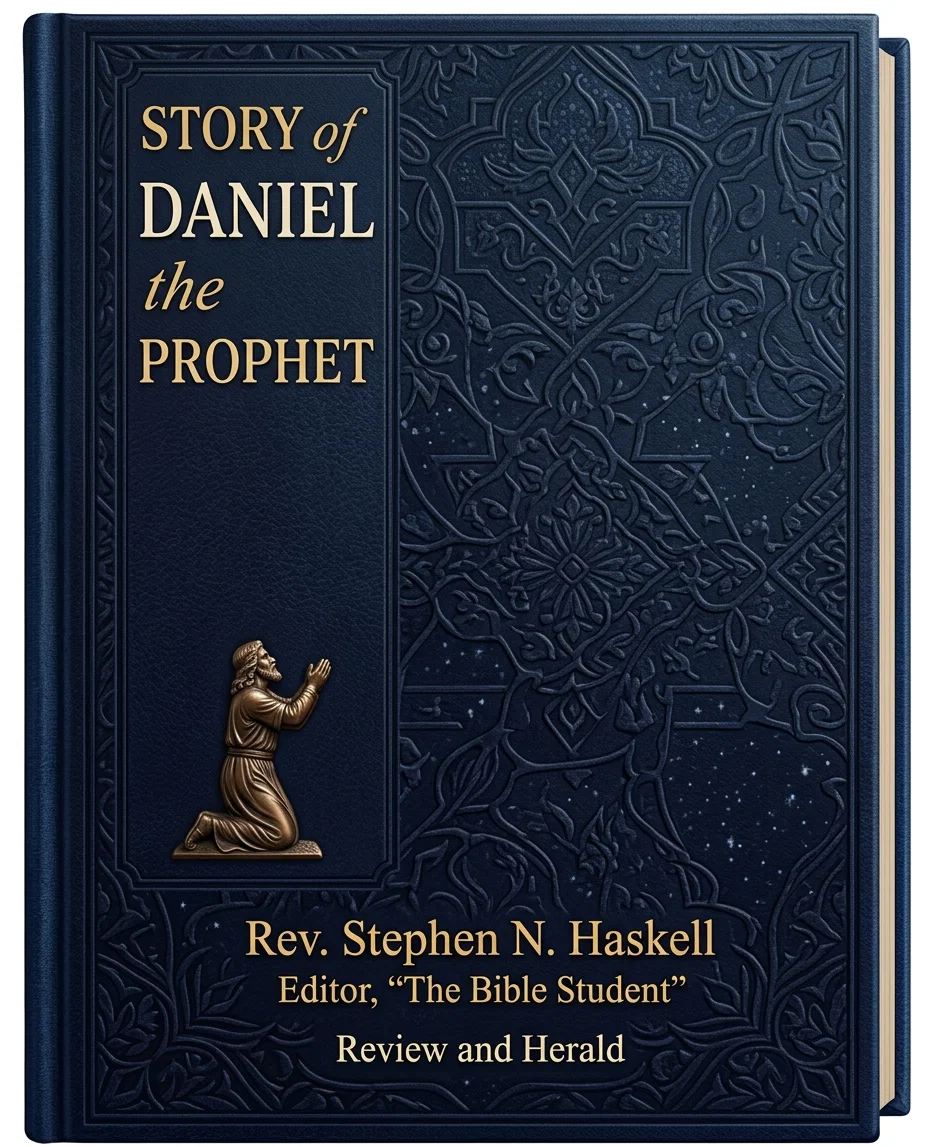
The Story of Daniel the Prophet

This biographical, historical, and prophetical work is extremely interesting, practical, and new in its treatment of the life of the prophet Daniel, giving in a pleasing style the experience gained in the extremes of captivity in his early life, and later of honor from the hands of earthly monarchs, illustrating the possibility of the exemplification of Christian principles and practises in all business transactions. This work reveals in the life of Daniel and his close connection with God all the vital principles of the gospel message for our times.
The rise and fall of nations, as outlined in the prophecies of Daniel, are carefully delineated, while the light contained on the sanctuary question is of great interest and value to every student of prophecy.
One of the many good features of this book is that the numerous texts of Scripture referred to are printed at the side of the subject-matter; and the entire book of Daniel is printed in italics in the margin; and the other passages referring to the same book are printed in Roman type.
The work is written in an easy and attractive manner that will interest the old as well as the young, and bring instruction to all. Beautifully and substantially bound in half cloth. Price, $1, postpaid.

Good Stenographers Wanted

YES, good stenographers are always in demand, both in denominational work and outside. But many are satisfied with very ordinary skill, and do not become proficient. Such persons find it difficult to hold their positions, and after a time drift into some other kind of work.
Even with the best text-books and the most approved system the way to the top is difficult, and requires untiring perseverance.
Our denominational shorthand work is, to a large degree, technical, and can not be dealt with by any shorthand text-book intended for general use. Hence many stenographers fail to make the necessary preparation, and ultimately fail.
To assist all who really wish to excel, H. E. Rogers, the author of “Rogers’ Compendium,” has prepared a book of “Special Contractions,” devoted especially to forms for words and phrases in frequent use in denominational work, the majority of which are not dealt with by any shorthand text-book. In this book, these contractions are indicated in a manner perfectly clear to all writers of the Pitmanic systems, by the briefest outlines consistent with legibility. The list includes the names of conferences, States, institutions, proper names, frequent phrases, special contractions, books of the Bible, shorthand numerals, etc., of great assistance to those preparing for conference, institutional, or any denominational reporting. Explicit directions are also given regarding methods of practise that can not but prove helpful. By the use of this book, you will be able to employ the briefest “short-cuts” in doing your own special work, and thus greatly increase your efficiency.
“Special Contractions” is pocket size, and neatly bound in flexible cloth. Price, 50 cents.

First Quarter Sabbath-School Lessons for 1905

THE Sabbath-school lessons for the first quarter of 1905 are a series of lessons upon Religious Liberty and Health and Temperance. The first six lessons will be a study of “The Bible and Liberty,” “The Sabbath and Liberty,” “Sunday and Slavery,” “An Epoch of Freedom,” “The Powers that Be,” and “The Final Conflict.” The remaining lessons for the quarter treat upon the principles of health and health reform.
The revival of the religious liberty work under changed conditions demands a study of the principles of true liberty, which must now be given in connection with the promulgation of the great advent message. This phase of the message, together with that of health and temperance, will constitute a timely and profitable study for the church for the first quarter of 1905.
The Quarterlies containing these lessons are now ready. Regular retail price, 5 cents a copy.

Our Paradise Home

As a testimony of the merits of this little book, its sale of fifty thousand copies the first year of its publication will speak. It treats in a masterly yet simple manner on the following important Bible themes: Sin Permitted, The Fall of Satan, The Purchased Kingdom, The Three Worlds, Redemption of the World Promised, The Two Kingdoms, The Two Jerusalems, The Three Heavens, Events Introducing the Restitution, The Earnest of the Holy Spirit, A Glimpse of the Future Kingdom, The Rest that Remaineth, The Events of the Millennium, The Judgment, The Two Resurrections, Description of the Kingdom of Glory, The New Jerusalem.
The great majority of people are interested in the study of these subjects; and they find in “Paradise Home” a logical and Biblical portrayal of each. The work is beautifully bound in three styles, and appropriately illustrated with new drawings made for the book. Prices, 25, 50, and 75 cents.

Order of Review & Herald

Order of Review & Herald, Washington, D. C.; Battle Creek, Mich.; Pacific Press, Mountain View, Cal.; Kansas City, Mo.; Southern Publishing Assn., Nashville, Tenn.; or your State Tract Society.

Editorial

A Saving Message

THE purpose of teaching the third angel's message is not to establish a creed, but to save people from sin. Iniquity abounds. A power from beneath is taking hold of men and women, and dragging them down to destruction. Only the power of God can rescue those who are held by Satan in the bondage of sin. The only provision for reaching and saving lost humanity is through that revelation of the power of God which comes to us in the gift of his Son, Jesus Christ. Therefore “we preach Christ crucified, unto Jews a stumbling-block, and unto Gentiles foolishness; but unto them that are called, both Jews and Greeks, Christ the power of God, and the wisdom of God.” The Lord's Word and the Lord's Christ have been set aside by the perversion of the truth, and human speculation and “the ideal man” have been substituted for them. But in doing this the barriers against sin have been broken down, and an increasingly strong tide of evil is sweeping helpless humanity before it. In the preaching of this message of “the everlasting gospel” to this last generation the power of God to save from sin is to be restored to the people, and in it they are to find the light and the help which they need in this time of special peril. God foresaw the condition of things in these last days,—the desperate and determined effort of Satan to pervert the truth and to deceive if possible the very elect,—and he has given a message for the world which will meet the need of the hour, and prepare a people to stand “without fault before the throne of God.” This is the message of Christ and his righteousness, and it is to be given to the world in the very setting which the Lord has provided for it as the threefold message to the last generation. The keynote of this message is, “The return of Christ to our world will not be long delayed,” and the cleansing of the sanctuary, in which is revealed the power of God to keep from sin, will be heard in every strain. O then let God's message be given in God's way,—always saying, “Behold, the Lamb of God, that taketh away the sin of the world.”

Our Time and Its Meaning

A WORKER in this message writes that he has been “deeply stirred” by recent articles in the REVIEW dealing with our present situation, and asks whether the time has “fully come to sound aloud the message of Rev. 18: 1-4 in connection with the first, second, and third angels’ messages of Revelation 14.”
An arbitrary reply to this question, a mere statement of human opinion, would be of no value to any one. Let us look again at some of those developments in recent history which will help us to understand the time.
The rejection of the first angel’s message by the churches generally, the refusal to listen to the proclamation of the immediate, visible coming of our Lord, led to the giving of the second angel’s message in the summer of 1844. This experience is clearly described by Elder J. N. Loughborough in his book, “Rise and Progress of Seventh-day Adventists,” in the following paragraph:—
In 1844 there was connected with the proclamation of the “midnight cry” just such a message as that of the second angel of Revelation 14. By it was set forth the fact that those who were taking the mere opinions of men in place of the plain statements of God’s Word, were following, thus far, in the steps of the mother church of Rome, and were in danger of placing themselves where the day of the Lord would finally overtake them “as a thief in the night.” The nominal churches were told that in thus setting aside the word of the Lord to establish their own opinions and creeds, they were like the papal church in taking “the Bible as explained by tradition,”—by the customs, sayings, and practices of the fathers, popes, and cardinals,—which was a direct departure from the Protestant’s rule of taking “the Bible and the Bible alone as the standard of faith.”
Elder J. V. Himes, in a letter dated Aug. 29, 1844, quoted by Elder Loughborough, says:—
It was not until “divers were hardened” and “spake evil of that way” [the Lord’s coming] before the multitude, that our brethren were moved to come out and separate from the churches. They could not endure this “evil speaking” of the “evil servants.” And the churches that could pursue the course of oppression and “evil speaking” toward those who were looking for the “blessed hope,” were to them none other than the daughters of the mystic Babylon. They so proclaimed them, and came into the liberty of the gospel.
The attitude assumed by the churches toward this advent message at that time has never been changed. The warning which came to them as the word of the Lord was rejected in favor of the opinions and traditions of men. This was a deliberate setting aside of a fundamental principle of Protestantism, and by the rejection of the authority of the Scriptures the door was opened for the entrance of many and grievous errors.
Here are some of the steps, as given by an advocate of the New Theology, which have led to open infidelity:—
First came geology, with its message that the world was not made in six days. The church replied, Six days does not mean six days; it means six long periods. Then came anthropology, with its message that man was not created six thousand years ago; but that he has been on the earth at least ten or fifteen or twenty thousand years. The church replied, The Bible is not authority on matters of chronology. Then came evolutionary science, with its message that man was not made perfect; he has been developed gradually, like all other animals, from a germ. And then the church replied—Nothing. Then followed literary criticism. . . . Then came the study of comparative religions. . . . Little by little the Protestant faith that the Bible is the supreme and final authority was weakened, and for some destroyed.
These attacks upon the foundations of Christianity were resisted with some show of earnestness for a time, but the step taken in 1844 prepared the way for all that followed, and those who had accepted human opinion in place of the word of God at that time could not successfully withstand the logical development of this course in later years. And so it has gone on step by step, until the following announcement of the overthrow of the old faith has been made, and has been allowed to pass unchallenged:—
Liberty to think and teach in the terms of the New Theology, and to interpret the Bible in the terms of the new criticism, is no longer denied in the Protestant churches.
The exercise of this “liberty” on the part of those who have already been claiming it has brought the following results:—
A pantheistic god, instead of a personal God.
A human savior, instead of a divine Saviour.
Infallible scholarship, instead of an infallible Bible.
“Modern thought,” instead of a “Thus saith the Lord.”
A development of religious ideas from the human mind, instead of a revelation from God.
The natural in all things, the supernatural in nothing.
Reformation, instead of regeneration.
Culture, instead of conversion.
A change of environment, instead of a change of heart.
The energy of the flesh, instead of prayer and faith.
Interest in the secular, instead of zeal for religion.
Nobody afraid of hell, and nobody caring much about heaven.
Everybody coming out right anyhow, and nobody on the wrong track except those who cling to the faith once delivered to the saints.
It appears to us that the situation thus described indicates another turning-point in the history of this fall of Babylon, and calls for the giving of the message of Rev. 18: 1-5, in which “the message of the fall of Babylon, as given by the second angel, is repeated, with the additional mention of the corruptions which have been entering the churches since 1844.” We do not say that this modern infidelity has reached its full development, but when the Bible ceases to be “an ultimate and supreme authority,” and the God of the Bible is repudiated in favor of “an Inscrutable Existence,” “The Infinite and Eternal Energy,” and the ten commandments are declared to be entirely unsuited to the needs of modern religious life, what is left to Protestant Christianity? Is it not time that the message of the commandments of God and the faith of Jesus should do an aggressive and powerful work in calling out of the fallen churches those who tremble at the word of the Lord? The great body of the nominally Christian church will never come back, as a whole, to the original platform of Protestantism. Only those individuals who listen to the call, “Come out of her,” and who accept God’s final message of warning to the world will be able to stand in the crisis which is just before us. “Is the time fully come to sound aloud the message of Rev. 18: 1-4 in connection with the first, second, and third angels of Revelation 14?” Let the facts answer.

Complete Consecration

THERE is nothing extreme or unnatural in the experience of fully yielding all the powers of our being to the service of the Lord. It simply means a life under the control of the Spirit of the Lord in all things, but the Spirit of the Lord will not lead anybody to do foolish or fanatical things. Where, then, is the danger? It is in substituting our own ideas and impressions for the leading of the Spirit of God. Here is the caution: “Beware how you follow impulse, calling it the Holy Spirit. Some are in danger in this respect.” The guidance of the Spirit will never lead us to go contrary to the plain teaching of the Word of God or the example of Jesus. A life of complete consecration to God will be in perfect harmony with both, and will reveal those fruits of the Spirit which glorify God. There is an urgent call at this time for a new and unreserved consecration to the service of God, and that means a service in harmony with God’s plan for this time. This will lead us to co-operate with our Master in doing the very thing which he desires to have done now. There are a thousand things which might seem to us very necessary to be done, and we might fully occupy ourselves with them, and yet utterly fail of meeting the mind of God as to consecrated and intelligent service for him. The special work to be done now is to prepare a people for the coming of the Lord by proclaiming God’s message to this generation. A complete consecration to God on the part of this people now will be revealed in giving that message. Thus will we be laborers together with God.

Comradeship of the Fields

WHEN the word was passed to all the missions last autumn that the mission funds indicated the necessity of rigid conservatism in planning the work, cheering responses came in from workers in the fields. The little Bermuda Mission, where only Elder J. A. Morrow and his wife are fully engaged in the work, made a definite effort to gain a surplus beyond its own needs in order to help in the time of shortage. In all, seventy-five dollars was sent in from the Bermuda Islands, which, of course, made no call for funds from our treasury.
Brother Morrow wrote that it seemed “wonderful how the Lord has brought means into our hands.” The tithe among the little company of believers there has grown, and Brother Morrow made a special effort with the literature, so that profits on book sales have kept the work going. It is not a large field, and so strong a book effort could scarcely be maintained; but Bermuda financed itself last year, and sent in funds to help in the time of pressure at the end of the year.
It is just a little token of the solidarity of our missionary interests. The various fields are not rivals, but associates in the one work. Many a field in need has declared itself ready to see longed-for requirements denied, if necessary, in order that still larger or more neglected fields might receive help.
In this spirit the work will be done without long delay, for God will surely bless unselfishness in fields as well as in individuals. The field is the world; and, after all, the final gathering of the harvest can not begin until the whole field is ready for the angel reapers. Whatever hastens on the work in the most neglected portions, and those furthest behind on the list, will hasten the finish in the fields where the most has been done. The way to a quickly finished work lies out through the waste places of the earth, among the unwarned millions, wherever they are waiting for us. W. A. S.

Encouraging Words

AMONG the privileges of the Christian life, a most valuable one is that of being ever “strong and of a good courage.” This privilege is independent of circumstances. Men of the world are hopeful and courageous when there is a prospect before them of success, but the world has nothing to offer the one who has neither fortune nor inherent abilities to raise him above the level of his birth. Christianity takes men from the lowest planes of life, and raises them up to sit with Christ in the heavenly places, because the power, and wisdom, and glory of such exaltation are all of God, and not of men.
It is for the glory of God that he should take from the last generation of humanity, from the most degenerate period of earth’s history, a class who will be honored above all others in the world to come, by being privileged to “follow the Lamb whithersoever he goeth.”
The following words of cheer, spoken through the spirit of prophecy, should be kept in mind by any who, because of inherent lack or defects, may be tempted to become discouraged:—
The Saviour takes those whom he finds will be molded, and uses them for his own name’s glory. He uses material that others would pass by, and works in all who will give themselves to him. He delights to take apparently hopeless material, those whom Satan has debased, and through whom he has worked, and make them the subjects of his grace. He rejoices to deliver them from suffering, and from the wrath that is to fall upon the disobedient.
Are you one of those whom others have passed by as being useless material — one not gifted with natural abilities, or one whom Satan has debased through years spent in his hard service? If so, then you are one of those whom the Saviour “delights to take,” and make “the subjects of his grace.” And he will certainly do that in which he delights if you will but give him the opportunity to use you for his name’s glory, by surrendering the hopeless, useless material of self into his hands.
The Christian life is always one of courage and of rejoicing. L. A. S.

The “Sabbath Observance” Campaign

MUCH interest in the Sabbath question has been developed in Washington as the result of the publication in the Washington Post of the open letter to the clergy of this city, which is printed in this issue of the REVIEW. The Bishop of Washington made a reply to this letter which was printed in the Post of Dec. 31, 1904. On Sunday, January 1, quite a number of the ministers of Washington preached upon some phase of the question of “Sabbath Observance,” according to the plan agreed upon two or three weeks ago. In the Post of Monday, January 2, there appeared no less than six letters, one of them from Dr. Wilbur F. Crafts, the head of the International Reform Bureau, dealing with some of the issues raised by this campaign.
Feeling confident that our readers have a special interest in this matter, we reprint two of these letters:—
THE DANGER OF INTOLERANCE
EDITOR POST: I have read with interest the editorial in your issue of December 28 under the title “Sabbath and Sunday.” Although I am not able to agree with all the positions taken in it, yet it does credit both to your research and to your candor. With your permission, I will call attention to a lesson from history, suggested by your closing statements, which are as follows: “The only danger is that those who observe it [Sunday] will become intolerant of those who regard it more as a holiday than a holy day. Against this intolerance those who appreciate the real value of Sunday must ever be upon their guard.”
The steps taken in the fourth and fifth centuries to secure the better observance of Sunday led directly to the intolerance of the Dark Ages. These steps, and the reasons given for them, are briefly these: “The Emperor Constantine, as Sozomen relates, enacted a law [A. D. 314] that on Friday, as on Sunday, there should be a suspension of business at the courts and in other civil offices, so that the day might be devoted with less interruption to the purposes of devotion. This was followed in A. D. 321 by Constantine’s celebrated Sunday law, which runs thus: “On the venerable day of the sun let the magistrates and people residing in cities rest, and let all workshops be closed. In the country, however, persons engaged in agriculture may freely and lawfully continue their pursuits, because it often happens that another day is not so suitable for grain sowing or for vine planting; lest by neglecting the proper moment for such operations the bounty of heaven should be lost.”
The custom of consecrating Sunday “in a special manner to religious employments and of abstaining from all worldly business was established by a synodal law, the twenty-ninth canon of the council of Laodicea [A. D. 364], yet with this restriction, that all Christians should abstain from their worldly business if they were able.”
“By a law of the year 386 those older changes effected by the Emperor Constantine were more rigorously enforced, and, in general, civil transactions of every kind on Sunday were strictly forbidden. Whoever transgressed was to be considered, in fact, as guilty of sacrilege.”
These various enactments in favor of a stricter observance of Sunday were all passed so that it might be easy for the people to attend the religious services on that day. But note the actual result. “Owing to the prevailing passion at that time, especially in the large cities, to run after the various public shows, it so happened that when these spectacles fell on the same days which had been consecrated by the church to some religious festival, they proved a great hindrance to the devotion of Christians, though chiefly, it must be allowed, to those whose Christianity was the least an affair of the life and of the heart. . . . The theater was vastly more frequented than the church. . . . Moreover, by the civil relations of those times many were obliged, on account of their particular place among the citizens, to take part in the arrangements necessary for the support of the public shows, and so to be interrupted in their devotions, against their will. [They were compelled by the government to work on Sunday!] Hence, the North African Church resolved, at an ecclesiastical convention held at Carthage in 401, to petition the emperor that the public shows might be transferred from Christian Sunday and from feast days to some other days of the week. Owing to the prevailing passion for the shows, this petition could not be granted, perhaps, without considerable difficulty. First, in the year 425 the exhibition of spectacles on Sunday and on the principal feast days of the Christians was forbidden, in order that the devotion of the faithful might be free from all disturbance. In this way the church received help from the state for the furtherance of her ends, which could not be obtained in the preceding period.”
But still the people cared more for amusement than for religion. They regarded Sunday, in the words of your editorial, “more as a holiday than a holy day.” This did not satisfy the religious teachers, and St. Augustine then propounded his celebrated theory of compelling people to attend to religious matters, in the following statements: “It is, indeed, better that men should be brought to serve God by instruction than by fear of punishment or by pain. But because the former means are better, the latter must not therefore be neglected.” “It was by Augustine, then, that a theory was proposed and founded which . . . contained the germ of that whole system of that spiritual despotism, of intolerance and persecution, which ended in the tribunals of the Inquisition.” [All the quotations in this communication, except Constantine’s Sunday law and the translation of Augustine’s theory of compulsion, are taken verbatim from Neander’s Church History, an acknowledged authority.]
The imperial decrees in favor of Sunday observance and the petition of the church that the government should not compel its members to work on Sunday, in order that the day might be more religiously observed, led logically to intolerance and persecution in order to compel people to be religious who were inclined to regard Sunday “more as a holiday than a holy day.” Is not the lesson plain? The clergy and people of Washington ought to consider this history before they enter upon any campaign “aimed at the [alleged] governmental practise of making certain employees work on Sunday.”
Furthermore, there are now before Congress two bills, with penalties of fines and imprisonment attached, designed to compel certain classes of people in the District of Columbia to regard Sunday as a holy day. The “danger” which you suggest as a possible one is even now a real one—the danger of intolerance. In the interest of a pure Christianity, I urge that the church should not attempt to secure governmental action in favor of Sunday, and that each one be left free to follow the dictates of his own conscience. W. W. PRESCOTT.

MAKING OF HYPOCRITES

EDITOR POST: I read with much satisfaction your able editorial in reference to the proposed desecration of the Lord’s prayer by making its recital compulsory upon certain offenders. Surely all will agree with you that the compulsory use of this beautiful prayer, which has been a help and inspiration to millions of hearts when repeated voluntarily, would, indeed, be an “egregious blunder.” Such a law would make that which, when done voluntarily, is a holy and righteous act, a sacrilegious farce.
Permit me to mention in this connection that a parallel of this wicked thing is found in the efforts now being made to make the observance of the so-called Lord’s day compulsory. Compulsory praying is no more hypocritical or sacrilegious than compulsory Sabbath-keeping. Why enforce by law the Lord’s day any more than the Lord’s prayer? Why seek to enjoin the one and neglect the other? Both acts are voluntary—a thing of the heart, a duty wholly between the individual and his Creator. No law enacted by man can change the heart, and any law enacted demanding recognition of a religious precept can do no more than make a man act as though he was religious when he is not, or, in other words, such legislation is simply a machine for manufacturing hypocrites, as all must clearly see.
The words of the immortal U. S. Grant—to “keep the church and the state forever separate”—are especially applicable at this time. It is devoutly to be hoped that the promoters of Sabbath legislation will take seriously to heart the lesson on religious liberty read them by your most able editorial.
G. B. THOMPSON.
At no time in the past has the question of the true Sabbath and the real nature and logical result of Sunday laws been so prominently placed before the people of Washington, and we can but believe that it will result in bringing some honest souls to a full knowledge of the truth for this time. We invite all our people to unite with the workers here in earnest prayer that God may greatly bless the work in this city, and that the seed sown may bear fruit to his glory.

“God’s Holy Day”

THIS is the expression which Dr. J. G. Butler repeatedly applied to Sunday in his sermon on “Sabbath Observance” at the Luther Place Memorial church in this city on Sunday, January 2. Here are some extracts from the sermon:—
It is not a holiday, though greatly abused by multitudes who neglect God’s house and trample upon God’s day.
This great government of ours should always stand for God’s holy day. We can not afford to have men in the departments of the government working and deprived of their rest day.
Every man needs a day of rest, even the overworked newspaper men, and no doubt there are people to-day lounging at home and reading the Sunday paper who ought to be in the house of God.
Ancient Israel went down as a nation trampling upon God’s Sabbath. It is for the patriotic Christian citizen to emphasize God’s holy day in his life and in his home, in business and in government, that the blessing of heaven may abide upon our Christian republic.
From the whole tenor of Dr. Butler’s sermon it is perfectly evident that the sentiment which he represents would not be satisfied with laws prohibiting labor on Sunday if the people still regarded it as a holiday, and not as a holy day. It is true that he refers to the need of rest on the part of “the overworked newspaper men” and “the weary, worn breadwinner,” but those who put forward this plea in behalf of Sunday would not be satisfied unless “the overworked newspaper men” and “the weary, worn breadwinner” should take their rest on one particular day, and in one particular way. The spirit which demands a Sunday law in order to protect the day will never rest content until it has carried this demand to its logical conclusion,—the effort to compel men to regard Sunday as “God’s holy day.” This is the real issue which will shortly come to the front, and the message of the true Sabbath and its significance is designed to prepare the people to meet the issue intelligently. It is time to give to this generation God’s message for this generation.

A Serious and Crucial Conflict

From the point of view of the New York Sun, the year 1905 seems likely to bring no diminution of the conflict between capital and labor, but may possibly, on the other hand, witness a more severe and crucial stage of the contest than has yet been seen. There are indications that the union labor forces are preparing for a decisive struggle over the question of the open shop. To establish the union or closed shop is regarded by them as vital to the success of the union movement, and for this the labor organizations will fight as they would for their own existence. The Sun reports that of late employers have been posting notices on their establishments that after a specified date these would be run on the open shop system; that the unions, in view of this movement, have been laying counter-plans, and that “indications multiply that a conflict, which may prove serious and crucial, is impending. Reports of both kinds,” says the Sun, “come from all over the Union, from Boston to San Francisco.”
Just now there is a cap makers’ strike in New York City, which followed the posting of a notice on one establishment there that after December 26 it would be run as an open shop, that employees would be engaged according to their behavior, and that the employers reserved the right to discharge employees for cause when they deemed it necessary. The strike was the union’s reply to this announcement.
“This strike,” says the Sun, “is a preliminary skirmish in what may become a wide-spread industrial conflict for the determination of a question which unionism has come to regard as vital to its organization.”
This, however, is not the most serious indication in the present outlook. The Sun says:—
Another and far more important skirmish, for it may well reach the dimensions of a battle, is indicated in the decisions reached on December 23 by the “general executive board” of the Carriage and Wagon Workers’ International Union. It is said by the committee that this will involve sixty thousand men, forty thousand of whom are organized unionists. The general secretary of that union has made this explanation:—
“We are necessarily on the defensive at first until we see what the employers are going to do, and how far the open shop movement is going to spread. We have arranged to spend a great deal of money, and send a large force of organizers into the field, to get as many of the twenty thousand non-union men into the union as possible. “When we have organized the trade as thoroughly as we can, we will demand the closed shop in all open shop factories. If this is refused, we will order strikes.”
From this the Sun concludes that “an extensive movement for the closed shop seems therefore to be on foot, and the issue between the open shop and the closed shop is likely to be fought out during the coming year, or, at any rate, the battle will begin sooner or later.”
The fight will be one to determine whether employers or employees shall control the industrial affairs of the nation, and with such an issue at stake the contest will necessarily be long and bitter. Thus the outlook continues to be prophetic of more and more strife among men, until the coming of Him who shall make wars to cease unto the ends of the earth. L. A. S.
Continue reading: The Support of Our Mission Work