In Rev. 7:1-3 the angels are commanded to restrain the winds of strife until the servants of God are sealed. When that is accomplished, probation will close. The obedience of the angels to this command is perhaps more evident now than ever before. While a part of the world is at war, and the remaining nations have been tried almost to the breaking point in one way and another, they have been restrained from actual warfare. This country, from which all the world is to be lightened with present truth, has been mercifully delivered thus far, but by the narrowest margin. It was thought more than once that the breaking point with Mexico had come, and that war must follow. Many believed that it would be the beginning of a trouble that would bring into the war one after another of the nations not now engaged in it. But a guiding hand has prevented this final step.
It seemed that a great railroad strike was unavoidable. The Chief Executive7of the nation used every means at his command to avoid a strike of such magnitude and consequences, which, if it had taken place, would indeed have been a national disaster. There are few who realize what that strike would have meant. Its greatest severity would have fallen upon the cities, a large per cent of whose inhabitants habitually live from hand to mouth. The long lines of trains carrying foodstuffs from day to day, meet the demands of these hundreds of thousands of city dwellers who are affected by a day's shortage. Let the trains be stopped for a few weeks, and wreck and ruin must result. This would have been the experience of many of our larger cities had the railroad strike been called. This large class would have been without food before the end of the first week. Men would not have seen their families starve without making an effort to secure food; and the food which might have been stored up by the rich, they would have seized to sustain life. No officials could have checked them. Other unions were waiting this move to declare strikes along other lines.
In James 5:1-6 is given a description of the contest between capital and labor, and the distress that will come upon the “rich men.” This would have been seen in terrible reality had the strike been called. “Every nation is living upon a magazine that, if the match were applied, would bring destruction,” declared a prominent man recently; and another has said, “The trade-unions will be the cause of the most terrible violence that has ever been seen among human beings.”
When a current has been set in motion among the great tides of humanity, there are times when the leaders are powerless to control it. Such tides are now being stirred, their volume is increasing, and the final results are sure.
But there is a work to be done. The gospel of the kingdom must be carried to every nation. Then the end will come. Matt. 24:14. Then the winds will blow, and strife and bloodshed will fill the world.
There seems no possible middle ground in the conflict between capital and labor. If the laborer should recede from his present demands, his position would soon be worse than now. If the capitalist should yield to present demands, other demands would quickly follow, and soon the accumulation of years would be gone. There is no limit to the demands of the selfish human heart. It is never satisfied.
Every sign the Lord has given of the nearness of his coming, both in the heavens and in the earth, has been fulfilled or is fulfilling. The work of God's messengers is to tell the people the meaning of these things that are shaking the world, and of the promised rest that awaits those who will put their trust in him.
Lodi, Cal.
The Griefs That Never Arrived
“Some of your hurts you have cured,
And the sharpest you still have survived;
But what torments of grief you endured
From evils which never arrived!”
Make Thy Garden Fair
By Robert Collyer
Go, make thy garden fair as thou canst,
Thou workest never alone;
Perchance he whose plot is next to thine
Will see it, and mend his own.
—Robert Collyer.
Thoughts That Steady the Soul
“THOUGHTS of God’s sovereignty, of his love, of his grace, and of his power, will steady the heart and stay the soul against the ravages of anxiety.”
Look to the Lord
By E. K. SLADE
E. K. SLADE
“Two men went up into the temple to pray; the one a Pharisee, and the other a publican. The Pharisee stood and prayed thus with himself, God, I thank thee, that I am not as other men are, extortioners, unjust, adulterers, or even as this publican. I fast twice in the week, I give tithes of all that I possess. And the publican, standing afar off, would not lift up so much as his eyes unto heaven, but smote upon his breast, saying, God be merciful to me a sinner. I tell you, this man went down to his house justified rather than the other.”
In this parable we have an illustration of two kinds of faith. That exercised by the Pharisee is a faith in one's self. The faith of the publican looks to the worthiness of God, and recognizes his power to save. It is not an uncommon thing for men to look to themselves, taking account of what they are doing, or of how well they have done, instead of looking to the Helper and Saviour of sinners. The faith that saves, the faith by which men are justified, as was the publican, is a faith that takes no account of one's own worthiness, but trusts wholly and always in the merits of Christ and in the power of God to save.
In the life and experience of Moses we see these two kinds of faith prominently revealed. After he had received many years of training in Egypt, realizing in some way that he was to be an instrument in the hands of God for leading Israel out of bondage into the Land of Promise, he looked to and relied upon his own ability in undertaking that great task. He failed in the very beginning. That circumstance led him into an experience that taught him that his only hope of accomplishing anything worth while for God was to look to the Source of all strength and wisdom. Moses had but little confidence in himself, when, after forty years, God called him to bear his message to Pharaoh, “Let my people go.” He begged to be excused on account of his inability. As was evident from all the experiences that followed, every victory that was won and all the advancement that was made in that wonderful deliverance of the people of God from Egypt and bondage, came because Moses had learned the lesson of looking to the One from whom his strength must come.
The psalmist had learned to say, “My help cometh from the Lord, which made heaven and earth.” One of the lessons that every Christian must learn is that of having no confidence in the flesh, and of looking up to the source of every good gift. There is a tendency on the part of every one to do as Moses did in his early experience, and as the Pharisee and the Jewish nation did. The disciples were not free from the tendency to look to themselves and their own works during the days when the Saviour was with them.
“Jesus went out, and departed from the temple: and his disciples came to him for to show him the buildings of the temple.” And one of his disciples said, “Master, see what manner of stones and what buildings are here!” This was typical of the feelings of the Jewish people. Their confidence was placed more in their system, their religion, and in what they had accomplished than in the power of God, and in the worthiness of God, by which alone a people can be saved. In the presence of their Saviour it was difficult for them to get their minds off their own accomplishments and off what they supposed to be their own worthiness.
There is danger that Christians will begin wrong. One who turns from a course of sin to follow the Lord, should have the experience described in the following words: “If ye then be risen with Christ, seek those things which are above, where Christ sitteth on the right hand of God. Set your affection on things above, not on things on the earth.” “He that cometh from above” has promised to come into our lives and dwell in our hearts. The faith that looks to God is the faith that gains the victory. “This is the victory that overcometh the world, even our faith.” Unless we cultivate the faith that looks away from self and from placing confidence in our own flesh or in that of another man, we are sure to meet defeat.
“My faith looks up to thee,
Thou Lamb of Calvary,
Saviour divine!”
is good to sing, and better to practice.
There is a remarkable lesson in the experience of Peter at the time when he, with the other disciples, was commanded by the Saviour to go across the lake, with the promise that the Saviour would meet them on the other side. In the night they were overtaken by a severe storm. In the midst of the awful darkness, the flashes of lightning, the deafening thunder, the raging wind and rolling waves, there appeared what they supposed to be a ghost. Much to their relief, a voice was heard, saying, “It is I; be not afraid.” Peter quickly responded, “If it be thou, bid me come unto thee on the water.” The Saviour said, “Come.” Peter stepped out of the boat, and in full view of his comrades, under these remarkable circumstances, he walked toward his Saviour with his eyes fixed upon divine power. But very shortly he began to look upon the scenes about him, and to think of what he was able to do. Then as he began to sink, he again reached up to his Lord, and appealed for help; and when the Saviour reached down his hand, he upbraided Peter for not continuing to trust in the power that had made his walk upon the water possible. Thousands will sink in the midst of the earthly elements that surround them, because they cease to look out and up.
While Elisha was stationed at Dothan, he was informed by his servant that the Assyrians had encamped near them, with horses and chariots and a great host. The servant inquired what they should do. The reply of the man of God was, “Fear not: for they that be with us are more than they that be with8them.” Then Elisha prayed, asking the Lord to open the eyes of the young man that he might see. “And the Lord opened the eyes of the young man; and he saw: and, behold, the mountain was full of horses and chariots of fire round about Elisha.” The man of God had learned to look to the Lord. This was one of the greatest lessons that this young man, his servant, had to learn. He was to learn that men in this world may accomplish great things for God and experience great victories in their own lives through looking to him.
We are constantly confronted by the danger of fixing our eyes upon our own attainments, upon our religion, and upon the church and the accomplishments of the church, and fall into that self-satisfied condition that Israel experienced. We are in danger of saying to the world, “See what manner of stones and what buildings are here!” We are inclined to think as Peter evidently did, not realizing that in the sight of heaven the only possible way we can walk “unto all pleasing” is through constantly looking to Jesus.
Mount Vernon, Ohio.
The Honest Man
THE most enviable of all titles—the character of an honest man.—Washington.
Witnessing for Christ
By Meade Mac Guire
MEADE MAC GUIRE
THERE is one phase of Christian life which we do not often hear emphasized. It is stated forcibly in Rom. 10:9: “If thou shalt confess with thy mouth the Lord Jesus, and shalt believe in thine heart that God hath raised him from the dead, thou shalt be saved.”
Many people today seldom testify in a social meeting, as in former times. Especially is this true in the large churches and institutional centers. Even when given an opportunity, they remain silent. When asked why they do not witness for their Master, they reply that they do not consider it necessary to speak in public; that the main thing is the life, and they prefer to show by their lives that they are God’s children, rather than by speaking in meeting.
Now, in theory this may have a show of plausibility, and may pass off as Christian humility or as timidity; but is it really in harmony with the teaching of the Scripture? If the life is given to God, then God works his work through that life. If the body is surrendered to God, its functions are used for him—the hands to work and the brain to think. The function of the vocal organs is not silence, but speech. If they are God’s, he will use them. We read in the Bible of a poor sinner possessed of a dumb devil, but when delivered he witnessed for Christ.
The scripture quoted presents two conditions of salvation: “Confess with thy mouth the Lord Jesus,” and “believe in thine heart.” Why should any one think that he can dispense with one of these conditions?
One may say that he is ready to testify to sinners, but not in a meeting of Christians. By such a course he is sure to miss a great blessing, for one of the most precious messages the Lord has left for his people is on this point. “They that feared the Lord spake often one to another: and the Lord hearkened, and heard it, and a book of remembrance was written before him for them that feared the Lord, and that thought upon his name: and they shall be mine, saith the Lord of hosts, in that day when I make up my jewels.” Mal. 3:16, 17.
“The Lord has shown me that great interest should be taken by Sabbath keepers to keep up their meetings and make them interesting. . . . All should have something to say for the Lord, for by so doing they will be blessed. A book of remembrance is written of those who do not forsake the assembling of themselves together, but speak often one to another. The remnant are to overcome by the blood of the Lamb and the word of their testimony. Some expect to overcome alone by the blood of the Lamb, without making any special effort of their own. I saw that God has been merciful in giving us the power of speech. He has given us a tongue, and we are accountable to him for its use. . . . We should not come together to remain silent; those only are remembered of the Lord who assemble to speak of his honor and glory and tell of his power; upon such the blessing of God will rest, and they will be refreshed.”—“Early Writings,” pp. 114, 115.
Those newly come to the faith or just starting in the Christian life should surely have wise, earnest instruction on this point. As a rule, one who is prepared for church membership is ready to testify to his satisfaction in a new-found Saviour, and seeks opportunity to do so.
Suppose I have a friend who is on trial for his life. Circumstantial evidence is against him, and he is about to be sentenced to death. I know he is innocent, and my testimony would free him. The judge solemnly asks the question, “Does any one know reason why sentence of death should not be passed on this man?” I am silent, and he is condemned. I did not have to say anything. My silence testified against him. Let us never again deny our best Friend even by our silence.
Hope
By A. J. Bristol
A. J. BRISTOL.
“Now abideth faith, hope, and love.” The first and the last of these three abiding graces seem to have held the attention of Christian speakers and writers almost to the obscuration of hope. But important as are faith and love,—the graces which mark the beginning and the ending of Christian growth,—we should not forget that hope occupies the central place, and may well be compared to the keystone of the arch.
While we are told that “all men have not faith,” it long ago became a proverb that “hope springs eternal in the human breast.” Throughout childhood’s happy years we are led along by the rosy pictures hope paints of what is beyond; and while youth gives some promise of what may be, hope almost makes us forget the joys of the present in anticipating the satisfaction we shall have in the achievements of our manhood and womanhood.
Too often these anticipations are not realized; but hope bids us look forward to the generation to come, for the realization of what was denied us. So, by keeping the bright lamp of hope constantly burning from generation to generation, the Lord has kept the world from settling into the blackness of despair.
The only source of regret in the experience of mankind with reference to hope is that so many set their minds on a false or unsatisfying hope. The man of business can at best only hope for that measure of success which will enable him to outstrip a rival and gain a temporary advantage. The hopes of other men are centered on acquiring social or political power over their fellow men; but so often the coveted place, when once attained, reveals how absolutely one man is in the power of another. Great financial success is the goal of many another’s hope; but how many find, only too late, that the Lord spoke truly of the rich man, “He heapeth up riches, and knoweth not who shall gather them.”
In contrast with all this, the Christian’s hope is most satisfying, for “godliness is profitable unto all things, having promise of the life that now is, and of that which is to come.” 1 Tim. 4:8.
This hope of eternal life has sustained God’s people in all ages. Enoch prophesied of the coming of the Lord, and Paul makes it plain that the “hope of Israel” is the hope of “the resurrection of the dead.” And since those who attain unto the resurrection of the dead cannot die any more, there will be ample time for the realization of every worthy object.
The acquirement of knowledge will be one of our chief delights, and there will be no danger of being led astray by false theories, or by misinterpretations of facts discovered. Our field of study will be as broad as the universe, for we read that these shall “follow the Lamb whithersoever he goeth.” Rev. 14:4. Well may the apostle call it a “blessed hope.” Titus 2:13.
Not only shall we be blessed with eternal life free from all sorrow and pain, but we shall be permitted to see face to face our Redeemer, who has purchased all this for us at so great personal sacrifice. “Thine eyes shall see the King in his beauty.” Isa. 33:17. “We shall see him as he is.” 1 John 3:2.
“Every man that hath this hope in him purifieth himself, even as he is pure.” 1 John 3:3. Glorious as is the prospect before the servants of God, no less inspiring is the thought of being changed into the likeness of Christ’s character. That we who have fallen low through sin can actually become Christlike through grace, is no less an evidence of God’s love for us than that he should receive us9to dwell with him at whose “right hand there are pleasures forevermore.” Ps. 16:11. There would be no pleasure, however, to one whose heart is a stranger to the pure, unselfish love of Christ; therefore he only has a well-grounded hope who has Christ in him, the hope of glory. See Col. 1:27.
Takoma Park, D. C.
Following Directions
By Mary A. Steward
MARY A. STEWARD
Mr. and Mrs. Straight-Road were an old couple who had lived in the village of Keep-on-in-the-Old-Way all their lives, honored and respected. There their children had been born and had grown up, and they followed in the tracks of their parents, working as they worked and believing as they believed. They said, “What was good enough for father and mother, is good enough for us.” So they lived along year after year, happy and contented. The village was quiet and restful, and everything moved on smoothly in the “good old way,” until finally it grew into a little city, with a mayor, several aldermen, and a town council.
One day a letter came to the post office, addressed to the mayor, and reading as follows:—
“WASHINGTON, D. C.,
July 1, 1916.
“Mr. — — — — —, Mayor
Keep-on-in-the-Old-Way.
“Dear Sir:—
“This is to warn you that a band of robbers has begun operations in the county north of you, and we have reliable information that it intends to work in your vicinity. We are doing all we can to bring the outlaws to justice, but so far they have escaped, and we wish to warn you so you may be on guard against them. We do not know just where they are, but you will do well to be prepared to give them a warm reception if they should come on you suddenly.
“Very truly yours,
“— — — — —”
Now the mayor at this time was a son of the old couple, Mr. and Mrs. Straight-Road, and he could not conceive of any danger’s coming to the little city lying so peacefully among the hills. He showed the letter, however, to the aldermen, and a few of the older citizens; but they pooh-poohed the idea that such a disaster could happen, and went home to sleep and dream of prosperity ahead.
Now that robber chief said to his band, “We have been successful so far in evading the police and even the State militia. There is a little hamlet down among the hills where I believe we might get a big haul. They are prosperous, and must have a lot of cash stacked up. Let’s go down and get it.”
So down they went, and the little city woke up with a start one morning to find their stores and banks broken open and their cash gone, and even some of the more wealthy homes invaded and valuables missing.
Then was a great cry raised, and it leaked out that the mayor and other officials had been warned of this invasion, but had taken no precautions against it, nor even informed the men who now were suffering most severely from the raid.
Full of wrath, the bankers and merchants went to the home of the mayor, but he had fled, unable to meet the anger and scorn of his fellow townsmen.
Now, friends, this is only a parable, for no one in his right senses would ever be guilty of neglect so culpable. But think!
God has sent the world a letter, warning men of a destruction more terrible than that which is pictured as befalling the prosperous city of Keep-on-in-the-Old-Way. A few have read that warning and know what it means, and upon them God is depending to warn the rest of the world. But what are they doing? Are they hiding or neglecting the letter, and leaving the world to go on in ignorance of the impending doom? Are they saying, “The way our fathers did is good enough for us”?
Behold, God has a new way for us to walk, to avoid a danger that did not threaten our fathers. We are living in the “time of the end,”—a time such as the world has never known before. The greatest event of all the ages is about to burst upon us, and we have been given the message concerning its approach, and have been bidden to herald that message “to every nation, and kindred, and tongue, and people.” If we neglect to give the message, how shall we meet, in the judgment, the lost souls who might have been saved? What excuse can we offer? How can we clear ourselves? Verily there will be no way to clear our garments of the blood of lost souls. What agony that will be! O may none of us who read these lines be in that position!
Reasons for Tithing
By Isaac E. Terry
God has commanded his people to give (Deut. 16:17; Matt. 5:42), and has coupled very precious promises with the act and fact of giving (Ps. 41:1-3; Mal. 3:10; Luke 6:38). He has so framed creation and ordered the course of nature that all man’s surroundings are ever teaching him the sublime and needed lesson of the benefit and blessing of a life from which flows some of the good he himself is continually receiving through the never-failing operation of divine providence.
Undoubtedly the best method ever devised for affording financial help to the cause of Christ is the one having as its basis the giving of one tenth of the income into the treasury of the Lord. We will notice some of the more apparent reasons why this system should be adopted by all Adventists.
1. It honors God. To devote a definite amount to the Lord must be pleasing in his sight, who gives us richly all things to enjoy. It will please him, we may be sure, to see us following in the footsteps of Abraham and other worthies; and as God “preached before the gospel unto Abraham,” we may adopt Abraham’s method in the gospel age without fear of offense or danger of becoming legal.
2. It brings a blessing. It is the universal testimony of those who have adopted this plan, that great personal blessing has come, and that nine tenths go farther than the ten tenths formerly did. This may not be the highest motive for giving, but it is one not to be overlooked or despised.
3. It helps faith. In many instances it requires great faith to leave the old habit of haphazard giving and to adopt what seems to the individual to be a new, uncertain, and strange method. Is it right? Can I afford it? Will it pay? These are some of the questions that confront one. It needs only the realization of God’s blessing and leading after the new step is taken, greatly to strengthen faith. The testing of faith precedes the act of giving, and is a part of the process by which this virtue is developed. . . .
4. It guards against inequality. Those with the largest incomes are not always the greatest givers. On the contrary, it is well known that the bulk of all incomes of those societies dependent on public benefactions, comes from those who are in moderate circumstances. The tithing system tends to correct this inequality, as does every divine precept tend to correct the condition brought about by man’s sin, indifference, and greed. Some churches are supported by yearly pledges. If those who pledge earn more at one season than at another, it is apt to be a difficult thing to keep up the payments when work is slack. By giving one tenth the year round, this difficulty would be obviated. Giving largely when work and wages are plenty, giving less (in amount, not in proportion) when these are decreased, would result in no broken pledges and no one discouraged or ashamed. The principle would apply equally to the more and to the less productive periods of our life work.
5. It presents a safe minimum. Where no fixed rule has been accepted and resolved on, the temptation is always present to cut from one’s subscription to church or charity, on the plea of personal necessity, hard times, or what not,—a rather poor place to begin economy from several standpoints. Will a man rob God? The writer has known several who have tried it, and lost a great deal more by the transaction than they hoped to gain. You need not stop with giving a tenth, but let that be the least you do give.
6. It solves the problem of giving. Many, on being approached on this subject, say, “Oh, I give more than that now!” Such have no real idea how much, or rather how little, they do give. They have derived their conceptions from having reversed the divine command to have God first: they put him last in their expense account. The process is usually something like this: Pay the grocer, pay10the landlord, the butcher, the doctor; have some ice cream, go for a ride, get an automobile or piano “on the instalment plan,” and then if there is anything left, (think of it!) give a part of it to our Maker. When one has spent his weekly or monthly wage down to the last fifty cents, it seems like giving much to give half of it in the Sunday morning collection, to be sure. But is it? Brother, put God first, give him the tenth while the money is in your hand, then with a merry heart, a clear conscience, and Heaven’s blessing, give those dear to you the full benefit of your work and wisdom for God and for them.
7. It eliminates wrong methods. The many frivolous, worldly, and impious ways that have been thought of and carried out to secure money from the unwilling and the unsanctified, could be forever abandoned, if all professed Christians had faith like a grain of mustard seed, and would adopt God’s financial plan.
8. Teaches value of order. Order, which is one of the elements of success, is fostered in those who adopt systematic giving. This lesson is as helpful in the spiritual life as it is known to be in worldly affairs.
9. Saves time and strength. If the time and strength spent in begging, baking, and bargaining, were spent in legitimate endeavor, there would not be so many slim prayer meetings through the week, or empty pews on Sunday.
10. It provides more means. A case in point is that of a brother who found that on becoming a tithe payer, his giving amounted yearly to more than ten times what it had formerly been. If you think you are giving as much without tithing, you should adopt the plan right away, as you have nothing to lose from your standpoint, and considerable to gain from the standpoint of others. If all would pay tithes, the financial problem of the Christian church would at once be solved.
A small body of people like the Adventists need to give systematically, that the stupendous task given them by God may be carried to a successful issue. There is no system of church finance equal to tithing. God is its author, and he will honor it if we carry it out as a freewill offering, and not under compulsion.—Isaac E. Terry, in the World’s Crisis.
Progress in Manchuria
By Bernhard Peterson
BERNHARD PETERSON
The Lord is very good to us here in this northern country, and we are grateful to him for the manifold manifestations of his love. The message is spreading to far-distant places in this great field, and many are the calls that come to us from those who desire to know more about the coming of the Lord.
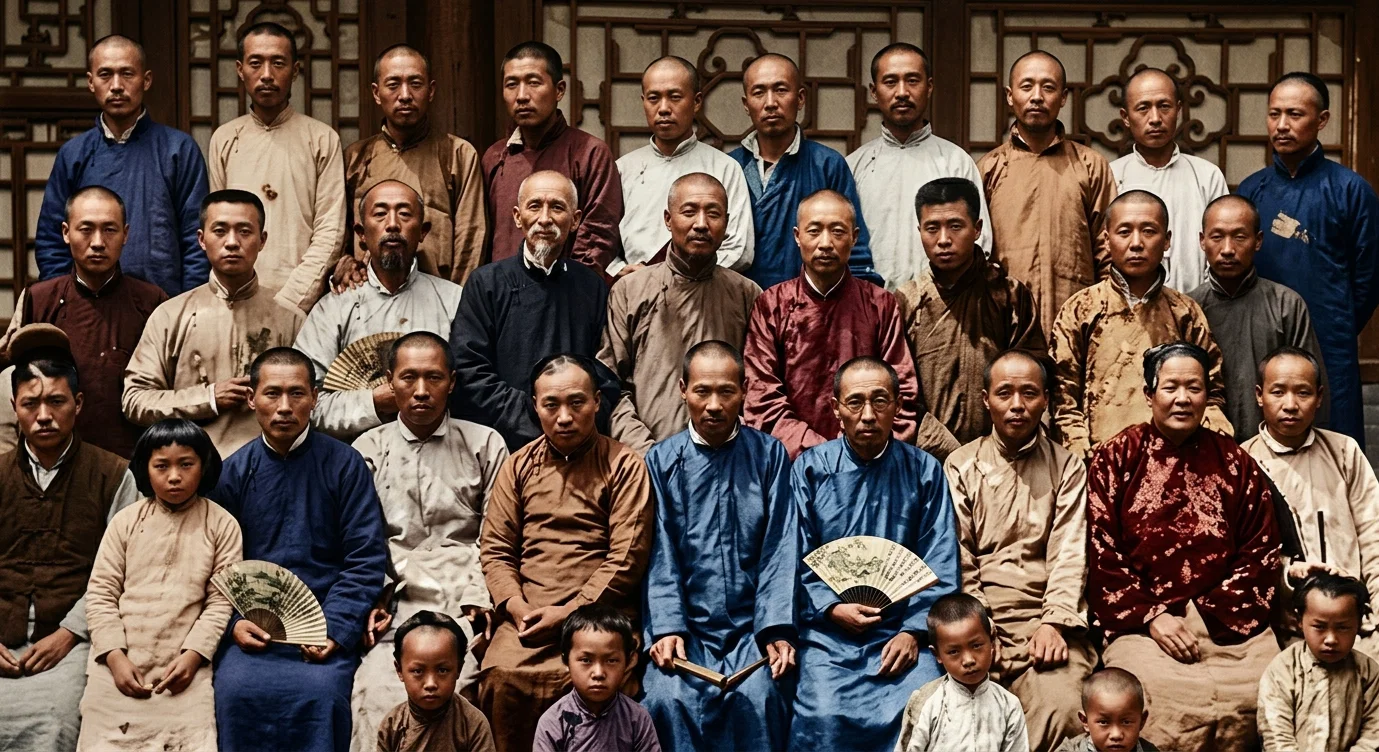
BELIEVERS AND INQUIRERS IN MUKDEN, INCLUDING THOSE RECENTLY BAPTIZED
A year and a half has passed since we began public effort in the city of Mukden. We have had three baptisms. About two weeks ago six precious souls were buried with their Lord in the watery grave. Others expressed their desire for baptism then, but we thought it best for them to wait a while longer. We have, therefore, planned for another baptism in about two months. We are also beginning to reap some fruit in the places where we established chapels last year. The Lord has blessed in the efforts made to present the message, and several have begun keeping the Sabbath, some of whom have asked for baptism.
About two weeks ago Brother O. J. Grundset and his family moved to Chang Chwen, a city about two hundred miles north of Mukden. We rejoice that we are thus able to establish another mission station here in Manchuria.
Our colporteur work is entering upon a new era. It was indeed difficult to convince the canvassers in this field that the colporteur work could be put upon an entirely self-supporting basis. We were therefore made glad when two native brethren arrived from the south to take up this work. These brethren soon discovered that they had reached a field that was as good as any in which they had been, and agreed with us that the magazine could be sold for a higher price. Subscriptions are now being taken at fifty cents a year, and single copies are selling for five cents each. Some of the canvassers have taken as many as twenty subscriptions in one day.
I have just returned from a trip about one hundred miles west of Mukden. I had a very interesting time while there, and held two meetings daily, besides studying and talking with the people. Some of these people had been members of other churches for years, but when they heard this message and saw how we as a people study the Bible, they were greatly surprised and stirred, and reasoned that if they had studied their Bibles faithfully, they would have found the truth before this. They are now very anxious to have us come there and establish a chapel. One of them has a large shoe store, and as he has known the Sabbath truth for some time, I spoke very earnestly to him about keeping the Sabbath right. He had not been working on the Sabbath for a long time, but the men under him had. He said, “I see it must come to where I must close up everything on the Sabbath; and though it seems difficult for me now, I am willing to follow the Lord.” I thank God for this testimony, knowing what it means in his case.
In our Sabbath school work we are making steady progress, not only in attendance, but also in offerings. During the last quarter, our Sabbath schools gave nearly $40 to missions. We were much encouraged to see this, considering the membership.
We are of good courage, seeing nothing but victory ahead of us, and we look forward to the time when this message shall have reached the remotest bounds of Manchuria. When you pray, remember Manchuria.
Mukden.
Setting Affections on Things Above
By Amos R. Wells
No one can live well in this world unless he fixes his affections on things above this world and beyond. If the plowman would plow straight, he must not look at his feet in the furrow, but at the other side of the field. If the surveyor would avoid all confusion, he must refer all lines to the north star.—Amos R. Wells.
A Limit to Grace
“IN every age there is given to men their day of light and privilege, a probationary time in which they may become reconciled to God. But there is a limit to this grace.”
Making a Life
“TRUE success is not making a living, but making a life.”