A PHYSICIAN writes thus to Farm and Fireside: “The very best disinfectant known to science does not seem to be known to some people at all. I allude to boric acid, or, as some people call it, boracic acid. It is exceedingly efficient, safe, and economical. It is a white powder, and makes the best dressing for wounds that modern doctors have ever discovered. In using peroxide of hydrogen it is always necessary to remember that, while it is a disinfectant, it is not a healing remedy at all, as it is acid in reaction, and stimulating rather than healing to wounds. Boric acid is mild and safe in its action, promotes rapid healing of wounds, can be used as a dressing powder or, dissolved in water, as a cleansing solution. Boric acid in solution makes an excellent gargle for sore mouth or a lotion for sore eyes; and as it is not at all expensive, a pound box of it should form part of the domestic supplies of every family. Always remember that boric acid is nonpoisonous in any ordinary quantity usually used, while bichloride of mercury and carbolic acid are exceedingly poisonous. For disinfecting and deodorizing drains, the crude or unrefined carbolic acid is one of the best agents obtainable.”
Psalm Twenty-Three
By Mrs. E. M. Peebles
MRS. E. M. PEEBLES
The Lord is my shepherd, no want shall I
know.
In green pastures he makes me recline,
And by the clear streamlet—how gentle its
flow!
He leads me, his hand clasping mine.
My soul, though all sin-sick, yet not marred
beyond cure,
He heals, and restores, and makes whole;
And gives me his robe of true righteousness
pure
To cover the rags of my soul.
And when the dark valley I have to pass
through,
I walk with the staff of his word,
For I know that no evil my soul can undo
While I lean on the arm of my Lord.
He feeds me with manna, so heavenly sweet,
Far better than viands of earth.
And so with the oil of gladness replete,
My cup runneth o'er without dearth.
So goodness and mercy shall follow me
through
This darksome and sorrowful world,
Until by and by in heaven I view
The dear blessed face of my Lord.
Then forever and aye, in the home of my soul,
I'll dwell, blessed Saviour, with thee;
'Tis thou who didst save me, and madest me
whole,
From sin and from death set me free.
Life Sketch of Elder W. H. Littlejohn
By C. A. Russell
WOLCOTT HACKLEY LITTLEJOHN was born in Little Falls, N. Y., May 27, 1834. He was the son of Flavius J. and Harriet B. Littlejohn. At the age of four, with his parents he came to Allegan, Mich., where his boyhood was spent. With the intention of becoming a lawyer, he attended Kalamazoo College and Michigan University, leaving the latter at the end of his sophomore year on account of an affection of the eyes which resulted in total blindness about fifteen years later.
In 1866 he became identified with the Seventh-day Adventist denomination, and he remained a firm believer in the fundamental doctrines advocated by them to the time of his death. When about seventeen years of age, he attended a course of lectures by Elders J. N. Loughborough and M. E. Cornell. A long and careful study of the subjects presented finally led to their acceptance. Later he entered the ministry, and for many years was actively engaged in the work.
In 1883 he accepted a call to become pastor of the Battle Creek Seventh-day Adventist church. In August of that year he was united in marriage with Mrs. Adeline P. Harvey. Shortly afterward, he was elected president of the Battle Creek College, a position which he held for two years. From that time until failing health prevented, he spent his time largely in writing on Biblical subjects. For many years he was a constant contributor to the REVIEW AND HERALD and other denominational publications, and was the author of several bound volumes, pamphlets, and tracts.
His was a life of unusual mental activity, and he was known as a sound reasoner and a profound logician. His faith in God remained unshaken to the close, and he sleeps, awaiting the call of the Life-giver when “the trumpet shall sound, and the dead shall be raised incorruptible.” He was aged 82 years, 5 months, and 10 days.
There are left to mourn, his faithful companion and one stepson, Frederick H. Harvey. Together they tenderly ministered to him in his declining years, doing everything that warm hearts and loving hands could do to lighten the burden of advancing years. There are also left two nephews, Wolcott H. Butler, of Ann Arbor, Mich., and Augustus S. Butler, of Allegan, Mich., and other more distant relatives.
The funeral was held from the home, west of Battle Creek, Elders R. A. Hart and L. McCoy assisting in the services. He was taken to his old home in Allegan, for burial.
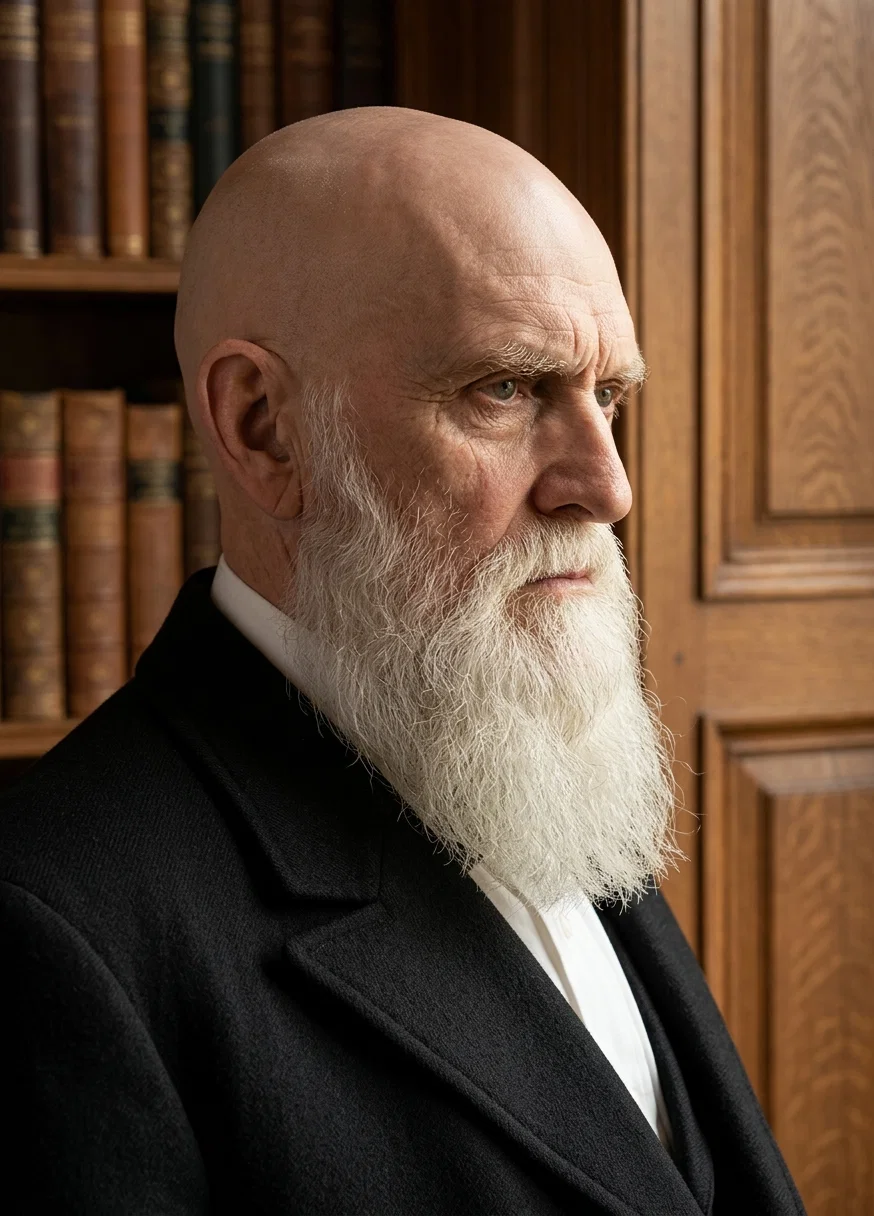
ELDER W. H. LITTLEJOHN
C. A. RUSSELL.
General Meeting for Kwang-si Province, China
By B. L. Anderson
ACCORDING to appointment, the annual meeting for Kwang-si was held May 24-28, at Wu-chau, the port of the above-named province. From the beginning, the attendance was good, and at every service the chapel was filled. Many people found sitting room in the court, which had been provided with a bamboo covering to protect them from the rain and from the heat of the sun.
All the native workers were present, and rendered reports from their respective stations. The companies of believers are scattered far and wide, so that by reason of the long distances they would have to travel, and the large expense, only those near the place of meeting were privileged to be present. The attendance averaged about fifty, and the interest was good from the beginning to the close. In the evening, people not of our faith came in; and as they listened to the prophecies of the Bible on the second coming of Christ, tears came to their eyes, and they would say, “That is the truth.”
A number presented themselves for baptism, but it was thought best to defer this rite until a later date, when they could be baptized at their home stations. On the Sabbath day a very interesting Sabbath school was conducted. The offering received amounted to more than $10. Brethren A. Mountain and A. L. Ham were present at this meeting. The former gave special instruction in regard to literature work, while the latter assisted Dr. Law Keem and the writer in looking after the spiritual interests of the people and in establishing them more firmly in the truth. B. L. ANDERSON.
Seeking the Lost Sheep
By J. P. Thompson
About two years ago, we received a letter from a man in Colonia Miguelete, Uruguay, requesting us to place his name on the subscription list for El Atalaya. The year following he not only renewed his own subscription, but sent in the names of eight or nine others for the paper. Brother Koch, who was canvassing in that neighborhood, called at this man's home several times, and was well received. About three months ago he renewed his and his neighbors' subscriptions to El Atalaya, and also wrote that he had begun weekly Bible studies with his neighbors for the purpose of increasing an interest in the study of God's Word. I felt much impressed that one who manifested so much interest in our literature ought to be visited, so I went.
I was most warmly welcomed, and was made to feel that there existed between us that sympathy that is known only in Christian fellowship. We were soon deeply engrossed in talking about the truth, and the time sped by quickly. While we were eating supper, one of the neighbors came in, and I learned that Brother Cayrus had sent his boy to tell him that I was there. Family worship being over, and the children having retired, we continued our conversation, and opened our Bibles for study.
Without any previous plan we began to study the prayer life of Jesus, searching the texts that tell when he prayed, the circumstances, and why he prayed. We were richly blessed in the study, and many times Brother Cayrus exclaimed, “How wonderful! How many times I have read those texts, and never saw these things!” When the study was ended, the neighbor said, “This has been a great blessing to me, for last Friday I smoked my last cigarette, and this is just what I need to strengthen me in the fight against this vice.”
The hour was then late, so after a word of prayer the neighbor was about to leave for his home when he asked me how long I intended to remain there. I had already told Brother Cayrus that I must leave the following Friday to meet other appointments, but before I could answer he said, “Until next Monday.” I told him I should be very glad to do so, but it did not seem possible. Then he said, “I understand. I was but expressing17a desire that I have that you might remain with us over the Sabbath, for yesterday [this was Monday night] I announced to my family that I had held the last service with them, as is our custom to do, on Sunday; for henceforth I shall observe the Sabbath.”
For a moment I was speechless with wonder, as I saw how the Spirit of God had been working on the hearts of these men. Each had made a great decision without the other's knowing it, though their houses were but a short distance apart. Then I also saw the hand of God directing my way, that I should be there at just the time when they felt the need of help.
Thirty-one years ago, when but a boy, Brother Cayrus heard Sister White preach in the Waldensian Valleys of Piedmont. He was very much impressed with the truth, but he was only a child, and did not receive encouragement from his parents to accept the truth presented. He had never forgotten the things he heard at that time, and now, when he is a man of mature years, and at the head of a fine family of children, the seed that was sown in his heart in childhood has sprung into life. He has in his possession a copy of “The Great Controversy” in French, which his father bought of Elder D. T. Bourdeau many years ago.
The next day was spent in visiting some of the near neighbors, who also are subscribers to El Atalaya. One of them invited me to have a meeting in his house, to which I consented. A goodly company assembled, and we had a very interesting study. The next day we went out farther to visit other friends. In the evening there was a band practice near the home of Brother Cayrus. Quite a number gathered to hear the music, and after the practice was over, I was again invited to speak. The next day was my last one there, so I improved the time in visiting those whom I had met at the evening meetings. Thursday night was the time for the weekly Bible studies Brother Cayrus is holding, so I was again invited to hold a service with them. He has been studying the book “Steps to Christ” in connection with the subjects presented. That night we had the chapter on “Consecration” for our study, and the room was well filled with most attentive hearers. They are people who know their Bibles; for no sooner was the text announced than they were ready to read it. J. P. THOMPSON.
Dedication of a New Church at Saginaw, Mich.
By M. C. Guild
More than fifty years ago Elder and Mrs. James White and other pioneers labored in the Saginaw Valley, and raised up a number of substantial churches that remain until the present. The influence of these early laborers and of the work that they did has been salutary, and this region is still a fruitful field.
For nearly two and one-half years I have been working in Saginaw, a city of about 75,000 inhabitants. Two series of tent meetings have been held, and much other labor performed, and many hundreds have heard the truth for this time. Valuable assistance has been rendered by those who have been associated with me, and God has graciously blessed the work. The Saginaw church has doubled in membership, a thriving young people's society has been organized, and a church school is in successful operation. As the Spirit of the Lord came in and precious souls were converted, a spirit of liberality was manifested by the believers and by friends in the city. Nearly $30,000 has been contributed to various branches of the cause during the past two years.
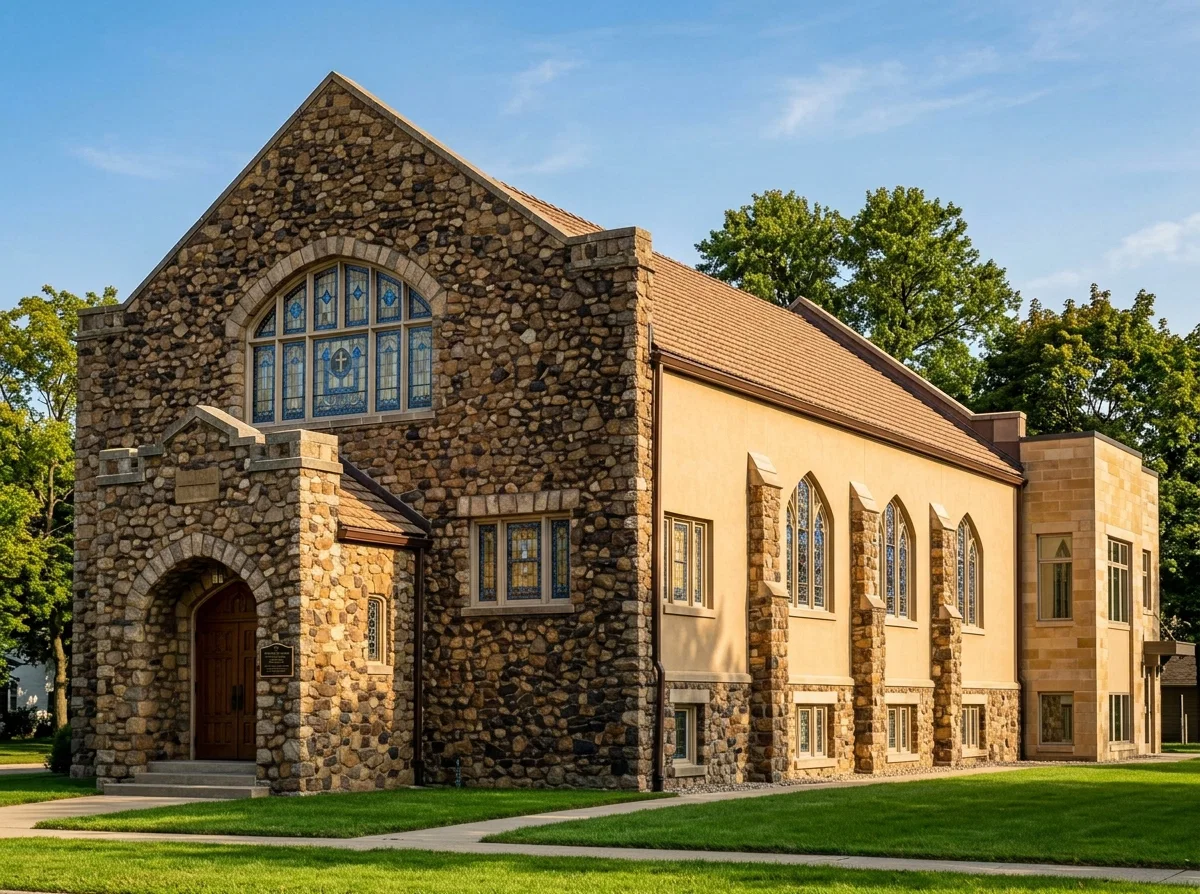
It was decided early last spring to erect a new church building, as the old building, located in an out-of-the-way place, proved to be inadequate for the work. A lot was secured in a central part of the city. It is in a fine residence district, and on two main car lines. A large portion of the past summer has been spent in the erection of the church, and we have been assisted part of the time by Elder I. J. Woodman and other brethren. The building is thirty-two feet wide and seventy-six feet long. The front vestibule incloses the steps that lead into the entrance hall, and to the right is a ladies' restroom. The main auditorium is thirty feet by forty-eight feet, with a balcony in the rear. It has a seating capacity of 275. The acoustic properties are especially good. In the rear is a room, well lighted and modern, which will be used for the church school. The entire building is faced with field stone, and trimmed with Bedford stone. All the stone and iron in the building and the interior decoration were donated by business men in the city. Many other substantial favors were shown by the citizens of Saginaw. The church members have been liberal, and their united efforts have made the work a success. The property is valued at $10,000. This substantial monument to the truth is within easy reach of many thousands of people, and can be used to splendid advantage for evangelistic purposes.
CHURCH BUILDING AT SAGINAW, MICH.
The opening services and dedication were held October 28 and 29, and were largely attended. Elder C. S. Longacre conducted a revival meeting Sabbath morning, in which a number gave their hearts to God, and backsliders were reclaimed. At the dedicatory service the sermon was delivered by Elder L. H. Christian, and the prayer was offered by Elder A. J. Clark. On Sunday evening the writer delivered a farewell address, having been asked to labor among the churches of Indiana during the coming year. I am now located with my family in Indianapolis. Elder Woodman is to be stationed in Saginaw, and is about to begin an active campaign in gospel work. We ask the prayers of God's people that the work both in Saginaw and in Indiana may be blessed to the salvation of souls. M. C. GUILD.
The Jews Realize Their Religion is Waning
By Frederick C. Gilbert
THE following is a portion of an article which appeared in the Jewish magazine, Tageblatt, some time ago, and it should encourage our people not to slacken their efforts to make known to the Jew the true principles of the gospel. The reader will also appreciate the resentful feeling the Jew has toward missionaries and missionary work, as noted in the article; at the same time it will be seen that the poor Jew realizes that the day of rabbinical Judaism is about gone. What a call to the people of God to do all in their power for the lost sheep of Israel!
The article in the Tageblatt, just mentioned, is entitled “Missionaries,” and the writer, Gedaliah Bublick, speaks as follows:—
“The missionaries complain that they have no success. But they need not be so perplexed, and we should not be so happy at their failure. They have very favorable chances for success in the future. The work for Christianity’s propagation in the ghetto is accomplished slowly but surely, and it is done, not through hired missionaries, but by the Jews themselves.
“I wish to speak plainly but clearly. We ourselves drive a large proportion of our children to the church. We are forcing them into the way of Christianity, and we are doing it every day, seven days in the week, three hundred and sixty-five days in the year. Christianity in the near future will reap the crop which we Jewish parents are sowing.
“Many Jews will not wish to tolerate such candid remarks, and many will be wrathy; but the truth stares us in the face, and we must meet it. Our children and grandchildren will not remain Jews of their own accord. Judaism is not a thing that comes without any effort. One becomes a Jew only when he learns. One cannot be a Jew without learning. A Jew who has not studied is in no way attached to Judaism, and he remains a person without a faith. But it is folly to think that the children and grandchildren of those who are without a faith will also remain without a faith. That is impossible. The American has his faith, and the Jew in the future will search for a religion; and not having his own, he will accept another. Not being attached to the synagogue, he will go to the church.
“Our great grandchildren in America will be believers. If we are not solicitous enough about them to have them whole-hearted Jews, they will become full-fledged Christians. The first generation will still feel that it is somewhat connected with the Jewish people. That is the effect of the Jewish environs in which he has been reared. But how will this generation be able to influence the future, if it does not know what Judaism is? What heritage will it leave to its children, and what will remain with the18third to transmit to the fourth generation? If there are still some left who feel as if they were Jews, not knowing what it means, it will not be so in the future. Then a Jew will be a Jew, or he will be a Christian.
“If you wish to, you may already see the beginning. Jewish children marry Christians, and take part in church work in the community in which they find themselves. They are looking for something spiritual, and if they cannot find it at home, they will look for it somewhere else. Regardless of how optimistic you may want to be, you cannot expect that there will be generations of lukewarm Jews. Lukewarm Jews later become Christians.
“The missionaries understand this. This is what one missionary said: ‘The Jews of America are fast forsaking the faith of their parents. Others are hungering for truth. There has never been a better opportunity. Will the church hear the cry?’ They feel that we furnish them good material.
“Why should the truth not be told? The father who does not send his children to school, prepares his great-grandchildren or others of his family for the church. He is doing a good work for the missionaries, and he is to be pitied if in his blindness he does not perceive it.
“Our anger against the missionaries and all our struggles against the missionaries will not answer the question. The enemy is not outside, but inside. The church is preying upon us, and we can defeat her only at home. It is said that a saint was informed that a Jew in the village became converted. ‘It is a lie,’ said the saint. ‘A Jew is not converted. He has been a non-Jew quite a while.’ If our future successors will be Jews, they will not fear the missionaries. If they will not be Jews, they will eventually become converted without missionaries.”
Dear brethren and sisters in present truth, is this not a loud call to us all to work as never before for the Jews? Years ago the Spirit of prophecy told us, when the Lord brought among our people an educated Jewish young man, that “his knowledge of Hebrew would have been a help to the office in the preparation of publications through which access could be gained to a class that otherwise could not be reached.”—“Testimonies for the Church,” Vol. III, p. 206. At the General Conference held in Takoma Park, D. C., in 1905, the following was given to us through the Spirit of prophecy: “The time has come when the Jews are to be given light. The Lord wants us to encourage and sustain men who shall labor in right lines for this people; for there are to be a multitude convinced of the truth, who will take their position for God.”—Review and Herald, June 29, 1905.
Is it not therefore clear to us that God has outlined how we should labor for the Jews? We should circulate the literature among them. We should place in their hands our publications. There is nothing that can appeal to the Jew more than the third angel’s message, when he understands it in its true light. This is what will satisfy his hungry heart. It is the real gospel; and it will cause joy to his soul when he sees that it is just the thing he has been looking for. May God help us to do this work now, as we have opportunity.
F. C. GILBERT.
Our Foreign-Born Neighbors — No. 1
By STEEN RASMUSSEN
The foundation of what later developed into the greatest and most unique foreign mission field on the globe, was laid in the early settlement of people from the Old World on the North American continent. Since then people of all nationalities under the sun have been gathering here, by a divine ordering, as it seems, within easy reach of the gospel. The greatness of this unusual opportunity is the measure of our obligation.
Radical changes in the volume and character of the stream of immigration have taken place since these first representatives of the Old World came, and especially has a marked change been going on during the last quarter century. The earlier immigrants came in comparatively small numbers, and the bulk of them were from northwestern Europe. Up to 1880 only one immigrant out of a hundred came from southeastern Europe, Italy, Austria-Hungary, Russia, Poland, and the Balkan States; the remaining ninety-nine came from England, Scotland, Ireland, Germany, and the Scandinavian countries.
Things have so changed that the great majority of the immigrants of the last fifteen years have come to us from the southern and eastern European countries, so that we now have what has been termed “the new immigration.” In their home countries these people belong to the rural peasantry and unskilled laboring class, but on coming to this country they soon find that there is a strong demand for their labor, especially in mining and manufacturing towns. Consequently these rural peasants have flocked into our industrial centers and large cities, and have entered upon occupations for which they had no previous training, and for which in most cases they are ill adapted.
A few figures giving the change in the make-up of our foreign-born population, are most interesting and worthy of our attention. The following table plainly shows how and when this change took place, and gives the number of our foreign-born population at three different periods:—
1900
IMMIGRANTS
PER CENT
Northwestern Europe
7,016,000
67
Southeastern Europe
1,832,000
17
Other countries
1,493,000
16
Total
10,341,000
100
1910
Northwestern Europe
6,740,000
49
Southeastern Europe
5,048,000
37
Other countries
1,727,000
14
Total
13,515,000
100
1915
Northwestern Europe
6,942,000
40
Southeastern Europe
7,753,000
45
Other countries
2,480,000
15
Total
17,175,000
100
The change is especially marked in the ten-year period from 1900 to 1910. In the census at the close of that decade 6,740,000 persons gave northwestern Europe as their former home, a decrease from 1900 of 275,000. Their percentage of the entire foreign-born population had dropped from 67 to 49. On the other hand, the people from southeastern Europe numbered 5,048,000, an increase of more than 3,000,000, or 175 per cent, and their percentage of the total foreign-born population had increased to 37. When we look at the 1915 figures, we see that things have changed even more. That year the southeastern European population passed the northwestern, their number totaling 7,653,000, or 45 per cent, while the latter numbered 6,942,000, or 40 per cent.
The increase in the ten-year period 1900-1910 was: Italians, 175 per cent; Russians, 170 per cent; Hungarians, 163 per cent; Poles, 210 per cent; Roumanians, 338 per cent; and Greeks, 1,089 per cent. On the other hand, the Germans had increased only 11 per cent, and the Scandinavians had made a gain of only 16 per cent.
Another factor of much importance and consequence is the ability of our foreign-born population to speak English. Again we find a vast difference between the immigrants from southeastern and northwestern Europe, as the following table of English-speaking ability will show:—
Nationalities
Percentage able to speak English in U. S.
Percentage 10 yrs. or more in U. S.
Lithuanians
4
10
Ruthenians
4
11
Poles
5
15
Greeks
7
16
Italians
15
29
Hungarians
13
24
Roumanians
14
32
Russians
19
30
This table does not include the ability either to read or to write in English. If it did, the figures would be considerably smaller.
By comparing this list with another including the people from northwestern Europe, we find that the people from that part of Europe acquire our language much more quickly and in larger numbers. About 85 per cent of the people of the so-called old immigration speak our language after they have been with us from five to ten years.
This sudden transplanting of this agricultural class from the Old World to the conditions and environments in America, has created a most perplexing problem to the social as well as the religious worker. Religion forms a very essential part of the life of the southeastern Europeans. They are inclined to fanatical superstition.
Another outstanding factor of no small importance, especially in later years, is the great number of Catholics who have been pouring into the country. When the immigration tide runs as high as one million and more a year, as it has for the last ten years, more than 600,000 of the total are Roman Catholics. It is therefore safe to say that out of the total number of immigrants landed here during the last twenty years, not less than 10,000,000 were adherents of the Roman Catholic Church. To shepherd these millions speaking thirty different languages, each race having its own customs, prejudices, and superstitions, surely presents a problem that no ecclesiastical body has been called upon to solve in the history of the Christian faith.
In view of the facts presented, probably the most significant feature of the entire situation is the almost complete19ignorance and indifference of the greater part of our population to these recent immigrant colonies and their conditions. This attitude extends even to their native churches, and altogether too few agencies have been established for reaching these people from southeastern Europe with the gospel of Jesus Christ. Altogether too little has been done by us as a denomination. The Lord will hold us accountable for the spiritual welfare of these millions at our very doors. The situation does, indeed, call for most earnest and solemn thought, coupled with careful study and attention on the part of our Union and local conferences, committees, and brethren in other positions of trust and responsibility. Last, but not least, it calls for the closest attention of every church member throughout the length and breadth of the land, because these people are found in every community.
Drifting Away from the Church
We find that many of the immigrants depart from their former religious belief when they come to this country. They are not here long before they discover that church and state are not united. The percentage of those who leave the faith of their fathers is very high; especially is this the case among the young men, to whom the teachings of Socialism have a great attraction.
A strong movement has in later years been going on among the Poles to break loose from the Roman Catholic power. Hundreds of thousands of them have left the church, and are apparently drifting into the mists of indifference and infidelity, as there are not enough Protestant workers to step in and shepherd this wandering flock. The same is true of Italians, Russians, Greeks, Hungarians, and others. An intelligent Pole, when asked why his people were leaving the church, said, “The conduct of the priests accounts for the indifference of the people, who receive no spiritual help from the dead teachings of the church.”
In our next article we will further describe some of the existing conditions among these people, and the reasons therefor, and point out some of the remedies that may be applied in raising these people to a higher social, moral, and spiritual standard.
STEEN RASMUSSEN.
The Outlook
By C. S. Longacre
Some events of much importance in their relation to religious liberty have taken place since we last wrote in this column. The Oklahoma Supreme Court of Criminal Appeals reversed the decision of the court of Watonga, Blaine County, which had stated that Seventh-day Adventists must also observe Sunday after observing the Sabbath. The supreme court decided that our people have the right to do any kind of secular work or to conduct mercantile business, provided that in so doing they do not disturb or interrupt other persons who observe the first day of the week as holy time.
This decision has established a new precedent in legal status. In the past, a number of State supreme courts have rendered contrary decisions on this point. The Oklahoma Supreme Court reviewed these decisions, and refuted the arguments made against our divine and civil rights to keep the seventh-day Sabbath and to work six days each week.
The Oklahoma court said: “It is facetiously argued by some courts, that to say to these people they shall keep our Sunday, does not prevent them from also keeping the day they regard as a ‘holy day.’ But these courts overlook the fact that under the divine commandment these people are striving to obey, it is just as imperative that they work six days as it is that they rest on the seventh. And if their conscience compels them to rest one day, and the law forces them to also rest another, they would thus be forced to violate the first provision of the commandment they are trying conscientiously to keep. For these reasons and others that might be added, we think the judgment should be reversed.
“The judgment is therefore reversed, and the cause remanded with directions to dismiss the case.” To this all three judges of the court agreed.
What a sane, just, and reasonable decision this is! The whole of this decision, together with the argument before the court, will be printed in the next issue of the Liberty magazine. This special number ought to be placed in the hands of every judge and lawyer.
This certainly is a wonderful victory for the truth. The credit is due to God, who has heard the prayers of his people. We have often argued this point of our rights under the Constitution and our obligations under the divine commandment, but could not get the courts to recognize them. We have wondered why the judges could not see that it was unjust to require us to observe two days each week simply because we observed another day than Sunday as holy time.
We received a telegram from H. W. Cottrell, president of the Western Oregon Conference, stating that the Sunday blue law of Oregon was repealed their Sunday laws by a popular vote. California, having previously repealed her Sunday law, voted again two years ago on the question of reenacting one, and turned down the Sunday-law proposition with a majority of 168,211 votes. The popular sentiment of the West is in favor of religious liberty as guaranteed by the Constitution.
In our recent fight against the liquor traffic we have been enabled to gain some decided victories over the rum tyrant. Six more States have gone dry, making twenty-three on the dry list now. Our next great battle will be for national prohibition.
Congress will soon convene, and we shall have to put forth earnest efforts to prevent the pending Sunday bills from being enacted into law during the last session of the Sixty-fourth Congress. We want our brethren in the field to stand ready for action if a crisis should arise. Let us be vigilant guardians of liberty and of the rights of conscience, for this is the price of our heritage of freedom. Proper education is the surest remedy to cure the threatening ills of religious bigotry and resultant oppression. May every lover of God and truth and justice do his heaven-appointed duty during this day of opportunity and special privilege to disseminate light and knowledge. C. S. LONGACRE.
“Mark, whose Hebrew name was John, a Jew by birth, was the nephew of Barnabas, Paul's traveling companion, and the son of Mary, a pious woman of Jerusalem, at whose house the apostles and early Christians often assembled. He wrote the Gospel bearing his name, probably at Rome, and in the Greek language20about A. D. 64 or 65, under the immediate direction of the apostle Peter, whose intimate friendship he seems to have enjoyed, and chiefly for the use of the Roman converts.
“The special aspect of our Lord's life and labors presented by Mark is that of Christ the friend of man; hence he records chiefly the actions of our Lord rather than his discourses. There is no attempt to give a continuous narrative, but rather a succession of facts and events, delineated with more or less minuteness, and described with graphic power. The contents of this Gospel are very similar to those of Matthew and Luke, nevertheless it has its own distinctive peculiarities. It does not seek to contend with Jewish prejudices, nor does it refer much to the Jewish people, or to the Mosaic law, or to the prophetical writings; but it dwells with vivid completeness on the miracles and doings of our Lord which incontestably prove his divinity. The Gospel of Mark lays claim to be a thoroughly independent and original composition, and neither an abridgment nor a compilation from other sources. Two miracles are recorded not to be found in the writings of the other evangelists, and many important matters are presented or discussed which tend to give a clearer conception of the nature and work of the Lord Jesus Christ.
“The style of Mark's Gospel is vigorous, abrupt, pictorial, and graphic; the present is often used for the past, and persons are introduced as speakers. In diction it approaches nearer to Matthew than to Luke. . . .
“Note especially the prominence given to the human personality of our Lord, both as regards actions, emotions, and physical needs; the miracles of the deaf stammerer and the blind man at Bethsaida healed, recorded only by Mark; the preponderance of the records of miracles generally over those of parables and discourses; and the fulness of the prediction concerning the second advent.”—Dr. J. Anderson.
The First Epistle to Timothy
“This epistle was written by Paul to Timothy, his own son in the faith, about A. D. 64. He was especially beloved by the apostle, and when quite a youth became his companion in travel. The parentage of Timothy is recorded, as well as the careful instruction he had at an early age in the Word of God. His father was a Greek, his mother (Eunice) was a believing Jewess, who, together with his grandmother Lois, are specially mentioned as having unfeigned faith. It is supposed that Timothy's conversion to the gospel of Christ took place on the occasion of Paul's first visit to Lystra; and that, on the apostle's second visit, Timothy, being well reported of by the brethren, was chosen to be the companion and assistant of Paul in his missionary labors. It was during the sojourn of Timothy at Ephesus, for the purpose of regulating the discipline of the church established in that city, that the apostle wrote him this epistle, the special object of which was to instruct Timothy in the proper choice of office bearers in the church, to caution him against false teachers, to urge upon him in his preaching to give due prominence to practical matters of religion, and generally to stimulate the young evangelist to a full and faithful discharge of all his ministerial duties. . . .
“The style of this epistle is earnest, practical, easy, and flowing, just what would naturally proceed from a loving, true-hearted man to his son in the faith, for whom he felt so much affection, and to whom he delegated so responsible a trust. Note especially the prediction of the apostasy of the latter times, the qualifications of bishops and deacons given with so much minuteness of detail, and the earnest exhortations to ministerial faithfulness.”—“Searching the Scriptures,” pp. 166, 167.