Its Message to This Generation — The Demons and War — Asleep in a Crisis
By WALTER E. GILLIS
SPIRITUALISM is antagonism to God. The Word says, “Ye shall know the truth, and the truth shall make you free.” But man, dominated by the “father” of lies, “the spirit that now worketh in the children of disobedience,” retorts, “We . . . were never in bondage to any man: how sayest Thou, Ye shall be made free?” John 8:32; Eph. 2:2; John 8:33.
Modern spiritualism is the ripening fruit of six thousand years of deception. Yea, more: modern spiritualism is “the working of Satan with all power and signs and lying wonders, and with all deceivableness of unrighteousness in them that perish; because they received not the love of the truth, that they might be saved.” 2 Thess. 2:9, 10.
A MESSAGE THROUGH WONDERS
Spiritualism to-day has a message for all the earth. It is a message of perversion of truth. It is a message which makes man believe that “preparedness for war is the bulwark of peace,” and destroys his faith in the Book that says, “When they shall say, Peace and safety; then sudden destruction cometh upon them.” 1 Thess. 5:3.
The wonderful appeals to man. Mystery charms him. And so history is embellished with the life stories of alchemists and charlatans whose dealings in the occult have caused their fellows to regard them with awe and fear.
WHY NOT THE BIBLE MYSTERIES?
Why is it that the Bible, so full of mystery, so replete with the wonderful, has had comparatively a small following? What alchemist has raised the dead? What occult worker has healed the leprous? What spiritist has taken the sting from a heart, and left peace in its place? Yet all these, and more, come to us with the Bible. And to-day one of the marvels of the ages challenges the admiration of all nations; namely, the Bible to every man in his own native tongue.
Why is it so? — It is because men have been captivated by the words, instead of giving attention to the power. 1 Cor. 4:19, 20. The worldly man has little relish for the power of an endless life received by faith, which transforms a profligate sinner into a humble commandment keeper. True humility has little charm for the one whose spiritual vision is eclipsed by mundane joys. And so we can but conclude that the forces of spiritism have rightly gauged the caliber of the present generation.
Asleep! “A form of godliness,” without the power that regenerates the life, is what the world wants to-day. And that is what it has. The Scriptures, foreseeing this age, outlined in detail its most prominent characteristics: “This know also, that in the last days perilous times shall come. For men shall be lovers of their own selves, covetous, boasters, proud, blasphemers, disobedient to parents, unthankful, unholy, without natural affection, trucebreakers, false accusers, incontinent, fierce, despisers of those that are good, traitors, heady, high-minded, lovers of pleasures more than lovers of God; having a form of godliness, but denying the power thereof: from such turn away.” 2 Tim. 3:1-5.
Self-deceived! As the Saviour wept over perverse Jerusalem, so He weeps over the world to-day. “They willingly are ignorant.” 2 Peter 3:5.
LOVE IS THE LOADSTONE
Love is the loadstone by which God draws man to obedience. The counterfeiting spirits play on this cord, and induce men to believe that love without obedience is a true harmony; and so the world is filled with such sentiments as, “My country, right or wrong,” and such conditions as arsenals, breweries, and drug manufactories leading the world’s activities.
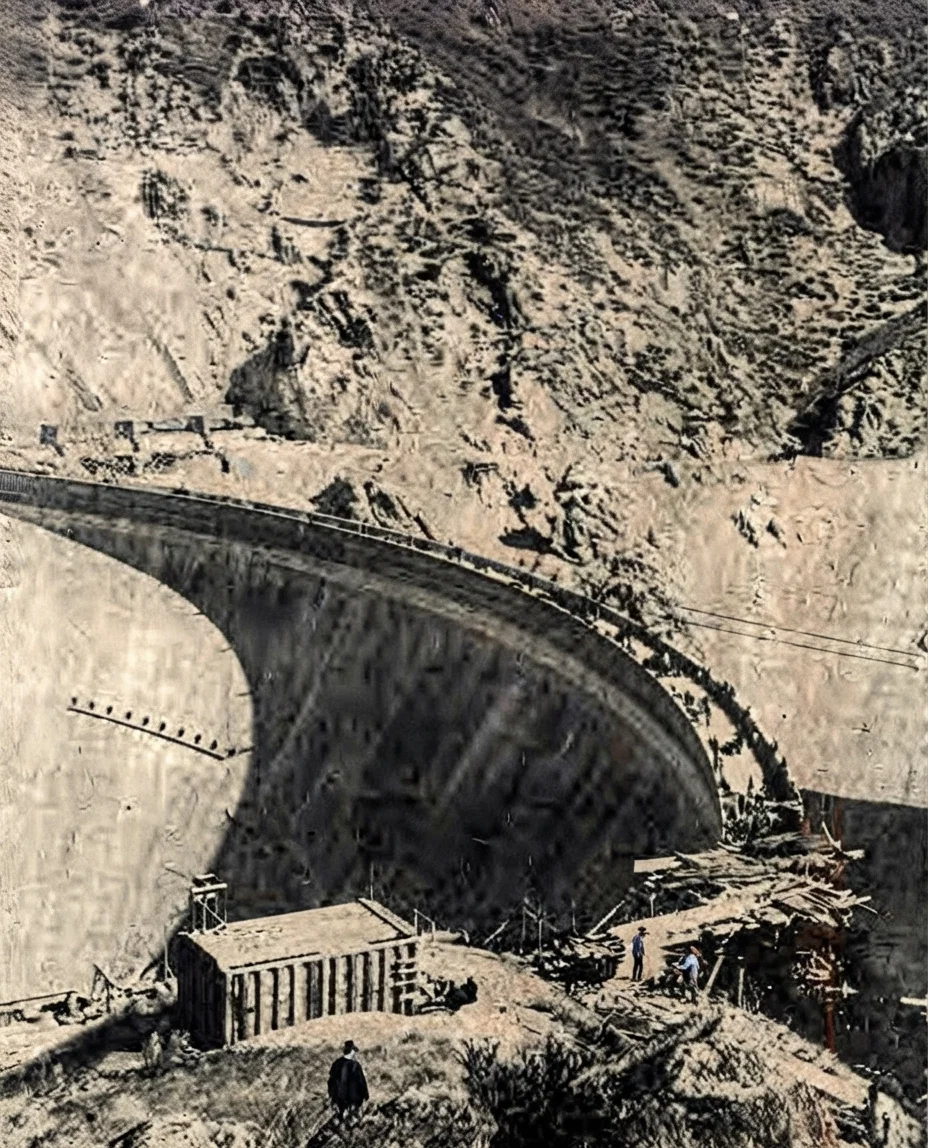
Photograph by Underwood & Underwood A VIEW OF THE FIVE-MILLION-DOLLAR DAM NEAR BOISE, IDAHO
The Saviour’s mission is to transform lives, and implant in the hearts of men the peace that results from harmony with God, the same peace that is seen in the harmonious action of the laws of the universe — no friction, all working together to form perfection. As the scripture says, “Be ye therefore perfect, even as your Father which is in heaven is perfect.” Matt. 5:48.
TO OVERTHROW GOD’S PURPOSE
To circumvent this purpose of God is the work of the fallen cherub and his impious crew. Spiritualism is at bottom the united effort of “the angels which kept not their first estate” (Jude 6) to thwart God by destroying the earth and slaying the people. Isa. 14:16, 17.
We who are living to-day are witnessing the final development of the enemy’s plans. That same spirit of whom the Saviour said, “He was a murderer from the beginning,” is the archrebel leading the van. It is of his final defeat that the prophet sings in rhapsody: “Yet thou shalt be brought down to hell, to the sides of the pit. They that see thee shall narrowly look upon thee, and consider thee, saying, Is this the man that made the earth to tremble, that did shake kingdoms; that made the world as a wilderness, and destroyed the cities thereof; that opened not the house [grave] of his prisoners?” Isa. 14:15-17.
The present momentous war crisis well illustrates the whole history of the controversy. Looking back a little more than one year, we find that when the nations, with their rulers, were692professedly and actually exerting themselves to the utmost to secure the permanency of peace, anxieties and alarms were all the more multiplied. No more contradictory condition ever existed. There were the rulers of the world, with their counselors, like a band of lovers strolling down the highway of time — a highway paved with the material, scientific, and mechanical triumphs of the golden age of human invention.
But lo, we examine the foundations only to find them mined to the deepest hell with lyddite shells and monster guns charged for the destruction of the race. Who could conceive of such a hellish project, or, having conceived, so maneuver the nations that a catastrophe monstrous as that now claiming the attention of mankind could be attained? Ah, the Scriptures reveal the fearful issue. “They are the spirits of devils, working miracles, which go forth unto the kings of the earth and of the whole world, to gather them to the battle.” Rev. 16:14.
THIS WAR NO ACCIDENT
This colossal folly to which nearly all the nations have been committed, is not the result of accident, but is the fruit of seed sown and cultivated. As the Saviour says: “While men slept, his enemy came and sowed tares. . . . The enemy that sowed them is the devil.” Matt. 13:25, 39.
And so it is. An anaesthesia of pleasure seeking and money getting has given to the world a feeling of security, while the spirits of devils have entered into the hearts of certain ones, who have been made to guide men’s minds enthusiastically in the channels that must finally culminate in the utter breaking down of all moral restraint. Useful inventions have been prostituted to accomplish man’s ruin. Scientific triumphs have been made to warp man’s judgment, and prejudice him against the truth.
ASLEEP IN A CRISIS
As the disciples, on the mount of transfiguration and in the Garden of Gethsemane, were made to slumber away the precious moments when light and truth would have armed them for future conflict with error, so isms have been multiplied, and carnal pleasures intensified, until the moral equilibrium has become most unstable.
The message of the spirits to this generation is one of slumber, and then — the abyss. Even the church of Christ is on the enchanted ground, for we hear the message proclaimed: “Awake, awake; put on thy strength, O Zion; put on thy beautiful garments, O Jerusalem”—the beautiful wedding garments of Christ’s righteousness.
The Saviour, looking forward to this time, saw the church as virgins sleeping, half of them utterly unprepared for the waking time. And what an awakening! It will be the day of exhausted patience, the day when the angel of mercy has finally winged her sorrowful way to the city of God, with the message that man has passed the boundary line, and retribution must be visited on him. It is that time of which the prophet wrote: “The great day of the Lord is near, it is near, and hasteth greatly, even the voice of the day of the Lord: the mighty man shall cry there bitterly. That day is a day of wrath, a day of trouble and distress, a day of wasteness and desolation, a day of darkness and gloominess, a day of clouds and thick darkness, a day of the trumpet and alarm against the fenced cities, and against the high towers. And I will bring distress upon men, that they shall walk like blind men, because they have sinned against the Lord: and their blood shall be poured out as dust, and their flesh as the dung.” Zeph. 1:14-17.
Reader, make haste. The day of probation is surely closing. “Seek, and ye shall find; knock, and it shall be opened.”
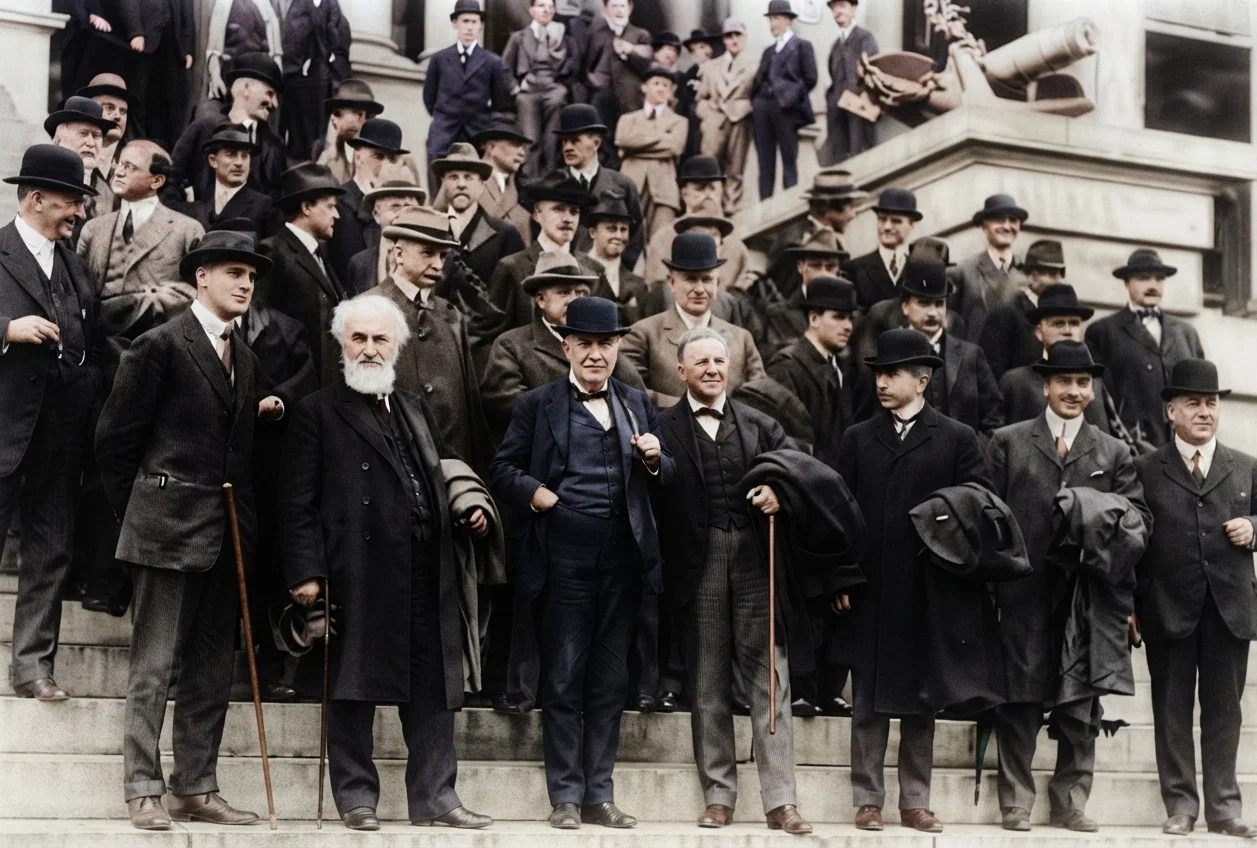
THE UNITED STATES NAVAL ADVISORY BOARD
False Notions About Meat
THE Journal of the American Medical Association is recognized as a leading authority on all questions in its line. The results of the latest research in the healing art are brought into its columns. Because of the standing of the Journal, the following paragraphs are of more than ordinary interest and importance:
“In common with other modern writers, Rubner contends that the conventional diet of the well-to-do is not even healthful; for, on account of false notions of the strengthening effect of meat, too much meat is used by young and old and by children, and this is harmful. But this meat diet is publicly sanctioned. It is found in all hotels. It has become international, and has supplanted almost everywhere the characteristic local culinary art. It has also been adopted in countries in which European culinary art was unknown. Long ago, the medical profession started an opposition to the exaggerated meat diet, even before the vegetarian propaganda was started. It was maintained that flour foods, vegetables, and fruit should be eaten in place of the overlarge quantities of meat.
“The situation created by the war, accordingly, is likely to enforce on a large, national scale the experiment of a reduction in meat consumption and an increase in vegetarian directions which many physiologists have advocated. Schmidt has remarked that it will be interesting to observe whether the contentions of the former enthusiasts prove true — whether the incidence of obesity, gout, kidney disorders, arteriosclerosis, neurasthenia, constipation, and related disturbances becomes reduced as a consequence of the new standards of living.
“Several factors stand in the way of the successful introduction of the new dietary regimen. It is not easy to bring an intelligent appreciation of the situation to the attention of all classes of people in the countries involved. The lower strata in particular will object to the withdrawal of food privileges they had begun to enjoy. There may be danger of undernutrition where really palatable food is not readily available.
LACK OF TRAINING THE CHIEF OBSTACLE
“The chief obstacle to the successful adjustment to the new standards is not in the nutritive inadequacy of the rations as such, but in large measure in the neglect of the art of cooking among the lower classes. It is far easier to prepare a service of meat or an egg dish than a really palatable course of vegetables. Boiled potatoes, sauerkraut, turnips, and fruits become far more monotonous than a repetition of cooked meat with bread and butter. Schmidt points out that few housewives understand the art of preparing a hundred and one acceptable concoctions involving the use of the cruder vegetables, nuts, and fruits. Indeed, he looks on the education of the housewife in the details of a vegetarian cookery as a great national need in Germany to-day. Here in the United States . . . we may do well to read the lessons derived from the European situation. Practical dietetics has not attained the high regard and the consideration which it deserves among us. . . . We ought not to wait until an unexpected necessity drives our American homes to learn the uses of the kitchen, and to discover that it can often convert the coarsest products into table delicacies.”
What to Behold
By Eliza H. Morton
WHAT we see with the natural eyes helps in the formation of character. The vision is refined and the life uplifted by looking for the beautiful. A man who had been rushing across a field was accosted by an artist, who asked him if he saw the beautiful sunset.
"No," replied the man, "I was looking for a runaway hog." We shall see in this life that to which our attention is directed. The true, the pure, and the lovely are worth beholding. If for a moment the unsightly objects of life obscure the vision, it is our privilege to look above them, and with the eye of faith to see Him who is invisible.
ELIZA H. MORTON.
Ancient Schools of the Prophets
By Mrs. E. G. White
Their Institution and Courses of Study—How They Strengthened and Prospered the Nation—A Model for Success To-Day
By the late MRS. E. G. WHITE
WHEREVER in Israel God's plan of education was carried into effect, its results testified of its Author. But in very many households, the training appointed by Heaven, and the characters thus developed, were alike rare. God's plan was but partially and imperfectly fulfilled. Fathers and mothers in Israel became indifferent to their obligation to God, indifferent to their obligation to their children. Through unfaithfulness in the home, and idolatrous influences without, many of the Hebrew youth received an education differing widely from that which God had planned for them. They learned the ways of the heathen.
SAMUEL ESTABLISHES SCHOOLS OF THE PROPHETS
To meet this growing evil, God provided other agencies as an aid to parents in the work of education. From the earliest times, prophets had been recognized as teachers divinely appointed. In the highest sense, the prophet was one who spoke by direct inspiration, communicating to the people the messages he had received from God. But the name was given also to those who, though not so directly inspired, were divinely called to instruct the people in the works and ways of God. For the training of such a class of teachers, Samuel, by the Lord's direction, established the schools of the prophets.
These schools were intended to serve as a barrier against the wide-spreading corruption, to provide for the mental and spiritual welfare of the youth, and to promote the prosperity of the nation by furnishing it with men qualified to act in the fear of God as leaders and counselors. To this end, Samuel gathered companies of young men who were pious, intelligent, and studious. These were called the sons of the prophets. As they studied the word and the works of God, His life-giving power quickened the energies of mind and soul, and the students received wisdom from above. The instructors were not only versed in divine truth, but had themselves enjoyed communion with God, and had received the special endowment of His Spirit. They had the respect and confidence of the people, both for learning and for piety.
In Samuel's day, there were two of these schools,—one at Ramah, the home of the prophet, and the other at Kirjathjearim. In later times, others were established.
WORKED TO SUSTAIN THEMSELVES
The pupils of these schools sustained themselves by their own labor in tilling the soil, or in some mechanical employment. In Israel, this was not thought strange or degrading. Indeed, it was regarded as a sin to allow children to grow up in ignorance of useful labor. Every youth, whether his parents were rich or poor, was taught some trade. Even though he was to be educated for holy office, a knowledge of practical life was regarded as essential to the greatest usefulness. Many also of the teachers supported themselves by manual labor.
In both the school and the home, much of the teaching was oral; but the youth also learned to read the Hebrew writings, and the parchment rolls of the Old Testament Scriptures were open to their study.
CHIEF TOPICS OF STUDY
The chief subjects of study in these schools were the law of God, with the instruction given to Moses, sacred history, sacred music, and poetry.
In the records of sacred history were traced the footsteps of Jehovah. The great truths set forth by the types in the service of the sanctuary were brought to view, and faith grasped the central object of all that system,—the Lamb of God, that was to take away the sin of the world. A spirit of devotion was cherished. Not only were the students taught the duty of prayer, but they were taught how to pray, how to approach their Creator, how to exercise faith in Him, and how to understand and obey the teachings of His Spirit. Sanctified intellect brought forth from the treasure house of God things new and old, and the Spirit of God was manifested in prophecy and sacred song.
PROSPERITY RESULTED FROM THESE SCHOOLS
These schools proved to be one of the means most effective in promoting that righteousness which "exalteth a nation." Prov. 14: 34. In no small degree, they aided in laying the foundation of that marvelous prosperity which distinguished the reigns of David and Solomon.
Then Israel reached the height of her greatness. The promise given to Abraham and repeated through Moses was fulfilled: "If ye shall diligently keep all these commandments which I command you, to do them, to love the Lord your God, to walk in all His ways, and to cleave unto Him; then will the Lord drive out all these nations from before you, and ye shall possess greater nations and mightier than yourselves. Every place whereon the soles of your feet shall tread shall be yours: from the wilderness and Lebanon, from the river, the river Euphrates, even unto the uttermost sea shall your coast be. There shall no man be able to stand before you." Deut. 11: 22-25.
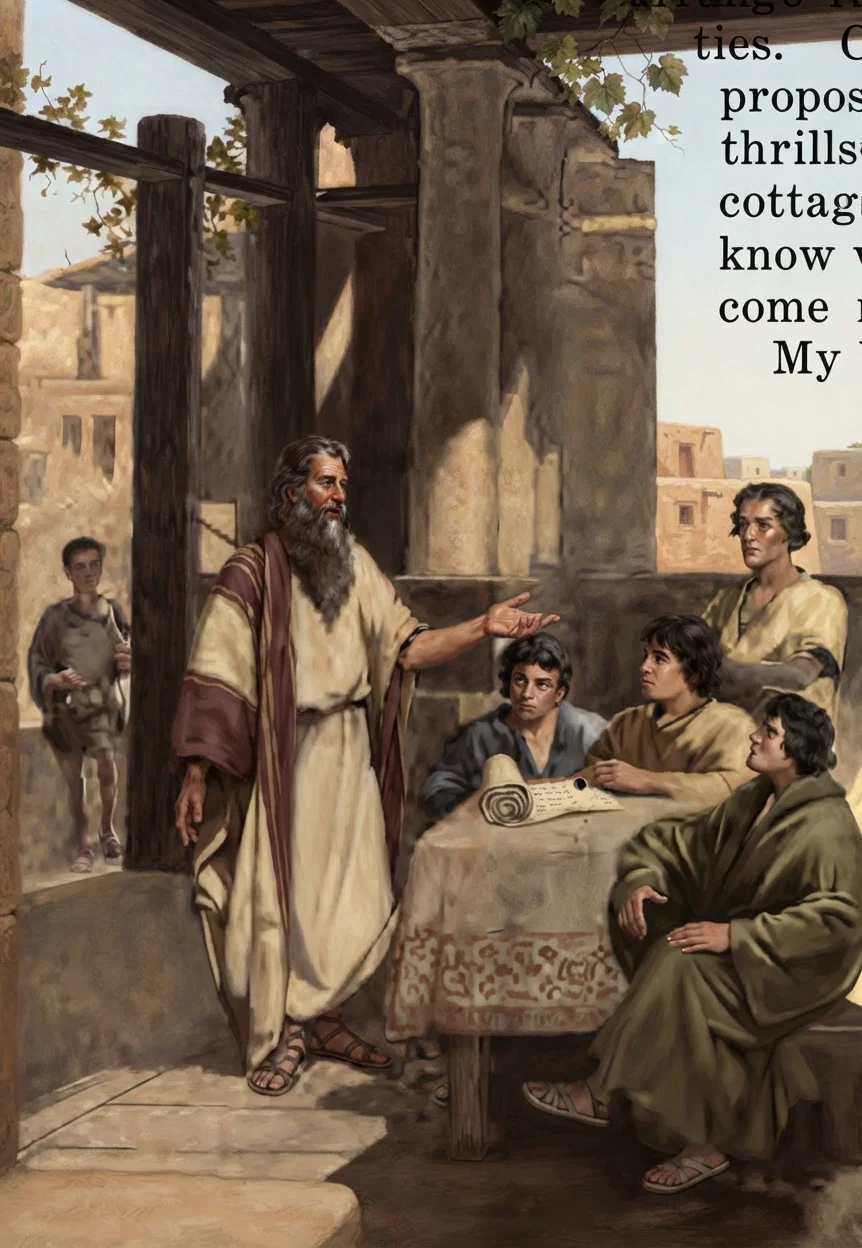
To this end, Samuel gathered companies of young men who were pious, intelligent, and studious.
THOSE WHO TRUST, WILL RECEIVE
But as a nation the children of Israel failed of receiving the benefits that God desired to give them. They did not appreciate His purpose or coöperate in its execution. But though individuals and peoples may thus separate themselves from Him, His purpose for those who trust Him is unchanged. "Whatsoever God doeth, it shall be forever." Eccl. 3: 14.
RECORDED FOR OUR INSTRUCTION
While there are different degrees of development and different manifestations of His power to meet the wants of men in the different ages, God's work in all time is the same. The Teacher is the same. God's character and His plan are the same. With Him "is no variableness, neither shadow of turning." James 1: 17.
The experiences of Israel were recorded for our instruction. "All these things happened unto them for ensamples: and they are written for our admonition, upon whom the ends of the world are come." 1 Cor. 10: 11. With us, as with Israel of old, success in education depends on fidelity in carrying out the Creator's plan. Adherence to the principles of God's word will bring as great blessings to us as it would have brought to the Hebrew people.
The Wages of Sin
By L. D. Santee
Will the Wicked Burn Eternally?—Is Such a Doctrine Reasonable or Just?
By L. D. SANTEE
"THE wages of sin is death; but the gift of God is eternal life through Jesus Christ our Lord." Rom. 6: 23.
In all nations, death is considered the greatest punishment. The word thanatos, here rendered "death," is defined, "extinction of life." This is the only literal meaning of the word as used by those who wrote and spoke in Greek. It has no other meaning when used to represent punishment.
Dr. Whedon says, "The Jewish synagogue taught the utter annihilation of the finally wicked."
The noted John A. Bengal says, "There are sacred truths which forbid us to insist on the eternity of 'hell torments' if we admit the Bible statement, that the wages of sin is death."
HORRIBLE AND UNREASONABLE
The horrible doctrine of eternal torment is abhorrent to reason. Here is one illustration: Suppose that I am going to visit a dear friend. We were boys together; and our love, true and tender, has stood the test of years. Circumstances drifted us apart, and for ten years we have not met. At last I arrange for a visit, to renew the old ties. Our joy is mutual over our proposed meeting. My heart thrills as I see the smoke of his cottage in the distance, for I know what a warm heart will welcome me over the threshold.
My friend is married, and a little girl nine years old gladdens their home. One day, I am sitting in the parlor, and the child is in the room, and she does something deserving of punishment. Her father, coming in soon, sees what has been done, and corrects the child reasonably.
As he goes out, she says to me: "Don't you feel sorry for me? Pa whipped me."
I answer, "No, my child; you ought not to have done wrong, and then you would not have been punished."
In this, I am loyal to my friend, and my sympathies are on the side of government.
The next day, the same thing happens again, and she asks me the same question. I say, "I am sorry that it was necessary to punish you, but your father did right."
In this, I am loyal to my friend, and my sympathies are still with the one who governs.
HIS CRUELTY BREEDS SENTIMENTS OF REBELLION
On the third day, the same offense is repeated. The father commences to punish his child; but instead of being governed by justice and mercy, the cruel whip continues694to fall. My feelings are changing, and I begin to have a sympathy for the criminal, and an indignation toward the one who is exercising cruelty.
By and by, I say to him, with some hesitation, "John, I think that you have whipped that child long enough." He answers back sharply, "You attend to your affairs, and don't dictate to me," and the whip still falls.
The friendship of years is forgotten, love is dead, and I am bitterly indignant, and just about to array myself as a rebel against his home government. I had been loyal, but his injustice made me rebellious.
THE ANGELS WOULD REBEL
Was I wrong? If God should visit on the sinner a living, agonizing punishment to all eternity, it would arouse just that feeling among the angels, and there would be another rebellion in heaven. God Himself does not want us to consider Him as a being of infinite cruelty. He protests against mankind's clothing Him with injustice.
Read Nahum 1: 9: "What do ye imagine against the Lord?" His next words tell us what He wants us to believe: "He will make an utter end." Read further on: "They shall be devoured as stubble fully dry." The one who imagines differently, does a cruel wrong to Him who "so loved the world, that He gave His only-begotten Son, that whosoever believeth in Him should not perish, but have everlasting life."
Do you want the truth? Then listen to two scriptures that settle this question forever. One is Ezek. 18: 4: "The soul that sinneth, it shall die." The other is our text: "The wages of sin is death."
One more statement voices the convictions of many thoughtful and scholarly men. Prof. C. M. Butler says, "Since I have reached and rested in the conclusion that the ultimate doom of the impenitent is death, and not eternal life in agony, a great cloud seems to have rolled away from the face of God, and I see Him as the loving Father of all His creatures."