THE WITNESSING OF GOD: THE BASIS OF OUR CONFIDENCE
By Editor
By the Editor
II. His Word Twice Written
From “Cuneiform Parallels to the Old Testament,” by Robert William Rogers
God does not leave Himself without witness in the Word alone. He has so revealed Himself that His revelations are themselves clear, cogent, sufficient witness of the Word which He Himself has given. In other words, God writes His Word twice at least,—all the Word which He has given. He does not leave it to chance, or to the care of a backslidden and apostate church; but He has so ordered in the giving of that Word, and in His providential care and guidance of the affairs of this world, that that Word itself, twice written in the letter and in the fulfilment, becomes a mighty and all-sufficient evidence of its veracity and inspiration.
That Word, it may be said in general, is composed of historical, prophetic, and ethical, or moral writings. The history records actual events which took place in connection with men and nations, in their relations with God and with each other. They show the outworking of the principles of truth, and the result of the rejection of those principles. In a way, they are prophecies of principles and of similar circumstances yet to rise. They show, and are designed to show to those who follow, that “whatsoever a man soweth, that shall he also reap;” that certain causes produce certain results; that he who transgresses God’s law, the law of life and being, must certainly reap the sure result,—deterioration, utter ruin, and death; and that “the Most High ruleth in the kingdom of men, and giveth it to whomsoever He will.”
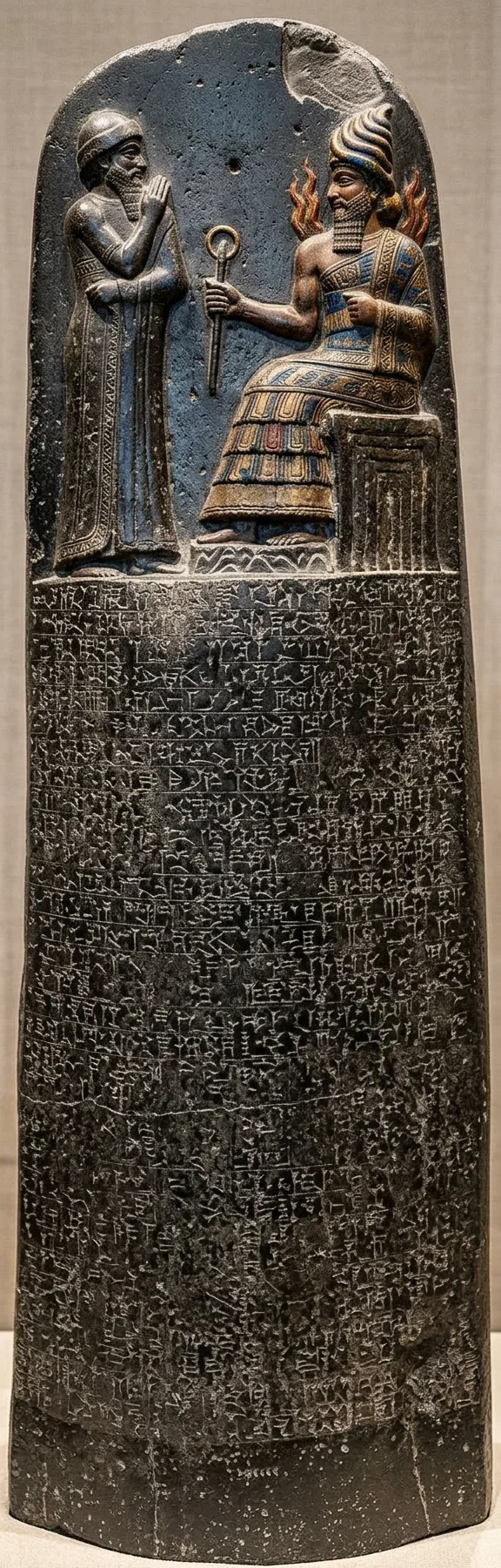
But the history of God’s word has been disputed. Take, for instance, Genesis, which has been set down by many of the higher critics as largely a book of myths, and at the best a matter of mere traditions. The 14th chapter of Genesis was years ago made a special object of attack. We are told in that chapter, historically, that in the days of Abraham, Amraphel king of Shinar, Arioch king of Ellasar, Chedorlaomer king of Elam, and Tidal king of Goïim, made war with Bera king of Sodom, and Birsha king of Gomorrah, Shinab king of Admah, Shemeber king of Zeboim, and the king of Bela. That is, there were four kings that made war against five, and the four kings conquered. Yet it has been said that there were no such civilizations as that; such a king as Amraphel of Shinar, or Chaldea, did not exist. In fact, the history given with such particulars in the 14th chapter of Genesis was scouted. But in the researches of the archeologists it was found that there was just such a king as Amraphel, that the name was identical with Hammurabi, or Khammurabi, and that he was a great king. His code of laws was also discovered, and has been translated. It showed a remarkable likeness, in many respects, to some of the laws of Moses. It indicated that civilization was high at that time in the land of Chaldea, and doubtless among the other kings with whom he was associated; and Sayce declares, in view of these discoveries, that “there were therefore Hebrews, or at least a Hebrew-speaking population, living in Babylonia at the period to which the Old Testament assigns the lifetime of Abraham. But this is not all. As I pointed out five and a half years ago, the name of Ammurabi himself, like those of the rest of the dynasty of which he was a member, is not Babylonian, but South Arabian. . . . The names are not South Arabian only, but they are Hebrew as well. . . . When Abraham, therefore, was born in Ur of the Chaldees, a dynasty was ruling there which was not of Babylonian origin, but belonged to a race which was at once Hebrew and South Arabian. The contract-tablets prove that a population with similar characteristics was living under them in the country. Could there be a more remarkable confirmation of the statements which we find in the 10th chapter of Genesis? There we read that unto Eber were born two sons; the name of the one was Peleg, the ancestor of the Hebrews, while the name of the other was Joktan, the ancestor of the tribes of South Arabia. The parallelism between the Biblical account and the latest discovery of archeology is thus complete, and makes it impossible to believe that the Biblical narrative could have been compiled in Palestine at the late date to which our modern critics would assign it. All recollection of the facts imbedded in it would then have long passed away.” (Quoted from “Patriarchal History,” by the New Biblical Guide, volume 2, pages 70, 71.)
The same volume (pages 189-205) takes up in detail the names of other kings mentioned in the 14th chapter of Genesis, and shows that they had actual6existence in harmony with the history. We read: “Every advance which has been made in the knowledge of this Elamite dominion has added to the confirmation of the Scripture. The names show an intimate acquaintance with the time. All these men, we now know, were contemporaries.”
The knowledge of this began to be opened by George Smith in 1871, and has been developing from that time since. God wrote His Word through Moses, from records, perhaps, that Abraham had himself left concerning that very time. The history of these kings was written in their own language, in the cuneiform alphabet; and God in His providence overruled that these records written in stone should be discovered, translated, read, and confirm His Word in this very day and generation, when His Word is on trial as it never was before in all the history of the past, and the two witnesses agree. They are not collusive, nor can they be, but they concur in every respect.
The Evidence of the Deluge
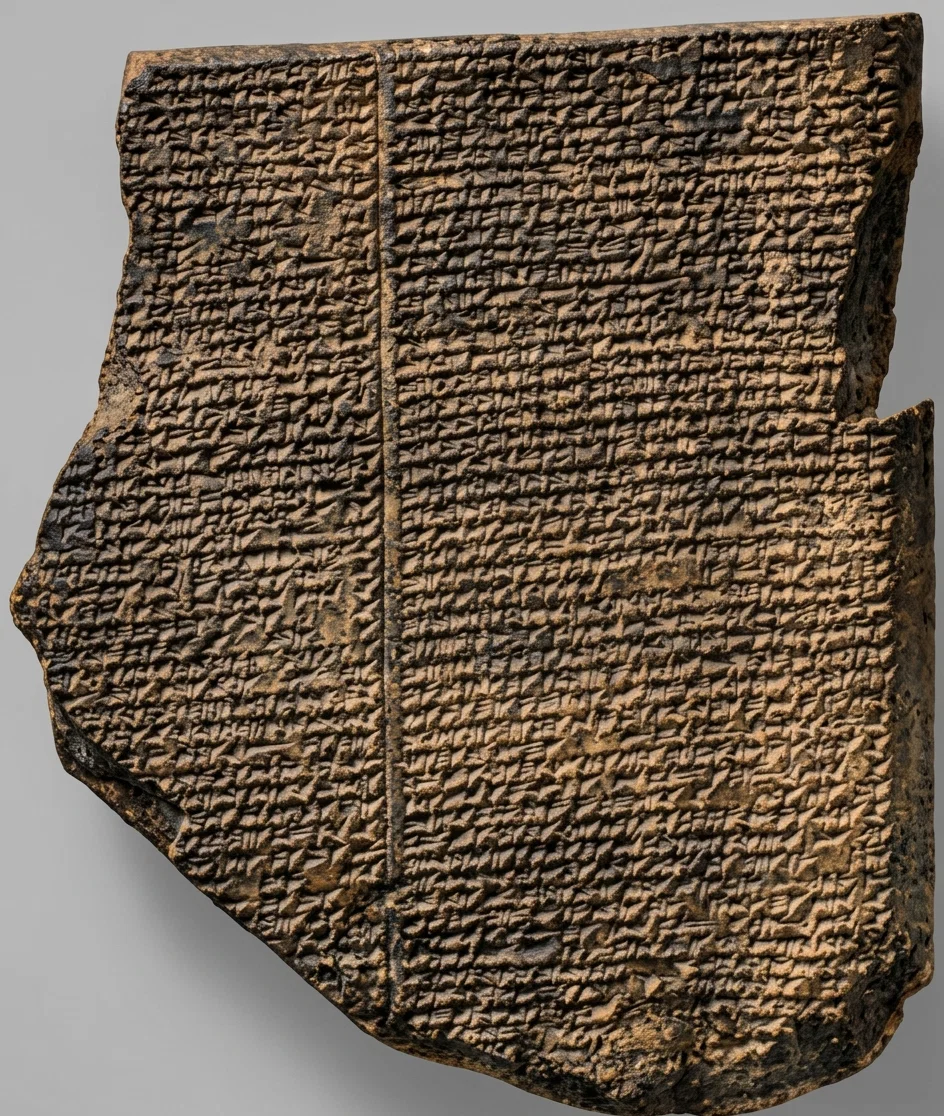
The Deluge, or Flood, of which we have a history in the 6th to the 8th chapters of Genesis, has also been among the disputed things. Men have ridiculed the idea that there was anything like a universal flood. That is still ridiculed to-day, and yet the language of the Scripture indicated that the Flood was universal, that the whole earth was itself covered, that all life except that which was preserved by Noah in the ark perished. Now Professor Wright is claiming that it was very much more extensive than the critics and doubters have regarded it. He declares that it extended over the northern part of Asia, and took in probably nearly all or all of the world at that time. But we have the tablets that were written by nations who lived just this side of the time of the recorded Deluge. The old Assyrian people have a tradition of the Deluge. They have colored this more or less with the traditions of their gods; but so far as the great fact itself is concerned, they record the Deluge entirely apart from the account of the Hebrews in the Bible.
More than this, we have traditions among native tribes of savages and barbarians in different parts of the world. The tradition is almost universal among savages that have any traditions at all of their early ancestries. They tell us in South America, and in North America, and elsewhere, that there was a time when a great deluge took place which drowned the people of the earth. Where did they get this tradition? It all must have been derived from the great fact which took place in the time and according to the manner described in the book of Genesis. The words of inspiration give us the fact; the traditions of the various tribes and nations, sifted through the various cults of heathenism, confirm the fact.
Then, too, it is written in the very earth itself. Go where we will, and we find evidences that the earth in various places was sometime submerged. Shell formation of rocks, fossil remains, water-washed stones and pebbles, and various other things, indicate clearly that the record in Genesis is true. It is written there by inspiration. In God’s providence it was carried in the traditions of men and buried underneath the surface of the earth, and the two witnesses concur.
We might refer to repeated instances in the history of the children of Israel, which have been disputed and criticized, but of which we now find contemporary records in the discoveries of archeology which have been exhumed in later years. Take one other instance of the testimony of history to the Word, found in the prophecies of Daniel, one of the disputed books of the Bible. The history is found in the 5th chapter of Daniel concerning Belshazzar, in which he is represented as the king of Babylon. In that idolatrous feast a hand comes forth and writes the doom of Babylon upon the wall. Daniel the prophet reads the inscription and tells its interpretation. Previous to this Belshazzar has promised Daniel that he would be made the third ruler in the kingdom if the inscription could be read. After the inscription has been read, although it pronounces the doom of Babylon, Belshazzar commands that Daniel be clothed with purple, a chain of gold put upon his neck, and the proclamation made that he should be the third ruler in the kingdom. And that night Belshazzar is slain.
Fragment of a baked clay tablet inscribed with the Babylonian account of the Deluge. The original is in the Nineveh Gallery of the British Museum.
The history of the times outside of the book of Daniel, gave us no account whatever of Belshazzar, so far as men had ascertained. We were told that the last king of Babylon was Nabonidus, but Nabonidus had reigned for years, and therefore the doom of Babylon in the third year could not have been true of him, and the logical conclusion was that the book of Daniel was not a reliable history. One devout man had made a guess at the truth, or really more than a guess, from a careful study of the Bible. He had learned, as all have who are acquainted with Oriental manners, that when an Oriental king made a promise, he made the promise as strong as he could make it. If he were to give gifts, he gave great gifts. If he promised a man a place in his kingdom, he made the promise as large as he could. Belshazzar promised that Daniel should be the third ruler in the kingdom. The natural gift would have been that he should be the second ruler, and this earnest man concluded that Belshazzar himself was the second ruler, and his father must have been the first ruler.
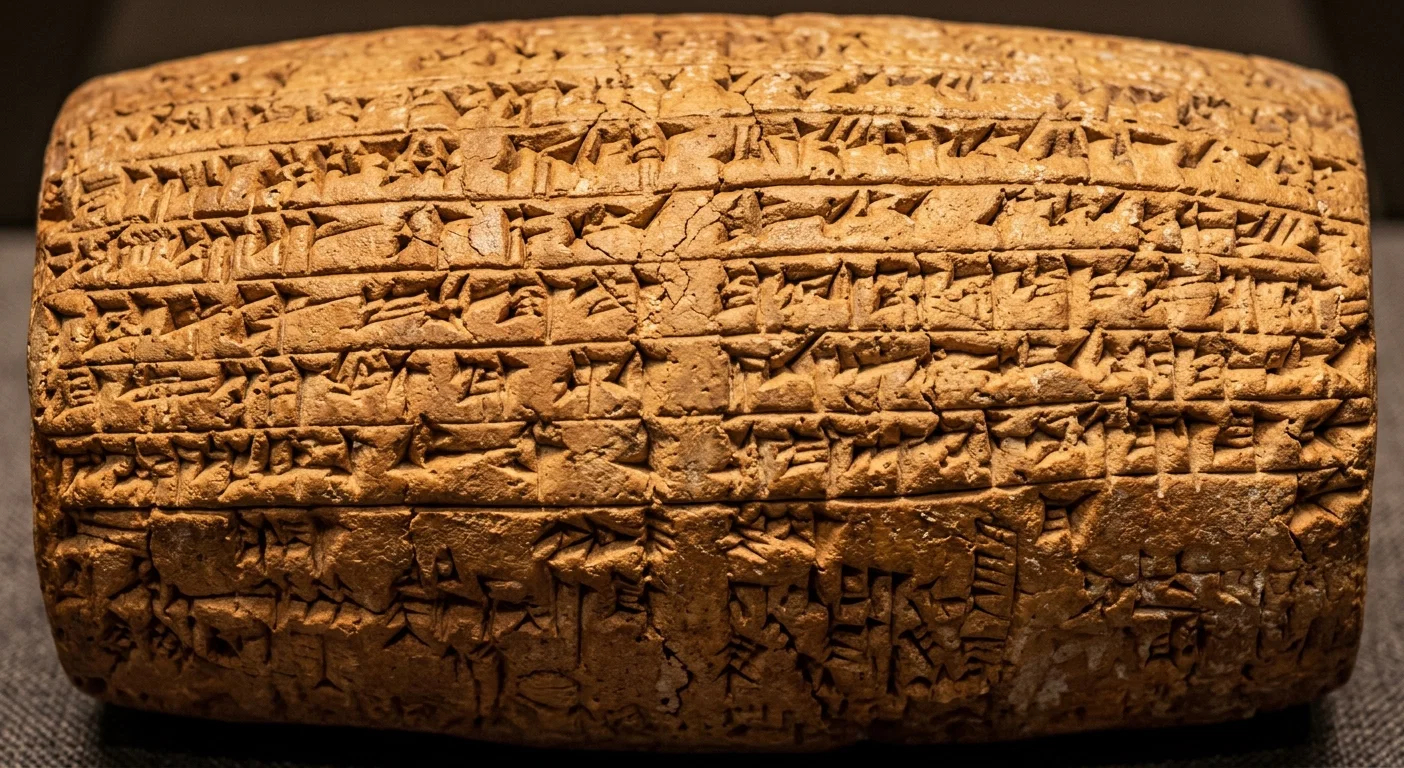
But this was considered merely a guess, and so the charge still lay against the book of Daniel that it was false, and not in harmony with the history of the time. Nabonidus was the king of Babylon; Belshazzar was not. Some of those who contended for the truth of the Bible thought that Belshazzar was probably some general, or some one in temporary authority, some one who was acting as regent in the absence of Nabonidus. But just at the time when it was needed most to meet the contentions of the higher critics, God in His providence was guiding archeologists in their researches. Nabonidus was a very devout man; he was a great temple builder. The last part of his life was given to the worship of the gods and the building of temples. He therefore associated with him upon the throne Belshazzar, his son and heir. Sayce tells us that his father alludes to him more than once in his inscriptions, calling him “Belshazzar, eldest son, offspring of my heart.” Among the things discovered left by Nabonidus was a cylinder written in cuneiform about 556-539. Upon that is a prayer to the moon-god for himself and for Belshazzar his son. This is reproduced upon this page. The providence of God overruled in the writing of the testimony on the cuneiform plate, which concurred with the testimony which was given in His Word. The Word was twice written, and in these last days of doubt and conflict the twofold witness comes to light, witness which could not be collusive in any way, but which becomes, in the very nature of the case, absolutely conclusive regarding the record given in Daniel.
And these are only a few instances among many which God has given concerning the truthfulness and reliability of His Word. We can rest upon it. He has given His Word by inspiration; He has in His providence caused it to be written in the history of nations in rebellion against Him. Heaven and earth shall pass away, but His Word shall not pass away.
[The next article in this series will be on His Work Witnessing to His Word.]
Baked clay cylinder of Nabonidus, king of Babylonia from B.C. 555 to B.C. 538. It is in the Babylonian and Assyrian room of the British Museum, and its record concludes with a prayer to the moon-god on behalf of Nabonidus himself and of his eldest son, Belshazzar, as follows: “O Sin, that is the moon-god, thou lord of the
Miracles Cannot Prove False Doctrine
A MIRACLE can prove nothing true which is inherently false. The multiplication of the loaves and fishes in the familiar story would not demonstrate the desirability of propagating a bad doctrine,—New York “Christian Advocate.”
Life Only Through Christ
1. Who only has immortality?
“Which in His times He shall show, who is the blessed and only Potentate, the King of Kings, and Lord of Lords; who only hath immortality, dwelling in the light which no man can approach unto; whom no man hath seen, nor can see: to whom be honor and power everlasting.” 1 Tim. 6: 15, 16.
2. Who is declared to be our life?
“If ye then be risen with Christ, seek those things which are above, where Christ sitteth on the right hand of God. Set your affection on things above, not on things on the earth. For ye are dead, and your life is hid with Christ in God. When Christ, who is our life, shall appear, then shall ye also appear with Him in glory.” Col. 3: 1-4.
3. For what purpose did God give His only-begotten Son?
“For God so loved the world, that He gave His only-begotten Son, that whosoever believeth in Him should not perish, but have everlasting life. For God sent not His Son into the world to condemn the world; but that the world through Him might be saved.” John 3: 16, 17.
4. Who has everlasting life?
“He that believeth on the Son hath everlasting life.” John 3: 36.
5. Who does not have everlasting life?
“He that believeth not the Son shall not see life; but the wrath of God abideth on him.” John 3: 36.
6. Who gives us eternal life? and where is this life to be found?
“And this is the record, that God hath given to us eternal life, and this life is in His Son. He that hath the Son hath life; and he that hath not the Son of God hath not life.” 1 John 5: 11, 12.
7. What purpose did John have in writing these things?
“These things have I written unto you that believe on the name of the Son of God; that ye may know that ye have eternal life, and that ye may believe on the name of the Son of God.” 1 John 5: 13.
8. What does God say in regard to promising life, to the wicked?
“Because with lies ye have made the heart of the righteous sad, whom I have not made sad; and strengthened the hands of the wicked, that he should not return from his wicked way, by promising him life.” Eze. 13: 22.
The Lay of the Last Mob
Some day ye will gaze at th' ruins
An' wreck of th' body ye made;
And ye'll see in th' dust th' work of your lust;
Ye'll wonder what's come o' your trade;
An' ye'll wonder what's happened th' union,
It's lying so feeble an' still;
An' ye'll know right away that it died on th' day
Ye started to murder an' kill.
Some day ye'll look back in remembrance,
An' think o' th' start that ye had;
Some day ye'll regret, when ye're reeking with
sweat,
That your end was so sudden an' sad.
An' ye'll wonder what happened to kill ye,
An' wonder what laid ye out cool;
It'll come to ye then, how it slipped from ye when
Ye broke every law with mob rule.
An' ye'll think how ye gave up your foothold,
An' turned all your friends that were true;
Ye'll think o' the time ye were in your prime.
An' th' union flourished an' grew.
If ye wonder what happened t' kill ye,
An' wonder what laid ye out low,
'Twill be easy t' tell, ye struck your death knell
When a riot was all ye could show.
If ye value th' union, brothers,
Go home to your children and wives;
Go settle your strikes without pistols and pikes,
Endangering poor devils' lives.
For ye're killing th' cause that ye're lovin';
Ye're riding a dangerous wave.
When ye smile at th' brute, an' permit him to
shoot,
It's th' cause that gets nearer th' grave.
— Anon.
The Bible Is a Very Old Book
IT has gone through many ages, many countries; it has gone through fire and persecution. The story of the past is a wonderful story, but the story of the present is almost more wonderful still. I have seen a chestnut-tree and an oak-tree which were mentioned in Doomsday Book—possibly they are a thousand years old; they are still living, but they are not what they were. Their former glory and greatness are very much diminished. The Bible is very much older than these trees, but it has branches to-day that spread over the world—there is hardly a place where its twigs and its leaves can not be found. The Bible is more luxuriant in its growth to-day than ever it has been in the past. Think of over 600 translations! Think of twelve to fifteen million copies circulated year by year by the Bible Society and other agencies through the world! Is not that wonderful? I do not suppose that when Moses came down from the mountain, with the tables of stone in his hands, he ever suspected that 3,000 years afterward the commandments that they contained would be translated into 600 tongues.
And there is a power in the Book. It is not merely history and tradition and civilization; even the very savages confess the wonderful power of the Book. You have heard of Dr. Paton of Aniwa, and you may know something of the natives of Aniwa—that they were once savage cannibals. Wo to the shipwrecked mariner or passenger cast upon their shores. They held it as a gift from the gods; and that mariner or passenger became their food. These savages became Christians. A vessel with about 310 passengers and thirty seamen was wrecked, and the natives kept them all for six weeks, housed and fed them, and when a passing steamer was hailed and took them off, they gave them sufficient food to last for a fortnight. They never got a penny for what they did; but if it had been in the days of their heathenism they would have in turn eaten every man, woman, and child of that party.— British and Foreign Bible Society.
Labor and Mental Discipline
“One man will pore and perplex himself over a difficult point, be it in law or science, or what you will; another will come in and see at a glance where the difficulty lies, and what is the solution. Does that necessarily prove that the latter has more genius?—No, but it proves that his faculties have been sharpened by familiarity with such topics; and the ease with which he now does his work, so far from proving that he has always worked with ease, is a measure, so to speak, of the labor by which he has prepared himself for doing it.”
Freedom’s Song
By N. W. Vincent
By N. W. Vincent
Our Saviour, ’tis to Thee,
Who died to make us free,
To Thee we sing.
We seek Thy love-lit face.
O, boundless is Thy grace.
Just, equal, all Thy ways,
Our Life, our King!
Omnipotent Thy hand—
Rule Thou in ev’ry land.
Thee we adore
Uplift the sad and poor;
When tried, help us endure;
Make our salvation sure
Forevermore.
Supreme on land and sea,
Our prince and glory be,
Our joy and song.
In tempest and in calm,
Our shield from sin and harm,
Beneath us be Thy arm
So kind and strong!
Thy gospel we receive,
Thy promises believe.
Thy Word is true.
With Thee in sweet accord,
We shed Thy light abroad.
Come soon with Thy reward,
Our home make new.
A Boy’s Prayer
Dear Father, there’s the other boy to-night,
Who’s praying to a god that’s made of wood.
He asks it to take care of him till light,
And love him—but it won’t do any good.
He is so far I can not make him hear.
I’d call to him, and tell him, if I could,
That You’ll take care of him, that You are near,
And love him—for his god is made of wood.
I know he’d ask You, if he only knew.
I know he’d love to know You, if he could.
Dear God, take care of him, and love him, too—
The other boy, whose god is made of wood.
— Selected.
The Book of Life
By John Kendrick Bangs
By John Kendrick Bangs in "Munsey's"
Each day in life is like a spotless page
That comes to us for writings, vain or sage;
Upon its face that which we say or do
Is written down—the false, the good and true.
Each year a chapter is that tells the tale
Of joy or grief, success or failure pale—
In sickness and in health, ambitions, fears,
Our good and evil deeds, our smiles and tears:
And at the last a book the record stands—
The history of self, by our own hands—
By self alone made, bound, and fully writ,
No word, or thought, or deed escaping it.
The Bible Is Attractive
By T.
NOTWITHSTANDING the fact that infidelity seeks to pour contempt upon the Bible, and would try to make it appear that the divine Book is very childish and elementary, some of the greatest thinkers of this world have been devout Bible students. Leading scientists, leading statesmen, leading educators, in fact, leaders in every walk of life, have been men who devoutly studied the Book of books. They have followed this study of the Bible because of its high ideals, because of its pure morality, because of the inspiration and hope that it held forth.
Sir Isaac Newton was one of the world’s greatest scientists. It was he who discovered the law of gravitation, and made such a stir in the world because of his discovery. He has been kept before the world as one among its conspicuously great, and yet this same Sir Isaac Newton wrote books upon prophecy that are as profound and scholarly as anything he ever wrote on science. After he had stirred the world by his published statements concerning the law of gravitation, he said, in one of his dissertations on the prophecies of the Bible, that in order for certain of these prophetic declarations to be fulfilled, there would yet be a mode of traveling of which the men of his time had no conception. He even ventured to say that the knowledge of mankind would be so increased that they would be able to travel at the rate of fifty miles an hour. He who communed, through nature, with the God who is the Author of the great laws that govern the universe, when he came to commune with Him through His inspired words of prophecy, was able to see that those prophecies could never be fulfilled without modes of travel being provided that were far beyond anything in existence in Sir Isaac’s time.
Voltaire commenced to hurl his vindictive epithets against the Bible and Christianity during the time that the venerable Newton was giving expression to his beliefs concerning the fulfilment of prophecy. And, in paying his respects to what Newton said concerning the mode of travel that would yet be developed, Voltaire said:
“Now look at that mighty mind of Newton’s, who discovered gravity, and told us such marvels for us all to admire. When he became an old man, and got into his dotage, he began to study that book called the Bible; and it seems that, in order to credit its fabulous nonsense, we must believe that the knowledge of mankind will be so increased that we shall be able to travel at the rate of fifty miles an hour.”
After thus passing his opinion upon Newton’s work, Voltaire gave vent to his pity and feelings of commiseration in the expression, “The poor dotard!”
Both of these men have passed from the scenes of earth; but in the light of existing fact, who is to be called “the poor dotard,”—the man who reverently believed and studied God’s prophetic Word, or the man who spent his life in seeking to pour contempt upon it? It turns out that Newton had the right of it; and we will see that all those who follow the prophetic declarations of God’s word will ever stand upon the solid foundation that supports all the structure of truth.
Newton could find that He who was the Author of the accurate and never-failing laws of nature was also the Author of the accurate and never-failing predictions of prophecy. The same One is the Author of both; and everything that comes from the hand of God is infinite in perfection, and may be depended upon with unwavering confidence.
T.
Growing in Christian Life Through God’s Word
THE only real growth in Christian life comes by appropriating God’s word. The Christian is begotten through the word of God (1 Peter 1:23; James 1:18), born of the water and the Spirit (John 3:5); and it is by the word of God that he grows up into Christ, the Incarnate Word (1 Peter 2:1-5). He must not only read the Word, or understand the Word, but he must appropriate or engraft the Word (James 1:21), till the truth of God becomes a very part of his being. It is this that the psalmist means when he says, “Thy word have I hid in mine heart, that I might not sin against Thee.” Ps. 119:11.
Devotion to a Cause
THERE has been but little said for weeks about the difficulty in the Balkans. We suppose after the red-tape, diplomatic way, peace will be brought about and patched up. There is one little kingdom, however, that arouses the natural sympathy of the human heart, the one which began the war, and evidently the one which is getting the worst of it, and that is little Montenegro. She has been determined if possible to take the city of Scutari (taken after this note was written), and her army has manifested unsurpassed physical courage in the attempt. The city has been defended by brave Turks. In order that the top of the Tarabosh Hill, where is one of the strong fortresses, might be held, it was surrounded by a network of barbed wire. In order that that fort might be taken, those barbed wires must be cut at whatever cost of life. Volunteers were called for, and 300 men, representing every regiment, stepped forward to do and to die, because it meant nothing else than death. They had no armor or guns with them, no shield to defend them. The ascent was difficult, the hill steep. They could only take the implements of the ordinary workman, and must lay aside the musket and the9bayonet. And they did it, and against raking, fearful fire, unprotected, they climbed that hill, reached the wires, cut and pulled, and opened the way for the army that followed; but not a single one of them entered the breach and shared in the joy of the victory. All fell dead. They expected it; they knew it might and probably would come, when, selected out of those who volunteered, they stepped forward and offered their lives for the awful sacrifice.
When men will do and dare for a mere earthly cause, Christians ought to be willing to do it for a King and cause that are eternal. How few there are, tho, that are willing even to deny themselves the common, ordinary luxuries of life for the sake of the Master!
All This and More
JESUS CHRIST would be everything to you, dear soul. Have you sinned?—In Him there is pardon waiting you. Are you vile?—He will cleanse you. Are you weak?—He has the “strength of His might” to bestow. Are you naked morally?—He will clothe you with His robe of righteousness. Are you blind?—He will anoint your eyes and make you to see. Are you hungry?—He is the bread of life. Are you thirsty?—He says, “If any man thirst, let him come unto Me and drink.” “Blessed are they that hunger and thirst after righteousness: for they shall be filled.” Are you dying?—In Him is life everlasting. Are you in despair?—He is our hope. Do you want evidence?—“If any man willeth to do His will, he shall know.”
Facts Versus Theories
Referring to the great so-called “discovery” that the Jewish week was movable, and that the Sabbath was not, therefore, the seventh day of our week, it is a sufficient reply to say that when the Jewish week came into contact with the fixed week of Rome and other Western nations, the Jewish week was found to be identical with the Roman week, with this simple difference: The Jewish or Bible week began at sunset Saturday night, while the Roman week began at midnight of the same day. The inevitable conclusion is, therefore, that the Bible week is a fixed week.
Effort has also been made frequently in time past to mystify the searcher after the true Sabbath by saying that in the change from Old Style to New Style, time was lost, and no one knew the proper order of the week. To this foolish statement it was only necessary to reply that Russia until very recently reckoned time by Old Style, while other European nations reckon by New Style, yet the week and the order of the days of the week are the same. The change from Old Style to New Style did not affect the order of the days of the week in the least.
The two theories are parallel. The Bible week is a fixed week, with the exception noted above, and is identical with the week common in all nations. An ounce of fact is worth a pound of theory.
The Puny Efforts of Man
An impressive editorial in the Scientific American of April 5 on “Harnessing Nature” tells us the wonderful things which man has done, the superstitions that he has overcome, by his progress and the accumulation of his experience, and declares that the real harnessing of nature has come in this generation. It refers to our giant steamships, driven across the ocean regardless of stress of wind and water; our railroad trains that span, on their appointed schedules, plain and valley, mighty watercourses, traverse the heart of mountains, and carry priceless freights and millions of people. It cites the great, tower-like buildings piercing the sky at almost a thousand feet in height, and the mighty aqueducts which bring water from the mountains to the cities. And yet it feels constrained to say:
“The thoughtful among us well understand that nature has become our beast of burden, not by compulsion, but rather by cheerful submission. Now and again she bestirs herself, and, as if to put us in mind of the fact that, if she will, she is master, not servant—in some hour of ugly temper, she smites us with the full force of her hidden potentialities. Let her activities become only a certain per cent greater than their normal, and disaster, often terrible disaster, sweeps over the very people whom she seemed so faithfully and submissively to serve.”
Then, citing San Francisco and the great Western floods and storms, the editor truly says:
“In the presence of such a tornado as has recently swept through the Middle West, we must confess to a feeling of absolute helplessness.”
The puny power of man against the power of God, perverted, is very small. One little shake of less than a minute would level the mighty towers which man has erected in defiance of the perverted elements in this sinful world. Such things as the mighty storms which have swept the West during the last few months are needed, in a moral way, to help men see their utter littleness, and to lead them to put some trust in a divine Being. And yet how few learn it!