Your ShelfYour Projects

Signs of the Times, Vol. 40, No. 20.

Question Corner
Earlier text: Studies in Ephesians

Various Kinds of Liars

MARK TWAIN, in one of his stories, says of a character, that whatever statement he chose to make was entitled to prompt and unquestioning acceptance as a lie.
There are a great many kinds of liars and a great many ways of lying. Mrs. Opie once undertook to classify lies as: lies of vanity, lies of flattery, lies of convenience, lies of interest, lies of fear, lies of malignity, lies of malevolence, and lies of wantonness. Mark Twain, in taking account of stock, counts eight hundred and sixty-nine varieties of lies.
We all know the foolish liars who lie without motive, from force of habit. We can understand a person's lying who has a strong motive for it, but to lie without any purpose whatever seems to be to the normal mind an unintelligible thing.
One very large class of liars are liars of carelessness, thoughtlessness; people who do not mean to lie, who are honest enough, but who are slipshod in their mental processes. Their observation is faulty; they do not see or hear things with exactitude, do not see or hear them as they are. This comes from not taking pains to get the exact facts about anything into their heads.
One of the most pernicious liars is the flatterer, the one who can not bear to wound you on your weak point. Then there is the polite liar, who prevaricates and deceives in order to be courteous. He wants you to think well of him and wants to make you feel good. He would rather deceive you than tell you unwelcome truths. Vanity liars can not bear to tell the truth when it reflects upon themselves or does not flatter their vanity. These liars may be believed in what does not reflect on themselves or put them in an unfavorable light.
The so-called benevolent liars often escape condemnation because their motives are good. A good-natured man or woman, compelled to dismiss an employee, will sometimes give an undeserved recommendation, quite unconscious of the injury thus done a later employer.
Slander, the blackest of all the falsehood family, does not always require a lying tongue. There are a thousand ways of lying. A person may lie by his silence, by not telling the truth when it is his duty to speak. A man may lie by telling a part of the truth. He may lie by his manner, by insinuations, by inference, by a shrug of the shoulders or a glance of the eye.
One of the most pitiable of all liars is the weak liar, who has not moral stamina enough to tell the truth when it is disagreeable. Liars of this brand do not want to argue or defend their position; they go along the line of least resistance, prevaricate and deceive, because there is not lime enough in the backbone to enable them to stand straight and look a man in the face and tell him unpleasant truths. They would rather make him feel good at the time, and prefer that he find out the truth when they do not have to meet his gaze. I know people who mean to be absolutely honest who can never tell the exact truth when it requires a little moral courage, and cowards are always liars. They do not lie because they are bad, but because they are weak.
It takes courage to tell the truth when you know it may place you in an unfortunate light before the world, and that a little prevarication or a little innuendo may save you pain. It takes courage and character to tell the truth when to do so will be a temporary loss to you. It takes courage and manliness, womanliness, to tell the truth when it gives a decided advantage to a rival. It takes courage to stand up squarely, with an unflinching eye, to look the world in the face and tell the straight, unvarnished truth, regardless of consequences.
The reputation of being beyond price, of being unshaken by any selfish motive; the reputation of always, everywhere, under all circumstances, telling the truth—not pretty nearly, but the exact truth—is worth a thousand times more to one than any temporary gain from deceit.
One of the most unfortunate phases of modern journalism is the temptation to tamper with truth, color it, distort, misrepresent it, to make a great thing out of a little thing. The reputation of a newspaper is like that of an individual. The newspaper which constantly, knowingly deceives, very soon gets the same kind of reputation as a consummate liar. There are few newspapers in the world which refuse to color the truth, to tamper with facts in order to make a sensation, and these few are the solid pillars of journalism. They stand for infinitely more in their community than some other papers with a hundred times more circulation.
One of the most dangerous characters in the business world is the man who has no vigor or integrity, who is indifferently honest, who prefers to be on the side of the right, but who will quibble, will tamper with the truth, will not tell quite the whole truth if his interests are jeopardized.
He may not lie outright, but he may leave untold a truth which he should tell, and which a gentleman would tell; but in the end, what such a man gains can not be compared with what he loses. He does not realize that altho he may make a little more money, he is less of a man every time he misrepresents; that while he may be adding something to his pocket, he is taking something away from his manhood.
How often, too, the crooked, lying man or institution finds that crooked methods do not pay, and that even as a working principle honesty is the best policy! Look at the history of business concerns in this country, and see how very few of those which were doing a great business fifty years ago are even in existence to-day. Many of them sprung up like mushrooms, made a good deal of noise in the business world, did lots of faking, deceptive advertising, and flourished for a while, attracting a great deal of attention, but they did not last long, because there was no character back of them. They were not reliable, and after successfully deceiving their customers for a time, they were found out. Then they began to shrink and shrivel, and ultimately went to the wall.
Still, a great many people believe in the expediency of the lie as a policy. They believe that it pays to deceive. Many business houses which are regarded as pretty honest cover up defects in goods and write misleading advertisements. There are many men who think that deception in business is just about as necessary as money capital. They believe that it is very difficult, practically impossible, for any man to succeed in a large way and always tell the exact truth about everything.
Not long ago a superintendent in a large dry-goods house said that he had been busy all the previous day cutting up whole bolts of cloth for remnants. He said that people would willingly pay more for these “remnants” when advertised as such because of the deceptive suggestion that they were cheap, than they would to buy by the yard from the piece. Now, how long will the public continue to patronize such a house after once discovering this deception? The same principle is true of the bargain sales. Merchants often sell inferior goods at more than their regular price during these sales, because they know the power of suggestion in advertising to deceive.
There is a great deal of the Indian in all of us. We do not forget favors, kindnesses, or injuries. On the ground of the weakness of all human nature, we may often forgive things which still sting; but when we have once been deceived by a business house, a traveling salesman, a solicitor, or a clerk, we do not forget it, and that house or clerk loses our confidence forever.
Most young men overestimate the value of mere shrewdness, cunning, long-headedness, smartness, keenness. They seem to think that if they are going to get ahead rapidly they must not be too scrupulous about the exact truth; that a little deception, a little cunning, will help them along faster; that if they veer this way and that from the truth—just enough to avoid disagreeable experiences—to make themselves popular, to make everybody feel good, they will be all right. There could not be a greater mistake; for if there is anything weak and doomed to failure by the very laws of the universe, it is misrepresentation. It never yet has won in the long run, and real success is as impossible by it as is the reversal of the law of gravitation.
Misrepresentation in any form is the shortest-sighted policy in the world. No man ever built up a permanent position or institution upon it, or ever will, for the man who gets a temporary advantage by misrepresentation makes everybody who finds it out his enemy ever after. It is human nature never to trust a person fully again who has once deceived us.
Is there any power in cunning, in shrewd, long-headed, deceptive methods, that can for a moment compare with the truth, with absolute integrity? There is no advertisement in the world, in the long run, that can compare with that which comes from the reputation of always and everywhere telling the exact truth, of being absolutely reliable. This reputation alone has made the names of some of the great business houses in this country worth millions of dollars.
Every time a man deceives, he knows that he has to cover his tracks. He is always on thorns for fear of discovery, for everything in his own nature is trying to betray him; but when he tells the truth, because he is built on the truth plan, he has all the universe sustaining, supporting, backing him.
What a difference there is between the power of a man who is telling the truth and is conscious that he is backed by the eternal principle of right and justice, and the man who is lying and is conscious of it!
One can look the world in the face without wincing, because he feels that he is backed by eternal principle. There is victory in his eye, assurance in his very bearing, while there is something within the other man which says: “I am a liar; I am not a man. I know I am not a man, but a sneak, a make-believe.”
Is there anything on this earth in quite so bad a plight as the liar, as the man despised, socially ostracized by all decent people and exiled from his own self-respect?
For the protection of the innocent, what a blessing it would be if all business, professional, political, and social liars of to-day were labeled and tagged, and were compelled, as was the leper of old, when any one came near him, to cry, “Unclean, unclean,” so that all decent people could be warned of their approach, and shun them as they would a deadly contagion! — Orison Swett Marden.

Daily Bible Reading

I AM sorry for the men who do not read the Bible every day. I wonder why they deprive themselves of the strength and of the pleasure. It is one of the most singular books in the world; for every time you open it, some old text that you have read a score of times suddenly beams with a new meaning. Evidently the mood and the thought of the day, bred by the circumstances that you can not analyze, has suddenly thrown its light upon the page and upon that passage, and there springs out upon the page to you something that you never saw lie upon it before. There is no other book that I know of of which this is true; there is no other book that yields its meaning so personally, that seems to fit itself so intimately to the very spirit that is seeking its guidance. And so when we teach our children, we do not teach them, I hope, dogmatically. We must not try to make them read the Scripture as we read it, but merely try to bring them into such contact with the Scripture that it will yield its meaning to their hearts and to their minds. Make it their companion, make it their familiar text-book, and the rest will take care of itself.
Who shall dare to guide another human spirit in the same path that he himself has trodden? Shall we not merely take those whom we teach to the road and say: “Here is the way of life. Walk ye on it; don’t follow us; don’t look to us as examples of the consequences of our teaching. Walk ye on it, and it will lead you to the City of Light.”—Woodrow Wilson.

But Men Are Hungry

I SAT in the house of a sailor last fall. It was a very bad inshore fishery, for some reason. This man was an old sailor; he had not had the privilege of a Sunday-school, he had not had the opportunities of the regular service, he knew no philosophy, he could barely read and write. Years ago he migrated—after a roving sea life—to the Labrador coast, and had settled down there because he could choose a place where fur was plentiful and the fish near at hand. A family had grown up with him; he had become known as a hospitable man; his house is on the path on which the komatiks travel in winter; and when a man is poor in Labrador, and starving, he has to travel somewhere to get help. The custom here was to go by the komatik trail and stop off at this man’s house; he had enlarged his cabin twice, in order that comers to and fro might not be disappointed.
He is a gray-headed old man. His wife has died, and all the children are gone but one. Last winter, with the lack of wage-earning capacity, the poorer people on the coast had eaten him out, as they say. The Hudson Bay agent of the district told me that one week-end that man had twenty-seven poor folk halting over Sunday at his house. It is my habit to help the old man out by giving him wood to cut for the fires of my hospital steamer. When I went to his home this fall there was only thirty dollars coming to him; the fishery was bad; he had had no other way of earning anything. I told him what there was coming to him, thirty dollars, and that it would give him so many barrels of flour, so much molasses, and some little fats; that is, sufficient so that they would be able to live—he and his son. I said to him, “What are you going to do this winter? You know the condition of the poor people; you had better move up the bay and get out of the komatik track.” That was so that visitors could not come to his house.
“No,” he answered, “I can not do that while I am alive.”
“But,” I said, “what will you do? You will starve if you feed others, because you haven’t more than enough for yourselves.”
The old man went to a sailor’s box and dug out all the usual things that fill an old chest like that, and produced a pencil-box; he pried off the cover and picked out a lot of oakum, and then picked out twelve five-dollar bills.
“What are these?” I asked.
“My money saved against old age.”
“What are you going to do with it?”
His answer was, “I want you to spend it in the same way—on flour and molasses.”
“Is that all you have got?” said I.
“Yes,” was the reply.
I told him he had better keep it in the box, and move up the bay. But he replied, “I may not need it next year (he is seventy-three), and I should not like to meet my Maker and feel that men were hungry and I had not used it.”
We read about hospitality, and some men say, “What is the good of Christianity, anyhow? Where, in all the philosophy of nature, where, in all the struggle for the survival of the fittest, comes in a force that will teach men, yes, teach us who talk about the Christ, lessons of that kind? Jesus Christ’s gospel is still to-day the power of God unto salvation.—Sir Wilfred Grenfell, in “Sunday School Times.”

Killing for Rewards

We have not been greatly taken with the endeavor to send out an army of children to kill flies.
The killing propensity in human nature needs no encouragement.
Indeed, we believe there is a better way to get rid of the fly than by enlisting boys and girls to destroy them at so much a thousand.
Get rid of the dirt and filth—that’s the real foe. Awaken in the young antagonism to whatever makes the fly a pest.
At the International Congress of Entomology, recently held at Oxford, England, a distinguished scientist declared that the true preventive of the house-fly as dangerous to the human life was the destruction of decomposing matter, dust heaps, and such nuisances, at the time when the fly is breeding. He affirmed that it was a fact that in all countries where a proper system of dust and dirt removal was in operation, the diseases attributed to the house-fly as a carrier were practically non-existent.
Several times men have seriously interfered with the balance of nature by the destruction of certain forms of supposedly noxious life, and paid dearly for their blunder.
At least let us keep the children from all our killing crusades.—Frances H. Rowley.

What Young Men Need

By Robert E. Speer in “S. S. Times.”
ABSOLUTE fidelity to truth. The great need of all days is for men and women who are absolutely true, who do not fool either other people or themselves, who will not lie, who act truthfully in everything, both great and small. “Power must come,” said Edward Thring, the great schoolmaster of Uppingham, at the opening of the schoolroom in 1863, “and there are two ways for it to come. Most of all, and first, the winning a character for truth and true honor. Most of all, that no lie in word or deed, no shams, no underhand deceits shall harbor here,—nothing that will not bear the light. Let this be the school character, as I trust it is, and fear not, the school is great. . . . Who shall set a limit to the power that goes forth from here? . . . Why should the prophecy of the little that remains be thought a vain dream,— the prophecy that a few years yet onwards, and by God’s blessing, when men think of their youth, and talk one with another of truth and honor and steadfast work, the name of the school shall rise readily to their lips, and deeds of patient endurance and a character hardly won for quiet, unassuming trustworthiness shall fill with honest pride the hearts of those who then shall be able to say, ‘And I, too, was at Uppingham’? Nothing is too great for the power of the truth.”

Christ Our Advocate

His Ministry in the True Tabernacle
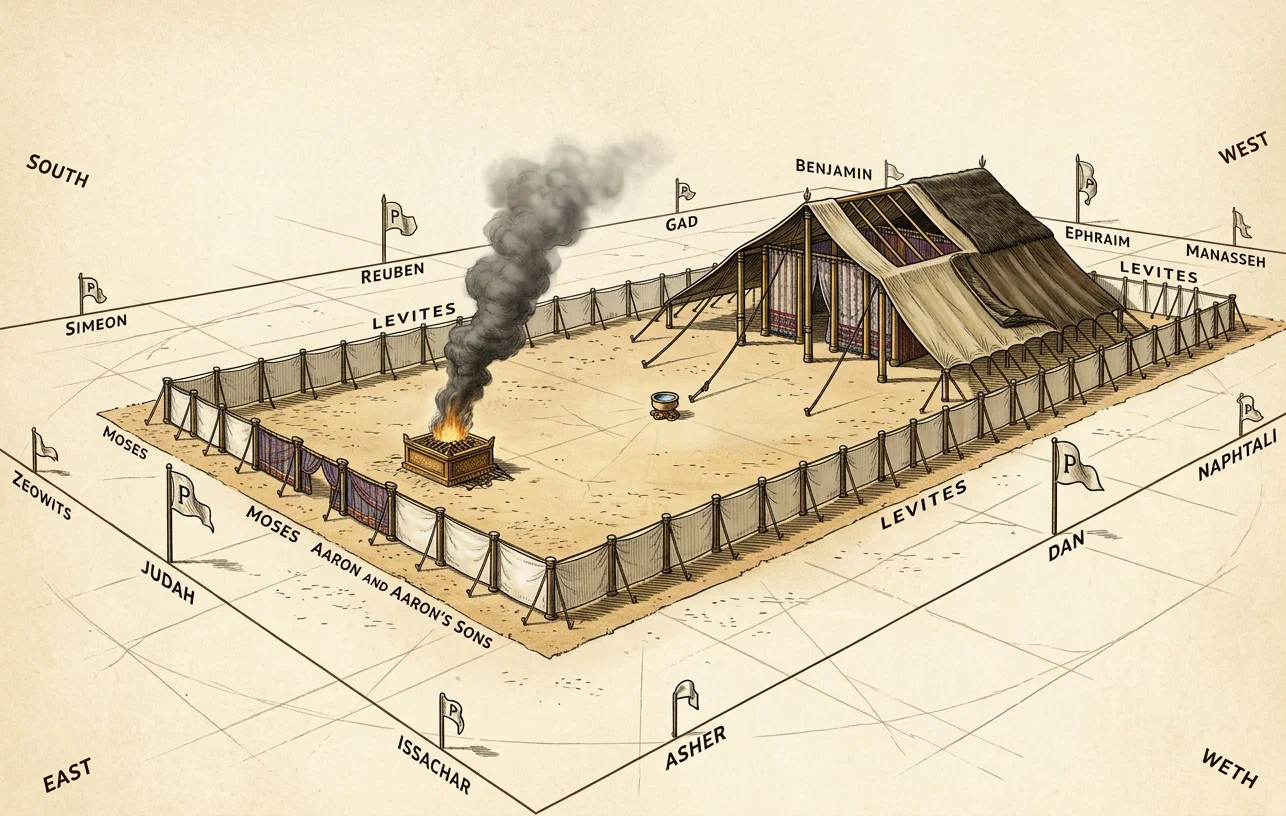
The above is a representation of the shadow, or type, “of the true tabernacle, which the Lord pitched, and not man.” In this “true,” or heavenly tabernacle, Christ, our Advocate, presides. What His work is, and how it concerns us, are the themes of this booklet, by Elder M. H. Brown. Several original illustrations. 112 pages, price 10 cents.

Other Choice Books

In sending for the above-mentioned pamphlet, you may wish to include in your request copies of some of the following:

THE LORD’S DAY

A study of the Sabbath question in the light of the dispensations. 125 pages, price 10c.

THE SURE WORD OF PROPHECY

A verse-by-verse study of the book of Daniel. 96 pages, price 10 cents.

THE SAINTS’ INHERITANCE

A beautiful study on the home of the saved, 88 pages, price 10 cents.

MATTHEW TWENTY-FOUR

Christ’s answer to the disciples’ question, “What shall be the sign of Thy coming, and of the end of the world?” and the history connected with the fulfilment of this prophecy. 94 pages, price 10 cents.

CHRISTIAN SCIENCE

A consideration of this “science” in the light of reason and revelation. 50 pages, price 10 cents.

THE SPIRIT WORLD AND A FUTURE LIFE

Is there a supernatural power being manifested by certain mediums, or is it all fraud? If it is genuine, what is its source? 96 pages, price 10 cents.
Order through your Tract Society, or

Pacific Press Publishing Association

Mountain View, California
Portland, Oregon  Calgary, Alberta, Canada  Kansas City, Missouri

Sabbath

The Apples of Gold Library tract No. 45, “Historical Facts and Incidents Relative to the Sabbath and the Sunday,” presents the most vital points from history in chronological order. They are the facts that one longs for in his study of the Sabbath. Single copy, post-paid, 3 cents; $2.00 a hundred. This office.

Elijah on the Sabbath

Doubtless the tract “Elijah on the Sabbath” has brought light on this question to more earnest inquirers than any other tract published. It is a simple, logical review that we can heartily recommend for your personal study and distribution. Price, $1.00 a hundred; single copy, post-paid, 2 cents. This office.

WESTERN OREGON CONFERENCE

The eleventh annual session of the Western Oregon Conference of Seventh-day Adventists is hereby called to be held at Portland, Oregon, in connection with the annual camp-meeting, June 19-29, 1913, to enjoy a spiritual feast and to transact such business as may be the pleasure of the delegates. Conference will organize for work Friday, the 27th, at 9 a.m. Each church is entitled to one delegate for the organization and an additional one for every ten members.
H. W. COTTRELL, President.
J. L. KAY, Secretary.

NOTICE

Western Oregon Conference Association

The Western Oregon Conference Association of Seventh-day Adventists, a legal corporation, is hereby called to meet on the camp ground in Portland, Oregon, Thursday, June 26, 1913, at 10 o'clock a.m., for the purpose of electing a board of five trustees, whose offices shall continue for one year, or until their successors are elected and are qualified, and of transacting such other business as the delegates may desire. The accredited delegates to the religious body are the delegates to the association.
By order of the Board of Trustees.
H. W. COTTRELL, President. C. E. OLCOTT, Secretary.

Overland Limited

IN THREE DAYS SAN FRANCISCO

Overland Limited

TAKES YOU To Chicago
ACROSS GREAT SALT LAKE AND HIGH SIERRA BY DAYLIGHT
Luxurious High-class Equipment Electric Lighted Throughout
Pullman Drawing-room Stateroom Vestibuled Sleeping-cars Careful and Attentive Dining Service Parlor Observation-car with Library and Cafe Ladies' Reading-room Gentlemen's Smoking-room Daily News Bulletins Latest Papers and Magazines
Southern Pacific

Bibles

Bibles.— Remember that we are headquarters for anything in the Bible line. Pacific Press Publishing Assn., Mountain View, California.

The Law

That question of “Under the law? or under grace?” is a constantly recurring one. Bible Students’ Library tract No. 163 gives a careful answer from the Bible. Single copy, 2 cents; a hundred, $1.00. This office.

THE BAPTISM OF JESUS

Is His Example Worthy of Consideration and Imitation?

This is the subject of a new tract by William P. Pearce. The tract is very forcefully written. The following sub-heads indicate the uniqueness of its make-up:
A Voluntary Act—“Then cometh Jesus . . . to be baptized.”
An Inconvenient Act—“Then cometh Jesus from Galilee to Jordan unto John, to be baptized of him.”
A Divine Act—“It becometh us to fulfil all righteousness.”
A Thoro Act—It was not simply “by” but “in” the waters of Jordan.
An Appreciated Act—By God the Father, and God the Holy Ghost.
A Symbolic Act—Act symbolic of His death, burial, and resurrection.
An Act to Imitate—“I have given you an example.”
The tract is issued as “Apples of Gold,” No. 95. It contains 8 pages. Price, fifty cents a hundred; single tract, two cents. Pacific Press Publishing Association, Mountain View, California.

FOR MINISTERS AND BIBLE WORKERS

Beautiful soul-winning Scripture post-cards, ten for 10 cents, 100 for 90 cents, post-paid. Wholesale prices by the thousand, freight prepaid. Special low prices on 12 x 16 Bible Mottos. Send in your orders at once. Waterbury Specialty Company, Pomona, Cal.

SANITARIUM COOKING OIL

“The Oil of Quality”
Pure Cotton Seed Oil direct from refinery. Sweet, wholesome, and delicious. 1-gallon cans, 90c each; 5-gallon can, $3.95; 10 gallons, $7.80; 30-gallon barrel, $21.00; 50-gallon barrel, $34.00. Cash with order. Sanitarium Cooking Oil Co., Louisville, Kentucky.

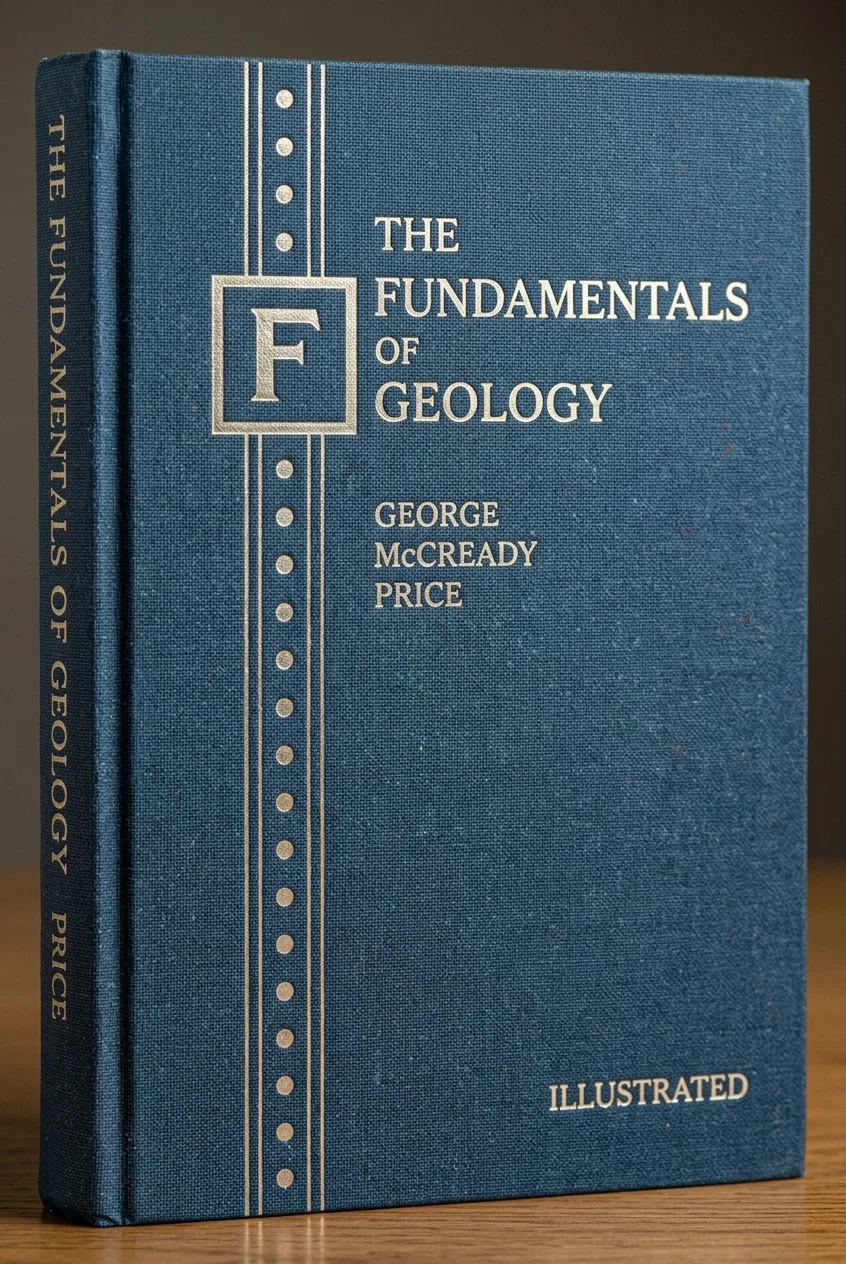
The Fundamentals of Geology

This new book by Professor George McCready Price, B.A., gives a scientific exposition of the various geological teachings of the present day. The “succession-of-life” theory, the “doctrine of uniformity,” and other theories are here investigated in the light of science. “It is,” says the author, “an honest effort to study the foundation facts of geology from the inductive standpoint. It is, so far as he knows, the only work of modern times in the English or any other language which does not treat the science of geology more or less as a cosmogony.”
The work is thoroly up to date, including photographs taken since the recent geological discoveries in great sections of Montana and Alberta.
The style is clear and forceful, and the book is in language that makes the study interesting to the average reader. Thirty-six illustrations add greatly to its value.
More than 250 pages, bound in durable cloth. Price, post-paid, $1.25
Order of your tract society, or
Pacific Press Publishing Association Mountain View, California

Manner of Christ’s Coming

Thousands believe in a second coming of Christ, but are confused as to how He will come. The sixteen page tract "Manner of Christ's Coming," Bible Students' Library, No. 124, will assist greatly in a careful study of this subject. Single copy, post-paid, 2 cents; $1.00 a hundred. This office.

The Gospel Message for To-Day

An outline of the messages presented in the Revelation, and especially the one mentioned in the fourteenth chapter, is clearly given in Bible Students’ Library, No. 188, “The Gospel Message for To-Day.” Price for single copy, post-paid, 2 cents; $1.00 a hundred. This office.

Life and Health

“Vacation” “Tuberculosis” and “Tobacco” Number

You can not afford to miss this excellent June number.

JUNE FEATURES

Making a Vacation Pay for Itself; Preventive Vaccination Against Tuberculosis; The Mystery of Tobacco (Convincing)!; The Baby’s Second Summer; Misuse of the Refrigerator; How the Body Repels Disease; That “Dragged Down” Feeling; Relief of Headache; How to Help Indigestion; Intestinal Poisons and Disease; Nutritive Diet for Babies.
$1.00 a Year  10 Cents a Copy
Three yearly subscriptions (yours included), to different addresses, only $2.00. Many agents make from $2.00 to $5.00 a day. Apply for agency to-day. Address nearest agency or
LIFE AND HEALTH
Washington, D. C.

Do You Know This Bear?

He stands for
ZEROLENE
The Standard Oil for Motor Cars
Watch for him. He is on every ZEROLENE can. He marks the oil that freed the car from carbon.
ZEROLENE is put up in the flat-shaped can—easy to handle; also in barrels and half barrels. Sold by dealers everywhere and at all agencies of the
STANDARD OIL COMPANY CALIFORNIA
SAN FRANCISCO

From an Aged Pilgrim

WE wish it were possible for us to publish all the good letters that we receive from our subscribers and readers, from the aged ones, from those who have trodden the path with their Lord for so many years, and have found Him more and more precious; but this is impossible. Occasionally we will take one as representative of many others, and in this we condense greatly.
This sister is eighty-five years of age, has one child, four grandchildren, nine great-grandchildren, and one great-great-grandchild. Of course she lived before the stars fell, but did not know it, as her family lived in a forest at that time, in Cherry Creek, New York, fifteen or twenty miles from any others. Her name is Maria Brown, of Schuyler, Nebraska. Her father's name was Eliphalet Wilcox. She recalls the maple-sugar making in the days of her childhood. Now she does her own work, cooks for herself and son, makes butter from two cows, and does her own dressmaking. She has read the SIGNS, the Review and Herald, and other papers for thirty years, received the message under the labors of Brethren Cudney and Nettleton, feels that the Lord has been very good, and expects to share eternity with Him in the earth made new.

Confession to Priests

The “Christian Leader” says that a lady attended “the Catholic missionary meeting at Dallas, and put questions in the query box.” One of her queries was: “The Bible says, ‘Confess your faults one to another.’ When people confess to the priests, do the priests confess to the people?” The question was not answered. The confessional is one of the greatest inventions of the Papacy. It gives the papal church a hold on the people that is exceedingly strong. Catholics go to the confessional from a sense of duty, and we admire their spirit of devotion. But it might be a help to many of them to know that God does not require any of us to confess in secret to a priest that has the same sinful nature as all the rest of humanity. God in His word does not authorize the confessional, and no church has a right to demand it. Let devout Catholics everywhere study their Bibles for themselves, as is their right and duty, and they will see that the Lord is not the author of confessing in secret to priests. When our heavenly Father says, “Confess your faults one to another,” He is asking us to have that sense of righteousness and courtesy that will cause us to go to a person that we have wronged, or before whom we have exerted a bad influence through our “faults,” and properly acknowledge it. Any one can see the rightfulness of this; but who can see the right of one sinner going to another and confessing his sins as tho the confessor were God?

The Editor Away at Meetings

The editor-in-chief of this paper will be absent from the office attending important meetings most of the time until the first of August. He has just left for the General Conference at Washington, D. C.; and on his return from there he will attend the Christian Citizenship Convention in Portland, and probably a number of camp-meetings in the Northwest. As he was leaving for Washington he placed in the hands of the associate editors several important articles on the “Witnessing of God.” We are publishing the second one on page five of this issue. We trust that all our readers will follow them. They are interesting and timely.

Times of Strife and Violence.—

The illustration on page 10, of a funeral in New Jersey, and the one on page 11, of a tumultuous concourse of people in Japan, both taken from photographs, are quite suggestive. Photographs of the kind could be secured in almost limitless quantities from every part of the world. They show in picture what is so fully depicted in word and act,—that this world, in every part of it, is in a state of seething discontent. The significance of it we seek to keep before the world, because of the glorious event of the second coming of Christ that is portended, and that lies just ahead of us, at which time all strife and sin and crime will be forever brought to an end.

Los Angeles White Slave Traffic Scandal

Los Angeles has been added to the list of the large cities that are seriously grappling with the white slave traffic. A number of leading “gentlemen,” including millionaire capitalists, bankers, etc., are under indictment for contributing to “the delinquency of minor girls.” The mildest thing we can think of to express appropriately the sentiments that should prevail against such actions is that it is contemptible and diabolical for men of such wealth and influence to be found debauching and degrading young girls,—girls that are not old enough to have the necessary sense to resist the glitter and fascination of automobile rides, fine suppers, and other forms of pleasures that go with that kind of dissipation and vice.
Continue reading: The General Conference