We have an impressive, and it should also be an instructive, object lesson of the working out of the idea of carrying religion into politics, in the Dark Ages. During that time, more than 50,000,000 of those who dared to stand firm for God and the right, against purely religious laws, “were put to death by every device of cruelty and torture that wicked men and demons could invent.” Will religion and politics united work any different in the nineteenth century than the same combination wrought in century 14? Has human nature changed? Are politics purer now than then? Is the enemy of God’s people less anxious to persecute now than in past ages? Is the old Roman idea of “Christian Citizenship” (which seems to be impressed upon the minds of the leaders of the present movement under that name as something modern) more advanced than the fact of heavenly citizenship, which was taught by the King of kings and Lord of lords? Shall we count as antiquated, and consign to oblivion, the truly immortal words of our Saviour, “My kingdom is not of this world,” and again, “Render therefore unto Cæsar the things which are Cæsar’s; and unto God the things that are God’s!” G. W. REASER.
“Go ye into all the world, and preach the Gospel to every creature,” “and, lo, I am with you alway, even unto the end of the world.” Mark 16:15; Matt. 28:20. This “ye” does not simply mean the disciples to whom it first referred, but is spoken to you and me, to all, until the end of the world, who know the truth.
THE SENDING OUT OF THE DISCIPLES.
A great many have an idea that all preaching is to be done from the pulpit, and that they will be excused because they have not the gift of words nor sense of being called to public service. But if any one thing is more clear than another in God’s Word, it is that this call is to every one; that none are exempt. “The field is the world,” and one open-eyed look into it is enough to stir any consecrated heart, and make it realize that the need is so urgent that every one who has ever heard the Gospel is called to go to some one else, and by some means make them understand what he knows about it. This may be done by dumb signs, by simple, kindly living and loving, through which the Spirit of God can breathe and shine; but however it is done, that is preaching Christ.
A preacher is a living representative of, and a witness for, Christ. The truth is very large; the Gospel is as wide as human needs. Some are called to preach by word of mouth, some only by the life, some that phase of the Gospel which especially applies to one phase of life and one line of truth, while another must go out along sharply divergent lines; but there is one sort of preaching to which every man and woman is called, and that is by testimony,—to be a witness. The very highest manifestation of the Spirit of God is in preparing an unimpeachable witness, whose testimony will bear the test of all manner of cross-questioning, and of daily living.
We are sent to “every creature.” The outgoings of our life must preach Christ to all with whom we come in contact. We are placed in family relations, social relations, business relations, that a channel may be made for the Gospel to every creature. As we come in contact with those who make our clothing, who keep our house, who prepare our food, or those whom we serve, we are expected to find an opportunity to preach Christ. Imagine the result if each one who has known the love of the Lord Jesus Christ had preached the Gospel in his daily living. Suppose that every unconverted individual with whom we have come in contact had been made to feel that he was a sinner, and then assured that Christ was the Saviour, and that he might be saved if he would. The world would have been stirred as it never has been. The very atmosphere would have been filled with inquiries. There would have been no escape from the practical personal work which would have been thrust into our hands upon the preaching of Christ.
Christ said, “I am come a light into the world;” and again, “Ye are the light of the world.” He expects his disciples in every age to be lights in this dark world, and shine as he did. It is the office of light to reveal, so that any sinner who comes within its influence shall see himself as he is. A young man who was trying to learn how to do Christian work, said, “I would not like to think all the time that when any one met me he would feel he was a sinner.” “That would be very unfortunate,” was the answer, “if the revelation stopped there.” The sinner must know his sin or die. But don’t leave him alone with that knowledge; it would be terrible. God himself would never reveal sin, and then leave a soul with that horrible fact staring him in the face. But with the sin, reveal the Saviour,—a real, practical Saviour, a complete remedy for sin. Let your light shine all the way from Adam shamed in the midst of his thistles and thorns, to Adam glorified in the ascended Lord.
I remember, when a child, sitting in my father’s study and listening to a conversation between him and a young man who was just starting in business. My father was his pastor, and he had come to him to talk over his plans. Among other things, he said that he should always give a tenth of his income to the Lord, because it was his due, and another tenth as a benevolence. This was to be his way of preaching; and through a long life he has faithfully kept his testimony in circulation. I have known him for more than forty years, during which he has passed through every crisis that has disturbed the business world, unshaken. He has made his business a Gospel channel, and over the counter of his hardware store has won more souls to Christ than any regular minister in the city where he lives. Any unconverted man, with whom he had business transactions, was sure to realize that he was a sinner, and to have comforting words of the Gospel passed on to him before he parted from this man of God.
We should make it our business to preach Christ,—the one business of life; for we really have no other reason for living. God has given us the truth as it is in Christ, and the various occupations which come into our hand are but appliances and opportunities for winning souls from sin.
As representatives of Christ, we are in this world as he is. 1 John 4:17. The pronouns in this text refer to Jesus and his followers,—those who profess to be known by his name. It is our great privilege to hold precisely the same relation to the things of this world that the Lord Jesus Christ would if he were here in our place, in the same business, the same home life, living as we must, and engaged in the same occupations, wearing the same clothing, handling the same utensils and tools.
Suppose that in the morning, as we come to prepare ourselves for the day’s duties, we should find the Lord Jesus Christ by our side in person, and he should say, “I know how you have tried to follow me, I know how you have wanted to live a true life, but you have made a great many mistakes; your life has been very imperfect; but now, as you have this true desire in your heart, I will lead you personally to-day; I will live your life, and will do your work. I will represent you, and so show you how to represent me.”
What would he find in our daily living which must be eliminated before he could represent us without defilement? Could he go to every place which we had intended to visit? Could he associate with our companions? Could he make use of all our articles of dress? What would he find in our room and in our pockets? What books in our library? What vocabulary on our tongues? It may mean much more than we have ever realized, to profess to follow Christ and live for him.
At the close of an address, a young lady came to me, and said:—
“Will you tell me what you think to be the harm in dancing?”
“Why do you suppose I think there is any harm in dancing?” I said. “I have not said anything about it.”
“The whole trend of your talk leads me to suppose so.”
“Very well,” I replied, “but it is not necessary to discuss the question at length; just allow me to ask you a question. Can you imagine the Lord Jesus Christ as a young man of6this day in which we live, dressed up as young men dress who attend such an occasion, coming to you and inviting you, as a young lady, to accompany him to the most select parlor dance?”
“O,” she exclaimed, “it seems sacrilegious to think of such a thing!”
“Why?”
“Because he would never—I can’t imagine him doing such a thing.”
“But why not?”
“Because he would not have time for such things.”
“But if anybody who ever lived in this world had time for anything, Christ did. He had all the time there was; and if he did not have enough, he could make more.”
“But he had other work,” she said. “These things would have spoiled his work.”
“And we have precisely the same work to do that he would have to do if he were here, for his Spirit says, ‘As he is, so are we in this world.’”
“Well, of course he would not go,” she said.
“If he would not go as a young man in the flesh, would he go in the Spirit?”
“No, no; O, no!”
“Then if you go, you must go without him; and between the place where you leave him, and the place to which you go for your own selfish pleasure, there is room for all eternity to drop in between you. Can you afford that?”
She dropped down at the altar, before which she was standing, and, with her face on the knee cushion, made her answer to God.
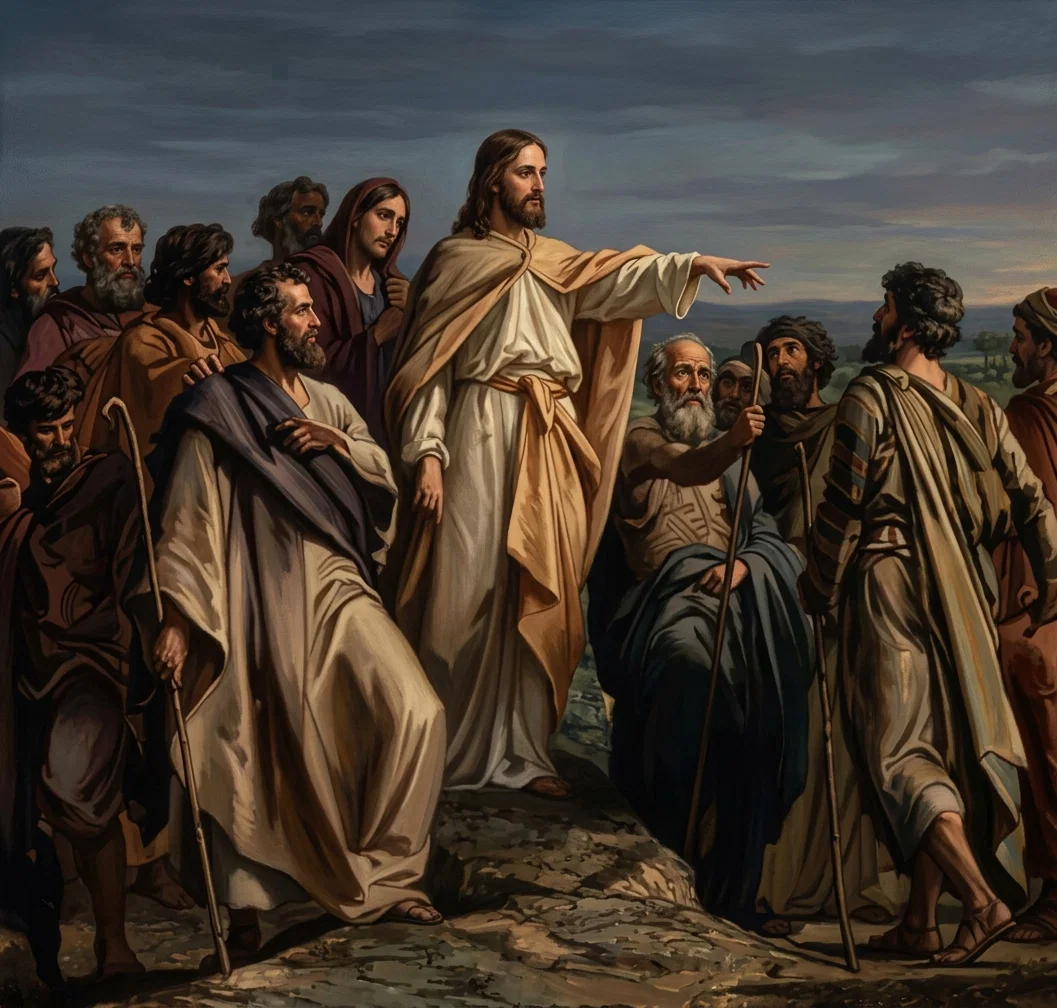
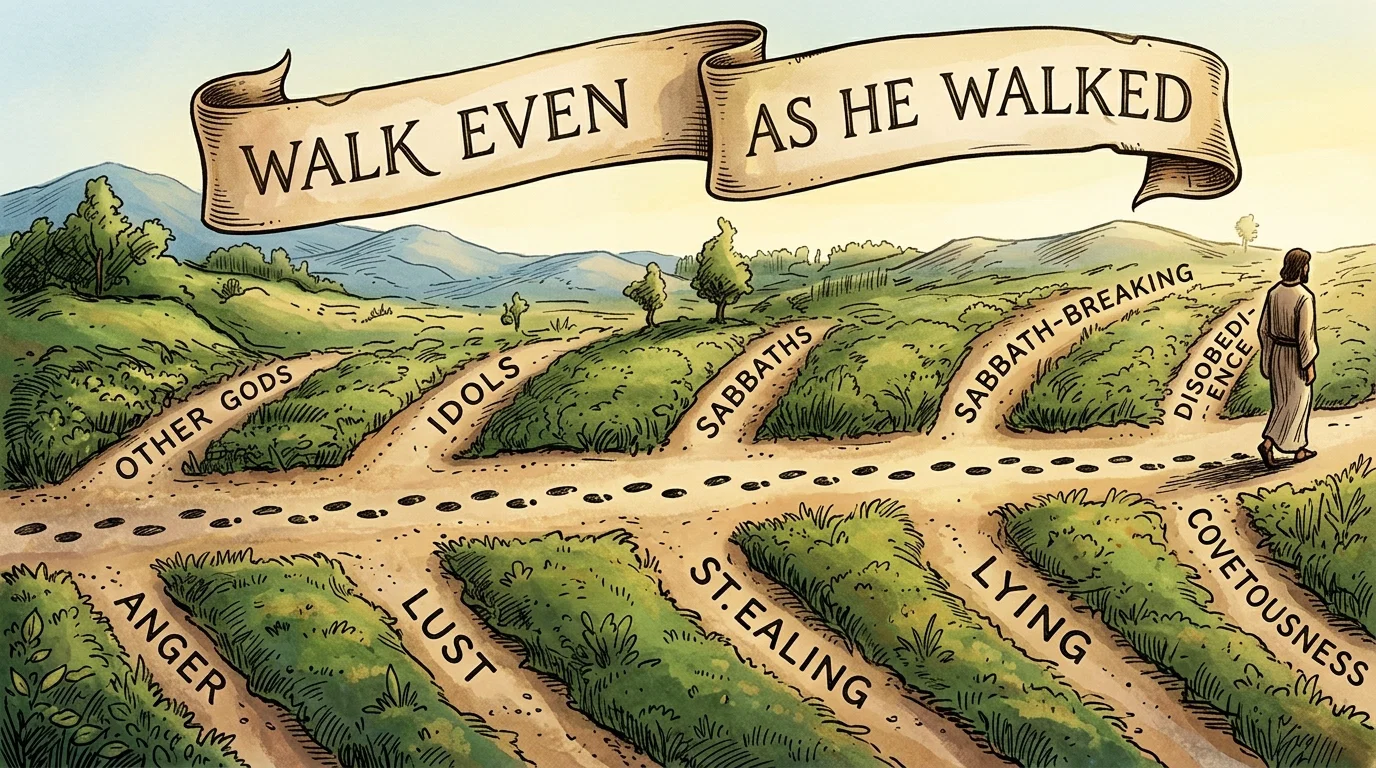
Go, preach,—walk as he walked; obey as he obeyed; serve as he served; love as he loved; live, pure, as he was pure, to the same end for which he died, that his salvation may, through our ministry, reach some poor soul with the joy of deliverance.
MRS. S. M. I. HENRY.
Sanitarium, Battle Creek, Mich.
WHO ARE THE CHRISTIANS?
By W. M. Adams
Rome.
We often hear the statement that “history repeats itself.” To this end let us study the past history of Rome. View the Iron Kingdom as it was 1,600 years ago, when paganism predominated to the extent that all church property not pagan was seized and confiscated. This was especially so prior to Constantine’s time. He came to the throne and began his eventful career upon the death of his father, Constantius Chlorus, who died July 25, A.D. 306. He saw that his “father revered the Christian God, and uniformly prospered, while the emperors who worshiped the heathen gods died a miserable death.” “Therefore,” said he, “that I may enjoy a happy life and reign, I will imitate the example of my father.” He did so, only he went farther.
At Milan, A.D. 313, he issued an edict to the effect that all confiscated church property should be restored to “the whole body of Christians” without demanding any price, and to do it without “delay or hesitancy.”—Eusebius, Ecclesiastical History, book 10, chapter 5. This imperial decree was published throughout the empire. Different sects claimed the property to be restored, for all claimed to be “the body of Christians,” according to the decree. Now in what position did these pressing claims place Constantine? He was forced to decide who were “the body of the Christians,” was he not?
In answer to a letter from Anulinus, proconsul of Africa, he says, “Hail, our most esteemed Anulinus; . . . whence it is our will, that when thou shalt receive this epistle, if any of those things belonging to the Catholic Church of the Christians, . . . these thou shalt cause immediately to be restored to their churches.”—Eusebius. Thus we see that the Catholic Church, according to the emperor, was “the body of Christians.”
United States.
Feb. 29, 1892, it was officially declared in a Supreme Court decision that “this is a Christian nation.” Why was such a decision rendered? Hear what the Supreme Court says: “This is a religious people. This is historically true. From the discovery of this continent to the present hour there is a single voice making this affirmation.” The commission to Christopher Columbus, prior to his sail westward, is from “Ferdinand and Isabella, by the grace of God, King and Queen of Castile,” and further, “It is hoped that by God’s assistance some of the continents and islands in the ocean will be discovered,” etc. Christopher Columbus was the discoverer of this country, and if what the Supreme Court has said be true, then would not this nation be the same kind of a Christian that Columbus was? Let us see. What was his religion?
Go back to his early days and we find him, when very young, entering upon a nautical life. He left the parental roof and sailed to Lisbon, the capital of Portugal. While there, as his custom was, he attended “religious services at the chapel of the Convent of All Saints.”—Discovery of America, by Washington Irving, p. 14. On page 113 (“World’s Columbian Exposition”) the record runs: “At the church, which, as a devout Catholic, he [Columbus] attended regularly, he saw and became enamored of the beauty of an Italian girl.”
Soon after he was married, he petitioned King John II., of Portugal, to furnish him with ships to cross the trackless ocean in quest of new worlds. He was denied. Then
he turned to Spain, and his request would have been ignored there had it not been for a Franciscan friar, Juan Perez, who had been confessor to Queen Isabella. Through his influence, Columbus was granted his petition by King Ferdinand V. and Queen Isabella.
William Swinton, A.M., says that Queen Isabella fitted out Columbus a fleet, thinking that “the discovery of these new realms might be the means of spreading the Christian faith here.”—United States History, p. 3, par. 10. Ferdinand V. was surnamed “The Catholic.”—The Student’s Cyclo., art. Ferdinand V. There is, too, a Spanish order of knighthood called “Order of Isabella the Catholic,” founded “as a reward of loyalty, and for the defense of the possessions of Spanish America.”—Chambers’ Encyclopedia, published by J. B. Lippincott & Co., art. Isabella the Catholic. Such were the supporters of Columbus in his aggressive enterprise.
He entered upon his voyage “with the most devout and affecting ceremonies.” He sailed from Palos, Spain, Friday, August 3, and landed Oct. 12, 1492. When he landed “he . . . formally planted the cross,” says A. S. Barnes, “and took possession of the country in the name of Ferdinand and Isabella.”—United States History, p. 23. “Since the time when Noah left the ark to set his foot upon a recovered world, a landing so sublime as that of Columbus, had never occurred. . . . He . . . erected a crucifix and took possession of the island.”—Willard’s Universal History, p. 302. “Columbus,” says A. B. Berard, “splendidly appareled, stepped on shore, and, with religious ceremonies, took possession of the country in the name of the sovereigns of Spain.”—United States History, p. 5, par. 3. Again we quote: “As the sun rose, Columbus landed; and with solemn ceremonies dedicated the new land to Christianity and civilization.”—World’s Columbian Exposition, pp. 123, 124.
When he returned to Spain, he received a royal reception. Says Washington Irving, “When Columbus landed, the multitude thronged to see and welcome him, and a grand procession was formed to the principal church.”—Discovery of America, p. 63. “He . . . told them of the beautiful land he had discovered, its brilliant birds, its tropical forests, its delightful climate, and above all its natives waiting to be converted to the Christian faith.”—Barnes U. S. History, p. 24, par. 2. When this was done, “the sanction of the pope, Alexander VI., was solicited.”—Willard’s Universal History, p. 303.
Here we have the picture before us. Columbus was a devout Catholic, and was aided by a Catholic prelate in securing favor of the Spanish sovereigns, who were surnamed THE CATHOLICS. When he landed on this continent, he took possession with religious ceremonies, and after planting the cross, he dedicated the country to Christianity.
On his return to Spain, he first went to the principal church, then in describing his wonderful discoveries he speaks of, “above all its natives waiting to be converted to the Christian [Catholic] faith.”
Now, then, if this be a “Christian nation” because the land was discovered by a Christian (Catholic) man, what church alone should possess it? What say you?
The “Christian Sabbath.”
George Washington, the father of our country, and the United States Senate, said in the treaty with Tripoli in 1797, “The government of the United States is not in any sense founded upon Christian religion.”—Article II. This7
treaty is a part of the supreme law of the land, according to Article VI. of the Constitution of the United States. Yet, notwithstanding this, the following action was taken by Congress in 1892.
A few months after the above dictum of the Supreme Court, the World’s Fair opened. Congress was asked for an appropriation of $5,000,000. While discussing the propriety of granting the request, Congress was reminded (by scores of petitions from professed Christians) that this is a “Christian nation,” consequently the Fair must be closed upon the “Christian sabbath.” An amendment providing for its closing was tacked upon the Appropriation Bill.
It is well known that there is a large body of citizens in the United States who keep the seventh day of the week (Saturday), while the majority honor the first day (Sunday) as the Sabbath. Now as Constantine was forced to decide who were the “Christians” of his empire, so the congress of the United States thought itself compelled to decide which was the “Christian Sabbath,” for this man-made “Christian nation” to keep; for they all claim to be Christians, whichever day they keep. The decision was that “the first day of the week, commonly called Sunday,” is the “Christian Sabbath.”—Congressional Record of July 10, 1892, p. 6614; and July 12, pp. 6694, 6695, 6701.
Is this not taking a step toward deciding who are the “Christians”? The pope sits in Saint Peter’s chair at Rome and decides ecclesiastical questions, while Congress sits in Washington, D. C., United States of America, as arbiter over religious controversies. What is the difference in principle?—The pope claims infallibility. Congress assumes it.
In an address to the General Assembly of Virginia soon after the Declaration of Independence was formed, we have these words:—
“It is at least impossible for the magistrate to adjudge the right of preference among the various sects that profess the Christian faith WITHOUT ERECTING A CLAIM TO INFALLIBILITY, which would lead us back to the Church of Rome.”—Baird’s Religion in America, Book III., chap. 3, par. 9–16.
Now that the “magistrate” has adjudged “the right of preference among the various sects,” what do they in principle erect?—INFALLIBILITY. Our forefathers came to this country to find “a state without a king and a church without a pope.” But where is this nation drifting? The Supreme Court decided that “this is a Christian nation.” “The decision of our federal Supreme Court is FINAL,” says the Catholic Mirror, March 2, 1895. The nation being “Christian,” and Sunday being the day generally kept, it follows that the decision of Congress was logical that Sunday is the “Christian sabbath.” This is the logical workings of the decision of the Supreme Court. Where will it end? Since that time the same sentiment has grown apace.
Is it not high time for every true Christian to arouse and say, “It is time for thee, Lord, to work; for they have made void thy law” (Ps. 119:126)? for Jesus Christ says in John 14:15, “If ye love me, keep my commandments,” and again, “If a man love me, he will keep my words” (verse 23). “Blessed is the man
that feareth the Lord, that delighteth greatly in his commandments.” Ps. 112:1. “If thou turn away thy foot from the Sabbath, from doing thy pleasure on My holy day; and call the Sabbath a delight, the holy of the Lord, honorable; and shalt honor him, not doing thine own ways, nor finding thine own pleasure, nor speaking thine own words; then shalt thou delight thyself in the Lord.” Isa. 58:13, 14. “So speak ye, and so do, as they that shall be judged by the law of liberty.” James 2:12. W. M. ADAMS.
Shelby, Iowa.
PERTINENT QUESTIONS.
ELDER A. E. PLACE was recently engaged in a discussion with Rev. C. Wesley Stephens, at Wallace, N. Y., on the proposition, “Resolved, That the Scriptures teach that the seventh-day Sabbath is abolished.” As a part of Elder Place’s argument on the negative side, he submitted the following list of questions, which all may consider with profit:—
1. If the Ten Commandments do not constitute God’s moral precepts, or rule of action, where are his moral precepts recorded?
2. Please give one scripture where God ever found any fault with any one of the Ten Commandments.
3. Give one scripture that any inspired writer of the Bible ever found any fault with any one of the Ten Commandments.
4. Give one scripture that speaks of a single sin that is not condemned by the Ten Commandments.
5. Give one scripture that says that God ever rested on any other day than the seventh day.
6. One scripture that he ever blessed any other day than the seventh day as the Sabbath.
7. One scripture that he ever sanctified, or set apart for sacred use, any other day than the seventh.
8. One scripture that he has ever removed his rest, blessing, or sanctification from the seventh day.
9. One scripture that Christ or any apostle ever blessed or sanctified any other day as the Sabbath.
10. If the fourth commandment of the ten is abolished, please give one scripture that there is any Sabbath at all in this dispensation.
It is needless to add that there was not even an attempt on the part of the first-day advocate to answer these propositions. Until they can be answered satisfactorily, the effort to sustain a first-day sabbath based on divine authority must prove utterly futile.
CHRIST’S TEACHINGS ABOUT THE SABBATH.
By W. L. Iles
First Proposition.
CHRIST taught us to keep the Sabbath, both by precept and example.
“And, behold, there was a man which had his hand withered. And they asked him, saying, Is it lawful to heal on the Sabbath days? that they might accuse him. And he said unto them, What man shall there be among you, that shall have one sheep, and if it fall into a pit on the Sabbath day, will he not lay hold on it, and lift it out? How much then is a man better than a sheep? Wherefore it is lawful to do well on the Sabbath days.” Matt. 12:10–12.
What day is referred to in this text? It can not be Sunday, for why should Jesus ask the Jews, “Is it lawful to heal?” and why should they become angry because he did heal, if it was Sunday? They then kept the seventh day, or Saturday, and do yet, when they keep any day. It is evident that what Jesus says in this text is about the seventh-day Sabbath. He recognizes the Sabbath, and the Sabbath law, by saying “It is lawful to do well on the Sabbath days.” The Sabbath law says, “The seventh day is the Sabbath,” then if we are to hear him in “all things,” will we not recognize the Sabbath, and do well on that day? Let us hear him from another text:—
“And he said unto them, The Sabbath was made for man, and not man for the Sabbath; therefore the Son of man is Lord also of the Sabbath.” Mark 2:27, 28.
What Sabbath day does Jesus refer to, and why does he claim to be Lord of it? The Sabbath referred to is the one that was made or had been made before he uttered these words. We have a record of this making of the Sabbath in Gen. 2:1–3. In this there were just four steps taken. The first step, and the foundation of the Sabbath institution, was six days’ work. The second step was God resting upon that day, and thus it became God’s rest day. The third step was the blessing of the day, by which act it became his blessed rest day. The fourth step was its sanctification. And thus it became holy, separated from the other six days, that it might be devoted to a sacred and holy use. God through Isaiah has told us how it should be used. “If thou turn away thy foot from the Sabbath, from doing thy pleasure on my holy day; and call the Sabbath a delight, the holy of the Lord, honorable; and shalt honor him, not doing thine own ways, nor finding thine own pleasure, nor speaking thine own words; then shalt thou delight thyself in the Lord.” God came down upon Mount Sinai and spake his holy law. Concerning the Sabbath he said:—
“Remember the Sabbath day, to keep it holy. Six days shalt thou labor, and do all thy work; but the seventh day is the Sabbath of the Lord thy God; in it thou shalt not do any work, thou, nor thy son, nor thy daughter, thy man servant, nor thy maid servant, nor thy cattle, nor thy stranger that is within thy gates; for in six days the Lord made heaven and earth, the sea, and all that in them is; and rested the seventh day; wherefore the Lord blessed the Sabbath day, and hallowed it.” Ex. 20:8–11.
The Sabbath that “was made” at creation, blessed and sanctified by God, enjoined in the fourth commandment of the Decalog, kept by the Jewish nation, is the one made for man, and the one of which Christ claimed to be Lord; and that was the seventh day, or Saturday. The Jews thought that they were lord of the Sabbath, and so added much to the Sabbath law. Many now think they are lord of the Sabbath, and can choose a day to suit themselves. Christ is still the Lord of the Sabbath, and so the Sabbath is the Lord’s day. Rev. 1:10.
In speaking of the destruction of Jerusalem Jesus says to his disciples, “But pray ye that your flight be not in the winter, neither on the Sabbath day.” Jesus knew Jerusalem would be destroyed, and he knew the time. Jerusalem was destroyed in A.D. 70, and at this time he recognized the existence of the Sabbath day. Jesus certainly referred to the seventh day, for no other day was kept as a Sabbath when he uttered these words. He never recognized any other day as the Sabbath. The disciples understood that he referred to the Sabbath in existence at the time he uttered these words. Some have claimed that Jesus told them to pray that their flight be not on the Sabbath day, because the Jews would have the gates of the city closed. If this were true, Jesus told them to pray that they should not flee when they could not. They were to flee from Judea, and there were no gates around Judea.
In the teachings of Christ, he recognized the Sabbath, and gave instructions how it should be kept.
“Is it lawful on the Sabbath days to do good, or to do evil? to save life, or to destroy it?” Luke 6:9.
“It is lawful to do well on the Sabbath days.” Matt. 12:12.
“Is it lawful to heal on the Sabbath day?” “Which of you shall have an ass or an ox fallen into a pit, and will not straightway pull him out on the Sabbath day?” Luke 14:3, 5.
The Jews had made the Sabbath burdensome by human restrictions and traditions. Jesus was acquainted with the Sabbath law, and knew the purpose and object of the Sabbath. He looked upon the Sabbath in its proper light, and we should look at it as he did. He always called the seventh day the Sabbath. His teachings respecting the Sabbath are all concerning that day. “Hear ye him in all things.”
Christ Kept the Seventh Day.
It is always safe to do as Jesus did. When in perplexity, it is well to inquire, “What would Jesus do under the circumstances?” Part of the world keeps the seventh day, or Saturday, and a part keeps the first day, or8Sunday. As God only blessed and sanctified one day, only one day can be the holy Sabbath, and that day must be the one Jesus kept. What day did he keep?
Jesus kept the Sabbath of the law, for sin is the transgression of the law, and Christ did no sin. If he had broken the Sabbath, he would have been a law-breaker, and thus a sinner. The law says, “The seventh day is the Sabbath.” Christ kept the law, therefore he kept the seventh day.
“And he came to Nazareth, where he had been brought up; and, as his custom was, he went into the synagog on the Sabbath day, and stood up for to read.” Luke 4:16.
“And came down to Capernaum, a city of Galilee, and taught them on the Sabbath days.” Verse 31.
It was the custom of Jesus to go into the synagog and teach the people on the Sabbath day. This day was Saturday, for it was the day kept by the Jews. Christ came to this world to set an example of righteousness and holiness. In his life appeared just what God desires to see in every Christian, and the power is provided in the Gospel. He desires that we should follow in his steps, step as he stepped, and walk as he walked. 1 Peter 2:21–24; 1 John 2:6. If he kept the Sabbath, we should do the same.
The Jews had one standard of Sabbath-keeping, and Christ had another. Their minds were corrupted with the commandments of men, and tradition. Christ had the mind of God, and therefore he had the true idea of Sabbath-keeping. But as the Jews had the wrong idea, they accused Jesus of Sabbath-breaking. “Therefore said some of the Pharisees, This man is not of God, because he keepeth not the Sabbath day.” John 9:16. This accusation was made against Jesus because he had healed a blind man on the Sabbath. Christ had proved it was lawful to heal on the Sabbath day, therefore he was not a Sabbath-breaker, only in the mind of the Jews. “And therefore did the Jews persecute Jesus, and sought to slay him, because he had done these things on the Sabbath day.” “Therefore the Jews sought the more to kill him, because he not only had broken the Sabbath, but said also that God was his Father, making himself equal with God.” John 5:16, 18.
Christ was persecuted for supposed Sabbath-breaking, while all the time he was keeping the Sabbath perfectly. As in the days of Christ, there are now two ideas of what constitute true Sabbath-keeping. One thinks he is keeping the Sabbath by resting upon the first day of the week, and working upon the seventh. Others believe it is Sabbath-keeping to observe the seventh day, and work upon the first. Those who keep the true Sabbath may expect to be persecuted the same as Jesus was. Persecution is always wrong, and it may be stated as a general truth that he who persecutes is in the wrong.
Second Proposition.
The teachings of Christ and his actions were in harmony. “Thou therefore which teachest another, teachest thou not thyself? thou that preachest a man should not steal, dost thou steal? thou that sayest a man should not commit adultery, dost thou commit adultery? thou that abhorrest idols, dost thou commit sacrilege?” Rom. 2:21, 22.
Christ would be a poor example for us if he did not obey his own teachings. The above proposition is self-evident. Christ never said to any one, “Do as I say, and not as I do.”
All agree that Christ kept the seventh day, or Saturday. His actions were in harmony with his teachings. Therefore Jesus taught the observance of the seventh day, for he kept it. “Hear ye him.” In our next we will consider the teachings of the apostles relative to the law of God. W. L. Iles.
THE CHURCH OR THE YOUNG PEOPLE?
By W. N. G.
The various young people's societies that have been fostered in the churches are manifesting such a spirit of self-importance and independence that many of the older members of the churches are becoming alarmed for the prospective results. The Examiner (Baptist) gives the following correspondence showing a prevailing custom which, it says, is deplored by the pastors, but which they are “powerless to remedy”:—
“Preaching service in the morning, followed by Sunday-school. In the evening, at 6:30 or 7, Christian Endeavor meeting for one hour, preceding the regular social meeting of the church in the same room. Endeavorers—some Baptist, others Methodist, and still others Congregationalist—straggling out at the close of their own meeting, and middle-aged and elderly folks coming in. Few, if any, young church members at the week-day evening church appointments.”
This same correspondent goes on to say that these young people show a great lack of interest in the important appointments of the church, but are more absorbed in their own appointments, which are often managed by persons not members of the Baptist Church at all. The same complaint is made by ministers of other churches, and often prominent persons in these societies, which detract so much from the regular work of the church, are not members of the church at all. The trouble is that these young people's societies have been encouraged and9puffed by the very ones who complain of their headiness and high-mindedness (2 Tim. 3:4) until they have been made to feel that they are the all-important factor of the church.
When these things are spoken of there are apologists for them right among the complainants. For instance, the Examiner itself admits that such a condition is an “anomaly;” that “it is a condition that ought not to exist.” But it apologizes by saying, “We believe that the spirit both of the Christian Endeavor Society and the Baptist Young People's Union is absolutely opposed to it.” If that be so, how can such things prevail? The apology is an admission that a sinister spirit is at the head controlling the masses who know better, and the masses follow in the wake of the evil influence.
The same principle is manifested in the attempted manipulation of the Christian Endeavor Society by a certain class of religious politicians. There is a large number who disclaim any desire to turn the association into a political reform society, and are ready to affirm that such is not the spirit of Christian endeavor; but, as in the case of the pastors of churches previously alluded to, they are “powerless to remedy” it. So they fall right in, and, instead of protesting, they keep quiet and thus give the illogical movement their quasi indorsement. It is the action that counts in such matters, and not the professed spirit. It is truly an alarming condition to see pastors and older members of the churches falling into line and following after an acknowledged evil, because they have placed themselves in a position of subserviency to the young people, many of whom are not members of the church. No wonder the apostle says that “in the last days perilous times shall come.” See 2 Tim. 3:1-5. Is the church to be superseded by the young people's societies? W. N. G.