Mr. WHITE, of Marsovan, reports a visit made by Miss Gage and himself to the city of Zille, the first made by any of the missionaries since the massacres of a year ago:—
“We lodged in the building used as church, school, and parsonage, unpretentious in appearance, but the most inviting spot in the unkempt city. The inquiries of the young preacher drew attention to the fact that each member of his class of six, who graduated from the seminary two years ago, is at his work as a preacher, usefully working, we trust.
“We had a constant stream of callers, when we were not making calls ourselves. Three candidates for church-membership were examined, one a young man, about whom one item of testimony was that at the time of the massacre, when another young man was dragged out of the same house and killed, this one begged his mother not to save his life at the expense of a lie; the second, an elderly woman, had been drawn by the matchless invitation, ‘Come unto Me, all ye that labor and are heavy-laden,’ and her faith was simple and touching; the third, a sister of the preacher, and partly educated in our girls’ school, had grown into a Christian life.
I preached at the usual services to audiences of nearly 400 and 300, the usual maximum being 50. The morning audience included an average of one from every Armenian house in the city. At this service the Lord’s Supper was celebrated. On Monday Miss Gage had a meeting with 100 women and girls. Such audiences indicate great friendliness and religious inquiry.
“The pall of the massacre hung over everything, for Zille had the worst massacre of the six in our field. Three hundred houses out of 400, and 200 shops were stripped, and about 150 men and boys killed. The alternative of Islam was freely offered, and two were found to accept. Two members of our church were slain. Seven out of ten Protestant houses were picked clean as a bone, and all the Protestant shops. The other three houses were not touched, simply because they were too poor already to invite plunder. The church was spared, partly because there was a vague idea that it was ‘English’ property, principally because of the personal friendship of Turkish neighbors for the preacher and his family. Except for their bare houses, our Protestant friends are practically worse than penniless, for the debts that some merchants carried in more prosperous times, are more than enough to swallow up the pickings and leavings of property, with which the government requires them to reopen their shops. Their business integrity in this catastrophe has won the admiration of all, and honored their evangelical faith.
“Considerable sums have been wisely distributed in relief by the Evangelical Church Committee, sums intrusted to missionary care. We have also been able to provide funds, with which thirty-one looms are now running, turning out gingham, for which there is a ready sale, at or above cost. We were able to arrange for doubling the capacity of this little plant, which will be a great boon to the poor, as almost every house has its loom. We also gathered up and brought home with us six orphan girls, and one boy about nine years of age, who will be cared for on our premises, and attend school either here or at the Protestant church in the city.”—Missionary Herald.
GO ON YOUR MISSION.
By A. R. Wilcox
[Written on the departure of dear friends and relatives to their field of missionary labor in South Africa.]
Go on your mission; Jesus calls
To Afric’s bright and sunny shore;
Across the ocean’s trackless wave
May blessings follow evermore.
And let us hope, as time may roll
With swift and changeful course along,
That we may meet some glad bright day
And join again in happy song.
To leave the dearest friends of earth
May add a sorrow to each heart;
The welcome day will soon appear
When loved and lost will never part.
A. R. WILCOX.
Athens, Vt.
WORK WHERE YOU ARE.
By Minnesota Worker
It is very common to hear people say: “If I were in different circumstances, I could do so much more for the cause. If I could only go here or go there—if only this obstacle or that were removed, I might do something.” The fact is, we can do what we can, wherever we are, and we should do no more than that anywhere. The missionary spirit shows itself as truly in the home as in a foreign land, and whoever can find nothing to do where he is, would make sorry work in a broader field. “It is not where we are, but what we are” that the angels record. If we think that a change of circumstances would improve our spiritual condition, let us consider whether a change of heart is not needed more. A good text for us to think of sometimes may be found in Jer. 2:36.—Minnesota Worker.
EDUCATION THAT EDUCATES.
Much is being said by literary critics, editors, and business men concerning present educational methods. Such questions as, “Modern Education; does it educate in the broadest and most literal sense of the term?” are being discussed pro and con, both publicly and privately, by university presidents and leading educators.
In this connection we wish to introduce to our readers “Christian Education,” a work of 255 pages, treating the subject in the light of the Scriptures. Such subjects as, Proper School Age of Children; Object of Education; Most Essential Part of Education; The Purpose, Standard, and Importance of Our Colleges; Influence of a Well-ordered Family; How to Choose a Home; Individuality to be Preserved; Literary Societies; Cultivation and Abuse of the Voice, etc., etc., are given careful consideration, together with scores of others equally necessary and important. Principles will be found in this book applying to every phase of the educational problem. Cloth, 50 cents.
PACIFIC PRESS PUB. CO., Oakland, Cal.
New York, N. Y. Kansas City, Mo.
SOME OF THE MAGAZINES.
THERE is no study for the children, to expand, purify, and strengthen the mind and heart, like the study of the Word and works of God. For that reason we welcome every publication which will help on in this direction. Among some of the later ones is the magazine Birds, published by the Nature Study Publishing Company, Chicago. Illustrated by colored photography; 15 cents a copy, $1.50 a year, monthly. Vol. 2, No. 1, July, 1897, is before us. It contains 9 colored illustrations of various birds and fowls in as near their natural colors as it would be possible to print them, except by so expensive a process as to put the cost out of the reach of all. Birds brings our feathered friends to us in beautiful picture-books, with accurate descriptions of the various birds illustrated. The issue before us contains colored illustrations of the American bald eagle, the ring plover, the mallard duck, American avocet, canvas-back duck, the wood duck (a beauty), the snake bird, American woodcock, white-winged scoter, and the snowy heron, besides good reading matter. An excellent book for the young.
Good Health for August is up to the standard of this excellent journal. The leading article is by Dr. J. H. Kellogg, on “The Nobility of Health.” An article, copiously illustrated, follows, on the Battle Creek Sanitarium, “Seen through the Eyes of a Visitor,” by Mrs. Marion B. Baxter. Other articles on various phases of health, disease, reform, and home life, by such experienced workers as Dr. Kate Lindsay and Mrs. S. M. I. Henry, are found in this number. Price, $1.00 a year, Battle Creek, Mich.
A BRIGHT little magazine, especially adapted to home and the healthfulness of its occupants, is the Pacific Health Journal. The August number contains, in its two departments, of General and Our Home, more than a score of articles, both interesting and useful. The Journal could, with profit to the people who read it, visit every home on the Pacific Coast monthly. Price, only 5 cents a copy, 50 cents a year. St. Helena, Cal.
McClure’s Magazine for September will contain a thoroughly practical and useful article on “Life in the Klondike Gold Fields.” It embodies the personal observations of a pioneer who has lately come out, bringing a fair fortune with him, and it tells how the miners enter and work their claims, how they live, how they govern themselves, what kind of men they are, and how they pass their leisure time. It tells also what is the best way to the Klondike, what the best equipment for the journey and a year’s residence there, and what promise of prosperity the country actually offers. The article will be fully illustrated from recent photographs.
CARD OF THANKS AND INSTRUCTIONS.
By J. G. Excell
We wish to express our thanks for the kindness of the different tract societies and individuals in responding to our request for papers. We are glad to see that others far distant from us are interested in the work here. Let the good work go on. Send Signs, Little Friends, Instructors, and Sentinels.
We note that some have sent papers by express and freight which could have come cheaper by mail. Also that some have paid too much postage. We therefore give the following rates: On Signs by mail, allowing for a common wrapper, 2 papers 1 cent, 12 for 5 cents, 25 for 10 cents, 52 for 20 cents, 78 for 30 cents, 104 for 40 cents, etc. The rate is 4 ounces for 1 cent, or 4 cents per pound. No papers should be sent without prepaying postage, as otherwise it must be paid by us. All papers are at the above rate except when sent by publishers or news dealers.
Papers sent by freight should be marked J. G. Excell, Pittsburg, Pa., not giving street or number, and must be prepaid. Notify me by mail, inclosing bill of lading and 25 cents (stamps) for drayage. Otherwise send by mail. We can not pay drayage or postage. Many papers have been sent us without sufficient postage. Do not send by freight or express unless you have a large quantity. Thanking you for past favors and requesting a continuance of the same, I remain, yours for the cause.
J. G. EXCELL.
211 Dinwiddie Street, Pittsburg, Pa.
CATHOLIC TESTIMONY.
The following tracts and leaflets are direct quotations from those high in authority in the Church of Rome, and can be relied upon as representative testimony.
From Sabbath to Sunday contains, among other important testimony, Father Enright’s $1,000 challenge for Bible proof of Sunday sacredness. ½ cent.
Who Changed the Sabbath? This question is disposed of by adducing evidences from Catholic sources. Price, 1½ cents.
Christian Sabbath. A reprinted article from the Catholic Mirror, which paper is the organ of the Catholic Church in the United States. It puts forth the question, “Why do Protestants keep Sunday?” Price, 2 cents.
A Challenge to Protestants. A pithy little leaflet quoting some strong words from a representative Catholic priest to the Protestant world. 25 cents per 100.
Rome’s Arrangement of Sabbath-breakers. This is a report of a sermon delivered by Father O’Keefe, a Baltimore Catholic priest, in which two facts are set forth and proved from a scriptural standpoint: (1) That the only Bible Sabbath is the seventh day, or Saturday; (2) that for first-day sacredness or observance there is no Bible warrant. Sixteen well-filled pages. Price, 1 cent.
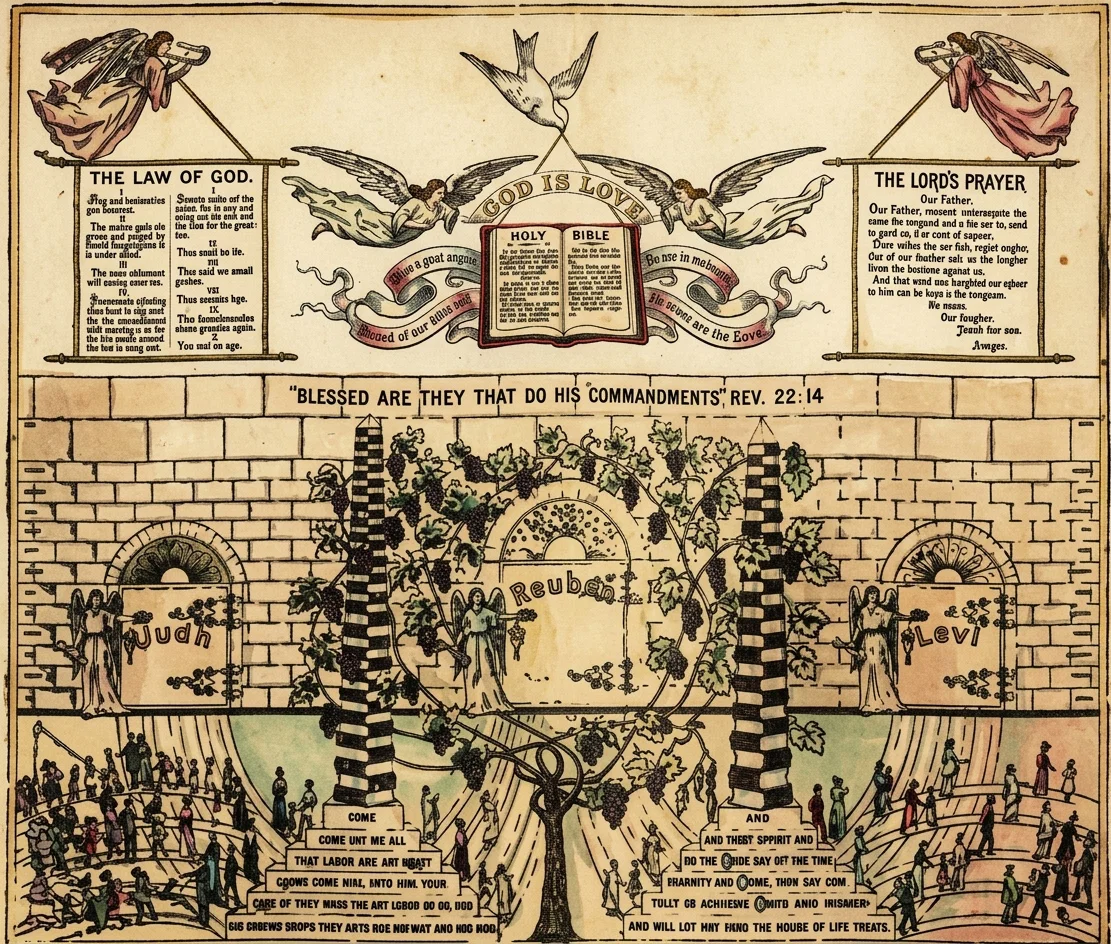
The Law of God as Changed by the Papacy. A chart 5½x11 inches, printed on thin paper, containing the law of God as changed by the Catholic power. This is flanked by papal assumptions and admissions, giving the whole history of the change of the Sabbath in a nutshell. A citation is made from each quotation to its original source, making it a document of especial importance. 50 cents per 100.
PACIFIC PRESS PUB. CO., Oakland, Cal.
New York City, N. Y. Kansas City, Mo.
SIGNS OF THE TIMES CLUBBING LIST.
By Editor
We have made arrangements with the publishers of the following journals whereby we can furnish the publications named, with the SIGNS OF THE TIMES, at the exceedingly low figures given in the last column, when all orders are sent direct to SIGNS OF THE TIMES, Oakland, Cal.
SIGNS OF THE TIMES (to new or old subscribers) and:—
Journal
Regular price of the two papers
Our clubbing price
Review and Herald (new subscribers only)
$2 50
$2 00
American Sentinel
$2 00
$1 50
Good Health
$2 00
$1 50
Youth’s Instructor
$1 75
$1 50
Our Little Friend
$1 50
$1 25
Pacific Health Journal
$1 50
$1 25
Review of Reviews
$3 50
$3 00
Missionary Review
$3 50
$2 90
The Literary Digest
$3 50
$3 40
The New York Voice (Prohibition)
$2 50
$2 20
N. B.—All communications concerning our offer as above, and all orders, must be sent direct to SIGNS OF THE TIMES, Oakland, Cal.
A REMARKABLE OFFER.
BRETHREN WILD and HILLIARD are now offering to send their beautiful chart, “The Two Ways,” and the key thereto, to every new subscriber to this paper, the SIGNS OF THE TIMES, for one year at one dollar. Address, Wild & Hilliard, 67 Kendall Street, Battle Creek, Mich.
THE SPIRIT OF GOD
By Ellet Joseph Waggoner
ITS OFFICES AND MANIFESTATIONS TO THE END OF THE CHRISTIAN ERA.
By Eld. J. H. Waggoner.
This is a brief but comprehensive argument on the solemn and important subject of the Spirit of God. Its chapters embrace the following heads: The Holy Spirit of Promise; The Power from on High; Circumcision of the Heart; The Unity of the Faith; The Law and the Testimony; Try the Spirits; The Great Commission; Gifts in the Reformation; In the Present Century; Spirit of Prophecy Restored. These are subjects of vital importance to all and especially to those who are looking for the return of their Lord. 144 pp. Price, 15 cents.
Address. PACIFIC PRESS Oakland, Cal.
CHRIST, OUR ADVOCATE
His Ministry in the True Tabernacle
An up-to-date pamphlet on the work of Christ in the sanctuary in Heaven. Bible Students' Library No. 128. Fully illustrated. Paper covers. Price, 10 cents.
42 “But God turned, and gave them up to serve the host of heaven; as it is written in the book of the prophets, Did ye offer unto me slain beasts and sacrifices Forty years in the wilderness, O house of Israel?”
43 And ye took up the tabernacle of Moloch, And the star of the god Rephan, The figures which ye made to worship them: And I will carry you away beyond Babylon.
44 Our fathers had the tabernacle of the testimony in the wilderness, even as he appointed who spake unto Moses, that he should make it according to the figure that he had seen.
45 Which also our fathers, in their turn, brought in with Joshua when they entered on the possessions of the nations, which God thrust out before the face of our fathers, unto the days of
46 David; who found favor in the sight of God, and asked to find
47 a habitation for the God of Jacob. But Solomon built him a
48 house. Howbeit the Most High dwelleth not in houses made with hands; as saith the prophet,
49 The heaven is my throne, And the earth the footstool of my feet; What manner of house will ye build me? saith the Lord; Or what is the place of my rest?
50 Did not my hand make all these things?
51 “Ye stiff-necked and uncircumcised in heart and ears, ye do always resist the Holy Ghost: as your fathers did, so do
52 ye. Which of the prophets did not your fathers persecute? and they killed them which showed before of the coming of the Righteous One; of whom ye have now become betrayers and
53 murderers; ye who received the law as it was ordained by angels, and kept it not.
54 “Now when they heard these things, they were cut to the
55 heart, and they gnashed on him with their teeth. But he, being full of the Holy Ghost, looked up steadfastly into heaven, and saw the glory of God, and Jesus standing on the right hand
56 of God, and said, Behold, I see the heavens opened, and the Son of man standing on the right hand of God. But they cried
57 out with a loud voice, and stopped their ears, and rushed upon
58 him with one accord; and they cast him out of the city, and stoned him; and the witnesses laid down their garments at the
59 feet of a young man named Saul. And they stoned Stephen, calling upon the Lord, and saying, Lord Jesus, receive my
60 spirit. And he kneeled down, and cried with a loud voice, Lord, lay not this sin to their charge. And when he had said this, he fell asleep. And Saul was consenting unto his death.
1 And there arose on that day a great persecution against the church which was in Jerusalem; and they were all scattered abroad throughout the regions of Judea and Samaria, except the
2 apostles. And devout men buried Stephen, and made great lamentation over him. But Saul laid waste the church, entering into every house, and hailing men and women committed them to prison.
4 “They therefore that were scattered abroad went about preaching the Word.”
QUESTIONS.
1. To what point in Stephen’s rehearsal of the history of Israel did we come in our last lesson?
It will be observed that Stephen abruptly closes his recital of Jewish history and experience, with a reference to the tabernacle and temple and the lesson drawn from them, found in verses 44–50. The sudden change in the subject, and the language used, show that he discerned the fact that they were convicted of the truth, but were resisting the Spirit and rejecting the light which was shining upon them. See verses 51–53.
The Sunday School
International Series.
Lesson XII.—Sunday, September 19, 1897.
Paul's Address to the Ephesian Elders.
Note.—This lesson section includes the whole of chapter 20, and the study should be connected with a review of lesson 9, in order to connect the incidents of the two chapters. The incidents of this lesson occurred during the latter part of the third missionary journey, while Paul was carrying to Jerusalem the collection for the poor of the church at that place. The student should trace out Paul's journey from the time he left Ephesus till he reaches Miletus. At that time Nero, then 21 years of age, was emperor of Rome, and Felix was governor of Judea.
22 “And now, behold, I go bound in the spirit unto Jerusalem, not knowing the things that shall befall me there; 23 save that the Holy Ghost testifieth unto me in every city, saying that bonds and afflictions abide me. 24 But I hold not my life of any account, as dear unto myself, so that I may accomplish my course, and the ministry, which I received from the Lord Jesus, to testify the Gospel of the grace of God. 25 And now, behold, I know that ye all, among whom I went about preaching the kingdom, shall see my face no more. 26 Wherefore I testify unto you this day, that I am pure from the blood of all men. 27 For I shrank not from declaring unto you the whole counsel of God. 28 Take heed therefore unto yourselves, and to all the flock, in the which the Holy Ghost hath made you bishops, to feed the church of God, which he purchased with his own blood. 29 I know that after my departing grievous wolves shall enter in among you, not sparing the flock; 30 and from among your own selves shall men arise, speaking perverse things, to draw away the disciples after them. 31 Wherefore watch ye, remembering that by the space of three years I ceased not to admonish every one night and day with tears. 32 And now I commend you to God, and to the Word of his grace, which is able to build you up, and to give you an inheritance among all them that are sanctified. 33 I coveted no man's silver, or gold, or apparel. 34 Ye yourselves know that these hands ministered unto my necessities, and to them that were with me. 35 In all things I gave you an example, how that so laboring ye ought to help the weak, and to remember the words of the Lord Jesus, how he himself said, It is more blessed to give than to receive.”
Golden Text.—“Remember the words of the Lord Jesus, how he said, It is more blessed to give than to receive.” Acts 20:35.
Suggestive Questions.
(1) In what way was Paul going to Jerusalem? Verse 22. (2) Of what was he ignorant? Same verse. (3) What information was he constantly receiving from the Holy Spirit? Verse 23. (4) What effect did these things have upon Paul's course? Verse 24. (5) How did he consider his life as compared with the work he was given to do? Same verse. Note 1. (6) Of whose Gospel was Paul a minister? Same verse. Note 2. (7) What knowledge was given Paul in regard to the future? Verse 25. (8) What did Paul declare in regard to the faithfulness of his work? Verse 26. (9) If any of them should be lost, what ground had Paul for claiming to be innocent of their blood? Verse 27. Note 3. (10) What admonition does he give the elders? Verse 28. (11) What office did they hold in the church? Same verse. (12) What was to be the work of such officers? Same verse. Note 4. (13) What could Paul see in the future life and struggles of the church? Verse 29. (14) What unholy work would be engaged in by some of those to whom Paul was then speaking? Verse 30. Note 5. (15) What charge did he give them? Verse 31. (16) What faithful work of his did he wish them to remember? Same verse. (17) To whom and what did he commend them? Verse 32. (18) What power was there in that Word? Same verse. (19) Of what did Paul declare his innocence? Verse 33. (20) What had Paul done besides laboring for his own support? Verse 34. (21) Why had Paul done this? Verse 35. (22) What words of Jesus did he wish them to remember? Same verse. Note 6.
Notes.
1. I hold not my life of any account.—Paul did not consider his life or his ease as anything if either stood in the way of the accomplishment of the work which the Lord had committed to his hands. Paul's object was to finish his “course,” his race, with joy. Four years later he expresses the same thought in more forcible language. Phil. 3:13, 14. Several years later we hear him saying, “I have fought a good fight, I have finished my course, I have kept the faith.” 2 Tim. 4:7, 8. How many others, following Paul's example (who followed Christ's), counted not their lives dear! Witness Luther, Tyndale, Knox, Huss, Jerome, and the millions of martyrs who sealed their testimony with their own blood.
2. Which I received from the Lord Jesus.—It was not a Pauline theology which Paul was teaching, as the epistles of Paul are frequently styled at the present day, an error which is likewise designating the epistles of the other evangelists as the theology of those writers. The theology taught by Paul was not his. It was the truth of God, spoken by Christ through Paul. There is a Pauline (or rather a Sauline) theology; but it was seen in his words and works before his name was changed. What Paul does not claim for himself, but positively disavows, theologians have no right to thrust upon him.
3. For I shrank not.—“No fear of unpopularity, no anxiety to say only the smooth and pleasant things, had kept him from declaring all of God's truth; not only the pleasant and hopeful, but the terrible; not only the promises of God, but his threatenings; not only his pleasure in virtue, but the blackness and ugliness of their sins in his sight.”—Peloubet.
4. To feed the church.—And the food which they as under-shepherds were to give to the flock for its spiritual life, they must themselves receive from Christ, the Great Shepherd. It was food of their own providing that caused the grievances in the church of which Paul speaks in verse 30. John Ruskin, in speaking of the work of the bishops, well says: “Nearly all the evils in the church have arisen from the bishops desiring power more than light. They want authority, not outlook. It is the king's office to rule. The bishop's office is to oversee the flock, to number it, sheep by sheep, to be ready always to give full account of it.”
5. Speaking perverse things.—“Truths distorted from their true meaning, as objects are in an imperfect or curved mirror; caricatures of truth. The most dangerous errors are truths distorted and perverted: truth enough to make some believe them, and error enough to injure or ruin those who do believe. . . . Even in the New Testament writings no fewer than six of the pioneers of these fatal teachers of error are mentioned as belonging to Ephesus.”—Schaff.
6. How he said.—These words are not found in the Gospels, and are not recorded elsewhere in the sacred writings; but this blessed truth which Christ spoke to the people of those days he has caused to be recorded for our benefit. Schaff says that “outside the inspired memories of the Gospels we possess the record of some twenty sayings of Christ which have floated down to us.” The Lord himself in speaking this truth speaks from experience. He had given everything for man, and knew the blessing, as he can not know who gives less than himself and his all.
The Gospel Primer
Over 300,000 Copies Already Sold
Published in GERMAN SWEDISH DANISH PORTUGUESE SPANISH
SIMPLE Gospel truths told to youthful readers in connection with the learning of the alphabet. Thus the mind receives the beautiful thoughts of the Scripture while learning to read.
Every chapter is an outline of a subject which may be enlarged upon by the parent or teacher.
Just the book to assist in guiding the little feet in Gospel paths.
Very Fully Illustrated
And Neatly Bound, as follows:—
Cloth, embossed in ink . . . . . 50c
Board Covers, Cloth back . . . . . 35c
Heavy Board, in four colors . . . . . 25c