HOW TO STUDY THESE LESSONS.—(1) Read the lesson story; (2) try to recall or find scriptures in proof of each statement; (3) study the texts; (4) see how many missing links you can supply; (5) give the lesson to some one else. You will keep only what you give away.
Before Jesus went back to heaven, he told the disciples that he was going. He also told them of the fall of Jerusalem. They supposed that these two things would come at the same time. They wanted to know what sign would be given of the coming of Jesus, and of the end of the world.
As an answer, Jesus gave them a view of some of the great events from that time to the end of the world. He told them to watch, and that when they saw an army surround Jerusalem, they might know that the time of its overthrow had come. Then they were to flee out of it.
He then spoke of a terrible time of trouble that would come to God’s people. He instructed those who believed to read and understand the book of Daniel. In Daniel we learn that this time of trouble would last for 1260 years. But if persecution should rage all these years, none of God’s children would be left alive; therefore God would shorten the trouble.
After the trouble ceased, but before the days were over, the sun would be darkened, the moon also; and later the stars would fall. Some of the people who saw the last of these signs, would also see the Saviour come.
All these signs have been seen.
In A. D. 70 the Roman army surrounded the city of Jerusalem; the disciples saw it, and ran away. None of them perished in the ruin of the city.
The 1260 years of the Dark Ages began in 538, and ended in 1798.
Since the Reformation, the persecution grew less and less, and had wholly stopped in 1773.
Between 1773 and 1798 the sun and the moon were darkened. This was on May 19, 1780.
The stars fell on Nov. 13, 1833. The people who saw them fall will not all be dead when Jesus comes.
When all these things were seen, the disciples were to know that he is near. Verse 33, margin.
The generation that sees these signs will not pass away till he comes. Verse 34.
You
I want to ask you a question: How do you study these lessons? Do you study them according to the instruction given at the head of each lesson? How I would like to “look in” to each study-room, and see how you study! The lesson in the INSTRUCTOR is supposed to be only an outline to help us all to keep together.
Are you learning to study the Bible itself?
There is one more question in my mind. What do you do with the lesson after it is studied? Do you give it away? I have not noticed any report on this point.
Will You?
If you have not given the lessons to some one, will you begin now?
There is so much to do. So little time to do it. So few who will help.
Jesus expects you to help somebody. Don’t DISAPPOINT HIM.
Is there some young person near you, who does not have the lesson? Begin with your little brother or sister if you can find no one else.
You will try it, won’t you?
“His Glorious Appearing”
Do you have the little book called “His Glorious Appearing”? If not, you ought to get it. When you have read it, sell it to some one. Most of you could sell from five to twenty-five copies of this book among your neighbors. Jesus will give you success, if you ask him, and then work for it.
Report your experience.
Matthew, Mark, and Luke have each given us the story of the disciples’ questions, and the answer of Jesus. We need all three of these accounts, in order to understand the whole subject. So be sure to study together Matthew 24, Mark 13, and Luke 21.
The disciples asked a threefold question. Jesus gave a threefold answer. Let us study till we can clearly show the answer to each question.
The destruction of Jerusalem was a type of the destruction of the world. This was one reason that the Saviour linked the two together.
The disciples were told constantly to pray that they should not be compelled to flee in the winter or on the Sabbath. This would keep them on the watch for the sign of Jerusalem’s downfall. Their prayers were answered. They saw the sign, and fled. Not one Christian perished in the awful ruin that came upon the city. Not one Christian will perish in the ruin of the world. But the only safety is in constant prayer and watchfulness.
We would not know from the answer of Jesus that the days of trouble were to last 1260 years. But he told us to read and understand the prophet Daniel. In Daniel’s prophecy we learn all about this time of trouble. We shall study this part of the subject more fully in another lesson.
Every part of the wonderful book of Daniel is to be understood by the people of God, in these last days. I hope you are earnestly studying the Sabbath-school lessons in this book. But no one but the wise can understand the book. Dan. 12: 10. What does the margin of Dan. 12: 3 mean to you?
Notice in particular how wonderfully the Saviour has located the special signs of his coming. Matthew says, “Immediately after the tribulation of those days shall the sun be darkened.” Verse 29. Mark tells us: “But in those days after that tribulation, the sun shall be darkened.” Verse 24. So we know that the sun must be darkened before 1798, else it would not be “in” “those” days. It can not be until after 1773, because the persecution did not stop till about that time, and it must be “after that” tribulation.
In “His Glorious Appearing” you will find an account of the darkening of the sun and moon, and of the falling of the stars. This little book ought to be sold now by the tens of thousands. It is present truth indeed.
The last sign that Jesus gave was the falling of the stars. In Rev. 6: 13 John tells how they fell.
It has been nearly sixty-nine years since the stars fell. Nearly all the people who saw them fall are dead. All the old people who lived then, all the middle-aged people, and nearly all the young people have passed away. Only a few, of those who were children then, are living. And they are all over seventy years old. They are passing away every day. But they will not all die till Jesus comes. He said, “This generation shall not pass,” and it will not. Men may try to explain these words; but they mean what they say, and they will not fail. The un-“faith”-ful servant may talk of delay. But Jesus will keep his word, and “there shall be delay no longer.”
There is only one reason why Jesus has not come before now. You will find it in Matt. 24: 14. The “gospel of the kingdom” must first go to “all the world.” He will not come till this is done. Therefore this is our battle-cry, “The Advent Message to all the World in This Generation.”
What are you doing to help in this glorious work, to hasten the coming of our King?
LUTHER WARREN.
400 West 57th Street, New York City.
Three Times
Will not be too often to read the personal letter that Brother Warren has written to you at the close of the Bible study on Jesus’ Second Coming, given on this page. Read it carefully, with a heart open to its suggestions, and a determination to do something in the work that will be accomplished in the earth before he comes. Take up the work in some simple way right where you are, and God will give results. Then tell your experience for the encouragement of others.
“It Can’t Equal Ours”
In speaking of the wonderful adaptation of the Bible to translation, the author of the book “Wonderful” says: “A Zulu Kafir once said to me, ‘White men are especially favored. They have railroads, telegraphs, breech-loading rifles, fine clothes, wisdom, and wealth; but they lack one advantage which we enjoy; namely, the gospel in the Zulu language.’ I replied, ‘Our translation is splendid; it is next to the Greek.’ The Zulu shook his head, and said, ‘It can’t equal ours.’ I thought no more of it until a Malay said to me: ‘The Malay language is the most eloquent in the world. Look at our translation of the Scriptures.’ This set me thinking. Now, Chinese is one of the most horrible languages conceivable—I can not speak it, but I am quoting the opinion of experts. A Chinese Christian to my face deplored the privation that Europeans endure in not having access to the Chinese version of the Scriptures. This gave me further light. I am now convinced that Scripture is unique, in that it will bear translation into any language, without losing one item of its force. The Bible seems to be the only book that is capable of being thoroughly rendered into any and all languages.”
Nettie's Free-Will Offering
By Louise M. Stormonth
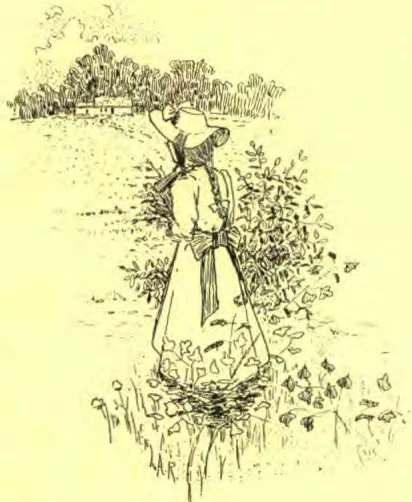
“IT WAS EARLY SPRINGTIME”
“And now, children,” said Mrs. Randolph, after she had explained all about the Feast of Tabernacles to her Sabbath-school class, “it is proposed that our little school shall set apart some day next autumn, and bring an offering to God of the fruit of our toil—something we have grown in the field or garden, or something our hands have made; or if we can sell the product of our efforts, to bring the price, and give that.” Then she gave some suggestions as to what the children could best grow and make for sale.
The idea that she could bring a gift that would be acceptable to the great God who had made all things “by the word of his power,” brought a new and sacred joy to Nettie Hamilton.
What would it be? It was early springtime, and her teacher had spoken of their raising flowers and vegetables. This seemed promising to Nettie, and more as the people did in olden times than some other ways mentioned.
Nettie was thirteen years old, and lived in the mountainous region of Tennessee. Since her mother's death a few months before, she and her father had lived together in a log cabin on a few acres which he had cleared of the heavy forest, and was farming in a very primitive way. Mrs. Hamilton had been ailing all the year before her death; and Nettie, who was strong and willing, had cared for her, and learned to keep the little home clean, and to prepare their simple meals; and although she now was often sad and lonely, she found little time to nurse her grief. She must make their home a cheerful place for her father, who was a quiet and at times a surly man. The latter mood Nettie found to be connected with a large black bottle which always stood in a corner of the cupboard, and which she had been forbidden to touch.
A tent had been pitched in their neighborhood the year before, and Mr. Hamilton had accompanied his wife and little daughter to the meetings held there every night. The ministers had since gone, leaving a few earnest converts, who met each week to study the word; and although her father appreciated Nettie's faithfulness, and was seldom unkind to her, he did not go with her to Sabbath-school; and when she told him of the ingathering offering, and her wish to raise a missionary garden, he said, “We're too poor, child. It's all I can do to get a living out of this bit of land with my hoe. I haven't a foot of ground to spare for stuff to give away.”
This was discouraging indeed, and Nettie quietly walked across the road, and through a narrow strip of timber to the edge of a little clearing, where she often went to open her heart to God.
Jessie Gray intended to crochet some lace for sale, but Nettie could not do needlework. Sarah Carson was to set a hen; but Nettie had none to set, and could not ask her father now. She was too far from town to sell papers. What could she do? She knew that the only thing was to ask the guidance of her Heavenly Father; so she knelt beside a log, and cast her burden on the Lord.
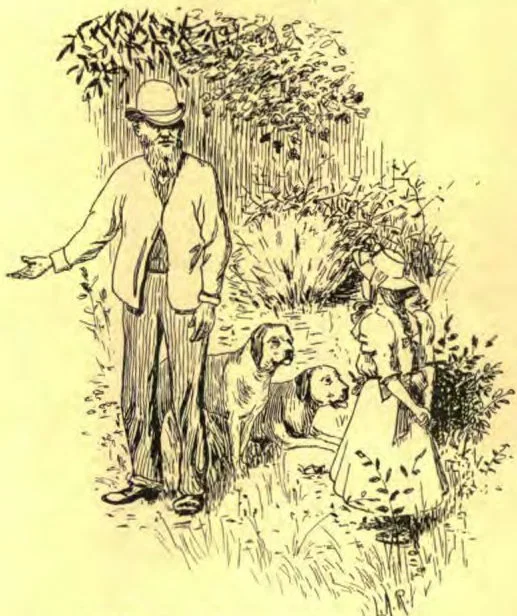
Crack! crack! went the underbrush, and Mr. Brown, the owner of the woodland, preceded by a pair of hounds, came out into the open spot beside the sorry, startled little girl.
“Well, well! Is that you, Nettie? What's the matter now?” And almost before she knew it, she had poured out her story to the kind, old man.
“So you want to raise a garden for the Lord, and haven't any ground? If that's all, you may farm right here among these stumps, and welcome. So cheer up.”
Nettie thanked him heartily; and before they parted, he said he believed he would put in an acre of cotton down on his river farm for the same purpose; “for I don't mind telling you, Nettie,” he said, “that I believe the Adventists preached the truth in that tent, and some day I'm a-going—O, well, good morning, little girl!”
“YOU MAY FARM RIGHT HERE”
A light hoe was the only garden tool which Nettie possessed; but it was soon on the ground, and while the birds sang, she did quite effective work in clearing away the loose leaves, and breaking up the mellow soil, rich with leaf-mold. Suddenly she stopped, and again a look of perplexity clouded her sweet face. She hadn't a seed to plant, except a few old-fashioned flowers, that every one thereabouts raised every year. “O, dear! And it's time to get supper, too.” But before she left the place, she knelt a second time beside the mossy log, and told her Friend and Helper of her perplexity.
After supper Nettie was sent to a colored auntie's near by on an errand. As she approached, the old woman stood in the door holding a willow basket filled with what looked like small white onions, and Nettie's eyes grew large as she heard her say, “Here, you, Sol'mon Isaac, tek out these here ‘shillots,’ and give 'em to dat pig. I'se planted all I wants, an' mo' too, an' I'se got mo' left than we'll eat till they grows.” “O Aunt Debby! please could I have them?” asked Nettie, “I'll give you—something—my beads if you want them,” as she unfastened a necklace of braided strands of small steel beads. “Will you, Aunt Debby?” “Why, honey, you mos' 'stonishes me. 'Cos yo' kin have them ‘shillots.’ An' yo' keep yo' beads; I ain't needin' beads very bad jes' now, chile,” and her ponderous body shook with the ripple occasioned by her little joke.
Nettie's errand done, Sol'mon Isaac helped “tote” the treasure to the planting-ground, and Nettie could scarcely sleep that night, so anxious was she to set the little bulbs, and have them growing. This pleasant task was accomplished the following day, and the bright green spikes came up quickly, and stood in stiff little bunches along the rows, and marshaled around the stumps, in fine order.
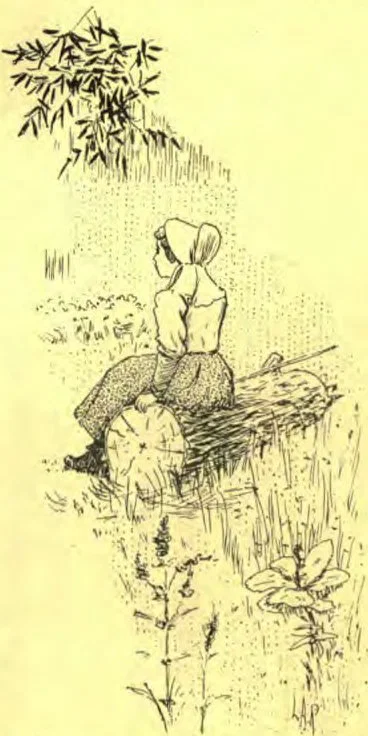
She told her teacher of what she had planted, and Mrs. Randolph said that other forms of the word “shallot” were “eschallot” and “scallion,” and that they were originally brought from Ascalon into Europe by the Crusaders. Mr. Hamilton said he didn't think any one would want to buy them, but Nettie said, “I'll do my best and see.” The little plot was well cared for; and often when warm and tired, Nettie would sit on the log and look up into the sky or the cool, green woods about her, and the Lord, “who looketh upon all the inhabitants of the earth,” impressed her heart with lessons from his great book of nature.
Autumn was almost here, and the little garden was brown long ago; and as Nettie gathered her crop, she found that each little bulb had produced four, five, or six, and when they were measured, she had two and one-half bushels. Early one fine morning she started off on foot to Belmont, four miles distant, with a quart of shallots as a sample. She had not forgotten to ask the blessing and guidance of God, and she tripped along with a light heart.
The day grew warmer, and the dusty road was long; and as Nettie went from door to door, and met one refusal after another, she became less cheerful. But not until every house in the village had been visited, did she give way to discouragement. She slowly walked out of Belmont, and sank down beside a little spring that welled up near the roadside. Refreshed by the cool water and the lunch that she had brought with her, her morning prayer was repeated, and hope revived in her heart.294
“WHEN WARM AND TIRED”
There was a large hotel on the mountainside near the village, at which many tourists from the North spent the cold winter months; and as Nettie sat admiring the great white house, with its wide “galleries,” fancy windows, and beautiful grounds, she suddenly resolved to try to make a sale there. Although she was somewhat overawed by the rare grandeur of the place, she climbed the rocky road, and stepped quickly along on the gravel walk and around to a side-door, where she was met by the cook, who, in his white cap, coat, and apron, bowed with French politeness to “ma'am'selle,” and looked into the now soiled paper bag of shallots.
“O, ah, yez, I zee, escolotte, for zee soup.” “Buy, monsieur, buy?” as he turned to the steward, who was passing. “Get what you'll need,” was his reply. “How many you have? How much I pay?” “Two and a half bushels at five cents a quart,” replied Nettie. “Fi' cent zee quart, very good. I buy two bushels. You bring to me soon. Au revoir, ma'am'selle.”
Nettie was so delighted that when she reached the gate, she scarcely noticed a passing carriage until Mr. Brown called to her to climb in and ride, as he was going her way. She told him of her efforts and success in disposing of her crop. The old farmer was much pleased, and offered to have his man deliver them for her the next day.
On the Sabbath of ingathering, Nettie's morning work was done earlier than usual, and she looked very neat in her blue calico, which Aunt Debby had made extra stiff for the occasion. She was almost ready to start to Sabbath-school when her father said, “If you'll wait a bit, daughter, I'll get ready, and go along.” He had bought the half bushel of shallots, that she might have an abundance of seed for the next year; and four shining silver dollars, carefully wrapped in her handkerchief, were carried by the little girl—a free-will offering indeed.
The little church was adorned with autumn treasures from forest and field, and happy children, young people and older ones as well, each brought a willing gift, and told in simple confidence of the blessings received in labor for the Master.
Aunt Debby, who had never been there before, occupied a back seat, and gave a half dollar she had earned doing laundry work: “'Cos Miss Nettie was dat stirred up a workin' for de Lord, it done stir me up, too,” she explained.
Louise M. Stormonth.
The Object of Decorations
By C. H. Castle
THE object of decorations should not be simply for ornament, but to illustrate some truth: in other words, the decorations should be an object-lesson. That being true, much care and tact must be exercised in order to bring about the best results. Decorations need not be expensive; they may be elaborate, yet inexpensive.
The initial step is to fix upon a design, the point of truth to be illustrated, and then plan the design and decoration accordingly. In the main, nature should supply the material for ornamentation. It is not profaning the house of God to bring into it boughs and branches of trees and foliage. As the ingathering service is held after the harvest has been gathered, and the forest leaves have become tinted, it is easy to secure a variety of colors and forms of leaves.
On one occasion while studying the subject of the Sanctuary, we made a tabernacle representing each article of furniture which the ancient tabernacle contained, surrounded by the court. This was, of course, on a small scale, proportionate to the building in which it was made. A framework was made for the tabernacle, and covered with lace and other curtains to represent the different coverings of the ancient tabernacle. The court wall about the sanctuary was also represented, and the tip ends of pop-corn ears were made to represent the heads of the posts supporting the outer curtains.
As before stated each article of furniture was represented both before and within the tabernacle. Gilt paper serves nicely to cover the furniture that was overlaid with gold.
Jacob’s ladder is another design that can be easily represented, the ladder being covered the entire length with leaves of different colors. House plants are always effective in decorations.
The garden of Eden can be easily represented. Outline the banks of the river with moss or other green material. House plants may be used to represent the different trees; or, better still, boughs of the trees themselves. Different varieties of fruit may be suspended from the little branches, showing at least some of the varieties of fruits which the garden of Eden contained. Of course these thoughts are only suggestive. The large boughs may be kept in position by setting them in blocks covered with grass or other material so that they will not be out of harmony with the rest of the background.
The general decorations need not necessarily be different for this design than for others. As the people anciently dwelt in booths during this great event, and brought of the fruit of the earth, — the harvest,— the truth was impressed upon their minds that when the earth should be restored, and the kingdom restored to the seed of David, the faithful of all ages would be gathered into the home prepared for the just. So we should keep in mind the object of this service—to vivify OUR minds, and implant seeds of the kingdom within the minds of those who may be induced to attend the service. This is one of the objects of the service. In this way seed may be sown in a heart that could not be approached in the ordinary way.
Let us study our plans, and so weave the word of God into our programs that the truth will shine out in its fullness; and as a result of the effort, some precious souls will become enlightened.
C. H. CASTLE.
A Harvest Ingathering Exercise
The following exercise, appropriate for the harvest-ingathering service, was written by Mrs. E. A. Otis, and printed in the Signs of the Times a few months ago. We are glad to give it again here:—
Life’s Harvest
Boys:
Here we sow life’s precious seed,
Day by day in word and deed,
In the harvest-field of life,
Where temptations oft are rife.
Sleep not while the day is here;
For the enemy is near,
Watching that his hand may cast—
Sowing thick and sowing fast—
Tares among the precious wheat
Springing up about his feet.
Girls:
Tell us, friends, O tell us who
Is this enemy that you
Fear ’mid your good seed may cast
Seeds of evil, tares that fast
Shall upspring and choke the wheat,
Growing while we wait and sleep?
Boys:
’Tis the evil one, who waits
Ever at Life’s harvest-gates;
We may see him not, but he
Ever standeth watchfully,
Never sleeping night or day,
Seeking always if he may
Cast the seed of evil in,
From which spring the tares of sin.
Girls:
O, the blessed Master’s hand
Sowed the field whereon we stand;
Made the world, his harvest-field,
Precious grain, not tares, to yield.
To the golden field of wheat,
Let us haste with willing feet,
Haste to see if there we find
Evil growth of any kind.
[They move on to the field, where the householder is standing, and find tares growing among the wheat.]
Girls:
Sir, what meaneth this we see
In this field of harvestry?
In thy field thy hand did sow
Only good seed, this we know;
Whence these tares, then, that we see,
Where but golden grain should be?
Householder:
An enemy hath done this.
Servants:
Wouldst thou, then, that we should go,
And uproot the tares that grow?
Householder:
Nay, leave them there among the wheat
Till the harvest-time; ’tis meet
Thus to leave them, lest ye should
With the tares uproot the good.
Let them grow together there—
Golden wheat and evil tare.
Then when comes the harvest-day,
I will to the reapers say:
“First the tares together bind,
And their bundles burn, then mind
That the precious wheat shall be
Gathered into barns for me.”
Servants:
Of this parable would we
All the hidden meaning see.
Householder:
List, and I will make it plain:
Good seed is not sowed in vain.
Children of the kingdom, see,
Are the good seed sown by me;
Children of the evil one
Are the tares which there have sprung,
And amid the wheat we see
Growing till the end shall be.
Servants:
And what the harvest-time when they
Shall be gathered, tell us pray?
Who the reapers that shall come
To bear the golden harvest home?
Householder:
The reapers are the angels blest,
Who gather saints unto their rest;
The harvest is that wondrous day
When earth and time shall pass away.
Boys:
When should the precious seed be sown?
Householder:
Ere the morning hours have flown.
Sowers Sing:
(Tune, Hymn No. 769)
Precious seed we hither bring,
Cast it where the harvests spring,
Golden in the light of love,
Ripening for our home above.
Sow it in the morning light,
In the golden sunrise bright,
Then the blessed eve shall see
A rich wealth of harvestry.
Reapers Sing:
(Tune, Hymn No. 1053)
Thrust in the ready sickle,
And gather in the sheaves;
For the harvest now is waiting,
And golden are its leaves.
O, angel forms are bending
With benedictions down,
And for each faithful sower
God hath prepared a crown.
All Together Sing:
We sing the harvest ended,
We sing of time no more;
For heaven and earth are blended,
Upon that happy shore
Where Jesus reigns forever,
And we may sing his praise,
And sin and sorrow never
Again shall cloud our days.
Tune ye your harps, O angels!
And sing of Jesus’ love,
And of the harvest gathered,
For our bright home above.
(Repeat last lines)
MEMORY VERSE: “Now all these things happened unto them for ensamples: and they are written for our admonition, upon whom the ends of the world are come.” 1 Cor. 10:11.
In this quarter’s lessons, we have passed through so many chapters that it seems as if the review might be long and hard. But God has himself given us in his word a very short review lesson of these chapters. We find it in the eleventh chapter of Hebrews. It speaks of the most important events in the lives of the men we have been learning about, and shows their place in God’s plan. It also shows how they got such a good report: it was faith that made it possible for them to please God.
The review in this chapter is given to teach us to look, as they did, unto Jesus, the Author and Finisher of faith, that we, too, may obtain a good report, and receive the promises of which we have been learning.
Questions
1. Who were the two children first born into this world? What was the great difference between these two boys? How was it shown? What did the child of the wicked one do to the child of God? Why?
2. Tell the names of Adam’s descendants down to the tenth generation. Can you tell the number of years that each lived? Who was the seventh? How was he distinguished from the others? What is remarkable about Enoch’s son? Who was Methuselah’s grandson? What kind of man was he?
3. What was the state of the world in Noah’s day? What did God do because of this? How long were the people warned of what was coming? What was a witness to them during all the time that Noah was preaching? How many people were saved in the ark? What went into it also? How long were the waters of the flood upon the earth?
4. Tell some of the changes that took place in the earth at the time of the flood. How do we know that there will never be another? With what are the earth and heavens now stored? When will God make use of this fire, and for what purpose? What will he bring forth from the cleansing fires?
5. What is the token that God will not again send a flood of waters on the earth? Where is God’s bow seen? Were there any clouds before the flood? Of what is the rainbow the reflection? Whose glory do we see in it? What is the glory of God? Ex. 13:18, 19. Then of what does the rainbow tell us?
6. What did men build after the flood? What did they hope to do by this? Why did not God let them go on with their work? How did he put a stop to it? Will there ever again be only one nation and one language? When?
7. Whom did God call out from the nations? What purpose did he have in this? What did he promise Abraham? How much of the earth did he promise him? What did Abraham therefore look for? What will be done to the earth before it is given to him? Who is the Seed that was promised to Abraham?
8. When Abraham had waited ten years for the son God promised, what did Sarah do? Who was born to Hagar? Was Ishmael the child of the promise?
9. Who came out with Abraham when he left his home? Why did Abraham and Lot afterward separate? Where did Lot go, and why? What sort of people were the men of Sodom? What did God do to Sodom and Gomorrah because of their wickedness? Who only were saved? What happened to Lot’s wife? What did God turn these wicked cities into? To whom are they an example?
10. How long was it from the time God first made the promise till Isaac was born? What was done with Hagar and Ishmael after his birth? Why were they sent away? Tell how God took care of them in the wilderness. What did Ishmael become?
11. How did God try Abraham’s faith when Isaac was grown up? How was he able to endure the trial? What did he believe that God would do? Tell how Isaac was saved. Who is the great Sacrifice?
12. After Sarah died, what did Abraham do for Isaac? Why did he not let Isaac go back to his kindred? Who chose Isaac’s wife? How did God show Abraham’s servant the woman that he had chosen?
13. What great lesson may we learn from the lives of these men? Heb. 12:1, 2.