The Youth’s Instructor, Vol. 65, No. 18.

Brief News Items from Around the World
Earlier text: Setting the Clock Forward

(Texts for April 29 to May 5)

THE texts for this week complete the study of the thirty-seventh psalm, which is said to resemble a chapter of the book of Proverbs, each verse being complete in itself.
In the week’s texts are included the last of the eight great precepts given in the chapter, which are:
“Fret not thyself because of evil-doers.” “Trust in the Lord, and do good.” “Delight thyself also in the Lord.” “Commit thy way unto the Lord.” “Rest in the Lord, and wait patiently for him.” “Cease from anger, and forsake wrath.” “Depart from evil, and do good.” “Wait on the Lord, and keep his way.”
Verse 29. The promises of God to his people cover every phase of their experience. How many of the poor of earth but rich in faith have been cheered and encouraged by the promise that the new earth shall be theirs, that they shall walk the streets of the city of God, knowing that its streets of gold and its gates of pearl, and its mansions prepared by the Saviour, shall one day be theirs to enjoy throughout eternity.
“There is clearly an emphasis in the repetition of the same promise in the same terms which ought to have been uniformly rendered throughout verses 9, 11, 22, 29, 34. And it cannot be doubted that there is a reference to the new heavens and the new earth of Isa. 66:17; 2 Peter 3:13.”
Verse 30. The Bible makes it very clear that “the mouth betrays the heart.” Good men as a rule speak that which is edifying. Nothing is more unseemly than ill speech in the mouth of one who claims to be a follower of the King of heaven.
“His tongue talketh of judgment.” “He advocates justice, gives an honest verdict on things and men, and he foretells that God’s judgments will come upon the wicked, as in the former days.”
Verse 31. Mr. Spurgeon outlines this verse thus: “(1) The best thing; (2) in the best place; (3) with the best of results.” “To keep the even tenor of one’s way, in such times as these, is given only to those whose hearts are sound toward God, who can, as in the text, call God their God. Policy slips and trips, it twists and tacks, and, after all, is worsted in the long run, but sincerity plods on its plain pathway and reaches the goal.”
Verse 32. The disciples of Jesus need not look for favor where their Master found it not. Many are the deliverances of God’s people from the wrath of the wicked. A striking instance is the experience of an early missionary and his wife in Africa. The Kafirs for some days had been “sharpening their assagais,” which was a sign of a raid.
“The missionary’s wife could speak Kafir like a native, and knew of the trouble. Friendly Kafirs warned the missionaries to flee; for they said they could not protect the mission from the raiders. At last, with the warnings more urgent, and an invitation to come to —’s kraal, beyond the river, for refuge, the missionaries started out by ox wagon. As they traveled, the uprising broke upon the country, and they had to push on for their lives with all the speed that could be urged into the slow-moving oxen. They came to the river, and there their way of escape was closed; there had been heavy rains upcountry, the river had ‘come down,’ and instead of a fording place, they found the waters filling the banks brim to brim, and rushing in a torrent.
“The boys who were driving said it was impossible to think of crossing. The only thing to do was to wait for the water to run out. But behind them the Kafirs were coming. The missionary’s wife was ill, and could not be moved from the wagon. There they were, in the rain and the darkness, the Kafirs on the warpath behind, and the torrent closing the way of escape. The native boys were in terror, and the oxen very nearly unmanageable.
“Just then two black men stepped up, and in a calm and forceful voice said, ‘Do you want to cross over the river?’ ‘Yes,’ said the missionary; ‘we must get to —’s kraal, on the other side of the river. He has invited us to come to him for safety. But the river is so full we cannot cross.’”
“‘We will take you over,’ said the men. They took charge of the team, led it into the river and through the whirling water, and safely up the bank on the farther side. The missionaries, grateful and astonished, wanted to thank their deliverers. But the men had disappeared as suddenly as they had appeared at the critical moment. The native boys, who had come through on the wagon, had never seen the men before, and did not know where they came from, nor did they see them as they withdrew. Safe on the farther shore, the party made its way to the friendly kraal, thanking God for the wonderful deliverance. They could not know of a certainty how the deliverance was wrought, but they saw in it the hand of God.”
Verse 34. A twofold admonition and a twofold promise. “Tarry the Lord’s leisure. Wait in obedience as a servant, in hope as an heir, in expectation as a believer.” This little word “wait” is easy to say, but hard to heed. Only God giveth one the power to wait in patience till “the fulness of the time come.”
Verses 35, 36, 37. “Three memorable scenes: (1) The imposing spectacle; (2) the astounding disappearance; (3) the delightful exit.” “Like a green bay tree, which produceth all leaves and no fruit,” says Matthew Henry. “In winter when all other trees—as the vine tree, fig tree, apple tree, etc., which are more profitable trees—are withered and naked, the bay tree continueth as green in winter as in summer. So fareth it with wicked men; when the children of God in the storms of persecutions, and afflictions, and miseries, seem withered, and, as it were, dead, yet the wicked all that time flourish and do appear green in the eyes of the world.”
Verses 39, 40. “The promises of grace summarized, and the grandest evidence of grace declared.”
F. D. C.

Missionary Volunteer Society Programs for Week Ending May 12

THE programs for this date, with notes, illustrations, and other helpful material, will be found in the Church Officers’ Gazette for May.

Our Refuge

(Texts for May 6-12)
“COME, let us sing the forty-sixth psalm,” said Luther to his fellow workers. Their courage was ebbing low; it seemed that the enemy would triumph, and that disaster awaited the one cause for which these brave men of the Reformation were giving their lives. But somehow the words of that thrilling song and the strains of the martial music brought their trembling hearts close to the Source of their strength, and they would return to their work to press forward with irresistible power.
We do not know who wrote this wonderful psalm, nor when the unknown author composed it; it seems probable, however, that it was written at a time of great national calamity; and the most generally accepted supposition among commentators is that it was written of Sennacherib’s invasion and the miraculous destruction of his army. But these things are not of vital importance. The author, whoever he was, struck an immortal chord whose undying music is still calling troubled hearts to their only refuge.
The psalm is divided into three parts, each having its own purpose, but all contributing to the one supreme thought that God’s presence means absolute safety, however wildly the storm may roar, or whatever troubles may come. The first part (verses 1-3) is an assurance that though storms may threaten to shake the very earth from under us, we may be perfectly safe with God; the second strophe (verses 4-7) turns the reader’s eye to other dangers. Nation may rise against nation, and they may attempt to sweep each other off the earth, leaving only bloody desolation behind; but in such a time of universal danger there is safety with God for all who will trust him. In the last division (verses 8-11), the psalmist alludes to an experience which confirms in his mind the truths he has just stated.
(Concluded on page sixteen)

Our Refuge

(Concluded from page fourteen)
Even today, in these critical times, we may say: “Ein feste Burg ist unser Gott;” and never was this mighty fortress needed more than now. The world is deluged with trouble, and God is our only Refuge — the only impregnable fortress. But this fortress is within easy access of all; only a sincere desire to be with God lifts us within the high tower which no storm can undermine, and no foe can scale.
And there is more than protection in this fortress. “There is a river, the streams whereof shall make glad the city of God.” May we not see in this a promise supplying all our needs? The river of God’s love and care is still full; the vanguard of his army drank from it long ago, but the rearguard are finding it abundantly sufficient for all their needs. All who will may drink; and all may enter the one sure Fortress.
“God will our strength and refuge prove, In all distress a present aid; And though the trembling earth remove, We will not fear nor be dismayed.
“Our trust in God shall still abide Though hills be shaken from their seat, And though the ocean’s swelling tide Against the trembling mountains beat.
“A river flows, whose living streams Make glad the city of our God, The holy place where glory beams Where God Most High has his abode.
“God has in her his dwelling made, And she shall nevermore be moved; Her God shall early give her aid, Her constant helper he has proved.
“Be still, ye nations; bow in fear, And know that I alone am God. To us the Lord of hosts is near, Our father’s God is our abode.”
MEDITATION: What a wonderful fortress our heavenly Father is! To this fortress we may flee away from storms that surge within our breasts as well as from those that rage without. I realize that I must enter that fortress through the path of self-surrender, and abide in it by daily reconsecrating my all to God. Through prayer and study of his Word he will teach me how to lead others to this only refuge from trouble of all kinds.
SPECIAL PRAYER: I thank Thee for this fortress; somehow, in thine own way, teach me how to abide in it in these days of universal peril.
M. E.

The Bible Year

Senior Assignment

May 6: 1 Chronicles 17 to 20. David desires to build God’s house.
May 7: 1 Chronicles 21 to 24. Gathering material for the temple.
May 8: 1 Chronicles 25 to 27. Various matters of order.
May 9: 1 Chronicles 28, 29. David’s charge to Solomon; prayer; death.
May 10: 2 Chronicles 1 to 4. Preparation and building.
May 11: 2 Chronicles 5 to 7. Dedication and acceptance.
May 12: 2 Chronicles 8, 9. Splendor of Solomon’s reign.
For notes on this assignment, see Review for May 3.

Junior Assignment

May 6: 2 Kings 7. Israel delivered from the Syrians.
May 7: 2 Kings 18. Hezekiah’s good reign.
May 8: 2 Kings 19. Isaiah sends a message to Hezekiah.
May 9: 2 Kings 20. Hezekiah’s prayer for health granted.
May 10: 2 Kings 22. Josiah repairs the temple.
May 11: 2 Kings 23: 36, 37; 24. Jerusalem besieged.
May 12: 2 Kings 25. Nebuchadnezzar takes Jerusalem.

A Great Victory

“Hezekiah” means “Jehovah strengtheneth,” and it seems that he was well named. Though living in an evil time, he was really a reformer, and though he was often very fearful and felt like trusting first in one earthly power and then another, he finally, encouraged by that prince of the prophets, Isaiah, triumphed over fear, and the Lord gave Israel such a victory as has never been known in history.
“The great Assyrian army, under Sennacherib, has swept across the land of Judah. Sixty cities have been taken, and night after night, from the watch-tower of Jerusalem, the watchmen have seen the flames leaping from the ruined towns. The people, watching the reflection of the fire in the sky, have gone to bed each night afraid to sleep lest the army be nearer than they think.
“On they come, but King Hezekiah is ready for them. Day and night the men have been at work. Every weak spot in the city wall has been made strong. New watchtowers have been built, so that close watch may be kept on the army. But the greatest danger in a siege is that the food and water will give out. Just outside the city is the reservoir that supplies the people with water, and the first thing Sennacherib will do, will be to cut off this water supply. Hezekiah knows this, and down deep underground, where they cannot be seen, he has had new channels dug, bringing the water into the city from the bottom of the reservoir.
“The light of the fires comes closer, and closer, each night. The first thing in the morning, every one runs to the housetop to see if the army is in sight. At last the morning comes, when, off to the north of the city, they see what they have been fearing. Their faces turn white, for there, quite close to the walls, are the archers, with their quivers of shining arrows; beyond are the chariots, and rank after rank of shields; while about the gates are the mounted cavalrymen.
“All day the people within the city watch that great army. They forget their work; they forget even to eat, and think only of that dull red color which they have seen in the sky so many nights. Will their homes be burned tonight, or will God stay this great army before them?”
Some time before this Hezekiah had been overcome by fear and paid large tribute to Assyria. He had even taken the gold from the temple. This made Sennacherib all the more sure that he could conquer Jerusalem. So now he sends a message to Hezekiah with this great escort of soldiers, demanding his surrender. Imagine the scene. The king’s representatives appear in state to meet Rab-shakeh. How the people on the wall must have trembled at the sight of these merciless soldiers of the East, and at the haughty words of defiance from this heathen warrior!
Hezekiah must have waited in suspense. What were his feelings when he received the message, and what did he do? Do you suppose he would have received that precious assurance from the Lord if he had not thus sought him? Read again that haughty letter which Sennacherib sent a little later, and see what Hezekiah does with it. O, what a lesson to us in this!
The Lord says that when we pray, really pray, he will hear and answer. What was the Lord’s answer, and how was it fulfilled? Was there ever such a victory?
“The people in Jerusalem were, oh, so glad that they had been true to their God and their king! for their homes were saved—their city not burned. Jehovah had taken care of his people.” M. E. K.

VI — Paul Before Festus

(May 12)
LESSON SCRIPTURE: Acts 25:1-27.
MEMORY VERSE: “If ye be reproached for the name of Christ, happy are ye.” 1 Peter 4:14.

Questions

1. After Festus came to the province, what city did he first visit? Who informed him about Paul while there? What favor did they desire of him? Acts 25:1-3. Note 1.
2. What reply did Festus give to this request? What did he say he would do? What did he tell the priests to do? Verses 4, 5. Note 2.
3. How long did Festus remain in Jerusalem? How long did he wait after his return before hearing Paul’s case? Verse 6.
4. With what did the Jews charge Paul? What answer did the apostle make? Verses 7, 8.
5. How did Festus feel toward the Jews on this occasion? What question did he ask Paul? Verse 9. Note 3.
6. What reply did Paul make to Festus? What did he say the governor knew? Verse 10. Note 4.
7. What did the apostle not refuse? To whom did he make appeal? Verse 11. Note 5.
8. Whose advice did Festus ask after Paul made this appeal? What decision did he give? Verse 12.
9. Who visited Festus after certain days? What did Festus declare to them? Relate what he said concerning the apostle. Verses 13-21.
10. What did King Agrippa say to Festus? What was the governor’s reply? Who attended Paul’s trial the next day? Verses 22, 23.
11. Whom did the governor address at the beginning of the trial? What did he say about Paul? Why was the apostle brought before King Agrippa? What did Festus think it unreasonable to do? Verses 24-27.

Questions for Diligent Students

1. Name the Roman governors mentioned in the Bible who tried to please the Jews.
2. What evidence do you find in this lesson that Festus was a prompt, energetic man?
3. What ought Festus to have done with Paul?
4. Describe the manner of holding a Roman court.
5. What experience similar to Paul’s will God’s people pass through in the last days?

Notes

1. “In making this request they purposed to waylay Paul along the road to Jerusalem, and murder him. But Festus had a high sense of the responsibility of his position, and courteously declined to send for Paul.”—“The Acts of the Apostles,” p. 428. Josephus says that Festus was a wise, firm ruler. He was a much better man than Felix.
2. Festus desired to act honorably toward Paul. He wanted him judged in harmony with Roman law. Paul’s persecutors had only one purpose in view, which was to secure his death.
3. It was a common fault with Roman governors to try to gain favor with the Jews. They wanted to do right, but they also wanted to be popular. Pilate committed this wrong at the trial of Jesus. Felix and Festus followed his example.
4. Although Paul was hated and hunted by the Jews, yet he never had feelings of hatred toward them. He said, “My heart’s desire and prayer to God for Israel is, that they might be saved.” “I could wish that myself were accursed from Christ for my brethren, my kinsmen according to the flesh.”
5. “The apostle knew that he could not look for justice from the people who by their crimes were bringing down upon themselves the wrath of God. He knew that, like the prophet Elijah, he would be safer among the heathen than with those who had rejected light from heaven and hardened their hearts against the gospel. Weary of strife, his active spirit could ill endure the repeated delays and wearing suspense of his trial and imprisonment. He therefore decided to exercise his privilege, as a Roman citizen, of appealing to Caesar.”—“The Acts of the Apostles,” p. 430. Paul’s Roman citizenship was worth much to him. It enabled him to do what he could not have done without it. It secured his release from mobs, from scourging, and from immediate death.

What I Know

“I KNOW of a surety, that the Lord hath sent his angel, and hath delivered me.” Acts 12:11.
“I know that the Lord saveth his anointed.” Ps. 20:6.
“I know that the Lord is great, and that our Lord is above all gods.” Ps. 135:5.
“I know that the Lord will maintain the cause of the afflicted, and the right of the poor.” Ps. 140:12.
“I know whom I have believed, and am persuaded that he is able to keep that which I have committed unto him against that day.” 2 Tim. 1:12.
“I know that it shall be well with them that fear God.” Eccl. 8:12.
“I know that I shall not be ashamed.” Isa. 50:7.
“I know that the way of man is not in himself: it is not in man that walketh to direct his steps.” Jer. 10:23.
“I know, that even now, whatsoever thou wilt ask of God, God will give it thee.” John 11:22.
“I know that in me (that is, in my flesh) dwelleth no good thing: for to will is present with me; but how to perform that which is good I find not.” Rom. 7:18.
“I know that this shall turn to my salvation through your prayer, and the supply of the Spirit of Jesus Christ.” Phil. 1:19.
“I know both how to be abased, and I know how to abound.” Phil. 4:12.
“I know that thou canst do everything, and that no thought can be withholden from thee.” Job 42:2.
“I know that my Redeemer liveth, and that he shall stand at the latter day upon the earth.” Job 19:25.
“I know that, whatsoever God doeth, it shall be forever: nothing can be put to it, nor anything taken from it: and God doeth it, that men should fear before him.” Eccl. 3:14.

A Correction

IN THE INSTRUCTOR of April 17, on page five, in the article entitled “Our Work in Algeria,” Brother Jose Abella should have been named with Brother W. E. Hancock as a licentiate; but in the article his name was given as the name of a town.

What the Lord Knows

“I know that thou didst this in the integrity of thy heart.” Gen. 20:6.
“I know their works and their thoughts.” Isa. 66:18.
“I know the things that come into your mind, every one of them.” Eze. 11:5.
“I know your manifold transgressions and your mighty sins.” Amos 5:12.
“I know that thou fearest God, seeing thou hast not withheld thy son, thine only son from me.” Gen. 22:12.
“I know thee by name, and thou hast also found grace in my sight.” Ex. 33:12.
“I know thy abode, and thy going out, and thy coming in, and thy rage against me.” 2 Kings 19:27.
“I know the thoughts that I think toward you, saith the Lord, thoughts of peace, and not of evil, to give you an expected end.” Jer. 29:11.
“I know thy works, and thy labor, and thy patience, and how thou canst not bear them which are evil: and thou hast tried them which say they are apostles, and are not, and hast found them liars.” Rev. 2:2.
“I know thy works, and tribulation, and poverty.” Rev. 2:9.
“I know thy works, and charity, and service, and faith, and thy patience, and thy works; and the last to be more than the first.” Rev. 2:19.
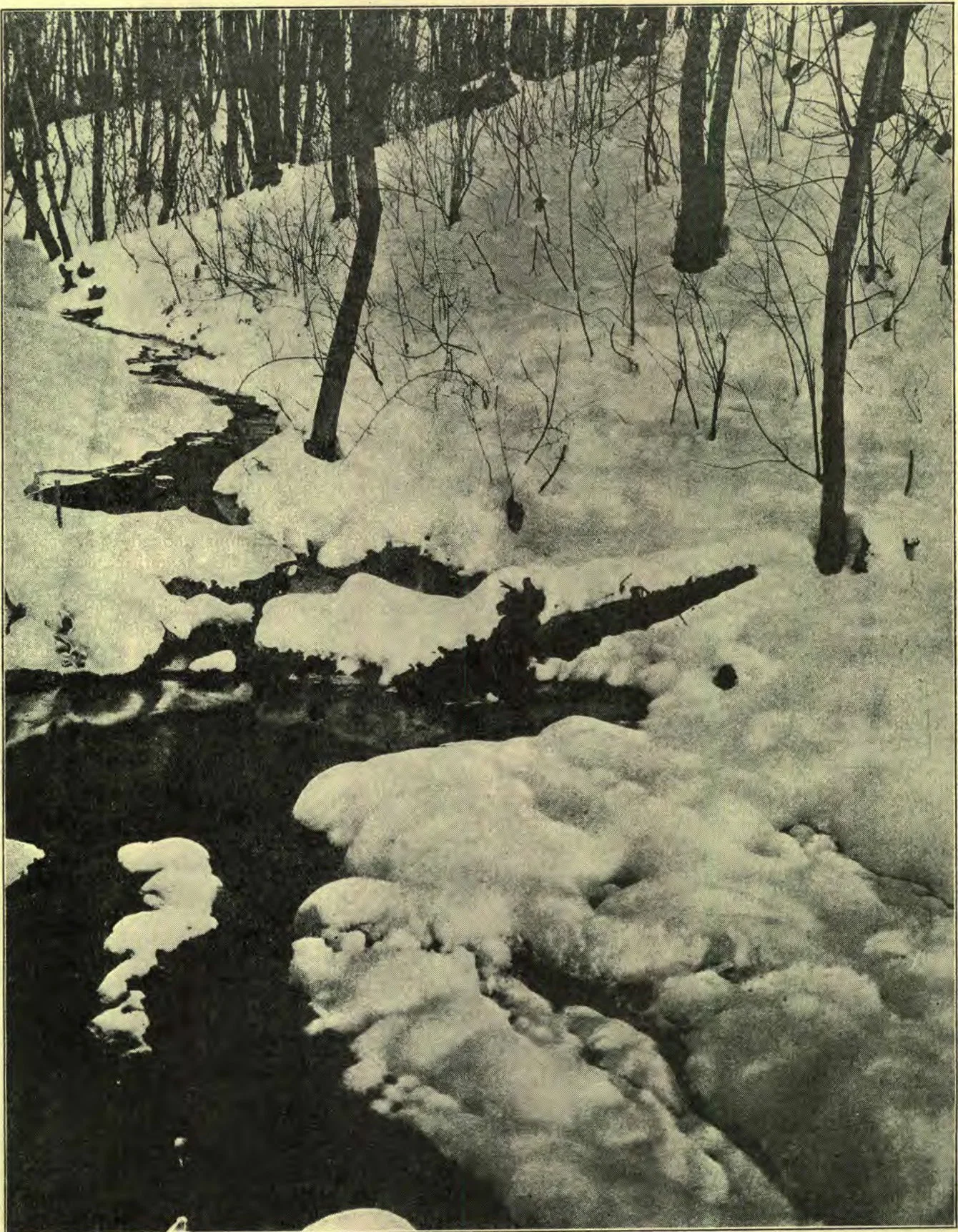
“BUT WINTER LINGERING CHILLS THE LAP OF MAY”
THE EARLY MORNING OFTEN FOUND JESUS IN SOME SECLUDED PLACE, MEDITATING, SEARCHING THE SCRIPTURES, OR IN PRAYER.
VI. Paul Before Festus

You have reached the end of this edition.

The Youth’s Instructor · May 1, 1917