1 Corinthians 8:9
But take heed lest by any means this liberty of yours become a stumblingblock to them that are weak.
Translations
But take heed lest by any means this liberty of yours become a stumbling block to them that are weak.
King James Version, KJV Cambridge Paragraph Bible
But take heed lest by any means this liberty of yours become a stumblingblock to them that are weak.
But take heed lest by any means this liberty of yours should become a stumbling-block to them that are weak.
Revised Version, American Standard Version
But take heed lest by any means this liberty of yours become a stumblingblock to the weak.
but see, lest this privilege of yours may become a stumbling-block to the infirm,
But see lest anywise this your right [ to eat] itself be a stumbling-block to the weak.
But be taking heed, lest, by any means, your right, itself, become, an occasion of stumbling, unto the weak;
Berean Standard Bible, Majority Standard Bible
Be careful, however, that your freedom does not become a stumbling block to the weak.
But be careful that by no means does this liberty of yours become a stumbling block to the weak.
But take care that this power of yours does not give cause for trouble to the feeble.
But take heede lest by any meanes this power of yours be an occasion of falling, to them that are weake.
Douay-Rheims (Challoner revision)
But take heed lest perhaps this your liberty become a stumblingblock to the weak.
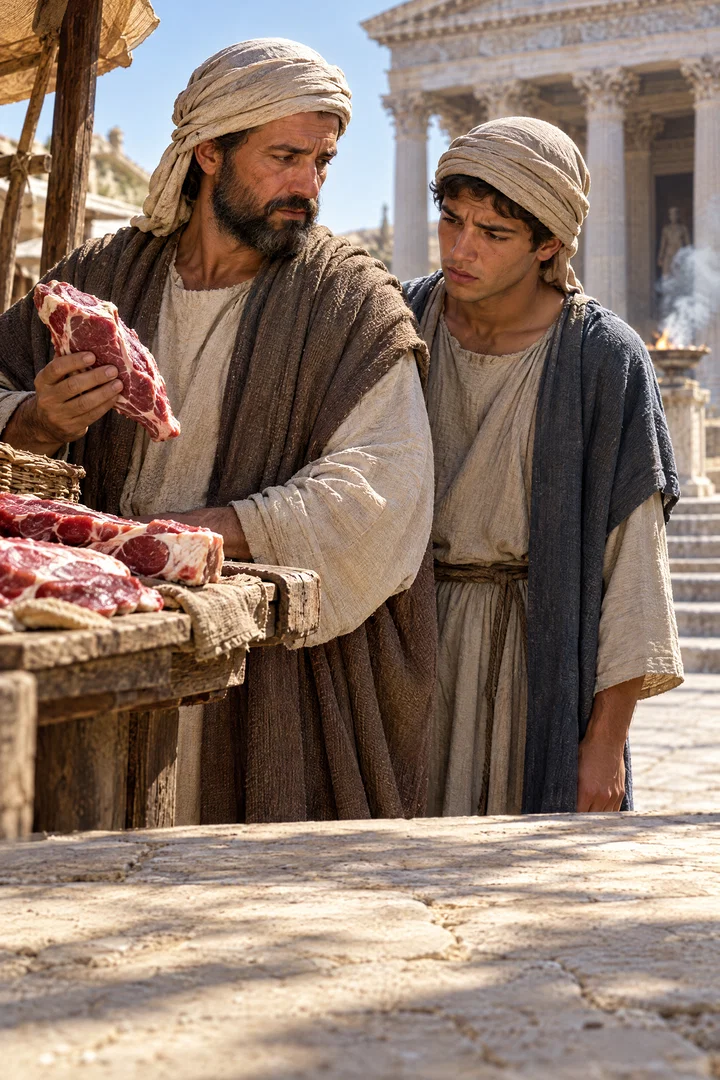
Pictures
Cross-references
- Romans 14:13
Let us not therefore judge one another any more: but judge this rather, that no man put a stumblingblock or an occasion to fall in his brother’s way.
Warns believers not to put a stumblingblock in another’s way.
- Romans 14:21
It is good neither to eat flesh, nor to drink wine, nor any thing whereby thy brother stumbleth, or is offended, or is made weak.
Commends foregoing a permitted practice rather than causing a weaker believer to stumble.
- 1 Corinthians 8:13
Wherefore, if meat make my brother to offend, I will eat no flesh while the world standeth, lest I make my brother to offend.
Paul resolves to forgo meat rather than cause a brother to stumble.
- Acts 15:29
That ye abstain from meats offered to idols, and from blood, and from things strangled, and from fornication: from which if ye keep yourselves, ye shall do well. Fare ye well.
The council’s instructions address Gentile believers’ abstention from food offered to idols.
- 1 Corinthians 10:23-33
All things are lawful for me, but all things are not expedient: all things are lawful for me, but all things edify not.
Teaches believers to use their freedom with regard for others.
- Romans 14:7
For none of us liveth to himself, and no man dieth to himself.
Believers’ conduct and choices affect others; no one lives only for himself.
- Romans 15:1
We then that are strong ought to bear the infirmities of the weak, and not to please ourselves.
The strong should bear the weak’s infirmities rather than please themselves.
- Acts 15:20
But that we write unto them, that they abstain from pollutions of idols, and from fornication, and from things strangled, and from blood.
Abstaining from idol offerings protects others from a stumbling block.
- Romans 14:15
But if thy brother be grieved with thy meat, now walkest thou not charitably. Destroy not him with thy meat, for whom Christ died.
Do not let liberty over food harm a brother for whom Christ died.
- 1 Corinthians 8:4
As concerning therefore the eating of those things that are offered in sacrifice unto idols, we know that an idol is nothing in the world, and that there is none other God but one.
The knowledge that idols are nothing underlies the liberty that could stumble the weak.
- Romans 14:14
I know, and am persuaded by the Lord Jesus, that there is nothing unclean of itself: but to him that esteemeth any thing to be unclean, to him it is unclean.
Both address liberty in food and its effect on the weak.
- Romans 14:19
Let us therefore follow after the things which make for peace, and things wherewith one may edify another.
Both urge limiting liberty for the good of others.
- Romans 14:2-3
For one believeth that he may eat all things: another, who is weak, eateth herbs.
Discusses differing choices about eating and abstaining.
- 1 Corinthians 8:1
Now as touching things offered unto idols, we know that we all have knowledge. Knowledge puffeth up, but charity edifieth.
Knowledge without love can set a harmful example.
- Hebrews 12:13
And make straight paths for your feet, lest that which is lame be turned out of the way; but let it rather be healed.
Both warn against causing the weak to stumble or turn aside.
- Romans 14:22
Hast thou faith? have it to thyself before God. Happy is he that condemneth not himself in that thing which he alloweth.
Both counsel restraint so permitted choices do not trouble conscience.
- Matthew 18:6
But whoso shall offend one of these little ones which believe in me, it were better for him that a millstone were hanged about his neck, and that he were drowned in the depth of the sea.
Jesus warns of the grave consequence of offending believers.
- 1 Corinthians 9:22-23
To the weak became I as weak, that I might gain the weak: I am made all things to all men, that I might by all means save some.
Paul adapts to others to gain the weak and save some.
- 1 Corinthians 10:32
Give none offence, neither to the Jews, nor to the Gentiles, nor to the church of God:
Believers should avoid conduct that gives offense to others.
Commentary
Each commentary is drawn from primary sources: the writings of Ellen G. White and Adventist pioneers and periodicals. Each commentary is separate. Its own words are not a quotation; follow the references to read the source passages.
Ellen G. White
16 sources
Liberty means Christian freedom and personal example, and the weak are those who are weak in faith, tender in conscience, or uninformed.RH Jun 25, 1861GW 233.1–2ST Jun 26, 1879 In its first setting about food offered to idols, buying such food could seem to approve idol worship and sharing a table with Gentiles could shock Jewish believers, so even conduct innocent in itself must be avoided when it could offend another's scruples.ST Jun 26, 1879AA 316.2–317.1 The verse allows no freedom that will prove a stumbling block to a weak brother, requiring believers to guard words, actions, motives and character, and to refuse to make crooked paths that turn weak feet aside.Ms 40, 1896, par. 114T 488.4–489.1 In health reform this means not pressing sudden dietary changes or making diet an early test, but leading gradually and attractively, since extreme words, excessive enthusiasm, and public use of tea while teaching others to abandon it create prejudice and turn souls away.GW 233.1–2CH 474.32T 386.3Lt 3, 1884, par. 20 The same care forbids costly fashionable dress that tempts poorer and less experienced women to ruinous imitation, forbids inconsistent conduct that hinders truth more than open opposition, and warns that those who give others excuse to do wrong must answer to God when the lost reproach those who caused them to stumble.RH Jun 25, 1861ST Jun 29, 1876Ms 40, 1896, par. 11CTBH 86.12T 96.3
Meaning and Original Setting
Liberty in the verse means Christian freedom and the power of personal example, which must be exercised with care so as not to become a stumbling block to others.RH Jun 25, 1861GW 233.1–2ST Jun 26, 1879AA 316.2–317.1TEPD 30.2 The weak are those who are weak in faith, who have a tender conscience, or who are uninformed.RH Jun 25, 1861GW 233.1–2ST Jun 26, 1879AA 316.2–317.1TEPD 30.2 Conduct that gives others an excuse to follow practices they believe to be wrong places a cause of stumbling before them.RH Jun 25, 1861 Even sound Bible teaching confuses and weakens others when the minister's conduct contradicts what is preached, so personal piety and practice must support words.TEPD 30.2 In applying the principle to health reform, those unfamiliar with it must not be pressured into sudden dietary changes nor have diet made an early test, but its principles are to be presented attractively so people are led rather than driven, since even praise of a good practice urged too enthusiastically can turn hearers away.GW 233.1–2
In its original setting concerning food offered to idols, Christian freedom had to be exercised with regard for its effect on others lest it lead someone with a tender conscience into offense or confusion.ST Jun 26, 1879 Buying such food could appear to approve idol worship and could distress Jewish believers.ST Jun 26, 1879 Sharing a table could also shock them because of Gentile customs involving blood.ST Jun 26, 1879
Even conduct innocent in itself must be avoided if it could seem to approve idolatry or offend another person's scruples.AA 316.2–317.1 Believers must therefore consider how their words and actions affect others.AA 316.2–317.1
No liberty may be taken that will prove a stumbling block to a weak brother.Ms 40, 1896, par. 114T 488.4–489.1 This requires guarding every point against temptation, watching words and guarding the spirit that prompts them, and watching actions and motives so that selfish conduct does not become a cause of stumbling to weaker believers.Ms 40, 1896, par. 114T 488.4–489.1 It requires standing as faithful sentinels over defective attributes of character.Ms 40, 1896, par. 11 Those for whom Christ has died must be treated with care, and crooked paths must not be made that turn a weak brother's feet out of the way of life.Ms 40, 1896, par. 11
Loving Use of Freedom
In health reform liberty must be used with care so as not to hinder those who are weak or uninformed.GW 233.1–2CH 474.3 Those unfamiliar with it must not be pressured into sudden dietary changes, and diet must not be made an early test.GW 233.1–2CH 474.3 Its principles should instead be presented attractively, with people led rather than driven and allowed to advance gradually.GW 233.1–2CH 474.3 Sudden demands and excessive enthusiasm may turn people away, and even praise of a good practice can turn hearers away if urged too enthusiastically.GW 233.1–2CH 474.3
Extreme words and conduct by inexperienced advocates create prejudice and harm the cause.2T 386.3 Such extremism makes unbelievers reject health reform together with the truths about the Sabbath and Christ's soon coming.2T 386.3 Those whose actions obstruct others from hearing these truths bear a great responsibility.2T 386.3 Even what is claimed as allowable or necessary must be withheld from public example if it will tempt others.Lt 3, 1884, par. 20 Therefore tea must not be served at the common table while tea drinkers are being taught to abandon it, and if in some circumstance its use is deemed necessary it must be given only in a private room, so that every cause of stumbling may be removed.Lt 3, 1884, par. 20
Following inclination or appetite rather than principle must be avoided, because neglecting known health and dress reform leads others to use that example as an excuse to indulge their appetites.TBC1872 44.1 Costly fashionable dress and self-adornment by professed Christian women sets just such a harmful example for less experienced and poorer women.ST Jun 29, 1876CTBH 86.1RH Oct 31, 1871 Those who feel pressure to imitate it are exposed to temptation and may be driven to privation, dishonesty, theft, ruin, or the sacrifice of virtue.ST Jun 29, 1876CTBH 86.1RH Oct 31, 1871 The example thus opens a door of temptation and brings serious accountability at the final judgment.ST Jun 29, 1876CTBH 86.1RH Oct 31, 1871
The tongue, though a little member, does a weight of mischief by sowing seeds of bitterness and suspicious thoughts.Ms 40, 1896, par. 11 In this way it becomes a plague spot and rock of offense that wrecks souls.Ms 40, 1896, par. 11 Even sound Bible teaching confuses and weakens others when a minister's conduct contradicts what he preaches, so personal piety and practice must support his words.TEPD 30.2 Inconsistency by a professed defender of truth who acts contrary to what he claims to believe hinders the cause more than open opposition.2T 96.3 His inconsistency gives an unbeliever greater reason to doubt.2T 96.3
Those whose conduct gives others excuses to follow practices they believe wrong place a cause of stumbling before them.RH Jun 25, 1861 They must answer to God for that influence at the final judgment.RH Jun 25, 1861ST Jun 29, 1876CTBH 86.1RH Oct 31, 1871 In the day when every case is revealed, those eternally lost will reproach those who caused them to stumble.Ms 40, 1896, par. 11 The same warning applies to Brother Smith, whose influence was a stumbling block to Brother Rupert and many others by hindering Rupert's work of confession.3MR 200.3
Sources
Pioneers and periodicals
83 sources
The verse warns that freedom to eat food offered to idols must not become a stumbling-block to those with weak consciences, even though the food itself does not make anyone better or worse before God.ST Jul 29, 1897ST Oct 16, 1893 The liberty is real because an idol is nothing and the meat is innocent and unchanged by the offering, so eating or not eating commends no one to God.ST Feb 4, 1903ST Mar 27, 1884RH Jul 16, 1901 Love must limit that liberty, requiring self-control to give up even lawful and harmless indulgence rather than cause another to stumble, offend, or sin.ST Dec 22, 1887RH Oct 12, 1916ST Apr 12, 1883 What is harmless for the knowledgeable can lead the weak to act against conscience, wound conscience, be emboldened toward idol worship and reckless conduct, and perish, and to cause this is to sin against the brother and against Christ.ST Jul 29, 1897ST Jul 29, 1897ST Oct 16, 1893ST Nov 4, 1880 The same rule requires total abstinence from alcohol, refusal of theatre-going, dancing, card-playing and gambling, avoidance of costly fashionable display, and adapting to hearers' customs in mission work, lest example reassure the weak and lead them to ruin.ST Apr 10, 1893ST Sep 4, 1879ST Oct 21, 1880ST Oct 21, 1880ST Jan 17, 1906
Words and Original Setting
Take heed that freedom to eat food offered to idols does not become a stumbling-block to those with weak consciences.ST Jul 29, 1897ST Oct 16, 1893 Careless indulgence can lead them into conduct they believe wrong and trouble and harm them.ST Jul 29, 1897ST Oct 16, 1893ST Jul 29, 1897 Even when the one with knowledge knows the food itself does not affect standing with God, that freedom must be restrained so it does not lead another to stumble.ST Oct 16, 1893ST Jul 29, 1897RH Jul 21, 1868 The warning applies to the danger of joining in such eating in a way that draws weaker Christians into sin.RH Jul 21, 1868
The liberty is real because no idol is anything, and the meat itself is innocent in itself and unchanged by being offered.ST Feb 4, 1903ST Mar 27, 1884ST Jan 31, 1906 It does not defile a strong conscience, dethrone reason, or create brutal excess.ST Mar 27, 1884 Eating or not eating does not commend anyone to God and does not make a person better or worse before Him.ST Feb 4, 1903ST Jul 29, 1897ST Oct 16, 1893 Some may take eating as approval of idol worship, while weak believers may be discouraged or led toward reckless conduct and apostasy, so even an act not sinful in itself can harm others through its influence and must be exercised with regard for their spiritual good.ST Oct 16, 1893ST Jan 31, 1906ST Oct 16, 1893
Idol comes from eidolon, meaning an image or representation of a false god shaped from a human conception of Deity.ST Dec 11, 1901 Worship of such an idol is worship of sense, of what is seen and felt and heard.ST Dec 11, 1901 The weak are brethren only about five years out of heathen idolatry, whose conscience is still weak and is defiled when they eat as of a thing sacrificed to an idol.ST Feb 4, 1903 They include former idolaters who fear that eating makes them idolaters and feel that eating acknowledges the idol, and those trained in strict observance of Jewish law who regard such eating as participation in idolatry.ST Mar 27, 1884RH Jul 16, 1901ST Mar 19, 1894ST Dec 29, 1909 Although the idol has no real power to affect the food, a former idolater may believe eating it is wrong, and for that person's sake others should refrain.ST Mar 19, 1894 Buying such food could appear to approve idol worship and distress Jewish believers, and sharing a table could also shock them because of Gentile customs involving blood.ST Jun 26, 1879
The food in question can include fruits and grains as well as flesh, for the matter concerns food dedicated to idols, not permission to eat pork.ST Sep 30, 1886 A believer who knows the idol has no power may eat such food, but should allow a new believer who sees eating it as honoring the idol to abstain and choose other food.ST Sep 30, 1886 This teaching was given to the church at Corinth during missionary journeys as teaching on Christian self-control, requiring restraint of liberty for the good of others and following after the things which make for peace.ST Mar 18, 1903 No good comes from eating it when it causes harm, because it tends to draw believers back into idolatry, causes a weak brother to stumble, and keeps others from being won from idolatry.ST Feb 22, 1883 For that reason Gentile converts were specially urged to abstain from meats offered to idols, since the practice was common among the Gentiles and converts were in special danger from it, and such abstinence keeps harmony with the will of God, gives a good example to the world, guards spirituality in the church, protects weak converts who might be drawn back and overcome, and removes customs repugnant to Jews and to righteousness that would hinder religious and social harmony.ST Feb 22, 1883ST May 28, 1902
The eighth chapter of 1 Corinthians runs parallel with the fourteenth chapter of Romans and makes this plain. One believer knows he may eat everything God has provided for eating and all food fit to be eaten, but another with little knowledge fears that some lawful food may have been devoted to an idol and that eating it would make him an idolater.
Love Limits Liberty
Christian liberty in food must be restrained by love through self-denial and self-control, giving up even legitimate freedom and lawful indulgence rather than cause another to stumble, offend, or sin.ST Dec 22, 1887RH Oct 12, 1916ST Apr 12, 1883ST Jul 29, 1913ST Oct 28, 1913 What is permitted to the believer must be used carefully so it does not become an obstacle to those whose faith is weak.RH Oct 12, 1916ST Jul 29, 1913ST Oct 28, 1913 Like a runner who forgoes lawful comforts to win the prize, the follower of Jesus surrenders indulgences when doing so helps others or serves benevolent purposes, and such self-denial also strengthens his own spiritual character.ST Jun 23, 1881
The lesson is one of abstinence for others' sake, treating the issue as one of right and wrong and distinguishing love from mere knowledge.ST Dec 18, 1893ST Feb 4, 1903 Knowing that food offered to idols is unchanged and harmless is not enough, for knowledge without care for others only increases self-importance and sets a pernicious example.ST Feb 4, 1903 What is right and harmless for the knowledgeable can lead a person of weaker conscience to eat against conscience and fall into sin, endangering salvation.ST Jul 29, 1897ST Jul 29, 1897ST Oct 16, 1893 Though the food itself does not affect standing with God, exercising freedom to eat what was offered to an idol may lead another to act against conscience or to treat the food as part of idol worship, and the principle applies broadly that even an act not sinful in itself can harm others through its influence.ST Oct 16, 1893ST Oct 16, 1893 Some may take the eating as approval of idol worship, while weak believers may be discouraged or led toward reckless conduct and apostasy, and by breaking over conscience they weaken conscience and Christian character and are in danger of ultimate fall, for which the better-instructed Christian is largely responsible.ST Jan 31, 1906ST Feb 4, 1903 A weak believer may interpret the act as honoring the idol and be led by that example toward actions that are sinful, so choices should be made with regard to their influence on others' spiritual good.ST Oct 16, 1893ST Oct 16, 1893
Causing a brother to stumble is sin against that brother and against Christ, and must not be done in a way that endangers one for whom Christ died.ST Jul 29, 1897ST Jul 29, 1897 Love for that brother, whose soul is priceless and for whom Christ died, calls the believer to give up freedom rather than embolden him to follow a harmful example and perish.ST Nov 4, 1880ST Dec 2, 1913 Those whose conduct gives others excuse to follow practices they believe wrong place a cause of stumbling before them and must answer to God for that influence.RH Jun 25, 1861 Jesus did not use His liberty and right but accepted lowliness in a manger so His liberty would not become a stumbling-block to the weak, even as He later had nowhere to lay His head. Daniel followed the same principle by refusing royal food and choosing plain food and water rather than risk compromising loyalty to God, since eating food dedicated to an idol in circumstances expressing sympathy with idolatry could entrap another person and calls for abstinence.RH Jun 11, 1908
Love gives greater consideration to influence and its results than to satisfying personal desire.ST Feb 4, 1903 Others may fall where the stronger thinks he can stand, for some with weak consciences are still beset by shadows of former superstition, and by seeing better-instructed Christians eat they will eat also against conscience.ST Feb 4, 1903 A person may be able to do something safely while others, seeing that example, are led into danger, so love calls for giving up personal privilege rather than putting another at risk.RH Nov 2, 1911RH Feb 7, 1907 The effect of choices on others must be considered even when the stronger acts without intending or realizing the consequences, since example may lead another into harmful conduct.RH Nov 2, 1911RH Feb 7, 1907 Since no one knows who may be weak, believers must be careful not to offend the conscience of the weak and must knowingly do no overt act that places a stumbling-block in a brother's way.ST Sep 3, 1896
Boundaries of the Rule
Freedom in this verse covers only what is proper for a Christian to do, and it never excuses wrongdoing or breaking God's express commands. One who knows an idol is nothing may eat meat offered to idols without the food itself changing him, yet doing so is not expedient when it might wound or mislead a weaker believer. Abstaining from a particular food does not save anyone, but love for God and for others calls for care not to turn liberty into a stumbling block.ST Jul 29, 1913 The liberty to eat is real, even where consciences trained in strict observance regard such eating as participation in idolatry, but love requires limiting it so it does not become a stumbling block and a bone of contention in the church.RH Jul 16, 1901 That abstinence is a question of expediency rather than of right, a local and temporary accommodation to weak consciences rather than a permanent binding law.RH Jul 16, 1901
The warning does not authorize regulating another person's conscience or demanding that he live according to one's own conscience.ST Sep 3, 1896 Greater knowledge in diet and health reform is a privilege for living without hindering others, not a right to force another to meet one's own standard.RH Aug 11, 1904 Liberty gives no right to hold one's own opinions at the expense of oversensitive consciences, and it never licenses dismissing or bullying the weak, since a person has a right to his own opinion only when that opinion is right.ST May 1, 1884 A weak believer should be instructed rather than treated harshly for mistaken understanding, using self-denial and regard for effects on others without sacrificing principle or violating conscience.ST Jan 31, 1906 Since no one knows who may be weak, no overt act should knowingly be done that places a stumbling block in a brother's way, and moral responsibility includes a gentle indication of concern when needed rather than encouraging or silently tolerating an error that could poison a weak mind.ST Sep 3, 1896
Liberty in eating must be so guarded as not to injure those of weaker conscience and understanding that no unvarying rule can regulate dietetic habits, because food wholesome and palatable to one person may be hurtful to another.RH Jan 19, 1905 Those who advocate unpopular truth must be most consistent in life and shun everything like extremes, laboring not to see how far to stand from other men but how near to come to those they wish to reform in order to help them to the position they prize.RH Jan 19, 1905 Advance must go no faster than those whose consciences and intellects are convinced of the truths advocated can be taken along, meeting people where they are and remembering that growth may take many years.RH Jan 19, 1905 Changes must be made with great care, moving cautiously and wisely in a course that recommends itself to intelligent men and women.RH Jan 19, 1905
The same principle both permits and requires total abstinence, giving up what may be lawful to oneself rather than following one's own propensities with liberty to the edge of sin and bringing condemnation upon another soul.ST Apr 22, 1889 Even the liberty to read, reason about, and judge Scripture for oneself can become a stumbling block to others when exercised without charity, contributing to division and contention among believers.RH Feb 7, 1907
Temperance and Health Example
Liberty to drink in moderation must not become a stumbling-block to the weak, for example can teach another that drinking is harmless and lead him into ruin.ST Oct 21, 1880ST Oct 21, 1880RH Jul 8, 1875ST Nov 11, 1880 When one who had never tasted alcohol saw another drink, even a pastor drink wine, he was led to try it himself, and one drink awakened an appetite that enslaved him and helped ruin his home.ST Oct 21, 1880ST Oct 21, 1880RH Jul 8, 1875 The danger is not only to oneself but to another led astray by example, since moderate use may encourage a dangerous habit, draw young people to begin drinking, and bring harm to family and friends with loss for time and eternity.ST Oct 21, 1880ST Nov 11, 1880
Even what is claimed as lawful gratification in wine must be given up for the sake of the weak-headed brother who stumbles over another man's example into sin.ST Apr 22, 1889ST Mar 6, 1893 An occasional drink can encourage another to drink more than is good for him, while total abstinence protects him and his family.ST Apr 22, 1889ST Mar 6, 1893 Moderate drinking sets an example that tempts those recovering from drunkenness and young people at risk, so refusing alcohol and not serving it removes the stumbling-block and helps the weaker person.ST Apr 7, 1881ST One who could resist temptation himself still must not let example lead others astray, but must give up a lawful privilege for their good rather than use liberty to the edge of sin and bring condemnation upon another soul.ST Apr 22, 1889ST
Temperance in the kitchen belongs to the same rule, for serving food flavored with alcohol can awaken a recovering drinker's appetite and put sobriety at risk.ST Oct 8, 1885 Refusal to sign the pledge can likewise give others an excuse to continue tobacco or wine use even when they feel convicted to give it up, so good example influences others either toward or away from renouncing harmful habits.ST Nov 6, 1879
Resuming tobacco use after giving it up sets a bad example that hinders others, and the wrong requires confession with promise to do better.RH Feb 24, 1863 In diet and health reform the same principle holds, for greater knowledge does not give a right to force another to meet one's own standard.RH Aug 11, 1904 It is a privilege to live in a way that does not hinder others and does not make liberty an occasion for the weaker to stumble.RH Aug 11, 1904
Freedom pampering the body and indulging its desires can become a snare to the soul rather than a proper aim of life.ST Dec 4, 1884 Each must choose whether personal pleasure or yielding to God's will is the chief object of life, and that choice bears on destiny.ST Dec 4, 1884
Dress Amusements and Daily Conduct
Even where theater attendance, dancing, card-playing, worldly sports and gambling feel personally harmless, liberty must be refused when example reassures a hesitant young person that such attendance is right and draws him onward.ST Sep 4, 1879ST Jan 17, 1906RH Sep 7, 1911RH Mar 12, 1914ST Jan 8, 1902 The decision about amusements must weigh not only effect on one's own life but effect on the weaker brother, for one who follows the example may be drawn into continued snares leading to final destruction.ST Sep 4, 1879ST Jan 17, 1906RH Sep 7, 1911 No wrong course can be safely tolerated in the slightest degree, and faithfulness to refuse the first steps away from right saves from the fateful end.RH Sep 7, 1911RH Feb 6, 1913 What seems innocent to the strong must be given up if it becomes a stumbling-block and leads another astray, since consistency requires putting away everything that hinders the saving of souls and worldly observers place no confidence in a professor who indulges in them.RH Mar 12, 1914RH Feb 6, 1913ST Jan 8, 1902 The question is lifted higher than how much can be done without personal danger, requiring abstinence even by those who believe themselves self-controlled lest others be misled.RH Feb 13, 1866RH Aug 29, 1912ST Jan 8, 1902
Costly fashionable display by professed Christian women becomes such a stumbling-block when less experienced and poorer women feel pressured to imitate it.ST Jun 29, 1876RH Oct 31, 1871 That pressure can drive them to dishonesty, theft, or sacrifice of virtue, opening a door of temptation.ST Jun 29, 1876RH Oct 31, 1871 Those whose example opens that door will answer for it at the final judgment.ST Jun 29, 1876RH Oct 31, 1871
Conduct need not be openly immoral to cause stumbling, for frivolity, worldly associations, vain dress, and willingly mixing with drinkers or swearers without reproof fail to edify, discredit profession, and bring reproach on Christ's name.RH Feb 9, 1860RH Feb 6, 1908 Patronizing demoralizing practices lends influence to them, and those who encourage such practices share responsibility for the ruin they cause instead of helping save those at risk.RH Feb 9, 1860RH Feb 6, 1908 Freedom must not be used to encourage or silently tolerate error that could poison a weak mind, but calls for care and when needed a gentle indication of concern so another is not led into harm.ST Aug 10, 1882RH Feb 7, 1871 Unfaithfulness, unkind criticism, and talk weakening respect for fellow believers can drive serious impressions from minds considering faith, while sinful behavior obstructs another's path and hurts God's cause.ST Aug 10, 1882RH Feb 7, 1871
Example signals safety to those less able to resist, so that even one who acts without falling can mislead another into sin.RH Feb 13, 1866RH Aug 29, 1912ST Jan 8, 1902 A person's example may encourage those with less power to resist to adopt harmful influences, and even one who believes himself self-controlled can gradually have ideals lowered and come under evil's power.RH Feb 13, 1866RH Aug 29, 1912 Carelessness and excessive attachment to things treated as unimportant can therefore offend family and others and make it hard for them to believe in sincere fear of God, with neglect of small duties leading gradually to unfaithfulness and disregard for God's will.RH Jul 7, 1863RH Jun 11, 1872RH Dec 9, 1858 Conduct that leads unbelievers to doubt conscientiousness, or teaches children to value money above sacred things as in Sabbath work like hiving bees, misuses liberty and hinders sinners, calling Sabbath-keepers to live without hindering others and to seek prayer and renewed faithfulness.RH Jul 7, 1863RH Jun 11, 1872RH Dec 9, 1858
Even certainty that a practice does not harm one's own soul does not free one from considering its effect on others and using influence to protect them.ST Jan 8, 1902RH Jan 8, 1875ST May 19, 1909 Influence may be unconscious, yet those who follow the example can be led into danger or ruin.RH Feb 4, 1909ST Jun 10, 1913 Personal freedom should therefore be restrained for the good of a young disciple who might fall, abstaining from what one could do without harm lest she be led into danger.RH Feb 4, 1909ST Jun 10, 1913RH Jan 8, 1875 Daily conduct is read as a living Bible, requiring careful walking, constant prayer and Scripture reading for a faithful example, so that Christian freedom and personal choices never become a harmful example even to the weak.RH Jan 8, 1875ST May 19, 1909
Mission Church and Witness
In mission work disregard for the hearers' customs destroys trust and undoes good influence, while respecting their restrictions and adapting conduct helps win them to God.ST Apr 10, 1893 Gentile believers are to give up liberty in prominent Gentile customs to set a good example to other Gentiles and keep harmony with Jewish believers, since such abstinence guards spirituality in the church, protects weak converts who might be drawn back and overcome, and removes customs repugnant to Jews and to righteousness that would hinder religious and social harmony, though it does not itself earn salvation.ST May 28, 1902 This applies to the castes of India and to the weak in China in darkness amid unrest, idol pilgrimages and temple worship, who may stumble and fall away from God and His Son Jesus Christ unless freedom is exercised faithfully so that dawn chases night from their hearts, a faithfulness that requires the prayers of brethren.ST Apr 10, 1893RH Nov 28, 1907 Strong and knowledgeable believers should consider whether using a Christmas tree hurts a weaker believer and refrain when it does, since its disuse harms no one.RH May 22, 1879
Freedom in running a Sabbath-school must be watched lest it become a stumbling-block to those who ought only to be benefited by it, by keeping its true object of religious training and reverence for worship and not allowing it to rival or despise the church, draw scholars away from public worship, or weaken the congregation.ST Oct 18, 1883 The same care governs cooperation with others on shared moral concerns, which should proceed only when it will not scandalize weaker believers, and governs remaining in a school, where leaving to protect girls whose faith could be harmed by its teaching uses liberty so as not to weaken others.RH Apr 6, 1916RH Dec 18, 1900 Christian liberty recognizes the right not to believe as well as the right to believe, so even a large majority of professed Christians must not use liberty to seize the power, funds, and machinery of the state to teach religion in the public schools, whether with a conscience clause permitting withdrawal or without one.RH Apr 20, 1905 Anything savouring of compulsion in support of religion or enforced attention to its teaching violates the spirit of freedom that is the essence of genuine Christianity and violates the separation of church and state, and separating children into distinct classes for religious instruction enters the realm of conscience and exposes children of unbelievers to contempt.RH Apr 20, 1905
Believers must live consistent lives and walk in love so liberty does not become a stumbling-block to sinners, living carefully so conduct becomes an obstacle to no one.RH Mar 14, 1871RH Jan 19, 1864 Especially in the last days with signs thickening for the coming of Jesus, much of the Spirit of God is needed to overcome and keep that consistent life and good influence, so that sinners seeing good works may be led to embrace the truth and, if faithful, be saved in Christ's everlasting and peaceful kingdom.RH Mar 14, 1871 Such hindrances must be removed, since unfaithfulness, unkind criticism, and talk weakening respect for fellow believers can drive serious impressions from minds considering faith and hinder others from seeking God.ST Aug 10, 1882 Even the humblest person who cannot serve as a brilliant guide can at least avoid hindering others.ST Apr 8, 1913
Those in Christ's army must test whether they help their neighbor or hinder him, whether they fight in the thickest of the battle receiving wounds on every side or skulk outside half ashamed of enrollment bringing disgrace on their Captain and no aid to those about them.ST Dec 29, 1887 Example set before a weaker brother does everything for good or ill, becoming great aid in the battle or a stumbling-block, while a cloud of witnesses watches and those in constant company keep their eyes upon daily conduct and will serve the Lord as they see Him served.ST Dec 29, 1887 Christian freedom must therefore be used so as not to cause stumbling, for one who represents the Bible through daily conduct is read as a living Bible and must walk carefully, enabled by constant prayer and reading of Scripture to keep a faithful example.
Sources