Romans 14:21
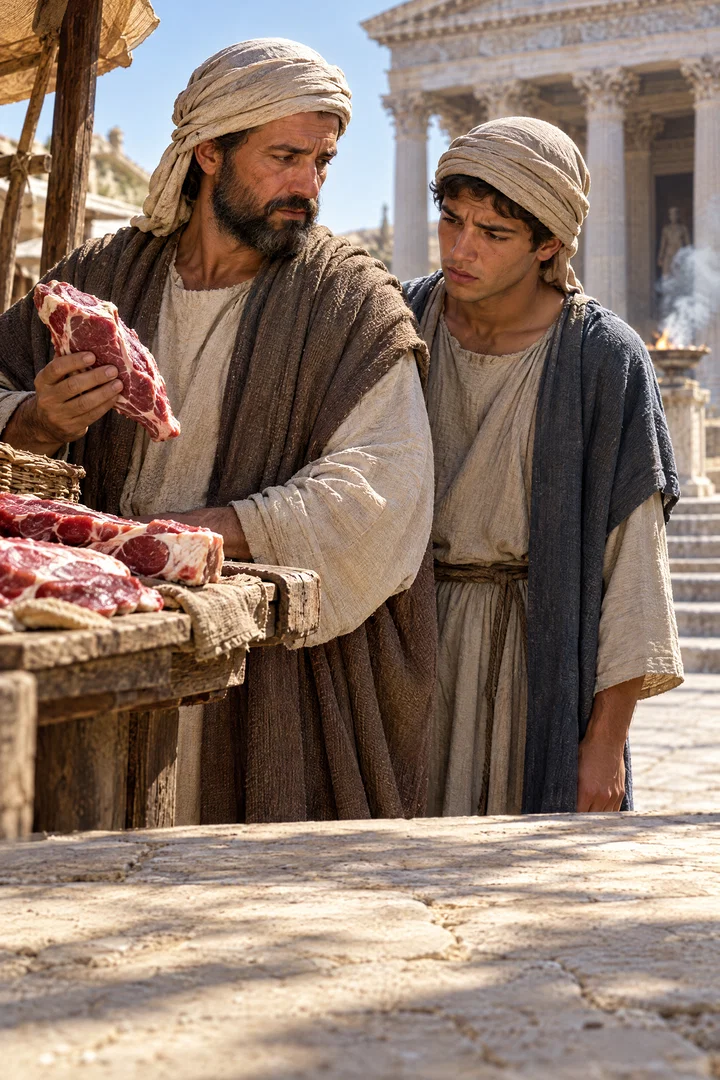
It is good neither to eat flesh, nor to drink wine, nor any thing whereby thy brother stumbleth, or is offended, or is made weak.
Translations
It is good neither to eat flesh, nor to drink wine, nor any thing whereby your brother stumbles, or is offended, or is made weak.
King James Version, KJV Cambridge Paragraph Bible
It is good neither to eat flesh, nor to drink wine, nor any thing whereby thy brother stumbleth, or is offended, or is made weak.
It is good neither to eat flesh, nor to drink wine, nor any thing by which thy brother stumbleth, or is offended, or is made weak.
Revised Version, American Standard Version
It is good not to eat flesh, nor to drink wine, nor to do anything whereby thy brother stumbleth.
Right [it is] not to eat flesh, nor to drink wine, nor to [do anything] in which thy brother doth stumble, or is made to fall, or is weak.
[ It is] right not to eat meat, nor drink wine, nor [ do anything] in which thy brother stumbles, or is offended, or is weak.
Well, is it not to eat flesh nor to drink wine nor [to do aught] whereby thy brother is caused to stumble.
It is better not to eat meat or drink wine or to do anything to cause your brother to stumble.
It is better not to eat meat or drink wine or to do anything to cause your brother to stumble or to be hindered or weakened.
It is good to not eat meat, drink wine, nor do anything by which your brother stumbles, is offended, or is made weak.
It is better not to take meat or wine or to do anything which might be a cause of trouble to your brother.
It is good neither to eate flesh, nor to drinke wine, nor any thing whereby thy brother stumbleth, or is offended, or made weake.
Douay-Rheims (Challoner revision)
It is good not to eat flesh, and not to drink wine, nor any thing whereby thy brother is offended, or scandalized, or made weak.
Pictures
Cross-references 20 of 30
- 1 Corinthians 8:13
Wherefore, if meat make my brother to offend, I will eat no flesh while the world standeth, lest I make my brother to offend.
Paul abstains from meat rather than cause a brother to stumble.
- Romans 14:13
Let us not therefore judge one another any more: but judge this rather, that no man put a stumblingblock or an occasion to fall in his brother’s way.
Urges believers not to put a stumbling block in a brother’s way.
- 1 Corinthians 10:31-33
Whether therefore ye eat, or drink, or whatsoever ye do, do all to the glory of God.
Eating and drinking should honor God while avoiding offense and seeking others’ good.
- Romans 14:15
But if thy brother be grieved with thy meat, now walkest thou not charitably. Destroy not him with thy meat, for whom Christ died.
Both forbid grieving or harming a brother through food-related liberty.
- Romans 14:5-6
One man esteemeth one day above another: another esteemeth every day alike. Let every man be fully persuaded in his own mind.
Different convictions about days and food are lived unto the Lord without judging one another.
- Romans 15:1
We then that are strong ought to bear the infirmities of the weak, and not to please ourselves.
The strong should bear the weak’s infirmities rather than please themselves.
- Colossians 2:16-17
Let no man therefore judge you in meat, or in drink, or in respect of an holyday, or of the new moon, or of the sabbath days:
Both address judgment over food and observance of days as ceremonial matters.
- Romans 14:17
For the kingdom of God is not meat and drink; but righteousness, and peace, and joy in the Holy Ghost.
God’s kingdom is defined by righteousness, peace, and joy in the Holy Spirit, not food and drink.
- Matthew 18:6
But whoso shall offend one of these little ones which believe in me, it were better for him that a millstone were hanged about his neck, and that he were drowned in the depth of the sea.
Jesus warns severely against causing a vulnerable believer to stumble.
- Romans 14:14
I know, and am persuaded by the Lord Jesus, that there is nothing unclean of itself: but to him that esteemeth any thing to be unclean, to him it is unclean.
Food is not unclean in itself, but conscience and its effect on others call for restraint.
- 1 Corinthians 8:9
But take heed lest by any means this liberty of yours become a stumblingblock to them that are weak.
Freedom over food can become a stumbling block to the weak.
- Romans 14:2-3
For one believeth that he may eat all things: another, who is weak, eateth herbs.
Food distinctions should not despise or stumble believers with weaker faith.
- Colossians 2:21
( Touch not; taste not; handle not;
Echoed in the closing call to avoid touching and tasting what may lead others astray.
- 1 Corinthians 8:11
And through thy knowledge shall the weak brother perish, for whom Christ died?
A brother may be harmed by another’s conduct despite Christ having died for him.
- Romans 14:3
Let not him that eateth despise him that eateth not; and let not him which eateth not judge him that eateth: for God hath received him.
Believers should not despise or judge one another over eating.
- Romans 14:1
Him that is weak in the faith receive ye, but not to doubtful disputations.
Believers should welcome the weak in faith without criticizing their views.
- 1 Timothy 5:23
Drink no longer water, but use a little wine for thy stomach’s sake and thine often infirmities.
Timothy is advised to use wine for his ailments, while Romans warns against causing another to stumble.
- 1 Corinthians 10:23-24
All things are lawful for me, but all things are not expedient: all things are lawful for me, but all things edify not.
Believers should weigh their choices by whether they build up others and seek their good.
- Proverbs 20:1
Wine is a mocker, strong drink is raging: and whosoever is deceived thereby is not wise.
Wine is portrayed as a mocker, supporting restraint from drinking.
- Habakkuk 2:15
Woe unto him that giveth his neighbour drink, that puttest thy bottle to him, and makest him drunken also, that thou mayest look on their nakedness!
Both condemn giving drink that harms a neighbor.
Commentary
Each commentary is drawn from primary sources: the writings of Ellen G. White and Adventist pioneers and periodicals. Each commentary is separate. Its own words are not a quotation; follow the references to read the source passages.
Ellen G. White
2 sources
It is good to eat no flesh and to drink no wine and to do nothing else by which a brother stumbles or is offended or is made weak.Ms 22, 1898, par. 36–40 Abstaining from wine and from flesh for the sake of a weak brother is therefore right.Ms 22, 1898, par. 36–40 The instruction was given as one of Paul's warnings against drunkenness, aimed at reforming the customs and habits of the Gentile world.Ms 22, 1898, par. 36–40
It is God's voice to those engaged in the work of health reform.Lt 82, 1899, par. 8–9 It should be carefully studied and made a guide for future labors.Lt 82, 1899, par. 8–9
Sources
Pioneers and periodicals
86 sources
It is good to refrain from eating flesh, drinking wine, or doing anything else when it would cause a brother to stumble, be offended, or be made weak in faith, even when the thing itself seems lawful or innocent to one's own conscience.ST Jun 3, 1897ST Jul 12, 1910ST Dec 30, 1913ST Dec 3, 1885ST Sep 22, 1890 Exercising personal liberty matters less than acting in love, seeking peace, unity and edification, and caring for one's influence so the work of God does not suffer.ST Jun 3, 1897ST Sep 4, 1893ST Sep 4, 1893ST Mar 6, 1893 Believers are to bear with the weak and not judge, despise or condemn one another over disputed matters of food, drink and days, for each will answer to God and must be fully persuaded in his own mind.ST Jul 12, 1910ST Jun 17, 1897ST Nov 11, 1930ST Feb 20, 1907 The verse says nothing about the Sabbath, the fourth commandment, or the moral law, but treats of meats, drinks and ceremonial days that are nonessential, while the kingdom of God is righteousness, peace and joy in the Holy Spirit rather than eating and drinking.ST Aug 11, 1909ST Jul 29, 1880RH Aug 19, 1851ST Apr 30, 1902 The same self-denying love calls for total abstinence from intoxicating drink and thoughtful care for health and example, since what one can do without harm to himself may still tempt a vulnerable soul to ruin.ST Oct 11, 1899ST Jul 1, 1897ST Oct 21, 1880RH Jul 8, 1875ST Mar 12, 1885
Words and Historical Setting
The word rendered flesh is the Greek kreas, meaning flesh spoken of as an article of food, in contrast to broma, the usual New Testament word rendered meat, which means eatables or solid food including fruits, grains and vegetables and never means flesh exclusively, and kreas occurs in only two places in the New Testament.RH Feb 20, 1872
The dispute behind the verse involved Jewish and Gentile Christians differing over meats and days regarded as nonessential to religion, calling for mutual forbearance rather than insisting on gospel liberty in indifferent matters.RH Apr 20, 1876RH Apr 20, 1876
That difference included ceremonial rules about meats and drinks, with Jews not to impose their ceremonial practices on Gentiles and Gentiles not to disregard Jewish scruples, but to act for the upbuilding of others.RH Apr 20, 1876RH Apr 20, 1876RH Aug 19, 1851
It also concerned food associated with idol worship, where the idol does not change the food itself yet eating can harm one whose conscience is still inclined toward idols, especially weak recent converts out of idolatry.RH Apr 20, 1876RH Jul 22, 1902
Former feast days and fast days were involved, including ritual distinctions in food and feast days, Passover meats and bitter herbs, and Jewish views about food and feast days still held by some converts, which are matters of indifference when not used to seek justification and reject Christ's sacrifice.RH Apr 21, 1851RH Mar 29, 1864RH Aug 19, 1851
The epistle was written from Corinth to the church at Rome in the spring of A.D. 58 as Paul returned from his third missionary journey.ST Jun 3, 1897
It was written in the same year Paul visited Troas.ST Jun 3, 1897
The verse belongs to the treatise in Romans 13 and 14 on the separation of religion and the State, the separation of what is due to God from what is due to the powers that be.ST Oct 18, 1899
The day in dispute grouped with questions about eating meat and herbs is not identified, and its grouping with those questions does not show that it was the Sabbath.RH Jan 13, 1852
Love Limits Christian Liberty
It is good to refrain from eating flesh, drinking wine, or doing anything else when doing so would cause a brother to stumble, take offense, or be made weak in faith.ST Jun 3, 1897ST Dec 30, 1913ST Sep 4, 1893ST Sep 4, 1893 Even what is otherwise lawful or innocent to one's own conscience should be given up rather than endanger another's conscience, and when its lawfulness is in doubt the safe course is to avoid it.ST Jul 12, 1910ST Dec 30, 1913 Christian liberty must not be used at the cost of another person's spiritual good, for love for others and care for the effects of one's influence take priority over exercising personal liberty.ST Sep 4, 1893ST Sep 4, 1893 Differences over food, drink, and the observance of days are not grounds for condemning one another, since each believer is accountable to God and each must take care not to put an obstacle in another's way.ST Jul 12, 1910
Exercising a liberty matters less than acting in love and avoiding harm to another person.ST Jun 3, 1897 The strong are to treat overscrupulous believers as brothers, not criticize them or discourage and ruin their faith, and each person is to be allowed to follow the understanding the Holy Spirit is shaping, for this concern for one another protects the peace and unity of the church.ST Nov 11, 1930 Those with greater understanding should show charity toward people with less light by avoiding actions that could make them stumble, offend them, or weaken them, living according to the light one has while treating others with care.ST Feb 20, 1907 Concern for another's spiritual welfare is a higher motive for abstinence than self-interest.ST Mar 6, 1893
Believers should bear with the weak and not judge, despise, dismiss, condemn or put an obstacle in one another's way over disputed matters of food, drink and days.ST Jul 12, 1910ST Jun 17, 1897 Each person will answer to God, so believers should avoid criticism and seek unity rather than impose narrow standards on one another, seeing that he himself is right and being fully persuaded in his own mind.ST Feb 11, 1913 Each shall give account of himself to God, whose judgment is according to His law, while looking with charity and kindness on things a brother does differently rather than treating him as criminal or sinful.ST Feb 11, 1913ST Nov 24, 1909 Eating meat is not condemned, but if eating meat or drinking wine or any other indulgence would cause a brother to stumble, love requires denying self for that brother's sake so the work of God does not suffer.ST Jun 17, 1897
Those with greater understanding should respect even mistaken scruples and allow each to follow the understanding the Holy Spirit is shaping rather than insisting they meet one's own standard.ST Nov 11, 1930ST Sep 3, 1896 It is a lesson in courtesy and helpfulness, calling for charity and patience toward those with scruples.ST Sep 3, 1896 The chapter's concern is living according to the light one has while treating others with care.ST Feb 20, 1907
The verse gives no one license to commit sin, break God's commandments, turn from what the Lord instructed, excuse what appetite suggests or the devil tempts to do, or set himself up as judge in God's place.ST Feb 11, 1913 It is not permission to treat the Sabbath or any other commandment of God as optional, nor does it grant license to disregard God's law.ST May 17, 1910 Another person's offense at obedience to God's commandments does not make that obedience a matter of personal choice. The strictest disciplinarian of himself must still refrain from sitting in judgment upon others.ST Feb 11, 1913
The chapter is not a rule prescribing what foods people must eat and does not decide what days should be kept or what food should be eaten.ST Aug 11, 1909ST Apr 30, 1902 It calls for restraint and care for others rather than judging them over their choices, and for care in one's own conduct so it is no cause of offense to others.ST Aug 11, 1909ST Apr 30, 1902 Food should not be made an unbearable burden or treated as a means of becoming righteous, and Christians should choose what is best for health and service without judging standing by diet.ST Aug 10, 1915 The kingdom of God is not a matter of eating and drinking but of righteousness, peace and joy in the Holy Spirit, and no particular abstinence saves since salvation comes only through Christ, not through rules about eating or drinking.ST Aug 10, 1915ST Jul 29, 1913ST Feb 6, 1896 The mere doing or not doing of a particular thing is not salvation, for one man's faith is broad enough to eat all things while another who is weak eats only herbs, yet he who eats must not despise his brother and he who abstains must not condemn him, for each is responsible to God alone.ST Feb 6, 1896
The verse does not make every food or drink permissible, since some are unfit to use, including what intoxicates. It addresses disputes over traditional distinctions not required by revelation, while warning that a person should not violate conscience. Love for God leads a person to heed what God said about clean and unclean, to eat and drink to God's glory as temples of the Holy Spirit, and to avoid what better knowledge and conscience tell them is wrong.ST Jul 29, 1913 The Mosaic prohibition was lifted in form but its principle remains and the swine is still unclean.ST Jul 29, 1913
The verse sums up Christian duty to give up food, drink, or any action that may cause a fellow believer to stumble or be hurt.ST Jun 3, 1897 It belongs to a chapter that teaches against judging others and calls for care in one's own conduct rather than condemnation of another, since each person must answer to God and be judged by His law. Self-indulgence that becomes a stumbling block shows lack of love and concern for a brother's salvation.ST Jun 3, 1897
Sabbath and Moral Law
It says nothing about the Sabbath, the fourth commandment, or the moral law, and does not plainly teach the abolition or change of the Lord's Sabbath.ST Jul 29, 1880RH Aug 19, 1851ST Jan 3, 1878RH Aug 5, 1852 Paul is treating not of the universal moral law at all but of meats and drinks and ceremonial matters whereby a brother stumbles or is offended or is made weak.ST Jul 29, 1880ST Jan 3, 1878RH Aug 5, 1852RH Oct 7, 1851 Its connection governs forbearance toward weak brethren who have not been so well instructed, concerning Jewish ritual and Mosaic ritual services that find their antitype in Jesus and the coming glories of the great salvation, including rules about meats and drinks, Passover meats and bitter herbs, and feast-day sabbaths, leaving the Sabbath by itself on its foundation.ST Jul 29, 1880RH Aug 19, 1851RH Oct 7, 1851 If it had any reference to the Sabbath or fourth commandment it would not comport with the testimony of James nor agree with what was previously written in the same epistle affirming the perpetuity of the law, and such a doctrine of abrogation must not be adopted without being thoroughly tested because it would require explicit language. So understood as part of a chapter about the ceremonial law, it has no bearing on the weekly Sabbath or any commandment of the enduring moral law of God.ST Jan 3, 1878RH Aug 5, 1852
The ritual distinctions in food and feast days under discussion are matters of indifference when they are not used to seek justification and reject Christ's sacrifice.RH Mar 29, 1864 Those observances were symbols pointing to Christ, and some believers continued to observe ceremonial feasts and related practices while others did not, without condemning one another, since believers who have Christ have their fullness in him.RH Mar 29, 1864 The discussion distinguishes these ritual days from the Sabbath, which Romans 14 does not address.RH Mar 29, 1864
The chapter does not make sabbatic observance dangerous or indifferent, since it belongs to counsel about eating flesh, drinking wine, esteeming days, and abstaining from flesh, wine, or anything else by which a brother stumbles, is offended, or is made weak. To use Galatians 4:10 to condemn Sabbath-keeping as dangerous therefore contradicts the appeal to Romans 14 to treat days as indifferent.
It must not be used to argue that no day is distinct and that each person may keep or refrain from keeping any day, as an excuse for disregarding the fourth commandment.RH Feb 3, 1852 Consideration for others in avoiding harm to another does not cancel God's commandments, change or abolish them, or create a new moral standard.RH Jul 22, 1852
Matters of religious observance, including the keeping of days, are matters of conscience for which each person is accountable to God and not to civil government.ST Feb 11, 1913ST Mar 19, 1894 Those in church relationship must not judge one another but must do everything in their power not to put a stumbling-block or occasion of falling in a brother's way, looking with charity and kindness on things a brother does differently rather than treating him as criminal or sinful.ST Feb 11, 1913 Each one must see that he himself is right because each shall give account of himself to God, and the verse gives no one license to commit sin, to break God's commandments, to turn from things the Lord has instructed to do, to excuse what appetite suggests or the devil tempts to do, or to set himself up as judge in the place of God, so that even the strictest disciplinarian of himself must still refrain from sitting in judgment upon others.ST Feb 11, 1913
By contrast, it is also taught that observance of a set day is a matter of personal persuasion rather than binding obligation.ST May 21, 1902ST Feb 4, 1903 Each person is left to choose for himself about Sabbath-keeping and about eating herbs or flesh meats or both, must be fully persuaded in his own mind, and he that regards the day regards it unto the Lord, while he that regards not the day to the Lord he does not regard it.ST May 21, 1902ST Feb 4, 1903 On this understanding the verse does not tell what a man should do morally but what he should not do, namely judge his neighbor, for man is not his judge and God will not compel acquiescence, though every choice brings its harvest, for disobeying God's Word reaps the wages of sin which is death and feeding on what is unwholesome reaps disease, while choosing in harmony with God's Word gives righteousness and peace and joy in the Holy Ghost, and God's Word will judge in the last day, since service done in doubt is service from fear and not from choice and love.ST May 21, 1902
The command concerns matters like former feast days and fast days and eating flesh, not the righteous will of God.ST Jun 22, 1904 Christians in the same church must not judge one another but must pursue peace and edification by putting no stumbling block in a brother's way, and if fellow believers stumble over eating flesh it is good for Christ's sake and for the weak soul's sake to abstain from flesh and wine and anything whereby a brother stumbles or is offended or made weak, and to do all in faith founded in the Word of God.ST Jun 22, 1904 The kingdom of God is righteousness and peace and joy in the Holy Spirit, and God's children keep His Sabbath and fulfill the righteousness of the law by putting away all sin without question.ST Jun 22, 1904
Temperance and Bodily Health
It is good to give up wine and strong drink, and any food, drink or other indulgence, when using it could cause a brother to stumble, take offense, or be made weak in faith, wounding conscience, tempting toward ruin and misery, or drawing a person vulnerable to alcohol into destruction.ST Dec 3, 1885ST Sep 22, 1890ST Sep 29, 1881ST Dec 29, 1909ST Oct 21, 1880 The ability to drink moderately without personal harm does not excuse conduct that encourages destructive drinking in another, for concern for a vulnerable soul for whom Christ died outweighs personal pleasure and takes priority even over an occasional glass.ST Jul 11, 1878ST Dec 29, 1909ST Oct 21, 1880 Temperance therefore includes abstaining from intoxicants and other indulgences that impair judgment or dull awareness of others' rights and feelings, following Christ's example to protect others and to keep God's work from suffering harm.ST Sep 22, 1890ST Dec 29, 1909 Wine may not be evil in itself, yet promoting its use can harm people and society, so personal freedom in food and drink, which is not central to God's kingdom, should yield to love, peace, and the spiritual good of others.ST Jul 29, 1897ST Dec 29, 1909
A pastor's or minister's example of drinking wine persuaded a man who had never drunk to try it, and that first drink awakened an appetite that led to addiction, enslaved him, and helped ruin his home and family.ST Oct 21, 1880RH Jul 8, 1875 People are therefore responsible not only for their own safety but for the harmful influence their example can have on others.ST Oct 21, 1880RH Jul 8, 1875 The verse condemns fermented wine and supports refusing it rather than recommending it as medicine.ST May 26, 1914 The converted heart does not ask how much intoxicating drink may be indulged and still be saved, but asks what the Lord wants done, requiring total abstinence from spirituous and malt liquors that intoxicate and stupefy mind and soul and bring misery.ST Jul 1, 1897
Habitual use of wine and alcoholic drinks must be given up entirely, because intemperance with its sin, shame, crime, horror and misery comes from the drinking habits of society, and those habits are upheld and perpetuated by the example and influence of intelligent people and the better classes.ST Mar 12, 1885 To lend example to uphold them by one who knows this is mortal sin, and it is a primary Christian duty to live so that if all the world should follow the example no harm could come from it.ST Mar 12, 1885 Universal total abstinence would cause the sin, shame, crime and misery of intemperance to cease and relieve the world of its wretchedness.ST Mar 12, 1885 Giving up wine is wise even when the sacrifice is great, for one's own sake as well as another's, and total abstinence rests on two reasons: it is best for oneself, and even one who believes himself strong enough to withstand temptation should abstain so that Christian example does not lead others astray.ST Jul 27, 1882ST
The same self-denial applies to tobacco, tea and coffee: when their propriety is in doubt the safe side must be kept by refusal, lest personal example encourage appetite in others, cause the good way to be evil spoken of, harden conscience through repeated violation, or trouble and offend others with smoke.RH May 20, 1858ST Nov 7, 1906RH Mar 17, 1863RH Jan 9, 1866 Refusal is both to overcome one's own harmful appetite and to avoid setting an example that fosters that appetite in others, even denying self of what might be a personal benefit rather than leading others by example to do what is not lawful.RH Mar 13, 1866RH Mar 17, 1863 A believer's refusal to commit to abstinence can give someone struggling with tobacco or wine a sense of relief and an excuse to avoid giving up the habit, while consistent refusal removes that excuse.ST Nov 6, 1879
Eating flesh or drinking wine is not an absolute necessity, and food is not to be used merely to gratify unholy appetite, but whatever is permitted should be used to seek God's glory rather than indulging the flesh.ST Oct 11, 1899ST Feb 17, 1904 The original diet and the manna given in the wilderness did not include flesh meats, and eating much flesh tends to corrupt the body, dull spiritual responsiveness, and demand stimulation, especially as animals become more diseased, while a vegetarian diet supplies all that is necessary and helps make the natural man more spiritual and responsive to the Spirit and less inclined to appetite. Yet there are times and places where flesh food is the very best food to be had, as after the Flood, as when Elijah was fed bread and flesh in famine, and as when Jesus ate fish. Christians should therefore choose what is best for health and service to God without judging standing by diet or making food an unbearable burden or a means of becoming righteous, doing all temperately and to God's glory, since the kingdom of God is not a matter of eating and drinking but of righteousness, peace and joy in the Holy Spirit, and since reform should be pursued thoughtfully without extremes or one unvarying rule because foods wholesome for one may harm another.ST Aug 10, 1915RH Jan 19, 1905
Whether it is right to raise swine to sell is left for every man to be fully persuaded in his own mind, with no direct Scriptural order binding consciences on it.RH Feb 13, 1872 In the case of food offered to idols, avoiding it could keep a weak believer from being drawn back into idolatry and help others be won from it.ST Feb 22, 1883 The disputed food in that discussion is food offered to idols, not pork: eating such food does not make it unlawful, but a believer who thinks eating it honors an idol may abstain, and others should not pressure that believer or provoke a crisis of conscience.ST Sep 30, 1886 On clean and unclean meats the teaching is stated both ways: that the Bible no longer recognizes a distinction between clean and unclean meats, and that the Mosaic food prohibition was lifted in form but its principle remains and the swine is still unclean, with love for God leading a person to heed what God said about clean and unclean and to eat and drink to glorify God, while no particular abstinence saves since salvation comes only through Christ.ST Jul 29, 1913RH Jan 20, 1853 The chapter belongs with 1 Corinthians 8 to the temperance lesson on Christian self-control, in which knowledge and liberty in eating flesh and drinking wine must be limited by love, giving up anything whereby a brother stumbles or is offended or is made weak, to follow after the things which make for peace and edify rather than asserting rights, a rule especially needed where believers are recent converts out of idolatry with weak consciences still inclined toward idols.ST Jul 29, 1897ST Feb 4, 1903ST Jun 3, 1897
Influence in Daily Life
It is good to give up even what is lawful to oneself when it causes a brother to stumble, take offense, or be made weak in conscience, and this rule reaches beyond eating flesh and drinking wine to any practice at all.RH Apr 13, 1876RH May 22, 1879ST Sep 4, 1879RH May 8, 1866RH Sep 7, 1911 Joining the Grange should therefore be weighed by whether it would grieve and offend fellow church members, and joining secret societies should be refused when example may lead weaker believers into danger.RH Apr 13, 1876RH May 8, 1866 Attending the theatre is to be refused when public example makes a questionable choice seem acceptable and lends influence that encourages a conscience-troubled person to go, and worldly amusements are to be refused when example may draw a weaker person into a harmful course even to destruction, with no wrong course tolerated even slightly.ST Sep 4, 1879RH Sep 7, 1911 Pursuing political office in a way that divides the church is disorderly and is to be avoided when it is known to distract and divide fellow believers, and the same self-denial governs use of a Christmas tree and uses of money and leisure including travel and collecting art or literature.RH May 22, 1879ST Jun 26, 1879
A host should refuse to offer or serve wine at home or at social gatherings rather than expose guests to temptation and ruin.ST Mar 18, 1880ST Mar 21, 1878RH Jul 9, 1872 Such serving can become a stumbling block to those vulnerable to intemperance, especially the young, those struggling with drinking, and those trying to reform, while refusal protects them and may help draw people back from intemperance.ST Mar 18, 1880ST Mar 21, 1878RH Jul 9, 1872 Refusing to supply liquor rejects the excuse that sale or use is justified because others will drink anyway.ST Jan 2, 1893
Parents are to model self-control before children because children closely observe example and conduct that undermines taught lessons can lead another to stumble or weaken.ST Feb 20, 1879 A person should abstain from what he himself could do without falling if doing it might cause a young or vulnerable disciple to fall.ST Jun 10, 1913 Applied to Sabbath observance at home, conduct is to consider its effect on other family members and treat both sides fairly under the golden rule, supporting considerate conduct rather than forced or merely outward religious obedience.RH Mar 27, 1900 Applied to disagreement over eating meat, dietary convictions remain a matter between each person and God, and differences are not to become grounds for petty persecution or judging another's motives.RH Oct 6, 1904
Christians should willingly concede personal customs and prejudices merely for religious and social harmony, with Gentile believers abstaining from prominent practices especially repugnant to Jews and to righteousness rather than remaining a constant hindrance.ST May 28, 1902 Giving them up is essential to harmony with God's will, to good example to the world, and to spirituality in the church.ST May 28, 1902 The chapter gives instruction to the church on dealing with a brother that walks disorderly, to be studied to learn how to withdraw in each case since no single rule fits every case, and to pursue with wisdom sought from God a course that witnesses for God and wins the sinning soul if possible.ST Oct 12, 1904 If fellow believers in the same church stumble over eating flesh, it is good for Christ's sake and the weak soul's sake to abstain from flesh and wine and anything whereby a brother stumbles or is offended or made weak, pursuing peace and edification, putting no stumbling block in a brother's way, and doing all in faith founded in the Word.ST Jun 22, 1904
A person's example can affect weaker people even when he believes he acts with self-control, for contact with a harmful spirit can gradually lower standards and make evil seem acceptable, so an otherwise permissible activity is to be given up if it may lead another into wrongdoing or weaken resistance.RH Sep 7, 1911RH Aug 29, 1912 Refusing wine or ale even when social custom makes drinking seem genteel protects a weaker neighbor, because example can encourage a vulnerable person to drink and contribute to ruin, knowingly tempting someone carries grave moral responsibility, and self-denial includes giving up small pleasure to support abstinence.RH Jan 9, 1872 Concern for others must not, however, lead Christians to sacrifice the sense of right, as when drinking beer and wine and accepting cigarettes to avoid offending neighbors adopts customs that undermine witness to Christian principles.
Sources