1 John 3:12
Not as Cain, who was of that wicked one, and slew his brother. And wherefore slew he him? Because his own works were evil, and his brother’s righteous.
Translations
Not as Cain, who was of that wicked one, and slew his brother. And why slew he him? Because his own works were evil, and his brother’s righteous.
King James Version, KJV Cambridge Paragraph Bible
Not as Cain, who was of that wicked one, and slew his brother. And wherefore slew he him? Because his own works were evil, and his brother’s righteous.
Not as Cain, who was of that wicked one, and slew his brother. And why did he slay him? Because his own works were evil, and his brother's righteous.
Revised Version, American Standard Version
not as Cain was of the evil one, and slew his brother. And wherefore slew he him? Because his works were evil, and his brother’s righteous.
not as Cain — of the evil one he was, and he did slay his brother, and wherefore did he slay him? because his works were evil, and those of his brother righteous.
not as Cain was of the wicked one, and slew his brother; and on account of what slew he him? because his works were wicked, and those of his brother righteous.
Not just as, Cain, was, of the wicked one, and slew his brother! And, for what cause, slew he him? Because, his works, were, wicked, whereas, those of his brother, were, righteous.
Berean Standard Bible, Majority Standard Bible
Do not be like Cain, who belonged to the evil one and murdered his brother. And why did Cain slay him? Because his own deeds were evil, while those of his brother were righteous.
unlike Cain, who was of the evil one and killed his brother. Why did he kill him? Because his deeds were evil, and his brother’s righteous.
Not being of the Evil One like Cain, who put his brother to death. And why did he put him to death? Because his works were evil and his brother's works were good.
Not as Cain which was of that wicked one, and slewe his brother: and wherefore slewe he him? because his owne workes were euill, and his brothers good.
Douay-Rheims (Challoner revision)
Not as Cain, who was of the wicked one, and killed his brother. And wherefore did he kill him? Because his own works were wicked: and his brother’s just.
Pictures
Cross-references 20 of 37
- Genesis 4:8
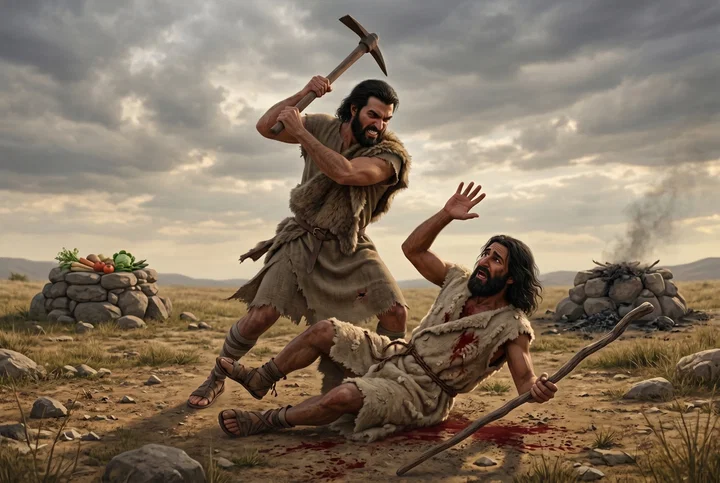
And Cain talked with Abel his brother: and it came to pass, when they were in the field, that Cain rose up against Abel his brother, and slew him.
Cain kills Abel, his righteous brother, because his own works were evil.
- Hebrews 11:4
By faith Abel offered unto God a more excellent sacrifice than Cain, by which he obtained witness that he was righteous, God testifying of his gifts: and by it he being dead yet speaketh.
Abel’s righteous offering by faith contrasts with Cain’s evil works.
- Genesis 4:4-5
And Abel, he also brought of the firstlings of his flock and of the fat thereof. And the LORD had respect unto Abel and to his offering:
Contrasts Abel’s accepted offering and righteous works with Cain’s rejected offering and evil works.
- Genesis 4:7
If thou doest well, shalt thou not be accepted? and if thou doest not well, sin lieth at the door. And unto thee shall be his desire, and thou shalt rule over him.
God warns Cain about sin and promises acceptance if he does well.
- Exodus 20:13
Thou shalt not kill.
Cain’s murder broke the commandment against killing.
- 1 John 3:8
He that committeth sin is of the devil; for the devil sinneth from the beginning. For this purpose the Son of God was manifested, that he might destroy the works of the devil.
The sinner is of the devil, who sins from the beginning.
- Genesis 4:10-12
And he said, What hast thou done? the voice of thy brother’s blood crieth unto me from the ground.
God curses Cain for shedding his brother’s blood.
- John 8:44
Ye are of your father the devil, and the lusts of your father ye will do. He was a murderer from the beginning, and abode not in the truth, because there is no truth in him. When he speaketh a lie, he speaketh of his own: for he is a liar, and the father of it.
The devil is described as a murderer from the beginning, as Cain was.
- Genesis 9:5-6
And surely your blood of your lives will I require; at the hand of every beast will I require it, and at the hand of man; at the hand of every man’s brother will I require the life of man.
God declares judgment against taking human life.
- Genesis 4:23-24
And Lamech said unto his wives, Adah and Zillah, Hear my voice; ye wives of Lamech, hearken unto my speech: for I have slain a man to my wounding, and a young man to my hurt.
Lamech boasts of killing and compares himself with Cain.
- 1 John 2:9
He that saith he is in the light, and hateth his brother, is in darkness even until now.
Hatred of a brother shows that one remains in darkness.
- Genesis 4:13
And Cain said unto the LORD, My punishment is greater than I can bear.
Cain acknowledges his punishment after killing his brother.
- Matthew 23:35
That upon you may come all the righteous blood shed upon the earth, from the blood of righteous Abel unto the blood of Zacharias son of Barachias, whom ye slew between the temple and the altar.
Both texts recall Abel’s righteous death at Cain’s hand.
- Hebrews 12:24
And to Jesus the mediator of the new covenant, and to the blood of sprinkling, that speaketh better things than that of Abel.
Abel’s blood contrasts with Christ’s better blood.
- Matthew 5:22
But I say unto you, That whosoever is angry with his brother without a cause shall be in danger of the judgment: and whosoever shall say to his brother, Raca, shall be in danger of the council: but whosoever shall say, Thou fool, shall be in danger of hell fire.
Christ connects anger toward a brother with murder.
- Genesis 4:17
And Cain knew his wife; and she conceived, and bare Enoch: and he builded a city, and called the name of the city, after the name of his son, Enoch.
Cain is associated with the beginning of city building.
- 1 John 4:20-21
If a man say, I love God, and hateth his brother, he is a liar: for he that loveth not his brother whom he hath seen, how can he love God whom he hath not seen?
Love for God cannot be separated from love for one’s brother.
- Leviticus 19:17-18
Thou shalt not hate thy brother in thine heart: thou shalt in any wise rebuke thy neighbour, and not suffer sin upon him.
The command to love one’s neighbor shows the duty Cain broke was old.
- Galatians 5:19-21
Now the works of the flesh are manifest, which are these; Adultery, fornication, uncleanness, lasciviousness,
Both identify envy and murder as sinful works.
- 1 John 3:16-18
Hereby perceive we the love of God, because he laid down his life for us: and we ought to lay down our lives for the brethren.
Contrasts Cain’s violence with love shown through action and sacrifice.
Commentary
Each commentary is drawn from primary sources: the writings of Ellen G. White and Adventist pioneers and periodicals. Each commentary is separate. Its own words are not a quotation; follow the references to read the source passages.
Ellen G. White
41 sources
The verse holds up Cain as the opposite of brotherly love that believers must not copy, for to be of that wicked one is to belong to Satan and stand on the adversary's side rather than on Christ's, and he killed his brother not for any wrong done but because his own works were evil and his brother's were righteous.RH Apr 3, 1900Lt 72, 1906, par. 13–17Lt 69, 1897, par. 12–14Ms 41, 1890, par. 20–24Ms 12, 1899, par. 17–18 Hatred of a brother belongs to death and makes a person a murderer in whom no eternal life abides, while love for the brethren proves passing from death to life and being born of a righteous God.Ms 31, 1903, par. 4–5Ms 108, 1899, par. 22–25Lt 80, 1898, par. 16–18 Cain's offering was disobedient because it lacked the required slain lamb pointing to Christ, while Abel in faith obeyed and offered the firstlings of his flock, which God accepted, and Cain in anger and jealousy killed him though reason and conscience told him Abel was right.Ms 41, 1890, par. 20–24Ms 78, 1901, par. 3–11PP 73.3–74.2Ms 53, 1890, par. 48–5921MR 416.1–3 Cain and Abel represent the two classes of the disobedient wicked and the obedient righteous that continue till the close of earth's history, for the wicked hate the righteous because righteous doing condemns their sinful course and reveals their sins.SG3 50.11SP 57.1GC88 46.14SP 47.1ST Feb 6, 1879 Abel's works were righteous because he kept God's commandments while Cain's were evil because he exalted his own judgment above God, the required lamb confessing sin and representing Christ the Lamb without blemish whose blood speaks better things than Abel's, and the commanded love is God's love seen in laying down life for the brethren in deed and in truth and not in word only.Ms 41, 1890, par. 20–24Ms 78, 1901, par. 3–11Ms 53, 1890, par. 48–59ST Jan 9, 1896ST Nov 14, 1895
Wording and Contrast
Cain stands as the opposite of brotherly love, the example believers must not follow.RH Apr 3, 1900Ms 41, 1890, par. 20–24Ms 12, 1899, par. 17–18 His killing of his brother shows what hatred does, bound up with evil rather than with the love that marks life with God, and it illustrates the difference between evil conduct and righteous conduct.RH Apr 3, 1900 That refusal of love was jealousy cruel as death, and the call instead is to refuse Cain-like jealousy and hatred and to love the brethren as Christ loved, losing sight of self and even laying down life for them.Ms 41, 1890, par. 20–24 Love of this kind does not compromise with sin but flows from loving God supremely and neighbor as self.Ms 41, 1890, par. 20–24 Loving one another is the message heard from the beginning, set in direct contrast to Cain's pattern.Ms 12, 1899, par. 17–18
To be of that wicked one is to belong to the evil one, to have Satan as leader, and to stand on the adversary's side rather than on Christ's side.RH Apr 3, 1900Lt 72, 1906, par. 13–17Lt 69, 1897, par. 12–14Ms 8a, 1888, par. 13–15Ms 31, 1903, par. 9 The verse sets the principles of Christ against the principles of Satan, with Cain on Satan's side in slaying his righteous brother because his own works were evil.Ms 31, 1903, par. 9 Hatred of a righteous brother marks those who do not belong to God, while love for one another with righteous conduct marks the children of God.Lt 72, 1906, par. 13–17Lt 69, 1897, par. 12–14 Hostility toward a righteous brother is therefore the fruit of evil, and hatred with evil conduct stands opposed to the brotherly love that must be shown in deeds and truth.Ms 8a, 1888, par. 13–15Ms 33, 1894, par. 8–9
The verse answers its own question about motive: he killed him because his own works were evil and his brother's were righteous, not for any wrong his brother had done.RH Apr 3, 1900Lt 72, 1906, par. 13–17Lt 69, 1897, par. 12–14Ms 8a, 1888, par. 13–15Ms 33, 1894, par. 8–9 The contrast of character explains the violence, with evil doing on the one side and righteous doing on the other.Ms 33, 1894, par. 8–9 That hatred and violence belong to the wicked one and stand against the love believers owe one another.Lt 391, 1906, par. 15–16
Hatred of a brother belongs to death and makes a person a murderer in whom no eternal life abides, while love for the brethren proves passing from death to life.Ms 31, 1903, par. 4–5Ms 108, 1899, par. 22–25Lt 80, 1898, par. 16–18Ms 12, 1899, par. 17–18 He that loves not his brother abides in death, but loving fellow believers proves passing from death unto life and being born of a righteous God.Ms 108, 1899, par. 22–25Lt 80, 1898, par. 16–18Ms 12, 1899, par. 17–18 Loving one another is the message from the beginning and the line dividing the children of God from the children of the devil, together with doing righteousness.Ms 31, 1903, par. 4–5Ms 108, 1899, par. 22–25Lt 80, 1898, par. 16–18 This instruction is to be received and profited from as a revelation of wonderful love for the sinful race.Ms 31, 1903, par. 4–5
Cain and Abel Story
Cain's offering was disobedient because it omitted the shedding of blood, lacking the required spotless slain lamb that pointed to Christ as the Lamb without blemish and the great Sacrifice to save the fallen race, an offering meant to acknowledge and confess sin.Ms 78, 1901, par. 3–11Ms 53, 1890, par. 48–5921MR 416.1–3 Abel in faith obeyed the express direction and injunction of God, offering the firstlings of his flock with the blood of the victim.Ms 78, 1901, par. 3–11Ms 53, 1890, par. 48–59 God respected that obedient offering and gave tokens of acceptance by fire from heaven, while He did not respect Cain's bloodless substitute.Ms 78, 1901, par. 3–11Ms 53, 1890, par. 48–59
Cain was angry that his own offering was rejected while his younger brother's was accepted, angry with God for rejecting man's substitute in place of the sacrifice divinely ordained.Ms 78, 1901, par. 3–11PP 73.3–74.2 He was angry also with Abel for maintaining that God is just, for choosing to obey God instead of joining rebellion, and for reminding him of God's direction for the offering.Ms 78, 1901, par. 3–11PP 73.3–74.221MR 416.1–3 That anger was jealousy cruel as death, with hatred beginning from the moment God showed acceptance to Abel, because Abel was better than himself and his right-doing condemned Cain's sinful course.Ms 41, 1890, par. 20–24PP 73.3–74.2ST Feb 6, 1879 He could not tolerate Abel because Abel would not accept Cain's reasoning but obeyed God and would not join him in rebellion.Ms 53, 1890, par. 48–59ST Feb 6, 1879
Abel's reproof of disregard for God's requirements provoked Cain, and Abel's life of obedience and unswerving faith stood as a perpetual reproof to him.Lt 19a, 1897, par. 25–28PP 73.3–74.2 Cain reproached Abel, tried to draw him into controversy, and argued with him.Ms 78, 1901, par. 3–11PP 73.3–74.2 Though reason and conscience told Cain that Abel was right, in fury of passion and burning anger he slew him, causing the first death in the world.Ms 78, 1901, par. 3–11PP 73.3–74.2ST Feb 6, 1879
Cain was of the wicked one because he had no respect for God or for His commandments but followed his own corrupt course, so God rejected him and would not bless him and would give him no prosperity.SG3 115.11SP 107.1 Abel was righteous because he loved and reverenced God, so God accepted and blessed him with prosperity and blessing from God alone.SG3 115.11SP 107.1 The same rule decides blessing and rejection apart from any earthly birthright or paternal blessing, as also governs Esau and Jacob: whoever loves and fears God like Abel is accepted and blessed, and whoever disobeys like Cain is rejected like Cain.SG3 115.11SP 107.1
Children Opposed by Works
Loving one another is the message heard from the beginning, and it is the dividing line between the children of God and the children of the devil.Ms 31, 1903, par. 4–5Ms 108, 1899, par. 22–25Ms 78, 1901, par. 3–11Lt 80, 1898, par. 16–18ST Dec 25, 1901 To be of God is to do righteousness and to love the brother, while to be as Cain was is to be of that wicked one, to do unrighteousness and to hate the brother.Ms 108, 1899, par. 22–25Ms 78, 1901, par. 3–11Ms 108, 1898, par. 7–10Lt 80, 1898, par. 16–18ST Dec 25, 1901 Cain belonged to the wicked one and slew his brother not for any wrong his brother had done but because his own works were evil and his brother's were righteous, and believers must not be like him.Ms 31, 1903, par. 4–5Ms 108, 1899, par. 22–25Ms 78, 1901, par. 3–11Ms 108, 1898, par. 7–10Lt 80, 1898, par. 16–18 Hatred of a brother belongs to death and makes a person a murderer in whom no eternal life abides, while love for the brethren proves passing from death unto life.Ms 31, 1903, par. 4–5Ms 108, 1899, par. 22–25Lt 80, 1898, par. 16–18
Retaining coarse traits of character and revealing human defects in words and disposition gives the same testimony as Cain.Ms 108, 1898, par. 7–10 Profession amounts to nothing unless Christ is revealed in actions and works of righteousness.Ms 108, 1898, par. 7–10 Abiding in Christ means not sinning, and doing righteousness proves one is righteous as Christ is righteous, and this is the genuine evidence of true conversion.Ms 108, 1898, par. 7–10
The love commanded is God's love seen in laying down life for the brethren.Ms 108, 1899, par. 22–25Lt 80, 1898, par. 16–18 It is denied when one has this world's goods and shuts up compassion from a brother in need.Ms 108, 1899, par. 22–25Lt 80, 1898, par. 16–18 It must be in deed and in truth and not in word and tongue only, assuring the heart before God.Ms 108, 1899, par. 22–25Lt 80, 1898, par. 16–18 Such love belongs with keeping His commandments and doing what is pleasing in His sight, bringing confidence toward God and answered prayer.Ms 108, 1899, par. 22–25Lt 80, 1898, par. 16–18
Love to the brethren is linked closely together with love to God.Ms 88, 1893, par. 35–37 It expresses the great principles of the law in the two precepts to love the Lord with all the heart, soul, strength and mind and to love the neighbor as self, upon which hang all the law and the prophets.Ms 88, 1893, par. 35–37Lt 80, 1898, par. 16–18 The word from the beginning is the holy law spoken at Sinai.Lt 80, 1898, par. 16–18
The passage belongs to a discourse on God's love for the human family.Lt 59a, 1895, par. 5 This instruction is to be received and profited from as a revelation of wonderful love for the sinful race.Ms 31, 1903, par. 4–5
The chapter calls for manliness and firmness in Christian character.Lt 2, 1895, par. 1–4 A cheap Christian character works more harm in the world than the character of a worldling, for professed Christians mislead others by professing to represent Him whose name they assume.Lt 2, 1895, par. 1–4
Enduring Persecution Pattern
Cain and Abel stand for the two classes that exist from the fall of man to the second coming of Christ and till the close of this earth's history, the righteous obedient believers and the wicked disobedient unbelievers.SG3 50.11SP 57.1ST Feb 6, 1879Ms 136, 1899, par. 11 Cain slaying Abel means the wicked are envious of the righteous and hate them because the righteous are better than themselves, with jealousy leading to persecution and to putting them to death because righteous doing condemns their sinful course and obedience exposes sin.SG3 50.11SP 57.1ST Feb 6, 1879 Abel would not join Cain in rebellion, and Cain's anger burned until he killed him, while the well-doer, the obedient man, does not war against the transgressor of God's law but those who do not respect God's holy law oppress and persecute their fellow men.ST Feb 6, 1879Ms 136, 1899, par. 11
Cain killed Abel not for any wrong Abel had done but because Abel's life of obedience and unswerving faith was a perpetual reproof, and so in all ages the wicked have hated those who were better than themselves.PP 73.3–74.2GC88 46.14SP 47.1 The brighter the heavenly light reflected from faithful servants the more clearly the sins of the ungodly are revealed, and purity and holiness rebuke selfishness and corruption while blameless conduct and unswerving faith disturb the sinner's peace, reprove sin, and are a terror to evildoers wherever known.PP 73.3–74.2GC88 46.14SP 47.1 Righteousness by its unlikeness to the world provokes bitter hostility because it gives no license to evil passions and, by presenting love and the beauty of holiness, draws away the subjects of Satan's kingdom, so the prince of evil is aroused to resist it and the efforts to destroy those who disturb false peace become more determined.PP 73.3–74.2
For the same reason Cain slew Abel, those who throw off the restraint of the Holy Spirit put God's people to death.GC88 46.14SP 47.1 The same irrepressible conflict between righteousness and sin, love and hatred, truth and falsehood that moved Cain moved the united forces of evil men and evil angels against Christ, whose every word and act breathed divine compassion, and the Jews rejected and crucified Him because the purity and holiness of His character was a constant rebuke to their selfishness and corruption.GC88 46.14SP 47.1 From the days of Christ until now those who love and follow the ways of sin hate and oppose His faithful disciples, bringing persecution and reproach on all imbued with His Spirit, with only the outward character of persecution changing with the times while the principle and spirit that has slain the chosen ever since Abel remains the same.GC88 46.14SP 47.1
The same hostile spirit seen in Cain was later directed against Christ and continues in opposition against obedient people, so hatred from the world should not surprise believers.Lt 22, 1895, par. 2–5Ms 136, 1899, par. 12–13 The Cain spirit works in the children of disobedience and has grown strong in the world, leading men to accuse, condemn, imprison, and put to death their fellow men.Ms 136, 1899, par. 12–13 Transgressors of plain commands, inspired by Satan to harm fellow men, have no right to injure bodies because of religious faith, and those who pass sentence of pain and death for differing belief, exalting man-made laws and using cruel inventions to compel blasphemy, will have the same sentence passed on them if they keep disregarding God's law, proving they would reject and put Christ to death if He came again as He came before.Lt 22, 1895, par. 2–5Ms 136, 1899, par. 12–13
The same enmity that stirred Cain against Abel stirred Joseph's brothers against Joseph and Saul against David.ST Dec 18, 1879PP 651.3ST Dec 18, 1879 Joseph's brothers hated Joseph as Cain hated his brother, because Joseph was innocent and righteous and beloved of his father while they were wicked and a grief to him, looking upon him as a spy to be slain for informing against their evil works, and David's blameless character and very life and presence cast a reproach upon Saul by contrast and presented Saul's character to disadvantage.ST Dec 18, 1879PP 651.3ST Dec 18, 1879 The spirit of Cain is deadly hatred toward a brother that intends murder and is the result of a hardened heart, for indulgence of one known sin deadens conscience so the next temptation is more easily overcome, and step by step the course is pursued until feelings become calloused in a harvest of crime.PP 651.3ST Dec 18, 1879 Envy is the offspring of pride that, if entertained in the heart, makes miserable and puts the humble in jeopardy, leading to hatred and eventually to revenge and murder, so that fury against one who never did harm displays Satan's own character.PP 651.3ST Dec 18, 1879
Evil spirits and the spirit of evil energized Cain, the same demoniacal spirit of apostasy from truth that works in the children of disobedience and that moved the priests and rulers against Jesus.Ms 104, 1897, par. 10–1219MR 164.1–2 Cain was of the wicked one because he followed Satan as leader, who is an accuser of God and of those made perfect through obedience, and that spirit seeks to silence those calling to obedience to God's holy law and to provoke the loyal to become disloyal, as Cain tried to provoke Abel.Ms 104, 1897, par. 10–12Ms 136, 1899, par. 1119MR 164.1–2 Unable to control his brother's conscience and make him disloyal, Cain with demon intelligence rent and destroyed one formed in the divine similitude, giving joy to the fallen apostate whose misapplied powers and ever-increasing knowledge and energy of transgression poison thought and measure human cruelty, and like Cain the unrighteous seek to control conscience and destroy those faithful to God's law.Ms 104, 1897, par. 10–1219MR 164.1–2
Law Sacrifice and Christ
Abel's works were righteous because he kept the Lord's commandments and carried out God's express direction in bringing his sacrifice to the altar, while Cain's works were evil because he disobeyed, had no respect for God or His commandments, followed his own corrupt course, and exalted his own judgment and ideas above God.ST Jan 9, 1896ST Nov 14, 1895 Those unreconciled to the law of Jehovah are unreconciled to those who magnify that law as holy, just and good, and they show the same bitterness, malice, hate, envy and jealousy that Cain showed toward Abel when Abel's righteous works condemned Cain's sinful course.ST Jan 9, 1896 Cain hated Abel for his obedience, persecuted him and put him to death because his own works were evil and his brother's righteous.ST Nov 14, 1895
The same Cain-like course is followed when men set aside God's law, especially the fourth commandment enjoining the Sabbath as the memorial of creation, make the law void and sweep away the Ten Commandments as nailed to the cross.ST Jan 9, 1896 They institute a spurious sabbath on the first day for Christ's resurrection without one line of God's word requiring it, offering what God never commanded while ignoring what He plainly commanded.ST Jan 9, 1896 Those who obey God's voice as Abel did receive from the disobedient the same treatment that Abel received from Cain.ST Jan 9, 1896ST Nov 14, 1895
From Abel's death onward there have always been two classes on earth with the same characteristics: the loyal and obedient who keep God's law and are blessed by God, and those who make void God's law and hate and persecute the obedient, including the world and professed Christians who set aside the law.ST Nov 14, 1895 The same rule decides prosperity and adversity, blessing and rejection, apart from any earthly birthright or paternal blessing: God gives prosperity and blessing to one whose course is righteous like Abel's, and brings adversity and rejection upon one whose course is wicked like Cain's.SG3 115.11SP 107.1 That rule also governs Esau and Jacob, for if either loved and feared God like Abel he would be accepted and blessed with prosperity from God alone, and if either disobeyed like Cain he would be rejected like Cain, whether or not he obtained the blessings and privileges generally bestowed upon the first-born.1SP 107.1
The offering God required was to include a slain lamb, acknowledging and confessing sin and representing Christ as the Lamb without blemish who became the great Sacrifice to save the fallen race.Ms 53, 1890, par. 48–5921MR 416.1–3 Cain brought a sacrifice without the shedding of blood and according to his own ideas, refusing God's requirement and lacking only the lamb, while Abel in faith followed God's injunction, obeyed direction and offered the firstlings of his flock, the best offering as a symbol of the Lamb slain, which God accepted, with Abel's reminder of God's direction provoking Cain's anger.Ms 41, 1890, par. 20–24Ms 78, 1901, par. 3–11Ms 53, 1890, par. 48–5921MR 416.1–3 By faith Abel's more excellent sacrifice obtained witness that he was righteous, and being dead he yet speaks, while Jesus the Mediator of the new covenant and His sprinkled blood speak better things than Abel and must not be refused.Ms 104, 1897, par. 10–12
Brotherly Love in Life
The verse sets the principles of Christ against the principles of Satan, and calls each person to know on whose side he stands, whether on the side of the adversary to which Cain belonged or on the side of Christ who kept His Father's commandments.Ms 31, 1903, par. 9Lt 11, 1900, par. 27 That decision is to be made plain at baptism.Lt 11, 1900, par. 27 Those who may become sons and daughters of God are to walk uprightly in a crooked and perverse generation and to display that contrast.Ms 31, 1903, par. 9
God's workers must reject Cain's violent spirit, for Cain was the violent one in acting against plainly stated will and refusing to acknowledge authority, while Abel was obedient.Lt 22, 1895, par. 2–5 They must never answer opposition with violence, retaliation, or harsh accusations, but show meekness, submission, kindness and the tenderness of Christ, even permitting injustice rather than fighting back.Lt 22, 1895, par. 2–5 Hatred from the world should not surprise believers, because the same hostile spirit seen in Cain was later directed against Christ and continues in opposition against obedient people.Lt 22, 1895, par. 2–5
Love does not compromise with sin but flows from loving God supremely and neighbor as self.Ms 41, 1890, par. 20–24 Cain stands as the opposite of brotherly love, an example not to follow, for he killed his brother from jealousy cruel as death because his own works were evil and his brother's were righteous.Ms 41, 1890, par. 20–24 Christians are therefore called to refuse Cain-like jealousy and hatred and instead to love the brethren as Christ loved, losing sight of self and even laying down life for them, bringing the best offering as a symbol of the Lamb slain.Ms 41, 1890, par. 20–24
Brotherly love must be shown in deeds and in truth, since hatred and evil conduct oppose it.Ms 8a, 1888, par. 13–15 Personal religion tells in its influence and in personal deeds.11MR 372.3 The soul surrendered to God and kept from evil will have a life full of goodness, love, and truth.11MR 372.3
The verse is to be studied and practiced and shown by faith in daily life.Ms 31, 1903, par. 9 Teachers and workers are to learn Christ's meekness and lowliness so His yoke is easy and His burden light, witnessing to keeping grace by faithful, joyful service.Ms 31, 1903, par. 9 They are to put sacred fire in the censer and use no common fire, to speak no harsh passionate rash word that could ruin a soul but to speak as Christ spoke with courtesy and respect, and to keep hereditary and cultivated tendencies under control while character is daily refined, sanctified and purified, because such teaching shapes present and future happiness.Ms 31, 1903, par. 9
The well-doer, the obedient man, does not war against the transgressor of God's law.Ms 136, 1899, par. 12–13Ms 136, 1899, par. 11 The opposite of loving one another is seen in Cain, who belonged to the evil one and killed his brother because his own works were evil and his brother's righteous, and the same Cain spirit working in the children of disobedience has grown strong in the world, leading men to accuse, condemn, imprison, and put fellow men to death.Ms 136, 1899, par. 12–13 Those who do not respect holy law oppress and persecute their fellow men, following Satan as leader and accuser of God and of those made perfect through obedience, while Cain and Abel stand as the two parties of the obedient righteous and the disobedient wicked that will exist till the close of this earth's history.Ms 136, 1899, par. 11 Transgressors of plain commands, inspired by Satan's spirit, have no right to injure bodies because of religious faith, and those who pass sentence of pain and death for differing belief, exalting man-made laws and using cruel inventions to compel blasphemy, will have the same sentence passed on them, proving they would reject and put Christ to death if He came again as before.Ms 136, 1899, par. 12–13
Sources
Pioneers and periodicals
93 sources
Cain belonged to the wicked one and killed his brother because his own works were evil and his brother's were righteous, the opposite of brotherly love that marks abiding in death.RH Apr 3, 1900ST Oct 23, 1893RH Apr 8, 1902 Abel was righteous because by faith in the coming Redeemer he offered the firstling lamb in obedience to God's express command, while Cain's works were evil through unbelief and self-trust in bringing fruit with no confession of sin and no Saviour.ST Nov 4, 1897ST May 10, 1905ST Jul 9, 1874ST Jan 22, 1880 The verse distinguishes the children of God from the children of the devil by doing righteousness and loving the brother, with Cain and Abel standing as the two opposing classes for all time.ST Dec 25, 1901RH Nov 15, 1870ST Oct 1, 1896ST Jul 14, 1898ST Dec 20, 1910 Loving one another is the message heard from the beginning, already binding in the days of Cain and Abel and underlying the Ten Commandments, so that by hating and killing his brother Cain broke the command to love and the command not to kill.RH Mar 1851RH Jan 7, 1902RH Feb 28, 1854RH Mar 1851ST May 6, 1886 It reveals the secret of all religious persecution, that a godly life rebukes the wicked and those who will not conform crave power to force conformity or put the godly out of sight, and it proves the moral law was known long before Sinai since Cain was charged and punished for transgressing it.ST Nov 21, 1895ST May 6, 1886ST May 9, 1906ST Sep 6, 1883ST Jul 27, 1915
Cain's Murder and Belonging
Cain belonged to the wicked one and slew his brother because his own works were evil and his brother's were righteous.RH Apr 3, 1900ST Oct 23, 1893RH Nov 15, 1870ST Jan 31, 1911RH Jun 8, 1916 His killing stands as the opposite of love for one another, which is God's message, and the command to love is the principle underlying the Ten Commandments as love to God and love to people, the first four concerning duties to God and the last six concerning duties to others as well as to God.RH Apr 3, 1900RH Nov 15, 1870 The contrast of evil and righteousness explains the hatred that can arise against a righteous brother, for Abel's righteousness exposed Cain's evil and Abel's goodness provoked his violence.ST Oct 23, 1893RH Nov 15, 1870ST Jan 31, 1911RH Jun 8, 1916 Cain and Abel each had a part in the cause of God, yet their evil and righteous works set them in opposition and illustrate the distinction between God's children and the devil's children.RH Apr 3, 1900RH Nov 15, 1870
Not loving his brother, Cain abode in death and became a murderer, the opposite of the brotherly love that marks life with God.RH Apr 3, 1900RH Apr 8, 1902 He was the first hater, for when his offering was rejected and Abel's lamb was accepted he let hatred fill his heart instead of learning from Abel, and his evil works and hatred mark him as belonging to the seed of the serpent.RH Apr 3, 1900 His selfishness was the sign that moral life had given way to death, a loss that deepened through humanity until the world apart from Noah's family was dead in trespasses and sins.RH Apr 8, 1902
Abel was the first martyr, a praying and vigorous young man who died for God's truth rather than compromise it.ST Dec 23, 1886RH Jul 25, 1871ST Oct 7, 1897RH Jul 13, 1916 His faithful offering showed trust in the coming Redeemer, and because he held to God's truth Cain opposed him, whose works were evil.ST Dec 23, 1886RH Jul 25, 1871 His death marks the beginning of the conflict between good and evil that continues through the ages, standing at the head of the holy martyrs, for through the ages others have likewise died for their religious convictions.ST Dec 23, 1886ST Jan 8, 1880
As the first descendant and immediate son of fallen Adam and Eve, Cain's slaying of Abel was the first human murder, staining the earth with blood.RH Mar 19, 1867ST Nov 19, 1894ST Dec 14, 1904 Jealousy, anger and wrath, works of the flesh, moved his bosom and maddened his brain while Abel walked with God, and failure to abstain from fleshly lusts led to violence and crime.RH Jun 27, 1912RH Mar 19, 1867 That envy and jealousy without cause stands at the beginning of the spirit of war in the human family and the origin of violence and war on earth.RH Jun 27, 1912ST Dec 14, 1904 To organize nations around armaments rather than Christian brotherhood is to follow Cain's principle against brotherhood, and his striking of his brother dead was the first fatal result of a wicked strike against God's government and service falling upon an innocent person.ST Oct 22, 1894ST Nov 19, 1894 All persecutors of the true, loyal and righteous servants of the living God belong to the violent Cain tribe, and since Cain millions of God's loyal servants have lost their lives by violent hands, while those who abstain like Abel suffer from the ungodly yet belong to the righteous class.RH Mar 19, 1867ST Nov 19, 1894
The devil was not of human origin but already existed before any sin in the human race as deceiver of the first parents, that old serpent, already a liar and a murderer in heart, the same truth that the tares are the children of the wicked one sown by the devil.ST Oct 9, 1879 Satan was present in Cain's time and instigated Cain to kill Abel.ST Jan 14, 1875 He is the wicked one Cain was of, who transforms himself into an angel of light and leads men to follow human reasoning instead of the things of God.ST Jul 16, 1894 He led Cain into reasoning that justified violating God's plain command to bring a lamb, so that under Satan's control Cain brought of the fruit of the ground; though Cain supposed he was worshiping God, he was in fact worshiping Satan by obeying him, while Abel worshiped God by obeying Him.ST Jul 16, 1894
Cain was wholly irreligious and wicked, and instead of repenting he murmured at his punishment and went out from God's presence manifested at the gate of Paradise to dwell at a distance, desiring separation from God and from Adam.ST Oct 16, 1879 His posterity was like him in character, growing up as a distinct, wicked, irreligious family apart from Seth's family.ST Oct 16, 1879 The entire family of Cain without exception perished in the Flood.ST Oct 16, 1879 By contrast Seth was given to take Abel's place, and his family perpetuated the worship of God, producing Enoch and Noah, and took the name sons of God to distinguish themselves from the irreligious sons of men.ST Oct 16, 1879
Cain has a spiritual progeny distinct from his lineal descendants, and this spiritual progeny are numerous and continue after his lineal descendants recorded in Genesis 4 perished at the Flood.ST Jun 26, 1901 He conceived the plan to build cities and concentrate people, opposing God's purpose that humanity spread across the earth, and the resulting corruption preceded the Flood.RH Dec 7, 1905 Children of the same parents, even with the same training, may take different paths, as Cain's killing of Abel because Cain's works were evil while Abel's were righteous shows that early training does not ensure a child will remain righteous.ST Nov 15, 1905RH Dec 7, 1905
Evil Works and Righteous Faith
Abel's deeds were righteous because by faith in the Redeemer to come he offered the firstling of the flock whose blood typified the sacrifice of the Son of God.ST Jul 9, 1874ST Jan 22, 1880ST Feb 22, 1877RH Aug 5, 1873 He acted in implicit obedience to God's express direction and command to bring a lamb, and his faith was made complete and perfected in presenting that offering to God.ST Jul 9, 1874ST Jan 22, 1880ST Feb 22, 1877RH Aug 5, 1873 His humble offering made in faith in the coming Lamb was accepted, and his obedience was counted to him for righteousness.ST Sep 11, 1884ST Jul 9, 1874ST Jan 22, 1880 His more excellent offering showed that he believed God.ST Sep 11, 1884
Cain's deeds were evil through unbelief, disobedience and self-trust.ST Nov 4, 1897ST May 10, 1905ST Jan 27, 1904ST Jun 24, 1897ST May 5, 1898 He reasoned that the fruit of the ground was equally religious service and brought only what could serve as a mere thank-offering, with no confession of sin, no trust in a Saviour from sin, no faith and no obedience.ST Nov 4, 1897ST May 10, 1905ST Jan 27, 1904ST Jun 24, 1897ST May 5, 1898 His offering had no Saviour in it and was a Christless offering, opposed to Christ.ST Nov 4, 1897ST May 10, 1905ST Jun 24, 1897 Led to follow human reasoning instead of the things of God, he violated God's plain command to bring a lamb, and by obeying that reasoning against God he was in fact under another control while supposing to worship God.ST May 10, 1905ST Jul 16, 1894 Abel trusted God while Cain trusted his own way.ST May 5, 1898ST Oct 1, 1902
The contrast is between self-righteous self-sufficiency feeling no need of the Saviour and humble consciousness of sin showing simple faith in the all-sufficient atonement of the Saviour's blood.ST Jul 14, 1898ST May 5, 1898ST Oct 1, 1902 Cain's works were evil because they were his own, his attempt to please God by human effort by bringing what he had produced by his own hard work instead of what God commanded, and that way of salvation by works was rejected and came to nothing.ST Jul 14, 1898ST May 5, 1898ST Oct 1, 1902 Abel's works were righteous because they were not his own but the work of the Spirit through faith in the Gospel of Christ, God working in him to will and to do of His good pleasure, proved by bringing the offering God commanded, so that he was accepted, his sins forgiven and his soul saved.ST Jul 14, 1898ST Oct 1, 1902 Abel's righteousness was manifested in keeping God's law and commandments, while Cain's opposite character was manifested in violating that law and making it void.ST Nov 14, 1895ST Aug 13, 1885
Cain was responsible for his defective offering and refused to repent and correct his wrong.ST Dec 16, 1886ST Jan 27, 1904RH Feb 16, 1869 He knew that doing right would bring acceptance and that doing wrong called for a sin offering, and his own reasoning recognized that Abel was right about the need for a blood sacrifice, yet he followed temptation instead and his cherished rebellious spirit made his faith fail to trust in the Lamb of God.ST Dec 16, 1886ST Jan 27, 1904RH Feb 16, 1869 His violence followed that refusal to repent, making Abel the innocent victim.ST Dec 16, 1886ST Jan 27, 1904RH Feb 16, 1869 He killed Abel from envy and jealousy at God's acceptance and blessing of Abel, though blessing was offered to him also.ST Sep 20, 1883ST Jun 24, 1897ST Mar 25, 1889RH May 7, 1872ST Oct 2, 1901 That envy gave rise to anger, wrath and hatred, because Abel's right-doing condemned Cain's sinful course and Abel defended God's goodness, pointed out Cain's error and would not join his rebellion.ST Dec 16, 1886ST Jun 24, 1897ST Mar 25, 1889RH May 7, 1872RH Mar 19, 1867 Cherished rebellion, rage and envy were the early fruit of unbelief, and envy directed against the righteous is most malignant because it is in reality against Christ, so that when nurtured it grows until it becomes murder.ST Sep 20, 1883ST Jun 24, 1897RH May 7, 1872ST Oct 2, 1901RH Mar 19, 1867 Indulged feelings are therefore dangerous even before they become violent acts, warning that failure to abstain from fleshly lusts such as jealousy, anger and wrath leads to violence and crime and brings grave accountability before God, while those who abstain like Abel may suffer from the ungodly yet belong to the righteous class.ST Mar 25, 1889RH Mar 19, 1867
Two Children Two Lines
The verse marks off two families by character, the children of God from the children of the devil, by doing what is right and by loving the brother.ST Dec 25, 1901RH Nov 15, 1870ST Oct 1, 1896 Whoever shares the selfish, self-saving, self-exalting nature belongs to Satan, as Cain belonged to that wicked one, while whoever has love and unselfishness is born of God through Jesus Christ.ST Dec 25, 1901ST Oct 1, 1896 Cain's evil works set against Abel's righteous works put the two in opposition, with Cain killing his brother because Abel's righteousness exposed the contrast with his own evil.ST Dec 25, 1901RH Nov 15, 1870 That contrast can stir hostility toward God's people, yet both Cain and Abel had a part in the cause of God.RH Nov 15, 1870 Loving one another is the message heard from the beginning, and Cain stands as the contrary example.ST Dec 25, 1901
To be a child of the devil is to obey him and be subject to him, not to be literally begotten by him, just as to be a child of God is to obey God.RH Oct 12, 1869 Cain's evil deeds against his brother's righteous deeds illustrate that rule of belonging by obedience.RH Nov 15, 1870RH Oct 12, 1869
Cain and Abel represent two classes that exist for all time from the fall to the second coming, the righteous and the wicked, believers and unbelievers.ST Feb 6, 1879ST Jul 14, 1898ST Dec 20, 1910 Cain was self-righteous and self-sufficient, feeling no need of the Saviour and bringing only a mere thank-offering, while Abel was humble and conscious of sin, showing simple faith in the all-sufficient atonement of the Saviour's blood in implicit obedience to His command.ST Jul 14, 1898 Cain hated Abel from the moment God showed tokens of acceptance to Abel, and was angry with both God and his brother, jealous and envious because Abel was better than himself and because Abel's right-doing condemned his sinful course.ST Feb 6, 1879 Abel would not join Cain in rebellion, and Cain's anger burned until he killed him.ST Feb 6, 1879 The same opposition of evil to righteousness is why the world hates Christ and His followers, with the wicked envious of the righteous, hating them, jealous of them, and persecuting and putting them to death because their obedience exposes sin.ST Feb 6, 1879ST Jul 14, 1898 Abel was the first martyr, and his death marks the beginning of the conflict between good and evil that continues through the ages.ST Jan 8, 1880 Cain stands as a type of unbelief, hatred, and disobedience, in contrast with Abel as a type of faith, love, and obedience, and these opposing kinds of character have continued to bless or curse the earth.ST Dec 20, 1910ST Sep 1, 1909
Cain belongs to the serpent's seed, not to the serpent's crusher.ST Mar 8, 1899 In him worked the spirit of antichrist, meaning opposed to Christ, present ever since sin entered through disobedience and through unbelief joined with a profession of faith and obedience.ST May 10, 1905 He came forth with his offering apparently as religious as Abel, but Abel offered a slain lamb whose blood typified the life of the Son of God, which Abel by faith appropriated to himself for righteousness according to God's commandment, while Cain reasoned that the fruit of the ground was equally religious service.ST May 10, 1905 Cain's offering had no Saviour in it, no faith, no obedience, a Christless offering, and was antichrist indeed.ST May 10, 1905 Out of the contrast between his own evil works and his brother's righteous works he murdered his brother, and that same antichristian spirit worked through the whole history of national Israel unto the rejection and killing of the Son.ST May 10, 1905
Love Commanded from Beginning
Loving one another is the message heard from the beginning, and Cain's murder of his brother stands as its violation and contrary example, for Cain belonged to the wicked one and slew Abel because his own works were evil and his brother's righteous.ST Dec 25, 1901RH Mar 1851RH Jan 7, 1902RH Feb 28, 1854ST Mar 9, 1888 Love for a brother was already a binding duty in creation in the days of Cain and Abel, reaching back to creation and not merely to the beginning of Christ's ministry, and it did not originate with the Christian age.RH Jan 7, 1902RH Feb 28, 1854RH Mar 1851RH Feb 1, 1870 The new commandment to love one another is identical in nature with that old commandment, a restating of the same lasting principle that controls God's children in every age.RH Jan 7, 1902 The history thus reinforces the call to love one another and affirms the account of their lives in Genesis, while distinguishing the children of God from the children of the devil by doing righteousness and loving the brother.ST Dec 25, 1901ST Mar 9, 1888
The command to love is the principle underlying the Ten Commandments, expressed as love to God and love to other people. The first four commandments especially concern duties to God, and the last six concern duties to other people as well as to God. Cain's murder of his brother violated the second great commandment, the principle of equal rights and love for others comprised in the last six, with his evil works set against his brother's righteousness showing that the moral law distinguishes sin from righteous conduct.ST Apr 13, 1915
True love to neighbor is tested by obedience to all God's commandments, for love to God is keeping His commandments and he who loves God loves his brother also.ST Dec 10, 1902 Only he who is born of God knows what love is, and he who knows what love is will love all men, and only such can love all men, because the eternal principle of the love of God is all-embracing.ST Dec 10, 1902
By hating and killing his brother Cain broke the commandment to love one another and the commandment against murder, showing love for one another inseparable from obedience to God's commandments.RH Mar 1851ST May 6, 1886RH Jun 28, 1870 That murder violated the law of love for one's neighbor and the prohibition against killing, with the law that makes sin a transgression existing before the law was spoken at Sinai, without which Cain could not have been convicted of sin.RH Mar 1851ST May 6, 1886RH Jun 28, 1870
Law Known Before Sinai
That Cain's sin was charged to him proves he knew God's law, for without a law already made known against killing his act could not have been transgression.ST May 9, 1906RH Jan 15, 1875ST Jun 3, 1875RH Mar 1851ST May 4, 1882 God dealt with him as a transgressor of that known law and punished him, which He could not justly have done for something Cain could not know was wrong.ST May 9, 1906RH Jan 15, 1875ST Jun 3, 1875RH Mar 1851 He was a murderer with no excuse of ignorance, belonging to the wicked one, his own works evil while his brother's were righteous.ST May 6, 1886ST May 9, 1906RH Jan 15, 1875ST Jun 3, 1875ST May 4, 1882 This proves the moral law, including the prohibition of killing and the law of love to neighbor that makes sin a transgression, was given and well known long before it was spoken on Sinai, even though Genesis records no formal giving of the law.ST May 6, 1886RH Jan 15, 1875ST Jun 3, 1875RH Mar 1851ST May 4, 1882
By killing his brother Cain broke the sixth commandment and the Decalogue, showing God's moral law was binding from his time.RH Dec 25, 1860RH Jun 28, 1870RH Mar 26, 1901 The Ten Commandments were thus known and violated long before the covenant at Sinai, Abel's righteousness being manifested in keeping God's law while Cain's opposite character was manifested in violating it and making it void.ST Nov 14, 1895ST Aug 13, 1885 His murder also violated the command to love one another, the principle requiring love from the beginning.RH Jun 28, 1870 Abel's righteous course by works of faith and Cain's wicked act alike witness that the law existed, and the law witnesses that works done in Christ are righteous, for Abel by faith offered an acceptable sacrifice and was counted righteous.RH Mar 26, 1901RH Mar 26, 1901 Abel's works were righteous because he kept the commandments of the Lord, while Cain's were evil because he disobeyed, and Cain hated him for his obedience and persecuted him and put him to death.ST Nov 14, 1895 From that death onward there have always been two classes on earth with the same characteristics, the loyal and obedient who keep God's law and are blessed by God, and those who make void God's law and hate and persecute the obedient, including the world and professed Christians who set aside the law.ST Nov 14, 1895
God's moral law makes humanity guilty before God, and its demands required Christ to lay down His life for the condemned world.RH Jul 22, 1852 It is the law whose violation makes the gospel's pardon necessary, not the abolished law of ordinances.RH Jul 22, 1852 Cain stands as an example of sin in both Old and New Testaments.RH Oct 3, 1865 The writing of the law in the heart, where heart means intellect and mind, produces complete intelligent obedience, and this is the new covenant made with every true child of God from Adam to the end of time.ST Nov 5, 1896
Hatred Persecution and Warning
The verse lays bare the secret of all religious persecution, for the godly by refusing to conform become a constant rebuke to the wicked, and especially to ungodly professors whose course they challenge.ST Nov 21, 1895 That rebuke cannot be answered by facts or Scripture or logic and cannot be endured, so the wicked crave power either to force the godly to conform or to put them out of sight.ST Nov 21, 1895 Since Abel fell under Cain because Abel's works were righteous, the powers of darkness have ever tried to compel conscience, while God does not force conscience.ST Nov 21, 1895
Those who live righteously may offend those who choose wickedness and may suffer for it, for the contrast between their lives stirs enmity.ST Sep 6, 1883ST Jul 27, 1915 A life of purity condemns the wicked by showing a better way, and those who reject that way may hate and persecute the righteous to escape that condemnation. In every age the wicked have hated those better than themselves, as Christ's purity and sinless devotion reproved the ungodly and stirred their hatred unto death.ST Oct 23, 1893 As ungodly Cain hated Abel, so the wicked hated the blameless early Christians because their lives and faith reproved sin.ST Jun 18, 1885
Hatred of good people is the mark of the spirit of Cain, for people may welcome the wicked yet grow suspicious and jealous around the godly, watching words and actions for fault.RH Sep 13, 1870 Outward religious acts such as praying or bringing offerings do not erase that spirit, and those who hate the good while worshiping may expect their offerings to fare as Cain's did, since hatred is murder concealed before God.RH Sep 13, 1870 Envy when indulged gives rise to anger and hatred and warns that envy and malice are dangerous even before violent acts, with grave accountability for taking life.ST Mar 25, 1889 The spirit of Cain is deadly hatred toward a brother intending murder, the result of a hardened heart where indulgence of one known sin deadens conscience so the next temptation is more easily overcome, until step by step feelings become calloused unto a harvest of crime.ST Dec 18, 1879
Those who devise worship contrary to God's commands become vexed and envious when true worshipers are accepted and blessed by God.RH Mar 10, 1868 Hostility toward God and His truth causes the division between brethren, so the blame rests with the hostile party and not with the faithful.RH Apr 9, 1872 Violence against the truth brings lasting ruin upon the violent one, while opposition to God's truth does not prevail.RH Jul 16, 1872
From Cain's time onward true reformers calling to repentance and obedience to God's law have faced opposition from false religionists and apostates whose evil ways they expose, who resent them and regard them as troublemakers.RH Jul 9, 1867 A fallen church persecutes and excommunicates righteous people because their goodness exposes its evil.RH Jul 19, 1864 Cain and Abel represent the conflict between the wicked and the godly throughout history, seen in the treatment of Christ by the Jews, in papal persecution of Christians in the Dark Ages, and in persecution in the present.
The same motive explains the attempt of Joseph's brothers to kill him and their sale of him, for envy grew from wicked hearts and was stirred by his righteousness, though he feared God and no wrongdoing by him is recorded.ST Apr 20, 1888 Joseph's brothers hated righteous Joseph as Cain hated his brother, because Joseph was innocent and righteous and beloved of his father while they were wicked and a grief to their father.ST Dec 18, 1879 Envy can move to murder as Cain killed Abel because his own works were evil while Abel's were righteous, and Saul's murderous hatred of faithful David was the same envy-driven hostility.ST Sep 20, 1883 Those who oppose righteous deeds and act from evil follow Cain's pattern, as in the Jews' rejection of Jesus and choice of Barabbas.ST Jun 16, 1898 The Jews rejected Jesus because His works were good while theirs were evil, just as Cain killed his righteous brother, their wickedness leading them to expect a Messiah who would resemble and justify them rather than receive One whose goodness exposed their evil.RH Jul 10, 1856 The question why Cain slew his brother also explains hostility toward the Jews as persecution for not conforming to the state church rather than for their occupations.ST Jun 17, 1903
So Sunday keepers dislike and persecute Sabbathkeepers because Sabbathkeeping is right, and the little company keeping the Sabbath stands as a witness and rebuke to apostasy and worldliness, calling to mind the Creator and Redeemer.ST Nov 21, 1895 Persecutors stand to conscientious fellow Christians as Cain stood to Abel, opposing them because their own works are evil and their brethren's are righteous, seeking to deny rights of conscience while selective prosecution of seventh-day Sabbathkeepers reveals enmity against the divine law rather than genuine concern for Sunday law.ST Dec 10, 1885 Those unreconciled to Jehovah's law are unreconciled to those who magnify that law as holy and just and good, showing the same bitterness and malice and hate and envy and jealousy Cain showed Abel.ST Jan 9, 1896 Abel carried out God's express direction in bringing his sacrifice, while Cain exalted his own judgment and brought an offering according to his own ideas, and when God approved Abel his righteous works condemned Cain's sinful course.ST Jan 9, 1896 The same Cain-like course is followed when men set aside God's law, especially the fourth commandment enjoining the Sabbath as the memorial of creation, sweep away the Ten Commandments, and institute a spurious sabbath on the first day without one line of God's word requiring it, offering what He never commanded while ignoring what He plainly commanded.ST Jan 9, 1896 Those who obey God's voice as Abel did receive from the disobedient the same treatment Abel received from Cain.ST Jan 9, 1896 All persecutors of the true and loyal and righteous servants of the living God belong to the violent Cain tribe, whose killing of his brother was the first fatal violence falling upon an innocent person.ST Nov 19, 1894
Cain's murder stands at the beginning of envy and jealousy and the spirit of war in the human family, slaying his brother without cause.RH Jun 27, 1912 Jealousy and anger and wrath, works of the flesh, moved his bosom and stained the earth with blood from want of abstinence, proving that failure to abstain from fleshly lusts leads to violence and crime, while those who abstain like Abel suffer from the ungodly yet belong to the righteous class.RH Mar 19, 1867 Cain's violence against his righteous God-fearing brother was rebellion against God, possessed by the wicked one and rejecting God's order to advance his own happiness by removing his brother.RH Jan 2, 1866 It exemplifies human nature unrestrained by God's Spirit, teaching that the same hostility toward the righteous can persist despite human enlightenment and refinement.RH Oct 22, 1872
Sources