Hebrews 11:4
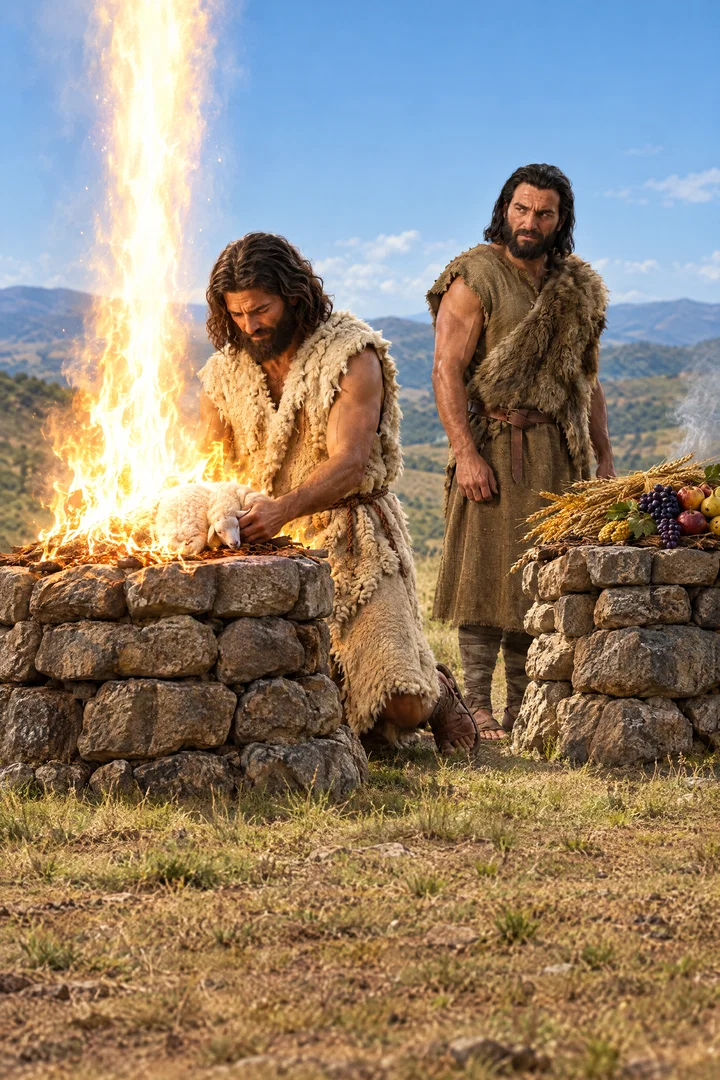
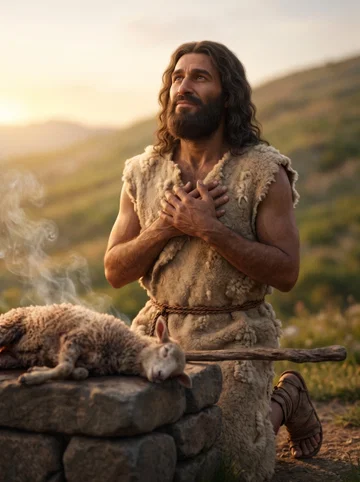
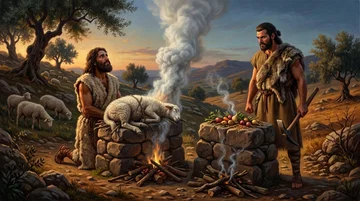
By faith Abel offered unto God a more excellent sacrifice than Cain, by which he obtained witness that he was righteous, God testifying of his gifts: and by it he being dead yet speaketh.
Translations
By faith Abel offered to God a more excellent sacrifice than Cain, by which he obtained witness that he was righteous, God testifying of his gifts: and by it he being dead yet speaks.
King James Version, KJV Cambridge Paragraph Bible
By faith Abel offered unto God a more excellent sacrifice than Cain, by which he obtained witness that he was righteous, God testifying of his gifts: and by it he being dead yet speaketh.
By faith Abel offered to God a more excellent sacrifice than Cain, by which he obtained testimony that he was righteous, God testifying of his gifts: and by it he being dead yet speaketh.
Revised Version, American Standard Version
By faith Abel offered unto God a more excellent sacrifice than Cain, through which he had witness borne to him that he was righteous, God bearing witness in respect of his gifts: and through it he being dead yet speaketh.
by faith a better sacrifice did Abel offer to God than Cain, through which he was testified to be righteous, God testifying of his gifts, and through it, he being dead, doth yet speak.
By faith Abel offered to God a more excellent sacrifice than Cain, by which he obtained testimony of being righteous, God bearing testimony to his gifts, and by it, having died, he yet speaks.
By faith, a fuller sacrifice, did Abel, offer unto God, than Cain,—through which, he received witness that he was righteous, there being a witnessing upon his gifts, by God; and, through it, though he died, he yet is speaking.
Berean Standard Bible, Majority Standard Bible
By faith Abel offered God a better sacrifice than Cain did. By faith he was commended as righteous when God gave approval to his gifts. And by faith he still speaks, even though he is dead.
By faith Abel offered to God a more excellent sacrifice than Cain, through which he had testimony given to him that he was righteous, God testifying with respect to his gifts; and through it he, being dead, still speaks.
By faith Abel made a better offering to God than Cain, and he had witness through it of his righteousness, God giving his approval of his offering: and his voice still comes to us through it though he is dead.
By faith Abel offered vnto God a greater sacrifice then Cain, by the which he obtained witnes that he was righteous, God testifying of his gifts: by the which faith also he being dead, yet speaketh.
Douay-Rheims (Challoner revision)
By faith Abel offered to God a sacrifice exceeding that of Cain, by which he obtained a testimony that he was just, God giving testimony to his gifts; and by it he being dead yet speaketh.
Pictures
Cross-references 20 of 38
- Genesis 4:3-5
And in process of time it came to pass, that Cain brought of the fruit of the ground an offering unto the LORD.
Abel’s faithful offering is accepted, while Cain’s offering is rejected.
- 1 John 3:12
Not as Cain, who was of that wicked one, and slew his brother. And wherefore slew he him? Because his own works were evil, and his brother’s righteous.
Contrasts Abel’s righteous works with Cain’s evil and murder.
- Genesis 4:8
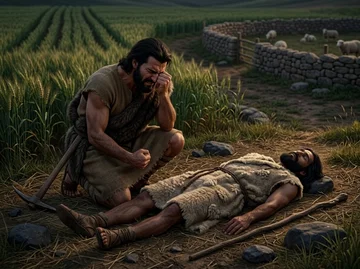
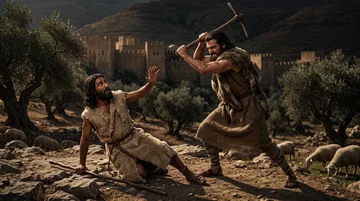
And Cain talked with Abel his brother: and it came to pass, when they were in the field, that Cain rose up against Abel his brother, and slew him.
Cain slays Abel, whose accepted offering testified to his righteousness.
- John 1:29
The next day John seeth Jesus coming unto him, and saith, Behold the Lamb of God, which taketh away the sin of the world.
Abel’s lamb offering pointed forward to the Lamb of God who takes away sin.
- Hebrews 9:22
And almost all things are by the law purged with blood; and without shedding of blood is no remission.
Remission requires shedding of blood, explaining Abel’s bloody offering.
- Hebrews 12:1
Wherefore seeing we also are compassed about with so great a cloud of witnesses, let us lay aside every weight, and the sin which doth so easily beset us, and let us run with patience the race that is set before us,
Abel is among the faithful witnesses whose example urges believers to run patiently.
- Genesis 4:10
And he said, What hast thou done? the voice of thy brother’s blood crieth unto me from the ground.
Abel’s blood cries to God after his death, continuing his witness.
- Genesis 4:7
If thou doest well, shalt thou not be accepted? and if thou doest not well, sin lieth at the door. And unto thee shall be his desire, and thou shalt rule over him.
God offers Cain acceptance for doing well and warns him about sin.
- Leviticus 17:11
For the life of the flesh is in the blood: and I have given it to you upon the altar to make an atonement for your souls: for it is the blood that maketh an atonement for the soul.
Blood represents life given for atonement.
- Revelation 14:13
And I heard a voice from heaven saying unto me, Write, Blessed are the dead which die in the Lord from henceforth: Yea, saith the Spirit, that they may rest from their labours; and their works do follow them.
Both connect the faithful dead with a witness that continues through their works.
- Hebrews 12:24
And to Jesus the mediator of the new covenant, and to the blood of sprinkling, that speaketh better things than that of Abel.
Christ’s blood speaks better things than Abel’s sacrificial blood.
- Romans 1:17
For therein is the righteousness of God revealed from faith to faith: as it is written, The just shall live by faith.
The just-live-by-faith principle is illustrated by Abel’s example.
- James 2:22
Seest thou how faith wrought with his works, and by works was faith made perfect?
Faith is made complete through works.
- Matthew 23:35
That upon you may come all the righteous blood shed upon the earth, from the blood of righteous Abel unto the blood of Zacharias son of Barachias, whom ye slew between the temple and the altar.
Both call Abel righteous and affirm Genesis.
- Galatians 3:11
But that no man is justified by the law in the sight of God, it is evident: for, The just shall live by faith.
Both declare that righteousness comes through faith.
- 1 Peter 1:19
But with the precious blood of Christ, as of a lamb without blemish and without spot:
Abel’s offering foreshadowed Christ, the spotless Lamb whose blood is precious.
- Hebrews 11:39
And these all, having obtained a good report through faith, received not the promise:
Both Abel and the faithful are commended through faith.
- Romans 4:5
But to him that worketh not, but believeth on him that justifieth the ungodly, his faith is counted for righteousness.
Expresses the teaching that faith is counted for righteousness.
- Habakkuk 2:4
Behold, his soul which is lifted up is not upright in him: but the just shall live by his faith.
Declares that the just live by faith, the principle illustrated by Abel.
- Revelation 13:8
And all that dwell upon the earth shall worship him, whose names are not written in the book of life of the Lamb slain from the foundation of the world.
Abel’s sacrifice anticipates the Lamb slain from the foundation of the world.
Commentary part 1 of 2
Each commentary is drawn from primary sources: the writings of Ellen G. White and Adventist pioneers and periodicals. Each commentary is separate. Its own words are not a quotation; follow the references to read the source passages.
Ellen G. White
71 sources
By faith Abel brought God a better offering than Cain did, and on the ground of that offering God gave him the witness that he was righteous.Lt 47, 1909, par. 1–5Ms 200, 1899, par. 12Ms 88, 1893, par. 24 He understood himself to be a sinner cut off from God by death-deserving transgression, and in felt need of a mediator he obeyed God's appointed order by bringing the very best of his flock, a slain lamb with its blood, while Cain in pride brought only the fruit of his own labor without blood or confession of need.PP 72.3ST Dec 23, 18862RED 20.1–2LC1 124.1–2 Through that shed blood he was looking ahead to the death of Christ on Calvary for pardon, for the lamb stood for the Son of God whose life alone could answer the claims of the broken law.PP 72.3ST Dec 23, 1886ST Feb 6, 1879 His acceptance was therefore righteousness by faith in the promised Redeemer, counted to him for obedience, not earned by the worth of anything he owned or did.ST Sep 11, 1884ST Feb 6, 1879 Though Cain murdered him for that faithful witness, Abel being dead still speaks, calling others to obedience by his faith and righteous example.Lt 47, 1909, par. 1–5Ms 88, 1893, par. 24Ms 104, 1897, par. 10–12
Place in Faith Record
Abel stands among the heroes of faith commended for fidelity, and his life is brought before the world as an example for the Christian church.CTBH 238.1CTBH 238.218MR 138.1 Fidelity to God marks such ancient people, and when their lives are set forth their light reaches people in darkness.Ms 53, 1902, par. 318MR 138.120MR 41.4–5 Their shining example leads others to glorify God and gives the church a pattern to follow.CTBH 238.1CTBH 238.220MR 41.4–5 The faith chapter to which this belongs directs the mind away from visible and discouraging things to unseen realities and to the hope of a better country, the heavenly city built by God.Ms 63, 1893, par. 26–27
The record of the faithful teaches that God's work is to be done by faith, and Abel's offering stands within it as an example calling laborers for God to go forward in faith.RH Sep 30, 1902 The same faith that worked through God's servants of old can work in people now.PK 175.2ED 256.1 God works through faithful hearts as channels of His power.PK 175.2ED 256.1
Abel is one of the cloud of witnesses compassing believers.Ms 61, 1907, par. 1–3 He breasted the evils and difficulties in his way and in the name of the Lord braced himself successfully against the opposing forces of evil, sustained and strengthened with the Lord holding him by His hand.Ms 61, 1907, par. 1–3 He was the first Christian among Adam's children and a martyr, and though he died his faithful example remains a witness.Ms 52, 1896, par. 74–75
Why Abel Excelled Cain
Abel's sacrifice was more excellent because by faith he grasped the great principles of redemption.PP 72.3ST Dec 23, 1886 He saw himself a sinner, saw sin and its penalty of death standing between his soul and communion with God, and saw that the transgressed law made a sacrifice necessary.PP 72.3ST Dec 23, 1886 By bringing the slain victim, the sacrificed life, he acknowledged the claims of the law that had been transgressed.PP 72.3ST Dec 23, 1886 In humility, reverence, and felt need of a mediator he obeyed God's precise requirements and ordained system.2RED 20.1–2LC1 124.1–2ST Sep 11, 1884RH Mar 3, 18741SP 55.2 He brought of the firstlings of his flock and of the fat, the very best, as priest in solemn faith presenting the blood of beasts with repentance, confession of sin, and belief that he needed cleansing and sins put away through the efficacy of the blood of the future great offering.2RED 20.1–2LC1 124.1–2RH Mar 3, 18741SP 55.2ST Dec 16, 1886
Like Adam he was tested on whether he would believe and obey, knowing the provision God had made for salvation and the system of offerings God had ordained.PP 71.2 By conforming to God's plan he gave proof of obedience and total dependence on the Saviour whom the offerings typified for pardon.PP 71.2 He offered firstlings of the flock for sacrifice while first-fruits of the earth were to be presented as a thank-offering, for without shedding of blood there is no remission of sin.PP 71.2 Cain in pride and self-dependence offered only fruit and produce of his labor, the products of his ground, in his own merits.2RED 20.1–2LC1 124.1–2ST Sep 11, 1884RH Mar 3, 1874LC1 124.3 He refused to join the blood of beasts with his offering, rejecting God's appointed ordinance and slighting the blood of atonement.2RED 20.1–2LC1 124.1–2RH Mar 3, 1874LC1 124.32RED 20.3
His bloodless choice refused to show repentance, confess sin, or acknowledge need of a Redeemer, because dependence and humiliation offended his proud heart.2RED 20.1–2LC1 124.1–2RH Mar 3, 1874LC1 124.32RED 20.3 He felt it would be an acknowledgment of weakness to follow the plan marked out by God, venturing to depend on his own merits with the sacrifice of a sinner without the virtue of divine mediation which alone can bring favor with God.ST Sep 11, 1884 His offering was therefore offensive, expressing pride and refusal to acknowledge sin and dependence on another, and choosing his own offering instead of submitting to God's ordinance.LC1 124.1–2ST Sep 11, 1884RH Mar 3, 1874LC1 124.32RED 20.3 God testified His respect for Abel by flashing light and fire from heaven to consume his offering as the sacrifice of a penitent sinner.1SP 55.219MR 310.3Lt 237, 1904, par. 14ST Dec 16, 1886 Cain received no manifestation that his was accepted.1SP 55.2
Abel courageously defended the sacrifice of faith, explaining and reminding Cain that God did not accept his offering because He required the blood of a slain victim as directed.ST Dec 16, 1886Lt 280a, 1904, par. 1–321MR 416.1–3 His courage in defending God's goodness and the truth about the sacrifice came from faith, even when it brought him into conflict with Cain.ST Dec 16, 1886 His faithfulness in that conflict angered Cain unto murder.ST Dec 16, 1886Lt 280a, 1904, par. 1–321MR 416.1–3
Christ Seen by Faith
Through the shed blood Abel looked forward to the future sacrifice dying on the cross of Calvary, trusting in the atonement to be made there for pardon and obtaining the witness that he was righteous and his offering accepted.PP 72.3ST Dec 23, 1886LC1 123.2 He understood himself to be a sinner, that sin brought death and stood between his soul and communion with God, and that the transgressed law made a sacrifice necessary.PP 72.3ST Dec 23, 1886 By bringing a slain victim, the sacrificed life, he acknowledged the claims of the law that had been transgressed and showed repentance for sin and faith in the coming Redeemer, while Cain was led into rebellion against that blood offering that prefigured the Redeemer to come.PP 72.3ST Dec 23, 1886LC1 123.2
The dying victim taught that sin brings death and that the sacrifice of life alone could answer the claims of the broken law, for only sacrifice of life could answer the broken law.ST Feb 6, 1879ST Dec 16, 1886 The slain lamb represented the Son of God appointed to die because of transgression of the law, who would die for sin and for the guilty.ST Feb 6, 1879ST Dec 16, 1886 Abel offered the very best of his flock in obedience to God's command and instructions, trusting in and relying on the promised Redeemer whom the offering represented, and God's acceptance testified that he was righteous through faith in Christ's atoning sacrifice, not through the value of his own work or possessions, with his faithful obedience remaining a witness even after death.ST Feb 6, 1879ST Dec 16, 1886
By faith he saw Christ figured in the sacrificial offerings and discerned that the slain lamb typified Christ.ST Mar 14, 1878 The gospel was preached to Cain as well as to Abel, but Cain did not believe in the necessity of sacrifices, refused to discern Christ in the slain lamb, discerned no virtue in blood and saw no virtue in the blood of beasts.ST Mar 14, 1878 To Cain the gospel became a savor of death unto death because he would not recognize in the blood of the sacrificial lamb Jesus Christ as the only provision made for man's salvation.ST Mar 14, 1878
His offering belonged to the sacrificial system of symbols that pointed to the sinless offering of God's Son and His death on the cross.ST Feb 20, 1893ST May 23, 1911ST Dec 22, 1914 Righteous Abel and other believers before Christ looked forward by faith to the coming Saviour and showed that faith through sacrifice and offering, with slain animals as symbols of Christ's sinless sacrifice.ST Feb 20, 1893ST May 23, 1911ST Dec 22, 1914 When Christ died the type and symbol met its fulfillment and the typical system and sacrificial system ceased.ST Feb 20, 1893ST May 23, 1911
His faith was faith in Christ, the Lamb slain from the foundation of the world, shown in offering his sacrifice which was accepted by fire from heaven consuming it, thereby bearing witness that he was righteous.19MR 310.3Lt 237, 1904, par. 14 It is faith that works by love and purifies the soul.19MR 310.3Lt 237, 1904, par. 14 This same faith calls for deeper trust, a softened and subdued heart, and cooperation with Christ.Lt 237, 1904, par. 14
His offering points to presenting Christ's blood before the Father and trusting in its merit, which cleanses from sin only for those who believe in it.GW 162.1–2GW92 104.1–2 That blood alone can make human offerings and gifts perfect.7MR 417.2Lt 74a, 1897, par. 7–8 Cain's offering was Christless and therefore offended God, while Abel's offering presented Christ and was accepted through faith, connecting faith in Christ with salvation and righteousness.GW 162.1–2GW92 104.1–2 What Abel though dead ever speaks is the blood of Christ, as part of the accumulated treasure of Old Testament history bound up for the last generation to profit by, to increase faith and awaken earnestness for sending the light to the ends of the earth.7MR 417.2
Christ was the way to God from the time of Adam, and patriarchs and prophets were saved through Him, for He is the only way by which anyone can have access to God.DA 663.2–3 Abel acknowledged Christ through the blood of the slain lamb, believed in Christ and was saved by Christ's power, the crucified Saviour who gives eternal life, as truly as Peter and Paul were.DA 663.2–36T 392.1–2ST Jan 10, 1900Lt 119, 1895, par. 23–25 The Old Testament is the gospel in types and shadows and the New Testament is only its advancement and unfolding, not a new religion superseding an old religion.Lt 119, 1895, par. 23–25
The whole ceremony was prepared by God with Christ as the foundation of the whole system and of the whole Jewish economy.1MR 131.5Ms 87, 1900, par. 2 It was a school of obedience and schoolmaster to bring sinful human agents to consideration of Christ, the foundation, that they might consider Him and be saved by His blood, with the sacrificial offerings pointing to Christ and the shedding of blood symbolizing the blood of Christ to be shed for the world.1MR 131.5Ms 87, 1900, par. 2 Abel by faith offered a more excellent sacrifice than Cain because he accepted God's plan in the school of obedience to be saved by the blood of Jesus Christ, and his sacrifice is the beginning of its work.Ms 87, 1900, par. 2 Cain refused the shedding of blood and refused God's plan of salvation through the blood of Jesus which the offerings symbolized, and the death of Abel was in consequence of that refusal.1MR 131.5Ms 87, 1900, par. 2
Declared Righteous by God
By faith Abel offered a more excellent and acceptable sacrifice than Cain, and God testifying of his gifts gave witness that he was righteous and his offering accepted.Lt 47, 1909, par. 1–5Ms 200, 1899, par. 12Ms 88, 1893, par. 24Ms 104, 1897, par. 10–12Lt 19a, 1897, par. 25–28 His faith made the offering better than Cain's, and that divine testimony through his gifts declared his righteousness.Lt 47, 1909, par. 1–5Ms 200, 1899, par. 12Ms 88, 1893, par. 24Ms 104, 1897, par. 10–1219MR 164.1–2 Though Cain killed him because Cain's works were evil and Abel's were righteous, Abel's witness continued after his death calling others to obedience and standing against resisting or harming those who reprove wrongdoing.Ms 104, 1897, par. 10–12Lt 19a, 1897, par. 25–2819MR 164.1–2
That acceptance testified righteousness through faith in Christ's atoning sacrifice and obedient reliance on the promised Redeemer, not through the value of his own work or possessions.ST Sep 11, 1884ST Feb 6, 1879 In humility and felt need of a mediator he followed the precise directions given, presenting his offering in faith in the coming Lamb of God and availing himself of the promised sacrifice for sin, and his obedience was counted to him for righteousness.ST Sep 11, 1884ST Feb 6, 1879 The dying victim taught him that sin brings death and that Christ would die for the guilty, for the sacrifice of life alone could answer the claims of the broken law.ST Sep 11, 1884ST Feb 6, 1879 Cain in self-dependence would come in his own merits, refusing to bring the lamb and mingle its blood with his offering but generously offering fruits as products of his labor, venturing to depend on his own merits with a sinner's sacrifice without the virtue of divine mediation which alone can bring favor with God.ST Sep 11, 1884
He was righteous because he loved and reverenced God, so God accepted and blessed him, while Cain had no respect for God or His commandments but followed his own corrupt course and was rejected.1SP 107.1SG3 115.1 Prosperity, acceptance, and blessing come from God alone according to a righteous or wicked course, not by birthright or a father's blessing.1SP 107.1 Those who love and reverence God are accepted and blessed, and those who disregard God and His commandments and follow their own corrupt course are rejected.1SP 107.1SG3 115.1
That righteousness comes by grace through faith and obedience, not by nature.1SP 60.2 Abel's life was right doing that honored God by doing His will and labored to turn sinful men to revere and obey Him.1SP 60.2 After Abel's death Seth took his place in that same right doing, separating himself from the corrupt descendants of Cain to carry on the work Abel would have done had he lived.1SP 60.2 Seth was a son of Adam like Cain with no more natural goodness than Cain, born in sin, but by the grace of God in receiving faithful instruction he honored God in doing His will.1SP 60.2
Just as pure a faith as Abel's with true experience and safe knowledge of God and Jesus unto salvation may be had by all who know them.Ms 200, 1899, par. 12 God's testimony to His servants is of more worth than seeking advantage and glorifying self.Ms 200, 1899, par. 12 No one should be careless, slack, and half serious, neither wholly for God nor wholly of the devil, for such divided service is of no use and only misleads, perverting entrusted talents given for His glory to selfish purposes to aggrandize self and be recognized as superior.Ms 200, 1899, par. 12 Abel was obedient to God's law and was murdered because of his obedience.6MR 146.1
Dead Yet Still Speaking
Abel offered by faith a sacrifice more acceptable than Cain's, and God by testifying of his gifts gave witness that he was righteous.Lt 47, 1909, par. 1–5Ms 88, 1893, par. 24Ms 104, 1897, par. 10–12Lt 19a, 1897, par. 25–2819MR 164.1–2 Though Cain killed him because Cain's own works were evil and Abel's were righteous, Abel being dead yet speaks.Lt 47, 1909, par. 1–5Ms 88, 1893, par. 24Ms 104, 1897, par. 10–12Lt 19a, 1897, par. 25–2819MR 164.1–2 His faith and righteous conduct still speak, and his faithful example continues to call others to obedience.Lt 47, 1909, par. 1–5Ms 88, 1893, par. 24Ms 104, 1897, par. 10–12Lt 19a, 1897, par. 25–2819MR 164.1–2 That example stands against resisting or harming those who reprove wrongdoing.Lt 19a, 1897, par. 25–28
His continuing witness is faithfulness to God's commands and to Christ as the way of salvation.ST Jan 13, 1898 He obeyed God's requirements and relied on the promised Redeemer whom the slain lamb represented, pointing to the Redeemer's death for sin, and he would not yield to another way though it offended Cain unto murder.ST Jan 13, 1898 That same speaking after death includes written works that keep communicating after their writer has died.Ms 186, 1905, par. 12
The grave does not end the influence of faithful service.ST Feb 14, 1884 The memory of words of counsel, admonition, and encouragement, and of steadfast adherence to truth under all circumstances, can speak more powerfully than the living example.ST Feb 14, 1884SLP 294.1 What a person does becomes a living influence in the thoughts and actions of others, like seed producing a harvest of its kind, and works follow the person.HPMMW 10.3SLP 294.1 Being dead yet speaking means words, influence, and example have lived after death in those who fought a good fight, finished the course, and kept the faith unto the end.9MR 132.2–133.1
When aged standard-bearers lay off the armor one by one and their voices fall silent and their place is vacant, they still speak because their works follow them.Ms 33, 1890, par. 1–4 Their words, though spoken with worn and enfeebled powers, remain as precious testimony to be treasured.Ms 33, 1890, par. 1–4 Younger workers who have entered into their labors should treat the aged pilgrims tenderly, esteem them highly for their works' sake, and rise up and call them blessed rather than discard them or show indifference.Ms 33, 1890, par. 1–4 Old messengers sent by God who stood firmly for the truth and fought the battles still speak through testimonies and publications, rallying true men around the sacred truth signified and endorsed by the Holy Spirit against new theories and misinterpretations of Scripture that unsettle faith.Ms 130, 1906, par. 37–38
So too Huss being dead yet speaks, and death did not end his testimony.GC 110.1 Though he was burned and his ashes with the soil were cast into the Rhine and borne onward to the ocean, his voice wakened echoes heard through all coming ages, his example of faith and constancy encourages multitudes to stand firm for truth in the face of torture and death, his scattered ashes became as seed in all countries yielding abundant witnesses, the truths for which he died never perish, and the cruelty shown in his execution furthered the cause his persecutors vainly sought to destroy.GC 110.1 Ralph's faithful exhortations continued to affect those who had heard and opposed him, and his death left a testimony of hope in Jesus and confidence in the resurrection.SG2 91.2–92.1 Hannah More's letters and example remain a testimony after her death, exposing the selfishness of professed commandment-keepers who refused her a home.1T 674.3
The words and deeds of the righteous of all ages testify through the centuries like lights gleaming through moral darkness, shining with ever-increasing brightness for time and for eternity.8RED 80.2 Even when one can no longer labor openly and actively, service and reward are not ended, for God uses His child in sickness as in health, in death as in life.SLP 294.1 Faith shines brightest in the darkness of affliction, bereavement, trial, and persecution.SLP 294.1 Those martyred for Christ are remembered in heaven and will receive a bright reward when called from their graves at the resurrection.8RED 80.2
Pattern for God's People
Cain and Abel present the earliest example of the two courses men take toward the claims of God, representing the two classes that have existed from generation to generation, from the fall to the second coming and to the close of time: the righteous, believing class and the wicked, unbelieving class.ST Sep 11, 1884ST Mar 14, 18781SP 57.1SG3 50.1 Abel felt he could not approach God without a mediator, and in humility and faith in the coming Lamb of God he followed the precise directions given, availing himself of the promised sacrifice for sin, discerning Christ figured in the slain lamb that typified Him, and his obedience was counted to him for righteousness.ST Sep 11, 1884ST Mar 14, 1878 Cain in self-dependence felt it would be an acknowledgment of weakness to follow the plan marked out by God, and would come in his own merits, refusing to bring the lamb and mingle its blood with his offering but generously offering fruits, the products of his labor, looking with scorn on Abel.ST Sep 11, 1884 Though the gospel was preached to Cain as well as to Abel, he did not believe in the necessity of sacrifices, refused to discern Christ in the slain lamb, saw no virtue in the blood of beasts, and ventured to depend on his own merits with the sacrifice of a sinner without the virtue of divine mediation which alone can bring favor with God, so that to him the gospel became a savor of death unto death.ST Sep 11, 1884ST Mar 14, 1878 Only through the merits of Jesus can transgressions of the law be pardoned, for Jesus Christ is the only provision made for man's salvation, and those who feel they can be moral without divine help and feel no need of the blood of Christ are betrayed into grievous sins and remain under condemnation unless they gladly and gratefully accept the cleansing blood, since there is no other provision to release from sin's thralldom; there must be repentance toward God and faith in the Lord Jesus Christ as the only way to excellence of character and the only path to divine favor, while the Lord assured Cain that if he did well he should be accepted, and despising the blood of the covenant provided for sanctification and redemption marks self-will and self-sufficiency that is not hidden from Jehovah.ST Sep 11, 1884ST Mar 14, 1878
The relation between the two classes is that the wicked envy the righteous and hate them because they are better than themselves, are jealous of them, and persecute and put them to death because righteous doing exposes and condemns their sinful course.1SP 57.1SG3 50.1 Abel as innocent and righteous was hated for it, and the same spirit is seen in Joseph's brothers, who resented his purity and goodness while refusing to turn from their own wickedness.ST Dec 18, 1879 Daring to condemn sin aroused hatred and resistance against Abel, with indignation excited against the reprover as if he were the cause of difficulty, while the sinner justified himself and sought the sympathy of others instead of correcting his error, a pattern continuing from his days to the present toward all who condemn sin.GC 500.1–2
His faithfulness to God brought him a place among those who suffered for being true to God and obedient to His commandments, beginning the long history of suffering among God's people.1T 77.1–78.1 He stood among the just who kept the fear of the Lord before their generation, receiving God's instruction from Adam and passing it on to children, showing that God had faithful people even in an age of widespread corruption and rejection of His words.Ms 122, 1897, par. 30–32
All who have a knowledge of God and of Jesus Christ may have just as pure a faith as Abel had, a true experience and safe knowledge of God and of Jesus Christ unto salvation, and God's testimony to His servants is of more value than seeking own advantage and glorifying self.Ms 200, 1899, par. 12 No one needs to be careless, slack, and half serious, neither wholly for God nor wholly of the devil, for such service is of no use and only misleading, perverting God-given talent entrusted for His glory to selfish purposes to aggrandize self and be recognized as superior.Ms 200, 1899, par. 12 Abel with Enoch and Noah will condemn in the judgment those who have great light and evidence yet remain defective and far from being a perfect man in Christ Jesus, when favored with great trusts and lent talents they should have been as righteous as Enoch in his day, who perfected such a Christlike character that the world took knowledge of him and had in him a correct sample of what a man could be, Christ often manifesting Himself to him even when the world was so wicked that perfection of Christlikeness was no more favorable then than now.Ms 200, 1899, par. 12 God accepts no service, however splendid or talented, unless it is laid upon and joined to Christ the living foundation, which alone gives it true worth and makes it living service to God.8RED 80.2
Sources
Pioneers and periodicals
359 sources
By faith Abel offered a slain lamb with shed blood in obedience to God's appointed requirement, while Cain brought fruit of the ground without blood in self-chosen unbelief and disobedience.ST Feb 26, 1902ST Nov 1, 1899RH Jul 25, 1871RH Aug 10, 1876ST Feb 12, 1902 Abel's offering was more excellent because in the lamb he trusted the promised Saviour to come and typified the death and blood of Christ the Lamb for sin.ST May 27, 1889ST Feb 22, 1877ST Sep 15, 1887ST Mar 3, 1898RH Mar 17, 1874 Through that faith God accepted his gift and testified that he was righteous, pardoned, justified and counted righteous by faith in Christ and not by works.ST Feb 6, 1879ST Jul 1, 1889RH Aug 3, 1869ST May 30, 1878 Though slain by Cain for his faithfulness, he being dead yet speaks through his righteous life, example and continuing witness after death, not through conscious existence.ST Jul 9, 1874ST Apr 8, 1913ST May 2, 1878ST Sep 3, 1894 From the beginning salvation has been by this same faith in Christ alone, with Abel showing the everlasting gospel and the faith required still today.ST Mar 25, 1889ST Oct 25, 1877ST Jan 10, 1900ST Nov 15, 1910ST Mar 27, 1893
Words and Historical Setting
Abel stands first in the roll of faith's heroes, memorialized as in capitals of light in a triumphal arch and gallery of faith-filled heroes. ST Oct 16, 1884ST May 12, 1909 He belongs among the ancient examples showing what faith accomplishes and bears witness to the efficacy of saving faith. RH Oct 15, 1857RH Jul 2, 1867 The achievements of God's people in past ages were accomplished through faith, and his acceptable sacrifice, testimony to righteousness, and continued speaking through example make him an early witness to truth and righteousness. RH Jul 2, 1867RH Dec 17, 1861 His life stands as an example of courage and trust in God, showing faith produces people enabled to rise from bondage to enduring freedom. ST May 12, 1909
Genesis 4 is true history, showing Cain and Abel were the sons and first children of Adam and Eve. ST Mar 9, 1888 Abel is presented as a type of a future character in contrast with Cain in the account of the first children and the first murder. ST Dec 20, 1910 His historical prominence came from embodying a revealed religious truth at its stage in development. RH Jul 2, 1867 By that offering made by faith he was counted righteous, God bearing witness by accepting his gifts, and though murdered by Cain he still speaks. ST Mar 9, 1888
The verse belongs to the account of faith as confidence in hoped-for things and proof of unseen realities. RH Jan 5, 1860 Faith makes future heavenly things seem present and real on God's authority, so they move and guide affections and actions as strongly as visible things, giving strength and action rather than fancy. RH Jan 5, 1860RH Feb 27, 1900 The closing chapters of Hebrews are rich in spiritual lessons about Old Testament types of the priesthood centering in Jesus Christ. ST Nov 10, 1909 The experiences of the faithful are experiences produced by faith, types of individual experience written for instruction to encourage believers not to abandon confidence as the Lord's coming draws near. RH Sep 1, 1904
More excellent means offered by faith as a fitting type and emblem, and God's testifying of his gifts means acceptance by a supernatural sign of divine favor accompanying faith. RH Jan 29, 1861RH Jan 27, 1910 The Lord had respect to Abel and his offering, shown by fire flashing from heaven and consuming the sacrifice. ST May 29, 1901 That sign teaches that when sin loses hold and is reduced as it were to ashes by the fire of the Holy Spirit, God accepts consecration and the worshiper serves the true God. ST May 29, 1901 Through that offering Abel received testimony that he was righteous, first in the long line whose faith was approved, and his faith and witness to God's power and faithfulness continue to testify after death. RH Jan 27, 1910ST Jun 6, 1900ST Nov 15, 1910RH Feb 20, 1900 The verse establishes that Abel made sacrificial offerings by faith, better than Cain's and belonging to the enduring truth that salvation is through Jesus Christ and that the everlasting gospel was preached to him, without specifying whether he worshiped at a regular dedicated place. RH Jan 27, 1910ST Jun 6, 1900ST Nov 15, 1910
The lesson linking Abel's accepted offering and Cain's rejected offering to faith in Christ raises whether Cain had that faith and why his offering was unsuitable, without providing the answers. RH Jun 27, 1878
Nature of Faith
Faith makes future heavenly things seem present and real on God's authority, so that they move, guide and shape affections and actions as strongly as visible things, giving strength and action to those who trust God.RH Jan 5, 1860RH Feb 27, 1900 It is not fancy or intellectual weakness or passivity but self-evidence and active power, helping to shape events through those who act.RH Feb 27, 1900ST Jun 7, 1883 It is confidence in and reliance on what God says, trusting Jesus to save and accepting the benefit of His death, which is confidence in God's testimony and trust in what He declares or promises.ST Nov 8, 1883RH Aug 26, 1862RH Apr 9, 1872
Faith is founded on God's Word rather than on feelings, convenience or human customs, comes by hearing God's word, and is both substance of things hoped for and evidence of things not seen together as one definition.RH Feb 6, 1900RH Dec 9, 1915 It looks forward to present revealed duty rather than backward, responding to the duty revealed in the present.ST Apr 30, 1894 It perceives what sight cannot see and understands what God is working out in future ages, for the ages were adjusted by the word of God so that His working cannot be seen in outward present appearances.ST Jan 16, 1896
Faith is taking God at His word and doing what He commands while trusting the Lord for the final result, not believing a thing so strongly that it happens simply because it is believed apart from God's promise.RH Feb 6, 1900 Abel offered a more excellent sacrifice than Cain by faith because God told him what to do and he obeyed.RH Feb 6, 1900 That faith that it was the Lord's will was his only warrant, and being satisfied of that settled the question without consulting relatives in the flesh, worldly interests or personal safety, since to take anything else into consideration puts something else on a par with the will of the Lord and puts man in His place.RH Dec 25, 1900
Faith is trust in God expressed in action, not mere confidence or belief without action, but producing practical evidence in obedience to God's Word.RH Dec 10, 1867 It is living and active, as when it moved Abel to offer a better sacrifice than Cain's, and it is joined with works, shown by practical works of the faithful patriarchs and perfected by good works without violating moral precepts.ST Aug 30, 1877ST Jan 8, 1880 It is the first stone in the structure of Christian life laid close upon Christ its foundation, essential to trusting God and receiving blessing, so that religious duties must be performed but are not a substitute for trust in God.RH Dec 29, 1859
Faith brought Abel to offer his sacrifice, not the sacrifice bringing him to faith, and the same faith brought to the offering all others ever accepted by God.RH Apr 3, 1900RH Apr 17, 1900 He offered by faith he already had, and the offering expressed faith in Christ as the one to be offered for sin rather than creating that faith.ST Sep 2, 1886RH Apr 17, 1900 His lamb represented Christ, and offering it expressed faith in Christ already possessed, while an offering without faith in Christ, as Cain's was, is not accepted and is worthless.RH Apr 17, 1900RH Jun 27, 1865
That faith came from knowledge of sin and conviction of guilt from having done against the commandments of the Lord, including the law that says not to covet, so Abel was shut up under guilt unto the faith expressed in sacrifice and offering as the only way out.RH Apr 3, 1900RH Apr 17, 1900 True faith is reliance wholly on Christ manifested by obedience to all of God's requirements and law, and by works faith is made complete, while without works of obedience faith is dead.ST Mar 10, 1898 Cain rendered only partial obedience in building an altar and bringing a sacrifice but disregarding what God directly and explicitly commanded for redemption through the ordained system of blood offerings pointing wholly to Christ, showing unbelief and rebellion, and Cain and Abel thus represent two classes to the close of time concerning obedience.ST Mar 10, 1898
Faith is proved amid opposition and difficulty, and trials provide the setting in which faith and character are shown.ST Jun 20, 1906 It is strengthened through adversity, not smooth sailing, and living faith endures and acts amid difficulty. It is needed both to overcome trials and to endure them, whether leading to deliverance from suffering and death or to enduring hardship and death.ST Jan 16, 1907 Dying does not mean lack of faith but submission to God's will, for faith remains real even when God does not deliver from suffering or death.ST Aug 24, 1904 The account of experiences of people of faith serves as the model for accounts of faithfulness under trial and martyrdom.ST Mar 27, 1884
Faith means being prepared to enter heaven by believing the Word of God and acting on it without any visible evidence of fulfillment, not merely listening to warnings or making an outward change.RH Jun 22, 1916 As Noah entered the ark at God's command seven days before rain began while those who believed only when they saw the storm were lost because it was too late, and as only two of the vast throng leaving Egypt entered the land while Moses only saw it from the mountain top, so the word preached profits only when mixed with faith in hearers.RH Jun 22, 1916 Faith has been present from the beginning and not only after Christ was manifested, and by that faith Abel found freedom.ST Mar 1, 1899 It comes whenever a person receives the Word of God, the Word of promise, and yields to it instead of fighting it, so the only fixed time for faith is now, today.ST Mar 1, 1899
The chapter is devoted to the beauty of faith, whose chief beauty lies in enabling people to do what is beyond ordinary human ability, illustrated as real history by the birth of Isaac and Abraham's offering of him on Moriah, for if they never happened the faith depicted would be mythical. Faith is the fundamental and only working grace of God's people, no less conspicuous under the old dispensation than under the new, without which it is impossible to please God and with which all things concerning God and His grace and power are possible to the believer, so that even the weakest saint can move the arm of omnipotence.ST Oct 21, 1886 It is the crowning virtue of overcomers whether facing prosperity or adversity, honor or dishonor, poverty or wealth, and the strong cord binding the church to God illustrated by experiences of faithful people across ages and circumstances.ST Jan 17, 1884ST Oct 21, 1886
Abel's offering as an act of faith illustrates that faith's triumphs are inseparably connected with obedience to God's instruction, and his obedience like that of others named was obedience by faith even when God's command seemed contrary to human reason.RH Sep 1, 1904 Although he had only the light available to him, that light dominated his soul and made him mighty in God.ST Jul 15, 1908 No sacrifice offered without faith can be received by God, and the only offering absolutely sinless and free from selfishness is the faith of Jesus, so everything must be offered in the faith of Jesus which the enemy cannot take away, holding faith in God as evidence of hoped-for but unseen things such as eternal life and perfect character when victory cannot be seen and only seeming defeat appears, reckoning oneself dead to sin and alive to God.ST Feb 12, 1902
Abel is an example of divine faith, the faith that pleases God, in contrast with unbelief.RH Mar 26, 1914RH Aug 5, 1873 His offering was an act of faith marking the first recorded triumphs of God's people throughout all ages, offered in full faith of the kind God requires.RH Dec 30, 1915RH Jun 27, 1865 His faith reached beyond the act of offering to grasp the gospel's provisions and promises before the plan of redemption's initiatory events became tangible facts, evidencing that faith existed among God's people beforehand.RH Apr 1, 1875
Two Sacrifices Compared
Abel brought the firstlings of his flock and the fat thereof, a slain lamb with shed blood, while Cain brought fruit and produce of the ground without blood.ST Nov 1, 1899RH Jul 25, 1871ST Aug 13, 1894ST May 6, 1875ST Jul 1, 1889 The contrast is between a bloody offering and a bloodless offering, Abel's lamb expressing faith in the coming Redeemer as the God-appointed sign of redemption through a Redeemer's life.ST Nov 1, 1899RH Jul 25, 1871ST Aug 13, 1894ST May 6, 1875ST May 30, 1878 Abel saw the lamb's blood as necessary while Cain saw no need for it and treated worship according to his own ideas, making self his god.ST Jul 1, 1889 The evidence that Abel's heart was right was exact doing of what God instructed, and outward value could not replace it even if Cain's gift equaled or exceeded Abel's.ST May 30, 1878
Abel's offering was more excellent because offered by faith in obedience to God's appointed requirement and instructions, while Cain's was convenient, merely formal, in unbelief, disobedience and self-chosen worship according to his own ideas.ST Feb 26, 1902RH Aug 10, 1876ST Feb 12, 1902RH Sep 13, 1870ST Apr 27, 1882 No sacrifice offered without faith can be received by God, and an offering without faith is worthless.ST Feb 12, 1902RH Sep 13, 1870 Acceptance requires doing well and doing the Father's will and putting away sin, not merely bringing an offering or calling on Christ, since clinging to sin while expecting acceptance is delusion.RH Sep 13, 1870 God's regard for Abel was not favoritism or arbitrary, for the gospel plan had been revealed from the beginning and Cain too could have been accepted if he did well, but his offering was not of faith.ST Apr 27, 1882ST Jun 3, 1875RH Jan 15, 1875 The only absolutely sinless offering free from selfishness is the faith of Jesus, in which everything must be offered, to be held as evidence of hoped-for unseen things such as eternal life and perfect character when only seeming defeat appears.ST Feb 12, 1902
Abel acted by faith following God's way of worship through blood sacrifice, while Cain chose his own way and offered without blood, for faith comes by hearing God's word and true worship depends on doing what God says.RH Dec 23, 1915ST Aug 13, 1894 Cain's worship departed from direction and became formal because it lacked faith in Christ as sin-bearer and redeemer.ST Aug 13, 1894
The superiority lay in recognizing sin and the sacrifice of the Son of God for the sinner, because remission requires shedding of blood, for the life of the flesh is in the blood given upon the altar to make atonement for souls.ST Feb 6, 1879ST Dec 29, 1909 The blood of beasts in itself could not take away sins.ST Dec 29, 1909 The dying victim taught that sin brings death and that Christ would die for the guilty, and sacrifice of life alone could answer the claims of the broken law.ST Feb 6, 1879
By bringing an animal and presenting its shed blood and fat, Abel showed faith in the promised Saviour and willingness to put away sins, teaching that sin could be atoned for only through death of a sinless innocent one.ST Nov 5, 1912ST May 1, 1901 The shedding of blood represented the sinner's deserved death and pointed to Christ's death as the only hope of pardon, acknowledging death deserved and need of cleansing under provision made from the beginning.RH Jun 27, 1878ST May 1, 1901 A dead body must come between sin and God.RH Nov 3, 1874
As a keeper of sheep Abel brought of the firstlings, a guileless unblemished sinless lamb over which he confessed sin, the innocent dying in place of the guilty.ST Dec 23, 1886ST Mar 25, 1913 His occupation taught him the meek innocent disposition of sheep, especially lambs, helping him appreciate the lamb's fitness as type of the promised Saviour.ST Jan 8, 1902 He offered the best of all he had to express faith in God's gift of His best, for God gave the firstling of His flock, the Lamb He had given, and acceptance of that gift is shown in gratitude by offering likewise.RH Jan 23, 1900 In the dying victim and flowing blood he saw by faith the Lamb of God and the blood of the Son to cleanse guilt in fulness of time, acknowledging the law's claims and looking through shed blood to the cross.ST Dec 23, 1886ST Mar 25, 1913
By his offering Abel acknowledged he was a sinner under sin's power, guilty, deserving death, unable to overcome, needing cleansing, Redeemer and mediator, showing repentance, humility, confession and obedience.ST Sep 11, 1884RH Mar 3, 1874ST Jul 1, 1889RH Jun 23, 1868 He felt he could not approach without a mediator and followed precise directions in humility and faith in the coming Lamb, availing himself of the promised sacrifice, and his obedience was counted for righteousness.ST Sep 11, 1884 Cain in self-dependence refused the lamb and mingling its blood, feeling following the marked plan would be acknowledgment of weakness, and would come in his own merits with fruits of labor, generously offered, looking with scorn on Abel and venturing to depend on merits without mediation, despising the covenant blood provided for sanctification.ST Sep 11, 1884RH Mar 3, 1874 His refusal to offer blood showed he would not submit to ordinance or acknowledge need of a Redeemer, and fruit without blood could not prefigure atonement because salvation required repentance, humility and faith.RH Mar 3, 1874RH Jun 23, 1868
Abel's heart was right shown by exact obedience to instruction, which outward value cannot replace even if Cain's gift equaled it.ST May 30, 1878 Abel offered a clean animal as required as a sign of faith in the promised Messiah, while Cain substituted produce on human reasoning, showing substituted worship is unacceptable and commands must be obeyed as given.ST May 30, 1878
Abel's offering was complete while Cain's was only in part.RH Feb 16, 1869 Cain knew what God wanted, what service, gifts and sacrifice were ordained, so the fault was his own, and he left out the sin-offering couching at his door that would have completed his gift.RH Feb 16, 1869 God promised the same acceptance and excellency and pre-eminence of the firstborn if he did well, showing no condition in life commends anyone but only right doing, and rejection was not favoritism or arbitrary.ST Sep 11, 1884ST Apr 27, 1882ST Jun 3, 1875RH Jan 15, 1875RH Feb 16, 1869 Cain could have chosen Abel's course and been approved, for his way was not forced upon him.ST Oct 25, 1883
The offering itself had no greater inherent virtue than fruit and in itself was nothing.ST Oct 14, 1889ST Jun 19, 1907 God did not look only at burning wood or bleeding victim but looked behind symbols to vital living faith in a broken contrite heart, proving former religion was not mere ritual but one faith.ST Mar 7, 1906ST Oct 14, 1889 Even a lamb offered without faith in Christ would be of no avail, for knowledge of sin under the moral law brought Abel to faith he already had, and offering expressed rather than created it.RH Apr 17, 1900ST Jun 19, 1907
Cain's sin was disobedience and unbelief rather than merely produce.ST Nov 4, 1897 His offering could have suited as a thank-offering, but it showed no faith in a Saviour from sin and did not acknowledge Christ's sacrifice for the world, lacking confession and sense of need.ST Dec 11, 1893ST Nov 4, 1897 Abel was righteous, while Cain's works were evil.ST Nov 4, 1897
Abel's sacrifice expressed humble faith in the Saviour's atoning blood and supreme love for God, while Cain's self-chosen fruit thank-offering from unbelief expressed self-love, acknowledged neither guilt nor need of mediator, and did not point to Jesus.ST Jul 14, 1898ST Apr 30, 1902RH Feb 27, 1900ST Apr 26, 1883 Abel trusted God's word, recognized sin's breach and need of atonement through a mediator, and through the lamb's blood looked forward to Jesus' death as Christians look back through bread and wine, resting hope on Christ.RH Feb 27, 1900ST Apr 26, 1883 He remained faithful to requirements even to death without compelling others, making him an example of holding worship according to God's will. His faith distinguished his offering from Cain's.ST Jul 14, 1898
Abel's slain lamb whose blood represented the life of the Son was appropriated by faith for righteousness in obedience to commandment, unlike Cain's fruit offering which had no Saviour, faith or obedience.ST May 10, 1905 Bringing the lamb was the act of faith by which one is counted righteous, binding together faith, obedience, righteousness and salvation with no other way of acceptance, making duty plain from the beginning.ST Oct 25, 1905 The lamb God selected was made clear from Adam's days, its meaning explained by God, practiced as well-known custom each Sabbath unchanged until Jesus the great Antitype came, the altar and victim expressing hope from Abel to Calvary and keeping alive the promise at the fall after exile from Eden, every heathen sacrifice being a perversion of this God-established practice.ST Oct 25, 1905
Abel offered firstlings by divine instruction with knowledge of the future sacrifice made on their behalf, more acceptable than Cain's fruit accompanied by wrath and jealousy, and though killed his example still speaks.GSAM 39.2 His sacrifice pleased God because its blood pointed to Christ's blood, while Cain's killing of Abel violated the law forbidding murder.RH Dec 28, 1869
Abel is a type of faith, love and obedience contrasted with Cain as a type of unbelief, hatred and disobedience.ST Nov 13, 1893ST Sep 1, 1909 Abel was righteous, innocent, lowly and good before God, while Cain had an unbelieving murderous spirit and hated him for righteousness, as Joseph's brothers resented purity while refusing to turn from wickedness.ST Dec 18, 1879ST Jun 26, 1901ST Nov 13, 1893 This divide continues in Cain's numerous spiritual children even though his physical descendants in Genesis 4 perished at the Flood, and his death did not silence faithful worship's witness.ST Jun 26, 1901ST Nov 13, 1893
Abel whose faith was manifest represents God's children contrasted with Cain's descendants lacking faith and looking only to earthly life.ST Aug 27, 1912 Cain and Abel represent two classes to the close of time.ST Sep 11, 1884 Abel's accepted lamb following God's will typified Christ's death for the world's sins, while Cain's fruit following human judgment rather than instruction represents salvation by works rather than faith.ST Sep 17, 1902
The way of Cain is about worship not murder.ST Sep 27, 1883 Cain is a type of the flesh, the natural man, acting in worship on self-willed aesthetic impulse, rejecting God's symbol of blood and in will-worship offering earth's fruits probably decorated with flowers to worship through them rather than through blood.ST Sep 27, 1883 The same way appears when churches introduce new forms and symbols at will against the second commandment forbidding worship not instituted by God, with flowers and fruits kept for admiration detracting from spiritual worship and as symbols dishonoring the blood with savor of idolatry.ST Sep 27, 1883
Abel's sacrifice expressed faith in God's provision for being made right, obeying requirements and relying on the promised Redeemer whom the slain lamb represented pointing to death for sin, and through it he became righteous.RH Aug 5, 1902 God's acceptance testified he was righteous, and his faithful obedience remains a witness even after death testifying God's purpose to dwell with humanity.RH Aug 5, 1902
Sources