1 Kings 13:11
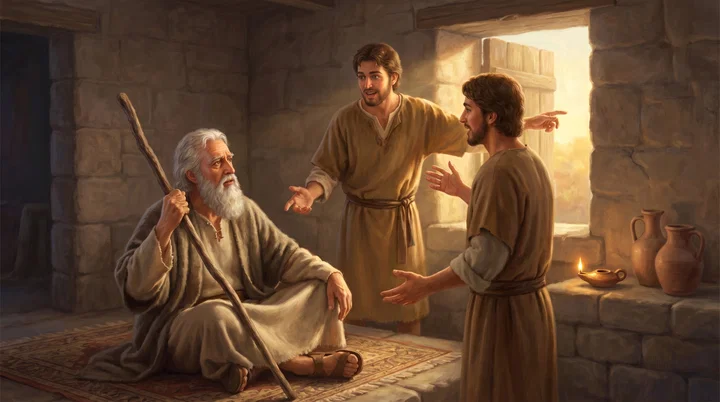
Now there dwelt an old prophet in Beth-el; and his sons came and told him all the works that the man of God had done that day in Beth-el: the words which he had spoken unto the king, them they told also to their father.
Translations
Now there dwelled an old prophet in Bethel; and his sons came and told him all the works that the man of God had done that day in Bethel: the words which he had spoken to the king, them they told also to their father.
Now there dwelt an old prophet in Beth-el; and his sons came and told him all the works that the man of God had done that day in Beth-el: the words which he had spoken unto the king, them they told also to their father.
Now there dwelt an old prophet in Beth-el; and his son came and told him all the works that the man of God had done that day in Beth-el: the words which he had spoken unto the king, them they told also to their father.
Now there dwelt an old prophet in Beth-el; and his sons came and told him all the works that the man of God had done that day in Beth-el: the words which he had spoken to the king, them they told also to their father.
Revised Version, American Standard Version
Now there dwelt an old prophet in Beth-el; and one of his sons came and told him all the works that the man of God had done that day in Beth-el: the words which he had spoken unto the king, them also they told unto their father.
And a certain aged prophet is dwelling in Beth-El, and his son cometh and recounteth to him all the deed that the man of God hath done to-day in Beth-El, the words that he hath spoken unto the king, — yea, they recount them to their father.
Now there dwelt a certain old prophet in Bethel; and his sons came and told him all the works that the man of God had done that day in Bethel; the words that he had spoken to the king, them they told also to their father.
But, a certain aged prophet, was dwelling in Bethel,—whose sons came in and related to him all the deeds which the man of God had done that day in Bethel—and the words which he had spoken unto the king, and they related them to their father.
Berean Standard Bible, Majority Standard Bible
Now a certain old prophet was living in Bethel, and his sons came and told him all the deeds that the man of God had done that day in Bethel. They also told their father the words that the man had spoken to the king.
Now an old prophet lived in Bethel, and one of his sons came and told him all the works that the man of God had done that day in Bethel. They also told their father the words which he had spoken to the king.
Now there was an old prophet living in Beth-el; and one of his sons came and gave him word of all the man of God had done that day in Beth-el, and they gave their father an account of the words he had said to the king.
And an olde Prophet dwelt in Beth-el, and his sonnes came and tolde him all ye woorkes, that the man of God had done that day in Beth-el, and the wordes which he had spoken vnto the King, tolde they their father.
Douay-Rheims (Challoner revision)
Now a certain old prophet dwelt in Bethel, and his sons came to him and told him all the works that the man of God had done that day in Bethel: and they told their father the words which he had spoken to the king.
Pictures
Cross-references
- 1 Kings 13:18
He said unto him, I am a prophet also as thou art; and an angel spake unto me by the word of the LORD, saying, Bring him back with thee into thine house, that he may eat bread and drink water. But he lied unto him.
The old prophet falsely claims an angel sent him, deceiving the man of God.
- 1 Kings 13:24
And when he was gone, a lion met him by the way, and slew him: and his carcase was cast in the way, and the ass stood by it, the lion also stood by the carcase.
A lion kills the man of God after his disobedience.
- 2 Kings 23:16-18
And as Josiah turned himself, he spied the sepulchres that were there in the mount, and sent, and took the bones out of the sepulchres, and burned them upon the altar, and polluted it, according to the word of the LORD which the man of God proclaimed, who proclaimed these words.
Josiah fulfills the prophecy against Bethel’s altar.
- 1 Kings 13:21-22
And he cried unto the man of God that came from Judah, saying, Thus saith the LORD, Forasmuch as thou hast disobeyed the mouth of the LORD, and hast not kept the commandment which the LORD thy God commanded thee,
The prophet is condemned for disobeying God’s command and denied burial with his fathers.
- 1 Kings 13:4-6
And it came to pass, when king Jeroboam heard the saying of the man of God, which had cried against the altar in Beth-el, that he put forth his hand from the altar, saying, Lay hold on him. And his hand, which he put forth against him, dried up, so that he could not pull it in again to him.
The rent altar and Jeroboam’s stricken arm are cited as warnings to the king.
- 1 Kings 12:28-29
Whereupon the king took counsel, and made two calves of gold, and said unto them, It is too much for you to go up to Jerusalem: behold thy gods, O Israel, which brought thee up out of the land of Egypt.
describes the calves he cried against
- 1 Kings 13:17
For it was said to me by the word of the LORD, Thou shalt eat no bread nor drink water there, nor turn again to go by the way that thou camest.
The command from the LORD’s word required exact obedience until revoked.
- 1 Kings 13:2
And he cried against the altar in the word of the LORD, and said, O altar, altar, thus saith the LORD; Behold, a child shall be born unto the house of David, Josiah by name; and upon thee shall he offer the priests of the high places that burn incense upon thee, and men’s bones shall be burnt upon thee.
The man of God foretells Josiah’s later action.
Commentary
Each commentary is drawn from primary sources: the writings of Ellen G. White and Adventist pioneers and periodicals. Each commentary is separate. Its own words are not a quotation; follow the references to read the source passages.
Ellen G. White
3 sources
The verse introduces an old prophet dwelling in Bethel, whose sons came and told him all the works that the man of God had done that day in Bethel and the words which he had spoken to the king.Ms 153, 1906, par. 3–6RH Jul 24, 1913Ms 153, 1906, par. 14 God had passed that old prophet in Bethel by and had chosen the man of God from another place for His work.Ms 153, 1906, par. 14 Their report led into the old prophet's false claim of a contrary message from God, that an angel had told him to bring the man of God back home to Bethel, contrary to the Lord's direct command, and he was false in this act.Ms 153, 1906, par. 3–6RH Jul 24, 1913Ms 153, 1906, par. 14
He repeated his lie until it persuaded the man of God to return with him.RH Jul 24, 1913 The man of God's trust in that lie led him to return in disobedience, bringing upon him death under the judgment pronounced against him.Ms 153, 1906, par. 3–6RH Jul 24, 1913
The account warns of the danger of abandoning a clear duty because of another person's false religious claim.RH Jul 24, 1913 The episode warns that people may reject a plain word from God despite sufficient evidence, choose falsehood, and lead others astray.Ms 153, 1906, par. 14
Sources
Pioneers and periodicals
23 sources
An old prophet was living at Bethel when his sons, who had watched the day's events, came home and told him everything the man of God had done there and said to the king against the altar.RH Mar 17, 1904ST Dec 24, 1885ST Feb 7, 1911 Their report moved him to find out which way the man of God had gone and to ride after him to meet him and bring him back.RH Mar 17, 1904ST Dec 24, 1885ST Mar 4, 1880 He then falsely claimed that an angel by the word of the Lord had sent him to bring the man back, and by that lie persuaded him to return to eat and drink where God had expressly forbidden it.RH Jul 24, 1913RH May 13, 1875ST Dec 7, 1882 God's known word stands above every other voice, and not even a claimed message from another prophet can cancel a command God has already given, so each person must keep personal responsibility for known duty.ST Feb 7, 1911ST Mar 4, 1880ST Dec 7, 1882 An explicit command from God must be obeyed to the letter until the same God who gave it revokes it with equal plainness, for God means exactly what He says and disobedience brings the pronounced judgment.ST Mar 31, 1898ST Dec 3, 1894ST Dec 7, 1882
Historical Setting and Narrative
The verse belongs to the history of Israel's divided kingdoms, a period extending from the revolt of the ten tribes through the death of Jehoshaphat, about eighty years, and including the ministries of several kings of Judah and Israel.RH May 25, 1916 It stands in the historical account of 1 Kings 3-21, a sad record full of important lessons.ST Apr 26, 1910 That account comes from a time of general downward moral tendency after David, with times of reviving whenever the people sought God and God worked for them and through them abundantly.ST Apr 26, 1910 It shows the responsibility resting on leaders, where faithful kings and priests mold the people immensely and failing leaders bring failure on the people with them.ST Apr 26, 1910
The immediate setting is the graphic account of how the ten tribes of Israel were separated from Judah and Benjamin and Jeroboam was elected king over them.ST Dec 7, 1882 The separation followed Rehoboam's refusal of their reasonable complaints that Solomon had overtaxed and oppressed them, answering that his little finger would be greater than his father's loins and that whereas his father had chastised them with whips he would chastise them with scorpions.ST Dec 7, 1882 The separation was so complete that Judah and Israel were never united again under the same government.ST Dec 7, 1882 Jeroboam received his kingdom from Jehovah yet lacked reverence for God and set at naught the commands of the God who had given him his empire.ST Dec 7, 1882
The verse stands where an unnamed man of God from Judah denounces Jeroboam's altar set up at Bethel.RH May 13, 1875ST May 20, 1913 That denunciation belongs to the context of Jeroboam's great sin of making two golden calves and setting one at Bethel and the other at Dan for worship.RH May 13, 1875 The chapter records God's prophecy against that altar, delivered by that unnamed prophet who later disobeyed God.ST May 20, 1913
The verse itself reports that an old, aged prophet dwelt in Bethel.RH Mar 17, 1904ST Dec 24, 1885ST May 31, 1899ST Mar 31, 1909ST Mar 4, 1880 His sons, who had witnessed that day's events, came and told him all the works the man of God had done that day in Bethel.RH Mar 17, 1904ST Dec 24, 1885ST Feb 7, 1911ST May 31, 1899ST Mar 31, 1909 They told him also the words he had spoken to the king, Jeroboam, including what he did and said against the altar.RH Mar 17, 1904ST Dec 24, 1885ST Feb 7, 1911ST May 31, 1899ST Mar 31, 1909
The sons' report prompted the old prophet to learn which way the man of God had gone.RH Jul 24, 1913RH Mar 17, 1904ST Dec 24, 1885ST Mar 4, 1880RH Apr 6, 1905 He then pursued him and went out to meet him and invite him back.RH Jul 24, 1913RH Mar 17, 1904ST Dec 24, 1885ST Mar 4, 1880RH Apr 6, 1905 Their report thus set in motion the events in which the old prophet went after the man of God.RH Apr 6, 1905ST Oct 23, 1884
The prophecy the man of God spoke to Jeroboam in this account was later fulfilled by Josiah, hundreds of years after it was spoken, just as the Lord had declared.ST May 10, 1910 It belongs to the account of the disobedient prophet whose prophecy Josiah later fulfilled.ST Jun 3, 1913
Prophecy Inspiration and Unfaithfulness
God can work through imperfect people, for the inspired word was spoken through this disobedient prophet, and the delivery of the message did not depend on the messenger being obedient or holy.ST Oct 1, 1894ST Mar 31, 1909 The man of God was destroyed after he trusted a fellow prophet and disobeyed God.ST Mar 31, 1909 Prophetic standing or impressive deeds do not by themselves prove that someone is a faithful messenger of God.ST May 31, 1899
Even a prophet can be deceived into thinking that God does not remain steadfast in what He has said.ST Mar 31, 1898 God means exactly what He says and requires unquestioning obedience, and the lesson applies to people in every age.ST Mar 31, 1898 The old prophet was a lying, irresponsible party whom God never commanded the man of God to listen to and whom the devil controlled in this matter.RH May 13, 1875ST Dec 7, 1882
The man of God was in favor with God when sent from Judah to cry against Jeroboam's great sin of making two golden calves and setting one at Bethel and the other at Dan for worship.RH May 13, 1875 By coming to the man of God in the name of a prophet with a falsehood, the old prophet deceived him into returning to lodge and to eat bread and drink water where God had explicitly forbidden it by a positive charge not to eat bread nor drink water nor return by the same way he came.RH May 13, 1875ST Dec 7, 1882 While they were eating the word of the Lord came declaring that because he had eaten and drunk where the Lord forbade him his carcass should not come to the sepulcher of his fathers.RH May 13, 1875 He was slain by a lion as he was returning because he had violated the command of God and died in that sin, so by Ezekiel 18:26 he must die for that sin, which is the second death.RH May 13, 1875
The man of God was still responsible for having been deceived, and God's condemnation and visitation of wrath upon him in delivering him to the lion was not harsh, unreasonable, or unjust.ST Dec 7, 1882 An explicit command from God must be carried out to the letter until the same God who gave it with equal explicitness and emphasis revokes it by a Thus saith the Lord from God Himself, and no utterance from another can set it aside.ST Dec 7, 1882 The report of the sons about the man of God's deeds and words set in motion the events that led the old prophet to pursue and deceive the man of God, showing how a religious leader who had turned from faithfulness could become an agent of temptation.RH Apr 6, 1905 He stands as a warning example that a minister who has turned from God's word can lure others away from it even while bearing a sacred title.RH Apr 6, 1905
Obedience to God's Command
God had laid a positive and explicit charge upon the man of God not to eat bread nor drink water in that place nor to return by the same way he came, but to return by a different way, and at first he obeyed that charge and refused to eat with the king.ST Feb 7, 1911RH May 13, 1875ST Dec 7, 1882 The old prophet then falsely claimed that an angel had told him by the word of the Lord to bring the man of God back to Bethel, and by coming in the name of a prophet with that falsehood and repeating the lie he persuaded him to turn back and lodge and eat bread and drink water where God had explicitly forbidden it.RH Jul 24, 1913RH May 13, 1875ST Dec 7, 1882 While they were eating the word of the Lord came declaring that because he had eaten and drunk where the Lord forbade him his carcass should not come to the sepulcher of his fathers.RH May 13, 1875 He was slain by a lion as he was returning because he had violated the command of God and died in that sin, which by Ezekiel 18:26 means he must die for that sin, which is the second death.RH May 13, 1875
He had received a clear command from God and sinned when he later followed the old prophet's contrary instruction, showing the danger of abandoning clear duty because of another person's false religious claim.RH Jul 24, 1913ST Oct 23, 1884 A claim of divine authority does not excuse disobeying God's plain word.RH Jul 24, 1913ST Oct 23, 1884 God's known Word stands above every other voice, and no word or influence, not even a claimed message from another prophet, can cancel or set aside a command already given by God.ST Feb 7, 1911ST Mar 4, 1880ST Dec 7, 1882ST Oct 23, 1884 Each person knows duty from God and must keep personal responsibility instead of shifting it to another.ST Feb 7, 1911
An explicit command from God must be carried out to the letter until the same God who gave it with equal explicitness and emphasis revokes it by a Thus saith the Lord from God Himself.ST Dec 7, 1882 Even a command given to one person must not be treated as changed on an unreliable claim of divine direction, so commands given to all people are no less unchangeable.ST Dec 3, 1894ST Dec 7, 1882 God means exactly what He says and requires unquestioning obedience in every age, with disobedience bringing the pronounced judgment.ST Mar 31, 1898ST Dec 7, 1882 The condemnation and visitation of wrath in delivering the man to the lion was not harsh, unreasonable, or unjust, though he was still responsible for having been deceived.ST Dec 7, 1882 The experience shows that even a prophet can be deceived into thinking God does not remain steadfast in what He has said.ST Mar 31, 1898
As the man of God was not excused but punished though he acted on the authority of one who once had been a prophet of the Lord, so those who hallow Sunday while admitting God commanded another day will surely not be excused.ST Dec 7, 1882 They cannot show a single word ever spoken by any inspired man favoring the first day as the Sabbath or its substitution for the seventh under any circumstances.ST Dec 7, 1882 Their practice proves they either claim power to change the Lord's time to suit convenience or think the Great Ruler will tolerate disregard of time if manner is kept, which affronts His sovereignty and jealous right to prescribe time.ST Dec 7, 1882
Sources