1 Kings 13:23
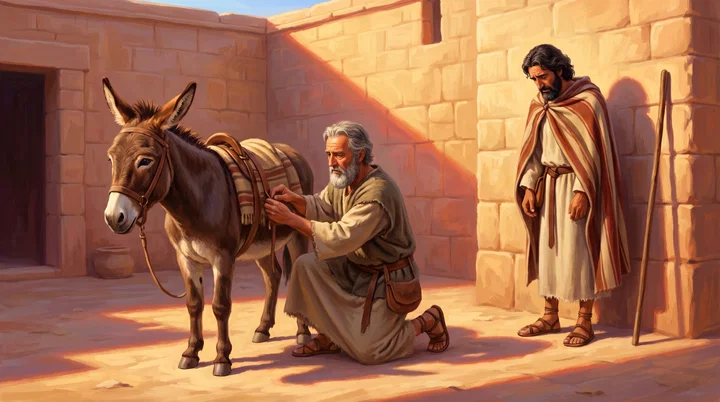
And it came to pass, after he had eaten bread, and after he had drunk, that he saddled for him the ass, to wit, for the prophet whom he had brought back.
Translations
American King James Version, King James Version, KJV Cambridge Paragraph Bible, Revised Version, American Standard Version
And it came to pass, after he had eaten bread, and after he had drunk, that he saddled for him the ass, to wit, for the prophet whom he had brought back.
And it came to pass, after he had eaten bread, and after he had drank, that he saddled for him the ass, to wit, for the prophet whom he had brought back.
And it cometh to pass, after his eating bread, and after his drinking, that he saddleth for him the ass, for the prophet whom he had brought back,
And it came to pass, after he had eaten bread, and after he had drunk, that he saddled the ass for him, for the prophet that he had brought back;
And it came to pass, after he had eaten bread, and after he had drunk, that he saddled for him the ass, for the prophet whom he had brought back.
Berean Standard Bible, Majority Standard Bible
And after the man of God had finished eating and drinking, the old prophet who had brought him back saddled the donkey for him.
After he had eaten bread and after he drank, he saddled the donkey for the prophet whom he had brought back.
Now after the meal he made ready the ass for him, for the prophet whom he had taken back.
And when he had eaten bread and drunke, he sadled him the asse, to wit, to the Prophet whome he had brought againe.
Douay-Rheims (Challoner revision)
And when he had eaten and drunk, he saddled his ass for the prophet, whom he had brought back.
Pictures
Cross-references
- 1 Kings 13:9
For so was it charged me by the word of the LORD, saying, Eat no bread, nor drink water, nor turn again by the same way that thou camest.
The Lord commands the prophet not to eat or drink at Bethel, a command he later disobeys.
- 1 Kings 13:18
He said unto him, I am a prophet also as thou art; and an angel spake unto me by the word of the LORD, saying, Bring him back with thee into thine house, that he may eat bread and drink water. But he lied unto him.
The old prophet’s lie persuades the man of God to return and eat.
- 2 Kings 23:16-18
And as Josiah turned himself, he spied the sepulchres that were there in the mount, and sent, and took the bones out of the sepulchres, and burned them upon the altar, and polluted it, according to the word of the LORD which the man of God proclaimed, who proclaimed these words.
Josiah fulfills the prophecy made against Jeroboam’s altar.
- 1 Kings 13:8
And the man of God said unto the king, If thou wilt give me half thine house, I will not go in with thee, neither will I eat bread nor drink water in this place:
shows first refusal of Jeroboam's hospitality before yielding
- 1 Kings 13:1-5
And, behold, there came a man of God out of Judah by the word of the LORD unto Beth-el: and Jeroboam stood by the altar to burn incense.
The prophet’s fate confirms the prophecy spoken over the altar.
Commentary
Each commentary is drawn from primary sources: the writings of Ellen G. White and Adventist pioneers and periodicals. Each commentary is separate. Its own words are not a quotation; follow the references to read the source passages.
Ellen G. White
7 sources
This verse belongs to one of the messages God sent to backslidden Israel during Jeroboam's reign to lead them back to allegiance to Him, to stay the tide of apostasy and return them from deepening idolatry.PK 108.1 After the man of God had eaten bread and drunk in Bethel at the old prophet's house, the old prophet who had brought him back saddled the ass for him to leave and travel home.Ms 153, 1906, par. 3–6Ms 1, 1912, par. 15–16RH Jul 24, 1913PK 106.3Ms 1, 1912, par. 17 The meal violated the Lord's express command.Ms 153, 1906, par. 3–6RH Jul 24, 1913 He disobeyed by returning to Bethel, obeying the old prophet's lie rather than God's direct command, and God had declared that he would die away from his fathers' burial place.Ms 153, 1906, par. 3–6Ms 1, 1912, par. 15–16RH Jul 24, 1913
The sentence and prophecy of his death was soon fulfilled on the way when a lion met him and killed him, costing him his life.Ms 153, 1906, par. 3–6RH Jul 24, 1913PK 106.3Ms 1, 1912, par. 17 His death confirmed the truth of the warning and showed God's swift displeasure and swift judgment against disobedience to an express command.RH Jul 24, 1913PK 107.1 His death was a further sign and confirmation of the prophecy against Jeroboam that God's words were true, and it should have led the king to turn from evil and serve the Lord.Ms 1, 1912, par. 17PK 107.1 If the prophet had continued safely after disobeying, Jeroboam could have used that outcome to defend his own disobedience; the prophet's fate was meant to warn Jeroboam against persisting in wrongdoing.PK 107.1
Sources
Pioneers and periodicals
19 sources
The verse marks the moment after the shared meal when the old prophet saddled the donkey for the man of God he had persuaded to return with him.RH Mar 17, 1904ST Dec 7, 1882ST Feb 7, 1911 That man had been sent to denounce Jeroboam's calf worship and had been expressly commanded to eat no bread and drink no water there, a command he had at first faithfully kept in refusing the king's hospitality.ST Dec 7, 1882ST Feb 7, 1911RH May 13, 1875 He turned back only because hunger and the old prophet's lying claim of an angelic message led him to disobey God's plain word.ST Dec 24, 1885RH Apr 6, 1905RH Mar 11, 1873 His departure on that saddled beast led straight to his death by a lion on the way, so that he never reached home.RH Mar 17, 1904ST Dec 7, 1882RH May 13, 1875 God requires exact, unquestioning obedience to what He has said, and no later word from even a prophet can set it aside, so that one who lets another's claim turn him from known duty remains guilty though deceived.ST Dec 7, 1882ST Feb 7, 1911ST Mar 31, 1898ST Dec 7, 1882RH Mar 11, 1873
Story and Historical Context
This verse belongs to the graphic account in 1 Kings 12-13 of the separation of the ten tribes of Israel from Judah and Benjamin and the events that led to the election of Jeroboam as king over the ten tribes.ST Dec 7, 1882 The man of God had been sent from Judah, while in favor with God, to cry against Jeroboam's calf worship at Bethel and Dan.RH May 13, 1875 That commission included God's prophecy against Jeroboam's altar, delivered by a prophet who afterward disobeyed God.ST May 20, 1913 His prophecy against the altar was later fulfilled by Josiah.ST Jun 3, 1913
He had received God's explicit and positive command not to eat bread nor drink water at Bethel and not to return by the same way.ST Dec 7, 1882ST Feb 7, 1911RH May 13, 1875 In obedience to that command he had at first refused the king's hospitality.RH Mar 11, 1873 He knew the Lord had told him not to tarry or return by the same route.ST Feb 7, 1911 The verse is part of the account of the man of God who was sent to Bethel and then disobeyed the command he had received.ST Dec 7, 1882
The old prophet of Bethel saddled an ass to pursue him and invited him to return.ST Dec 24, 1885RH Mar 11, 1873 He lied that an angel had told him to bring him back, claiming inspiration from God.RH Apr 6, 1905 The man of God's hunger and the false prophet's claim of inspiration led him to believe the lie.RH Mar 11, 1873 Persuaded by that old lying prophet to turn back, he ate and drank with him in his house in defiance of God's command, trusting the false prophet's lie.RH May 13, 1875ST Dec 24, 1885 Even religious teachers may so deceive.ST Dec 24, 1885
The verse records the moment after the meal, when after he had eaten bread and drunk, the man who had brought him back saddled a donkey for him.ST Dec 7, 1882ST Feb 7, 1911ST May 20, 1913 The young prophet ate and drank at the old prophet's house after being persuaded to disobey, and was then provided a donkey to leave afterward.RH Mar 17, 1904 After the man of God ate and drank at the old prophet's invitation and in disobedience in returning to Bethel, the old prophet saddled the ass for him for his return journey and travel.RH Jul 24, 1913ST Dec 7, 1882RH Apr 6, 1905 The saddling marks the departure for his return journey.ST Dec 7, 1882
That departure led directly to divine punishment on the way.ST Dec 7, 1882ST Dec 7, 1882 A lion met him by the way and slew him, so he was slain by a lion on his return and found dead.RH Jul 24, 1913ST Dec 7, 1882RH May 13, 1875ST Mar 4, 1880 He died before reaching home and did not reach home.RH Mar 17, 1904RH Apr 6, 1905 Because he had eaten and drunk where the Lord forbade him, his carcass would not come to the sepulcher of his fathers.RH May 13, 1875
Obedience, Judgment, and Inspiration
The saddling of the ass comes after the meal in which the man of God from Judah ate bread and drank water at Bethel in disobedience to God's explicit command not to eat, not to drink, and not to return by the same way, and it marks his departure on the journey on which a lion met him and slew him.ST Dec 7, 1882ST Mar 31, 1898 That outcome proves that God insists upon exact obedience in every particular, remains steadfast in what He has said, and requires unquestioning obedience, visiting wrath even when disobedience was caused by deception by another claiming prophetic authority.ST Dec 7, 1882ST Mar 31, 1898 The condemnation and visitation of wrath upon him was just and not harsh, unreasonable, or unjust, but was for the cause assigned, disobedience to the mouth of the Lord.ST Dec 7, 1882ST Dec 7, 1882 Though he was deceived by the falsehood of one who came in the name of a prophet, he was still responsible for having been deceived.ST Dec 7, 1882ST Dec 7, 1882
God's command was as explicit as words could make it, and it was his business to carry it out to the letter until the same God who gave it revoked it with equal explicitness and emphasis by a Thus saith the Lord from God Himself.ST Dec 7, 1882 Instead he listened to an irresponsible party whom God never commanded him to listen to and whom the devil controlled, and that listening brought the judgment.ST Dec 7, 1882 A later message from another person cannot cancel a command God has already given, and God's Word must be regarded above any human influence, even a prophet's claim to a message from God.ST Feb 7, 1911RH Mar 11, 1873 Since even religious teachers may deceive, God's commands must remain the individual's test and guide.ST Feb 7, 1911ST Dec 24, 1885
Each person remains responsible for obeying what God has made known, and is lost by trusting a fellow prophet instead of obeying God and by allowing another's words to turn him from known duty.ST Feb 7, 1911ST Mar 31, 1909 Hunger and the false claim of a message from God led him to believe the lie and turn back to eat and drink in the old prophet's house, contrary to God's command, after he had rightly refused the king's hospitality.ST Feb 7, 1911RH Mar 11, 1873 By turning aside from his mission he was led into sin, fell from favor with God, and died before reaching home.RH Mar 17, 1904RH May 13, 1875RH Apr 6, 1905 Though in favor when sent to cry against Jeroboam's calf worship at Bethel and Dan, he disobeyed God's positive command through persuasion by the old lying prophet, and after the meal the word of the Lord came that because he had eaten and drunk where the Lord forbade him his carcass should not come to the sepulcher of his fathers.RH Jul 24, 1913RH May 13, 1875
His death in disobedience confirmed the truth of the warning and showed that disobedience to God's command brings swift judgment, for the sentence was soon carried out when a lion met him on the way and killed him.RH Jul 24, 1913RH Mar 17, 1904 For violating God's command he was slain by a lion on his return and died in his sin, so he must suffer the second death.RH May 13, 1875 His story is therefore a warning to fully follow the Lord's command rather than let anyone lead a person away from it.RH Mar 17, 1904ST Dec 24, 1885 Yet his disobedience did not prevent God from using him as an instrument, for God's inspired word could still be spoken through him and he could still deliver a message from God.ST Oct 1, 1894ST Dec 26, 1892
Sources