1 Kings 13:22
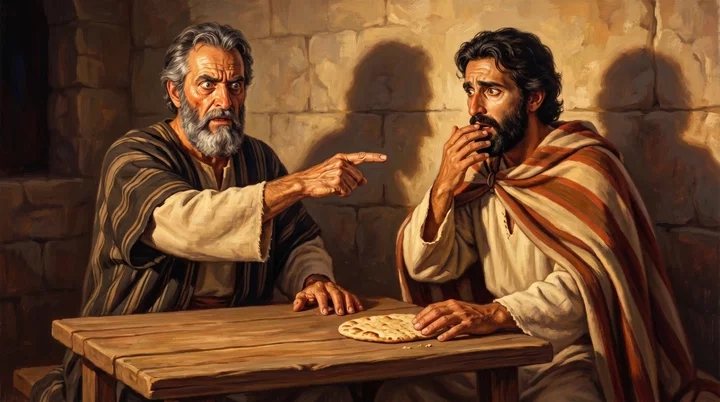
But camest back, and hast eaten bread and drunk water in the place, of the which the Lord did say to thee, Eat no bread, and drink no water; thy carcase shall not come unto the sepulchre of thy fathers.
Translations
But came back, and have eaten bread and drunk water in the place, of the which the Lord did say to you, Eat no bread, and drink no water; your carcass shall not come to the sepulcher of your fathers.
But camest back, and hast eaten bread and drunk water in the place, of the which the Lord did say to thee, Eat no bread, and drink no water; thy carcase shall not come unto the sepulchre of thy fathers.
but camest back, and hast eaten bread and drunk water in the place, of the which the Lord did say to thee, Eat no bread, and drink no water; thy carcase shall not come unto the sepulchre of thy fathers.
But hast returned, and hast eaten bread and drank water in the place, of which the LORD said to thee, Eat no bread, and drink no water; thy carcass shall not come to the sepulcher of thy fathers.
but camest back, and hast eaten bread and drunk water in the place of the which he said to thee, Eat no bread, and drink no water; thy carcase shall not come unto the sepulchre of thy fathers.
but camest back, and hast eaten bread and drunk water in the place of which he said to thee, Eat no bread, and drink no water; thy body shall not come unto the sepulchre of thy fathers.
and turnest back and dost eat bread and drink water in the place of which He said unto thee, Thou dost not eat bread nor drink water — thy carcase cometh not in unto the burying-place of thy fathers.'
but camest back, and hast eaten bread and drunk water in the place of which he said to thee, Eat no bread and drink no water; thy carcase shall not come to the sepulchre of thy fathers.
but hast returned, and eaten bread and drunk water, in the place of which he said unto thee, Thou mayest neither eat bread nor drink water: thy dead body shall not enter the burying-place of thy fathers.
Berean Standard Bible, Majority Standard Bible
but you went back and ate bread and drank water in the place where He told you not to do so, your body shall never reach the tomb of your fathers.’”
but came back, and have eaten bread and drank water in the place of which he said to you, “ Eat no bread, and drink no water,” your body will not come to the tomb of your fathers.’”
But have come back, and have taken food and water in this place where he said you were to take no food or water; your dead body will not be put to rest with your fathers.
But camest backe againe, and hast eaten bread and drunke water in the place (whereof he did say vnto thee, Thou shalt eate no bread nor drinke any water) thy carkeis shall not come vnto the sepulchre of thy fathers.
Douay-Rheims (Challoner revision)
And hast returned and eaten bread, and drunk water in the place wherein he commanded thee that thou shouldst not eat bread, nor drink water, thy dead body shall not be brought into the sepulchre of thy fathers.
Pictures
Cross-references
- 1 Kings 13:18
He said unto him, I am a prophet also as thou art; and an angel spake unto me by the word of the LORD, saying, Bring him back with thee into thine house, that he may eat bread and drink water. But he lied unto him.
The old prophet’s lie about an angelic message persuaded the man of God to disobey the Lord’s command.
- 1 Kings 13:9
For so was it charged me by the word of the LORD, saying, Eat no bread, nor drink water, nor turn again by the same way that thou camest.
The original command forbade eating and drinking there.
- 1 Kings 13:2-5
And he cried against the altar in the word of the LORD, and said, O altar, altar, thus saith the LORD; Behold, a child shall be born unto the house of David, Josiah by name; and upon thee shall he offer the priests of the high places that burn incense upon thee, and men’s bones shall be burnt upon thee.
Josiah’s prophecy and the altar’s sign confirm the warning against Jeroboam’s altar.
- 2 Kings 23:16-18
And as Josiah turned himself, he spied the sepulchres that were there in the mount, and sent, and took the bones out of the sepulchres, and burned them upon the altar, and polluted it, according to the word of the LORD which the man of God proclaimed, who proclaimed these words.
Josiah fulfills the man of God’s prophecy concerning the altar and his burial.
- 1 Kings 13:8
And the man of God said unto the king, If thou wilt give me half thine house, I will not go in with thee, neither will I eat bread nor drink water in this place:
The man of God first refuses the king’s invitation, citing the Lord’s command.
- 1 Kings 13:26
And when the prophet that brought him back from the way heard thereof, he said, It is the man of God, who was disobedient unto the word of the LORD: therefore the LORD hath delivered him unto the lion, which hath torn him, and slain him, according to the word of the LORD, which he spake unto him.
The old prophet identifies the man’s death as the consequence of disobeying the Lord.
- 1 Kings 13:11
Now there dwelt an old prophet in Beth-el; and his sons came and told him all the works that the man of God had done that day in Beth-el: the words which he had spoken unto the king, them they told also to their father.
Identifies the prophet whose disobedience led to his death.
Commentary
Each commentary is drawn from primary sources: the writings of Ellen G. White and Adventist pioneers and periodicals. Each commentary is separate. Its own words are not a quotation; follow the references to read the source passages.
Ellen G. White
7 sources
The verse condemns the man of God for coming back and eating bread and drinking water at Bethel, in the very place where the Lord had directly commanded him not to eat or drink.Ms 153, 1906, par. 3–6Ms 1, 1912, par. 15–16PK 106.2RH Jul 24, 1913PK 106.3 He did so after accepting an old prophet's false claim to have a new message and counterorder from God, and trusting that lie led to his death.Ms 153, 1906, par. 3–6Ms 1, 1912, par. 15–16 A claimed prophetic message must never be allowed to override a command God has already given.Ms 153, 1906, par. 3–6 As judgment for that disobedient eating and drinking, God declared that his carcass would not come to the sepulchre of his fathers, that his body would not be buried in his ancestral tomb.Ms 153, 1906, par. 3–6PK 106.2RH Jul 24, 1913PK 106.3Ms 1, 1912, par. 17
The announced penalty was fulfilled when he died on the way, killed by a lion, with his body left by the road.Ms 1, 1912, par. 15–16RH Jul 24, 1913PK 106.3Ms 1, 1912, par. 17 The sentence being carried out confirmed the truth of God's word and of the prophecy.RH Jul 24, 1913Ms 1, 1912, par. 17 His death was evidence to Jeroboam that God's word was true and served the king as a warning against continuing in disobedience.RH Jul 24, 1913Ms 1, 1912, par. 17 It should have led Jeroboam to turn from evil and serve the Lord.Ms 1, 1912, par. 17
The account has been misapplied to accuse another prophet of being honest but deceived like the man of God.Lt 11, 1890, par. 13 The proper challenge in answer to that use is to show any actual disobedience to God, rather than misrepresenting the testimony.Lt 11, 1890, par. 13
Sources
Pioneers and periodicals
25 sources
The man was sent to denounce idolatry at Bethel under a direct order not to eat bread or drink water there, but on his way home he was turned back to eat and drink by an old prophet who falsely claimed angelic direction, and while they ate judgment came upon him that for his disobedience he would die and not be buried with his fathers.ST Dec 2, 1880RH Mar 17, 1904ST Dec 7, 1882ST Dec 24, 1885ST Feb 7, 1911 The sentence was soon executed when a lion killed him on the way, so he never reached home.ST Dec 2, 1880RH Mar 17, 1904ST Dec 7, 1882 God's commands are serious and require unquestioning obedience, and being misled by another does not remove personal responsibility to obey what God has plainly spoken.RH Mar 17, 1904ST Dec 7, 1882ST Dec 24, 1885ST Feb 7, 1911ST Mar 31, 1898 A command remains binding until God Himself clearly revokes it, and no fellow prophet can rightly cancel it on a claim of later divine direction.ST Dec 3, 1894ST Dec 7, 1882ST Mar 4, 1880 His fall proves that one once in favor can fall by disobedience and perish, a warning that applies still to keeping God's enduring law and Sabbath against human alteration.RH May 13, 1875ST Oct 1, 1894ST Dec 7, 1882ST Dec 2, 1880
Story and Judgment
The verse stands in the wholly historical record of 1 Kings 3-21.ST Apr 26, 1910 That record is a sad account showing the general downward moral tendency in Judah and Israel after David with times of reviving, showing that whenever the people sought God He wrought abundantly for them and through them, and showing the responsibility resting on leaders because faithful kings and priests molded the people while failing leaders caused the people to fail with them.ST Apr 26, 1910 Within it, the account in 1 Kings 12 and 13 tells of the separation of the ten tribes of Israel from Judah and Benjamin and the events leading to the election of Jeroboam as king over the ten tribes.ST Dec 7, 1882 There God gave prophecy against Jeroboam's altar and the disobedience of the prophet who delivered it.ST May 20, 1913
A man of God from Judah was sent to cry against Jeroboam's idolatry at Bethel.RH May 13, 1875 He was under a positive, explicit command from the Lord not to eat bread nor drink water there nor return by the same way he came, but to go home another way.ST Dec 7, 1882RH May 13, 1875 While going home that other way he was persuaded to come back and eat bread and drink water where God had forbidden him by an old, lying prophet of Bethel.ST Dec 2, 1880RH May 13, 1875 That old prophet deceived him with a false claim of an angelic message and inspiration, and one prophet could not rightly cancel a command the Lord had already given.RH Apr 6, 1905ST Mar 4, 1880
The verse is the word of the Lord coming to him while they were eating.RH May 13, 1875 It rebukes and condemns him for returning and eating and drinking in the place of which the Lord had said to eat no bread and drink no water.ST Dec 24, 1885ST Feb 7, 1911ST Mar 31, 1898 It sentences him to death and forfeiture of life: that his carcass would not come to the sepulchre of his fathers.ST Dec 24, 1885RH May 13, 1875ST Mar 31, 1898 That means his body would not be buried in his ancestral and family tomb, with his fathers.RH Mar 17, 1904ST Dec 7, 1882ST Feb 7, 1911ST Mar 31, 1898ST Oct 23, 1884 Although he believed the prophet of Bethel had brought a later instruction from God and wanted to obey, he sinned by accepting human authority over the command God had already given.ST Oct 23, 1884 His word could still be spoken through a disobedient prophet, who did not speak merely from himself.ST Oct 1, 1894
The sentence was confirmed and carried out when a lion killed him on the way soon after he left Bethel.RH Jul 24, 1913ST Dec 7, 1882ST Oct 23, 1884 He never reached home, and he was found dead the next day.ST Dec 2, 1880RH Apr 6, 1905 This fulfilled the warning that his body would not be buried in his ancestral tomb.RH Mar 17, 1904ST Oct 23, 1884 In this it confirmed the truth of the prophecy and served as a warning to Jeroboam against continuing in disobedience.RH Jul 24, 1913
The verse foretells that the man of God who disobeyed the Lord's command would die without being buried in his fathers' tomb.ST May 10, 1910 That prophecy concerning the disobedient prophet was fulfilled hundreds of years later when Josiah carried out the predicted judgment against Jeroboam's altar.ST May 10, 1910ST Jun 3, 1913
Obedience Despite Deception
The disobedience brought condemnation and forfeiture of life because the man returned and ate bread and drank water in the place where eating and drinking had been expressly forbidden, and the sentence that his body would not come to the burial place of his ancestors was fulfilled when he was killed on the way and never reached home.RH Mar 17, 1904ST Dec 7, 1882ST Dec 24, 1885 God's commands in this are serious and must be obeyed, for God means what He says and requires unquestioning obedience, and the lesson applies to people today.RH Mar 17, 1904ST Dec 24, 1885ST Mar 31, 1898 No person should lead anyone away from a command God has given.RH Mar 17, 1904
Being deceived by another prophet did not cancel responsibility to obey, since the command was explicit and already known.ST Dec 7, 1882ST Feb 7, 1911ST Dec 7, 1882 The one who knew the clear command remained personally responsible and could not shift that responsibility to the prophet who misled him.ST Dec 7, 1882ST Feb 7, 1911 He was responsible for accepting the deception instead of waiting for an explicit word from God Himself.ST Dec 7, 1882
The command remained binding until God Himself clearly revoked it, and an alleged message from someone else, even one claiming to speak as a prophet, was not enough.ST Dec 7, 1882 The Lord does not give a command through one person and then authorize another to nullify it, so one prophet could not rightly cancel a command the Lord had already given.ST Mar 4, 1880RH Mar 11, 1873 God's commands cannot be altered on a claim of divine direction or on belief that God had changed a command He had given.ST Dec 3, 1894ST Dec 7, 1882RH Mar 11, 1873
He sinned by accepting human authority over the command God had already given, trusting a fellow prophet and acting against the Lord's command.ST Oct 23, 1884ST Mar 31, 1909 This was so although he believed the prophet of Bethel had brought a later instruction from God and wanted to obey.ST Oct 23, 1884 Nor was disobedience excused although he had been misled by someone who had once been a prophet.ST Dec 7, 1882 Even one who has resisted threats and rewards can be led into ruin by a false religious messenger through a false claim of an angelic message and inspiration.RH Apr 6, 1905 God's command must therefore be obeyed even when a deceiver urges otherwise.RH Apr 6, 1905ST Dec 2, 1880
The warning bears on keeping God's enduring law and the seventh-day Sabbath.ST Dec 2, 1880 God's commands about the time of an observance and about where and when to eat and drink must not be altered or disregarded at human convenience.ST Dec 7, 1882 The case proves that one once in favor and in grace can fall by disobedience, for the man was in favor when sent to cry against idolatry at Bethel yet violated the positive command not to eat bread nor drink water nor return by the same way, was persuaded while going home another way to return and eat and drink where forbidden, received while eating the word that his carcass would not come to the sepulchre of his fathers, and was slain on his return because he violated God's command and died in that sin.RH May 13, 1875 By the test of Ezekiel 18:26 his death in sin brings the second death.RH May 13, 1875 Yet his disobedience did not prevent God from using him as an instrument, showing that God's word could be spoken through a disobedient prophet who did not speak merely from himself.ST Oct 1, 1894ST Dec 26, 1892
Sources