1 Kings 13:30
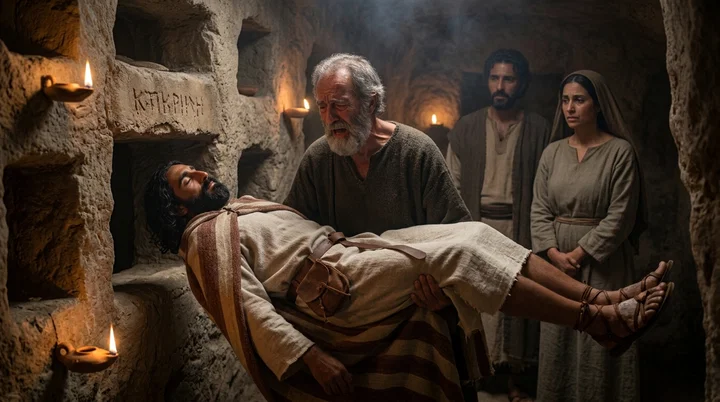
And he laid his carcase in his own grave; and they mourned over him, saying, Alas, my brother!
Translations
American King James Version, Webster Bible
And he laid his carcass in his own grave; and they mourned over him, saying, Alas, my brother!
King James Version, Revised Version
And he laid his carcase in his own grave; and they mourned over him, saying, Alas, my brother!
And he laid his carcase in his own grave; and they mourned over him, saying, Alas, my brother.
And he laid his body in his own grave; and they mourned over him, saying, Alas, my brother!
and he placeth his carcase in his own grave, and they mourn for him, 'Oh, my brother!'
And he laid his corpse in his own sepulchre; and they mourned over him [saying], Alas, my brother!
And he laid his dead body in his own grave,—and they lamented over him, [saying] —Alas, my brother!
Berean Standard Bible, Majority Standard Bible
Then he laid the body in his own tomb, and they lamented over him, “Oh, my brother!”
He laid his body in his own grave; and they mourned over him, saying, “ Alas, my brother!”
And he put the body in the resting-place made ready for himself, weeping and sorrowing over it, saying, O my brother!
And hee layed his bodie in his owne graue, and they lamented ouer him, saying, Alas, my brother.
Douay-Rheims (Challoner revision)
And he laid his dead body in his own sepulchre: and they mourned over him, saying: Alas! alas! my brother.
Pictures
Cross-references
- 1 Kings 13:24-26
And when he was gone, a lion met him by the way, and slew him: and his carcase was cast in the way, and the ass stood by it, the lion also stood by the carcase.
The man of God is killed by a lion after disobeying the Lord’s command.
- 1 Kings 13:18
He said unto him, I am a prophet also as thou art; and an angel spake unto me by the word of the LORD, saying, Bring him back with thee into thine house, that he may eat bread and drink water. But he lied unto him.
The old prophet’s lie leads the man of God to disobey.
- 2 Kings 23:16-18
And as Josiah turned himself, he spied the sepulchres that were there in the mount, and sent, and took the bones out of the sepulchres, and burned them upon the altar, and polluted it, according to the word of the LORD which the man of God proclaimed, who proclaimed these words.
Josiah fulfills the prophecy concerning the man of God’s bones.
- 1 Kings 13:9
For so was it charged me by the word of the LORD, saying, Eat no bread, nor drink water, nor turn again by the same way that thou camest.
God commands the prophet not to eat or drink there.
- 1 Kings 13:4-5
And it came to pass, when king Jeroboam heard the saying of the man of God, which had cried against the altar in Beth-el, that he put forth his hand from the altar, saying, Lay hold on him. And his hand, which he put forth against him, dried up, so that he could not pull it in again to him.
The altar sign and the prophet’s fate confirm God’s warning to Jeroboam.
- Job 14:13
O that thou wouldest hide me in the grave, that thou wouldest keep me secret, until thy wrath be past, that thou wouldest appoint me a set time, and remember me!
Both use *kever* for a grave.
- Isaiah 53:9
And he made his grave with the wicked, and with the rich in his death; because he had done no violence, neither was any deceit in his mouth.
Both use *kever* for a grave.
Commentary
Each commentary is drawn from primary sources: the writings of Ellen G. White and Adventist pioneers and periodicals. Each commentary is separate. Its own words are not a quotation; follow the references to read the source passages.
Ellen G. White
1 source
The verse records the burial of the disobedient prophet, whose corpse was laid in a grave and lamented with mourning over him.RH Jul 24, 1913 His death came as a swift divine judgment for disobeying God's express command.RH Jul 24, 1913 The carrying out of that announced judgment confirmed the truth of the prophecy that had been spoken against him.RH Jul 24, 1913 His punishment stood as a warning to Jeroboam not to continue persisting in his course of wrongdoing.RH Jul 24, 1913
Sources
Pioneers and periodicals
18 sources
The verse records the burial of the prophet from Judah who was slain by a lion on the way from Bethel after being deceived into returning and accepting food, his body laid in a grave while mourners cried over him in brotherly lament.RH Jul 24, 1913ST Dec 2, 1880ST Oct 23, 1884 He forfeited his life by turning aside from God's explicit command and listening to the false prophet, showing that God condemns disobedience even when religious claims are used to persuade and that He means exactly what He says and requires unquestioning obedience.ST Dec 24, 1885RH Mar 17, 1904ST Mar 31, 1898 Being deceived by one claiming to speak as a prophet did not remove his responsibility, for he should have continued to obey unless God Himself clearly revoked the command, and no claimed later divine message can alter God's command.ST Dec 3, 1894ST Dec 7, 1882 Yet God's inspired word could still be spoken through that disobedient prophet, since inspiration did not depend on the moral character of its instrument, and his prophecy against Jeroboam was fulfilled centuries later by Josiah just as the Lord had declared.ST May 10, 1910ST Oct 1, 1894ST Dec 26, 1892ST Jun 3, 1913
Narrative Context and Burial
The verse falls within the histories of Judah and Israel from the revolt of the ten tribes to the death of Jehoshaphat, a period of about eighty years.RH May 25, 1916 It belongs to the wholly historical record of 1 Kings 3-21, a sad record showing the general downward moral tendency in Judah and Israel after David, with times of reviving whenever the people sought God and God worked for them and through them abundantly.ST Apr 26, 1910 That history shows the responsibility resting on leaders, since faithful kings and priests mold the people immensely while failing leaders cause the people to fail with them.ST Apr 26, 1910 It belongs to the account of an unknown, unnamed prophet's prediction against Jeroboam and the altar.ST May 20, 1913
It belongs to the account of the prophet from Judah who, after being deceived by the old prophet of Bethel into returning and accepting food, was found dead the next day.ST Dec 2, 1880 He had disobeyed God's plain command after believing the Bethel prophet's lie, and his disobedience was punished by death.ST Oct 23, 1884 A lion slew him on the way from Bethel.ST Dec 2, 1880ST Oct 23, 1884 His body was laid in a grave and buried, and people mourned over him saying, Alas, my brother.RH Jul 24, 1913
The word for grave means a burial place where a body is laid.RH Nov 7, 1854
Warnings on Obedience
The verse closes the account of the man of God who forfeited his life after turning aside from God's explicit command and listening to the false prophet, showing that God condemns disobedience even when religious claims are used to persuade someone to disobey.ST Dec 24, 1885 The lesson is that people must follow God's command and must not let anyone lead them away from it, for his destruction by a lion followed his failure to obey.RH Mar 17, 1904 God means exactly what He says and requires unquestioning obedience from His people, as in the past, and the consequences seen here point to that requirement.ST Mar 31, 1898
Being deceived by someone claiming to speak as a prophet did not remove his responsibility, for his death was a judgment for returning and eating when God had forbidden him to do so.ST Dec 7, 1882 He should have continued to obey unless God Himself clearly revoked the command.ST Dec 7, 1882 God's command is not to be treated as altered on the claim of a later divine message, so people or powers claiming divine authority to change God's commands are unreliable, and a man was punished here for believing that God had changed a command He had given.ST Dec 3, 1894 The account serves as a warning that God's commands must be obeyed as given and cannot be changed to suit human preference, with Jeroboam's self-chosen month for worship standing as a further example of altering God's prescribed time.ST Dec 7, 1882
His death was a swift judgment for disobeying God's command, and it confirmed the truth of the prophecy spoken against him, while his buried body was mourned over.RH Jul 24, 1913 That punishment also served as a warning to Jeroboam that he should not persist in wrongdoing.RH Jul 24, 1913 He had been sent to condemn idolatry but disobeyed God's command by eating and drinking when the old prophet persuaded him to return, and he was slain by a lion and died in that sin.RH May 13, 1875 According to Ezekiel 18:26 he must face the second death.RH May 13, 1875
Prophecy Inspiration and Death
The burial belongs to the chapter containing the man of God's prophecy to Jeroboam, which Josiah fulfilled centuries later just as the Lord had declared.ST May 10, 1910ST Jun 3, 1913 It belongs to the account of the disobedient prophet whose prophecy was later fulfilled by Josiah.ST May 10, 1910ST Jun 3, 1913
The chapter shows that God's inspired word could be spoken through a disobedient prophet, for the word came from God and not from the prophet himself.ST Oct 1, 1894 A disobedient prophet could still deliver God's message, because inspiration did not depend on the moral character of the person used as its instrument.ST Dec 26, 1892 The grave where the body is laid is a burial place, using kever, and it is not the same as sheol, the state of death shared by all the dead.RH Nov 7, 1854
Sources