1 Kings 13:29
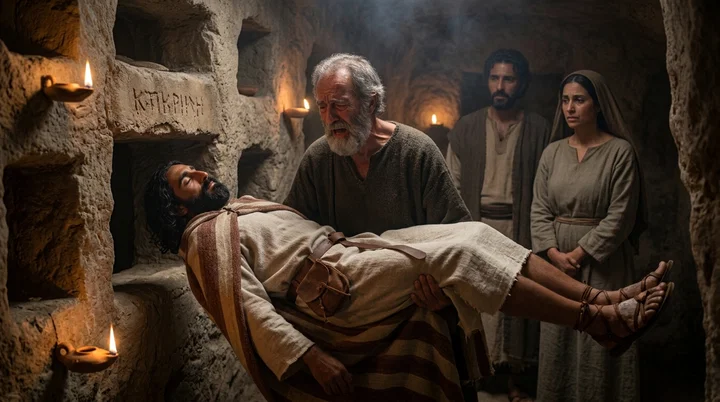
And the prophet took up the carcase of the man of God, and laid it upon the ass, and brought it back: and the old prophet came to the city, to mourn and to bury him.
Translations
And the prophet took up the carcass of the man of God, and laid it on the ass, and brought it back: and the old prophet came to the city, to mourn and to bury him.
King James Version, KJV Cambridge Paragraph Bible
And the prophet took up the carcase of the man of God, and laid it upon the ass, and brought it back: and the old prophet came to the city, to mourn and to bury him.
And the prophet took up the carcass of the man of God, and laid it upon the ass, and brought it back: and the old prophet came to the city, to mourn and to bury him.
And the prophet took up the carcase of the man of God, and laid it upon the ass, and brought it back: and he came to the city of the old prophet, to mourn, and to bury him.
And the prophet took up the body of the man of God, and laid it upon the ass, and brought it back; and he came to the city of the old prophet, to mourn, and to bury him.
And the prophet taketh up the carcase of the man of God, and placeth it on the ass, and bringeth it back, and the old prophet cometh in unto the city to mourn and to bury him,
And the prophet took up the corpse of the man of God, and laid it upon the ass, and brought it back; and the old prophet came into the city, to mourn and to bury him.
And the prophet took up the dead body of the man of God, and laid it upon the ass, and brought it back,—and the aged prophet came into the city, to make lamentation, and to bury him.
Berean Standard Bible, Majority Standard Bible
So the old prophet lifted up the body of the man of God, laid it on the donkey, and brought it back to his own city to mourn for him and bury him.
The prophet took up the body of the man of God, and laid it on the donkey, and brought it back. He came to the city of the old prophet to mourn, and to bury him.
Then the prophet took up the body of the man of God and put it on the ass and took it back; and he came to the town to put the body to rest with weeping.
And the Prophet tooke vp the body of the man of God, and layed it vpon the asse, and brought it againe, and the olde Prophet came to the citie, to lament and burie him.
Douay-Rheims (Challoner revision)
And the prophet took up the body of the man of God, and laid it upon the ass, and going back brought it into the city of the old prophet, to mourn for him.
Pictures
Cross-references
- 2 Kings 23:16-18
And as Josiah turned himself, he spied the sepulchres that were there in the mount, and sent, and took the bones out of the sepulchres, and burned them upon the altar, and polluted it, according to the word of the LORD which the man of God proclaimed, who proclaimed these words.
Josiah’s actions fulfilled the man of God’s prophecy.
- 1 Kings 13:22
But camest back, and hast eaten bread and drunk water in the place, of the which the Lord did say to thee, Eat no bread, and drink no water; thy carcase shall not come unto the sepulchre of thy fathers.
His disobedience brings the judgment that his body will not reach his fathers’ sepulcher.
- 1 Kings 13:18
He said unto him, I am a prophet also as thou art; and an angel spake unto me by the word of the LORD, saying, Bring him back with thee into thine house, that he may eat bread and drink water. But he lied unto him.
The false prophet’s claim contradicts God’s explicit command.
- 1 Kings 13:2
And he cried against the altar in the word of the LORD, and said, O altar, altar, thus saith the LORD; Behold, a child shall be born unto the house of David, Josiah by name; and upon thee shall he offer the priests of the high places that burn incense upon thee, and men’s bones shall be burnt upon thee.
The man of God prophesied about Josiah to Jeroboam.
Commentary
Each commentary is drawn from primary sources: the writings of Ellen G. White and Adventist pioneers and periodicals. Each commentary is separate. Its own words are not a quotation; follow the references to read the source passages.
Ellen G. White
1 source
The man of God who had disobeyed the divine command was struck down on the road, killed by a lion as judgment for his disobedience.RH Jul 24, 1913 Afterward the old prophet lifted the lifeless body, laid it upon the donkey, and carried it back from where it had fallen.RH Jul 24, 1913 He brought it into the city for the purpose of mourning over the dead and giving him burial.RH Jul 24, 1913 That death and burial confirmed the sentence already pronounced against the disobedient prophet, proving that the word of God would surely be fulfilled.RH Jul 24, 1913
Sources
Pioneers and periodicals
15 sources
The old prophet lifted the slain man of God onto the donkey and carried him back to the city to mourn and bury him, confirming the judgment pronounced for eating and drinking where God had forbidden.RH Jul 24, 1913RH May 13, 1875ST Oct 23, 1884 The man from Judah had been sent to cry against Jeroboam's calves at Bethel and Dan with a plain command to eat no bread, drink no water, and not return by the same way, but on his way home he was persuaded by the old prophet's lie to turn back and eat.ST Dec 2, 1880RH May 13, 1875ST Mar 31, 1898 His death by the lion shows that departing from God's command forfeits life and brings condemnation, for God means what He says and requires unquestioning obedience that deception by claimed prophetic authority does not excuse.RH Mar 17, 1904ST Dec 24, 1885ST Mar 31, 1898ST Dec 7, 1882ST Oct 23, 1884 Believing that God had changed His earlier command did not make disobedience right, and his case stands as a warning that God does not excuse disregard of His command about when worship is to be observed even for claimed religious authority.ST Mar 31, 1898ST Dec 3, 1894ST Dec 7, 1882 The prophecy he spoke was still fulfilled by Josiah hundreds of years later because inspiration rests on God's word and not on the messenger's faithfulness, while his fall after favor proves that falling from grace is possible and brings the second death of Ezekiel 18:26.RH May 13, 1875ST May 10, 1910ST Oct 1, 1894ST Dec 26, 1892ST Jun 3, 1913
Narrative Setting and Outcome
The verse belongs to the division of the kingdom told in 1 Kings 12 and 13, when the ten tribes separated from Judah and Benjamin and elected Jeroboam king.ST Dec 7, 1882 After complaints of overtaxation and oppression under Solomon, Rehoboam answered that his little finger would be greater than his father's loins and that where his father chastised with whips he would chastise with scorpions, so the ten tribes revolted and completely severed from Judah and Benjamin in a division never reunited under one government.ST Dec 7, 1882 Jeroboam received the kingdom from Jehovah through prophecy, yet though a man of genius he lacked reverence for God and set at naught the commands of the God who had given him his empire.ST Dec 7, 1882
The man of God from Judah was in favor with God when sent to Bethel to cry against Jeroboam's sin of making two golden calves at Bethel and Dan for Israel to worship.RH May 13, 1875 He had a positive command from God not to eat bread nor drink water nor return by the same way he came, and he started home another way.RH May 13, 1875 The old prophet rode out and found the weary man beneath an oak.ST Dec 2, 1880 His disobedience followed deception when he was persuaded by the old lying prophet to return and eat bread against God's command.ST Dec 2, 1880RH May 13, 1875ST Mar 31, 1898
While they were eating the word of the Lord came that because he had eaten and drunk where the Lord forbade him his carcass should not come to the sepulcher of his fathers.RH May 13, 1875 He was slain by a lion on his return for violating God's command.RH Jul 24, 1913RH May 13, 1875ST Oct 23, 1884 The old prophet took up the body, laid it on the ass, and brought it back to the city to mourn and to bury him.RH Jul 24, 1913RH May 13, 1875ST Oct 23, 1884 That burial confirmed the judgment pronounced against him and showed that God's word would be fulfilled.RH Jul 24, 1913
Obedience and Its Warning
The verse stands in the account of the disobedient prophet, whose death shows that departing from God's command brings serious consequences.RH Mar 17, 1904ST Dec 24, 1885 The man of God forfeited his life after disobeying God's command and listening to the false prophet's lie.ST Dec 24, 1885 Those who reject God's word are under His condemnation.ST Dec 24, 1885 The account teaches that God means what He says and requires unquestioning obedience, and that His instructions do not change.ST Mar 31, 1898
The man was responsible for keeping God's explicit and plain command, and he should not have changed course unless God Himself explicitly revoked it.ST Dec 7, 1882ST Oct 23, 1884 Being deceived by someone claiming prophetic authority did not excuse his disobedience.ST Dec 7, 1882 What followed confirms this, for the old prophet took up the dead man of God, carried him back to the city on an ass, and mourned and buried him, recording the aftermath of disobedience to God's plain command and the death that followed.ST Oct 23, 1884 He was punished after believing that God had changed an earlier command, showing that a claimed divine message cannot make it right to disregard a command God has already given.ST Dec 3, 1894
The recorded events serve as examples and warnings for later generations.ST Mar 31, 1898 His case warns that God does not excuse disregard of a command about when worship is to be observed, even when the disobedient person has some claimed religious authority for acting otherwise.ST Dec 7, 1882
Prophecy, Inspiration, and Grace
1 Kings 13:29 belongs to the account of the man of God whose prophecy against Jeroboam was fulfilled by Josiah hundreds of years later, just as the Lord had declared.ST May 10, 1910ST Jun 3, 1913 The chapter containing the burial is the chapter containing that prophecy, and the later fulfillment shows the word spoken stood sure despite what followed.ST May 10, 1910ST Jun 3, 1913
The same chapter shows that God's inspired word could be spoken through a disobedient prophet.ST Oct 1, 1894ST Dec 26, 1892 His moral failure did not mean the message he spoke originated with himself, because inspiration depended on God's word and not on the messenger's character or faithfulness.ST Oct 1, 1894ST Dec 26, 1892 A disobedient prophet could still deliver a message from God.ST Oct 1, 1894ST Dec 26, 1892
The burial records the end of a man of God who was in favor with God when sent to Bethel to cry against Jeroboam's sin of making two golden calves at Bethel and Dan for Israel to worship.RH May 13, 1875 He had a positive command from God not to eat bread nor drink water nor return by the same way he came, and he started home another way, but he was persuaded by an old lying prophet to return and eat bread.RH May 13, 1875 While they were eating the word of the Lord came that because he had eaten and drunk where the Lord forbade him his carcass should not come to the sepulcher of his fathers.RH May 13, 1875 He was slain by a lion on his return because he violated God's command and died in that sin, and the old prophet laid his body on the ass and brought it back to the city to mourn and bury him.RH May 13, 1875 His violation after favor proves that falling from grace is possible, and according to Ezekiel 18:26 he must die for that sin, which is the second death.RH May 13, 1875
Sources