1 Kings 17:11
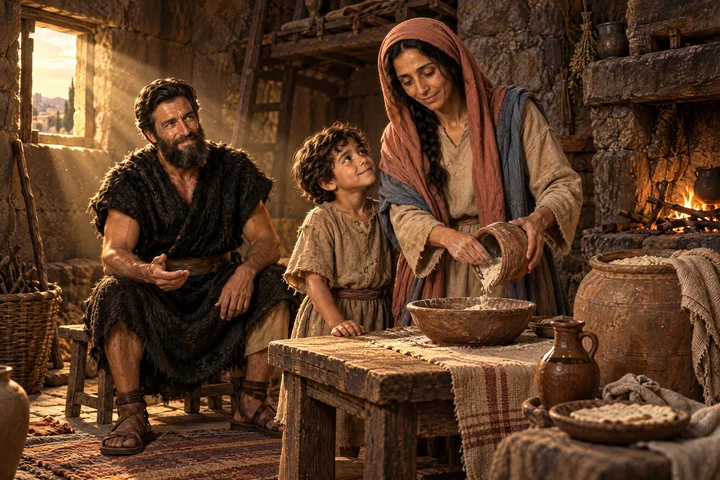
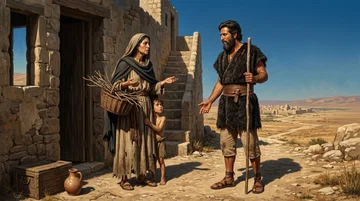
And as she was going to fetch it, he called to her, and said, Bring me, I pray thee, a morsel of bread in thine hand.
Translations
And as she was going to fetch it, he called to her, and said, Bring me, I pray you, a morsel of bread in your hand.
King James Version, KJV Cambridge Paragraph Bible, Revised Version
And as she was going to fetch it, he called to her, and said, Bring me, I pray thee, a morsel of bread in thine hand.
And as she was going to bring it, he called to her, and said, Bring me, I pray thee, a morsel of bread in thy hand.
And as she was going to fetch it, he called to her, and said, Bring me, I pray thee, a morsel of bread in thy hand.
And she goeth to bring [it], and he calleth unto her and saith, 'Bring, I pray thee, to me a morsel of bread in thy hand.'
And she went to fetch [ it], and he called to her and said, Bring me, I pray thee, a morsel of bread in thy hand.
And, as she went to fetch it, he called to her and said, Bring me, I pray thee, a morsel of bread, in thy hand.
Berean Standard Bible, Majority Standard Bible
And as she was going to get it, he called to her and said, “ Please bring me a piece of bread.”
As she was going to get it, he called to her and said, “ Please bring me a morsel of bread in your hand.”
And when she was going to get it, he said to her, And get me with it a small bit of bread.
And as she was going to fet it, he called to her, and sayde, Bring me, I pray thee, a morsell of bread in thine hand.
Douay-Rheims (Challoner revision)
And when she was going to fetch it he called after her, saying: Bring me also, I beseech thee, a morsel of bread in thy hand.
Pictures
Cross-references
- Luke 4:25-26
But I tell you of a truth, many widows were in Israel in the days of Elias, when the heaven was shut up three years and six months, when great famine was throughout all the land;
Jesus recalls Elijah’s mission to the widow at Sarepta during the famine.
- 1 Kings 17:4-6
And it shall be, that thou shalt drink of the brook; and I have commanded the ravens to feed thee there.
ravens and widow both preserved Elijah
- 1 Kings 17:1
And Elijah the Tishbite, who was of the inhabitants of Gilead, said unto Ahab, As the LORD God of Israel liveth, before whom I stand, there shall not be dew nor rain these years, but according to my word.
The drought prophecy brought famine and led to the widow’s need.
- James 5:17
Elias was a man subject to like passions as we are, and he prayed earnestly that it might not rain: and it rained not on the earth by the space of three years and six months.
Elijah shared human weakness, yet prayed and witnessed God’s power.
- Malachi 4:5
Behold, I will send you Elijah the prophet before the coming of the great and dreadful day of the LORD:
Elijah is presented as a type of a people before the day of the Lord.
- 1 Kings 17:6
And the ravens brought him bread and flesh in the morning, and bread and flesh in the evening; and he drank of the brook.
same famine feeding by ravens beforehand
- 1 Kings 17:7
And it came to pass after a while, that the brook dried up, because there had been no rain in the land.
explains drying of Cherith forcing move to Zarephath
- Matthew 14:17-21
And they say unto him, We have here but five loaves, and two fishes.
Another example of a small amount of food being multiplied.
Commentary
Each commentary is drawn from primary sources: the writings of Ellen G. White and Adventist pioneers and periodicals. Each commentary is separate. Its own words are not a quotation; follow the references to read the source passages.
Ellen G. White
30 sources
After the brook Cherith dried up Elijah in obedience left Israel for Zarephath of Sidon, and at the city gate found the widow gathering sticks and as she went to fetch water first asked for water and then called after her for a morsel of bread in her hand in a time of severe famine when food was nearly gone.RH Aug 28, 1913PK 129.1–3PK 131.52SP 112.2–113.13T 288.1–2
She was a heathen Gentile woman of Sarepta who never shared Israel's privileges, yet she believed in the true God and lived faithfully up to all the light on her pathway.PK 129.1–3DA 238.2–239.1ST Feb 17, 1881AA 416.2–417.1DA 239.2–240.1
Though many widows were in Israel, he was sent outside Israel to her because Israel's unbelief and apostasy caused God to pass them by, and God commanded and entrusted her to sustain him and give him asylum in her home.PK 129.1–3ST Feb 17, 1881ST Feb 17, 1881SLP 229.1–230.24RED 5.3–7.1
The call for bread while her own supply was nearly gone tested whether she would trust God and share her last morsel with a stranger, and she shared her small portion and made a home for God's servant.RH Aug 28, 1913PK 131.52T 28.2RH Aug 28, 1913
Her hospitality was met with a daily miracle that preserved her life and her son's life, showing that God sustains His faithful self-sacrificing servants and children through scarcity so they have bread and water sure, and that giving help to others in need brings His blessing.PK 131.53T 288.1–22T 28.2RH Aug 28, 1913SG2 243.1–245.1
Famine Setting and Request
After the brook Cherith dried up from continued drought, Elijah in obedience to God's direction left Israel for Zarephath, which belongs to Zidon, also called Sidon and Sarepta, where there was no safety for him among his own people.PK 129.1–33T 288.1–2RH Oct 7, 1873 At the gate of the city he found the widow gathering sticks, and as she was going to fetch water he first asked her for water and then called after her for a morsel of bread in her hand.RH Aug 28, 1913PK 129.1–3PK 131.52T 28.2SLP 250.3 Driven from his own people, he sought help from her in this way, and her willingness to respond while fetching water reflected the kindness for which she was entrusted with God's servant.SLP 250.3Ms 40, 1887, par. 8–11
The request comes during a severe famine from a three-and-a-half-year drought, when food is scarce and nearly gone.RH Aug 28, 1913DA 238.2–239.12SP 112.2–113.1LC1 53.2–54.1ST Jun 23, 1909 It was a time of great famine in which Elijah was sent to a widow in Zarephath in Sidon rather than to any of Israel's many widows.DA 238.2–239.12SP 112.2–113.1LC1 53.2–54.1ST Jun 23, 1909 She was favored in this scarcity because she had followed the light she had received and was open to the greater light brought through the prophet.DA 238.2–239.1ST Jun 23, 1909
The verse belongs to Elijah's work in the northern kingdom that leads to his stern confrontation with King Ahab, where the charge is that Ahab and his father's house, not Elijah, have troubled Israel.PK 129 The encounter at the gate begins a daily miracle that provides food for Elijah and the widow's family, keeping them supplied and showing God's care for them.3T 288.1–2RH Oct 7, 1873 Together with the provision by the brook Cherith, this daily supply stands as blessed evidence of God's love and care that should have kept him from ever distrusting God.RH Oct 7, 1873
Gentile Widow Chosen for Faith
The woman Elijah meets at the gate is the widow of Zarephath, also called Sarepta in Sidon, a heathen Gentile woman and not an Israelite who never shared the privileges and blessings of God's chosen people.PK 129.1–3AA 416.2–417.1DA 239.2–240.1 She believes in the true God and walks in all the light shining on her pathway, living faithfully according to it with kindness and liberality.PK 129.1–3ST Feb 17, 1881ST Feb 17, 18814RED 5.3–7.1Ms 40, 1887, par. 8–11 She is receptive and open to the light she has received and to the greater light God brings through Elijah.DA 238.2–239.1ST Jun 23, 1909DA 239.2–240.1
Although many widows are in Israel, Elijah is sent outside Israel to her, passing over the widows in Israel because of Israel's unbelief, apostasy, and rebellion.ST Feb 17, 1881ST Feb 17, 18812SP 112.2–113.1LC1 53.2–54.1ST Jun 23, 1909 God cannot trust him with Israel, for unbelief and rebellion have turned God away from His chosen people to those in a heathen land who have not rejected the light from heaven.ST Feb 17, 1881SLP 229.1–230.2 By living up to all the light she has, she is accounted more righteous than God's backslidden people who sacrificed principle to convenience and worldly honor.SLP 229.1–230.2AA 416.2–417.1 Those with greater religious light forfeit it through unbelief and lives contradicting their profession, while she who lives up to the light she has stands in a more favorable position before God than those who neglect greater light and become hardhearted and less open to truth.ST Feb 17, 1881AA 416.2–417.1Ms 8, 1888, par. 9–14
God specially favors her, commands her, and entrusts her to sustain Elijah and give him asylum and care in her home.PK 129.1–3ST Feb 17, 18814RED 5.3–7.12SP 113.2–3 Her willingness to help reflects the kindness and liberality for which she is entrusted with God's servant, and she welcomes him and makes a home for him.PK 129.1–34RED 5.3–7.1Ms 40, 1887, par. 8–11 Driven from his own people with no safety among them, Elijah flees hatred, malice, and danger to seek protection, refuge, succor, and help among the heathen.SLP 229.1–230.2SLP 250.3RH Nov 9, 1911AA 430.4–431.2 With backsliding Israel there is no safety for the faithful messenger of God, so God gives him asylum among the heathen from the malice of His professed people, and a prophet is safer there than among those who reject heaven's light and harden their hearts against the truth.SLP 229.1–230.2ST May 22, 1884ST May 22, 1884
Her story, cited by Jesus at Nazareth, is an example of God's blessings and power reaching Gentiles.LC1 56.1DA 239.2–240.1 God's power is especially displayed through faithful prophets for people willing to respond with faith rather than for an unbelieving, hard-hearted people.LC1 56.1AA 416.2–417.1
Hospitality Tested and Provided
As she was going to fetch water, the call for a morsel of bread in her hand came when her food was nearly gone in severe famine, testing whether she would trust God to provide and share her last morsel with a stranger.RH Aug 28, 1913 She shared her small portion and morsel of food with God's prophet and made a home for God's servant.PK 131.52T 28.2RH Aug 28, 1913 Her hospitality was met with miraculous sustenance that preserved her life and her son's life.PK 131.52T 28.2RH Aug 28, 1913 Giving help to others in a time of need brings God's blessing.PK 131.5
After the brook Cherith dried up, the encounter began a daily miracle that provided food for Elijah and the widow's family, showing God's care for them.3T 288.1–2 God provided for His servant even when food was scarce, sustaining His faithful, self-sacrificing servants and children through scarcity so that even in famine they will not be left to perish but will have bread and water sure and their needs supplied, while the wicked perish for lack of bread.3T 288.1–2SG2 243.1–245.1GC88 629.2–4RH Nov 26, 1857 Together with the provision by the brook Cherith, the daily supply stands as blessed evidence of God's love and care that should have kept him from ever distrusting God.RH Oct 7, 1873
Sources
Pioneers and periodicals
60 sources
As she is going to fetch water, Elijah calls to her and asks her to bring him a morsel of bread in her hand.RH Aug 28, 1913RH Jun 24, 1902ST May 20, 1913 He makes this request in a severe drought and famine when food is nearly gone, and she is a poor widow with only a handful of meal and a little oil, gathering sticks to bake one last cake for herself and her son.RH Aug 28, 1913RH Jun 24, 1902ST Apr 6, 1888RH Mar 13, 1900 God had commanded her to sustain Elijah, and He daily replenished the meal and oil to provide for Elijah and her household through the famine.ST Apr 6, 1888RH Dec 17, 1914RH Dec 17, 1914 Though there were many widows in Israel, he is sent to none of them but only to this heathen widow at Sarepta in Sidon, because Israel had departed from God and rejected warning.ST Feb 17, 1881ST Jun 16, 1887 The asking for bread when almost nothing is left tests whether she will trust God to provide and put His cause first by sharing her last morsel, and her giving in obedience is met with a supply that does not run out.RH Aug 28, 1913RH Jun 24, 1902RH Mar 17, 1903RH Jan 16, 1872
Setting in Famine History
As she was going to fetch water, he called after her and asked her to bring him a morsel of bread in her hand.RH Aug 28, 1913RH Jun 24, 1902ST May 20, 1913RH Mar 17, 1903RH Jan 16, 1872 The request for bread came while she was on her way for water, and it brought her need into view and set up the test of her scarce provisions and her trust in God.RH Jun 24, 1902ST May 20, 1913RH Mar 17, 1903RH Jan 16, 1872RH Jun 24, 1902 It was part of his instruction that she make him a little cake first, putting God's cause first, and her preparing to bring bread when asked illustrates the obedience that was followed by continuing supply.RH Mar 17, 1903RH Jan 16, 1872RH Jun 24, 1902
The call for bread comes during a severe drought and famine with almost no food and her food nearly gone.RH Aug 28, 1913RH Jun 24, 1902ST Apr 6, 1888 It belongs to the time when heaven was shut up three years, also described as three and a half years of famine, illustrating God's ways and means of caring for His own.ST Sep 7, 1904RH Feb 25, 1873 The story is set amid suffering and want while God had taken events in hand, and Elijah waited on God and prayed for Israel to turn from idolatry.
The widow is poor, with only a handful of meal and a little oil in a cruse, enough for one final meal.RH Jun 24, 1902ST Apr 6, 1888RH Mar 13, 1900RH Mar 17, 1903RH Jan 16, 1872 She is found at the gate gathering sticks to bake one last small cake for herself and her son to eat and die, with purses empty and all ways of relief stopped.RH Mar 17, 1903RH Jan 16, 1872ST Nov 27, 1884RH Feb 25, 1873 God's work does not depend on wealth or worldly standing, for He sent Elijah to such a poor widow and used her to feed the prophet.RH Mar 13, 1900
After being fed by ravens with bread and flesh morning and evening and drinking from the brook until it dried up, Elijah is sent to Zarephath, also called Sarepta, in Sidon in the region of Tyre.ST Mar 17, 1898RH Dec 17, 1914RH Feb 25, 1873ST Feb 19, 1894 That widow's household at Zarephath became the means of sustaining the prophet, and her aid was part of God's daily provision for him during the famine.RH Dec 17, 1914RH Apr 9, 1914ST Apr 17, 1907 It was one of his hiding-places with the brook from the wrath of Ahab in the history of the northern kingdom of the Ten Tribes, where he fled for refuge and help among the heathen when hatred and danger and Jezebel's persecution drove him from Israel, while wicked King Ahab hunted through his own and other kingdoms to find and kill him and God kept His servant alive first by ravens if need be and later by a poor widow of Sidon.ST Apr 17, 1907
The verse stands in the history of Ahab as man and king recorded in 1 Kings 16-22, which was written for the learning and profit of men and kings of after generations.RH Nov 7, 1912 Ahab was seventh king of Israel and second ruler of the third Israelitish dynasty, reigning twenty-two years early in the ninth century before Christ, contemporary of Jehoshaphat and Elijah, who as a civil ruler was successful, clever, skilled and patriotic yet a moral coward, who wickedly sold himself to the worship of a plurality of heathen deities and later enforced their worship upon his people.RH Nov 7, 1912 It belongs to the apostasy in Elijah's day, when God had a faithful remnant who would respond to His prophet. Elijah used the long drought as a basis for spiritual education, through which the calamity was brought to bear on people's conscience.RH Jun 15, 1911
God's Miraculous Provision
God had commanded the widow at Zarephath to sustain Elijah, and after the brook from which he drank dried up her household became the means of sustaining the prophet through daily replenishing of the meal and oil to provide for Elijah, the widow, and her son for a full year, sustaining a family of three.ST Apr 6, 1888RH Dec 17, 1914RH Dec 17, 1914 She was found at the gate of the city gathering sticks to bake her last cake that she and her son might eat and die, having only a handful of meal and a little oil in a cruse which was all her living, and when asked for a morsel of bread she was bidden to bake for him first and then for herself and her son with promise in the Lord's name that the barrel should not waste nor the cruse fail.RH Feb 25, 1873RH Nov 1, 1853RH Jul 9, 1867 In this way her handful was miraculously increased and the supply lengthened, keeping the widow, her son, and Elijah alive.RH Feb 25, 1873RH Nov 1, 1853RH Jul 9, 1867
That provision shows God is able to make a small quantity equal to the largest amount and to multiply a handful of meal into many barrels, so that He can be depended on to make a little go a great way for His servants since He gives everything and works miracles daily to keep alive and provide daily food.ST Apr 6, 1888 Nine-tenths of what a person thinks will support him, with God's blessing, is better than the whole amount without God's blessing.ST Apr 6, 1888 He is prepared for any emergency, and His promise to those who trust and obey is that He will never leave them nor forsake them.ST Sep 7, 1904 Even in famine their bread and water will be sure while the wicked perish for lack of bread, and this care assures self-sacrificing people that God will provide for them.RH Nov 26, 1857ST Sep 7, 1904
The multiplied meal and oil stands alongside other accounts of miraculous provision of food as an Old Testament example of God miraculously increasing a widow's meal and oil.ST Jun 6, 1900 It is true history, not myth, allegory, or fancy, a manifestation of the mighty miraculous power of God toward fallen man. Its truth stands with the giving, story, mission, work, and central figure Jesus Christ of the whole Bible as proof that every word and infallible promise of the Bible is to be cherished. To deny this miracle is soul-destroying error that denies the miraculous power of God and leads at last to denying every essential saving truth of the Word.
The widow's willingness to receive and provide for God's servant though she was poor, sharing her morsel of food with Elijah in time of want, was met through hospitality with blessing on her household and preservation of her life and her son's.RH Aug 28, 1913CO 73.5 God afterward restored her son to life.CO 73.5 That raising before the resurrection of Christ is an explicit account of resurrection from the dead, just as real a resurrection as if raised to immortality, for the Bible makes no distinction between a resurrection to mortality and one to immortality.RH Aug 6, 1872 Its existence proves that others being raised before Christ does not contradict Christ being called the firstfruits of them that slept, the first that should rise from the dead, the first-begotten and first-born from the dead.RH Aug 6, 1872
The verse shows God caring for an individual in need, sending Elijah to the lonely widow of Zarephath and preserving her during the famine, and caring for the weary by supplying the widow's oil in famine as proof that He has every one of His people on His great, almighty, loving heart.ST Oct 1, 1896ST Feb 18, 1886 He preserved the life of Elijah during the famine that followed his prediction of no dew nor rain, keeping His servant alive first by the ministration of ravens bringing bread and flesh morning and evening if need be and later by a poor widow of Sidon, to whom He made the prophet a blessing, while wicked King Ahab cursed the prophet instead of repenting and hunted through his own and other kingdoms to find and kill him.RH Feb 25, 1873ST Apr 17, 1907 After the brook dried He worked a daily miracle to keep the widow's family and Elijah supplied with food, blessed evidence of God's love and care for Elijah that should have kept him from ever distrusting God.RH Oct 7, 1873RH Apr 9, 1914ST Jun 24, 1889 He gives strength enough to carry every legitimate load in life when superfluous anxieties, sinful desires, and worry are put away.ST Feb 18, 1886
Sent Beyond Israel
Though there were many widows in Israel when heaven was shut up three years and six months and great famine came over all the land, Elijah was sent to none of them but only to a heathen widow woman at Sarepta in Sidon outside Israel.ST Feb 17, 1881ST Jun 16, 1887ST Jun 23, 1909 Israel had departed from God, rejected reproof, despised warning that called to humility and faith, and sought to destroy Elijah, so God passed them over for unbelief and apostasy.ST Feb 17, 1881ST Jun 16, 1887 He found a hiding-place and asylum for His servant among the heathen and entrusted him to her kindness and liberality.ST Feb 17, 1881ST Jun 16, 1887
The widow was highly favored because she had lived faithfully according to all the light she had and appreciated God's favors.ST Feb 17, 1881ST Feb 17, 1881ST Jun 16, 1887 She had followed the light she had received and was open to the greater light God brought through Elijah, having faith enough to receive the prophet and the blessing offered through him.ST Jun 16, 1887ST Jun 23, 1909ST Feb 19, 1894 A heathen woman who lived faithfully according to the light she had could thus receive God's favor, while people with greater religious light could forfeit it through unbelief and lives that contradicted their profession.ST Feb 17, 1881 She was made more worthy of blessing than unbelieving Israel, whose unbelief and self-exaltation closed the door of good.ST Jun 16, 1887
Being sent outside Israel proves that no prophet is acceptable in his own country and explains Jesus rejected at Nazareth when He came to His own. Her condition pictures the unbelief of Nazareth.ST Jun 16, 1887 The episode shows that a prophet could be safer among heathen than among those who rejected heaven's light and hardened their hearts against the truth, finding refuge and help there rather than among them.ST May 22, 1884ST May 22, 1884ST May 22, 1884 Hatred and danger drove Elijah to flee and seek protection among the heathen at the widow of Sarepta, and the request for bread belongs to that provision through a Gentile widow when he had been driven away.RH Nov 9, 1911ST May 22, 1884
Elijah's work was in the region of Tyre and Sidon, the same region where Jesus later withdrew and ministered to the Canaanite woman and the multitudes about two months after the death of John the Baptist, and the miracle there shows the object and mission of miracles.ST Mar 17, 1898 His staying with the poor widow of Zarephath in her humble dwelling was a lodging like John Huss's lodging with a poor widow in a humble dwelling at Constance.ST May 28, 1885
Although water was still available, the request for even a morsel of bread brought her poverty to the fore and exposed how little she had.ST Jul 27, 1904 She was a heathen who knew Elijah was an Israelite, and his dependence on her made the journey to Zarephath a test of his faith and courage.ST Jul 27, 1904 He was forced to leave his own country while the scorching sun burned up every green thing and dried up the rivers, and to remain in severe adversity at the humble hut of a poor widow whose sole sustenance was a handful of flour and a little oil in the cruse. Standing as far as he knew alone against the whole apostate nation with its usages, customs, priests and rulers, the prospect looked unpromising for carrying on any reformation, and staying there required living faith and courage. Enduring such adverse circumstances developed in him the strong, firm, stable faith by which by the word of God he shut the heaven, raised the dead, was answered by fire, received rain, and was finally prepared for translation without seeing death.
Faith Tested Through Giving
Elijah's call for bread as the widow goes to fetch water comes when famine has left her nearly without food, and it tests whether she will trust God to provide and share her last morsel with a stranger.RH Aug 28, 1913RH Jun 24, 1902ST Oct 22, 1902 She has only a handful of meal and a little oil, enough for one final meal for herself and her son before they expect to eat and die, and his request brings that need into view.RH Jun 24, 1902RH Jan 16, 1872ST Oct 22, 1902 He instructs her to make him a little cake first, putting God's cause first, and promises in God's name that the supplies will last until rain comes.RH Mar 17, 1903RH Jan 16, 1872 Her willingness to give first from the little she has in trust is followed by provision enough to preserve her and her son through the famine.RH Jun 24, 1902RH Mar 17, 1903ST Mar 25, 1903
Her obedience in giving first is met by a continuing supply of meal and oil that does not run out.RH Jun 24, 1902RH Mar 17, 1903RH Jan 16, 1872 Giving to God's servant did not mean her provision was lost.RH Apr 2, 1914 Those who give in faith receive from God.ST Mar 25, 1903
The request becomes a lesson in sharing even when resources are scarce: giving what one has to serve others and God's cause is an act of trust, and God can provide more through what is given.RH Jun 24, 1902RH May 6, 1902 The limited provision shared from scanty food can continue to sustain both giver and receiver through the famine.ST Mar 18, 1889 Selfishly keeping resources would have left her with nothing, while passing on blessings was accompanied by inexhaustible supply.RH Jun 24, 1902 By giving to receive, the little left is multiplied and want is kept far from the giver's side, and by giving water with a liberal hand though famine curses the land the giver will never stand athirst.ST Jun 12, 1901 Giving all in faith opens God's own store for more supply, with blessings falling beside the door in clothing the naked and feeding the hungry instead of laying aside in selfish greed, so that the liberal soul is made fat with the deed of love full well repaid.ST Jun 12, 1901
God's work does not depend on wealth or worldly standing, for He sent Elijah to a poor widow who had only enough for one small meal for herself and her son and used her to feed the prophet.RH Mar 13, 1900 He can use the poor and humble, and can send help through unexpected people and places, as in sending Elijah to a foreign widow whose hospitality provided for him in need.RH Mar 13, 1900RH Sep 10, 1872 Trusting God when purses are empty with only a handful of meal and a cruse of oil left and all ways of relief stopped is where the wisdom of grace lies, whereas trusting Him when warehouses and bags are full and tables are spread is no hard thing.ST Nov 27, 1884 Money spent on helping others can still be like the widow's meal and not give out, and her preparing to bring bread when asked illustrates God's continued provision.ST Mar 25, 1903ST Feb 27, 1893
Applied Lessons and Symbols
The unfailing meal and oil are an image of a treasury that faces demands and seems near running out yet keeps providing what is needed.RH Feb 4, 1909 That provision shows God caring for His work and supplying its needs even when conditions appear financially desperate.RH Aug 27, 1914 The widow's faith when her meal was low that it would not waste or diminish is the pattern for giving tracts freely to the poor, trusting God to keep up the treasury that supplies the work so that it likewise will not waste or diminish even without selling to members.RH Jan 14, 1873
Her sharing of scant food with the prophet is missionary service for God and fellow human beings.RH Oct 3, 1907 In that act her cruse of oil stands for abilities and opportunities, which are increased by being used.ST Dec 5, 1895 Poured out without doubting in faithful service, the oil proves enough to fill all the vessels at command.ST Dec 5, 1895 The cruse also stands for submission, with thankfulness and cheerful submission in trial and thankfulness in prosperity preserving the oil, while want of submission, fault-finding, rebellion, complaining, and ingratitude for husband, children, and home wastes it.ST Dec 5, 1895 Learning submission by grace through chastisement and determining to be submissive to circumstances as they are changes circumstances, restores home influence over children, leads the husband to seek the Lord, raises up help in trial, and makes the home shut in from outside work the sweetest field of labor for doing good.ST Dec 5, 1895
The oil and meal are a picture of the Bible as daily bread, in that as they did not grow less though used for food every day, so the Bible can be fed upon daily without becoming less and without those who feed upon it tiring of it.ST Nov 24, 1898 This is unlike honey of which one soon has enough and condiments which grow flat and stale, while no one ever has enough bread.ST Nov 24, 1898 Giving is the divine law for receiving, for as people give, God imparts to them.ST Jan 27, 1904 When comfort is failing, rising and sharing it with another causes it to last through all the years of famine and serve both giver and receiver.ST Jan 27, 1904 Creating sunshine for others by sharing brings gain in health even to the sick, for giving is living and denying is dying.ST Jan 27, 1904
The widow's small supply of meal and oil not running out shows that God cares for those who trust in Him.RH Mar 4, 1873 Yet people should also use the means of help God has provided rather than expect a miracle while neglecting them.RH Mar 4, 1873 Her small meal sustained the prophet of God by a continuing miracle while he was hiding from Jezebel's persecution, in contrast with Jezebel's provision for the many prophets of Baal and image worship.ST Oct 22, 1894
Sources