Matthew 14:17
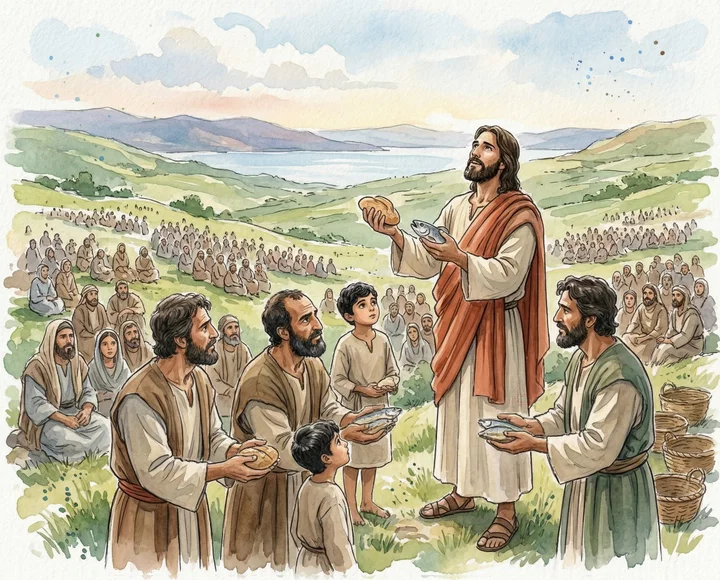
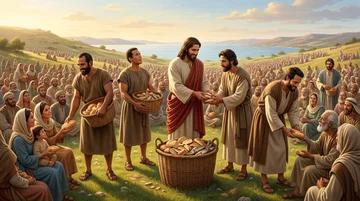
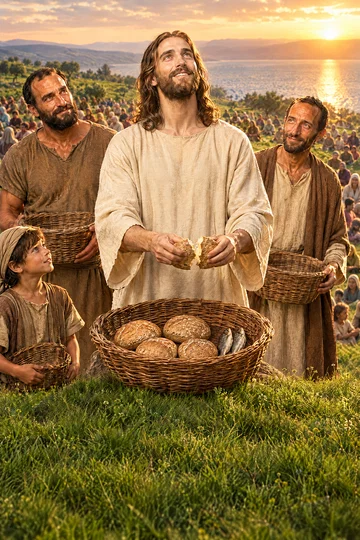
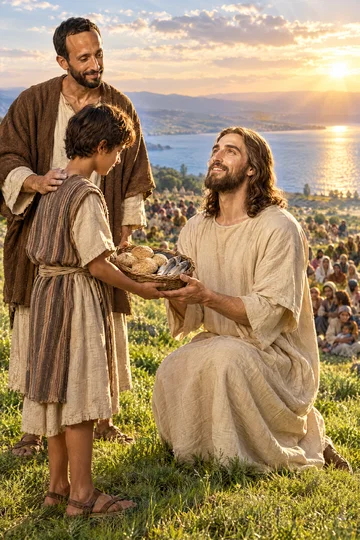
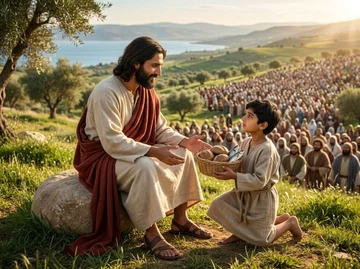
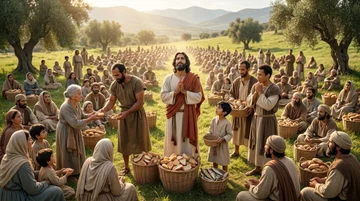
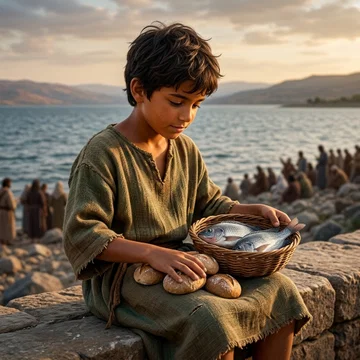
And they say unto him, We have here but five loaves, and two fishes.
Translations
American King James Version, Webster Bible
And they say to him, We have here but five loaves, and two fishes.
King James Version, KJV Cambridge Paragraph Bible, Revised Version, American Standard Version
And they say unto him, We have here but five loaves, and two fishes.
And they say to him, 'We have not here except five loaves, and two fishes.'
But they say to him, We have not here save five loaves and two fishes.
But, they, say unto him—We have nothing here, save five loaves and two fishes.
Berean Standard Bible, Majority Standard Bible
“ We have here only five loaves of bread and two fish,” they answered.
They told him, “ We only have here five loaves and two fish.”
And they say to him, We have here but five cakes of bread and two fishes.
Then saide they vnto him, Wee haue here but fiue loaues, and two fishes.
Douay-Rheims (Challoner revision)
They answered him: We have not here, but five loaves, and two fishes.
Pictures
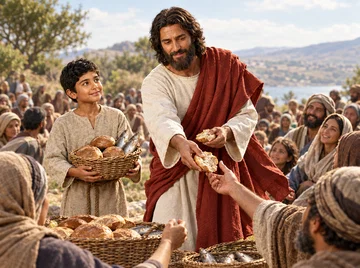
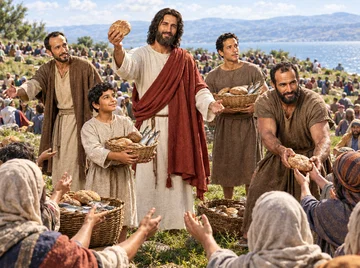
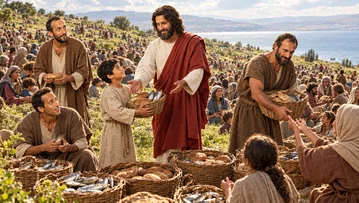
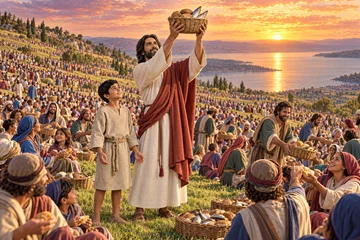

Cross-references 20 of 23
- John 6:5-13
When Jesus then lifted up his eyes, and saw a great company come unto him, he saith unto Philip, Whence shall we buy bread, that these may eat?
Both texts recount Jesus feeding the crowd with five loaves and two fish.
- Mark 6:35-44
And when the day was now far spent, his disciples came unto him, and said, This is a desert place, and now the time is far passed:
Jesus feeds the crowd with five loaves and two fishes.
- Luke 9:13-17
But he said unto them, Give ye them to eat. And they said, We have no more but five loaves and two fishes; except we should go and buy meat for all this people.
Parallel account of Jesus feeding the crowd from five loaves and two fishes.
- John 6:35
And Jesus said unto them, I am the bread of life: he that cometh to me shall never hunger; and he that believeth on me shall never thirst.
The feeding also points to Christ giving the bread of life.
- Matthew 15:32-38
Then Jesus called his disciples unto him, and said, I have compassion on the multitude, because they continue with me now three days, and have nothing to eat: and I will not send them away fasting, lest they faint in the way.
Both show Jesus multiplying little food to feed thousands, with abundance left over.
- Exodus 16:4-15
Then said the LORD unto Moses, Behold, I will rain bread from heaven for you; and the people shall go out and gather a certain rate every day, that I may prove them, whether they will walk in my law, or no.
God’s provision of manna in the wilderness is linked with Jesus feeding the multitude.
- 1 Kings 17:8-16
And the word of the LORD came unto him, saying,
God made the widow’s small supply sustain her household.
- John 6:12
When they were filled, he said unto his disciples, Gather up the fragments that remain, that nothing be lost.
Jesus commands the disciples to gather the leftover fragments after feeding the multitude.
- 2 Kings 4:42-44
And there came a man from Baal-shalisha, and brought the man of God bread of the firstfruits, twenty loaves of barley, and full ears of corn in the husk thereof. And he said, Give unto the people, that they may eat.
Elisha’s small food supply feeds a hundred men, with food left over.
- John 6:7
Philip answered him, Two hundred pennyworth of bread is not sufficient for them, that every one of them may take a little.
Both describe the disciples’ concern that there is not enough food for the crowd.
- Matthew 14:25
And in the fourth watch of the night Jesus went unto them, walking on the sea.
Jesus walks on the sea immediately after feeding the multitude.
- Mark 6:39-40
And he commanded them to make all sit down by companies upon the green grass.
describes seating in fifties and hundreds next
- Matthew 14:21
And they that had eaten were about five thousand men, beside women and children.
gives the number fed from the loaves and fishes
- Mark 8:4
And his disciples answered him, From whence can a man satisfy these men with bread here in the wilderness?
The disciples again question how Jesus can feed the multitude.
- Mark 6:41-43
And when he had taken the five loaves and the two fishes, he looked up to heaven, and blessed, and brake the loaves, and gave them to his disciples to set before them; and the two fishes divided he among them all.
Parallel account of Jesus multiplying and distributing the loaves and fish.
- Luke 9:16-17
Then he took the five loaves and the two fishes, and looking up to heaven, he blessed them, and brake, and gave to the disciples to set before the multitude.
The disciples distribute the food Jesus provides to the multitude.
- Matthew 16:9-10
Do ye not yet understand, neither remember the five loaves of the five thousand, and how many baskets ye took up?
Jesus recalls both feedings to teach that there was no lack.
- John 6:13
Therefore they gathered them together, and filled twelve baskets with the fragments of the five barley loaves, which remained over and above unto them that had eaten.
shows twelve baskets gathered from five loaves
- John 6:5
When Jesus then lifted up his eyes, and saw a great company come unto him, he saith unto Philip, Whence shall we buy bread, that these may eat?
Jesus asks where bread can be bought for the crowd.
- Exodus 16:4
Then said the LORD unto Moses, Behold, I will rain bread from heaven for you; and the people shall go out and gather a certain rate every day, that I may prove them, whether they will walk in my law, or no.
Christ’s provision of bread recalls God feeding Israel in the wilderness.
Commentary
Each commentary is drawn from primary sources: the writings of Ellen G. White and Adventist pioneers and periodicals. Each commentary is separate. Its own words are not a quotation; follow the references to read the source passages.
Ellen G. White
70 sources
The disciples told Jesus in the desert place at evening that all they had to feed the fainting multitude of more than ten thousand was a lad's store of five barley loaves and two small fishes.Ms 47, 1894, par. 1–2Lt 318, 1908, par. 7–11MH 45.1–4ST May 10, 1883ST At His command it was brought to Him, and after He looked to heaven and blessed and broke it, it multiplied in His hands and in the hands of the disciples as they carried it to the hungry until all were satisfied and twelve baskets of fragments were gathered.Ms 47, 1894, par. 1–2Lt 318, 1908, par. 7–11Ms 197, 1907, par. 1–4ST May 10, 1883RH Apr 8, 1909 The provision proves His divine, omnipotent power and tender compassion for bodily need, the same power that continually multiplies the harvest of the earth and must be acknowledged with gratitude.STED 107.3ST Dec 15, 1909ST Aug 12, 1897CT 34.1 He gave to the disciples and they to the multitude and the people to one another, showing that those who first receive the Bread of Life from Him are to impart it, and that the gift increases by giving so that receiving continues only as imparting continues.Ms 47, 1894, par. 1–26T 263.1Ms 186, 1907, par. 8–9ST Jan 22, 190216MR 70.1–2 What seems wholly insufficient becomes more than enough in His hands, so His workers are to use thankfully and share unselfishly what little they have and gather up all fragments in careful economy, trusting His power to multiply their means to feed souls starving for truth.Ms 197, 1907, par. 1–4ST Mar 7, 19066T 345.1–36T 467.16T 465.4
Setting and Occasion
The words were spoken in the evening in a desert and wilderness place after a long day in which a great multitude pressed about Jesus eager to hear and to see.Ms 47, 1894, par. 1–2Lt 318, 1908, par. 7–11ST Jan 22, 1902DA 368.2–3 They had lingered into evening unconscious of hunger until faint and weary, with night approaching.Ms 47, 1894, par. 1–2Lt 318, 1908, par. 7–11ST Jan 22, 1902DA 368.2–3Ms 73, 1909, par. 20–21 Jesus Himself had labored all day teaching and healing without food or rest until pale from weariness and hunger.Ms 47, 1894, par. 1–2ST Jan 22, 1902 A large crowd had gathered to hear His teaching, and He also took care of their bodily need for food.2T 579.2–580.2Ms 73, 1910, par. 16
The crowd was five thousand men besides women and children, thus more than ten thousand people.Lt 318, 1908, par. 7–11DA 364.16RED 44.23SP 226.1–26RED 64.2 They are described as pilgrims traveling toward Jerusalem near Passover who had gathered to hear His teaching.DA 364.1Ms 73, 1910, par. 16 The feeding took place at Bethsaida on the shores of Galilee, and those fed there were Jews.6RED 44.26RED 64.2DA 404.1–405.2
Moved with sympathy the disciples had come for permission to send the crowds to the villages to buy food and find refreshment.Ms 47, 1894, par. 1–2Lt 318, 1908, par. 7–11ST Jan 22, 1902 But Jesus told them not to send them away but to feed them themselves.Ms 47, 1894, par. 1–2Lt 318, 1908, par. 7–11ST Jan 22, 1902 In amazement at His command they answered that they had only five loaves and two fishes.Ms 47, 1894, par. 1–2Lt 318, 1908, par. 7–11ST Jan 22, 1902
Jesus asked how much food could be found to test the disciples' faith, though He already knew how He would provide.ST May 20, 1886ST Mar 1, 1877ST Mar 18, 1913 Andrew had discovered a lad in the company who carried the five barley loaves and two small fishes.ST May 20, 1886ST Mar 1, 1877 Like Andrew the disciples measured the great need against their resources as too small, a supply plainly inadequate and nothing among so many thousands.ST May 20, 1886ST Mar 1, 1877ST Mar 18, 1913DA 369.1 Yet His command to feed the people carried power to supply what was lacking.DA 369.1
The setting belongs to Christ traveling slowly away from villages into out-of-the-way places to open the Scriptures in simplicity to receptive minds.Lt 318, 1908, par. 7–11 Moved with compassion to heal the sick and feed the hungry, He worked so His work would be made known after His crucifixion and resurrection.Lt 318, 1908, par. 7–11 He provided because hunger could hinder them from receiving spiritual benefit, teaching outdoors amid scenery that made lessons memorable.Lt 318, 1908, par. 7–11RH May 30, 1871 This took place just before He sent the disciples away and went to pray alone, while news of the miracle brought many back to the place the next day.ST Dec 29, 1887ST Dec 29, 1887
Smallness of the Supply
The supply on hand was only five barley loaves and two small fishes.MH 45.1–4ST May 10, 1883ST2SP 261.2–262.2 It was a boy's store discovered among the crowd, found by searching through the company.ST May 10, 1883ST2SP 261.2–262.2 It was but a small supply even for Jesus' own family of disciples, far too little to feed so many people.MH 45.1–4ST May 10, 1883STST Jan 22, 1902 When placed in His hands and blessed, that little store sufficed to feed the multitude, multiplying until all were satisfied with twelve baskets of fragments left, and the disciples themselves ate of the heaven-supplied food.MH 45.1–4ST2SP 261.2–262.2ST Jan 22, 1902
That meager store was plainly inadequate and nothing among so many thousands.ST May 10, 1883ST May 20, 18863RED 55.2 It was scarcely enough for twenty people, set against the need of five thousand men besides women and children.ST May 20, 18862SP 261.2–262.23RED 55.2 Because they were in a desert and wilderness place, no more could be obtained and food was not near at hand.MH 48.2–3ST May 10, 1883ST May 20, 18862SP 261.2–262.2 Christ had no apparent means at hand to meet the need, which highlights human need and the apparent lack of means.MH 48.2–3ST May 10, 1883ST Aug 19, 1897DA 368.2–3
Miracle of Multiplication
At His word the little store was brought to Him, and He had the multitude seated on the grass in companies on a grassy plot.Ms 47, 1894, par. 1–2Lt 318, 1908, par. 7–11Ms 186, 1907, par. 8–9Ms 123, 1909, par. 32–34 A hymn was sung, and looking up to heaven He gave thanks and asked the blessing upon the food.Lt 318, 1908, par. 7–11Ms 197, 1907, par. 1–4ST May 10, 1883 He blessed and broke and divided the bread and the fishes into small pieces.Ms 47, 1894, par. 1–2Lt 318, 1908, par. 7–11Ms 197, 1907, par. 1–4Ms 123, 1909, par. 32–34 He did not Himself pass among the hungry but placed the pieces in the hands of His disciples.Ms 47, 1894, par. 1–2Ms 197, 1907, par. 1–46T 263.1
The disciples put the food in the hands of the hungry, and the supply continued and increased in His hands and as they gave it out.Ms 47, 1894, par. 1–2RH Apr 8, 19093RED 55.26T 263.1 They kept coming back for more, imparting and imparting what they received.Ms 197, 1907, par. 1–4Ms 186, 1907, par. 8–9 All were satisfied from the insufficient supply of five barley loaves and two small fishes, and the disciples themselves also ate of the heaven-supplied food.ST May 10, 1883RH Apr 8, 19093RED 55.26T 263.1Ms 186, 1907, par. 8–9
When all were filled He commanded that the fragments be gathered up that nothing be lost.Ms 197, 1907, par. 1–4STB 772.1–2Ms 123, 1909, par. 32–34 Twelve baskets full were left on this occasion, and seven on another occasion.ST May 10, 1883STST Mar 7, 1906Ms 123, 1909, par. 32–34Ms 64, 1910, par. 10–11
Christ's Power and Compassion
The scant supply of five loaves and two fishes set against thousands hungry in the wilderness with night approaching and no food near at hand placed Christ in dependence on His heavenly Father for means to provide.MH 48.2–3ST Aug 19, 1897DA 368.2–3 His presence there was by providence, and the Father's resources could meet the need, teaching that God's workers are to use wisdom and the means provided, follow His instructions, and depend on Him when difficulties arise in His work.MH 48.2–3ST Aug 19, 1897DA 368.2–3
The feeding proves He truly possessed divine, omnipotent power exercised in beneficence for suffering humanity, showing His power to provide for the five thousand men besides women and children until all were satisfied with twelve baskets left over.ST2SP 262.3–263.1RH Aug 4, 1874ST Aug 12, 1897 That display confirmed the people's growing belief that He was the Messiah.ST2SP 262.3–263.1 His care afterward to gather the fragments is as essential as His creating of the food and is striking evidence of His divinity.ST Dec 15, 1909
The same power that multiplied the loaves continually multiplies seed and feeds people through the earth's harvest.ED 107.3ST Aug 12, 1897 God's ordinary provision of food through nature therefore depends on His continuing power.ED 107.3ST Aug 12, 1897 Daily food remains His gift and should be received with gratitude and used as blessing rather than credited to human tending and bread-making alone or turned selfishly to harm.ED 107.3ST Aug 12, 1897
Moved with sympathy and compassion, He discerned the needs of the poor through His own experience of poverty and came to minister to the suffering and needy.CT 34.1STB 438.1Ms 1, 1909, par. 5–6Ms 55, 1901, par. 22–23Lt 3, 1859, par. 4–5 He cared for ordinary bodily needs with simple fare without promising luxury, and that simple provision assured the faint, hungry multitude of His power and tender care.DA 367.1–2Ms 55, 1901, par. 22–23Lt 3, 1859, par. 4–5 Though He had left royal courts, laid aside crown and robes, clothed divinity with humanity, worn no gorgeous priestly robes and possessed no earthly riches, He walked and taught among accumulating crowds with His Father's power granted Him to work miracles for the help and uplifting of mankind as part of a mission expressing love for humanity.CT 34.1STB 438.1Ms 1, 1909, par. 5–6 Obtaining true higher education is not gaining popularity, worldly advantage, abundant temporal supply, or honor from the titled and wealthy, but doing this work of ministering to the suffering and needy.Ms 1, 1909, par. 5–6
He had that same divine power while doing daily work to support His family, yet He did not use it to lessen His own burdens or lighten His toil, showing that work is honorable and people should be industrious.RP 26.5–6RH Oct 3, 1912CT 276.3–4 He could have satisfied His own hunger in the desolate wilderness, but He refused to work a miracle on His own account to relieve His own want and suffering.2RED 39.1–41.2RH Aug 4, 1874ST Jun 25, 1874 To do so would not have accorded with the plan of salvation and would have taken Him out of His Father's hands.RH Aug 4, 1874ST Jun 25, 1874 His mission was to save others and to bring blessing, hope, and life to the afflicted and oppressed.2RED 39.1–41.2RH Aug 4, 1874
Disciples as Channels
Christ did not Himself go among the hungry to place portions in their hands, but He broke and blessed the five loaves and two fishes and gave to His disciples, and they placed it in the hands of the hungry as men ministering for Him.Ms 47, 1894, par. 1–2 The people thus took provision from His appointed agencies as if from His own hand, and their grateful response is accepted by Him as given to Himself.Ms 47, 1894, par. 1–2 Ministers, evangelists, teachers, friends, companions, and all the various instrumentalities are therefore workers together with God to pass on what He supplies.Ms 47, 1894, par. 1–2
The verse holds the pattern that Christ received from the Father and imparted to the disciples, they imparted to the multitude, and the people to one another.ST Jan 22, 1902 Dedicated service opens the way for God to give His Holy Spirit so His followers can communicate supply to those in necessity.Ms 186, 1907, par. 8–9 As His representatives they must first receive the bread of life, the heavenly food, from Him, for even the most intelligent and spiritually minded can of themselves supply nothing for the needs of the soul.ST Jan 22, 1902ST Mar 16, 1915 All who are united with Christ receive from Him and impart to others, for the disciples were the channel of communication between Christ the great Center and Source of all strength and the people.ST Jan 22, 1902
The gift increased as they gave it out, and the hands of the disciples reaching out to Christ Himself the Bread of Life were never empty.6T 263.1ST Jan 22, 190216MR 70.1–2Lt 7, 1901, par. 1–3 Jesus gave thanks and put the food into the disciples' hands to distribute, it multiplied in His hands, and after the wants of the people had been supplied the fragments were gathered up and Christ and His disciples also ate of the precious heaven-supplied food.6T 263.1ST Jan 22, 1902 Those who work with God receive divine grace to share with people in need, and He fills the hands of faithful disciples so they can give the word of life to spiritually hungry people and help them reach others in turn.16MR 70.1–2DA 370.1Lt 7, 1901, par. 1–3 Imparting comes only as receiving, and receiving continues only as imparting, so as imparting continues receiving continues, and the more imparted the more received.ST Jan 22, 1902 In this way Christ's followers share with the needy what they receive from Him.6T 263.116MR 70.1–2
Though the little store at Bethsaida with His blessing sufficed to feed the multitude, those fed there were Jews.DA 404.1–405.2 The disciples saw this miracle, yet afterward they did not bring forward their all and trust His power to multiply it for hungry crowds.DA 404.1–405.2 This revealed their unbelief and the strength of Jewish prejudice against Gentiles and heathen.DA 404.1–405.2
Trust Economy and Sharing
The words teach trust, not to worry and fret over what cannot be helped but to go on from strength to strength, for the five loaves and two small fishes that were far short of feeding five thousand men besides women and children show that what seems insufficient by human judgment becomes more than enough in Christ's hands.ST Mar 7, 19066T 465.4Ms 66a, 1900, par. 24–27Ms 114, 1899, par. 1–3 He had the hungry seated on a grassy spot, broke the small supply into small pieces, and fed the multitude through His disciples until all had enough, then commanded that the fragments be gathered that nothing be lost, leaving twelve baskets full on this occasion and seven on another.Ms 123, 1909, par. 32–34Ms 182, 1907, par. 21–23 The same Jesus can do great things for His people today and bring fruit from their labor, so they need not be discouraged when resources seem small but should act in faith that He can do all things, minister, teach, guide into truth and help in every wrestling and trial.6T 465.47T 61.2Ms 66a, 1900, par. 24–27Ms 123, 1909, par. 32–34Ms 114, 1899, par. 1–3
When the best use is made of what is had, God blesses and multiplies little means and offerings until they supply the needs of many and advance His work, feeding multitudes now starving for the Bread of Life.6T 467.1STB 148.2–3Ms 66a, 1900, par. 30–31STB 119.3–4 The scarcity teaches sharing what one has with those who lack, putting limited visible resources and available facilities to use with trust in God who enlarges their effect rather than measuring work by what is seen, and leaving something to share with others.6T 345.1–36T 467.1Ms 180, 1907, par. 27–28 That sharing is to be with thanksgiving, prayer and unselfishness, in simple daily fare rather than luxury, including sharing the truth and putting what is had into missionary and soul-saving work.6T 345.1–3STB 148.2–3Ms 180, 1907, par. 27–28Ms 66a, 1900, par. 30–31
The command to gather up the fragments that nothing be lost is a lasting lesson of carefulness, saving, economy and thrift in the use of all God's gifts, temporal and spiritual, showing that the bounties of Providence are not given to be squandered or used in an aimless or wasteful manner.Ms 197, 1907, par. 1–4STB 772.1–2ST Dec 15, 1909 Nothing is to be wasted, no temporal opportunity or spiritual advantage let slip, but treasured as a credit, with nothing lost that would benefit a human being or relieve the necessities of earth's hungry ones, but saved that it may be given.ST Dec 15, 1909Ms 64, 1910, par. 10–11Ms 182, 1907, par. 21–23 This requires plain and simple building with no extravagance while still making room to care for and impress people, simple inexpensive preparations without selfish private interests obstructing the work, and understanding in preparing suitable food for different times.Ms 197, 1907, par. 1–4Lt 302, 1906, par. 5 No one has a right to gamble or to get means by robbing another, but must impart what God has given, with the baskets of fragments distributed and carried away into all the region round about to share with friends at home the bread that comes down from heaven to satisfy hunger of the soul and to repeat what was learned of the wonderful things of God, leaving like the healings and miracles an impression of truth permanently in the minds of those who see.Ms 197, 1907, par. 1–4ST Dec 15, 1909Ms 182, 1907, par. 21–23
God's workers are to use wisdom and the means He provides, follow His instructions, and depend on Him when they reach difficulties while doing His work, for Jesus in the wilderness with little food and night approaching depended on His Father to provide.DA 368.2–3 The miracle does not teach that people are to put forth no effort to provide the necessities of life, for its purpose is to impart spiritual truths of vital importance to salvation; as God can furnish food miraculously yet leaves human effort for daily provision in place, so He can heal in answer to prayer yet does not abolish agencies for the suffering, and hygienic living and treatment must not be despised.Lt 93, 1892, par. 4–5 Daily gifts, including the power that multiplied the loaves and continually multiplies seed and feeds people through the earth's harvest, are to be received with gratitude and used as blessings rather than selfishly turned to harm.ED 107.3 Disciples are to care compassionately so that weary and hungry seekers of salvation can hear the Word of life and are not sent away faint or discouraged, assuring those who have plain or scanty food and live in poverty that their needs will be supplied and that His abiding presence is better than worldly goods.DA 367.1–2ST Aug 12, 1897 Obtaining the higher education is not gaining popularity, worldly advantage, abundant temporal supply, or honor from the titled and wealthy, but doing the work of ministering to the suffering and needy, as He who discerned the needs of the poor through His own experience of poverty, left royal courts, laid aside crown and robes, clothed divinity with humanity, and had His Father's power granted Him to work miracles for help and uplifting, cared for ordinary needs without promising luxury.DA 367.1–2Ms 1, 1909, par. 5–6
Sources
Pioneers and periodicals
92 sources
The disciples reported they had on hand only five barley loaves and two small fishes, simple ordinary fare far too small for the need of the multitude.STST Mar 16, 1904
The food belonged to a little lad present, found by Andrew when Jesus ordered the disciples themselves to feed the crowd and not send them away, and asked how many loaves they had.RH Mar 16, 1905RH Jul 28, 1903RH Feb 6, 1908
Brought to Jesus at His command, He looked to heaven, blessed and broke it, and the disciples distributed it till all ate and were filled, gathering twelve baskets of fragments that remained, the food multiplying as it was broken and served.ST May 10, 1883ST Jun 14, 1899ST Oct 12, 1904
The increase was a direct act of Christ's own creative power, the same divine power that yearly produces food from seed, showing tender compassion that meets bodily as well as spiritual needs.RH Nov 19, 1908RH Jul 28, 1903RH May 20, 1858ST Aug 26, 1880
Christ made the disciples channels of the blessing, teaching that what is very little, brought to Jesus in earnest prayer for His blessing, is multiplied, and receiving continues only as imparting continues.ST Jan 22, 1902ST Mar 25, 1903ST Sep 18, 1893ST Apr 11, 1906
Words of the Report
The disciples had on hand only five loaves and two fishes for the great multitude, a supply they themselves saw as far too small for the need.ST Mar 16, 1904ST Jul 26, 1905ST Jun 14, 1899 Their report exposes how inadequate their provisions were in relation to so many hungry people and makes clear their inability to meet the need themselves.ST Mar 16, 1904ST Jul 26, 1905ST Jun 14, 1899 That small store was then taken by Jesus at His word to bring it to Him, blessed and distributed through the disciples until all were fed abundantly, with more fragments left over than was present at first.ST Jul 26, 1905ST Jun 14, 1899ST Oct 12, 1904 The scantiness of what they had sets up the lesson that Jesus has creative power as Shepherd and Provider, able to provide for His people in any circumstance, and that God's power multiplies responsive human effort.ST Mar 16, 1904ST Oct 12, 1904
The loaves were five barley loaves and the fishes were two small fishes.STST May 20, 1886STST Mar 1, 1877 It was simple ordinary fare, like the daily food of Galilean fisherfolk, a boy's plain provision carried among the company.STST Mar 31, 1898 That meager store was scarcely enough for twenty people and was nothing among so many thousands.ST May 20, 1886 Because they were in a desert place no more could be obtained elsewhere.ST May 20, 1886
The food belonged to a lad present, a little lad or poor boy whose basket held the bread and fish.RH Mar 16, 1905RH Jul 28, 1903RH Feb 6, 1908ST Andrew discovered him and reported what he carried.ST May 20, 1886ST May 20, 1886 On the hills of Galilee the lad gave his five loaves and fishes into the Master's care, and what was little when placed in Christ's hands was multiplied to meet great need.RH Mar 16, 1905RH Jul 28, 1903RH Feb 6, 1908 One who was present himself ate from the miraculous provision and was among its witnesses.ST Nov 1, 1910
The words answer Jesus after He told the disciples they need not send the multitude away but should themselves give them to eat.ST Jan 22, 1902ST May 20, 1886 He had asked how many loaves they had and how much food could be found among the company, and told them to go and see.ST May 20, 1886ST May 20, 1886 They report what is here, five loaves and two fishes, and question what so little is among so many.ST May 20, 1886ST May 20, 1886 The reply came in the evening after a day spent teaching many things and healing the sick among the multitude who had followed Jesus to a quiet retreat after the news of John the Baptist's death, when the hungry disciples had asked Him to send the people away to buy food.ST Jan 22, 1902 About two hundred shillings, likely all their money, would not give each person even a little, and their answer shows they measured what they could do by their small supply and had not grasped the power in Jesus' command, whose commands come with power to carry them out when His children act in faith.ST Mar 11, 1908
Setting of the Miracle
The place was a desert place, meaning a wilderness or uninhabited region and not necessarily a barren sandy plain.ST Jun 7, 1883ST May 20, 1880 The mention of grass in the same account shows it could be grassy and fertile, and desert ground of that kind could still be a land of hills and dales, mountains and valleys, much of it fit for cultivation, with numerous springs and pools of water.ST Jun 7, 1883ST May 20, 1880 It lay on the northern bank of the Sea of Galilee, near Bethsaida and the Sea of Galilee where the multitude was fed near the sea.ST Sep 18, 1893STRH May 27, 1858 More exactly it was near Bethsaida Julia, on a plain a few miles in extent near the head of the Sea of Galilee.ST Jul 7, 1898
Jesus and the disciples had sought a quiet place to rest and a quiet retreat, but crowds followed across the water and met them when they landed.ST Dec 22, 1887 This gathering followed the news of John the Baptist's death, and after a day spent teaching many things and healing the sick the people lingered into evening unconscious of hunger.ST Jan 22, 1902 The hungry disciples had asked Jesus to send the people away to buy food, but He answered they had no need to go away and the disciples should give them to eat.ST Jan 22, 1902 All that day Jesus Himself labored without food or rest until pale from weariness and hunger, and the crowd had been fed on the preceding day so that news of the miracle brought many people back to the place where Jesus had been.ST Jan 22, 1902ST Dec 29, 1887
Those eating were about five thousand men besides women and children, who had nothing to eat and for whom the five loaves and two fishes were far too little, with no more to be obtained because they were in a desert place.ST Aug 19, 1897ST May 10, 1883ST Sep 18, 1893 The same number is given as five thousand people besides women and children, and as five thousand men besides women and children for whom food came through the hands of Jesus at Bethsaida.STST Oct 25, 1910 At His order they were seated in companies of about fifty and in ranks of hundreds and fifties on green grass.ST May 20, 1886 The multitude is also described as twelve thousand followers who heard Him gladly and took away their physical hunger on the shores of Galilee.ST Jul 31, 1901
The feeding happened between two evenings of the same day, the first evening when the disciples asked to send the multitude to buy food and the second evening at sunset when Jesus was alone praying.ST Dec 29, 1887 The disciples had the five loaves and two fishes with them in the desert place during the first evening, which Jesus divided among the multitude so that all ate and were filled before He sent them away. This proves two evenings with the first beginning much earlier, about three o'clock, and the true evening beginning at sunset to mark the beginning of the next day. In order it took place after John the Baptist was cast into prison and after the disciples rubbed the ears of corn, and before a Passover, the rubbing being near a Passover later than the first and earlier than the last but one, so that with the three Passovers named by John the ministry lasted more than three years, with three years of special work and one further year of respite.RH Apr 2, 1908
Nature of the Miracle
The scant store was brought to Jesus at His command, and He looked up to heaven, blessed and gave thanks, broke the loaves, and handed the food to the disciples to set before the crowd.ST May 10, 1883RH Apr 8, 1909STST Jun 14, 1899ST Jan 9, 1907 The disciples distributed what He gave and afterward gathered the leftovers, helping in the work while Jesus Himself performed the all-important act to which all praise belongs.ST May 10, 1883RH Apr 8, 1909STST Oct 12, 1904ST Jan 9, 1907 Taken from their hands and blessed by Him, the five loaves and two fish were made to feed the multitude abundantly.RH Apr 8, 1909ST Jun 14, 1899ST Oct 12, 1904
All ate and were filled, taking as much as they desired until satisfied, and twelve baskets of fragments remained.ST May 10, 1883RH Apr 8, 1909STST Mar 1, 1877ST Jun 14, 1899 More was gathered afterward than was present at first, for the food did not diminish as it was served but multiplied as it was broken and passed out.ST May 10, 1883RH Apr 8, 1909STST Mar 1, 1877ST Oct 12, 1904
The increase was a direct act of creative power, Christ's own power and not angelic power.RH May 20, 1858 It required the same divine power that produces food through the slower yearly growth of grain from seed into abundant harvest.RH May 20, 1858ST Aug 26, 1880RH Apr 9, 1901 By multiplying bread directly He revealed Himself as the source of food and the power behind its ordinary growth through sunshine, rain, sowing, and harvest, so that the extraordinary act makes visible that the natural process also depends continually on Him and is not denied or dishonored.RH May 20, 1858ST Aug 26, 1880RH Apr 9, 1901RH Feb 8, 1906
The work proves the Lord as Shepherd and Father is not limited in resources nor in ways and means for sustaining His people.STST Mar 16, 1904ST Oct 22, 1902 It demonstrates loving care that the world is fed directly from God's resources, answering the prayer for daily bread and teaching dependence on Him day by day.ST Oct 22, 1902RH Nov 21, 1907 With Jesus present there can be no lack, for God can make a little go a long way for those who depend on Him, even when ordinary supplies such as a wheat crop fail.STST Mar 16, 1904ST Oct 22, 1902ST Apr 6, 1888
Jesus fed the hungry as one of the things He did for those He came to save, showing tender compassion in the wilderness.RH Nov 19, 1908RH Jul 28, 1903ST Nov 14, 1906 After feeding them spiritually with His teaching, He also provided for their bodies, giving bread as well as forgiveness and thus meeting bodily as well as spiritual needs.RH Jul 28, 1903ST Nov 14, 1906RH Dec 4, 1860 He knew hunger could hinder them from receiving spiritual benefit, and in enlarging the small supply He revealed heaven's spirit of doing good, delighting to minister to the wants of the poor and needy and turning away from no case that appeals to humanity.RH May 30, 1871RH Dec 4, 1860RH Mar 10, 1863
The feeding was a literal event supplying bodily food, not merely a symbolic feeding of the soul with the bread of life.ST Jul 25, 1911ST Sep 13, 1905 It stands as a credible true miracle and historical account, not an invented or mistaken report, myth, or fancy.RH May 10, 1906ST Sep 13, 1905 It should not be rejected merely because it is contrary to nature or inconceivable to human reasoning, nor dismissed as merely poetic, for seeing does not make such a divine work less beyond ordinary explanation.ST May 13, 1897ST Mar 1, 1899RH May 10, 1906
The miracle shows His divine power and identity as the Son of God, Creator of the bread and Master of the sea, omnipotent in beneficence.STST Aug 2, 1905RH Dec 8, 1859ST Dec 17, 1885 That power was His even in human nature, where humanity and divinity were combined, and it was the same power present during His years of ordinary labor.RH Oct 3, 1912ST Dec 17, 1885 Yet though He truly possessed power that could have satisfied His own hunger and eased His own burdens, He did not use it to lessen His daily labor or serve Himself, but in self-forgetting love cared for others, refusing in the wilderness what would have taken Him out of His Father's hands and out of the plan of salvation.RH Oct 3, 1912ST Nov 15, 1905
Links to Other Scripture
The feeding of the five thousand to which the report of five loaves and two fishes belongs is the one miracle recorded by all four evangelists, with parallel accounts in John, Mark and Luke, and comparing the four accounts helps reveal its important points.ST Jun 6, 1900 It stands with similar Old Testament miracles of provision — Elijah fed by the ravens, the increase of the widow's meal and oil, Elisha feeding one hundred men with twenty loaves, and the long-continued gift of manna — and teaches dependence on God for daily bread.ST Jun 6, 1900 It belongs with Elijah's and Elisha's deeds and the other miracles of Christ, showing His work on earth foretold in prophecy, His deeds of kindness and healing, and giving illustrations from nature to be dwelt upon and studied.RH Sep 3, 1908
The miracle wrought to give bread to those who needed it proves the Father's loving care for the creatures He has made and that the world is fed directly from God's resources, answering the prayer Give us this day our daily bread and acknowledging dependence upon God day by day. Remembering the five loaves that fed the five thousand, with many baskets taken up afterward, should have kept the disciples from reasoning anxiously about having no bread and should have shown them that Jesus was not speaking about literal bread when He warned about leaven, and forgetting it showed little faith and failure to perceive His power to provide and His spiritual meaning.ST Jun 28, 1899 Food was created for the multitude from a small supply, yet the disciples soon forgot that Christ Himself was living bread and that those who have Him can never hunger.ST Jun 28, 1899 Christ recalled this miracle together with the other feeding miracle to impress that where He is there can be no lack, because He is living bread, and His spoken word can when necessary take material form and become nourishing substance for the body.ST Jun 28, 1899
Jesus fed the thousands with His word from only five loaves and two fishes, showing His power over nature and preparing the comparison with His power to raise the dead.ST May 24, 1905 The loaves are a picture of the Word of God. When people feed on Christ through His Word until it becomes part of them, they become living expressions of that Word and share it with others, and through people renewed by Christ's power the spiritual food multiplies and gives life.
Spiritual Meaning for Believers
Christ supplied the food, worked through the disciples, and made them channels of blessing for the multitude.STST Jan 22, 1902ST Mar 25, 1903ST Sep 18, 1893 What was on hand for the work was very little, only five loaves and two fishes, but that little brought to Jesus in earnest prayer for His blessing was multiplied by Him until it fed the multitude.STST Mar 25, 1903ST Sep 18, 1893 The disciples served the food and afterward ate from it themselves, and the hands reaching out to Christ Himself were never empty.STST Jan 22, 1902 God's munificence is limited only by want of faith, and He waits to impart rich gifts to those who seek Him in earnest faith and prayer.ST Apr 11, 1906
All who are united to Christ as the Bread of Life receive from Him the bread of life, the heavenly food, and impart it to others.ST Jan 22, 1902ST Apr 11, 1906RH Nov 17, 1910 Christ received from the Father and imparted to the disciples, they imparted to the multitude, and the people shared with one another, and this receiving and passing on is the true gospel way.ST Jan 22, 1902ST Apr 11, 1906RH Nov 17, 1910 Receiving continues only as imparting continues, so as imparting continues receiving continues, and the more imparted the more received.ST Jan 22, 1902 The loaves are a picture of the Word of God, and when people feed on Christ through His Word until it becomes part of them they become living expressions of that Word, so that through people renewed by His power the spiritual food multiplies and gives life. In constant need of heavenly grace in soul experience and in intercourse with others, faithful followers may receive in rich measure that others may share the bounty, with special strength for every time of need and a word of encouragement for the faltering one who has not yet learned to trust in the Giver of all good.ST Apr 11, 1906
Those who would distribute to the multitude must first get bread from Christ's hands and receive their supplies from Him.STST Jan 22, 1902ST Apr 11, 1906RH Jan 1, 1914 Even the most intelligent and spiritually minded can of themselves supply nothing for the needs of the soul, and the church cannot give to the world what it does not itself possess.ST Jan 22, 1902RH Jan 1, 1914 Only close consecration gives passion and only tarrying for power gives ability to transmit power.RH Jan 1, 1914 The work must therefore begin not by rising to go out into the highways but by falling on the knees in repentance, contrition, and real agony of soul, gaining nearness to Christ to know how to speak to the weary and to point them to His rest.ST Apr 11, 1906RH Jan 1, 1914
The disciples saw only their small supply and measured what they could do by it, and had not grasped the power in Jesus' command to feed the people.ST Sep 18, 1893ST Mar 11, 1908 His commands come with power to carry them out, and the supply is ready when His children act in faith.ST Mar 11, 1908 Lack of visible resources in hard times is no reason to stop working for the hungry multitude, but when obeyed and engaged in the work His blessing on the little store makes it more than enough.ST Sep 18, 1893 Christian courage, which is Christian faith, means readily taking up works that are great to the doer, making large ventures and trusting God for great things, and God justifies that faith by making ability equal to the work and showing a way to feed thousands from the little available.RH Mar 31, 1874
Jesus asked how much food was available to test the disciples' faith, though He already knew how He would provide.ST Mar 1, 1877ST Mar 18, 1913 The need placed Him in dependence on His heavenly Father with no apparent means at hand, with only five loaves and two fishes, even five barley loaves and two small fishes, to feed five thousand men besides women and children.ST Mar 7, 1906ST Mar 1, 1877ST Mar 18, 1913RH Apr 10, 1900 The lesson is to trust and not to worry and fret over what cannot be helped but to go on from strength to strength, because after all had been satisfied twelve baskets full of fragments were gathered up.ST Mar 7, 1906 God can use what is already available even when it appears far too little, and His children will have faith like the faith of Jesus.RH Apr 10, 1900ST May 5, 1914
The account calls believers to answer Jesus' command by bringing spiritual food with willing hearts and eager hands to people who hunger for God, giving the bread of life rather than sending them away empty or faint.ST Nov 15, 1899RH Jul 28, 1903 After feeding the people spiritually with His teaching He also provided food for their bodies, and the apostles distributed food from God's ample provision so that the children were cared for and no one was sent away hungry.RH Jul 28, 1903RH Jul 28, 1903 Christ helped those in need without first requiring proof that they were worthy or would show gratitude.ST Apr 29, 1908 Charity must therefore be given freely to all in need, with a bountiful meal not given alone to the faithful and true, without asking whether want came by misfortune or by folly, without asking the cause of suffering, without asking whether the sufferer is Jew or Gentile, and without scanning closely the frailties of the friendless, but giving bread to the wanderer, to the sick and unfed, and to him that would borrow without turning away.ST Nov 20, 1901
Judas of Kerioth worked furiously in distributing the bread and fishes to the multitude at Bethsaida, where food for five thousand men besides women and children came through the hands of Jesus.ST Oct 25, 1910 Judas afterward reckoned how many shekels the food would have brought if sold instead of given, and argued that One who could create such food could provision an army against the Romans, heading the turbulent throng that sought to crown Jesus at Jerusalem because of the bread and fishes.ST Oct 25, 1910 Another witness himself ate from the miraculous provision and was among the witnesses to the miracle.ST Nov 1, 1910
Practical Applications for Life
What little is on hand, when brought to Jesus in earnest prayer for His blessing, is multiplied by Him so as to feed the multitude.STST Mar 25, 1903ST Sep 18, 1893 Lack of visible resources in hard times is no reason to stop working for the hungry multitude, for when the small store is offered and the work is engaged in, His blessing makes it more than enough.STST Sep 18, 1893RH Jul 11, 1912 What is little, placed in Christ's hands, meets great need, so children's pennies given to help homeless orphans can grow into dollars for their care.ST Mar 25, 1903RH Feb 6, 1908ST Mar 26, 1912 Small gifts placed in the Master's hands, with God's blessing upon what is had and done, can provide abundantly both gospel sharing and practical care for those suffering and spiritually hungry, carrying the bread of life throughout the world.STRH Jul 11, 1912ST Mar 26, 1912 Prayerfully and cheerfully given money, possessions, tract buying, mission papers sustained, and care for the poor thus become means to feed hungry souls and to accomplish the last gospel message through a small people with meager resources.ST Mar 25, 1903ST Sep 18, 1893RH Feb 6, 1908RH Jul 11, 1912ST Mar 26, 1912
After the thousands were fed from five barley loaves and two small fishes supplied by a little lad, twelve baskets of fragments remained, and the command to gather the leftovers teaches that food should not be wasted, even plain food.ST Dec 15, 1909RH Mar 16, 1905ST Jan 11, 1877 Carefulness, saving and economy in the use of all God's gifts is God's standard, for the bounties of Providence are not given to be squandered in extravagant spending on luxuries and dainties or used in an aimless or wasteful manner.ST Dec 15, 1909RH Mar 16, 1905ST Jan 11, 1877 Christ's care of the fragments is as essential as His creating of the food and is striking evidence of His divinity, showing the same standard in saving food as in saving money.ST Dec 15, 1909RH Mar 16, 1905 In spiritual as in temporal things nothing is to be wasted, no temporal opportunity or spiritual advantage let slip, nothing lost that would benefit a human being or relieve the necessities of earth's hungry ones, but saved that it may be given.ST Dec 15, 1909RH Aug 10, 1916 The baskets carried away into all the region round about to share with friends at home mean those fed are to give to others the bread that comes down from heaven to satisfy hunger of the soul and to repeat what they learned of the wonderful things of God, like a mother's daily care in providing food for her children.ST Dec 15, 1909RH Sep 15, 1910 Keeping such careful, detailed and methodical account of work done is right, following His perfect pattern and orderly method.ST Dec 15, 1909RH Aug 10, 1916
Temperate, simple eating does not mean starvation, for Jesus took the accustomed food available and multiplied it.RH Dec 21, 1905 Reform in diet should come through conviction and education, not force, while people are still urged to learn to choose what is good even as the food they desire may satisfy them.RH Dec 21, 1905
A moment spent serving God can become far-reaching blessing, for a single sentence or a few words, like the small provision of loaves and fish feeding five thousand, can be used to nourish many.ST Jun 23, 1909 The feeding stands among the wonders that could have led to belief, yet faith while He was dying betrayed and deserted is far more astonishing.ST Sep 5, 1911 Fasting forty days, raising the dead, being crucified and rising again are mighty works of Christ that cannot be enjoined as literal duty on every disciple, whose following means submitting to God's will, overcoming sin and laying hold of Him by faith, not doing the identical things He did.ST Sep 5, 1911ST Jun 23, 1909
The wilderness feeding pictures heaven as a place where everyone will have enough to eat and ample food.RH Mar 9, 1916RH Oct 28, 1915 Seeking loaves and fishes for material provision or gain, applied to political change, describes an unthinking and irresolute pursuit that risks losing self-government and ending under a king.RH Mar 9, 1916ST Nov 22, 1910
Five loaves and two fishes are valued as humble provision when dependence rests on God's miraculous power to increase it rather than preferring visible abundance.RH Jun 9, 1903RH Jun 22, 1905 He did not turn away those in need or leave the work of feeding them to someone else, but Himself took care of the hungry people.RH Jun 9, 1903RH Jun 22, 1905
The disciples witnessed the feeding with five loaves and two fishes yet did not consider what God had done, because their hearts had become hardened through contact with the influences around them.ST Feb 11, 1886ST Jun 26, 1893 Jesus fed the hungry multitude as from nothing among mighty works of healing the sick, curing loathsome diseases, quieting the angry waves of the sea, and raising the dead at will.ST Feb 11, 1886ST Jun 26, 1893 His personal presence enabled the disciples to do wondrous things, including casting out devils in His name, beyond what they could see another doing for them or doing without Him.ST Feb 11, 1886ST Jun 26, 1893
Sources