1 Kings 17:12
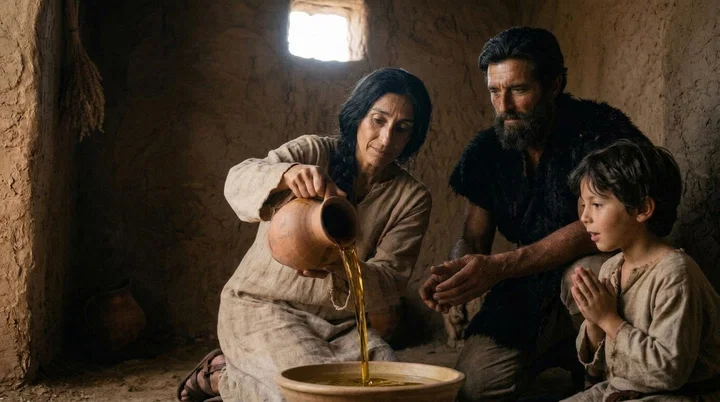
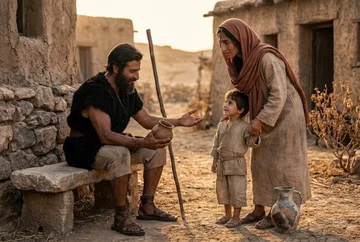
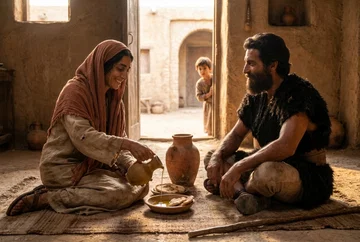
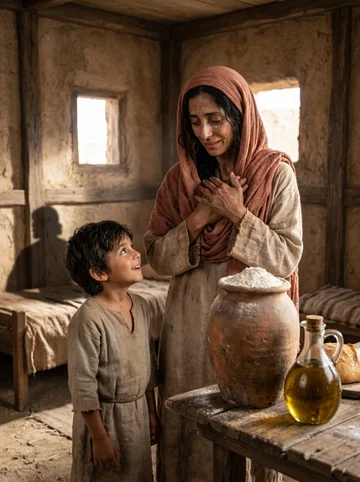
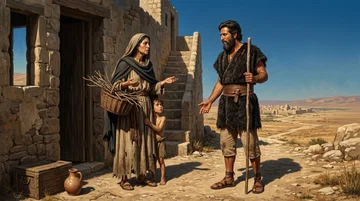
And she said, As the LORD thy God liveth, I have not a cake, but an handful of meal in a barrel, and a little oil in a cruse: and, behold, I am gathering two sticks, that I may go in and dress it for me and my son, that we may eat it, and die.
Translations
And she said, As the LORD your God lives, I have not a cake, but an handful of meal in a barrel, and a little oil in a cruse: and, behold, I am gathering two sticks, that I may go in and dress it for me and my son, that we may eat it, and die.
And she said, As the LORD thy God liveth, I have not a cake, but an handful of meal in a barrel, and a little oil in a cruse: and, behold, I am gathering two sticks, that I may go in and dress it for me and my son, that we may eat it, and die.
And she said, As the Lord thy God liveth, I have not a cake, but a handful of meal in a barrel, and a little oil in a cruse: and behold, I am gathering two sticks, that I may go in and dress it for me and my son, that we may eat it, and die.
And she said, As the LORD thy God liveth, I have not a cake, but a handful of meal in a barrel, and a little oil in a cruse: and behold, I am gathering two sticks, that I may go in and dress it for me and my son, that we may eat it, and die.
And she said, As the LORD thy God liveth, I have not a cake, but an handful of meal in the barrel, and a little oil in the cruse: and, behold, I am gathering two sticks, that I may go in and dress it for me and my son, that we may eat it, and die.
And she said, As Jehovah thy God liveth, I have not a cake, but a handful of meal in the jar, and a little oil in the cruse: and, behold, I am gathering two sticks, that I may go in and dress it for me and my son, that we may eat it, and die.
And she saith, 'Jehovah thy God liveth, I have not a cake, but the fulness of the hand of meal in a pitcher, and a little oil in a dish; and lo, I am gathering two sticks, and have gone in and prepared it for myself, and for my son, and we have eaten it — and died.'
And she said, As Jehovah thy God liveth, I have not a cake, but a handful of meal in a barrel, and a little oil in a cruse; and behold, I am gathering two sticks, that I may go in and dress it for me and my son, that we may eat it, and die.
And she said—By the life of Yahweh, thy God, verily I have not a cake, only a handful of meal in the jar, and a little oil in the cruse,—and lo! I have been gathering a couple of sticks, so I shall go in and make it ready for me and for my son, that we may eat it—and die!
Berean Standard Bible, Majority Standard Bible
But she replied, “ As surely as the LORD your God lives, I have no bread— only a handful of flour in a jar and a little oil in a jug. Look, I am gathering a couple of sticks to take home and prepare a meal for myself and my son, so that we may eat it and die.”
She said, “ As the LORD your God lives, I don’t have anything baked, but only a handful of meal in a jar and a little oil in a jar. Behold, I am gathering two sticks, that I may go in and bake it for me and my son, that we may eat it, and die.”
Then she said, By the life of the Lord your God, I have nothing but a little meal in my store, and a drop of oil in the bottle; and now I am getting two sticks together so that I may go in and make it ready for me and my son, so that we may have a meal before our death.
And shee sayde, As the Lord thy God liueth, I haue not a cake, but euen an handfull of meale in a barrel, and a litle oyle in a cruse: and behold, I am gathering a fewe stickes for to go in, and dresse it for me and my sonne, that we may eate it, and dye.
Douay-Rheims (Challoner revision)
And she answered: As the Lord thy God liveth, I have no bread, but only a handful of meal in a pot, and a little oil in a cruse: behold I am gathering two sticks that I may go in and dress it, for me and my son, that we may eat it, and die.
Pictures
Cross-references
- Luke 4:25-26
But I tell you of a truth, many widows were in Israel in the days of Elias, when the heaven was shut up three years and six months, when great famine was throughout all the land;
Jesus recalls Elijah being sent to the widow of Zarephath during the famine.
- 1 Kings 17:4-6
And it shall be, that thou shalt drink of the brook; and I have commanded the ravens to feed thee there.
God sustains Elijah with food from ravens before sending him to the widow.
- James 5:17
Elias was a man subject to like passions as we are, and he prayed earnestly that it might not rain: and it rained not on the earth by the space of three years and six months.
Elijah’s drought-causing prayer is set in the famine surrounding the widow’s story.
- John 6:11-13
And Jesus took the loaves; and when he had given thanks, he distributed to the disciples, and the disciples to them that were set down; and likewise of the fishes as much as they would.
God miraculously multiplies a little food to provide for many.
- 1 Kings 17:1
And Elijah the Tishbite, who was of the inhabitants of Gilead, said unto Ahab, As the LORD God of Israel liveth, before whom I stand, there shall not be dew nor rain these years, but according to my word.
The drought Elijah announced left the widow destitute and tested her faith.
- 1 Kings 17:22-23
And the LORD heard the voice of Elijah; and the soul of the child came into him again, and he revived.
Elijah restores the widow’s son to life, answering her anguish.
- 1 Kings 17:16
And the barrel of meal wasted not, neither did the cruse of oil fail, according to the word of the LORD, which he spake by Elijah.
The meal and oil do not run out despite her scarcity, showing God’s provision.
- Mark 12:44
For all they did cast in of their abundance; but she of her want did cast in all that she had, even all her living.
Both widows give all they have despite their poverty.
- 2 Kings 4:42-44
And there came a man from Baal-shalisha, and brought the man of God bread of the firstfruits, twenty loaves of barley, and full ears of corn in the husk thereof. And he said, Give unto the people, that they may eat.
Elisha’s small supply of bread feeds a hundred men.
- Matthew 6:30
Wherefore, if God so clothe the grass of the field, which to day is, and to morrow is cast into the oven, shall he not much more clothe you, O ye of little faith?
Jesus teaches trust in God to provide for his followers’ needs.
- 2 Kings 8:1
Then spake Elisha unto the woman, whose son he had restored to life, saying, Arise, and go thou and thine household, and sojourn wheresoever thou canst sojourn: for the LORD hath called for a famine; and it shall also come upon the land seven years.
The Shunammite family is spared during a famine.
- Matthew 14:17-20
And they say unto him, We have here but five loaves, and two fishes.
Both accounts show God providing food from a scant supply.
- Luke 21:1-4
And he looked up, and saw the rich men casting their gifts into the treasury.
The widow gives all she has despite her poverty.
- 2 Kings 5:1-14
Now Naaman, captain of the host of the king of Syria, was a great man with his master, and honourable, because by him the LORD had given deliverance unto Syria: he was also a mighty man in valour, but he was a leper.
Jesus pairs Naaman’s healing with Elijah’s aid to the foreign widow.
- Luke 12:29-31
And seek not ye what ye shall eat, or what ye shall drink, neither be ye of doubtful mind.
Jesus urges seeking God’s kingdom rather than worrying about necessities.
- Exodus 16:14-18
And when the dew that lay was gone up, behold, upon the face of the wilderness there lay a small round thing, as small as the hoar frost on the ground.
Manna sustains Israel in the wilderness.
- Matthew 6:11
Give us this day our daily bread.
The passage connects trust in God with praying for daily bread.
- Mark 7:24-30
And from thence he arose, and went into the borders of Tyre and Sidon, and entered into an house, and would have no man know it: but he could not be hid.
Jesus helps a Gentile woman from the region associated with Elijah’s help.
- Luke 6:38
Give, and it shall be given unto you; good measure, pressed down, and shaken together, and running over, shall men give into your bosom. For with the same measure that ye mete withal it shall be measured to you again.
states the divine law the widow's supply illustrates
- Luke 4:27
And many lepers were in Israel in the time of Eliseus the prophet; and none of them was cleansed, saving Naaman the Syrian.
Jesus pairs the widow with Naaman, a Gentile who received God’s favor.
Commentary
Each commentary is drawn from primary sources: the writings of Ellen G. White and Adventist pioneers and periodicals. Each commentary is separate. Its own words are not a quotation; follow the references to read the source passages.
Ellen G. White
28 sources
The widow at the gate of Zarephath answered Elijah's request for bread by telling him she had only a handful of meal and a little oil left to cook a last scant meal for herself and her son before they died.RH Aug 28, 19136T 345.4–346.1PK 130.1–2 She spoke in a time of severe famine when heaven had been shut for three years and six months, after God had hidden Elijah by the dried brook Cherith and then sent him to her to be sustained.PK 129.1–3ST Feb 17, 18814RED 5.3–7.1 She was a heathen Gentile woman outside Israel who had no privileges of God's chosen people, yet she believed in the true God and lived faithfully up to all the light she had.PK 129.1–32SP 113.2–32SP 112.2–113.1 God passed by the many widows in Israel because of their apostasy and unbelief and chose her, accounting one who lives up to the best light she has more righteous than those with great light whose lives contradict it.2SP 113.2–32SP 112.2–113.1ST Feb 17, 1881 Elijah's asking for drink and food from her last morsel tested her faith to the utmost, and when in extreme want she shared it with him God met her extremity with a daily miracle that preserved her household and showed He will surely sustain His self-sacrificing people through famine.PK 130.1–2PK 131.53T 288.1–2SG2 243.1–245.1GC88 629.2–4
Famine Setting and Need
The widow spoke these words as her answer when Elijah met her at the gate of the city gathering sticks and asked her for water and a morsel of bread.6T 345.4–346.1PK 129.1–3 Zarephath belongs to Zidon and was called Sarepta in New Testament times, lying in Sidon outside Israel in a heathen land.6T 345.4–346.1PK 129.1–3LC1 53.2–54.1 The meeting took place during a severe famine when heaven was shut up three years and six months and great famine was throughout Israel.ST Feb 17, 18814RED 5.3–7.1LC1 53.2–54.1
After Elijah had denounced God's judgments upon Ahab and Israel for apostasy, God hid him from Jezebel's power by the brook Cherith where he was fed morning and evening for many months.PK 129.1–3RH Oct 7, 1873 Continued drought dried the brook, and then God commanded the widow to sustain him and sent him to her.PK 129.1–3RH Oct 7, 1873 Her poverty and need set the scene for God's care of Elijah through a foreign widow while famine afflicted Israel.4RED 5.3–7.1RH Oct 7, 1873
Her home was poverty-stricken where famine pressed sore, and her pitifully meager food was about to fail.RH Aug 28, 19136T 345.4–346.1PK 130.1–2 She had only a handful of meal in a barrel and a little oil in a cruse, and was gathering two sticks to cook a last scant meal for herself and her son on which she could barely sustain life.RH Aug 28, 19136T 345.4–346.1PK 130.1–2DA 238.2–239.13T 288.1–2 She expected after preparing and eating it to give up the struggle to sustain life and die.PK 130.1–2DA 238.2–239.13T 288.1–22SP 113.2–34RED 5.3–7.1 Her oath invoking the LORD as Elijah's God acknowledged Him as Elijah's God and testified to the extremity of her need.RH Aug 28, 1913
Heathen Widow Chosen by God
She was no Israelite and had never shared the privileges and blessings of God's chosen people, but was a heathen Gentile woman dwelling in a heathen land.PK 129.1–32SP 113.2–32SP 112.2–113.1ST Feb 17, 1881ST Jun 23, 1909 She was a believer in the true God who walked in all the light shining on her pathway, living faithfully and strictly according to the light she possessed and doing right so far as she could distinguish right from wrong.PK 129.1–32SP 113.2–32SP 112.2–113.1ST Feb 17, 1881SLP 229.1–230.2 She had followed that light and was open to greater light through Elijah.DA 238.2–239.1ST Jun 23, 1909DA 239.2–240.1
God passed by the many widows in Israel and sent Elijah to her because of Israel's apostasy, unbelief, rebellion, self-exaltation, rejection of light and warnings, and hardening of heart.2SP 112.2–113.1ST Feb 17, 1881SLP 229.1–230.2ST Feb 17, 1881Ms 40, 1887, par. 8–11 He could not trust His prophet with Israel, for Israel's unbelief had closed the door to blessing.SLP 229.1–230.2Ms 40, 1887, par. 8–11Ms 8, 1888, par. 9–14 She was therefore especially favored and cared for by God, and was accounted more righteous than God's backslidden chosen people who had rejected light and sacrificed principle for convenience and worldly honor.2SP 113.2–32SP 112.2–113.1ST Feb 17, 1881AA 416.2–417.1Ms 40, 1887, par. 8–11 God regards a heathen who lives up to the best light she has with greater favor than those who have great light and make high profession of godliness while their daily lives contradict their profession, so that those who live up to light are more favorable before Him than those who neglect greater spiritual advantages.ST Feb 17, 1881Ms 8, 1888, par. 9–14
God made her home a refuge and asylum where Elijah found safety, help and succor when there was no safety for him in Israel.PK 129.1–3ST Feb 17, 1881ST Feb 17, 1881Ms 40, 1887, par. 8–11 Hatred, hostility, opposition and danger among his own people drove him to flee, and he was safer among the heathen than among those who had rejected heaven's light and hardened their hearts against the truth.SLP 250.3ST May 22, 1884 Jesus used the sending of Elijah to a widow outside Israel, though many widows were in Israel, to support His warning that a prophet is not accepted in his own country.LC1 53.2–54.1
Faith Tested and Provided For
Elijah arrived on that very day when her pitifully meager supply was about to fail, and his request for drink and then food from her last scant morsel tested to the utmost her faith in the power of the living God to provide for her necessities.PK 130.1–2 Even in dire extremity her compliance bore witness to her faith.PK 130.1–2
Despite having only enough for one final meal for herself and her son, she shared her morsel with Elijah.6T 345.4–346.1PK 131.52T 28.2RH Aug 28, 1913Ms 40, 1887, par. 8–11 That sharing in extreme want was an act of hospitality, faith, generosity and kindness.6T 345.4–346.1RH Aug 28, 1913Ms 40, 1887, par. 8–11 It makes her an example of giving sympathy and assistance to one more needy while having very little herself.PK 131.52T 28.2
In return her life and her son's life were preserved, for God sustained her and her son and kept the household supplied.PK 131.53T 288.1–22T 28.2RH Aug 28, 1913 He met that extremity of almost no food left by a daily miracle keeping the widow's family and Elijah supplied with food.RH Oct 7, 1873 That provision in desperate need for her household and Elijah was blessed evidence of God's love and care that should have kept Elijah from ever distrusting God.3T 288.1–24RED 5.3–7.1RH Oct 7, 1873
In the history of the prophets she represents a person whose faith made her a recipient of God's power displayed through a faithful prophet.LC1 56.1 The meaning is that all who give sympathy and assistance to others more needy in trial and want, sharing their last morsel, receive God's promised great blessing.PK 131.5 That blessing is fulfilled in the promise that he who receives a prophet in the name of a prophet receives a prophet's reward, and God's power to preserve and bless is no less now than in the days of Elijah.PK 131.5
God's care for Elijah through the widow in that severe famine shows that He will sustain His self-sacrificing people who trust Him and sacrifice for Him through deprivation and will not leave them to perish.SG2 243.1–245.1GC88 629.2–4RH Nov 26, 1857 Even when those around them perish for lack of bread, in famine their bread and water will be sure and they will be supplied and satisfied.SG2 243.1–245.1GC88 629.2–4RH Nov 26, 1857
Sources
Pioneers and periodicals
79 sources
The widow answers Elijah that she has no baked bread left, only a small amount of flour in a jar and a little oil in a jug, and she is picking up sticks to cook it as a final meal for herself and her son before they die.RH Aug 28, 1913ST Jul 23, 1885RH Jun 24, 1902 Her oath by the life of the LORD as his God confesses Him as Elijah's God while laying bare the utter scarcity that makes his request for food a trial of trust.RH Aug 28, 1913ST Jul 27, 1904ST Jun 23, 1898 She speaks in the famine sent in judgment for Baal worship after Elijah declared there would be no dew nor rain, when vegetation failed and food grew scarce.RH Oct 7, 1873ST Apr 17, 1907 That scanty store was miraculously multiplied so it did not fail but sustained the widow, her son, and Elijah for many days through the famine.RH Jun 24, 1902ST Apr 6, 1888ST Jun 6, 1900 Though she had only enough for one last meal, she shared it and at his word prepared food for him first, and she is the widow in Sidon to whom alone Elijah was sent when heaven was shut up, though many widows were in Israel.ST Jun 16, 1887ST Feb 17, 1881RH Jun 24, 1902RH Mar 17, 1903ST Mar 25, 1903
Widow's Words and Plight
The widow answers that she has no baked cake at all, only a handful of meal in a barrel and a little oil in a cruse.RH Aug 28, 1913ST Jul 23, 1885RH Jun 24, 1902ST Jul 27, 1904ST Jun 23, 1898 She is gathering sticks to go in and dress that scant supply for herself and her son, that they may eat it and die, expecting it to be their last meal before death.RH Aug 28, 1913ST Jul 23, 1885RH Jun 24, 1902ST Jul 27, 1904ST Jun 23, 1898 Her reply is one of utter destitution in the famine, a pathetic statement of having almost no food left.RH Aug 28, 1913RH Jun 24, 1902ST Jul 27, 1904ST Jun 23, 1898ST Jul 27, 1904
She swears by the oath, As the LORD thy God liveth, thereby acknowledging the LORD as Elijah's God.RH Aug 28, 1913ST Jul 27, 1904ST Jun 23, 1898 That oath at the same time testifies to the extremity of her need and the desperate scarcity surrounding her.RH Aug 28, 1913ST Jul 27, 1904RH Jan 16, 1872 In that scarcity his request for food becomes a test of trust.RH Jan 16, 1872
She speaks at the gate of the city while gathering sticks and going to fetch water.ST Jun 23, 1898ST Jun 23, 1898RH Feb 25, 1873 Elijah has first asked her for water, and then has further asked for a morsel of bread, and her words are her reply to that further request.ST Jun 23, 1898ST Jun 23, 1898 God had commanded her to sustain Elijah, who came to her after being fed bread and flesh morning and evening by ravens.RH Feb 25, 1873
She is gathering only two sticks to cook the meal.ST Jun 23, 1898 That small number shows the small amount of firewood used for daily cooking where wood was too costly to heat a room.ST Jun 23, 1898ST Sep 23, 1886 Water was still available in Phoenicia, but even a morsel of bread was beyond her means.ST Jul 27, 1904
Her words reveal the severity and extremity of the famine.RH Jun 24, 1902ST Jul 27, 1904ST Jul 27, 1904ST Sep 7, 1904 They lay bare dire poverty in which she expects death after this final food for herself and her son.RH Aug 28, 1913ST Jul 27, 1904ST Jul 27, 1904RH Feb 25, 1873 It was a severe famine of three years in which she was reduced to baking her last cake to eat and die.ST Sep 7, 1904RH Feb 25, 1873
Famine and Historical Setting
The drought and famine came as judgment upon Ahab for Baal worship after Elijah announced there would be no dew nor rain.RH Oct 7, 1873ST Apr 17, 1907 Vegetation perished and food grew scarce, yet Ahab hunted Elijah to kill him instead of repenting.ST Apr 17, 1907 Elijah prayed in faith while waiting for the time to act, and God took matters in hand to preserve His servant through that extremity.RH Oct 7, 1873ST Apr 17, 1907 After Elijah appeared before Ahab denouncing the judgments of God for his and Israel's apostasy, God directed him away from Jezebel's power to safety.RH Oct 7, 1873
Ahab's record in 1 Kings 16-22 stands written for the learning and profit of men and kings of later generations.RH Nov 7, 1912 He was contemporary with Jehoshaphat of Judah and Elijah the Tishbite, the seventh king of Israel and the second ruler of the third Israelitish dynasty, reigning twenty-two years early in the ninth century before Christ, of whom more is said in Scripture than of any other ancient monarch.RH Nov 7, 1912 Both as man and prince he enjoyed more than average opportunities, and from a civil viewpoint he was successful as a clever statesman, a skilled general, and a patriot toward his people and country.RH Nov 7, 1912 Yet he was a moral coward who sold himself to the worship of a plurality of heathen deities and afterward enforced their worship upon his people.RH Nov 7, 1912
The famine lasted three years, described as three years and six months when heaven was shut up, with great famine throughout Israel and over all the land.ST Feb 17, 1881ST Sep 7, 1904RH Feb 25, 1873 The widow's handful of meal and little oil left to dress for herself and her son before death shows the extremity of that famine.ST Sep 7, 1904RH Feb 25, 1873 The verse belongs to God's care for Elijah during those three and a half years, illustrating His ways and means of caring for His own in any emergency.ST Sep 7, 1904RH Feb 25, 1873
Zarephath, also called Sarepta, lay in Phoenicia in the region of Tyre and Sidon outside Israel.ST Feb 17, 1881ST Mar 17, 1898ST Jul 4, 1900ST Feb 19, 1894 Together with the brook Cherith it was one of Elijah's hiding-places from the wrath of Ahab.ST Sep 8, 1898 Zarephath is one of the chief places in the history of the Ten Tribes, connected with Elijah the prophet who came from Gilead.ST Sep 8, 1898 Elijah's miraculous work there in the region of Tyre and Sidon stands with the later work of Jesus in the same region.ST Mar 17, 1898ST Jul 4, 1900
The setting was a period of great apostasy in which Israel had departed from the living God, rejected reproof, and multiplied guilt until judgment came in famine.ST Jun 16, 1887 Their unbelief, self-exaltation, and rejection of warnings closed the door of good to them.ST Jun 16, 1887ST Feb 17, 1881 Yet God nevertheless preserved a faithful remnant that responded to His prophet's call. Elijah had to leave his country for the low, unpromising, humble hut of a poor widow whose sole sustenance was a handful of flour and a little oil in the cruse. With the scorching sun burning up every green thing and drying up the rivers, there was no outward promise that any reformation of apostate Israel could be carried on from such poverty and obscurity. Enduring that adversity developed in him a living faith strong enough to shut heaven, raise the dead, be answered by fire, receive rain, and be prepared for translation without seeing death.
God first preserved Elijah by ravens bringing bread and flesh morning and evening by the brook Cherith.RH Oct 7, 1873RH Feb 25, 1873ST Apr 17, 1907 When the brook dried He sent him to the widow of Sarepta for safety and commanded her to sustain him.RH Oct 7, 1873RH Feb 25, 1873ST Apr 17, 1907 There God wrought a miracle daily to keep the widow's family and Elijah supplied with food, blessed evidence of His love and care.RH Oct 7, 1873
God's Miraculous Provision
The handful of meal and little oil she had left were miraculously increased and did not fail but lasted many days.RH Jun 24, 1902ST Apr 6, 1888ST Jun 6, 1900RH Jun 24, 1902ST Oct 22, 1902 God made that scant store sufficient to support a household of three for a full year, keeping the widow, her son, and Elijah alive through the famine.ST Apr 6, 1888RH Dec 17, 1914ST Oct 22, 1902 What she expected to be one last meal dressed for herself and her son before death became daily replenished provision.RH Jun 24, 1902RH Dec 17, 1914ST Oct 22, 1902
The Lord sent Elijah to her in her need and commanded her, as He had commanded the ravens that brought bread and flesh morning and evening, to supply the prophet's daily food.RH Dec 17, 1914RH Feb 25, 1873RH Apr 9, 1914 He chose a poor heathen widow of Sarepta rather than a well-provisioned family to sustain His servant, passing by the many widows among His professed people.ST Jun 16, 1887RH Mar 13, 1900RH Apr 9, 1914ST Dec 23, 1889 Her poverty made her an unlikely source of support, yet God provided through her and entrusted His hunted servant to her kindness when apostate Israel sought to destroy him.ST Jun 16, 1887ST Oct 22, 1902RH Feb 25, 1873 Because she had lived according to all the light she possessed and responded to further light, she was highly favored and became His agent and a refuge for Elijah.ST Jun 16, 1887ST Dec 23, 1889
That care shows His way of caring for His own when driven to the last extremity, when barrel and cruse seem entirely spent.RH Nov 26, 1857RH Oct 7, 1873ST Sep 7, 1904 He is prepared for any emergency, and His promise to those who trust and obey is that He will never leave nor forsake them, so that even in famine their bread and water will be sure.RH Nov 26, 1857ST Sep 7, 1904 The same provision is seen when flour is replenished until more can be bought, and when hungry children cry for breakfast yet needs are supplied.RH Dec 17, 1914ST Oct 1, 1896ST Feb 18, 1886 After Elijah denounced judgment for apostasy and was fed by the brook Cherith until it dried, God wrought a daily miracle at Sarepta to keep the widow's family and Elijah supplied, blessed evidence of love and compassion for individuals in need that should keep distrust away.RH Oct 7, 1873ST Oct 1, 1896ST Feb 18, 1886
Even in extreme poverty she received Elijah into her home, and God blessed her in temporal things and made Elijah a blessing to her in return.CO 73.5ST Apr 17, 1907 He restored her son to life and returned the child's life to his mother, showing tender sympathy with a mother's anguish and love.CO 73.5ST Apr 17, 1907RH Sep 16, 1902 The little meal and oil, nearly all she had left for herself and her son, became God's instrument to feed Elijah and the widow through the famine and to accomplish what human resources alone could not; the power was God's.ST Feb 18, 1886ST Jul 23, 1912
Faith Generosity and Hospitality
With only enough ground grain and oil left for one final meal for herself and her son before they expected to die, the widow did not hold back her last food but divided it with the prophet in famine and poverty.RH Aug 28, 1913RH Jun 24, 1902RH Mar 17, 1903ST Jun 12, 1901RH May 6, 1902 At his word she baked the small cake for him first and then for herself and her son, putting God's cause first.RH Mar 17, 1903ST Mar 25, 1903 His need moved her to give all she had.RH Jun 24, 1902
Her act shows giving to another not out of abundance but out of poverty and extreme scarcity.ST Mar 26, 1885RH Apr 2, 1914 Even a small supply given to another can serve both, for what seems barely enough for one can feed two when shared.ST Mar 18, 1889 Divine love renews what is used, so the handful is renewed and she is enabled to live through the famine.ST Mar 26, 1885ST Mar 18, 1889 Believers are therefore urged to share what little they have and trust God to provide.RH Jun 24, 1902
Trusting God when purses are empty, with only a handful of meal and a cruse of oil left and every way of relief stopped, is hard.ST Nov 27, 1884 It is unlike trusting when warehouses and bags are full and tables are spread.ST Nov 27, 1884 Yet to trust Him in that emptiness is the wisdom of Christian grace, and to do what is right and trust Him for the outcome is safe.ST Nov 27, 1884RH Dec 5, 1871
Her sacrifice brought no loss, for the supply did not fail but continued to sustain her and her son.RH Jun 24, 1902RH Mar 17, 1903RH Apr 2, 1914ST Mar 25, 1903 Selfishly keeping what one has can mean losing it, while giving and passing on blessings brings an unfailing supply.RH Jun 24, 1902 By giving one best receives, for giving is the divine law of receiving: as a person gives God imparts, so giving is living and denying is dying.RH Jun 24, 1902ST Jun 12, 1901
Her taking God's hunted prophet into her poor humble dwelling and giving him welcome refuge is the pattern for sheltering His servants when hatred and opposition drive them to flee and enemies track them.RH Nov 9, 1911ST May 22, 1884ST May 28, 1885 In finding refuge and help with the widow of Sarepta among the heathen, he was safer among them than among those who had rejected heaven's light and hardened their hearts against the truth.ST May 22, 1884ST May 22, 1884
Her willingness to receive him showed the faith born of her depth of poverty.ST Feb 19, 1894 Her oil was increased by the using of it, picturing abilities and opportunities increased by being used and poured out without doubting to fill every vessel within reach.ST Dec 5, 1895 That same faith that the meal when low will not waste or diminish is to be exercised in giving, believing God will keep the supply from failing.RH Apr 2, 1914RH Jan 14, 1873
Doctrine and Prophetic Meaning
The verse belongs to the history of the widow whose son was afterward restored to life, and that restoration is counted a genuine resurrection from the dead before the resurrection of Christ, though the son was not raised to immortality.RH Aug 6, 1872RH May 28, 1861ST Mar 30, 1876 The record in 1 Kings 17 is set alongside other explicit raisings before Christ to show that Christ was not the only person raised from the dead beforehand, yet He can still be called the first to rise.RH Aug 6, 1872ST Mar 30, 1876 Scripture itself makes no distinction between a resurrection to mortality and a resurrection to immortality, for Christ's own word that the dead were raised up and His calling of the restoration of the wicked a resurrection prove that difference in final condition makes no difference in being raised.RH Aug 6, 1872 That raising took place by virtue of the sacrifice of the Son of God, which had not then been accomplished but was established in the purpose of God.ST Oct 12, 1876
The verse stands within the shutting of heaven by Elijah so that it did not rain, which was the word of God's two olive trees, His two witnesses, the Old Testament and the New Testament, the law and the gospel, spoken by the mouth of Elijah.ST May 10, 1883 That word bears testimony to God's will concerning duty in the law and to His power to save from sin by the gospel, and it threatens men with death by fire if they refuse to repent.ST May 10, 1883 The same shutting and reopening belongs to the account of answered prayer in which the heavens were stopped from giving rain and rain later came again.RH Nov 21, 1912
The multiplying of the meal and oil for the widow, by which her handful of meal and little oil were supernaturally multiplied so that she and her son lived, is a true, literal Old Testament miracle to be taught as true throughout.ST Jan 24, 1906 It stands with the Creation, the Fall, the Flood, the confusion of tongues, and the miracles of Elisha, and with the miracles of Elijah as a whole, as literal history, not myth, allegory, fancy, nor crude and childish.ST Jan 24, 1906 It is a manifestation of the mighty, miraculous power of God to fallen man, belonging to the infallible Old Book whose every word is cherished and whose every infallible promise is a staff and stay, which has regenerated men, changed the face of the world, brought hope to unnumbered souls, and lighted the dark valley entered by God's trusting saints. To deny this miracle is to deny the infallibility of the Bible and at last its every essential, saving truth, including its giving, story, mission, work, and its central figure Jesus Christ.
The widow of Zarephath was reduced to a handful of meal and a little oil, with only enough for one last meal for herself and her son before they expected to die, yet God lengthened their supply and kept the widow, her son, and Elijah alive through the famine.RH Nov 1, 1853 That handful of meal also serves as an image of the small remnant of spiritual truth remaining during a famine for hearing the word of the Lord.RH Nov 1, 1853 The third angel's message is likened to a handful of corn whose fruit will spread widely.RH Nov 1, 1853
Links to Other Scriptures
Luke identifies her as the widow in Sidon to whom Elijah was sent when heaven was shut up three years and six months and great famine was throughout all the land.ST Feb 19, 1894 Though there were many widows in Israel in those days, Elijah was sent to none of them but only to her at Zarephath.ST Dec 23, 1889ST Feb 19, 1894 This passing by of Israel shows that no prophet is acceptable in his own country, as Jesus was rejected at Nazareth where He had been brought up. God had precious souls among other nations as well as Israel.ST Dec 23, 1889
Though she was a heathen woman of Sarepta in Sidon, she had lived in accordance with all the light she possessed and had done right so far as she was able to distinguish right from wrong.ST Jun 16, 1887ST Feb 17, 1881 Israel had departed from the living God, rejected reproof and warnings, and multiplied guilt until judgment came, and by apostasy, unbelief and self-exaltation closed the door of good to itself.ST Jun 16, 1887ST Feb 17, 1881 God therefore passed over the many widows in Israel and chose her to give asylum to His servant and care for him, entrusting him to her kindness and liberality and making her home a refuge from those who sought to destroy him.ST Jun 16, 1887ST Feb 17, 1881ST Feb 17, 1881 She was highly favored because she appreciated His favors and responded to the light given from heaven, and God regards such a heathen who lives up to the best light she has with greater favor than those who have great light and make high pretensions to godliness while their daily lives contradict their profession.ST Jun 16, 1887ST Feb 17, 1881 While Israel rejected God's warnings, this woman in a heathen land had followed the light she had received and was open to further light through Elijah.ST Feb 17, 1881ST Jun 23, 1909
Elijah's miraculous work in the region of Tyre and Sidon stands together with Jesus' work in the same region, where He withdrew and met the Canaanite woman and healed her daughter.ST Mar 17, 1898 The two works stand together to show the object and mission of miracles, with Jesus' work in Galilee continuing about two months after the death of John the Baptist while opposition to His work kept increasing until its culmination at the cross.ST Mar 17, 1898
The handful of meal and little oil picture the Bible as daily bread, for just as they could be fed upon daily yet never grow less, the Bible can be fed upon every day without being diminished and without tiring those who feed on it.ST Nov 24, 1898 It is unlike honey of which one soon has enough and condiments that grow flat and stale, while no one ever has enough bread.ST Nov 24, 1898
The little oil in her cruse is abilities and opportunities, which are increased by being used, so that poured out without doubting the oil is enough to fill every vessel within reach.ST Dec 5, 1895 In another sense the cruse is the submission she had at her command, which she had wasted through lack of submission, yet by grace choosing submission changed her response to her circumstances.ST Dec 5, 1895 It is also usefulness at home to cheer, give thanks, show love, and make home bright and attractive to husband and children, even for a mother shut in by ill health and children.ST Dec 5, 1895 Saying she can do nothing that counts misunderstands the cruse, and fretting, dissatisfaction, gloom, ingratitude for safety and for children as gifts from God, fault-finding over every new event, and reproach toward husband and children wastes the oil and darkens home and widens the breach between her and her family.ST Dec 5, 1895 The failing cruse is a cruse of comfort, and the way to preserve it through all the years of famine so that it serves both her and her brother is to rise and share it with another.ST Jan 27, 1904ST Mar 24, 1898RH Jul 13, 1911 Then love divine fills the storehouse and renews the handful, so that scanty fare for one becomes a royal feast for two, for giving is the divine law of receiving, as a person gives God imparts, so giving is living and denying is dying and the heart grows rich in giving because it can only live in loving and love grows by serving.ST Jan 27, 1904ST Mar 24, 1898
Practical Applications for Believers
The widow with only a handful of meal and a little oil for one last meal for herself and her son before they die teaches believers to share what little they have and trust God to provide.RH Jun 24, 1902ST Mar 25, 1903 Giving generously to the Lord's cause and putting God first in faith brings provision, while those who live only for themselves perish.RH Jun 24, 1902ST Mar 25, 1903
Her small provision and dire need make her sharing of her last handful an example of missionary service for God and other people.RH Nov 12, 1903RH Oct 3, 1907 The church is to use its own limited resources as she used her meal and oil, to feed people in foreign lands with the gospel.RH Nov 12, 1903RH Oct 3, 1907 That same faith that the meal will not waste or diminish is to be exercised toward the tract treasury, giving tracts away freely and letting nothing stand between the poor and the work of sending out truth, trusting God to keep the treasury supplied.RH Nov 12, 1903RH Jan 14, 1873
The widow's barrel is a picture of a supply that repeatedly appears close to running out but continues to provide a little more amid ongoing demands.RH Feb 4, 1909ST Jun 16, 1909 The mission treasury is like it, able to supply a little more year by year despite fears that funds would not keep pace with the work.RH Feb 4, 1909ST Jun 16, 1909 As God sustained the widow at the point of extreme scarcity, He has kept workers from spending their last dollar when funds were nearly depleted.ST Jun 16, 1909RH Nov 12, 1901
As a mother in desperate poverty sharing her last food and expecting death, she shows God's tender sympathy with a mother's anguish and love and His care in healing her son and returning the child's life to his mother.RH Sep 16, 1902RH Sep 2, 1915 Her handful became enough through God's grace to feed her household, encouraging that limited efforts offered with help from above can benefit both one's own family and a neighbor.RH Sep 16, 1902RH Sep 2, 1915 Even a mother shut in by ill health and children still has a cruse of oil that counts in her usefulness at home to cheer, give thanks, show love, and make home bright and attractive to husband and children.ST Dec 5, 1895RH Sep 2, 1915 Saying she can do nothing that counts misunderstands the cruse, while fretting, dissatisfaction, gloom, ingratitude for safety and for children as gifts from God, fault-finding over every new event, and reproach toward husband and children wastes the oil and darkens home and widens the breach in the family.ST Dec 5, 1895
God's supply of need in extreme poverty during famine is illustrated by flour replenished until more could be bought.RH Dec 17, 1914ST Feb 27, 1893 The meal that never gives out is a picture of money that does not run completely dry, showing God's provision amid limited means.RH Dec 17, 1914ST Feb 27, 1893 Even a small supply given to another can serve both, for divine love can renew what is used.ST Mar 18, 1889 Sharing scant provisions with another is met with continued provision, so the handful is renewed and food that seems barely enough for one can serve two.ST Mar 18, 1889ST Mar 24, 1898 Rising to share a failing cruse of comfort like a handful of meal and a little oil makes it serve both giver and brother through all the famine, so scanty fare for one becomes a royal feast for two.ST Mar 24, 1898 Love divine fills the storehouse and renews the handful, so the heart grows rich in giving because it can only live in loving and love grows by serving.ST Mar 18, 1889ST Mar 24, 1898
Sources