Luke 4:25
But I tell you of a truth, many widows were in Israel in the days of Elias, when the heaven was shut up three years and six months, when great famine was throughout all the land;
Translations
American King James Version, King James Version, KJV Cambridge Paragraph Bible
But I tell you of a truth, many widows were in Israel in the days of Elias, when the heaven was shut up three years and six months, when great famine was throughout all the land;
But I tell you in truth, many widows were in Israel in the days of Elijah, when the heaven was shut three years and six months when great famine was throughout all the land:
Revised Version, American Standard Version
But of a truth I say unto you, There were many widows in Israel in the days of Elijah, when the heaven was shut up three years and six months, when there came a great famine over all the land;
and of a truth I say to you, Many widows were in the days of Elijah, in Israel, when the heaven was shut for three years and six months, when great famine came on all the land,
But of a truth I say to you, There were many widows in Israel in the days of Elias, when the heaven was shut up for three years and six months, so that a great famine came upon all the land,
And, of a truth, I say unto you—Many widows, were in the days of Elijah, in Israel, when the heaven was shut up three years and six months, when there came a great famine upon all the land;
Berean Standard Bible, Majority Standard Bible
But I tell you truthfully that there were many widows in Israel in the time of Elijah, when the sky was shut for three and a half years and great famine swept over all the land.
But truly I tell you, there were many widows in Israel in the days of Elijah, when the sky was shut up three years and six months, when a great famine came over all the land.
Truly I say to you, There were a number of widows in Israel in the days of Elijah, when the heaven was shut up for three years and six months and there was no food in the land;
But I tell you of a trueth, many widowes were in Israel in the dayes of Elias, when heauen was shut three yeres and sixe moneths, when great famine was throughout all the land:
Douay-Rheims (Challoner revision)
In truth I say to you, there were many widows in the days of Elias in Israel, when heaven was shut up three years and six months, when there was a great famine throughout all the earth.
Pictures


Cross-references
- 1 Kings 17:8-16
And the word of the LORD came unto him, saying,
The widow of Sarepta received and acted on the light given her.
- 1 Kings 17:1
And Elijah the Tishbite, who was of the inhabitants of Gilead, said unto Ahab, As the LORD God of Israel liveth, before whom I stand, there shall not be dew nor rain these years, but according to my word.
Elijah announced the drought that brought the famine.
- James 5:17
Elias was a man subject to like passions as we are, and he prayed earnestly that it might not rain: and it rained not on the earth by the space of three years and six months.
Both texts describe Elijah’s drought lasting three years and six months.
- 1 Kings 18:1-2
And it came to pass after many days, that the word of the LORD came to Elijah in the third year, saying, Go, shew thyself unto Ahab; and I will send rain upon the earth.
God sends Elijah to Ahab as the drought ends amid severe famine.
- 1 Kings 18:17
And it came to pass, when Ahab saw Elijah, that Ahab said unto him, Art thou he that troubleth Israel?
Ahab confronts Elijah during the drought, calling him the one troubling Israel.
- Revelation 11:6
These have power to shut heaven, that it rain not in the days of their prophecy: and have power over waters to turn them to blood, and to smite the earth with all plagues, as often as they will.
Both describe heaven being shut so that rain does not fall, as in Elijah’s days.
- 1 Kings 18:39
And when all the people saw it, they fell on their faces: and they said, The LORD, he is the God; the LORD, he is the God.
Israel acknowledges the LORD as God after he answers Elijah by fire.
- 1 Kings 18:41-45
And Elijah said unto Ahab, Get thee up, eat and drink; for there is a sound of abundance of rain.
Elijah prays, and rain returns.
- 1 Kings 19:10
And he said, I have been very jealous for the LORD God of hosts: for the children of Israel have forsaken thy covenant, thrown down thine altars, and slain thy prophets with the sword; and I, even I only, am left; and they seek my life, to take it away.
Elijah describes Israel’s departure from God and rejection of His prophets.
- Matthew 17:1-8
And after six days Jesus taketh Peter, James, and John his brother, and bringeth them up into an high mountain apart,
contrasted glory with Nazareth rejection
- Luke 9:54-55
And when his disciples James and John saw this, they said, Lord, wilt thou that we command fire to come down from heaven, and consume them, even as Elias did?
Jesus rebukes the desire for destruction and rejects a spirit unlike His own.
- 2 Kings 1:10
And Elijah answered and said to the captain of fifty, If I be a man of God, then let fire come down from heaven, and consume thee and thy fifty. And there came down fire from heaven, and consumed him and his fifty.
Fire from heaven consumes troops sent to seize Elijah.
Commentary
Each commentary is drawn from primary sources: the writings of Ellen G. White and Adventist pioneers and periodicals. Each commentary is separate. Its own words are not a quotation; follow the references to read the source passages.
Ellen G. White
36 sources
In the days of Elijah the sky was closed for three years and six months, bringing severe famine upon the land when many widows were living in Israel, yet he was sent to none of them but to a poor widow in Sarepta of Sidon outside Israel.1RED 53.2–57.1LC1 53.2–54.1STMW6 20.1–21.2 Jesus spoke this history in the synagogue at Nazareth on the Sabbath, after reading Isaiah and declaring it fulfilled in himself, to answer the doubt and demand for miracles of those who knew him only as Joseph's son.Lt 51a, 1895, par. 5–8Lt 81, 1896, par. 2–3ST Dec 16, 1897 He gave it as proof that no prophet is accepted in his own country, to rebuke unbelief and to show that his hearers were no more favored than Gentiles.LC1 53.2–54.1Lt 51a, 1895, par. 5–8Lt 81, 1896, par. 2–3 Israel was passed over because apostasy, rebellion and unbelief cut it off from blessing and made it unfit to be trusted with God's servant, while the heathen widow who lived faithfully by the light she had was more acceptable.Ms 40, 1887, par. 8–114RED 5.3–7.1ST Feb 17, 1881 So God's help was not confined to Israel but reached into heathen lands, as also shown when Elisha cleansed Naaman the Syrian, teaching that receptive faith matters more than belonging to the chosen people.STMW6 20.1–21.2Ms 133, 1902, par. 1–10Lt 6, 1896, par. 8–10AA 416.2–417.1SLP 229.1–230.2
Elijah's Drought and Widows
In the days of Elijah the sky was closed and rain was withheld from Israel for three years and six months, producing drought.1RED 53.2–57.1LC1 53.2–54.1STMW6 20.1–21.2Ms 40, 1887, par. 8–114RED 5.3–7.1 That shutting of heaven brought a great and severe famine throughout all the land.1RED 53.2–57.1LC1 53.2–54.1STMW6 20.1–21.2Lt 51a, 1895, par. 5–8Lt 6, 1896, par. 8–10 The three-and-a-half-year period marks the time of Elijah's ministry and the length of the dearth that lay upon the country.STMW6 20.1–21.2Ms 40, 1887, par. 8–11Lt 51a, 1895, par. 5–8Lt 6, 1896, par. 8–1020MR 367.1–368.1
At that same time many widows were living in Israel and shared in the suffering of the famine.1RED 53.2–57.1LC1 53.2–54.1STMW6 20.1–21.2Ms 40, 1887, par. 8–114RED 5.3–7.1 They remained in the land through the years of drought and want when food failed everywhere.1RED 53.2–57.1LC1 53.2–54.1STMW6 20.1–21.2Ms 40, 1887, par. 8–11ST Feb 17, 1881
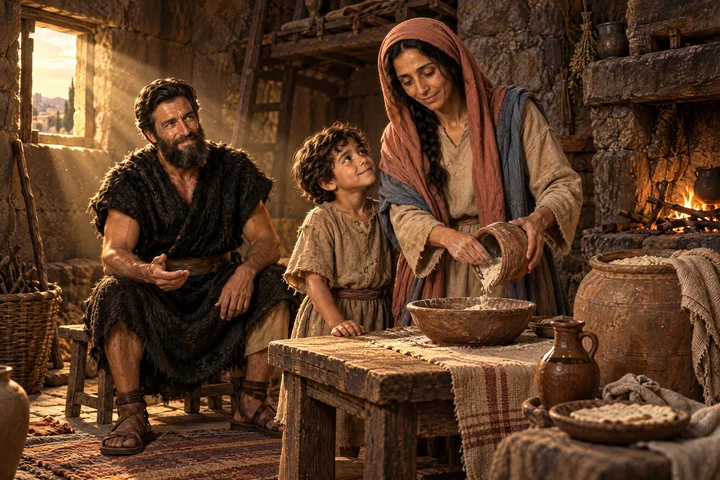
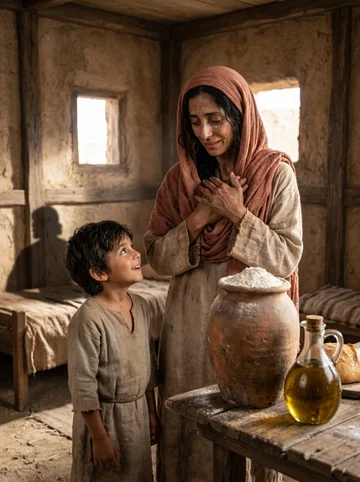
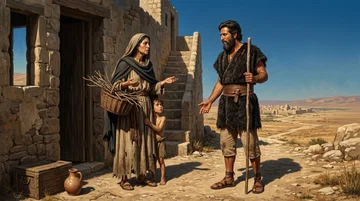
Elijah was sent to none of those Israelite widows.1RED 53.2–57.1LC1 53.2–54.1STMW6 20.1–21.2Ms 40, 1887, par. 8–114RED 5.3–7.1 He was sent instead to a poor widow at Sarepta, also called Zarephath, a city of Sidon in a heathen land outside Israel.1RED 53.2–57.1STMW6 20.1–21.2Ms 40, 1887, par. 8–114RED 5.3–7.1ST Feb 17, 1881
Jesus Speaking at Nazareth
On the Sabbath in the synagogue at Nazareth Jesus preached His first sermon there, reading Isaiah's promise and declaring it fulfilled in their hearing.Lt 51a, 1895, par. 5–8ST Dec 16, 1897Ms 4, 1890, par. 13–16Lt 49, 1899, par. 6–10Lt 33a, 1888, par. 3–4 He stood in an elevated place as speaker, announcing Himself as the Anointed One and explaining the prophets concerning Himself.Ms 4, 1890, par. 13–16Lt 49, 1899, par. 6–10Lt 33a, 1888, par. 3–4 His work was to console, but also to restore and reprove.Lt 81, 1896, par. 2–3
At first all wondered at the gracious words that proceeded from His lips under the influence of God's Spirit.Lt 51a, 1895, par. 5–8Lt 49, 1899, par. 6–10Lt 33a, 1888, par. 3–4Lt 33, 1888, par. 19–24 Then doubt followed, and they questioned Him as Joseph's son and demanded miracles like those heard of in Capernaum.Lt 51a, 1895, par. 5–8 Their resistance exposed an expectation that the Messiah would use power to advance their nation, and their unfavorable reception showed how familiarity can keep those who have known a man since childhood from recognizing admirable qualities in him.Ms 39, 1889, par. 4–5ST Feb 3, 1881
He answered that no prophet is accepted in his own country, and gave the history of Elijah as proof and rebuke of their unbelief.LC1 53.2–54.1Lt 51a, 1895, par. 5–8Ms 39, 1889, par. 4–5LC1 56.1 He recalled that though many widows were in Israel during three years and six months of shut heaven and great famine, God's sending passed them by.LC1 53.2–54.1Lt 51a, 1895, par. 5–8 By pointing to God's blessings upon Gentiles He showed His hearers they were no more favored than Gentiles, for God's power works through faithful prophets for those who have faith and not for a hard-hearted and unbelieving people.Lt 81, 1896, par. 2–3Ms 39, 1889, par. 4–5LC1 56.1ST Feb 3, 1881
His pointed words about their spiritual condition and about Israel's untrustworthiness stirred national pride, unbelief, resistance and murderous anger.Lt 6, 1896, par. 8–10Ms 39, 1889, par. 4–5Lt 33a, 1888, par. 3–4Lt 33, 1888, par. 19–24 Despite the power of God and the Holy Spirit bearing witness to Him, the very ones who had admired Him opened their lips to utter falsehoods, tore Him from His place, and drove Him from the synagogue.12MR 182.2–183.2ST Dec 16, 1897Ms 4, 1890, par. 13–16Lt 49, 1899, par. 6–10 They hurried Him to the eminence on which their city was built to cast Him down headlong and would have killed Him, but divine power and angels guarded Him until His work was done.20MR 367.1–368.112MR 182.2–183.2ST Dec 16, 1897Lt 49, 1899, par. 6–10 He left Nazareth after a life of persecution, though He healed, fed, stilled the waves, cast out devils, raised the dead, and taught with wisdom.Lt 33a, 1888, par. 3–4Lt 33, 1888, par. 19–24
Why Israel Was Passed Over
Israel's apostasy, rebellion and unbelief brought the famine of three years and six months, and led the people to reject God's warnings.Ms 40, 1887, par. 8–114RED 5.3–7.1ST Feb 17, 1881DA 238.2–239.12SP 112.2–113.1 By that rejection Israel cut itself off from the channel of blessing and shut itself off from the good offered.Ms 40, 1887, par. 8–11ST Jun 23, 1909 Its apostasy made it unfit to be trusted with God's servant, so Elijah was sent to none of the many widows in Israel but to one outside Israel.20MR 367.1–368.1DA 238.2–239.12SP 112.2–113.1
God therefore passed over people who had received great light and religious privilege when they rejected it.4RED 5.3–7.1ST Feb 17, 1881DA 238.2–239.12SP 112.2–113.12SP 113.2–3 Privilege and claims to godliness do not win favor when life contradicts profession.Ms 40, 1887, par. 8–112SP 113.2–3 Those who reject greater light are passed by in favor of those who value God's gifts and respond to the light they have, even when they are Gentiles.Ms 40, 1887, par. 8–114RED 5.3–7.1ST Feb 17, 1881
The widow of Sarepta, also called Zarephath in Sidon, was a heathen with less light, yet she was more acceptable and more righteous than backslidden Israel.Ms 40, 1887, par. 8–114RED 5.3–7.1ST Feb 17, 1881AA 416.2–417.1 She lived faithfully by the light she had, responded to it, and was open to further light, and for that reason she received special help.Ms 40, 1887, par. 8–11DA 238.2–239.12SP 112.2–113.1ST Jun 23, 1909 She had lived up to all the light she received, while Israel had not rejected heaven's light less but had rejected it.AA 416.2–417.12SP 113.2–3
God's power works through faithful prophets for those who have faith and are open to blessing, not for a hard-hearted and unbelieving people.LC1 56.1ST Jun 23, 1909DA 239.2–240.1 Israel had rejected God's warnings while the Sidonian widow was receptive to the light she had received, so blessing was given to those open to it and not simply to those who belonged to Israel.DA 238.2–239.12SP 112.2–113.1ST Jun 23, 1909DA 239.2–240.1 Receptive faith matters more than belonging to the chosen people, and God's favor is not secured by that belonging.LC1 56.1ST Jun 23, 1909
Favor Beyond Israel
God's help and favor and blessing were not limited to Israel and not confined within it, but could reach outward into heathen lands and were also given to Gentiles.STMW6 20.1–21.2Ms 133, 1902, par. 1–10Lt 6, 1896, par. 8–10AA 416.2–417.1Ms 39, 1889, par. 6 In the days of Elijah the heaven was shut for three years and six months, bringing severe famine throughout all the land while many widows were living in Israel and suffering in it, yet Elijah was sent to none of those Israelite widows.STMW6 20.1–21.2Ms 133, 1902, par. 1–10AA 416.2–417.1AA 417.2Ms 39, 1889, par. 6 He was sent instead to a poor widow in Sarepta, also called Zarephath, a city of Sidon outside Israel, showing that divine aid passed beyond the borders of the chosen nation.STMW6 20.1–21.2Ms 133, 1902, par. 1–10Lt 6, 1896, par. 8–10AA 416.2–417.1Ms 39, 1889, par. 6
That sending belongs together with the cleansing of Naaman the Syrian by Elisha as a paired proof of the same truth.Lt 6, 1896, par. 8–10AA 416.2–417.1SLP 229.1–230.2 In both cases God turned from His own chosen people to those in heathen lands who had not rejected heaven's light, because Israel's unbelief and rebellion had made the faithful messenger unwelcome there.Lt 6, 1896, par. 8–10AA 416.2–417.1SLP 229.1–230.2 The widow of Sarepta and Naaman had lived up to the light they had received and were more righteous than backslidden Israel, so the two histories stand side by side to reprove a people that refused blessing.AA 416.2–417.1SLP 229.1–230.2
Christ's own personal work was likewise confined to a small circumference in Palestine and was not extended to the heathen nations surrounding it.ST Dec 16, 1897Ms 50, 1897, par. 1 Those nations were not prepared for His work, and for Him to devote His time to the conversion of the Gentile world would have closed the door by which He could bear His message to the Jewish nation.ST Dec 16, 1897Ms 50, 1897, par. 1 Even with that limit, Jewish prejudice against Him was strong, and the discourse at Nazareth so enraged the hearers that they drove Him from the synagogue and would have killed Him if divine power had not preserved Him.ST Dec 16, 1897Ms 50, 1897, par. 1
Mere belonging to the chosen people does not secure God's favor.ST Jun 23, 1909RH Sep 25, 1900DA 239.2–240.1 Israel had rejected God's warnings and cut itself off from the channel of blessing, while the foreign widow received help because she followed faithfully the light she had and was open to further light.ST Jun 23, 1909DA 239.2–240.1 In this way the people of Nazareth were shown to be no more favored by heaven than the Gentiles, for blessings are given to those open to them through receptive faith rather than to those who merely hold privilege of birth.ST Jun 23, 1909RH Sep 25, 1900DA 239.2–240.1
Prophecy and Present Warning
The three years and six months defines the length of the period connected with the prediction in 1 Kings 17:1, when the heaven was shut and famine spread throughout the land.GC88 323.2GC 321.1–323.1 It stands as one of many predicted events that were once only a matter of prophecy and were then fulfilled within the given time in accordance with the prediction.GC88 323.2GC 321.1–323.1 In this it proves that God foretells events to occur within a set time and fulfills them accordingly.GC88 323.2
The verse exposes the path of unbelief that rejects God's sent message, as seen when Christ confronted unbelief in His own hometown synagogue at Nazareth on the Sabbath after reading Isaiah's promise and declaring it fulfilled in their hearing.Lt 51a, 1895, par. 5–8 When the hearers first wondered at His gracious words and then questioned Him as Joseph's son and demanded miracles like those heard of in Capernaum, He answered that no prophet is accepted in his own country and gave Elijah's time as proof that though many widows were in Israel during the shut heaven and great famine, God's sending passed them by.Lt 51a, 1895, par. 5–8 That unbelief brings smitten blindness with closed eyes and ears and darkened understanding, stirs wrath against Christ, and leads to the dangerous sin of calling the work of the Spirit of God the work of Satan.Lt 51a, 1895, par. 5–8 Received light itself can become a stumbling block when people oppose truth because it differs from their views, as the people of Nazareth opened their hearts to unbelief and resisted the light sent them.Lt 51a, 1895, par. 5–8Ms 15, 1888, par. 38–40
It warns that faithful messengers are unsafe among people who reject their message, for Israel's apostasy made it unfit to be trusted with God's servant.20MR 367.1–368.1AA 416.2–417.1 People who turn from light and conviction may reject God's messenger and become violently hostile, as Jesus reminded Nazareth that during three years and six months of drought and famine with many widows in Israel, Elijah was sent to a widow outside Israel.20MR 367.1–368.1AA 416.2–417.1 Christ used Israel's history of unbelief and rebellion to show that God had turned from His chosen people and revealed Himself to people in heathen lands who had not rejected heaven's light, the widow of Sarepta and Naaman the Syrian having lived up to the light they received.AA 416.2–417.1 Rejecting a message God sends through His messenger is a rejection of Christ, as shown by Nazareth refusing the light He brought.20MR 367.1–368.1AA 416.2–417.1Lt 4, 1889, par. 29
The reproof applies when God's people reject His messenger and points to God's work among Gentiles as well as Israel.AA 417.2 When believers reject or hinder a faithful servant whom God has called, their envy and failure to value his work can deprive them of the blessing his ministry brings, and God may allow the consequences rather than miraculously prevent them.AA 417.2SLP 231.1–232.1 This was seen when the church leaders' bitterness and failure to accept Paul's calling to preach to the Gentiles helped bring about the early end of his work, which God did not miraculously prevent.AA 417.2SLP 231.1–232.1 The same lack of honor appears when a prophet is unfavorably received upon announcing himself as the Anointed One among those who have known him since childhood, for familiarity can keep people from recognizing admirable qualities in someone from their own community even as they become excited by a stranger or pretender.ST Feb 3, 1881SLP 231.1–232.1
Sources
Pioneers and periodicals
39 sources
In the days of Elijah the sky was shut for three years and six months so that no rain fell and severe hunger spread through the land when many widows were living in Israel.ST Jun 16, 1887ST Feb 19, 1894ST Sep 24, 1894 Though the need in Israel was great, Elijah was sent to none of those widows but only to the widow at Zarephath in Sidon, a Gentile woman outside Israel.ST Feb 19, 1894ST Sep 24, 1894ST Mar 22, 1899 Jesus set forth this history in the Nazareth synagogue to show that no prophet is accepted in his own country, and with the cleansing of Naaman the Syrian it enraged His hearers until they drove Him out to destroy Him.ST Mar 22, 1899ST Mar 16, 1904ST May 19, 1898 Israel was passed by because apostasy and unbelief cut it off from blessing, while the Sidonian widow received the prophet because she lived by the light she had and risked all she had in receptive faith, proving that God's favor comes by faith and not by national privilege.ST Feb 17, 1881ST Jun 16, 1887ST Jun 20, 1900ST Feb 19, 1894ST Feb 19, 1894 The drought itself was God's judgment for turning from true worship to Baal, coming in answer to Elijah's petition by the word of the Lord through him so that rain fell only at his word.PGGC 80.2–3RH Jan 14, 1862RH Sep 23, 1873RH Jun 18, 1872
Words and Historical Setting
In the days of Elijah the sky was shut for three years and six months, a great famine lay throughout all the land, and many widows were in Israel.ST Jun 16, 1887ST Feb 19, 1894ST Sep 24, 1894ST Sep 24, 1894ST Jun 20, 1900 That three-and-a-half-year shutting of heaven brought severe drought and famine across the land while those many widows lived there.ST Sep 24, 1894ST Sep 24, 1894 The stated length of three years and six months is not given in the Old Testament account, and it marks the time when rain was withheld from Israel.RH Aug 8, 1871 The word for days denotes a period of twenty-four hours and not daylight hours only, as an instance of a succession of days.RH Dec 12, 1871 In that famine Elijah spent about a year at the brook Cherith and was in his third year at Zarephath, where a widow sustained him.ST Aug 3, 1904
The drought and famine came as God's judgment because Israel had departed from true worship to Baal and Baalim, and appeals to idols brought no rain.PGGC 80.2–3RH Sep 23, 1873RH Jun 18, 1872 Heaven was shut in response to Elijah's petition and by the power of God's word spoken through him, locking up dew and rain so that there was no rain except at his word.RH Jan 14, 1862RH Sep 23, 1873RH Jan 13, 1859 His word was the only key that could open heaven again, and the drought ended when the Lord sent him to Ahab with promise of rain and after he prayed for rain.PGGC 80.2–3RH Sep 23, 1873RH Jan 13, 1859 Even after the famine had lasted its full term Israel had not abandoned idolatry, so the people still needed opportunity to return to the true God.RH Jun 18, 1872 Elijah faithfully confronted the king by identifying forsaking God's commandments and worshiping Baal as the cause of the trouble.PGGC 80.2–3
The verse belongs to Luke 4:16-31, which leads up to the work of preaching repentance because the kingdom of heaven was at hand, calling Peter, Andrew, James and John to be fishers of men, teaching in synagogues, preaching the gospel of the kingdom, and healing disease and sickness described in Matthew 4:17-25.ST Dec 23, 1897 This was in the second year of Christ's ministry, in A.D. 28, when He was between 31 and 32 years old.ST Dec 23, 1897 It stands at the close of Luke's extended record of Jesus' early mission, giving the births of John and Jesus, the angelic vision to the shepherds and their worship of the child, the presentation in the temple, John's preaching, the genealogy traced back to Adam, the temptation, and the ministry in Nazareth, told with exact rulers, governors and times and more fully than in the other Gospels.ST Mar 17, 1909 That ministry in Nazareth came about six months after His temptation.ST Mar 17, 1909
Rejection at Nazareth
Jesus spoke these words in the synagogue at Nazareth where He had been brought up, on the Sabbath, after reading from Isaiah and declaring the Scripture fulfilled in Himself as the Anointed One.ST Mar 22, 1899 That announcement at first brought wonder and joy at His gracious words and glad tidings.RH Aug 17, 1876ST Jan 9, 1896 His hearers then turned to question whether He was not Joseph's son, the carpenter who had worked among them.ST Mar 22, 1899ST Jan 9, 1896 They expected the mighty works done at Capernaum to be done in His own country, yet they could not accept one of their own number although the manner of His coming had been plainly foretold.ST Mar 22, 1899ST Jan 9, 1896
He answered that no prophet is acceptable in his own country.ST Mar 22, 1899 He proved it from history by two examples, first the many widows in the days of Elijah and then the many lepers of whom none was cleansed but Naaman the Syrian.ST Mar 22, 1899 The saying places His teaching about rejection in the setting of Elijah's day, when Israel had many widows during the three-and-a-half-year famine yet the prophet was not honored among his own people.ST Mar 16, 1904 The recital, especially its pointing to God's blessings upon Gentiles and its showing that the hearers were no more favored by heaven than Gentiles, stirred national pride.ST Mar 22, 1899ST Jan 9, 1896 The synagogue was filled with wrath, and they drove Him out of the synagogue and town to the brow of the hill to cast Him down headlong.ST Mar 22, 1899ST May 19, 1898RH Aug 17, 1876ST Jan 9, 1896
They would have killed Him if divine power had not saved Him, but He passed from their midst.ST Dec 16, 1897RH Aug 17, 1876ST Jan 9, 1896 The violence proves the specially turbulent and tempestuous disposition of the people of Nazareth, a town of such bad reputation that it was said even in Jerusalem that nothing good could come out of it.ST May 19, 1898 Christ took human nature and grew up in that town surrounded by such people, yet developed a meek and lowly and mild disposition in sinful flesh.ST May 19, 1898
His discourse there belonged to a work confined to a small circumference in Palestine and not extended to the heathen nations surrounding Palestine.ST Dec 16, 1897 The heathen nations were not prepared for His work, and devoting His time to the Gentile world would have closed the door for bearing His message to the Jewish nation, yet even with that limit Jewish prejudice against Him was strong.ST Dec 16, 1897 The verse belongs simply to the account of His rejection at Nazareth.ST Mar 19, 1894 It was spoken as part of His entering upon His office in the synagogue at Nazareth, and that moment began an uninterrupted life of controversy that continued until His death on the cross.ST May 27, 1913
Sent Beyond Israel
Though many widows were in Israel in the days of Elijah, he was sent to none of them but to only one, the widow at Zarephath, Sarepta in Sidon in Phoenicia.ST Jun 16, 1887ST Feb 17, 1881ST Feb 19, 1894ST Sep 24, 1894ST Mar 22, 1899 She was a needy widow from another land, a Gentile woman outside Israel.ST Feb 17, 1881ST Feb 19, 1894ST Sep 24, 1894ST Jul 27, 1904ST Aug 23, 1910 With the companion example of Elisha cleansing none of the many lepers in Israel but only Naaman the Syrian, this shows God's work and care and healing help and favor were not confined to Israel and not reserved for Israel.ST Feb 19, 1894ST Mar 22, 1899ST Jun 20, 1900ST Aug 23, 1910 That favor is not secured by belonging to His chosen people.ST Jun 23, 1909ST Feb 19, 1894
Israel's apostasy and sinful unbelief and rejection of God's warnings and message cut it off from the channel of blessing.ST Feb 17, 1881ST Jun 16, 1887ST Jun 23, 1909ST Jun 20, 1900ST Feb 19, 1894 Those with greater light and claims to godliness were passed by when their lives contradicted their profession.ST Feb 17, 1881ST Feb 17, 1881ST Feb 19, 1894RH Jun 24, 1902 Need alone did not secure help, for because of unbelief those who rejected God's message could be passed by while people they despised received help.ST Feb 19, 1894ST Feb 19, 1894 God passed over His own apostate people and would not trust Elijah among them, but provided His servant a refuge and asylum among a heathen people and sent him to a foreign nation where he was received.ST Jun 16, 1887ST Sep 24, 1894RH Sep 23, 1873
The Sidonian widow lived faithfully according to the light she had received and followed it and was open to more.ST Feb 17, 1881ST Jun 16, 1887ST Jun 23, 1909 She valued God's favors and responded with receptive faith, risking all she possessed to give Elijah her little food, so her supply remained unfailing and she suffered no loss.ST Feb 17, 1881ST Jun 16, 1887ST Jun 23, 1909RH Jun 24, 1902 God works for those who act on the light they have and value His favors, so His blessings are received by faith and not by national privilege.ST Jun 16, 1887ST Feb 17, 1881ST Jun 23, 1909ST Feb 19, 1894 The widows in Israel could have received the blessing of his presence if they had believed, but only the widow of Sarepta in Phoenicia had faith enough to receive the prophet, while those blessed with special privileges and great light who did not live by them were left in darkness.ST Feb 17, 1881ST Feb 19, 1894RH Sep 23, 1873
God's sending of Elijah had a double purpose of sustaining His servant and bringing care and truth to a widow whose heart was receptive, though she was in such poverty she could barely sustain life.ST Jul 27, 1904RH Sep 23, 1873 Though Elijah was a man of great faith whom God translated without death and could use for notable miracles, he was sent with miraculous help to only one widow. This means miracles wrought by God's Spirit are limited to the will of God and not to human judgment, and the Spirit is not given for men to use at will but to use them. Likewise Christ wrought no miracles to gratify idle curiosity or to satisfy demands to prove His Messiahship.RH Jun 27, 1871
Prophecy and Divine Power
The shutting of heaven in the days of Elijah for three years and six months was twelve hundred and sixty literal days without rain.ST Jan 15, 1885 That literal period is the pattern for the twelve hundred and sixty prophetic days when the Old Testament and the New Testament prophesied clothed in sackcloth during papal persecution.ST Jan 15, 1885 The days of Elijah give an analogy in which the sun-worshiping prophets of Baal correspond to the papacy setting aside the law of God.ST Jan 15, 1885 They correspond specifically to teaching the people to keep Sunday instead of the Sabbath.ST Jan 15, 1885
Application for Believers
The three and a half years of drought in Elijah's time illustrate that God's people may have to keep trusting and working through a long period without visible signs of success until God's appointed time to answer.ST Aug 28, 1884 The rejection at Nazareth belongs to that history, where Jesus faced the undeserved enmity of a whole people and walked one of earth's difficult paths before believers.ST Mar 2, 1915 That path stands with the dark hours of Gethsemane and the blackness of the cross as ground marked by the footprints of the Man of Calvary, who sought above all that God's will be wrought in Him, by Him, and through Him to the eternal good of people and to the glory of God.ST Mar 2, 1915 It teaches those in darkness to wait with God, to abide in gloom with Him rather than walk without Him at noonday, and to trust and stay upon God where they cannot trace.ST Mar 2, 1915
At first His declaration that Scripture was fulfilled in Himself brought wonder and joy because of the gracious news, but His hearers then stumbled over Him as Joseph's son, the carpenter who had worked among them, and could not accept one of their own number although the manner of His coming was plainly foretold.ST Jan 9, 1896 In wrath they thrust Him out and attempted to cast Him from the brow of the hill, but He passed from their midst, showing that God's truth is truth nevertheless no matter how humble the instrument.ST Jan 9, 1896 In the same way Elijah's message of mercy was rejected in Israel, so God sent him to a foreign nation where he was received, warning that people may reject God's message because they focus on the messenger instead of hearing the message.ST Sep 24, 1894
The setting in Elijah's day, when Israel had many widows during a three-and-a-half-year famine yet the prophet was not honored among his own people, supports the lesson that people can be slow to accept someone they have long known when that person is called to a great work.ST Mar 16, 1904 The unfavorable reception of Jesus at Nazareth when He announced Himself as the Anointed One shows how a prophet may lack honor among those who have known Him since childhood.ST Feb 3, 1881 Familiarity can keep people from recognizing admirable qualities in someone from their own community, even as they become excited by a stranger or pretender.ST Feb 3, 1881
Christ preached in the Nazareth synagogue where the people first marveled at His gracious words and then were filled with wrath and thrust Him out of the city to the brow of the hill to cast Him down headlong, proving the specially turbulent and tempestuous disposition of Nazareth, a town of such bad reputation that it was said even in Jerusalem that nothing good could come out of it.ST May 19, 1898 Yet He took human nature and grew up in that town surrounded by such people, and developed a meek and lowly and mild disposition in sinful flesh, which encourages all, especially those placed under peculiarly unfavorable circumstances.ST May 19, 1898 The glad tidings He declared in the synagogue where He was brought up were rejected by the people of His own town when they took Him to the brow of the hill to cast Him down and put Him out, showing that not a village in the country wanted Him then and not a town or village under the sun wants Him now.RH Aug 17, 1876 His reproof of the people of Nazareth applies when God's professed people reject a servant called to serve others, as the Jews' hostility toward Paul, including bitterness among his fellow believers, repeated the rejection Jesus condemned.ST Feb 12, 1885
Spoken as part of Jesus entering upon His office in the synagogue at Nazareth, the saying began an uninterrupted life of controversy that continued until His death on the cross.ST May 27, 1913 It shows that Jesus was never out of controversy and that truth must be stated with reference to opposing errors.ST May 27, 1913 It shows that strenuously opposing what is wrong is not contrary to Christian meekness, and that His censure included not only false doctrines but the supporters of false principles themselves.ST May 27, 1913
Sources