1 Kings 17:10
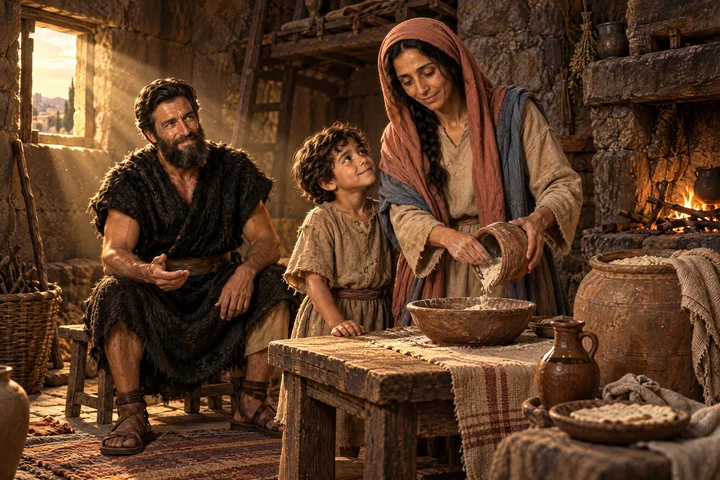
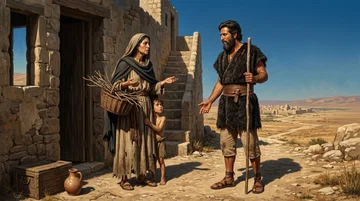
So he arose and went to Zarephath. And when he came to the gate of the city, behold, the widow woman was there gathering of sticks: and he called to her, and said, Fetch me, I pray thee, a little water in a vessel, that I may drink.
Translations
So he arose and went to Zarephath. And when he came to the gate of the city, behold, the widow woman was there gathering of sticks: and he called to her, and said, Fetch me, I pray you, a little water in a vessel, that I may drink.
King James Version, KJV Cambridge Paragraph Bible
So he arose and went to Zarephath. And when he came to the gate of the city, behold, the widow woman was there gathering of sticks: and he called to her, and said, Fetch me, I pray thee, a little water in a vessel, that I may drink.
So he arose and went to Zarephath. And when he came to the gate of the city, behold, the widow woman was there gathering sticks: and he called to her, and said, Bring me, I pray thee, a little water in a vessel, that I may drink.
So he arose and went to Zarephath; and when he came to the gate of the city, behold, a widow woman was there gathering sticks: and he called to her, and said, Fetch me, I pray thee, a little water in a vessel, that I may drink.
So he arose and went to Zarephath; and when he came to the gate of the city, behold, a widow was there gathering sticks: and he called to her, and said, Fetch me, I pray thee, a little water in a vessel, that I may drink.
And he riseth, and goeth to Zarephath, and cometh in unto the opening of the city, and lo there, a widow woman gathering sticks, and he calleth unto her, and saith, 'Bring, I pray thee, to me, a little water in a vessel, and I drink.'
And he arose and went to Zarephath; and when he came to the entrance of the city, behold, a widow woman was there gathering sticks. And he called to her and said, Fetch me, I pray thee, a little water in a vessel, that I may drink.
So he arose and went to Zarephath, and, when he came to the entrance of the city, lo! there, a widow woman gathering sticks,—and he called to her, and said, Fetch me, I pray thee, a little water in a vessel, that I may drink.
Berean Standard Bible, Majority Standard Bible
So Elijah got up and went to Zarephath. When he arrived at the city gate, there was a widow gathering sticks. Elijah called to her and said, “ Please bring me a little water in a cup, so that I may drink.”
So he arose and went to Zarephath; and when he came to the gate of the city, behold, a widow was there gathering sticks. He called to her and said, “ Please get me a little water in a jar, that I may drink.”
So he got up and went to Zarephath; and when he came to the door of the town, he saw a widow woman getting sticks together; and crying out to her he said, Will you give me a little water in a vessel for my drink?
So he arose, and went to Zarephath: and when he came to the gate of the citie, beholde, the widowe was there gathering stickes: and he called her, and sayde, Bring me, I pray thee, a litle water in a vessel, that I may drinke.
Douay-Rheims (Challoner revision)
He arose, and went to Sarephta. And when he was come to the gate of the city, he saw the widow woman gathering sticks, and he called her, and said to her: Give me a little water in a vessel, that I may drink.
Pictures
Cross-references
- Luke 4:25-26
But I tell you of a truth, many widows were in Israel in the days of Elias, when the heaven was shut up three years and six months, when great famine was throughout all the land;
Jesus recalls Elijah’s mission to the widow at Sarepta as an example of God’s work beyond Israel.
- 1 Kings 17:14-16
For thus saith the LORD God of Israel, The barrel of meal shall not waste, neither shall the cruse of oil fail, until the day that the LORD sendeth rain upon the earth.
God’s promise keeps the widow’s meal and oil from failing during the famine.
- 1 Kings 17:4-6
And it shall be, that thou shalt drink of the brook; and I have commanded the ravens to feed thee there.
God sustains Elijah with food and water during the famine.
- James 5:17-18
Elias was a man subject to like passions as we are, and he prayed earnestly that it might not rain: and it rained not on the earth by the space of three years and six months.
Elijah’s prayer for drought and rain frames his journey to Zarephath.
- Malachi 4:5-6
Behold, I will send you Elijah the prophet before the coming of the great and dreadful day of the LORD:
Promises Elijah’s work before the day of the Lord.
- 1 Kings 18
And it came to pass after many days, that the word of the LORD came to Elijah in the third year, saying, Go, shew thyself unto Ahab; and I will send rain upon the earth.
Elijah is later sent to confront Baal’s priests, and rain returns in answer to prayer.
- 1 Kings 17:15-16
And she went and did according to the saying of Elijah: and she, and he, and her house, did eat many days.
The widow shares her food, and the meal and oil do not run out.
- 1 Kings 17:1
And Elijah the Tishbite, who was of the inhabitants of Gilead, said unto Ahab, As the LORD God of Israel liveth, before whom I stand, there shall not be dew nor rain these years, but according to my word.
Elijah’s drought warning to Ahab precedes his journey to Zarephath.
- Matthew 17:11
And Jesus answered and said unto them, Elias truly shall first come, and restore all things.
Jesus speaks of Elijah’s coming work of restoration.
- Matthew 10:41-42
He that receiveth a prophet in the name of a prophet shall receive a prophet’s reward; and he that receiveth a righteous man in the name of a righteous man shall receive a righteous man’s reward.
Receiving a prophet and giving even a cup of water bring reward.
- 2 Kings 2:11
And it came to pass, as they still went on, and talked, that, behold, there appeared a chariot of fire, and horses of fire, and parted them both asunder; and Elijah went up by a whirlwind into heaven.
The passage calls the faith of Elijah a translating faith.
- 1 Kings 19:9-13
And he came thither unto a cave, and lodged there; and, behold, the word of the LORD came to him, and he said unto him, What doest thou here, Elijah?
God questions Elijah about his flight and whereabouts.
- 2 Kings 8:1-2
Then spake Elisha unto the woman, whose son he had restored to life, saying, Arise, and go thou and thine household, and sojourn wheresoever thou canst sojourn: for the LORD hath called for a famine; and it shall also come upon the land seven years.
God warns the woman of the coming famine and preserves her household.
- Mark 7:24-30
And from thence he arose, and went into the borders of Tyre and Sidon, and entered into an house, and would have no man know it: but he could not be hid.
Both accounts describe an encounter with a woman in the region of Tyre and Sidon.
Commentary
Each commentary is drawn from primary sources: the writings of Ellen G. White and Adventist pioneers and periodicals. Each commentary is separate. Its own words are not a quotation; follow the references to read the source passages.
Ellen G. White
30 sources
After the brook Cherith dried up, Elijah arose in obedience to a divine commission and went to Zarephath in Sidon, a heathen land outside Israel where he could find refuge from Jezebel's hatred, and at the gate of the city he found the widow gathering sticks and asked her for a little water to drink.PK 129.1–33T 288.1–2SLP 250.3AA 430.4–431.2RH Oct 7, 1873 This was in the time when heaven was shut up three years and six months and great drought and famine lay upon the land, leaving her household in dire poverty near its last food.RH Aug 28, 1913ST Feb 17, 18812SP 112.2–113.14RED 5.3–7.1 Though many widows and needy sufferers were in Israel and Samaria, he was sent to none of them but only to this foreign Gentile widow, because Israel's unbelief, apostasy and hardening against truth cut it off from blessing so God could not trust his servant among them.DA 238.2–239.12SP 113.2–3ST Feb 17, 18812SP 112.2–113.14RED 5.3–7.1 She had never shared Israel's privileges, yet she believed in the true God and had walked faithfully in all the light shining on her pathway, and she was therefore favored to give him asylum and was accounted more righteous than backslidden Israel.PK 129.1–3DA 238.2–239.1ST Feb 17, 18812SP 113.2–3SLP 229.1–230.2 His request for water and food tested her faith, and her generous hospitality in sharing her morsel in want opened the way for a daily miracle that preserved her life and her son's, showing that cheerful giving to the needy brings blessing and that God will sustain and not abandon his faithful, self-sacrificing people in hunger and want.RH Aug 28, 1913PK 131.52T 28.2Ms 40, 1887, par. 8–11RH Nov 26, 1857
Arrival at Zarephath
Elijah arose in prompt obedience after remaining hidden many months in the mountains by the brook Cherith where he was miraculously provided with food.PK 129.1–33T 288.1–2RH Oct 7, 1873RH Oct 30, 1913 When the continued drought dried the brook he went from Cherith to Sarepta, for God directed him there.PK 129.1–33T 288.1–2RH Oct 7, 1873RH Oct 30, 1913 His journey there was by divine commission, in contrast with his later hasty flight into the wilderness.PK 129.1–3RH Oct 30, 1913
Zarephath, or Sarepta, belongs to Zidon, a city of Sidon in a heathen land outside Israel.PK 129.1–3ST Feb 17, 18812SP 112.2–113.14RED 5.3–7.1ST Jun 23, 1909 With no safety for him in the land of Israel, God sent him there to find refuge and asylum and to seek help and support.PK 129.1–3SLP 250.3AA 430.4–431.2RH Nov 9, 1911ST May 22, 1884 He was directed away from Jezebel's power to a place of safety, away from hatred, danger and hostility that drove him to flee for refuge among the heathen.SLP 250.3AA 430.4–431.2RH Nov 9, 1911RH Oct 7, 1873ST May 22, 1884
God had commanded the widow there to sustain him and gave her the privilege of caring for His servant.PK 129.1–3ST Feb 17, 1881ST Jun 23, 1909 When he came to the gate of the city she was there gathering sticks, and he called to her and asked for a little water in a vessel to drink.RH Aug 28, 1913PK 129.1–3ST Feb 17, 1881RH Aug 28, 1913ST Jun 23, 1909 This was at a time when famine afflicted the land and left her household in dire poverty close to its last food.RH Aug 28, 1913ST Feb 17, 1881RH Aug 28, 1913
The verse belongs to the days when heaven was shut up three years and six months and great famine and drought were throughout the land.2SP 112.2–113.14RED 5.3–7.1 Through the widow God worked a daily miracle to keep Elijah and her family supplied with food, showing His care for them.3T 288.1–2RH Oct 7, 1873
Why a Heathen Widow
In the days when heaven was shut up three years and six months and great famine and drought were throughout the land, there were many widows in Israel and many poor and afflicted in Israel and in Samaria who were in need, yet Elijah was sent to none of them, but only to Sarepta, a city of Sidon, to a foreign, heathen, Gentile widow woman outside Israel.2SP 113.2–32SP 112.2–113.14RED 5.3–7.1LC1 53.2–54.1Ms 8, 1888, par. 9–14 Her lesser advantages, never having shared the great light and privileges given to Samaria and to God's chosen people, placed her in a more favorable position to receive God's truth than those who had resisted the light given to them.LC1 53.2–54.1Ms 8, 1888, par. 9–14 Israel's unbelief, apostasy, self-exaltation, rebellion, rejection of God's warnings, abuse of privileges, and hardening of the heart against the truth cut it off from blessing and kept God from showing His power among them, so He could not trust His servant with Israel.2SP 113.2–3ST Feb 17, 1881SLP 229.1–230.22SP 112.2–113.14RED 5.3–7.1 That rejection of warnings is what cut Israel off from blessing, while abuse of privileges stood in contrast to faithfulness to light received.DA 238.2–239.1ST Feb 17, 1881
She was not an Israelite and had never had the privileges and blessings enjoyed by God's chosen people, but she was a believer in the true God who had walked in all the light shining on her pathway.PK 129.1–3DA 238.2–239.12SP 113.2–3 She had lived faithfully and in strict accordance with the light she possessed, doing right so far as she was able to distinguish right from wrong, living up to the light she had received.ST Feb 17, 1881SLP 229.1–230.22SP 112.2–113.14RED 5.3–7.1 She had followed the light she had received and was open to the greater light God sent through Elijah, whom she welcomed.PK 129.1–3DA 238.2–239.1 She was therefore given the privilege of caring for God's servant and favored to give him asylum and refuge in her home, with special favor and evidences of God's power.DA 238.2–239.1ST Feb 17, 18814RED 5.3–7.1 Her faithfulness showed that a woman in a heathen land could be more righteous than God's chosen people when they rebelled and rejected light from heaven, and she was therefore accounted more righteous than backslidden, rebellious Israel.SLP 229.1–230.2AA 416.2–417.1
God regards heathen people who live by the best light they have, with hearts to feel and faith to believe, more favorably than people with great light and high profession of godliness whose daily lives contradict their profession, and such believing hearts are specially favored with evidences of His power.ST Feb 17, 18814RED 5.3–7.1LC1 56.1 Elijah's experience among the heathen illustrates that he could be safer among them than among those who had rejected the light from heaven and hardened their hearts against the truth, so that God's servants may find protection outside those who have rejected light.ST May 22, 1884LC1 56.1AA 416.2–417.1 God manifested Himself to people in heathen lands when His chosen people rejected the light through unbelief and rebellion, working through faithful prophets for people whose hearts were open to Him rather than for an unbelieving, hard-hearted people.LC1 56.1AA 416.2–417.1 Jesus' later reference to God's blessing of this Gentile widow at Zarephath illustrates that hard-hearted unbelief shuts people out from God's working, as it illustrated the true state of the people at Nazareth.4RED 5.3–7.1LC1 56.1 That reference stirred the synagogue hearers' national pride and hostility toward Jesus.4RED 5.3–7.1DA 239.2–240.1
Provision and Hospitality Lesson
Elijah's request for a little water at the gate came when the widow was gathering sticks in dire poverty, close to her household's last food, and sharing with a stranger in that want tested her faith that God would provide.RH Aug 28, 1913 Her kind and liberal response to the prophet bore witness to that faith, showing she acted faithfully on the light she had.RH Aug 28, 1913Ms 40, 1887, par. 8–11 Though herself in need, she shared her morsel with him in time of trial and want, and her hospitality became the setting for a miracle in which the scant food sustained her.PK 131.52T 28.2RH Aug 28, 1913 By that sharing her life and her son's life were preserved.PK 131.52T 28.2RH Aug 28, 1913
God has promised great blessing to all who give sympathy and assistance to others more needy, and His power to bless and preserve is no less now than in the days of Elijah.PK 131.5 Lack of provisions need not excuse refusing hospitality, for cheerful generosity for God's glory brings blessing.2T 28.2 His care for Elijah in famine assures self-sacrificing believers that they need not cling to possessions instead of giving to support His work, because He will provide for them.RH Nov 26, 1857 He can sustain His faithful, self-sacrificing people when food is scarce, so that their bread and water will be sure even when the wicked around them perish for want of bread.SG2 243.1–245.1 The righteous may suffer persecution, privation and lack of food in times of hunger and want, yet He will protect them and supply their needs and will not abandon them or let them perish.GC88 629.2–4
There at Zarephath He worked a daily miracle to keep Elijah and the widow's family supplied with food.RH Oct 7, 1873 That provision was an evidence of His love and care for Elijah that should have kept him afterward from distrusting God and giving way to despondency and fear.RH Oct 7, 1873
Sources
Pioneers and periodicals
61 sources
Elijah obeyed the Lord's direction to arise and go to Zarephath to dwell there after the brook Cherith dried up.RH Jun 24, 1902ST Jun 23, 1898RH Feb 25, 1873 When he came to the gate of the city he found the widow woman there gathering sticks, and he called to her to fetch him a little water in a vessel to drink.RH Aug 28, 1913RH Jun 24, 1902ST Jun 23, 1898 God had already commanded and appointed this poor widow to sustain him, providing for His servant through an unexpected source that gave little sign she could support anyone.ST Jun 23, 1898RH Dec 17, 1914ST Oct 22, 1902 Though there were many widows in Israel, he was sent to none of them but only to this foreign heathen woman at Zarephath in Sidon, because unbelief shut Israel off from blessing while she lived by the light she had and received the prophet in faith.ST Jun 16, 1887ST Feb 19, 1894ST Feb 19, 1894ST Dec 23, 1889 His request for water and then for a little cake first tested her faith when she had only enough for one last meal, and in response God daily replenished the meal and oil so they did not fail until rain came.ST Apr 6, 1888ST Jun 6, 1900RH Mar 17, 1903RH Jan 16, 1872ST Oct 22, 1902
Arrival at Zarephath
Elijah arose and went to Zarephath to dwell there in obedience to the Lord's direction to arise and go, sent on from the brook Cherith after it dried up.RH Oct 7, 1873RH Jun 24, 1902ST Jun 23, 1898RH Feb 25, 1873 His journey there was by divine commission, in contrast with his later hasty flight into the wilderness.RH Oct 30, 1913 God directed him away from Jezebel's power to a place of safety, and there worked to keep him supplied.RH Oct 7, 1873
Zarephath is also called Sarepta and belongs to Zidon in Sidon in Phoenicia.ST Jun 23, 1909ST Jun 23, 1898ST Feb 19, 1894ST Oct 1, 1896 It lies in the region of Tyre and Sidon, the same region where Jesus later withdrew and met the Canaanite woman.ST Mar 17, 1898ST Jul 27, 1904 Elijah's work there joins his miracles with Christ's miracles there.ST Mar 17, 1898
When he came to the gate of the city he found the widow woman there gathering sticks, and he called to her and asked her to fetch him a little water in a vessel to drink.RH Jun 24, 1902ST Jun 23, 1898CO 73.5RH Mar 17, 1903ST Mar 25, 1903 His request began the encounter in which she would provide for him during the famine.RH Jun 24, 1902RH Mar 17, 1903ST Mar 25, 1903 Water had not yet failed in Phoenicia, though food was scarce and her household was in dire poverty close to using its last food.RH Aug 28, 1913ST Jul 27, 1904
The journey occurred during the long drought and famine when heaven was shut up three years and six months and great famine came over all the land, in which God had taken the situation in hand and sustained the prophet through a severe famine of three years.ST Sep 7, 1904RH Feb 25, 1873 Elijah had prophesied the drought, and its fulfillment identifies him as a prophet.RH Dec 6, 1864 His word to shut heaven so it would not rain was the word of God's two olive trees, His two witnesses, bearing testimony to His will concerning duty in the law and to His power to save from sin by the gospel, and threatening men with death by fire if they refuse to repent.ST May 10, 1883 While Ahab searched for Elijah to kill him, God preserved him until the appointed time came to send him to confront Ahab and bring rain.RH Jul 9, 1867
Zarephath with the brook Cherith was one of Elijah's hiding-places from Ahab's wrath while Ahab searched to kill him.RH Apr 9, 1914RH Jul 9, 1867 After the ravens supplied him, God sheltered and directed him there.ST Mar 14, 1878RH Apr 9, 1914 There he depended on a poor widow for water and lodging and daily food, stopping with her in her humble dwelling where she received him and gave him welcome refuge, though not a secure asylum.ST Mar 14, 1878RH Apr 9, 1914ST May 28, 1885 His experience among the heathen illustrates that he could be safer among them than among those who had rejected the light from heaven and hardened their hearts against the truth, and that God's servants driven by hatred and danger may find protection and refuge outside those who have rejected light.ST May 22, 1884RH Nov 9, 1911
Divine Care and Provision
God had already commanded the widow at Zarephath to sustain Elijah, appointing her household as the means to support him through the drought with daily replenished meal and oil for the widow, her son, and the prophet.ST Jun 23, 1898RH Dec 17, 1914RH Feb 25, 1873RH Apr 9, 1914 She was an unexpected source, a poor widow whose circumstances gave little sign she could support anyone, yet God sent Elijah to her for help and sustenance in his need.ST Oct 22, 1902RH Dec 17, 1914RH Apr 9, 1914 After the ravens, God used her as His agent of providence to provide Elijah's daily food while Ahab's wrath forced him into hiding.RH Apr 9, 1914 The verse illustrates God's inimitable ways and means of caring for His own, showing He is prepared for any emergency and that His promise to those who trust and obey is I will never leave thee, nor forsake thee.ST Sep 7, 1904 His care for Elijah in famine assures self-sacrificing believers that He will provide for them, so they need not cling to possessions instead of giving to support His work.RH Nov 26, 1857 The account of Elijah reaching Zarephath in famine, meeting the widow, and having his needs supplied shows God's care for His servants and for those who trust in Him, and that He cares for His work and supplies its needs even in hard times despite financial hardship.ST Feb 18, 1886RH Mar 4, 1873RH Aug 27, 1914
The widow had only a handful of meal and a little oil in a cruse, all the food she had, enough for one last small meal for herself and her son before they ate and died.RH Mar 13, 1900ST Oct 22, 1902RH Feb 25, 1873RH Nov 1, 1853 Her purses were empty and all ways of relief stopped, and God used her humble poverty and humble circumstances to provide for the prophet.RH Mar 13, 1900ST Nov 27, 1884RH Nov 1, 1853 When she obeyed Elijah's instruction to bake for him first and then for herself and her son, God made the small quantity equal to the largest amount.ST Apr 6, 1888RH Feb 25, 1873 The barrel of meal did not waste and the cruse of oil did not fail, but were daily replenished and did not run out until rain came.RH Dec 17, 1914ST Oct 22, 1902RH Apr 2, 1914RH Feb 25, 1873 The Lord made that small amount sufficient support for a family of three for a full year, multiplying a handful of meal into many barrels and making a little go a great ways for one of His servants.ST Apr 6, 1888 The miraculous increase of the widow's meal and oil is an Old Testament example of God providing food.ST Jun 6, 1900
Daily keeping alive and providing daily food is itself a miracle of the Lord's mercies and compassions.ST Apr 6, 1888 The meal and oil seemed close to running out but continued to supply what was needed, showing provision that lasts despite continuing demands when ordinary supplies seem insufficient.RH Feb 4, 1909ST Feb 27, 1893 Nine-tenths of what would support life is better with the blessing of God than the entire amount without God's blessing.ST Apr 6, 1888 The widow's providing for Elijah while he hid from persecution was part of a continuing miracle.ST Oct 22, 1894 Through hospitality even while in need, the widow was preserved during the famine and her life and her son's were preserved by sharing.RH Aug 28, 1913ST Oct 1, 1896 Poor though she was, she received Elijah into her home and God blessed her with material provision and restored her son to life, also making her a blessing to the prophet and a lonely widow preserved through a poor widow of Sidon.CO 73.5ST Apr 17, 1907ST Oct 1, 1896
Her son's raising is a genuine resurrection from the dead before Christ's resurrection, cited without distinguishing it on the basis of whether the person was raised to mortality or immortality.RH Aug 6, 1872 Christ's being the first-fruits of those who sleep means He holds the preeminent place in redemption, not that He was the first person raised in time, and the earlier resurrection depended on His power.ST Apr 30, 1896 The multiplied meal and oil is a true account of one of Elijah's miracles and true Old Testament history, to be taught to children as true with the Creation, the Fall, the Flood, and the confusion of tongues, not a pious legend or myth.ST Jan 24, 1906 It is not a myth, allegory, fancy, or crude or childish story, but a real manifestation of God's mighty miraculous power to fallen man, part of the infallible Bible whose every word regenerates men, changes lives, brings hope, lights death, and proves a staff and stay through infallible promise, so that to deny this miracle is to deny the essential saving truth of the Word. God directed Elijah away from Jezebel's power to a place of safety with the widow of Sarepta after the brook Cherith dried up, and there worked a daily miracle to keep Elijah and the widow's family supplied with food as evidence of His love and care for Elijah that should have kept him from afterward distrusting God and giving way to despondency and fear.RH Oct 7, 1873
Sent to a Gentile
Though there were many widows in Israel in the days of famine, Elijah was sent to none of them but only to the widow at Zarephath in Sidon, a foreigner and heathen woman outside Israel, whom he met gathering sticks at the gate of the city and asked for water to drink.ST Feb 17, 1881ST Feb 19, 1894RH Sep 10, 1872 She lived in Sidon outside Israel and was given the privilege of caring for God's servant and providing help and hospitality through her humble shelter while famine afflicted the land.ST Feb 17, 1881ST Dec 23, 1889RH Sep 10, 1872 Luke 4:25-26 uses this sending to a single foreign widow to show the meaning of the event during the severe famine.ST Feb 19, 1894
The sending belongs to Israel's apostasy in Elijah's time, when unbelief shut Israel off from blessing while God preserved a faithful remnant that responded to the prophet's call.ST Jun 16, 1887ST Feb 17, 1881 Elijah's presence and help could have blessed Israel's widows, but only the widow of Sarepta in Phoenicia had faith enough to receive the prophet.ST Feb 19, 1894 Israel had rejected God's warnings, while she had followed the light she had received and was open to greater light through the prophet.ST Feb 17, 1881ST Jun 23, 1909
She had lived according to the light she possessed and showed kindness and generosity to God's servant, welcoming him as refuge, so she received God's favor.ST Jun 16, 1887ST Jun 23, 1909 Her welcome made her a refuge for God's servant and brought her special favor and evidence of God's power.ST Jun 23, 1909 Her faithfulness to the light she had received stands in contrast to Israel's unbelief and abuse of its privileges, illustrating that God regards heathen people who live by the light they have more favorably than people with great religious light whose lives contradict their profession.ST Feb 17, 1881ST Feb 17, 1881 Her example shows that God's blessings are received by faith, not by ethnic distinction, and her selection shows that God has precious souls in every nation, not only among His professed people.ST Feb 19, 1894ST Dec 23, 1889
Jesus recalled the sending to prove that no prophet is acceptable in his own country. It took place when heaven was shut up three years and six months and great famine came over all the land. When He declared this at Nazareth all in the synagogue were filled with wrath and rose up and cast Him out of the city and led Him to the brow of the hill to throw Him down headlong.
Elijah's work at Zarephath belongs to the region of Tyre and Sidon, the same region where Jesus later withdrew and met the Canaanite woman.ST Mar 17, 1898 Elijah meeting the widow gathering sticks at the gate of the city and asking her for water is part of that regional ministry and an example of help rendered by Elijah to a woman of the region where Jesus met the Gentile woman.ST Mar 17, 1898ST Jul 4, 1900 Joining Elijah's miracles there with Christ's miracles there, their object and mission repay study.ST Mar 17, 1898
Faith Tested and Rewarded
The asking for a little water at the gate begins the encounter and the trial of trust, for it leads at once to the further asking to make a little cake for the prophet first.RH Mar 17, 1903RH Jan 16, 1872ST Oct 22, 1902ST Mar 25, 1903RH Feb 25, 1873 She has only a handful of meal and a little oil, enough for one last meal for herself and her son before they eat and die, and she is found gathering sticks to bake that last cake.RH Mar 17, 1903RH Jan 16, 1872ST Oct 22, 1902ST Mar 25, 1903RH Feb 25, 1873 For the prophet himself to have to depend for support on a poor widow in Phoenicia in famine is also a test of his faith and courage in a humble and difficult setting, though water had not yet failed there while food was scarce.ST Oct 22, 1902RH Feb 25, 1873ST Jul 27, 1904
His request comes when her household is in dire poverty and close to using its last food, so that sharing with the stranger tests her faith that God will provide.RH Aug 28, 1913ST Nov 27, 1884 Her answer to him bears witness to that faith.RH Aug 28, 1913 To trust God when warehouses and bags are full and tables are spread is no hard thing, but to trust Him when purses are empty and all ways of relief are stopped and only a handful of meal and a cruse of oil are left is hard, and to trust Him then is the wisdom of Christian grace.ST Nov 27, 1884
By putting God and His cause first even when resources are scarce, she and her son receive enough to live through the famine.RH Mar 17, 1903RH Jan 16, 1872ST Mar 25, 1903 Her obedience is followed by an unexhausted supply of meal and oil that does not run out until rain comes, with further blessings besides, while those who live only for themselves perish.RH Mar 17, 1903RH Jan 16, 1872ST Oct 22, 1902ST Mar 25, 1903 This pattern will be repeated among those who have the faith of Jesus.ST Mar 25, 1903 Her hospitality to him at the city gate, even while she herself was in need, was part of the sharing that preserved her life and her son's, showing how God provides help and hospitality through her, a heathen woman.RH Aug 28, 1913RH Aug 28, 1913RH Sep 10, 1872
Giving and Gospel Application
The widow's meeting with Elijah happened in famine, and it teaches that sharing scarce provision can sustain both the giver and another, because divine provision can renew what is shared. Giving water with a liberal hand to the prophet in need means that even when famine curses the land the giver shall never once stand athirst.ST Jun 12, 1901 Sharing even a small provision with God's prophet in that need is giving through which provision is multiplied.RH May 6, 1902
Her willingness to respond to Elijah's need from her limited supply is to be applied to sharing the bread of life with spiritually hungry people and to giving to the Lord's cause even at personal cost while trusting God to provide.RH Jun 24, 1902 By putting God's cause first she and her son received enough to live through the famine, while those who live only for themselves perish, and this pattern will be repeated among those who have the faith of Jesus.ST Mar 25, 1903
Selfishly holding back what one has leads to loss, while sharing it in faith brings continued blessing, for her supply did not fail as long as she gave.RH Jun 24, 1902 Give, and it shall be given unto you is a divine law, that as a person gives God imparts and that is the way to receive, so giving is living and denying is dying.ST Jan 27, 1904 Her generosity in sharing her last food with God's servant did not leave her without provision, for the meal did not run out and the oil did not fail.RH Apr 2, 1914 Through all the years of famine the failing cruse served both her and her brother, and resolving to create sunshine for those around brings gain in health even to a poor invalid.ST Jan 27, 1904
The widow's cruse of oil was increased by the using of it, picturing abilities and opportunities increased by pouring them out in use.ST Dec 5, 1895 Poured out with nothing doubting, the oil is enough to fill all the vessels at command, and even talents spent at home among young and numerous children and straitened means are such a cruse.ST Dec 5, 1895 Duty is to be done just where one is and just as one is situated instead of waiting for circumstances to become favorable, for submission to God amid difficult circumstances brings blessing while lack of submission wastes the resource.ST Dec 5, 1895ST Dec 5, 1895 Her act of giving is an example of serving God and others and of missionary service.RH Oct 3, 1907 Her faith when meal was low that it would not waste or diminish is to be exercised in giving tracts freely to the poor instead of selling them, trusting that the treasury will not waste or diminish.RH Jan 14, 1873
Sources