1 Kings 18:35
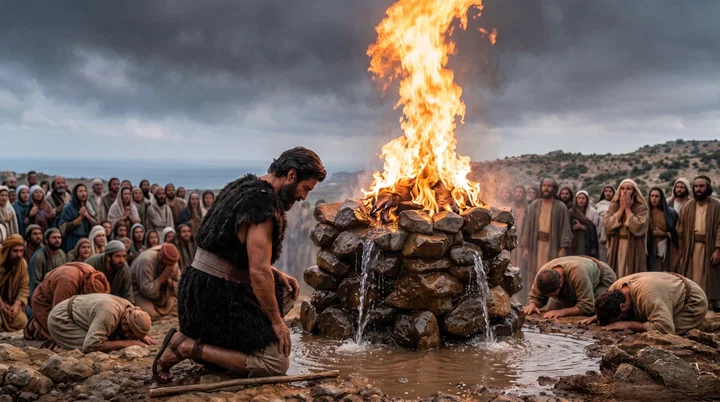
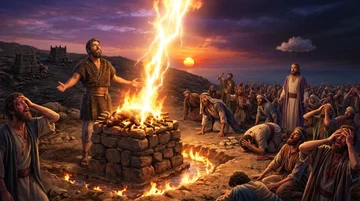
And the water ran round about the altar; and he filled the trench also with water.
Translations
American King James Version, King James Version, KJV Cambridge Paragraph Bible, Revised Version, American Standard Version, Darby Translation
And the water ran round about the altar; and he filled the trench also with water.
And the water ran around the altar; and he filled the trench also with water.
and the water goeth round about the altar, and also, the trench he hath filled with water.
And the water ran round about the altar,—moreover also, the trench, filled he with water.
Berean Standard Bible, Majority Standard Bible
So the water ran down around the altar and even filled the trench.
The water ran around the altar; and he also filled the trench with water.
And the water went all round the altar, till the drain was full.
And the water ran round about the altar: and he filled the ditch with water also.
Douay-Rheims (Challoner revision)
And the water run round about the altar, and the trench was filled with water.
Pictures
Cross-references 20 of 25
- 1 Kings 18:21-24
And Elijah came unto all the people, and said, How long halt ye between two opinions? if the LORD be God, follow him: but if Baal, then follow him. And the people answered him not a word.
Elijah challenges Israel to choose between the Lord and Baal and proposes a test by fire.
- James 5:17-18
Elias was a man subject to like passions as we are, and he prayed earnestly that it might not rain: and it rained not on the earth by the space of three years and six months.
Elijah’s prayers withheld rain and brought it again after the drought.
- 1 Kings 19:1-3
And Ahab told Jezebel all that Elijah had done, and withal how he had slain all the prophets with the sword.
Jezebel’s threat follows Carmel’s victory and sends Elijah fleeing.
- 1 Kings 17:1
And Elijah the Tishbite, who was of the inhabitants of Gilead, said unto Ahab, As the LORD God of Israel liveth, before whom I stand, there shall not be dew nor rain these years, but according to my word.
Elijah announces the drought that sets the later meeting in motion.
- 1 Kings 18:39
And when all the people saw it, they fell on their faces: and they said, The LORD, he is the God; the LORD, he is the God.
The people acknowledge the Lord after fire consumes the water.
- 1 Kings 18:41-45
And Elijah said unto Ahab, Get thee up, eat and drink; for there is a sound of abundance of rain.
After the altar contest, Elijah prays persistently and rain returns.
- 1 Kings 18:19
Now therefore send, and gather to me all Israel unto mount Carmel, and the prophets of Baal four hundred and fifty, and the prophets of the groves four hundred, which eat at Jezebel’s table.
Elijah summons Israel and the prophets of Baal to Mount Carmel.
- 2 Kings 2:11
And it came to pass, as they still went on, and talked, that, behold, there appeared a chariot of fire, and horses of fire, and parted them both asunder; and Elijah went up by a whirlwind into heaven.
Elijah is taken up to heaven after his victory.
- 1 Kings 18:24
And call ye on the name of your gods, and I will call on the name of the LORD: and the God that answereth by fire, let him be God. And all the people answered and said, It is well spoken.
The water made the test of which God answered by fire harder.
- 1 Kings 18:26-29
And they took the bullock which was given them, and they dressed it, and called on the name of Baal from morning even until noon, saying, O Baal, hear us. But there was no voice, nor any that answered. And they leaped upon the altar which was made.
Baal’s prophets shout and strive in vain, contrasting with God’s prophet.
- 1 Kings 18:40
And Elijah said unto them, Take the prophets of Baal; let not one of them escape. And they took them: and Elijah brought them down to the brook Kishon, and slew them there.
Baal’s prophets are slain after the contest.
- Malachi 4:5
Behold, I will send you Elijah the prophet before the coming of the great and dreadful day of the LORD:
Elijah’s work precedes the great and dreadful day of the LORD.
- Matthew 17:11
And Jesus answered and said unto them, Elias truly shall first come, and restore all things.
Jesus identifies Elijah’s restorative work as fulfilled in John.
- Leviticus 9:24
And there came a fire out from before the LORD, and consumed upon the altar the burnt offering and the fat: which when all the people saw, they shouted, and fell on their faces.
same prior sending of fire to accept an offering
- 1 Kings 18:30
And Elijah said unto all the people, Come near unto me. And all the people came near unto him. And he repaired the altar of the LORD that was broken down.
repairs broken altar before water is poured
- 1 Kings 18:44-45
And it came to pass at the seventh time, that he said, Behold, there ariseth a little cloud out of the sea, like a man’s hand. And he said, Go up, say unto Ahab, Prepare thy chariot, and get thee down, that the rain stop thee not.
shows great rain sent in answer to that prayer
- Judges 6:21
Then the angel of the LORD put forth the end of the staff that was in his hand, and touched the flesh and the unleavened cakes; and there rose up fire out of the rock, and consumed the flesh and the unleavened cakes. Then the angel of the LORD departed out of his sight.
same prior sending of fire to accept an offering
- 1 Kings 18:22
Then said Elijah unto the people, I, even I only, remain a prophet of the LORD; but Baal’s prophets are four hundred and fifty men.
Elijah says he is alone in the contest.
- 1 Kings 18:18
And he answered, I have not troubled Israel; but thou, and thy father’s house, in that ye have forsaken the commandments of the LORD, and thou hast followed Baalim.
Elijah's charge of forsaking the LORD explains why the miracle was needed.
- 1 Kings 17:3-6
Get thee hence, and turn thee eastward, and hide thyself by the brook Cherith, that is before Jordan.
God fed Elijah at Cherith
Commentary
Each commentary is drawn from primary sources: the writings of Ellen G. White and Adventist pioneers and periodicals. Each commentary is separate. Its own words are not a quotation; follow the references to read the source passages.
Ellen G. White
22 sources
At the hour of the evening sacrifice Elijah repaired the broken altar with twelve stones, laid the wood and the bullock upon it, and had the people drench it with water poured three times until the water ran around the altar and filled the trench.3T 283.2–284.2RH Sep 25, 1913Ms 19, 1906, par. 6–13 He did this deliberately to make the test with the prophets of Baal unmistakable, standing alone as God's sole witness before Ahab, Israel, and the four hundred and fifty prophets of Baal on Mount Carmel.3T 283.2–284.2RH Sep 25, 1913Ms 19, 1906, par. 6–13DA 120.2PK 173.3 God answered by fire from heaven that consumed the sacrifice and even the water and the stones, proving that Jehovah the Creator is God and displaying His power over Baal.3T 284.4Ms 29, 1911, par. 38–40RH Oct 7, 1873 Through that display idolatry was cast down, the false prophets were slain, and the people declared their allegiance to God and were stirred to return to His worship.DA 120.2ED 60.3Ms 15, 1908, par. 6 The soaked altar prepared according to God's word before the fire fell shows that God's people must yield to His shaping and follow His word, and Elijah's stand gives courage to those called to stand for the right in a time of apostasy.PK 177.1Ms 115a, 1899, par. 13Ms 115, 1899, par. 19
Water-Soaked Offering at Carmel
At the hour of the evening sacrifice Elijah made his final preparation by first repairing the broken-down altar of the Lord, building it with twelve stones for the tribes of Israel, making a trench about it, putting the wood in order, and cutting the bullock and laying it on the wood.RH Sep 25, 1913Ms 19, 1906, par. 6–13 He then deliberately had the people flood the burnt sacrifice, the wood and the altar, commanding four barrels of water to be poured a second time and a third time.3T 283.2–284.2RH Sep 25, 1913Ms 19, 1906, par. 6–13 The water ran round about the altar and filled the trench also, leaving the offering and wood thoroughly soaked before he prayed.3T 283.2–284.2RH Sep 25, 1913Ms 19, 1906, par. 6–13PK 151.4 This repeated drenching was done to make the test with the prophets of Baal unmistakable, so that no doubt would remain when fire fell.3T 283.2–284.2Ms 19, 1906, par. 6–13
The verse belongs to the public confrontation on Mount Carmel, a conspicuous place Elijah chose for God to display His power and vindicate the honor of His name.PK 144.2 There, commissioned to stand before the idolatrous priests, he stood alone as the sole witness to the true God in a life-and-death contest.PK 173.3RH Oct 7, 1873RH Oct 30, 1913 Undaunted before King Ahab, he faced the whole nation of Israel with the four hundred and fifty prophets of Baal at their head.DA 120.2Ms 15, 1908, par. 6RH Oct 7, 1873 He stood there after bearing a heavy burden for Israel, with faithful warnings against national idolatry and deep solicitude during three years and a half of famine, while watching and waiting for some token of repentance.ST Nov 17, 1909
Jehovah Proved All-Powerful
God answered by fire from heaven that consumed not only the drenched sacrifice but also the water and the altar stones, after Elijah had the people soak the sacrifice and altar and fill the trench around the altar with water.3T 284.4Ms 29, 1911, par. 38–40RH Oct 7, 1873 That consuming of the water along with the offering displayed God's power over Baal in the life-and-death contest on Carmel where Elijah showed undaunted courage and triumphed over the king, priests, and people.3T 284.4Ms 29, 1911, par. 38–40RH Oct 7, 1873 The watered altar and trench were part of the wonderful events and exhibitions of the power of God that proved Jehovah, the Creator of the heavens and the earth, is God, after which Elijah slew the prophets of Baal.3T 284.4RH Oct 7, 1873
Through the power of faith idolatry was cast down and overthrown on Carmel on that terrible day when Elijah stood undaunted before King Ahab and faced the whole nation of Israel with the four hundred and fifty prophets of Baal at their head.ST Nov 17, 1909DA 120.2ED 60.3Ms 15, 1908, par. 6 There the false prophets were slain and the people declared their allegiance to God.DA 120.2Ms 15, 1908, par. 6RH Oct 7, 1873 Many Israelites were stirred to return to the worship of God, and Elijah is seen standing long and valiantly for the right.DA 120.2ED 60.3
The Mount Carmel contest led to Elijah's prayer for rain after he told Ahab to go up to eat and drink for there was a sound of abundance of rain.Ms 19, 1906, par. 14–16 Elijah went up to the top of Carmel and cast himself down upon the earth with his face between his knees in a painful, humiliating position.Ms 19, 1906, par. 14–16 His prayer for rain was strong and earnest, his faith was sorely tried while he bore a heavy burden for Israel with faithful warnings against national idolatry and deep solicitude during three years and a half of famine while watching and waiting for some token of repentance, standing alone for God.Ms 19, 1906, par. 14–16ST Nov 17, 1909 He continued in earnest prayer until his faith was rewarded by tokens of rain, followed by heaven black with clouds and wind and great rain, and through the faith that helped overthrow idolatry the blessed rain testified to the showers of blessing waiting to be poured upon Israel.Ms 19, 1906, par. 14–16ED 151.1–2ST Nov 17, 1909
The account of the confrontation with Baal worship shows that idolatry existed in ancient Israel and has counterparts in the Christian world.4SP 399.1 The miracle was a wonderful revelation of God's power wrought before the people and the king to brace Elijah to do His work and to assure him that God would not forsake him and that His power as Lord of heaven and earth was wholly sufficient to sustain him.Lt 62, 1900, par. 3–6 It was meant to make an impression on king and people that would have wrought a reformation if Elijah had constantly looked to God, maintained implicit trust and confidence, made God his refuge and strength, and stood steadfast and immovable for the truth.Lt 62, 1900, par. 3–6 Elijah hoped much from the miracle but was disappointed at its results, and when Jezebel threatened him he lost his hold on God, lost courage and faith, and fled without being sent.Lt 62, 1900, par. 3–6
Courage, Preparation and Warning
The record of Elijah's work in a time of apostasy and idolatry to which this soaking of altar and trench belongs gives courage to those called to stand for what is right when people turn from God.PK 177.1 The drenching of altar and trench with water was part of preparing the altar according to God's word before the fire fell.Ms 115a, 1899, par. 13 That preparation illustrates that God's people must yield to His shaping, be emptied of self, and follow His word, for the altar must be prepared as God directs before the fire can burn.Ms 115a, 1899, par. 13 The same preparation illustrates that the fire can burn only when the altar is purified according to God's word.Ms 115, 1899, par. 19
The signal triumph over those seduced into Baal-worship opened the way for still greater victories and wonderful opportunities before Elijah.PK 167.2 Yet he was turned away from them by the threat of Jezebel.PK 167.2 He still had to learn to trust wholly in God in order to complete his work, and to understand the weakness of his present position as compared with the vantage-ground the Lord would have him occupy.PK 167.2
He had stood long and valiantly for the right, bearing a heavy burden for Israel with faithful warnings against national idolatry and deep solicitude during three years and a half of famine while watching and waiting for some token of repentance.ST Nov 17, 1909DA 120.2 On the terrible day upon Carmel he stood undaunted before King Ahab and faced the whole nation of Israel with the four hundred and fifty prophets of Baal at their head, when through the power of faith idolatry was cast down, the false prophets were slain, and the people declared their allegiance to God.ST Nov 17, 1909DA 120.2Ms 15, 1908, par. 6 The blessed rain that followed testified to the showers of blessing waiting to be poured upon Israel.ST Nov 17, 1909 That wonderful revelation of power in defeating the prophets of Baal was wrought before the people and the king to brace Elijah to do His work and to assure him that God would not forsake him and that His power as Lord of heaven and earth was wholly sufficient to sustain him, and to make an impression on king and people that would have wrought a reformation.Lt 62, 1900, par. 3–6
Elijah hoped much from the miracle but was disappointed at its results.Lt 62, 1900, par. 3–6 When idolatrous Jezebel threatened him, Satan took advantage of human weakness, and Elijah lost his hold on God, lost courage and faith, and in weakness fled for his life without being sent.ST Nov 17, 1909DA 120.2Ms 15, 1908, par. 6Lt 62, 1900, par. 3–6 He should have constantly looked to God, maintained implicit trust and confidence, made God his refuge and strength, and stood steadfast and immovable for the truth.Lt 62, 1900, par. 3–6 The victory thus warns of the fruit of letting go of faith, for by that one failure Elijah cut short his life-work and was not to complete what he had begun, yet God marked his heart-service with mercy reaching to the depths.ST Nov 17, 1909
Sources
Pioneers and periodicals
99 sources
The water poured over the offering ran around the altar and filled the trench, leaving the sacrifice, wood and altar thoroughly soaked from twelve barrels poured three times in succession.RH Dec 15, 1910ST Aug 13, 1885ST Aug 10, 1904ST Jun 30, 1898ST Aug 7, 1901 Elijah deliberately made the test harder to magnify the miracle and to show the offering was not kindled by ordinary means or trickery.RH Oct 19, 1916ST Nov 7, 1906 In answer to his short evening prayer fire fell from heaven and consumed the sacrifice, wood, stones, dust and water, proving Jehovah the Creator to be God and the idols powerless.ST Sep 26, 1911ST Jun 29, 1904ST Mar 14, 1878ST Dec 2, 1913 Satan was then restrained from bringing fire before the people, though he will counterfeit that sign in the last days through spiritism and the false prophet to deceive the world and enforce false worship.RH Apr 3, 1855ST Dec 16, 1889ST Mar 9, 1915RH Jun 22, 1869ST Sep 26, 1911 On Carmel one man strong in God stood against hundreds of prophets of Baal, showing God's work is done by faithful minorities and truth is not decided by numbers, so each person must decide whom to serve.ST Jul 4, 1878RH May 25, 1876ST Jun 17, 1903ST Mar 6, 1893
Contest Setting on Carmel
The verse belongs to an agreed test on Mount Carmel in which each side was to offer a sacrifice and call on its God, and the God who answered by fire would be acknowledged as God, and the people agreed that the test would decide who was truly God.RH Sep 18, 1856ST Sep 7, 1904RH Aug 14, 1868 It was Elijah's contest with the prophets of Baal in which answer by fire was the test, and Elijah's challenge showed that their god could not answer while the living God could.ST Sep 7, 1904ST Jul 27, 1904RH Jan 11, 1915 The fire was a fitting test because Baal worshipers were sun worshipers and fire was characteristic of their god, yet the event does not establish that God will answer present-day requests for miraculous tests, for God chooses tests suited to their occasion and the test now is the Word of God.ST Jul 27, 1904
The test was fitting and fair because Baal was looked upon as a sun-god, lord of the forces of nature who presided over fire, so the contest was on his own ground and required the god who presided over fire to answer by fire in consuming his sacrifice.ST Dec 29, 1909ST Sep 7, 1904 His failure at such a time, before such a large and varied assembly, was disastrous to the claims of his prophets.ST Sep 7, 1904 The choice set before the people was between worshiping Baal, identified with the sun-god, and worshiping Jehovah the Creator, presented as a decisive test of whom they would worship.ST Aug 21, 1901
The contest took place near the top of Carmel, with the sea and the Valley of Esdraelon in view, where Elijah serving Jehovah alone met the 850 priests of Baal and Astarte.ST Nov 14, 1900 Its setting is the Carmel range west of the plain of Jezreel, a place visible from the heights near Nazareth across the plain of Jezreel.ST Jul 14, 1898ST Jul 14, 1898 Elijah's place of sacrifice stood near the plain of Jezreel and the hills of Megiddo.ST Jul 14, 1898
Its historical setting is the reign of Ahab in 1 Kings 16-22, seventh king of Israel and second ruler of the third Israelite dynasty, contemporary of Jehoshaphat of Judah and Elijah the Tishbite, reigning twenty-two years early in the ninth century before Christ.RH Nov 7, 1912 His life as man and king is recorded more fully than that of any other ancient monarch for the learning and profit of later men and kings, showing a civilly successful ruler, clever statesman, skilled general and patriotic king who was a moral coward, sold himself to the worship of a plurality of heathen deities and later enforced it upon a people devoted to monotheistic religion and semitheocratic rule.RH Nov 7, 1912 His wife Jezebel slew the prophets of the Lord, led her husband into idolatry, and fed the prophets of Baal at her own table, and her name is a figure denoting the papal abominations suffered by the church during the 1260 years of papal supremacy.RH Feb 12, 1857ST Jan 15, 1880
After Ahab, stirred up by his sun-worshiping queen Jezebel, had hunted Elijah in all the kingdoms far and near, God shielded His servant and when the opportune moment came used him on Carmel's top to reveal to Ahab and blinded Israel the difference between the true God and the false.ST Sep 4, 1901 At Elijah's command Ahab had gathered Israel and the prophets of Baal to Carmel where the contest was decided, although afterward Ahab did not firmly take the Lord's side.ST Aug 20, 1885
The setting follows three years and three and a half years of drought on Israel for idolatry, when heaven was shut and it rained not, and Elijah's word was vindicated after that time.ST Jul 27, 1904ST Nov 13, 1893ST Jan 15, 1885 The long drought was used as a basis for spiritual education, to bring Israel to repentance by proving that the God of Israel and not the gods of Phoenicia holds the power of heaven and earth.RH Jun 15, 1911ST Nov 13, 1893 That history shows that the only true God alone has the prerogative to give and withhold rain, and that when the hearts of the people turned back to the true God the Lord gave them rain in abundance. The shutting of heaven is brought to view as for twelve hundred and sixty literal days, likened to sun worship set against the law of God and the Sabbath during the twelve hundred and sixty years when the two witnesses, the Old and New Testaments, prophesied clothed in sackcloth, and Elijah is identified as praying for the drought.ST Jan 15, 1885ST Feb 3, 1881
By God's direction Elijah repaired the broken-down altar of the Lord, building a simple altar of twelve unhewn stones for the tribes of Israel, dug a trench about it, laid the wood in order and laid the prepared slain bullock upon it.RH Sep 25, 1913ST Nov 14, 1900 He timed all the work to bring him to the hour of the evening oblation, the hour of the evening sacrifice, when pious Jews offered prayer to God while the priests interceded through the daily morning and evening lambs offered with flour, oil and wine.RH Sep 25, 1913RH Sep 12, 1871ST Nov 14, 1900 The days of those rites are now gone by through the one offering of Christ, and the morning and evening hour is now kept when the household assembles around the family altar in praise and supplication.RH Sep 12, 1871 The design was that all the people watching would know the fire that fell was not from man's device but came direct from God in answer to short prayer of faith for a sinful people.ST Nov 14, 1900 The Hebrew word in the verse means to fill, with no sense of filling a second time inherent in the word.ST Mar 10, 1881
Water Drenching the Altar
The poured water ran round about the altar and filled the trench also, leaving the altar, the sacrifice and the wood thoroughly wet and saturated.RH Dec 15, 1910ST Aug 13, 1885ST Jun 30, 1898ST May 24, 1905 After the bullock was cut in pieces and laid on the wood, the command was given to pour water over the burnt sacrifice and wood a second time and a third time, flooding sacrifice, altar and trench until the water soaked the offering and wood and ran around the altar and filled the surrounding trench.RH Sep 30, 1873ST Jun 30, 1898ST Apr 17, 1907 This drenching was deliberate before the short evening prayer, so that when the Lord answered by fire and consumed the sacrifice, the wood, the stones and dust and licked up the water in and around the trench, it demonstrated God's power and made clear the fire came from Jehovah.RH Dec 15, 1910ST Aug 13, 1885RH Sep 30, 1873ST Apr 17, 1907ST Dec 2, 1913
The soaking came from four barrels poured three times in succession, twelve barrels in all, a second time and a third time, with water brought from a perennial spring.ST Aug 10, 1904ST Jun 30, 1898ST Aug 7, 1901RH Feb 15, 1912 After the priests of Baal had exhausted all their pleading with no response, the altar was built, the sacrifice laid on it, and the twelve barrels poured over it until water ran around the altar and filled the trench.ST Aug 10, 1904ST Aug 7, 1901RH Feb 15, 1912 This deliberate soaking of the altar and its surroundings made the coming miracle of God answering by fire all the more striking to the people and demonstrated His mighty power to the people serving Baal, even though Elijah soon afterward sat discouraged in the wilderness and asked that he might die, proving subjection to the same frailties and human weaknesses as men today.ST Aug 10, 1904ST Aug 7, 1901RH Feb 15, 1912
The test was deliberately made more difficult to magnify the miracle and show faith that God could answer by fire despite the soaked offering and altar.RH Oct 19, 1916ST Nov 7, 1906ST Sep 8, 1898 The thorough drenching made clear that the offering was not ignited by ordinary means and was no trick, but a clear test of whether Jehovah was God rather than a result of ordinary fire.ST Sep 8, 1898ST Nov 19, 1885 The water was not naphtha, and the claim of naphtha or a chemical fire is rejected, for the fire that covered the altar and consumed the water as well as the sacrifice was God's act.ST Nov 7, 1906ST Nov 19, 1885RH Sep 22, 1910
In answer to simple prayer fire fell from heaven and burned the sacrifice and consumed the wood, stones, dust and the water around and in the trench, licking it up.ST Sep 26, 1911ST Mar 14, 1878ST Dec 2, 1913 The prophets of Baal could not bring fire from heaven to consume the sacrifice, having leaped upon their altar and shouted and foamed and cut themselves with knives from morning till noon and from noon until the time of the evening sacrifice, expecting noise to bring fire while the heavens stayed silent and brassy.ST Sep 26, 1911ST Dec 2, 1913 After the sun had sunk and the priests had ceased and silence reigned, and as the sun dipped toward the Mediterranean before a famine-stricken multitude, the broken altar of the Lord having been repaired and the sacrificial offering prepared, Elijah, a quiet man in simple dress with devoted zeal, earnest courage and unfeigned faith, knelt quietly without discordant shrieks, outcry or noisy demonstration, and with reverent lifting of the eyes toward heaven spoke a few earnest words to the Lord God of Abraham who rules above and created the starry host, to bare His almighty arm and in mercy hear His servant's cry so it would be known through Israel that day that He alone is God.ST Mar 14, 1878ST Dec 2, 1913 God heard swifter than light, and after a sigh and an expectant hush a dazzling light flashed from the far-off zenith, with tongues of flame from heaven and fire descending from the dazzling skies that quickly consumed the waiting sacrifice and licked up even the water poured round the altar and in the trenches, causing the cry to go abroad on the evening wind from pallid lips, The Lord, he is the God, showing that God answers quiet reverent prayer and not loud display.ST Mar 14, 1878ST Dec 2, 1913
The water poured around the altar and into the trench, with the very stones of the altar, proves that natural obstacles do not count when God's purposes are concerned.RH Mar 24, 1904 In the controversy with the priests of Baal the water and the stones became inflammable material.RH Mar 24, 1904
Fire Proves the True God
The fire proved that Jehovah, the Creator of heaven and earth, is God, and that the idols were powerless, revealing the difference between the true God and the false and showing that Israel's God is greater than Baal.RH Oct 7, 1873ST Jun 29, 1904ST Jun 13, 1906ST Sep 4, 1901 It belonged to a life-and-death contest on the top of Carmel in which Elijah with undaunted courage triumphed over the king, the priests and the people, after Ahab at the instigation of his sun-worshiping queen had hunted him through kingdoms far and near, yet God shielded His servant for the opportune moment to open blinded Israel's eyes.RH Oct 7, 1873ST Sep 4, 1901 The watered altar and the filled trench were part of those wonderful exhibitions of God's power, and after the test Elijah slew the prophets of Baal, even in the king's presence.RH Oct 7, 1873
The event vindicated Elijah's word after three and a half years of drought, when the altar and trench had been soaked with water and the prophets of Baal could bring no fire, but fire fell in answer to his prayer.ST Aug 14, 1879ST Jul 27, 1904 It proved his mission as a true prophet as distinguished from the false prophets, for God demonstrated His truth before rebellious Israel and showed which prophet He was with.ST Feb 10, 1904 His stand against popular Baal worship was not wasted, for God vindicated His faithful servant and showed that the majority's support did not make that worship right.ST Nov 5, 1885ST Nov 5, 1885 Elijah had repaired the altar and prayed that Israel might know he had acted at God's word, showing that the decisive test was God's word rather than outward displays of power or religious zeal, and that word prevailed.ST Feb 10, 1904
The consuming of the water-soaked sacrifice was God revealing Himself again as the God who accepts every true-hearted offering, doing only what He had done many times before and not acting in a new and strange way.ST Dec 29, 1909 The verse belongs to God's quick heavenly answer to Elijah's petition and short evening prayer, a heavenly manifestation in vindication of Jehovah before the Baal worshipers.ST Jul 6, 1915 It stands as encouragement to believe that God answers prayer, as prayer had stayed the heavens from rain and prayer had brought rain again.RH Nov 21, 1912 It links prayer with power to kindle fire even on a broken altar, and teaches calm, steady faith grounded in God's word in contrast with reliance on excitement of senses and feelings.ST Nov 18, 1889RH Dec 31, 1903 What is of God is vindicated without human help, so that what is founded in truth and planted by God will endure and be perpetuated while what is not of God will perish with those identified with it.ST Dec 7, 1904
The contest displays confidence in the living God who can answer, over the worship of inanimate matter and blind force that cannot answer prayer.RH Jul 31, 1913 Elijah stood alone on Carmel proclaiming the supremacy of the worship of the one true God over Baal worship, in a demonstration of confidence in God and His power after the altar was drenched before God answered with fire.RH Jul 31, 1913 The prophets of Baal had confidence in their god enough to accept a public test and try to prove him, and that willingness to put one's god to trial is made the measure for atheists and materialists, who are challenged to show the same confidence.
The miracles of Elijah are true events rather than pious legends or myths, including the pouring of water over the altar until it ran round about it and filled the trench.ST Jan 24, 1906 The story of Elijah and the prophets of Baal is one in which Christ can be found and taught out of the Old Testament by a teacher filled with the Holy Ghost, as Peter and Stephen and Paul and Apollos sought and found Christ in the Old Testament Scriptures and proclaimed Him.ST May 15, 1884 Showing Christ out of the Old Testament together with the New Testament is more effective in teaching Christ than showing Him out of the New Testament only.ST May 15, 1884
Counterfeit Fire in Prophecy
On Carmel the water ran round about the altar and filled the trench also, yet God brought fire from heaven before the assembled people, and that contest showed that the God who could send fire was the true God, a sign Satan could not then perform because he had been restrained from publicly bringing fire down from heaven in the past.RH Apr 3, 1855RH Jun 22, 1869ST Aug 20, 1894 The drenched altar stands as a work of God and not a miracle Satan had performed, in contrast to the prophets of Baal who could not bring fire down, and to God's sending fire as witness to the truth.RH Jun 22, 1869ST Aug 20, 1894RH Mar 5, 1908 That heavenly fire will later be counterfeited, for Satan will imitate even that sign to deceive the world and to make a lie appear to have divine approval.RH Apr 3, 1855ST Aug 20, 1894RH Mar 5, 1908
The wonder of bringing fire down from heaven to earth in the sight of men will be repeated in the last days to deceive those that dwell on the earth.ST Mar 9, 1915ST Sep 26, 1911RH Dec 5, 1871 Then the sun worshipers who failed on Carmel, when Elijah's opponents could not bring fire down, will be or seem to be successful, and the false miracle will make united earthly powers appear to have authority equal to Elijah's, presenting their enforced religious laws and worship as sacred like his message.ST Mar 9, 1915ST Sep 26, 1911 It is worked by the devil through spiritism in its various forms, aided by false science and deception, counterfeiting every miracle wrought by Christ and His apostles and prophets.ST Dec 16, 1889ST Mar 9, 1915 Beginning in the United States and going abroad into all the earth to kings and rulers, that spiritualistic deception will gather the nations to the battle of the great day of God Almighty, bringing the hour of the power of darkness and the hour of temptation coming upon all the world to try them, when a strong current of delusion will sweep all from their anchorage except the elect of God, whom it is not possible to deceive.ST Mar 25, 1880RH Dec 5, 1871
The two-horned beast acting as the false prophet will work this very miracle of Elijah again, with many other miracles of equal magnitude wrought by spirits of devils, to prove himself a true prophet as Elijah did. The design is to show that the God of Heaven approves the making of the image of the beast and the worship of the beast and his image and the receiving of his mark. Having thus proved his mission by fire from heaven as Elijah did, the false prophet will use Elijah's slaying of the prophets of Baal after the fire to justify the decree to slaughter those who refuse to worship the beast and his image or receive his mark, so that men will think they are putting to death those who deny the great power of God and not the people of God.
The account in 1 Kings 18 and 19 parallels the final crisis over the Ten Commandments.RH Dec 3, 1901 Israel had turned from the commandments of God to serve Baal, Elijah warned them but was unheeded, blighting curses came upon the land, and groaning under the curse the people believed that if the stickler for the commandments were out of the way their trouble would cease, as Ahab's charge, Art thou he that troubleth Israel, shows, while the true cause was that Ahab and his father's house had forsaken the commandments of the Lord and followed Baalim.RH Dec 3, 1901 In the same way unrest will deepen, crime will increase, the cause will be sought in every direction but disobedience, and all eyes will center on the small company who remain true to the Ten Commandments.RH Dec 3, 1901 It takes the times of both Elijah and John properly to typify the last days, and both Elijah and John to typify the work and character of God's servants in the last days against apostasy, when the people of God are joined with the world in great general forms of worldly idolatry chief of which is Baal or sun-worship, ending in an unholy union of Church and State that treads down God's law and persecutes the prophet and true worshipers of Jehovah.ST Aug 7, 1901
That sign by fire will not be required again, because God never exactly duplicates His work and all sacrifices for sin were offered when Jesus Christ died on the cross.ST Dec 29, 1909 Baal was the sun god who presided over fire, so the test on Carmel was on his own ground, requiring the god who presided over fire to answer by fire in consuming his sacrifice, and the fire falling and consuming Elijah's water-soaked sacrifice was God revealing Himself again as the God who accepts every true-hearted offering, doing only what He had done many times before and not acting in a new and strange way.ST Dec 29, 1909 Bringing fire from heaven is not among the signs God has given for the last days, for God chooses tests suited to their occasion and does not establish by Elijah's test that He will answer present-day requests for miraculous tests.ST Dec 29, 1909ST Jul 27, 1904 The test people have now is the Word of God, and the truest signs of the true God are souls recreated by His power who keep the commandments of God and the faith of Jesus.ST Dec 29, 1909ST Jul 27, 1904
Call to Faithful Witness
On Carmel Elijah alone stood for truth against 450 prophets of Baal and 850 priests of Baal and Ashtarte fed at Jezebel's table.ST Mar 6, 1893ST Jul 14, 1887 He stood as Jehovah's witness before Ahab, the prophets and Israel, not truly alone for he stood in God's presence with the Lord of hosts filling him with His Spirit to make Israel know the Creator again. One man strong in God was a match for all the prophets of Baal and all the apostates, able to chase a thousand, for God's work has ever been done by minorities.ST Jul 4, 1878ST Mar 6, 1893 Truth is not decided by numbers, and Elijah was right and received heaven's approval despite the overwhelming majority against him.ST Jun 17, 1903ST Jul 14, 1887 His mighty triumph of faith came against a wicked king and a whole nation apostatized from God.
The verse belongs to a great apostasy in Elijah's days in which God found a faithful remnant who responded to the call of His prophet.ST Sep 8, 1898 It stands in the decisive test at Carmel between false gods and the true God, between Baal worship as popular substitute and return to God's commandments.RH May 25, 1876ST Aug 19, 1913ST Sep 8, 1898 Even when false teachers seem numerous and honored there are only two ways, and each person must decide whom to serve rather than follow religious fashion.ST Aug 13, 1885RH Apr 28, 1863 God gives good reasons for serving Him and desires wholehearted undivided service, framing the choice between true faith and infidelity and between Jehovah and Baal when Israel wavered.ST Aug 13, 1885ST Aug 19, 1913RH Apr 28, 1863
That meeting with the prophets of Baal was the sole meeting of religions ever called by a true servant of God, held after three years of drought for idolatry to bring Israel to repentance by proving that the God of Israel and not the gods of Phoenicia holds power over heaven and earth.ST Nov 13, 1893RH May 5, 1859 Acting by the Spirit, Elijah assembled the prophets of Baal and overthrew them, meeting them with ridicule and contempt rather than honor, fellowship or parley, and pouring contempt on their gods before Israel to remove idol worship from the nation in one day.ST Nov 13, 1893ST Nov 13, 1893 He would not divide God's honor with Baal, because the first duty of religion is to honor the first commandment.ST Nov 13, 1893ST Nov 13, 1893 God will not share His glory and honor with pagan gods or human imagination, even as Moses and Elijah were not allowed to share Christ's honor but attention was required to the beloved Son alone, who will not divide honors with those who receive Him much less with those who neglect or reject Him.ST Nov 13, 1893 His challenging of established worship as new and unpopular exemplifies God's sending a message of reform to counter evil and call people back to truth.RH May 5, 1859ST Mar 15, 1910
Elijah's humility before God did not make him timid before the king, for having seen God's majesty he stood firm and did not fear human power.RH Dec 17, 1857ST Feb 11, 1897 His bidding the infatuated prophets send up a louder howl to their dumb god who might be gone on a journey or occupied was righteous indignation permitted to defenders of truth.RH Dec 17, 1857ST Feb 11, 1897 The prophets of Baal from morning to evening were loud and intensely earnest, leaping, shouting and cutting themselves, yet they were wrong and perished in sin.RH May 18, 1876ST Feb 27, 1901 Their sincerity did not make their worship true or acceptable, and much religious work and activity does not by itself demonstrate living faith.RH May 18, 1876ST Feb 27, 1901 True worship is calm steady faith grounded in God's word rather than excitement of senses and feelings.RH May 18, 1876ST Feb 27, 1901
The verse belongs to Elijah's signal victory when God sent fire from heaven to witness to the faith of His servant before all Israel, casting down idolatry after the heavy burden borne for Israel with faithful warnings against national idolatry and deep solicitude through three years and a half of famine while watching for repentance, with blessed rain testifying to showers of blessing waiting for Israel.ST Nov 17, 1909ST Apr 24, 1893 Even after such wonderful triumph eternal vigilance and constant trust remain necessary, since the enemy can bring terror and confusion in an unguarded moment immediately following triumph.ST Apr 24, 1893ST Aug 24, 1904 In one eventful, exciting and inspiring day Elijah carried into effect the greatest program for God of which there is record, yet before its excitement was over he fled panic-stricken at the wicked queen's threat to the mountain cave at Horeb more than three hundred miles from Carmel, leaving the field where God had manifested Himself in great majesty and had just begun a great work at a most critical moment in the conflict.ST Aug 24, 1904 By that later failure of faith in sitting discouraged and asking to die he cut short his life-work and was not to complete what he had begun, yet God marked his heart-service with mercy reaching to the depths.ST Nov 17, 1909 He had depended too much on miraculous spectacular workings through the elements as in the years of famine to restore allegiance, feeling the work could be accomplished only that way, but those signs failed and God taught that He would not always work through such means but in the still small gentle whisper of conscience, with solitude as the surest token of His nearness.ST Aug 24, 1904
The verse belongs to idolatry in ancient Israel when the house of Israel, the church, had chosen Baal instead of Jehovah, compared with idolatry in the Christian world.ST Jul 4, 1905ST Nov 5, 1885 The altars to Baal connect that worship with Satan's use of false worship to deceive people.ST Jul 4, 1905RH Jul 28, 1868 Elijah's message defeated the prophets and overthrew the worship of Baal.ST Nov 13, 1893RH May 11, 1916 That victory on Carmel came as the outcome of faithfulness under necessary conditions, an example of power available to believers who fulfil them and of strength found through God in standing against idolatry, with no separate meaning in the water around the altar or in the trench beyond that faithfulness.RH Jul 26, 1906ST Mar 9, 1882 His nearness to God in active service on Carmel was the same as his nearness in rest beneath the juniper bush, showing rest that renews and refits for service is legitimate and needful and God is as present in such rest as in work.ST Mar 9, 1882ST Oct 1, 1885 Commissioned to stand before the idolatrous priests at the trenches of Baal, his confrontation with defiance of God's word shows how zeal for God's honor sets the righteous on fire with indignation.RH Oct 30, 1913RH Oct 20, 1859 The contest was decided after Israel and the prophets were gathered at his command, a great victory known to the king of Israel, yet Ahab did not firmly take the Lord's side afterward.ST Aug 20, 1885ST Aug 4, 1898 The mighty miracle by his hand was to convince Israel of the true God as Creator after they had forsaken the commandments, trampled the Sabbath, followed Baal and lost sight of God as Creator.ST Mar 25, 1913
Sources