1 Kings 19:1
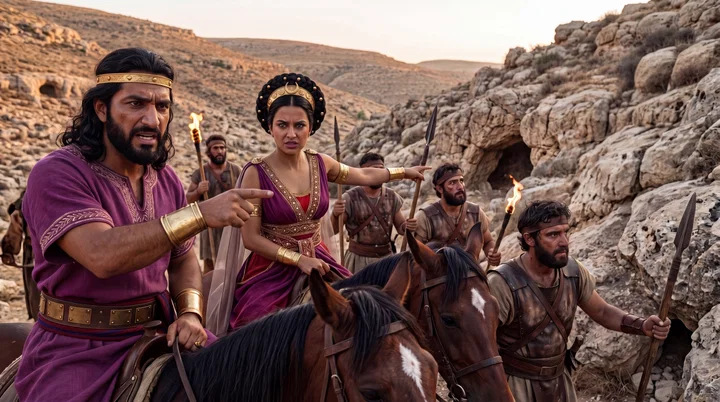
And Ahab told Jezebel all that Elijah had done, and withal how he had slain all the prophets with the sword.
Translations
And Ahab told Jezebel all that Elijah had done, and with how he had slain all the prophets with the sword.
King James Version, KJV Cambridge Paragraph Bible, Revised Version, American Standard Version
And Ahab told Jezebel all that Elijah had done, and withal how he had slain all the prophets with the sword.
And Ahab told Jezebel all that Elijah had done, and how he had slain all the prophets with the sword.
And Ahab declareth to Jezebel all that Elijah did, and all how he slew all the prophets by the sword,
And Ahab told Jezebel all that Elijah had done, and in detail how he had slain all the prophets with the sword.
And Ahab told Jezebel, all that Elijah had done,—and withal, how he had slain all the prophets with the sword.
Berean Standard Bible, Majority Standard Bible
Now Ahab told Jezebel everything that Elijah had done and how he had killed all the prophets with the sword.
Ahab told Jezebel all that Elijah had done, and how he had killed all the prophets with the sword.
Ahab gave Jezebel news of all Elijah had done, and how he had put all the prophets to death with the sword.
Now Ahab tolde Iezebel all that Eliiah had done, and how he had slaine all the prophets with the sword.
Douay-Rheims (Challoner revision)
And Achab told Jezabel all that Elias had done, and how he had slain all the prophets with the sword.
Pictures
Cross-references 20 of 25
- 1 Kings 18:40
And Elijah said unto them, Take the prophets of Baal; let not one of them escape. And they took them: and Elijah brought them down to the brook Kishon, and slew them there.
Elijah’s killing of the prophets is the deed Ahab reports.
- Revelation 2:20
Notwithstanding I have a few things against thee, because thou sufferest that woman Jezebel, which calleth herself a prophetess, to teach and to seduce my servants to commit fornication, and to eat things sacrificed unto idols.
Jezebel’s name figures corrupt teaching and idolatry tolerated in the church.
- 1 Kings 21:25-26
But there was none like unto Ahab, which did sell himself to work wickedness in the sight of the LORD, whom Jezebel his wife stirred up.
Jezebel stirred Ahab to wickedness and idolatry.
- 1 Kings 18:4
For it was so, when Jezebel cut off the prophets of the LORD, that Obadiah took an hundred prophets, and hid them by fifty in a cave, and fed them with bread and water.)
Jezebel had persecuted and killed the Lord’s prophets.
- 1 Kings 18:17-18
And it came to pass, when Ahab saw Elijah, that Ahab said unto him, Art thou he that troubleth Israel?
Ahab blamed Elijah for Israel’s trouble after Israel forsook God’s commandments.
- James 5:17
Elias was a man subject to like passions as we are, and he prayed earnestly that it might not rain: and it rained not on the earth by the space of three years and six months.
Elijah’s fear shows his human vulnerability.
- 1 Kings 18:45-46
And it came to pass in the mean while, that the heaven was black with clouds and wind, and there was a great rain. And Ahab rode, and went to Jezreel.
The rain after Elijah’s work on Carmel preceded Ahab’s return to Jezreel.
- 1 Kings 18:39
And when all the people saw it, they fell on their faces: and they said, The LORD, he is the God; the LORD, he is the God.
the people's allegiance that preceded the report
- 2 Kings 2:11
And it came to pass, as they still went on, and talked, that, behold, there appeared a chariot of fire, and horses of fire, and parted them both asunder; and Elijah went up by a whirlwind into heaven.
Elijah’s hunted life ends with his translation to heaven.
- 1 Kings 16:31
And it came to pass, as if it had been a light thing for him to walk in the sins of Jeroboam the son of Nebat, that he took to wife Jezebel the daughter of Ethbaal king of the Zidonians, and went and served Baal, and worshipped him.
Ahab’s marriage to Jezebel led him to serve and worship Baal.
- 1 Kings 19:5-8
And as he lay and slept under a juniper tree, behold, then an angel touched him, and said unto him, Arise and eat.
An angel feeds Elijah in the wilderness and strengthens him for the journey to Horeb.
- 1 Kings 17:1
And Elijah the Tishbite, who was of the inhabitants of Gilead, said unto Ahab, As the LORD God of Israel liveth, before whom I stand, there shall not be dew nor rain these years, but according to my word.
Elijah’s drought warning to Ahab foreshadows the judgment reported to Jezebel.
- 1 Kings 18:19
Now therefore send, and gather to me all Israel unto mount Carmel, and the prophets of Baal four hundred and fifty, and the prophets of the groves four hundred, which eat at Jezebel’s table.
Jezebel supported Baal’s prophets, whom Elijah summoned to Carmel.
- 1 Kings 19:10
And he said, I have been very jealous for the LORD God of hosts: for the children of Israel have forsaken thy covenant, thrown down thine altars, and slain thy prophets with the sword; and I, even I only, am left; and they seek my life, to take it away.
Elijah says the Lord’s prophets have been killed.
- 2 Kings 9:30
And when Jehu was come to Jezreel, Jezebel heard of it; and she painted her face, and tired her head, and looked out at a window.
Jezebel hears of Jehu’s arrival before her later downfall and death.
- Romans 11:4
But what saith the answer of God unto him? I have reserved to myself seven thousand men, who have not bowed the knee to the image of Baal.
God preserved seven thousand who remained faithful in Elijah’s time.
- Matthew 17:3
And, behold, there appeared unto them Moses and Elias talking with him.
earthly trial qualifies him to appear
- 1 Kings 18:38
Then the fire of the LORD fell, and consumed the burnt sacrifice, and the wood, and the stones, and the dust, and licked up the water that was in the trench.
fire from heaven witnessed Elijah's faith in victory
- 1 Kings 19:15-16
And the LORD said unto him, Go, return on thy way to the wilderness of Damascus: and when thou comest, anoint Hazael to be king over Syria:
God directed Elijah to appoint a successor.
- 1 Kings 17:2-6
And the word of the LORD came unto him, saying,
prior protection Elijah forgot when threatened
Commentary
Each commentary is drawn from primary sources: the writings of Ellen G. White and Adventist pioneers and periodicals. Each commentary is separate. Its own words are not a quotation; follow the references to read the source passages.
Ellen G. White
23 sources
Ahab parted from Elijah at the gate of Jezreel, went inside his palace, and told Jezebel everything Elijah had done, and that report set in motion Elijah's flight and testing.PK 155Lt 62, 1900, par. 3–6RH Oct 16, 1913 All he told was Elijah's whole work at Carmel of standing alone for God before the king, the nation and the four hundred and fifty prophets of Baal, proving Jehovah the Creator to be the true God, leading the people to confess and return, slaying the idolatrous prophets in judgment, and praying for rain to end the famine as the reward of right-doing.PK 155.1–156.2RH Oct 16, 1913PK 159.1–3 Ahab had been convinced by the miracle, but his conviction failed before his idolatrous wife, who held more power over him than God did, so hardened and defiant Jezebel refused to see God's hand, was infuriated, and threatened Elijah with death like the prophets he had slain.Ms 19, 1906, par. 17–19RH Oct 16, 19133T 288.3PK 159.1–3Ms 29, 1911, par. 37 Though Elijah had stood boldly before Ahab and cast down idolatry, he lost hold on trust in weariness and fear, fled hunted for his life until he wished to die, and cut short the greater victories God had prepared, yet God did not forsake him in the wilderness but preserved him and took him to heaven.ED 151.1–2ST Nov 17, 19094SP 445.2–446.1 The history teaches God's people in trial and danger to trust the Lord and not fear, and proves that even one favored and entrusted by God can sink and fall into error, to warn against disobedience and to encourage the fallen that by grace they can take heart and conquer.PK 173.113MR 362.1ST May 31, 1910Ms 6, 1889, par. 57
Report at Jezreel Palace
Ahab parted from Elijah at the gate of Jezreel and went within to the shelter of his palace, and there he told Jezebel all that Elijah had done.PK 155Lt 62, 1900, par. 3–6RH Oct 16, 1913PK 173.1 That report of the wonderful events of the day set in motion Elijah's flight and the testing that followed his victory.PK 155Lt 62, 1900, par. 3–6PK 173.1 It begins the account of his fearful trial after God had helped him defeat Baal's prophets, for her threat upon hearing it led him to flee.Lt 62, 1900, par. 3–6PK 173.1
All that Elijah had done was his whole work at Carmel after standing alone for God.PK 155.1–156.2RH Oct 16, 1913PK 159.1–3RH Oct 7, 1873DA 120.2 He had set apostasy before the ten tribes and called them to humble their hearts and turn to the Lord.PK 155.1–156.2 He had faced King Ahab and the whole nation with the four hundred and fifty prophets of Baal at their head, and by marvelous displays and wonderful exhibitions of divine power had proved that Jehovah the Creator of heaven and earth is the true God and Elijah His chosen messenger.RH Oct 16, 1913PK 159.1–3RH Oct 7, 1873DA 120.2 He had led the people to confess sin and acknowledge the God of their fathers as the living God after they declared their allegiance, had denounced coming judgment, and had executed Heaven's judgments by slaying the idolatrous false prophets with the sword.PK 155.1–156.23T 275.1DA 120.2 He had announced and prayed for the withdrawal of the curse and the renewal of temporal blessings, with rain as the promised reward of right-doing that ended the famine.PK 155.1–156.2
Ahab had been convinced by the miracle, but his conviction lasted only until he told his wife, whose influence over him outweighed the convincing evidence of God's Spirit.Ms 19, 1906, par. 17–19 God would have been with Ahab if he had walked in heaven's counsel, but he married a woman given to idolatry, and the unconsecrated idolatrous Jezebel had more power over the king than God had.Ms 29, 1911, par. 37 She led him into idolatry, and with him the people.Ms 29, 1911, par. 37 When God sent Elijah to Israel with warnings and threatenings, neither king nor people heeded him, but looked upon him as a messenger of evil.Ms 29, 1911, par. 37 When at last God sent drought upon the land as judgment, the people did not discern its object and humble their hearts.Ms 29, 1911, par. 37 Jezebel said Jehovah's prophets had brought the calamity upon them and that there would be no rest or prosperity until they were put to death, so anger was aroused against the men God had sent to entreat repentance, many holy men died for their testimony, while Elijah was preserved by a miracle of divine power to proclaim warnings before king and queen which Ahab then carried to Jezebel.Ms 29, 1911, par. 37
Jezebel was hardened and impenitent in sin and bold, determined and defiant in idolatry.RH Oct 16, 19133T 288.3RH Oct 7, 1873 She became infuriated at the report of the day's displays of God's power and the killing of Baal's prophets.RH Oct 16, 19133T 288.3PK 159.1–3RH Oct 7, 1873 She refused to recognize in Carmel the overruling providence of God.RH Oct 16, 1913PK 159.1–3 With hatred shared by Baal's priests, she boldly declared that Elijah should die and should not live, threatening him with the fate of the prophets he had killed and putting his life in danger.RH Oct 16, 1913RH Oct 7, 18733T 275.14SP 445.2–446.1 News of the warning spread through the land, stirring fear in some and anger in many.3T 275.1
Elijah's Fearful Flight
1 Kings 19:1 begins the account of Elijah's fearful trial after victory, setting the scene for Jezebel's rage and his flight for his life into the wilderness.ED 151.1–2PK 173.1 Ahab's report of what Elijah had done, including the death of Baal's prophets, brought Jezebel's threats that drove the prophet to flee.Lt 62, 1900, par. 3–6PK 173.1
Though he had stood undaunted and boldly before Ahab, faced the whole nation of Israel with the four hundred and fifty prophets of Baal at their head, helped cast down idolatry, and seen rain end the famine, Elijah fled Jezebel's threats in weariness, weakness, and exhaustion.ED 151.1–2ST Nov 17, 1909DA 120.2Ms 15, 1908, par. 6 He had to flee from place to place to save his life, hunted like the wild beasts to be destroyed.ED 151.1–2SG1 40.2 Danger and exhaustion brought him to bitter disappointment and a wish to die, to flee into the wilderness and ask to die.PK 173.1ST Nov 17, 1909
Although he had courageously done God's work and stood long and valiantly for the right, he lost courage when he failed to keep trusting God amid threatening circumstances.Lt 62, 1900, par. 3–6DA 120.2Ms 15, 1908, par. 6 When strength failed and faith let go its hold upon God, even one who had stood boldly before Ahab and Israel could be overcome in the time of greatest weakness when weakness and fear took hold.DA 120.2Ms 15, 1908, par. 6 Satan used and exploits that weakened human condition to tempt and distress him and to shake confidence in God.DA 120.2Ms 15, 1908, par. 6
His failure of faith and retreat cut short the work he had begun and turned him away from the greater victories God had prepared for him.ED 151.1–2ST Nov 17, 1909PK 167.2 His retreat showed the weakness of his present position compared with the place of trust and service God wanted him to occupy, so God directed him to appoint another prophet in his place.ED 151.1–2ST Nov 17, 1909PK 167.2 Yet God marked and recognized his faithful service and did not forget or forsake him in danger.ED 151.1–2ST Nov 17, 19094SP 445.2–446.1GC 626.2–627.1 He did not leave him to die alone in discouragement in the wilderness, but preserved him and took him up to God's presence in heaven.ED 151.1–2ST Nov 17, 1909
Lessons for Times of Trial
The history that opens with Ahab carrying to Jezebel the report of what Elijah had done, including the slaying of the prophets, becomes the account of Elijah's discouragement and flight for his life after her threat, and in his danger, exhaustion, bitter disappointment and wish to die he learns in his greatest weakness to trust God even under forbidding circumstances.PK 173.113MR 362.1 God's people facing difficulty, trials and danger must therefore trust in the Lord rather than human wisdom, remain faithful in the way of duty and not let fear discourage them.13MR 362.1Ms 6, 1889, par. 57 They are to wait patiently and pray with confidence in God, who will defend them and display His power.13MR 362.1Ms 6, 1889, par. 57 Nor should others take over the burdens God means each person to bear or stand between God and those He is trying to reach.Ms 6, 1889, par. 57
When Jezebel heard that Elijah had killed the prophets of Baal, her oath put his life in danger and began his fearful trial.PK 173.1GC 626.2–627.1GC88 626.1–3 Yet God did not forget or forsake him under that threat.GC 626.2–627.1GC88 626.1–3 His experience assures God's people that they are not abandoned or forgotten when threatened by enemies.GC 626.2–627.1
That sinking of Elijah's strong spirit under temptation proves that a man favored by God and entrusted with great responsibility could be overcome by temptation and fall into error just as people do now.ST May 31, 1910 Its record stands faithfully told with the sins of Noah, Lot, Moses, Abraham, David, Solomon, Jonah, Peter, and Paul and Barnabas.ST May 31, 1910 Together they require strict obedience to God's law and warn against disobedience and its sure punishment.ST May 31, 1910 They also encourage desponding hearts that through God's grace the fallen can gain fresh vigor, take heart again, rise above evil nature, and conquer.ST May 31, 1910
Sources
Pioneers and periodicals
52 sources
After Carmel Ahab goes into his palace and tells Jezebel all that happened that day, including that Elijah had slain the prophets of Baal with the sword, and her answering threat to kill him drives Elijah to flee for his life.RH Oct 16, 1913RH Oct 7, 1873ST Aug 20, 1885ST Aug 17, 1904 Ahab shows himself weak and double-minded, yielding to Elijah on Carmel through fear and then yielding again to Jezebel under her influence, while she remains hardened and defiant, refusing to recognize God's hand and vowing vengeance.RH Oct 16, 1913RH Oct 7, 1873ST Aug 17, 1904ST Apr 17, 1907 Even this bold prophet becomes terrified and panic-stricken in weariness after great victory, showing that when trust gives way to focus on threat the strongest can fall into discouragement and flight.ST Sep 7, 1904 His flight is a type of God's commandment-keeping people in the last days, who after faithfully calling back to God's law will be blamed, threatened, and driven into the wilderness, where God will care for them by His angels.RH Mar 31, 1868RH Dec 3, 1901RH Dec 6, 1864RH Dec 6, 1864 In that same history Jezebel with her slaying of the Lord's prophets and upholding of Baal stands as a figure of the papal apostasy and persecuting power, yet God does not forsake His weary servant but nourishes him, teaches him at Horeb, and sends him back to his work.ST Sep 7, 1904RH Jun 17, 1862ST May 13, 1908RH Aug 7, 1860RH Feb 12, 1857
Narrative Context and Details
The verse opens the account after Mount Carmel in which Ahab reports to Jezebel all that Elijah had done, including the slaying of Baal's prophets with the sword, and her threat in response causes Elijah to flee for his life.ST Aug 20, 1885ST Aug 17, 1904RH Nov 19, 1861 The report shows Ahab telling Jezebel of the utter defeat of the false prophets nourished by the corrupt queen and of the killing of those prophets who had brought a curse upon Israel, and it precedes her vow of vengeance and threat against Elijah that helps explain why he fled.ST Apr 17, 1907 That threat caught Elijah by surprise in human weakness and unpreparedness for danger, and, though so unlike his usual manner, the weary prophet became discouraged and fearful and fled; Ahab himself, weak and double-minded, was too weak to resist Jezebel's influence once more under her personal power.ST May 13, 1908ST Apr 17, 1907 The chapter thus shows Elijah's failure after triumph and his subjection to human weakness: while trusting God he was invincible, but when focusing on Jezebel's threat he became terrified and panic-stricken before the day's excitement had passed.
The report follows Elijah's prayer for rain upon the drought-smitten land that came in abundance, Ahab's chariot drive from Carmel to Jezreel, and Elijah running twenty-five miles ahead of the chariot, entering the city before the king and lying down wearily by the city gate discouraged at the spiritual apathy of Israel, where Jezebel's messenger then found him. It follows Elijah's day of anxiety and triumph at Carmel and his run of at least sixteen miles before Ahab's chariot down the long slope to the entrance of Jezreel.ST May 13, 1908 Ahab separates from Elijah at the gate of Jezreel, goes within to the shelter of his palace, and there tells Jezebel the wonderful events of the day and the marvelous revelation of divine power on Carmel proving Jehovah the Creator of heaven and earth to be the true God and Elijah His chosen messenger, including the slaying of the idolatrous prophets.RH Oct 16, 1913RH Oct 7, 1873 Jezebel, hardened and impenitent, bold, determined and defiant in idolatry, became infuriated at the report, refused to recognize in the events on Carmel the overruling providence of God, and still defiant boldly declared that Elijah should die and should not live.RH Oct 16, 1913RH Oct 7, 1873
While Ahab went into his palace to tell of his humiliation and the prophets' fate, Elijah rested believing the victory would lead to revival in Israel and that Jezebel would yield to the evidence that Jehovah was God. He did not see the expected reform of Ahab's court and had to flee for his life, a bitter disappointment that can test whether a servant's heart remains steadfast with God.RH Jul 6, 1869 God did not forsake him but taught him a wonderful lesson at Horeb and sent him back to do God's work with Elisha joined to him.ST May 13, 1908 The verse marks the beginning of Elijah's flight from Jezebel and his Horeb experience, about ten years before his ascension.ST
The verse belongs to the wholly historical 1 Kings 3-21, a sad record full of important lessons in the general downward moral tendency in Judah and Israel from the time of David, broken by times of reviving whenever the people sought God and God wrought for them and through them abundantly.ST Apr 26, 1910 It brings out the responsibility resting upon leaders of God's people, that when king and priest are faithful to God and strong for Him they mold the people immensely, but when leaders fail to lead in right ways the people fail with them.ST Apr 26, 1910 The verse is among the records of Elijah's ministry showing that prophets were present in Israel beyond the sixteen whose writings appear from Isaiah to Malachi.RH Jun 23, 1903 It shows Elijah as an example of God giving His servants extraordinary signs to support human weakness.ST Aug 7, 1901
Ahab and Jezebel Portrayed
Ahab was naturally weak, and after giving up the religion of his fathers for Baal worship he became more and more the creature of circumstances.ST Aug 17, 1904 On Mount Carmel he yielded to every suggestion of Elijah through fear, but once more under the personal influence of Jezebel he became powerless against her iron will.ST Aug 17, 1904ST Apr 17, 1907 His course is that of the double-minded man.ST Aug 17, 1904 His weakness was capricious and spoiled-child-like, always ruled by whatever influence affected him at the moment.ST Aug 20, 1885 After the contest of the Lord against Baal was decided, instead of firmly taking a stand on the Lord's side he simply went and told Jezebel all that had happened, letting her exert herself anew in behalf of Baal, having obeyed Elijah only so far as to gather all Israel and the prophets of Baal to Carmel.ST Aug 20, 1885
In reporting to Jezebel what Elijah had done at Carmel, especially the killing of Baal's prophets with the sword, Ahab turned from the truth he had witnessed and submitted to her influence.RH Nov 19, 1861 This illustrates how rulers who reject God's message turn against His messengers.RH Nov 19, 1861ST Sep 1, 1898 Ahab separated from Elijah at the gate of Jezreel, went within to the shelter of his palace, and there told Jezebel the wonderful events of the day and the marvelous revelation of divine power proving Jehovah the Creator of heaven and earth to be the true God and Elijah His chosen messenger, including the slaying of the idolatrous prophets.RH Oct 16, 1913RH Oct 7, 1873 Jezebel, hardened and impenitent in sin, became infuriated at the report, refused to recognize in the events on Carmel the overruling providence of God, and still bold, determined and defiant in her idolatry declared that Elijah should die and should not live.RH Oct 16, 1913RH Oct 7, 1873
Jezebel was a fierce and dangerous enemy, driven by intense anger and resolute will.RH Sep 9, 1862 On hearing how Elijah had slain the prophets of Baal she vowed vengeance and threatened to do to Elijah as he had done to the prophets of Baal, so that his sensitivity to her threats is understandable.RH Sep 9, 1862ST Apr 24, 1893 Though the king and the people at first rejoiced and Elijah and his God were honored, the spirit of Jezebel was unchanged and she still sought Elijah's life, so that he was again compelled to flee into the wilderness.ST Aug 11, 1909 The public acknowledgment that Jehovah is God did not turn her from idolatry or end persecution of God's prophet.ST Aug 11, 1909ST Sep 8, 1898 Though Elijah had spoken truth to the king and God had confirmed it by fire from heaven in accepting his sacrifice and destroying those prophets, Jezebel continued to pursue him and hunt for his life.RH Jan 10, 1865
Jezebel, Ahab's wife, slew the Lord's prophets, led Ahab into idolatry, and supported the prophets of Baal at her table.RH Jun 17, 1862RH Aug 7, 1860RH Feb 12, 1857 Her history makes her a figure for the papal system and its corruptions.RH Jun 17, 1862 In the comparison drawn from this account, Jezebel stirred Ahab to hunt down those faithful to the God of Israel, and a modern Jezebel likewise stirs earthly rulers to persecute God's people.ST Sep 12, 1916
Elijah's Discouragement and Flight
1 Kings 19:1 begins the account of Elijah's failure after triumph on Carmel, where Ahab reported to Jezebel all Elijah had done including slaying the prophets of Baal, and her threat in response led him to flee for his life. The chapter shows his subjection to human weakness, for while trusting God he was invincible but when focusing on the threat he became terrified and panic-stricken before the excitement and inspiration of that day had passed. The victory had aroused the enemy's wrath to desperation which Elijah had not anticipated, and after a great victory elation when the strain of contest relaxes can leave people morally weak and off guard, giving Satan an opportunity.ST Sep 7, 1904 The threat reached him in an unguarded moment immediately after signal victory attested by fire from heaven, when having gained the battle he laid off the armor and became less active and alert, though he had defied wicked and haughty Ahab to his face and rebuked false worship before all Israel.ST Apr 24, 1893 Satan recovered quickly and stepped in at that unguarded moment with terror and confusion, seizing him with dismay so that he fled to the desert to save his life and manifested the weakness of human nature.ST Apr 24, 1893 Eternal vigilance is the price of freedom from Satan's power and constant trust in God the only source of strength and steadfastness, for even a prophet who stood boldly before Ahab and Israel can be overcome when weakness, weariness and fear take hold, and Satan uses that weakened condition to tempt and distress him.ST Apr 24, 1893
In weakness and weariness he fled into the wilderness and asked to die after the victory on Carmel and the rain ending the famine, and his loss of faith cut short the work he had begun so that God told him to appoint another prophet in his place.ST Nov 17, 1909 Yet God did not leave him to die alone in discouragement but recognized his faithful service and took him to heaven.ST Nov 17, 1909 The episode opens with him, though eminent for faith, as weak as other men and despondingly requesting death, showing even the best believers have imperfect faith differing in strength at different times and mixed with some measure of unbelief.ST Mar 10, 1887 The beginning of his fearful trial, in which his strong spirit sank under temptation, proves a man favored by God and entrusted with great responsibility can be overcome and fall into error just as people do now.ST May 31, 1910 Its record stands with those of Noah, Lot, Abraham, Moses, David, Solomon, Jonah, Peter, Paul and Barnabas, faithfully told to require strict obedience to God's law, to warn against disobedience and its sure punishment, and to encourage desponding hearts that through grace the fallen can gain fresh vigor, take heart again, rise above evil nature and conquer.ST May 31, 1910 His flight and despair followed a great public victory when Jezebel threatened his life and he prayed to die, but did not mean his prophetic work had failed.
After the test between true and false the wicked pressed the righteous thirsting for blood, forcing him to flee weary and hungry seeing no way of escape and praying to die. God cared for His chosen one by giving sleep watched by angels and having an angel spread his table twice with cake baked on coals and water with flesh and grease entirely removed, and in the strength of that food he went forty days and nights to manifestations of God's glory. The order from bread and flesh twice daily at Cherith to coarse bread and mild oil with the widow of Zarephath to cake and water in the wilderness shows God's manner of preparatory work, cutting off flesh then grease and simplifying diet to purify body and spirit. This is the pattern for the work in the spirit and power of Elijah to prepare erring ones for the great day and to fit a people for translation without seeing death. Even this great and mighty prophet, devoted and earnest, who under God slew Baal's prophets as Israel itself ought to have done and whose prayer for rain God answered, became discouraged and overcome by weariness, yet God translated him.ST May 20, 1913 Weary and disheartened fleeing from Jezebel's hate he hastened to the Mount of God, because mountains are places of communion where strength for the next work is gained, and on Carmel he had felt he had no human help.ST Jul 1, 1880ST Sep 10, 1902
Prophetic Parallels and Persecution
Ahab's report to Jezebel and her threat to kill Elijah begin his flight into the wilderness, which is a type of God's commandment-keeping people in the last days who will face persecution and be driven from the towns into the wilderness where God will care for them through His angels.RH Mar 31, 1868 In that time when people have turned from God's commandments, Elijah warned them but they blamed him for the trouble caused by their own disobedience, and so in parallel commandment-keepers in the future will be blamed for society's troubles and targeted with hostility.RH Dec 3, 1901 Elijah's escape from Jezebel after she reacted to the report by threatening him is a pattern for the true apostolic church, which fled persecution and remained obscure in the wilderness while an idolatrous false church sought to turn God's servants from His commandments.RH Feb 21, 1865 After Elijah reproved apostasy and called the people back to God's law the authorities sought to kill him but the Lord delivered him, and his experience patterns the last-days remnant who keep God's commandments and bear the testimony of Jesus and face threats and persecution for that work.RH Dec 6, 1864RH Dec 6, 1864
When Elijah faithfully delivered God's message calling for keeping the commandments, Ahab's report set Jezebel's threat in motion, and this foreshadows that those who faithfully proclaim God's final message of Christ's coming and keeping the commandments will likewise be persecuted before Christ returns and the faithful living are translated as Elijah was.ST Dec 12, 1916 In the parallel Elijah prefigures the remnant church, Jezebel the wicked queen prefigures the persecuting enemy of the saints, and Ahab the king is the civil power through whom her persecuting power is exercised, for after Carmel the king and people at first rejoiced and Elijah and his God were honored but the spirit of Jezebel was unchanged and still sought his life so that he was again compelled to flee into the wilderness.ST Aug 11, 1909 Ahab telling Jezebel what Elijah had done, including killing the prophets with the sword, shows Jezebel stirring Ahab to hunt down those faithful to Israel's God, and a modern Jezebel likewise stirs earthly rulers to persecute God's people.ST Sep 12, 1916 Ahab under Jezebel's influence responding to Elijah's condemnation by moving to destroy him serves as a pattern for an apostate church's influence over a latter-day confederacy that seeks to destroy God's people and silence God's message of salvation and protest.ST Apr 30, 1912
Jezebel's response of hunting and killing God's faithful people after Ahab reported Elijah's deeds and the killing of the prophets provides the type for the later persecution of Christians by apostate religious power.ST Dec 10, 1902 Elijah illustrates the prophetic pattern of reform in which he represents John the Baptist and, in later application, those who do a converting work like theirs before the great day of the Lord.RH Jul 9, 1901 Elijah's fleeing for his life before pagan power for three and a half years proves that paganism persecutes true worshipers who remain loyal to God and His law while compelling false worship of Baal in sun-worship in place of the worship of God, and that persecuting and compelling work identifies paganism as the first division of the great apostate system of spiritual Babylon.ST
Apostasy, Remnant, and Babylon
1 Kings 19:1 belongs to the history of Ahab's wife Jezebel, who slew the Lord's prophets, led Ahab into idolatry, and supported the prophets of Baal at her table.RH Jun 17, 1862RH Aug 7, 1860RH Feb 12, 1857RH Oct 16, 1856 Her persecuting and idolatrous course makes her a fitting figure for the papal system and its corruptions.RH Jun 17, 1862RH Aug 7, 1860RH Feb 12, 1857ST Jan 15, 1880 She is the historical figure behind the figurative Jezebel in Revelation, representing the papal abominations set forth in the message to Thyatira and in the church's period of papal rule.RH Aug 7, 1860RH Oct 16, 1856ST Jan 15, 1880
The verse stands in the record of a great backsliding of the Israel of God in the days of Elijah. That backsliding shows that the church of Christ can go into apostasy in the sense of backsliding rather than utter apostasy from which there is no recovery. It was a time when God found a faithful remnant who would respond to the call of His prophet, and that remnant illustrates those who come out of apostasy as the remnant according to the election of grace.
It was a time when Israel had largely abandoned the worship of the true God for Baal, and Elijah believed he was the only faithful servant left.RH Feb 21, 1865 The visible, widely recognized religious body could be in apostasy while God's true people remained, though hidden from view.RH Feb 21, 1865 God told Elijah that seven thousand had not bowed to Baal.RH Feb 21, 1865
The account of Ahab, Jezebel, and Elijah frames the conflict between Baal worship and the worship of Jehovah through Ahab's idolatry and Jezebel's persecution of the Lord's prophets.RH Nov 7, 1912RH Mar 10, 1868 Elijah was opposed by King Ahab because he reproved him of sin, and Jezebel sought his life because he slew the prophets of Baal.RH Mar 10, 1868 It stands as one instance proving there has been a true and a false religion and that the true has been opposed by the false.RH Nov 7, 1912RH Mar 10, 1868
Practical Lessons and Encouragement
Ahab's telling Jezebel that Elijah had slain her prophets brought Jezebel's hostile threat against God's prophet, and that threat is an example of severely adverse circumstances.ST Jul 22, 1886 Yet the prophet could stand fast in spite of Jezebel.ST Jul 22, 1886 This proves a man can always live a Christian life in spite of any and all adverse circumstances, need never sin, and can either live faithfully or die a Christian's death.ST Jul 22, 1886
The surrounding account presents Elijah as an example of firmness under pressure from rulers, for her response does not make him yield.RH Jul 10, 1860 Set beside Daniel, the lesson is that steady, childlike faith in God gives courage and keeps a godly person from fleeing in fear.RH Dec 29, 1859 After Ahab told all Elijah had done and how he had slain the prophets, Jezebel raised persecution so that Elijah must fly.RH Jan 10, 1871 In this a faithful servant who will not flatter sensuality or seek wealth is driven into exile by hostile power, and banishment endured for truth makes one like Elijah.RH Jan 10, 1871
Elijah's unpopular prophetic work brought danger, for after Ahab told Jezebel what Elijah had done, Elijah had to flee for his life.RH Sep 5, 1865 His experience illustrates that defenders of unpopular truth may be accused and threatened.RH Sep 5, 1865 His facing danger and a death sentence after Jezebel heard what he had done is an example of God's servants enduring calamity and persecution.ST Jan 31, 1906 The verse begins the account of discouragement after the victory on Mount Carmel, when the victory had aroused the enemy's wrath to desperation, which Elijah had not anticipated.ST Sep 7, 1904 After a great victory, elation when the contest's strain relaxes can leave people morally weak and off guard, giving Satan an opportunity.ST Sep 7, 1904
The report followed Elijah's day of anxiety and triumph at Carmel and his run of at least sixteen miles before Ahab's chariot down the long slope to the entrance of Jezreel.ST May 13, 1908 Then a messenger from wicked Jezebel told Elijah his life must pay forfeit for the destruction of the false prophets, and the weary prophet, so unlike his usual manner, became discouraged and fearful and fled for his life.ST May 13, 1908 God did not forsake him but sent an angel to nourish and encourage His weary and discouraged servant.ST Sep 7, 1904ST May 13, 1908 God taught him a wonderful lesson at Horeb and sent him back to do God's work with Elisha joined to him.ST May 13, 1908
Sources