1 Kings 18:30
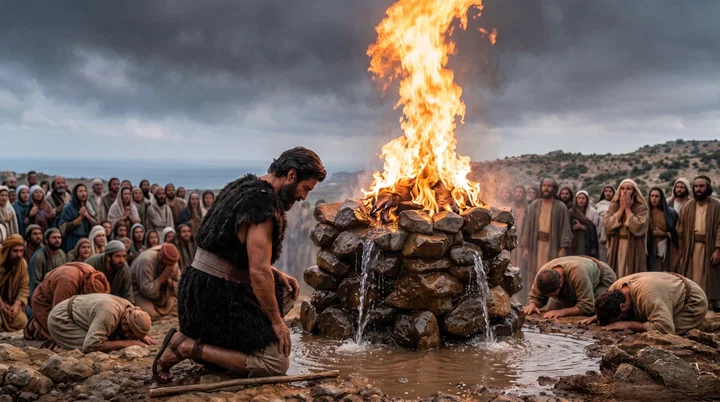
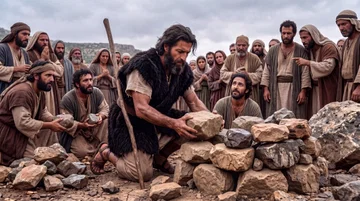
And Elijah said unto all the people, Come near unto me. And all the people came near unto him. And he repaired the altar of the LORD that was broken down.
Translations
American King James Version, Webster Bible
And Elijah said to all the people, Come near to me. And all the people came near to him. And he repaired the altar of the LORD that was broken down.
And Elijah said unto all the people, Come near unto me. And all the people came near unto him. And he repaired the altar of the LORD that was broken down.
And Elijah said unto all the people, Come near unto me. And all the people came near unto him. And he repaired the altar of the Lord that was broken down.
And Elijah said unto all the people, Come near unto me; and all the people came near unto him. And he repaired the altar of the LORD that was thrown down.
And Elijah said unto all the people, Come near unto me; and all the people came near unto him. And he repaired the altar of Jehovah that was thrown down.
And Elijah saith to all the people, 'Come nigh unto me;' and all the people come nigh unto him, and he repaireth the altar of Jehovah that is broken down;
Then Elijah said to all the people, Draw near to me. And all the people drew near to him. And he repaired the altar of Jehovah which was broken down.
Then said Elijah unto all the people: Draw near unto, me. And all the people drew near unto, him. Then repaired he the broken-down altar of Yahweh; yea Elijah took twelve stones, according to the number of the tribes of the sons of Jacob,—
Berean Standard Bible, Majority Standard Bible
Then Elijah said to all the people, “ Come near to me.” So all the people approached him, and he repaired the altar of the LORD that had been torn down.
Elijah said to all the people, “ Come near to me!”; and all the people came near to him. He repaired the LORD’s altar that had been thrown down.
Then Elijah said to all the people, Come near to me; and all the people came near. And he put up again the altar of the Lord which had been broken down.
And Eliiah said vnto all the people, Come to me. And all the people came to him. And he repayred the altar of the Lord that was broken downe.
Douay-Rheims (Challoner revision)
Elias said to all the people: Come ye unto me. And the people coming near unto him, he repaired the altar of the Lord, that was broken down:
Pictures
Cross-references 20 of 35
- 1 Kings 18:36-39
And it came to pass at the time of the offering of the evening sacrifice, that Elijah the prophet came near, and said, LORD God of Abraham, Isaac, and of Israel, let it be known this day that thou art God in Israel, and that I am thy servant, and that I have done all these things at thy word.
God answers Elijah’s prayer with fire, and the people acknowledge the Lord.
- 1 Kings 18:21
And Elijah came unto all the people, and said, How long halt ye between two opinions? if the LORD be God, follow him: but if Baal, then follow him. And the people answered him not a word.
Elijah challenges Israel to choose whom they will worship.
- James 5:17-18
Elias was a man subject to like passions as we are, and he prayed earnestly that it might not rain: and it rained not on the earth by the space of three years and six months.
Elijah’s fervent prayer brought drought and then rain.
- 1 Kings 19:3
And when he saw that, he arose, and went for his life, and came to Beer-sheba, which belongeth to Judah, and left his servant there.
Elijah flees after Jezebel threatens his life following the Carmel victory.
- 1 Kings 18:39
And when all the people saw it, they fell on their faces: and they said, The LORD, he is the God; the LORD, he is the God.
The people see the sign and confess that the Lord is God.
- 1 Kings 17:1
And Elijah the Tishbite, who was of the inhabitants of Gilead, said unto Ahab, As the LORD God of Israel liveth, before whom I stand, there shall not be dew nor rain these years, but according to my word.
Elijah’s announced drought frames the later contest at Carmel.
- Malachi 4:5-6
Behold, I will send you Elijah the prophet before the coming of the great and dreadful day of the LORD:
Elijah’s altar reform illustrates the promised latter-day Elijah’s work of restoring devotion.
- 1 Kings 18:18
And he answered, I have not troubled Israel; but thou, and thy father’s house, in that ye have forsaken the commandments of the LORD, and thou hast followed Baalim.
Elijah identifies Israel’s forsaking God’s commandments and following Baal as its trouble.
- 1 Kings 18:38
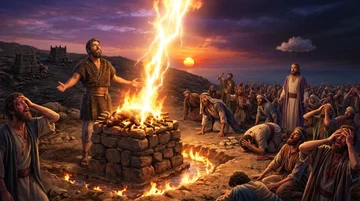
Then the fire of the LORD fell, and consumed the burnt sacrifice, and the wood, and the stones, and the dust, and licked up the water that was in the trench.
The Lord’s fire consumes the offering on the altar Elijah repaired.
- 1 Kings 19:10
And he said, I have been very jealous for the LORD God of hosts: for the children of Israel have forsaken thy covenant, thrown down thine altars, and slain thy prophets with the sword; and I, even I only, am left; and they seek my life, to take it away.
Elijah laments Israel’s destroyed altars and believes he alone remains faithful.
- 1 Kings 18:42-44
So Ahab went up to eat and to drink. And Elijah went up to the top of Carmel; and he cast himself down upon the earth, and put his face between his knees,
Elijah bows in persistent prayer, and rain follows.
- 1 Kings 18:19-20
Now therefore send, and gather to me all Israel unto mount Carmel, and the prophets of Baal four hundred and fifty, and the prophets of the groves four hundred, which eat at Jezebel’s table.
Elijah gathers Israel and Baal’s prophets at Carmel for the confrontation.
- 2 Kings 2:11
And it came to pass, as they still went on, and talked, that, behold, there appeared a chariot of fire, and horses of fire, and parted them both asunder; and Elijah went up by a whirlwind into heaven.
Elijah’s translation is compared with the deliverance of God’s people.
- Luke 1:17
And he shall go before him in the spirit and power of Elias, to turn the hearts of the fathers to the children, and the disobedient to the wisdom of the just; to make ready a people prepared for the Lord.
John comes in Elijah's spirit and power
- Matthew 17:1-8
And after six days Jesus taketh Peter, James, and John his brother, and bringeth them up into an high mountain apart,
The passage contrasts Elijah’s rejection of Baal worship with the disciples’ focus on Jesus at the transfiguration.
- 1 Kings 19:4
But he himself went a day’s journey into the wilderness, and came and sat down under a juniper tree: and he requested for himself that he might die; and said, It is enough; now, O LORD, take away my life; for I am not better than my fathers.
Elijah asks to die after Carmel’s triumph.
- Matthew 17:11-12
And Jesus answered and said unto them, Elias truly shall first come, and restore all things.
Jesus identifies John as fulfilling Elijah’s work of restoration.
- 1 Kings 18:22
Then said Elijah unto the people, I, even I only, remain a prophet of the LORD; but Baal’s prophets are four hundred and fifty men.
Elijah stands alone as the Lord’s prophet against Baal’s prophets.
- 1 Kings 17:5-6
So he went and did according unto the word of the LORD: for he went and dwelt by the brook Cherith, that is before Jordan.
Elijah was fed at Cherith before his victory at Carmel.
- 1 Kings 18:1-2
And it came to pass after many days, that the word of the LORD came to Elijah in the third year, saying, Go, shew thyself unto Ahab; and I will send rain upon the earth.
Elijah is sent to Ahab during the drought.
Commentary
Each commentary is drawn from primary sources: the writings of Ellen G. White and Adventist pioneers and periodicals. Each commentary is separate. Its own words are not a quotation; follow the references to read the source passages.
Ellen G. White
31 sources
On conspicuous Mount Carmel Elijah gathers the trembling people close around him and single-handedly rebuilds the broken-down altar of the Lord with twelve stones for the tribes of Israel, honoring God's covenant and treating those ruins as more sacred than all heathen altars.3T 283.2–284.2RH Sep 25, 1913Ms 19, 1906, par. 6–13PK 144.1PK 144.2 After the voiceless failure of Baal's prophets he prays simply at the evening sacrifice, and fire from heaven consumes sacrifice, wood, stones, dust and water, so the people fall down confessing the Lord as God and the false prophets are slain at Kishon.Ms 19, 1906, par. 6–13Ms 29, 1911, par. 38–40 That triumph checks the idolatry encouraged by Ahab and Jezebel, stirs the nation to return to God, and opens the way to reformation.PK 224.1–2ED 60.3PK 254.1 Through faith the repaired altar brings the blessed rain, for which Elijah prays earnestly on Carmel until the heavens blacken and great rain falls.Ms 19, 1906, par. 14–16ED 151.1–2ST Nov 17, 1909 The altar had to be put in order according to God's word before the fire could burn, which calls for purifying the soul by surrendering self so Christ may fill it, giving courage to stand for right amid end-time idolatry of wealth, pleasure and false ideas of God.4SP 399.1PK 177.1Lt 62, 1900, par. 3–6Ms 115, 1899, par. 19Ms 115a, 1899, par. 13
Ruined Altar Rebuilt
The altar stood on a high ridge of Mount Carmel, whose heights were visible across much of Israel, in sharp contrast to the altars of Baal and Ashtoreth among the leafless groves.RH Sep 18, 1913PK 144.1PK 144.2 Because idolatrous worship there had dishonored God, that conspicuous place was chosen to display His power and vindicate the honor of His name.RH Sep 18, 1913PK 144.2 The Lord's altar there lay broken down, neglected and torn down through Israel's apostasy, which had allowed the priests of Baal to destroy it.3T 283.2–284.23T 280.1 Its ruined condition stood before the assembled people as a visible sign of Israel's desolation and departure from God.3T 280.1RH Sep 18, 1913
Elijah called all the people to come near to him, and they drew near tremblingly and watched expectantly.RH Sep 25, 1913PK 151.3 His calm manner stood in contrast to the frenzied efforts of Baal's priests.PK 151.3 He first drew their attention to the ruined altar and then challenged them to choose whether to follow the Lord or Baal, while their silence showed they would not openly take their stand for God.PK 147.2RH Sep 18, 1913
At the hour of the evening sacrifice he turned to the broken-down altar where the God of heaven had once been worshiped and repaired it without asking anyone to help.3T 283.2–284.2RH Sep 25, 1913PK 151.1–2 That heap of ruins he treated as more sacred and precious than all the magnificent and splendid altars of heathendom.3T 283.2–284.2RH Sep 25, 1913PK 151.1–2 He rebuilt it with twelve stones according to the number of the tribes of the sons of Jacob, to whom the word of the Lord came saying Israel shall be thy name.3T 283.2–284.2RH Sep 25, 1913Ms 19, 1906, par. 6–13 This honored God's covenant with Israel made when they crossed the Jordan into the promised land and represented all twelve tribes descended from Jacob.3T 283.2–284.2RH Sep 25, 1913PK 151.1–2 With the stones he built an altar in the name of the Lord, made a trench about it as great as would contain two measures of seed, put the wood in order, cut the bullock in pieces and laid it on the wood, and had four barrels of water poured on the burnt sacrifice and wood a second and a third time.Ms 19, 1906, par. 6–13 The altar had to be put in order according to God's Word before the fire could burn.Ms 115, 1899, par. 19
Fire, Confession, and Rain
The repairing of the altar came only after the prophets of Baal had called upon their god from morning until the time of the evening sacrifice and received no voice, no answer, and no regard, leaving the test of the God who answers by fire to be decided.Ms 19, 1906, par. 6–13Ms 29, 1911, par. 38–40 Then Elijah prayed simply and fervently to the Lord God of Abraham, Isaac, and Israel, asking Him to show that He is God in Israel and that He has turned the people's heart back again.Ms 19, 1906, par. 6–13Ms 29, 1911, par. 38–40 The fire of the Lord fell and consumed the sacrifice, the wood, the stones, the dust, and the water in the trench.Ms 19, 1906, par. 6–13Ms 29, 1911, par. 38–40 The people fell on their faces confessing that the Lord is God and declaring their allegiance to Him.Ms 19, 1906, par. 6–13Ms 29, 1911, par. 38–40
It was a terrible day of contest between life and death in which Elijah stood undaunted and triumphed over the king, the priests, and the people.DA 120.2Ms 15, 1908, par. 6RH Oct 7, 1873 The false prophets were taken to the brook Kishon and slain, a work God commissioned him to do.Ms 19, 1906, par. 6–13DA 120.2 That day's wonderful events and exhibitions of power showed that Jehovah, the Creator of heaven and earth, is God.RH Oct 7, 1873 The confrontation checked the idolatry that Ahab and Jezebel had encouraged, stirred the nation, and led many to return to the worship of God and to seek Him.PK 224.1–2ED 60.3PK 254.1 The public display of God's power gave Elijah courage for his work and was meant to make a lasting impression on king and people leading to reformation.Lt 62, 1900, par. 3–6
Through the power of faith idolatry was cast down when the broken altar was repaired, and the blessed rain that followed testified to the showers of blessing waiting to be poured upon Israel.Ms 19, 1906, par. 14–16ED 151.1–2ST Nov 17, 1909 On the top of Carmel Elijah prayed earnestly, cast down upon the earth with his face between his knees in a most painful, humiliating position.Ms 19, 1906, par. 14–16 His faith was sorely tried as he continued in earnest prayer until rewarded by tokens of rain, when the heaven was black with clouds and wind and there was a great rain.Ms 19, 1906, par. 14–16 There he stood as the sole witness to the true God before Ahab, the whole nation, and the four hundred and fifty prophets of Baal.RH Oct 30, 1913PK 173.3Ms 15, 1908, par. 6 He acted as a preacher of righteousness under God's direction and the guidance of the Holy Spirit, accomplishing the work God had given him.Ms 31, 1889, par. 77RH Oct 30, 1913
That commissioned stand on Carmel belongs in a sequence directed by God, after being sent to the brook Cherith and afterward to the widow of Sarepta, and before being girded with strength to guide the king's chariot to the gate of Jezreel.PK 168.1
Faith Tested and Applied
The repairing of the broken altar gives courage to all who stand for what is right amid apostasy and wickedness.PK 177.1Lt 62, 1900, par. 3–6 The public display of God's power on that day was meant to make a lasting impression on king and people that would lead to reformation, and it gave Elijah himself courage for his work.Lt 62, 1900, par. 3–6 That history has special relevance for the end times, because the idolatry of Elijah's age is repeated.4SP 399.1PK 177.1 Then as now men worship a false conception of God or of nature instead of the true God, setting up wealth, fame, pleasure, or human ideas in His place.4SP 399.1PK 177.1
Elijah had borne a heavy burden for Israel with faithful warnings against national idolatry and had watched through three and a half years of famine for some token of repentance.ST Nov 17, 1909 He had maintained his trust through drought and famine and had stood undaunted before Ahab and before the whole nation with the four hundred and fifty prophets of Baal at their head as the sole witness to the true God.RH Oct 30, 1913PK 173.3Ms 15, 1908, par. 6 That commission to return to Israel and stand before the idolatrous priests belonged in a sequence directed by God, after being sent to the brook Cherith and afterward to the widow of Sarepta, and before being girded with strength to guide the king's chariot to the gate of Jezreel.PK 168.1 The day ended with the false prophets slain at the brook and the people declaring allegiance to God, turning from the greater victories the repaired altar had opened to them.Ms 15, 1908, par. 6 After standing long and valiantly for the right, weariness let fear of death overcome faith, his strength failed and his faith let go its hold upon infinite power, and he fled for his life before the threats of idolatrous Jezebel and prayed alone in the desert that he might die.ST Nov 17, 1909RH Oct 30, 1913PK 173.3Ms 15, 1908, par. 6 This shows how Satan assails in the time of greatest weakness and overcomes when will power weakens and faith ceases to repose in God.Ms 15, 1908, par. 6 That hasty flight into the wilderness was not sent by God, when he needed to trust wholly in God, and by that one failure of faith he cut short his life-work so that the work he had begun he was not to complete and another was to be anointed prophet in his stead.ST Nov 17, 1909PK 168.1
Yet God had marked his heart-service, so he was not left to perish in discouragement and solitude.ST Nov 17, 1909 He did not go down to the tomb but ascended with God's angels to the presence of His glory.ST Nov 17, 1909 His life declares that unbelief means failure and sin brings only shame and loss, but God's mercy reaches to the deepest depths and faith lifts the repenting soul to share the adoption of the sons of God.ST Nov 17, 1909 The repair itself teaches that God's fire can burn only when the altar is purified according to God's word.Ms 115a, 1899, par. 13 Spiritually this calls for surrendering self to God so that Christ may fill the soul.Ms 115a, 1899, par. 13
Sources
Pioneers and periodicals
103 sources
Elijah gathered the wavering people close to witness before he rebuilt the Lord's altar that neglect and Baal worship had left in ruins.RH Oct 19, 1916ST Aug 13, 1885ST Aug 10, 1904RH Sep 30, 1873ST Jun 30, 1898 He rebuilt it alone calmly at the evening sacrifice with twelve stones for the tribes of Jacob to honor God's covenant and restore true worship before offering prayer.RH Sep 25, 1913RH Oct 19, 1916ST Aug 13, 1885RH Sep 30, 1873ST Mar 14, 1878 God answered with fire that consumed the sacrifice, wood, stones and water-soaked offering, proving Jehovah the Creator supreme over Baal the sun-god of fire and fertility on his own ground.ST Dec 29, 1909ST Sep 26, 1911ST Aug 14, 1879ST Mar 9, 1915ST Jul 6, 1915 The act calls for wholehearted, undivided obedience that stops halting between Jehovah and Baal and returns to keeping God's commandments.RH May 25, 1876ST Aug 13, 1885RH May 18, 1876ST Feb 10, 1904ST Aug 19, 1913 That stand foreshadows the last-day choice between Creator worship and sun-day mandates and the counterfeit fire by which the two-horned beast will deceive the world.RH Apr 3, 1855ST Dec 16, 1889ST Aug 21, 1901ST Jan 27, 1898
Carmel Contest Setting
The verse belongs to the public contest on Mount Carmel to learn which God is truly God, decided by the God who answers with fire from heaven.RH Sep 18, 1856RH Dec 15, 1910RH Apr 3, 1855ST Sep 7, 1904ST Jun 29, 1904 It is part of Elijah's confrontation with Ahab and the prophets of Baal as a public demonstration of God's existence and power that ended with the people acknowledging that the Lord is God.RH Sep 18, 1856RH Dec 15, 1910ST Jun 29, 1904RH Aug 14, 1868 The test was fair to the Baal worshipers on their own ground because Baal was looked upon as sun-god, lord of the forces of nature and of fire and fertility, the very god who ought to be able to answer, and his failure before a large and varied assembly was disastrous to the claims of his prophets.RH Apr 3, 1855ST Sep 7, 1904
Elijah seemed to stand alone as far as human help was concerned against 450 prophets of Baal and those fed at Jezebel's table.ST Jul 1, 1880ST Jun 17, 1903ST Mar 6, 1893ST Jul 14, 1887 He alone represented the truth against the prophets of Baal and his female counterpart, and he stood alone against 450 prophets yet was right and approved by Heaven despite the overwhelming majority against him.ST Jun 17, 1903ST Jul 14, 1887 The majority sided with Baal while God preserved only a small remnant, and the safety of God's people does not depend on numbers.RH Sep 18, 1856 God's work is ever done by minorities, for one man strong in God can chase a thousand, and Elijah alone on the summit was a match for all the prophets and apostates.ST Mar 6, 1893
The contest took place near the summit of the mountain with the sea and the Valley of Esdraelon in view and Jezreel in the distance.ST Nov 14, 1900 The broken altar of Jehovah stood on a high ridge in contrast with the altars of Baal and Ashtoreth in the leafless groves, and because idolatrous worship there had dishonored God the place was chosen as conspicuous to display God's power and vindicate His name.RH Sep 18, 1913 It stood at a place of sacrifice on the Carmel range southwest and west of the heights near Nazareth in plain view across the great plain of Jezreel and within sight from the plain, where Jesus' journey later brought Him within sight of where God had worked mightily through Elijah.ST Aug 20, 1912ST Jul 14, 1898 It was more than three hundred miles from the cave at Horeb where Elijah afterward hid, and the repairing of the altar was part of the critical moment when God manifested Himself in majesty and began a great work for His people.ST Aug 24, 1904ST Apr 12, 1905
The repair follows the failure of Baal's prophets, when after they had failed and the people were ready to listen Elijah called them near.ST Aug 10, 1904ST Jun 30, 1898 It comes at the hour of the evening sacrifice after three and a half years of withheld rain, twelve hundred and sixty literal days of drought that severely chastened Israel's idolatry and directly challenged Baal as god of agriculture and fertility.ST Jul 27, 1904RH Jun 15, 1911ST Jan 15, 1885 Ahab had obeyed Elijah's command to gather Israel and the prophets after Elijah's denunciation and the drought judgment, but after the decision he did not firmly take the Lord's side.ST Aug 20, 1885
The setting is Israel's apostasy after turning from God and His commandments to Baal and sun-image worship, when Elijah confronted the people to bring them back to obedience to God's law.RH Dec 6, 1864ST Aug 20, 1894 This came under Ahab and Jezebel, daughter of Ethbaal the Zidonian sun-worshiping king, who slew the Lord's prophets, led her husband into idolatry, fed the prophets of Baal at her own table, and provides the figure for papal abominations suffered during the 1260 years of papal supremacy.RH Aug 7, 1860RH Feb 12, 1857 It was a joining of God's people with the world in a union of church and state that trod down God's law and persecuted true worshipers, though the house of Israel was God's church it had preferred Baal to Jehovah.ST Jul 4, 1905
The people wavered between Jehovah and Baal, could extol one one day and the other the next, and in the crisis stood silent and would not openly take their stand.RH Sep 18, 1913RH Apr 28, 1863 The contest showed the powerlessness of the sun-god, and though the people then acknowledged Jehovah as God their hearts were not made right.RH Sep 18, 1913ST Sep 8, 1898 They returned to idolatry and were destroyed as a nation, showing that a fiery display can convince or frighten without changing hearts.ST Nov 19, 1885 The spectacular working through the elements in miraculous manifestation failed to restore allegiance, showing that God does not always work through such means but through the still small gentle whisper of conscience.
Repairing the Broken Altar
Elijah summoned all the people to come near to him and drew them closer before he touched the altar, calling them to stop halting and to decide whom they would follow.RH Oct 19, 1916ST Aug 13, 1885ST Aug 10, 1904ST Aug 20, 1894RH May 25, 1876 His urging them near belonged to his call to reform worship and lead Israel back to keeping God's commandments instead of accepting Baal worship as a substitute.ST Aug 20, 1894RH May 25, 1876 The restored altar marked a return to the worship of Israel's God amid national idolatry.ST Nov 13, 1893
The altar of the Lord had been used before but had fallen through neglect or been destroyed by Baal worshipers, torn down either by decree of Ahab and Jezebel or by the people themselves as they turned to idolatry.ST Aug 10, 1904RH Sep 30, 1873ST Jun 30, 1898 Israel's apostasy had allowed the priests of Baal to tear it down.RH Sep 30, 1873 Standing broken down before assembled Israel it was a visible sign of departure from God, and the people's silence showed they would not openly take their stand for Him in the crisis.RH Sep 18, 1913RH Dec 4, 1913 Yet the very place of the broken altar was a recognized site of worship where the God of heaven had once been worshiped.RH Sep 25, 1913ST Jul 28, 1898
He repaired it alone, calmly and solemnly, at the time of the evening sacrifice, after Baal's prophets had failed and the people were ready to listen.ST Aug 10, 1904RH Sep 30, 1873ST Jun 30, 1898 That heap of ruins was more sacred and precious to him than all the magnificent prepared altars of Baal and of heathendom.RH Sep 25, 1913RH Sep 30, 1873 With devoted zeal, earnest courage and unfeigned faith he prepared his offering in quiet kneeling prayer with no wild shrieks, in contrast to the frenzied cry of Baal's priests.ST Mar 14, 1878 As the people tremblingly drew near he turned to the broken-down altar and repaired it.RH Sep 25, 1913
He rebuilt it with twelve stones according to the number of the tribes of the sons of Jacob, in the name of the Lord, the stones representing the twelve tribes of Israel.RH Sep 25, 1913ST Aug 13, 1885RH Sep 30, 1873 In so doing he respected the Lord's covenant with His people although they had apostatized.RH Sep 30, 1873 He thereby revealed respect for the covenant the Lord made with Israel when they crossed the Jordan into the promised land.RH Sep 25, 1913
The repair restored the place of worship before the contest, sacrifice and prayer, and publicly recalled the worship of the Lord.RH Oct 19, 1916ST Aug 10, 1904ST Aug 10, 1904 True religion thus honored God's first commandment rather than sharing His honor with idols, demonstrating that the Lord, not Baal, held power over heaven and earth.ST Nov 13, 1893 The restored altar stood in contrast to the worship of Baal and prepared the people to see that the Lord is God.RH Feb 5, 1867 Drenched with water yet consumed with the sacrifice, wood, stones and water by fire in answer to Elijah's brief prayer, it became the means of the mighty miracle by which He convinced Israel that He is the true God and Creator and brought them to acknowledge that Jehovah is God.ST Apr 17, 1907ST Mar 14, 1878
Fire Reveals True God
Answer by fire was a fair test chosen on the Baal worshipers' own ground, for Baal was looked upon as the sun-god, lord of the forces of nature and of fire and fertility, the very god who ought to be able to answer by fire.ST Dec 29, 1909ST Mar 9, 1915ST Sep 7, 1904 The sun-worshipers called for fire from heaven and failed to bring it, while Elijah's appeal to God was answered.ST Aug 14, 1879ST Mar 9, 1915ST Jul 27, 1904 His failure at such a time, before such a large and varied assembly, was disastrous to the claims of his prophets.ST Sep 7, 1904 The test fitted the occasion because fire was characteristic of their god.ST Jul 27, 1904
God promptly answered Elijah's brief, simple prayer with a heavenly manifestation that vindicated Jehovah's authority before Baal's worshipers.ST Sep 26, 1911ST Jul 6, 1915RH Jul 15, 1862 Though the altar and sacrifice were drenched with twelve barrels of water poured round it and in the trenches, fire from above fell and consumed the sacrifice, the wood, the stones, and the altar and licked up the water.ST Sep 26, 1911ST Apr 17, 1907ST Mar 14, 1878 This response revealed not merely severity as a judge but God's gentleness and paternal care.ST Jul 6, 1915 Elijah had prepared his offering in quiet kneeling prayer with no wild shrieks, in contrast to the frenzied cry of Baal's priests, and prayed to the Lord God of Abraham to make bare His arm and let it be known through Israel that He alone is God.ST Mar 14, 1878
That fire was God's genuine witness to the truth before a rebellious people, showing which prophets He was with and that Israel's God was greater than Baal.RH Mar 5, 1908RH Jul 31, 1913 It was not a miracle performed by Satan, but an example of God restraining Satan's power to bring down fire from heaven.RH Jun 22, 1869 It demonstrated that Jehovah the Creator of heaven and earth is supreme over Baal and that images and other powerless objects of worship have no power.ST Jun 13, 1906RH Jan 11, 1915RH Jul 31, 1913 Elijah stood with unwavering confidence on Carmel proclaiming the one true God supreme over the false worship surrounding him, and the repair of the broken altar belonged to a confrontation over the second commandment.ST Jun 13, 1906RH Jul 31, 1913 The day ended with the people crying that the Lord, He is the God and declaring allegiance to God, with Israel again brought to know the Creator, and with Baal's priests slain as work God commissioned.ST Apr 17, 1907ST Mar 14, 1878
In the contest Elijah mocked the dumb god of Baal and bade his prophets cry louder as if gone on a journey or occupied, an act of righteous indignation at vain worship teaching the commandments of men.RH Dec 17, 1857 That consuming fire was not new or strange, but God revealing Himself again as before as the God who accepts every true-hearted offering.ST Dec 29, 1909 The sign by fire in connection with animal sacrifice will not be required again, because all sacrifices for sin were offered once when Jesus Christ died on the cross.ST Dec 29, 1909 God chooses tests suited to the time, and while a fiery display could convince or frighten people without changing their hearts, the enduring test for people now is the Word of God.ST Dec 29, 1909ST Jul 27, 1904 Fire from heaven is not among the signs God has given for the last days, for Satan will in the last days seemingly bring fire from heaven to connect his devotees with Elijah and to support a lie and deceive people; the truest signs of the true God now are souls recreated by His power who keep the commandments of God and the faith of Jesus.ST Dec 29, 1909RH Mar 5, 1908
Last-Day Counterfeit and Typology
On Carmel the test was which God answers by fire from heaven, distinguishing the true God from Baal, and that genuine miracle is the pattern for a last-day worldwide deception in which the two-horned beast acting as false prophet will seemingly bring fire down to claim divine approval for worshiping the beast and its image and receiving its mark.RH Apr 3, 1855ST Mar 25, 1880 The ancient contest provides the precedent, for the sun-worshipers then failed to bring fire while Elijah's appeal was answered, but in the counterfeit they will appear to succeed.ST Dec 16, 1889ST Mar 9, 1915 That imitation will invoke Elijah's example to justify a decree against those who refuse that worship, using the sign to make people believe earthly powers enforcing it have authority equal to Elijah's.ST Sep 26, 1911 Only God's elect will remain undeceived when those apparent wonders come.ST Mar 25, 1880
That coming fire will be meant only to deceive, will be visible to all men, may take any deceptive appearance that accomplishes deception, and will probably not be consuming. It will not be new or strange in form, but God revealing Himself again as before as the God who accepts every true-hearted offering is not to be expected again by that sign in connection with animal sacrifice, since all sacrifices for sin were offered once when Jesus Christ died on the cross.ST Dec 29, 1909 Fire from heaven is not among the signs God has given for the last days, and His people will meet the deception not by signs but by His truth and by the moral conduct that comes from living that truth.ST Dec 29, 1909 The truest signs of the true God now are souls recreated by His power who keep the commandments of God and the faith of Jesus.ST Dec 29, 1909
As Ahab charged Elijah with troubling Israel and Elijah answered that Ahab and his father's house had troubled Israel by forsaking the commandments of the Lord and following Baalim, so the deepening unrest, insecurity, plotting and crime of the last days will be blamed on the small company who remain true to the principles of the Ten Commandments.RH Dec 3, 1901 The people then had turned from God's commandments to serve Baal, Elijah warned them but was unheeded, and blighting curses came upon the land in consequence of their evil course, yet under the curse they were led to believe that if this defender of the commandments were out of the way their trouble would cease.RH Dec 3, 1901 Elijah's reformatory, converting work in repairing the broken altar represents typically John the Baptist before the first advent and antitypically those living near the second coming before the great and dreadful day who fear the Lord, obey Him on tithes and offerings, and engage in the same turning work.RH Jul 9, 1901 His confrontation with Baal worship and call to reform is the pattern for a last-generation message that will challenge apostasy and bring the world to a test.RH May 11, 1916ST Aug 7, 1901 God was with him and worked mightily through him against the king and hundreds of priests and false prophets, and his afterward being translated makes him a type of the righteous of the last generation.ST Sep 17, 1896
That work stood where God's people were joined with the world in great general forms of worldly idolatry, chief of which was Baal or sun-worship led by Jezebel, daughter of Ethbaal the Zidonian sun-worshiping king, in an unholy union that trod down God's law and persecuted the prophet and true worshipers, in short a union of church and state.ST Aug 7, 1901 As John's work called people to repent, turn to obedience, and prepare for Christ's coming amid formalism, liberalism, commercialism and Herodias's control of the ruler, so the one little country is the type of the world and the one people the type of all who profess His name for the work and character of God's servants in the last days.ST Aug 7, 1901 The history of Jezebel, Ahab's wife, who slew the Lord's prophets, led her husband into idolatry, and fed Baal's prophets at her own table, provides the figure for the papal abominations suffered during the 1260 years of papal supremacy.RH Feb 12, 1857 The twelve hundred and sixty literal days when rain was withheld are the pattern for the twelve hundred and sixty years when the two witnesses, the Old and New Testaments, prophesied clothed in sackcloth while studied in secret under papal persecution by the papacy that set aside God's law and taught the venerable day of the sun instead of the Sabbath.ST Jan 15, 1885
Elijah's stand was a decision between Baal the sun-god and Jehovah the Creator, and that same choice between worshiping the creature and worshiping the Creator still stands with greater intensity over whether to bow to the mandates of Lucifer enforcing the day dedicated to the sun or to obey God and keep His commandments forevermore.ST Aug 21, 1901ST Jan 27, 1898 Sun-worship is not dead but is the question of earth's ages, and each person must decide with Elijah for Jehovah the Creator.ST Aug 21, 1901
Call to Wholehearted Obedience
On Carmel Elijah drew Israel close and rebuilt the Lord's broken altar, and that repaired altar stands for the restoration of the Lord's worship after Israel had forsaken His commandments and followed Baal.RH Oct 19, 1916ST Mar 25, 1913 His call for all the people to come near was a call to turn their hearts back to the only true God, who alone has the right and power to give and withhold rain. That turning back to God opened the way for the Lord to send rain in abundance, and the restored altar belonged to the confrontation through which God worked a mighty miracle to convince Israel that He is the true God and Creator.ST Mar 25, 1913
His urging the people near and repairing the altar belongs to his work of reforming worship and leading Israel back to keeping God's commandments instead of accepting Baal worship as a substitute.RH May 25, 1876 His action and prayer rested on God's word, not on outward displays of power or religious fervor, and obedience to God's commandments was the burden of his work.ST Feb 10, 1904 The scene exemplifies confronting apostasy, restoring downtrodden truth, and zealously upholding God's law.ST Mar 20, 1901 It serves as a picture of reform: restoring what has been damaged and calling people back to allegiance to God.ST Mar 15, 1910
The account teaches that there are only two ways to follow and that God requires whole-hearted, undivided service.ST Aug 13, 1885 Elijah called all the people to come near in order to stop halting between the LORD and Baal and to choose whom they will follow.ST Aug 19, 1913 That means the church must now draw the line and choose between the gospel of Jesus Christ and true faith on one side and Baal in the form of false philosophy masquerading under the guise of Christianity on the other, and must not allow that Baal to remain enthroned.ST Aug 19, 1913 The issue is not between two schools of Christian thought but between Christianity and infidelity, and false teaching that is allowed to continue leavens more and more of the entire church.ST Aug 19, 1913 Elijah would not fellowship with Baal worship or share the Lord's honor with pagan gods, but used God's power to turn the nation from idolatry, and in separating from the united prophets of Baal he appeared in their eyes as a factionist.ST Nov 13, 1893ST Feb 25, 1886 Earnestness alone does not save, for the Carmel worshippers of Baal were intensely earnest, but their worship was wrong and they perished in their sin.RH May 18, 1876
Israel's idolatry had displaced worship of the Lord, so the broken altar was repaired as the people were called back to the living God.RH Dec 24, 1903 That conflict applies to modern false worship, for philosophies that replace the personal God with nature or an impersonal force are refined idolatry comparable to Baal worship.RH Dec 24, 1903 Christ can be found and taught even in this Old Testament lesson of Elijah and the prophets of Baal.ST May 15, 1884
Faith Courage and Revival
Elijah standing alone for truth against 450 prophets means having faith and courage to go against the current and do right though all others go the other way, as Noah did and as Lot did in Sodom, including keeping the Sabbath.ST Jul 4, 1878 Going with the multitude is no excuse for disobedience, for Jesus did not follow the multitude but calls for taking up the cross and following Him even when it brings the opposition and persecution of the world.ST Jul 4, 1878 The stand was against popular, state-sponsored Baal worship by the house of Israel, which though it was God's church had preferred Baal to Jehovah, and it was vindicated when the prophets of Baal were slain and judgment came upon the wicked rulers and the apostate nation, while Elijah himself was taken to heaven.ST Nov 5, 1885ST Nov 5, 1885 Majority support or common practice does not make a practice right nor prevent God from judging it, and one person's faithful opposition to widespread sin is not useless even when the majority rejects it.ST Nov 5, 1885ST Nov 5, 1885ST Nov 5, 1885
God's work is ever done by minorities, for one man strong in God can chase a thousand, and Elijah alone on the summit of Carmel is a match for all the prophets of Baal and all the apostates fed at Jezebel's table.ST Mar 6, 1893 That strength is the calmness and power of simple faith resting on God's word, in contrast to reliance on sensory excitement and feelings.ST Nov 18, 1889 Baal's prophets leaped, shrieked, shouted, foamed and cut themselves with knives from morning till noon and till the time of the evening sacrifice, yet the silent heavens remained unmoved and brought no answer.ST Nov 7, 1906ST Dec 2, 1913 Then Elijah, a quiet man in simple dress, calmly prepared the Lord's altar with no outcry and no noisy demonstration, spoke a few earnest words with reverent lifting of the eyes toward heaven, and after an expectant hush fire flashed down, consumed the sacrifice and licked up even the water in the trenches.ST Nov 7, 1906ST Dec 2, 1913 The Spirit works through the meek and quiet spirit and has little in common with noise, disorder and turbulent commotion, so simple humility and faith rather than noise or display bring the promised blessing.ST Nov 7, 1906ST Dec 2, 1913 His humility did not make him timid or willing to yield to public pressure, but he stood firmly for what was right before King Ahab and the prophets of Baal in that great public testing.ST Feb 27, 1901ST Feb 11, 1897
Elijah stood as Jehovah's witness, conscious of God's presence and strengthened by God's Spirit, through whom Israel was brought again to know the Creator. He was God's devoted and earnest prophet, full of God's Spirit, obedient and trusting, humble as God's servant, earnest in prayer, and on fire with zeal for God and His honor against defiance of God's word and worship.ST May 20, 1913RH Jul 26, 1906RH Oct 20, 1859 His courage and power were not inherent in himself but are available to every believer willing to meet the conditions of faithfulness, and he stood in his commissioned service before the idolatrous priests on Carmel.RH Oct 30, 1913RH Jul 26, 1906 His calm faith looking to God to prove what is of God teaches that if a religious institution is of God its friends should trust His all-power to vindicate and perpetuate what He has planted, rather than bolstering it by tradition, false teaching and combined civil power, for what is founded in truth will endure while what is not of God will perish with all who identify themselves with it to the end.ST Dec 7, 1904
God answers prayer by sending rain after withholding it, and Elijah calling the people near and repairing the altar belongs to the prayer through which the heavens stayed from rain again gave rain.RH Nov 21, 1912 Heaven-inspired prayer can kindle fire on broken altars and precedes revival.RH Dec 31, 1903 Restoring what has been damaged through neglect is a fitting beginning for revival, for churches are strengthened by renewing existing members in prayer, zeal, faith and duty rather than relying chiefly on new converts.ST Oct 29, 1885 A neglected family altar should likewise be restored by gathering the household each day to offer praise and thanksgiving, entrust each member to God, pray for individual needs and seek special help in trial.RH Mar 4, 1915 Parents are to renew family worship and begin children's education at home, preparing youth to bless their schools and become active missionaries, which is a call to restore family worship and devotion in the last days when all must choose whom they will follow.RH Jul 2, 1908 The same morning and evening hour commanded in Exodus 29 with its continual offering of lambs, flour, oil and wine for a sweet savour remains for every Christian family, though burnt offerings for sin are gone because by one offering Christ has perfected forever them that are sanctified; husband and wife, father and mother, son and daughter assembling around the family altar with grateful praise and earnest supplication send up a voice before the throne of mercy sweeter than any offering made by fire, where the Lord meets His children.RH Sep 12, 1871
Elijah on Carmel restoring the Lord's worship was as near to God there as beneath the juniper bush, showing that rest or change of activity can be legitimate when it renews a person for service.ST Oct 1, 1885 The signal victory when God witnessed to His servant's faith by fire from heaven was a real battle won, yet winning did not end danger, for laying off the armor and becoming less active and alert after success gives Satan opportunity to recover and enter at the unguarded moment with terror and confusion.ST Apr 24, 1893 Eternal vigilance is the price of freedom from Satan's power and constant trust in God the only source of strength and steadfastness, as seen when courage before Ahab and all Israel was followed by terror at Jezebel's threat and flight to the desert, manifesting the weakness of human nature.ST Apr 24, 1893 Through faith idolatry was cast down when the broken altar was repaired, and the blessed rain that followed testified to showers of blessing waiting for Israel after three and a half years of famine and faithful warnings against national idolatry, yet afterward Elijah yielded to weakness and weariness, fled before Jezebel's threats, prayed alone in the desert to die, and by that failure cut short his life-work so another was to be anointed in his stead.ST Nov 17, 1909 The day that ended with the false prophets slain and the people declaring allegiance to God was followed almost at once by deep discouragement, when he who stood alone against 450 priests of Baal fled panic-stricken at the threat of one determined woman on a night after his greatest triumph, in an eventful, exciting day carrying into effect the greatest program for God of record.ST Aug 7, 1901 He forgot the victory, thought he alone followed God, and ran in fear when Jezebel refused faith and threatened his life.ST Aug 7, 1901ST May 24, 1905 Yet God marked his heart-service, so he was not left to perish in discouragement and solitude and did not go down to the tomb but ascended with angels to the presence of His glory, showing he was subject to like passions as men today, invincible while his eyes were upon God but defeated when he saw Jezebel, and declaring that unbelief means failure and sin brings shame and loss while mercy reaches the deepest depths and faith lifts the repenting soul to share the adoption of the sons of God.ST Nov 17, 1909ST Aug 7, 1901
Sources