1 Kings 22:17
And he said, I saw all Israel scattered upon the hills, as sheep that have not a shepherd: and the LORD said, These have no master: let them return every man to his house in peace.
Translations
And he said, I saw all Israel scattered on the hills, as sheep that have not a shepherd: and the LORD said, These have no master: let them return every man to his house in peace.
King James Version, Webster Bible
And he said, I saw all Israel scattered upon the hills, as sheep that have not a shepherd: and the LORD said, These have no master: let them return every man to his house in peace.
And he said, I saw all Israel scattered upon the hills, as sheep that have not a shepherd: and the Lord said, These have no master: let them return every man to his house in peace.
And he said, I saw all Israel scattered upon the mountains, as sheep that have no shepherd: and the LORD said, These have no master; let them return every man to his house in peace.
And he said, I saw all Israel scattered upon the mountains, as sheep that have no shepherd: and Jehovah said, These have no master; let them return every man to his house in peace.
And he saith, 'I have seen all Israel scattered on the hills as sheep that have no shepherd, and Jehovah saith, These have no master; they turn back each to his house in peace.'
And he said, I saw all Israel scattered upon the mountains, as sheep that have no shepherd. And Jehovah said, These have no master: let them return every man to his house in peace.
And he said—I saw all Israel, scattered among the mountains, like sheep that have no shepherd,—so Yahweh said, These have, no masters, let them return every man unto his own house, in peace.
Berean Standard Bible, Majority Standard Bible
So Micaiah declared:
“ I saw all Israel scattered on the hills
like sheep without a shepherd.
And the LORD said, ‘ These people have no master;
let each one return home in peace.’”He said, “ I saw all Israel scattered on the mountains, as sheep that have no shepherd. The LORD said, ‘ These have no master. Let them each return to his house in peace.’”
Then he said, I saw all Israel wandering on the mountains like sheep without a keeper; and the Lord said, These have no master: let them go back, every man to his house in peace.
Then he said, I sawe all Israel scattered vpon the mountaines, as sheepe that had no shepheard. And the Lord sayde, These haue no master, let euery man returne vnto his house in peace.
Douay-Rheims (Challoner revision)
And he said: I saw all Israel scattered upon the hills, like sheep that have no shepherd: and the Lord said: These have no master: let every man of them return to his house in peace.
Pictures
Cross-references
- 2 Chronicles 18:16
Then he said, I did see all Israel scattered upon the mountains, as sheep that have no shepherd: and the LORD said, These have no master; let them return therefore every man to his house in peace.
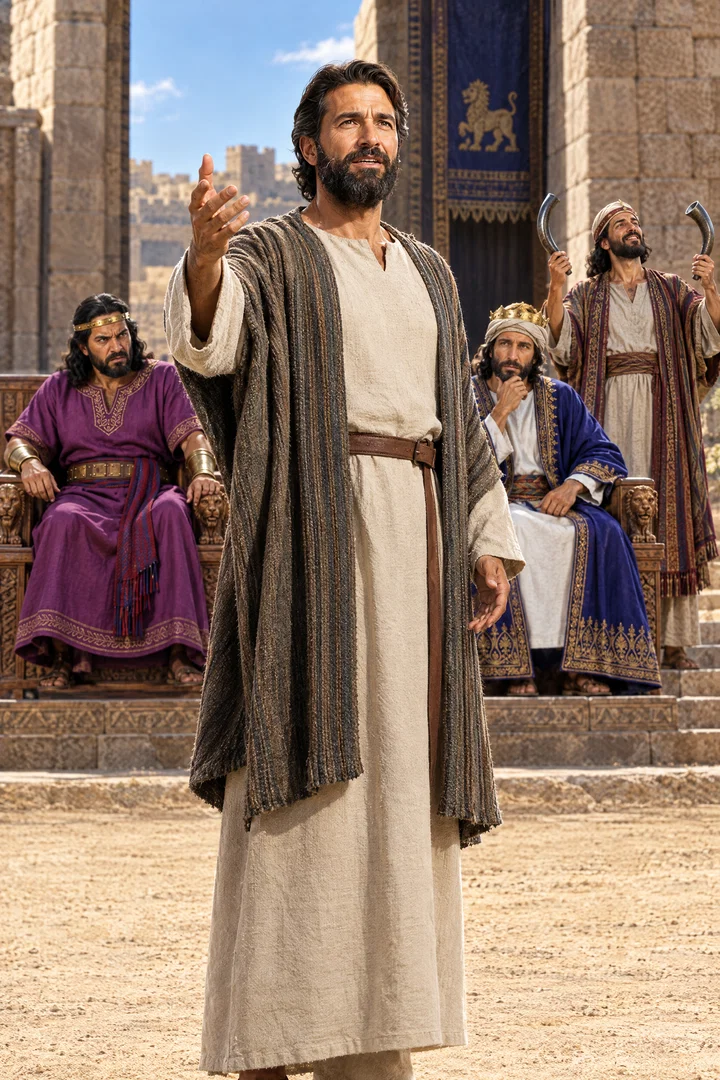
Micaiah’s vision depicts Israel scattered without a shepherd or leader.
- 1 Kings 22:8
And the king of Israel said unto Jehoshaphat, There is yet one man, Micaiah the son of Imlah, by whom we may enquire of the LORD: but I hate him; for he doth not prophesy good concerning me, but evil. And Jehoshaphat said, Let not the king say so.
Ahab hates Micaiah for prophesying evil concerning him.
- 1 Kings 22:34-38
And a certain man drew a bow at a venture, and smote the king of Israel between the joints of the harness: wherefore he said unto the driver of his chariot, Turn thine hand, and carry me out of the host; for I am wounded.
Ahab’s defeat and death fulfill Micaiah’s warning.
- 2 Chronicles 18:34
And the battle increased that day: howbeit the king of Israel stayed himself up in his chariot against the Syrians until the even: and about the time of the sun going down he died.
After Ahab’s death, the army disperses and returns home.
- Matthew 9:36
But when he saw the multitudes, he was moved with compassion on them, because they fainted, and were scattered abroad, as sheep having no shepherd.
Jesus sees the scattered people as sheep without a shepherd.
- 1 Kings 22:6
Then the king of Israel gathered the prophets together, about four hundred men, and said unto them, Shall I go against Ramoth-gilead to battle, or shall I forbear? And they said, Go up; for the Lord shall deliver it into the hand of the king.
The four hundred prophets advise battle, which Micaiah opposes.
- 2 Chronicles 18:5
Therefore the king of Israel gathered together of prophets four hundred men, and said unto them, Shall we go to Ramoth-gilead to battle, or shall I forbear? And they said, Go up; for God will deliver it into the king’s hand.
Ahab’s prophets urge battle, contrary to the LORD’s warning of Israel’s defeat.
- 1 Kings 22:36
And there went a proclamation throughout the host about the going down of the sun, saying, Every man to his city, and every man to his own country.
The army returns home, fulfilling Micaiah’s warning that Israel would be scattered.
- 2 Chronicles 18:6
But Jehoshaphat said, Is there not here a prophet of the LORD besides, that we might enquire of him?
Jehoshaphat asks for a prophet of the Lord.
- 2 Chronicles 19:1
And Jehoshaphat the king of Judah returned to his house in peace to Jerusalem.
explains what Jehoshaphat returned from in peace
Commentary
Each commentary is drawn from primary sources: the writings of Ellen G. White and Adventist pioneers and periodicals. Each commentary is separate. Its own words are not a quotation; follow the references to read the source passages.
Ellen G. White
5 sources
Ahab counted Micaiah as an enemy because Micaiah prophesied evil against him.Lt 19, 1875, par. 9–10 The verse gives Micaiah's vision of all Israel scattered upon the hills like sheep that have no shepherd, with the Lord declaring that these have no master and directing every man to return to his house in peace.Ms 29, 1911, par. 35–36PK 196.1RH Dec 25, 1913PK 195.2–3
Having no shepherd and having no master means the army would be left without its king to lead it.RH Dec 25, 1913PK 195.2–3 The vision warned that the kings' planned battle, the campaign against Ramoth-gilead and against the Syrians, was not favored by heaven and would not end in victory.Ms 29, 1911, par. 35–36PK 196.1RH Dec 25, 1913PK 195.2–3
It foretold the dispersal of Israel's armies and their return home after Ahab's death.Ms 29, 1911, par. 35–36PK 196.1RH Dec 25, 1913 This was fulfilled after Ahab died, when a proclamation went out sending each man back to his own city and to his own country.RH Dec 25, 1913 Ahab could have been saved by accepting this warning, but he rejected it and perished.Ms 29, 1911, par. 35–36
Sources
Pioneers and periodicals
19 sources
Micaiah foresaw Israel's army broken and left kingless when Ahab fell in battle at Ramoth-gilead, with the Lord bidding the leaderless soldiers return each to his own home in peace rather than press on to victory.PGGC 82.1–83.1ST Sep 10, 1885RH Jun 23, 1903 His warning of defeat stood alone against four hundred prophets who promised success and prosperity, and though hated, imprisoned and rejected for opposing their popular counsel, events proved him alone to have spoken truly.RH Jun 26, 1855RH Jul 13, 1911ST Dec 16, 1889RH Jun 23, 1903RH Sep 5, 1865 The word was fulfilled when the allied host was routed, Ahab was slain, Jehoshaphat barely escaped with his life, and the troops were sent home while Judah was spared further pursuit.RH Dec 25, 1913ST Jul 13, 1904 The doom was just, for God had faithfully warned Ahab and given him time to reform, but when he persisted in evil God left him to his own way and gave him over to a lying spirit to persuade him to his fall.RH Jan 8, 1861 Judah would have been safe by obeying God and trusting His defense, for He never approves alliance with wickedness for seeming advantage, and His people must now draw close in love in readiness for the hour when they too shall be scattered as sheep upon the mountains.ST Jul 13, 1904RH Jan 23, 1900
Setting and Prophetic Warning
The verse belongs to the history of the two separate kingdoms of Judah and Israel for about eighty years, from the revolt of the ten tribes to the death of Jehoshaphat, comprising the histories of the reigns of several kings both of Judah and of Israel.RH May 25, 1916 Ahab was a very wicked king who turned to the worship of many heathen gods and enforced that worship on Israel, causing the people to depart from the Lord and doing evil above all who were before him.RH Jan 8, 1861RH Nov 7, 1912 The good king Jehoshaphat of Judah made the fearful mistake of alliance with weak and wicked Ahab, joining his house to Ahab's by the marriage of Jehoram to Athaliah for political reasons.ST May 13, 1908ST Jul 13, 1904 That alliance issued in a joint expedition to recapture Ramoth-Gilead, long held by the Syrians east of Jordan and a standing menace to Israel and Judah.ST Jul 13, 1904
Micaiah was a faithful prophet who declared what the Lord had shown him in vision, and because he would not prophesy what Ahab wanted but spoke evil concerning him, he was hated and imprisoned on the bread and water of affliction.RH Jun 26, 1855RH Sep 5, 1865 His vision of all Israel scattered upon the hills as sheep without a shepherd meant the army would be defeated and left without its king after Ahab's death in battle.PGGC 82.1–83.1ST Sep 10, 1885ST May 11, 1891 The Lord declared they have no master and directed each man to return home in peace rather than win the battle, so the soldiers would be sent home instead of gaining victory.RH Dec 25, 1913PGGC 82.1–83.1ST Sep 10, 1885RH Jun 23, 1903ST May 11, 1891
Micaiah's warning of coming judgment and disaster stood against the four hundred prophets' assurances of peace, success and prosperity in battle.RH Jul 13, 1911ST Dec 16, 1889RH Jun 23, 1903 His counsel was rejected because it opposed their popular advice, but what followed showed he alone had spoken truly and exposed their counsel as unreliable.RH Jul 13, 1911ST Nov 22, 1899 The warning was fulfilled when the allies were defeated, Ahab was killed, and Jehoshaphat barely escaped with his life.RH Dec 25, 1913ST Jul 13, 1904 A proclamation sent each soldier back to his own city and country, and because the Syrians did not follow up their victory, Jehoshaphat returned to Jerusalem in peace.RH Dec 25, 1913ST Jul 13, 1904
Divine Justice and Application
The decision that Ahab should fall at Ramoth-gilead and leave Israel without master was not unjust, for he was a very wicked king who caused Israel to depart from the Lord and did evil above all before him.RH Jan 8, 1861 God faithfully warned him by His servants and gave him time to reform, but he continued in what displeased the Lord until God suffered him to follow his own way.RH Jan 8, 1861 God then gave him over to the control of a lying spirit to persuade him to go up to Ramoth-gilead and decided he should fall there, showing God's right to punish the disobedient and impenitent and giving a striking illustration of His justice and long-suffering.RH Jan 8, 1861
Judah would have been safe by obeying God and trusting His defense, for He could easily protect His people and destroy every enemy.ST Jul 13, 1904 He never justifies alliance with the world or compromise with error for ostensible advantage, since such alliances only result in evil.ST Jul 13, 1904 Jehoshaphat had joined himself to the wicked Ahab and Jezebel and joined his house to theirs by the marriage of Jehoram to Athaliah, moved by political reasons to undertake a joint expedition to recapture Ramoth-gilead, long held by the Syrians east of Jordan and a standing menace to Israel and Judah.ST Jul 13, 1904 Micaiah's counsel foretelling disaster was not heeded, the allies were defeated, Ahab was killed and Jehoshaphat barely escaped with his life, and because the Syrians did not follow up their victory Jehoshaphat returned to Jerusalem in peace.ST Jul 13, 1904
The image of Israel scattered without spiritual guidance also applies to people who follow leaders that depart from God, for when those leaders end in despair their followers are left scattered.ST Sep 3, 1894 The image of sheep scattered on the hills without a shepherd describes a few isolated believers who lack a leader and are weak and at risk of abandoning their past experience.RH Apr 14, 1853 Like Micaiah with Elijah and other faithful prophets, present defenders of lasting prophetic truth preach unpopular truth foretelling evil and disaster and are despised by the mass who choose brief popularity.RH Sep 5, 1865 Micaiah was hated by the wicked king because he always prophesied evil, and with Elijah who had to flee for his life and the other faithful prophets they were called uncharitable, troublers of Israel, croakers, evil prophets and self-righteous.RH Sep 5, 1865
God's people must soon be scattered like sheep upon the mountains in the closing hour of preparation, so they must now draw close and closer to one another, cultivate confidence, cherish one another, and love as their Lord loved, in readiness for that scattering.RH Jan 23, 1900 Sheep without a shepherd pictures people left without guidance, which applies to the plea not to be left without workers to continue the meetings and care for those seeking the truth.RH Dec 17, 1908
Sources