1 Kings 22:16
And the king said unto him, How many times shall I adjure thee that thou tell me nothing but that which is true in the name of the LORD?
Translations
And the king said to him, How many times shall I adjure you that you tell me nothing but that which is true in the name of the LORD?
And the king said unto him, How many times shall I adjure thee that thou tell me nothing but that which is true in the name of the LORD?
And the king said unto him, How many times shall I adjure thee that thou tell me nothing but that which is true in the name of the Lord?
And the king said to him, How many times shall I adjure thee that thou tell me nothing but that which is true in the name of the LORD?
And the king said unto him, How many times shall I adjure thee that thou speak unto me nothing but the truth in the name of the LORD?
And the king said unto him, How many times shall I adjure thee that thou speak unto me nothing but the truth in the name of Jehovah?
And the king saith unto him, 'How many times am I adjuring thee that thou speak nothing unto me but truth in the name of Jehovah?'
And the king said to him, How many times shall I adjure thee that thou tell me nothing but truth in the name of Jehovah?
And the king said unto him, How many times must, I, adjure thee,—that thou speak unto me nothing but truth, in the name of Yahweh?
Berean Standard Bible, Majority Standard Bible
But the king said to him, “ How many times must I make you swear not to tell me anything but the truth in the name of the LORD?”
The king said to him, “ How many times do I have to adjure you that you speak to me nothing but the truth in the LORD’s name?”
Then the king said to him, Have I not, again and again, put you on your oath to say nothing to me but what is true in the name of the Lord?
And the King said vnto him, How oft shall I charge thee, that thou tell me nothing but that which is true in the Name of the Lord?
Douay-Rheims (Challoner revision)
But the king said to him: I adjure thee again and again, that thou tell me nothing but that which is true in the name of the Lord.
Pictures
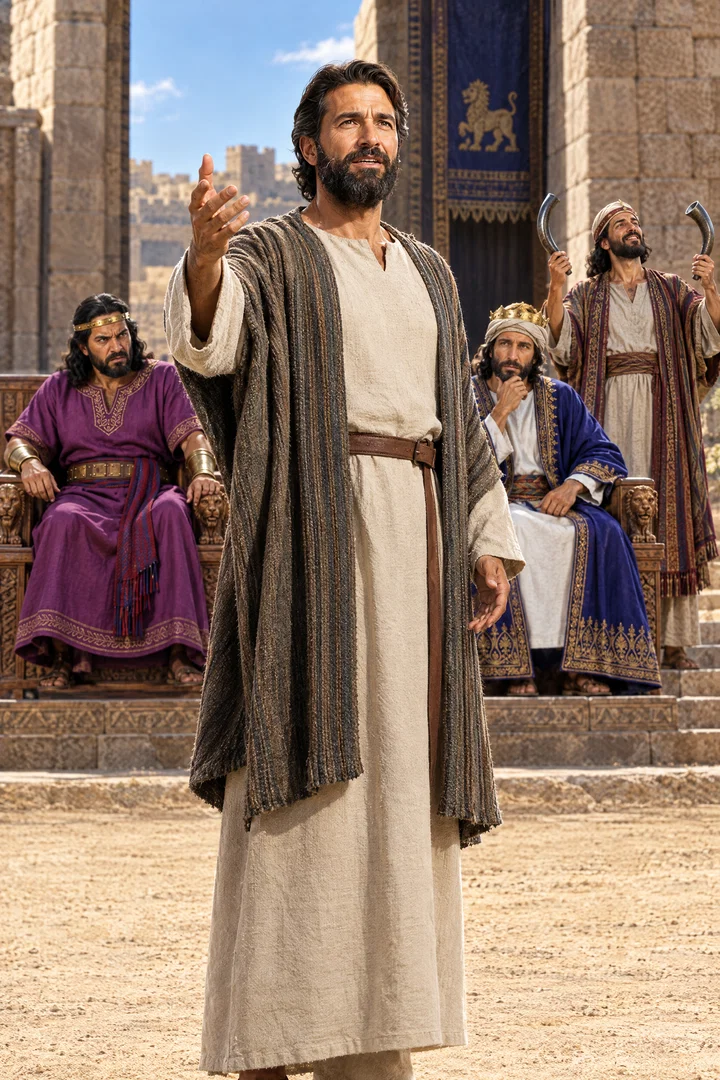
Cross-references
- 1 Kings 22:8
And the king of Israel said unto Jehoshaphat, There is yet one man, Micaiah the son of Imlah, by whom we may enquire of the LORD: but I hate him; for he doth not prophesy good concerning me, but evil. And Jehoshaphat said, Let not the king say so.
Ahab hates Micaiah for prophesying evil rather than good concerning him.
- 2 Chronicles 18:16
Then he said, I did see all Israel scattered upon the mountains, as sheep that have no shepherd: and the LORD said, These have no master; let them return therefore every man to his house in peace.
Micaiah warns that Israel will be scattered and sent home in peace.
- 2 Chronicles 18:15
And the king said to him, How many times shall I adjure thee that thou say nothing but the truth to me in the name of the LORD?
The parallel account records Ahab adjuring Micaiah to speak truth in the Lord’s name.
- 1 Kings 22:28
And Micaiah said, If thou return at all in peace, the LORD hath not spoken by me. And he said, Hearken, O people, every one of you.
Micaiah’s return in peace would prove whether the Lord had spoken through him.
- 2 Chronicles 18:4-6
And Jehoshaphat said unto the king of Israel, Enquire, I pray thee, at the word of the LORD to day.
Jehoshaphat asks to inquire of the Lord before deciding whether to go to battle.
- 2 Chronicles 18:7
And the king of Israel said unto Jehoshaphat, There is yet one man, by whom we may enquire of the LORD: but I hate him; for he never prophesied good unto me, but always evil: the same is Micaiah the son of Imla. And Jehoshaphat said, Let not the king say so.
Ahab hates Micaiah because he prophesies evil concerning him.
- Matthew 26:63-64
But Jesus held his peace. And the high priest answered and said unto him, I adjure thee by the living God, that thou tell us whether thou be the Christ, the Son of God.
Christ answers the high priest after being adjured.
Commentary
Each commentary is drawn from primary sources: the writings of Ellen G. White and Adventist pioneers and periodicals. Each commentary is separate. Its own words are not a quotation; follow the references to read the source passages.
Ellen G. White
5 sources
Ahab hated Micaiah because the prophet spoke evil against him, his messages being unfavorable and condemning to the king.RH Dec 25, 1913Lt 19, 1875, par. 9–10 Yet in this verse Ahab solemnly adjures him to tell nothing but what is true in the name of the Lord.Ms 29, 1911, par. 35–36PK 196.1RH Dec 25, 1913PK 195.2–3 He made that demand because he and Jehoshaphat suspected that Micaiah's first favorable answer was not right.Ms 29, 1911, par. 35–36
What followed when the truth was told was a vision of Israel scattered without a leader, like sheep without a shepherd, with the word that the people should return each to his house in peace.Ms 29, 1911, par. 35–36RH Dec 25, 1913PK 195.2–3 That word was light and truth showing that heaven did not favor their project against Syria at Ramoth-gilead, warning that the campaign would not end in victory.Ms 29, 1911, par. 35–36PK 196.1PK 195.2–3 Neither king heeded the warning, and both went on to battle together.Ms 29, 1911, par. 35–36PK 196.1RH Dec 25, 1913
They rejected it because they had already marked out their course and were determined to follow their own judgment, making the warning unacceptable to them.Ms 29, 1911, par. 35–36 Ahab was determined to proceed, while Jehoshaphat was reluctant to withdraw after pledging himself to join him.PK 196.1 The refusal cost Ahab his life and brought the scattering of the armies of Israel and the return of the army, fulfilling the prophecy.Ms 29, 1911, par. 35–36RH Dec 25, 1913 Ahab's life might have been saved if he had accepted the message, but he refused it and perished.Ms 29, 1911, par. 35–36
Sources
Pioneers and periodicals
14 sources
Ahab demanded that Micaiah tell him nothing but the truth in the name of the Lord, even though he hated him because his prophecies were always unfavorable and evil toward him.RH Dec 25, 1913PGGC 82.1–83.1ST Dec 16, 1889 Micaiah faithfully told what the Lord had shown him that Ahab would be overthrown and Israel scattered without a leader, contrary to the flattering assurances of success from four hundred false and popular prophets, and was imprisoned and afflicted for the unwelcome warning.RH Jun 26, 1855PGGC 82.1–83.1RH Jul 13, 1911 His counsel was rejected because it opposed the popular counsel, and Ahab and Jehoshaphat went to battle where Ahab was killed at Ramoth-Gilead and the army returned as foretold, while Jehoshaphat barely escaped, proving Micaiah alone was right.RH Dec 25, 1913ST May 13, 1908ST Nov 22, 1899 God had faithfully warned the very wicked Ahab by His servants and gave him time to reform, but when he continued in evil God let him follow his own way and gave him over to a lying spirit to fall in battle, which is a striking illustration of divine justice and long-suffering and of His right to punish the disobedient and impenitent.RH Jan 8, 1861RH Nov 7, 1912 Jehoshaphat's alliance with Ahab to recapture Ramoth-Gilead was a fearful mistake urged by political fear of Syria, for Judah was safe while obeying God and trusting His defense, and no alliance with the world or compromise with error is ever justified by seeming advantage.ST May 13, 1908RH Jul 13, 1911ST Sep 10, 1885ST Jul 13, 1904
Historical Setting and Outcome
The verse belongs to the reign of weak and wicked Ahab, king of Israel, contemporary of Jehoshaphat of Judah and of Elijah the Tishbite.RH Nov 7, 1912ST May 13, 1908 He was the seventh king of Israel and second ruler of the third Israelitish dynasty, reigning twenty-two years early in the ninth century before Christ.RH Nov 7, 1912 More is said in Scripture of him both as man and king than of any other ancient monarch, written for the learning and profit of men and kings of after generations and showing divine solicitude toward him.RH Nov 7, 1912 He enjoyed more than average opportunities both as man and prince, and from a civil viewpoint was successful, clever, skilled and patriotic when Judah and Israel attained the acme of power and prosperity, a clever statesman, skilled general, and eminently patriotic toward his people and country, but was a moral coward who failed where he should have been strongest.RH Nov 7, 1912
Its setting is a war with Syria three years after the previous conflict, for Ramoth-Gilead east of Jordan, which Ahab sought to recapture from Syrian control.ST Sep 10, 1885ST Jul 13, 1904 The good king Jehoshaphat of Judah made the fearful mistake of alliance with Ahab and Jezebel, joining his house to theirs by the marriage of his son Jehoram to Athaliah.ST May 13, 1908ST Jul 13, 1904 That alliance ended with Ahab's death.ST May 13, 1908ST Sep 10, 1885
In the verse Ahab adjures Micaiah to tell him nothing but what is true in the name of the LORD, even though he hated Micaiah because his prophecies were regularly unfavorable and evil toward him.RH Dec 25, 1913PGGC 82.1–83.1ST Dec 16, 1889ST Nov 22, 1899RH Sep 5, 1865 The verse thus places the prophet's unpopular warning in a setting where truth was demanded but unwelcome.PGGC 82.1–83.1RH Sep 5, 1865 The episode contrasts Micaiah's faithful, even life-threatening warning of judgment with the flattering predictions of success by four hundred false, Baal, or popular prophets and priests.RH Jun 26, 1855PGGC 82.1–83.1ST Dec 16, 1889RH Jun 23, 1903ST Nov 22, 1899
Micaiah told what the Lord had shown him rather than what the wicked king wanted to hear, testifying that Ahab would be overthrown and that Israel would be scattered without a leader and disaster would come on the expedition, contrary to their assurances.RH Dec 25, 1913RH Jun 26, 1855ST Dec 16, 1889RH Jun 23, 1903 His hostility to the unwelcome message led to his imprisonment and affliction.RH Jun 26, 1855PGGC 82.1–83.1 Jehoshaphat's concern that the four hundred were deceiving him led him to seek Micaiah, whose contrary counsel exposed the danger of trusting them.RH Jul 13, 1911
Micaiah's counsel was rejected because it opposed the popular counsel, and Ahab and Jehoshaphat ignored the warning and went to battle.RH Dec 25, 1913ST Nov 22, 1899ST Jul 13, 1904 The allies were defeated, Ahab was killed and fell in battle at Ramoth-Gilead and the army returned as foretold.RH Dec 25, 1913ST May 13, 1908ST Jul 13, 1904 Jehoshaphat barely escaped with his life and returned to Jerusalem in peace because the Syrians did not follow up their victory.ST Jul 13, 1904 The outcome showed that Micaiah alone was right and the four hundred were wrong.ST Nov 22, 1899
Divine Justice and Warning
The verse stands in the account of a lying spirit persuading Ahab to go up to Ramoth-Gilead to fall in battle, and that act does not make God unjust.RH Jan 8, 1861 Ahab was a very wicked king who caused Israel to depart from the Lord and did evil above all before him.RH Jan 8, 1861 He wickedly sold himself to the worship of a plurality of heathen deities and later enforced their worship upon his people, whose predominating characteristic was devotion to a monotheistic religion and a semitheocratic civil regime.RH Nov 7, 1912 God faithfully warned him by His servants and gave him time to reform, but he continued doing what displeased the Lord.RH Jan 8, 1861 Finally God let him follow his own way, gave him over to the control of a lying spirit, and decided he should fall in battle at Ramoth-Gilead.RH Jan 8, 1861
God has a right to punish the disobedient and impenitent, and Ahab's case is a striking illustration of God's justice and long-suffering.RH Jan 8, 1861 The verse illustrates that prophets who advised kings on political and military affairs could give unreliable counsel when their words were not prompted by the Lord.RH Jul 13, 1911 Believers are in danger if they trust such assurances of success without seeking the Lord's true word.RH Jul 13, 1911
The alliance was urged by political fear of Syria as a standing menace, yet Judah was safe while obeying God and trusting His defense.ST Jul 13, 1904 God could easily protect His people and destroy their enemies.ST Jul 13, 1904 No alliance with the world or compromise with error is ever justified by seeming advantage, since such alliances bring only evil.ST Jul 13, 1904
Sources