1 Samuel 1:26
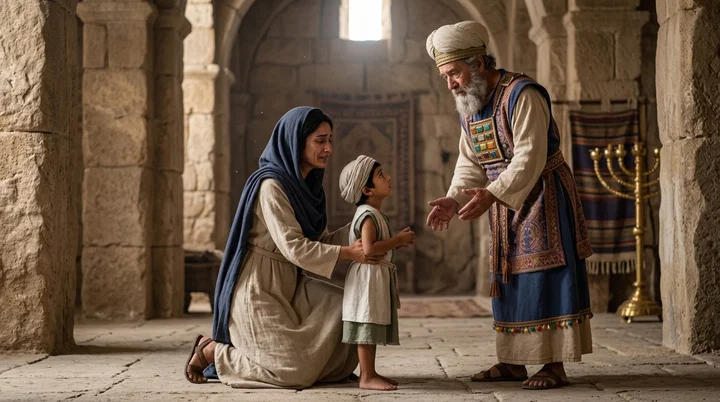
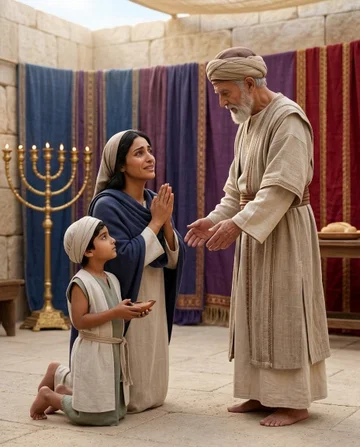
And she said, Oh my lord, as thy soul liveth, my lord, I am the woman that stood by thee here, praying unto the LORD.
Translations
And she said, Oh my lord, as your soul lives, my lord, I am the woman that stood by you here, praying to the LORD.
King James Version, Revised Version
And she said, Oh my lord, as thy soul liveth, my lord, I am the woman that stood by thee here, praying unto the LORD.
And she said, O my lord, as thy soul liveth, my lord, I am the woman that stood by thee here, praying unto the Lord.
And she said, O my lord, as thy soul liveth, my lord, I am the woman that stood by thee here, praying to the LORD.
And she said, Oh, my lord, as thy soul liveth, my lord, I am the woman that stood by thee here, praying unto Jehovah.
and she saith, 'O, my lord, thy soul liveth! my lord, I [am] the woman who stood with thee in this [place], to pray unto Jehovah;
And she said, Oh my lord, [ as] thy soul liveth, my lord, I am the woman that stood by thee here to pray to Jehovah.
And she said—Pardon, my lord! By the life of thy soul, my lord,—I, am the woman who was standing near thee here, praying unto Yahweh:
Berean Standard Bible, Majority Standard Bible
“Please, my lord,” said Hannah, “ as surely as you live, my lord, I am the woman who stood here beside you praying to the LORD.
She said, “Oh, my lord, as your soul lives, my lord, I am the woman who stood by you here, praying to the LORD.
And she said, O my lord, as your soul is living, my lord, I am that woman who was making a prayer to the Lord here by your side:
And she said, Oh my Lord, as thy soule liueth, my lord, I am the woman that stoode with thee here praying vnto the Lord.
Douay-Rheims (Challoner revision)
And Anna said: I beseech thee, my lord, as thy soul liveth, my lord: I am that woman who stood before thee here praying to the Lord.
Pictures
Cross-references
- 1 Samuel 1:11
And she vowed a vow, and said, O LORD of hosts, if thou wilt indeed look on the affliction of thine handmaid, and remember me, and not forget thine handmaid, but wilt give unto thine handmaid a man child, then I will give him unto the LORD all the days of his life, and there shall no razor come upon his head.
Hannah vows to dedicate the child she asks God to give her.
- 1 Samuel 2:18-19
But Samuel ministered before the LORD, being a child, girded with a linen ephod.
Samuel serves at the tabernacle while Hannah brings him a coat each year.
- 1 Samuel 2:1-11
And Hannah prayed, and said, My heart rejoiceth in the LORD, mine horn is exalted in the LORD: my mouth is enlarged over mine enemies; because I rejoice in thy salvation.
Hannah’s prayer follows her appeal at Shiloh and dedication of Samuel.
- 1 Samuel 1:20
Wherefore it came to pass, when the time was come about after Hannah had conceived, that she bare a son, and called his name Samuel, saying, Because I have asked him of the LORD.
Samuel’s birth answers Hannah’s prayer.
Commentary
Each commentary is drawn from primary sources: the writings of Ellen G. White and Adventist pioneers and periodicals. Each commentary is separate. Its own words are not a quotation; follow the references to read the source passages.
Ellen G. White
18 sources
She returned to Shiloh to tell Eli that she was the woman who had stood there praying to the Lord during the family's yearly worship, and that Samuel was the answer to that earnest prayer, his name meaning asked of God.PP 569.3–4ST Oct 27, 1881CE 214.4–215.1PP 570.4 After his birth and weaning, during his first three years, she brought him to the tabernacle and house of God at Shiloh and gave him to the Lord's service under Eli the high priest, fulfilling her vow to dedicate him rather than withholding the gift she had received.ST Oct 27, 1881RH Sep 8, 1904Lt 12, 1884, par. 8 Giving up the care of her beloved child was a real sacrifice made with great self-denial, yet she was grateful and joyful that the Lord accepted her gift as a fragrant offering, and after leaving him she continued to care for him through prayer and a yearly robe while entrusting him to Eli's care.RH Sep 8, 1904Lt 12, 1884, par. 8CE 214.4–215.17MR 5.2LSEGW 120.2–4 During those first three years she carefully taught him to distinguish between good and evil and led his thoughts to the Creator, and that faithful training made home and school one and enabled him to maintain integrity amid the evil influences and sinful example of Eli's household without following his sons.RH Sep 8, 1904Ms 100, 1901, par. 10RH Oct 30, 1900 Her firmness, self-denial, and faithful influence in his earliest years powerfully shaped his character in contrast to Eli's failure to restrain his sons, and stands as an example of devotion and a mother's care in training children to love God and seek His honor.RH Sep 8, 1904ST Nov 10, 1881CE 214.4–215.1ST Nov 10, 1881
Hannah's Vow Fulfilled at Shiloh
The verse is Hannah returning to Shiloh and telling Eli that she is the woman who had stood there praying to the Lord.PP 569.3–4ST Oct 27, 1881CE 214.4–215.17MR 5.2SG2 107.2–108.1
Her distress and prayer had taken place during the family's yearly worship and sacrifices at Shiloh.PP 569.3–4
Samuel was the answer to her earnest prayer, and his name means asked of God.ST Oct 27, 1881PP 570.4
After his birth and weaning, during his first three years, she brought her young son to the tabernacle and house of God at Shiloh.ST Oct 27, 1881RH Sep 8, 1904Lt 12, 1884, par. 8CE 214.4–215.1PP 570.4
There she gave him to the Lord's service under Eli the high priest, fulfilling her vow to dedicate him rather than withholding the gift she had received.ST Oct 27, 1881RH Sep 8, 1904Lt 12, 1884, par. 8PP 570.4Ms 100, 1901, par. 10
Her prayer and dedication were followed by leaving him at Shiloh for service in God's house.CE 214.4–215.1Ms 100, 1901, par. 10
Giving up the care of her beloved child was a real sacrifice made with great self-denial.RH Sep 8, 1904Lt 12, 1884, par. 87MR 5.2
Yet she was grateful and joyful that the Lord accepted her gift as a fragrant offering.Lt 12, 1884, par. 87MR 5.2
After leaving him for service she continued to care for him through prayer and a yearly robe or little coat, entrusting him to Eli's care and to another's care to fulfill her duty.CE 214.4–215.17MR 5.2LSEGW 120.2–4SG2 107.2–108.1
Her yearly gift of clothing is compared to the yearly present brought to Henry while another family cared for him.LSEGW 120.2–4
Faithful Training and Example
During his first three years his mother carefully taught him to distinguish between good and evil, using every familiar object around him to lead his thoughts up to the Creator.RH Sep 8, 1904Ms 100, 1901, par. 10 That training made home and school one, with loving father and mother instructing in place of stranger lips.RH Oct 30, 1900 They taught God's requirements and all His dealings with His people, associating thoughts of God with daily life and recounting His mighty works in deliverance.RH Oct 30, 1900 They impressed God's providence and the future life and the true, the good, the beautiful on the young mind.RH Oct 30, 1900 They illustrated lessons by figures and symbols to fix them in memory and initiated the child almost from infancy into the mysteries, wisdom and hopes of his fathers, in a way of thinking and feeling and anticipating that reached beyond things seen and transitory to the unseen and eternal.RH Oct 30, 1900 Such training brought forth youth vigorous in body and mind, quick to perceive and strong to act, with heart prepared like good ground for the precious seed and mind trained to see God in revelation and nature.RH Oct 30, 1900
That early training led him to choose to maintain his integrity when his youth in the tabernacle exposed him to evil influences and sinful example.RH Sep 8, 1904Ms 100, 1901, par. 10 It helped him resist the evil in Eli's household, for he did not seek the company of the sons of Eli, who feared not God nor honored their father, nor follow their evil ways.RH Sep 8, 1904Ms 100, 1901, par. 10 Given to God as a consecrated offering, he was accepted by God because his heart was pure and he revered God.Ms 51, 1900, par. 2220MR 43.5 The Lord made him a channel of light from childhood, and later gave the boy a solemn message.Ms 38, 1895, par. 38–40Ms 51, 1900, par. 2220MR 43.5 His story shows that God can choose and work through the young, and young people who consecrate themselves to God may likewise be accepted and used in His work.Ms 38, 1895, par. 38–4020MR 43.5
His mother's firmness and self-denial and faithful influence in the child's earliest years powerfully shaped his character.ST Nov 10, 1881ST Nov 10, 1881 Her faithfulness stands in contrast to Eli's failure to restrain and guide his sons.ST Nov 10, 1881ST Nov 10, 1881 Her fulfillment of the vow is an example of devotion to God and of a mother's care for her child.RH Sep 8, 1904CE 214.4–215.1 Her example shows a mother teaching her child to love and reverence God and seeking for him the greatness of honoring God and blessing others.CE 214.4–215.1 Her reward encourages faithfulness in training children for God.RH Sep 8, 1904 Her patient, prayerful, and persevering fidelity is the quality needed in the church, Sabbath school, and society.TSSW 109.4–5 Her entrusting her young son to another's care and leaving him in Eli's care connects a parent's care for a child with sacrifice in order to serve God and fulfill duty.SG2 107.2–108.1LS 254.2–255.1
Sources
Pioneers and periodicals
20 sources
Hannah is identifying herself to Eli as the woman who had stood beside him in that same place praying to the Lord.ST Apr 8, 1913ST Apr 8, 1913RH Jun 24, 1875 The prayer she recalls was her earnest prayer for a son, and in bringing the weaned Samuel back to Shiloh she presents the answered prayer to the Lord in faithful fulfillment of her solemn vow to give him to God.ST Oct 27, 1881ST Apr 23, 1912RH Jan 12, 1860RH Aug 31, 1869 With great self-denial she leaves her young son in the care of Eli the high priest to be trained for service in the house of God.RH Sep 8, 1904ST Nov 10, 1881ST Apr 6, 1888 Her careful teaching in his first three years to know good from evil and to obey fitted him to keep his integrity amid the evil influences of Eli's sons and to hear the Lord's voice, showing the power of a mother's early influence to shape character for God.RH Sep 8, 1904ST Nov 10, 1881RH Oct 30, 1900RH Feb 27, 1908 Her bringing of Samuel is therefore the pattern for every Christian mother and godly father in dedicating children to God's service, for mere consecration without such devoted training and renewed obedience does not form souls for Him.LS 254.2–255.1RH Feb 18, 1902RH Nov 17, 1904
Hannah's Words and Setting
The speaker is Hannah identifying herself to Eli as the woman who had stood by him there praying to the LORD.ST Apr 8, 1913ST Apr 8, 1913RH Jun 24, 1875RH Aug 31, 1869ST Jul 13, 1904 The identification recalls the prayer connected with Samuel's birth and the answer to that prayer, to her prayer as a mother.ST Apr 8, 1913ST Apr 8, 1913RH Aug 31, 1869 She speaks after returning to the temple with Samuel after he was weaned.ST Jul 13, 1904 That prayer was answered in the birth of Samuel, who became a prophet, and her later yearly visits bringing him a coat belong to the same setting but add no further meaning to the verse.RH Jun 24, 1875RH Aug 31, 1869
The prayer she recalls was her prayer for a son. Samuel was the answer to that earnest prayer.ST Oct 27, 1881RH Aug 31, 1869 She has returned to the same place, now with an overflowing heart, to present Samuel to the Lord as she had promised. She had vowed to dedicate him to God's service, and she kept that vow and brought him to the Lord.ST Oct 27, 1881
She spoke these words on returning to the same place at Shiloh.ST Oct 27, 1881RH Jun 24, 1875 That place was the tabernacle or temple where Eli served as high priest.ST Sep 29, 1898 She came bringing Samuel after he was weaned to present him to the Lord.ST Oct 27, 1881ST Jul 13, 1904 The young Samuel afterward served there in the tabernacle.ST Sep 29, 1898
The verse belongs to Israel's history between the judges and the kings, a period whose experiences have spiritual value for God's people. It stands in the record of Israel's apostasy and backsliding in the days of Samuel. Israel was restored from that backsliding through the ministrations of Samuel the prophet. It belongs also to the godly household of Hannah and Elkanah, whose home atmosphere produced Samuel.ST Sep 9, 1880
Faithful Vow and Motherhood
The verse belongs to Hannah's faithful keeping of her solemn vow to give her son to the Lord, when after his birth she brought Samuel to the tabernacle as the beginning of his service to God.ST Apr 23, 1912 That bringing was an offering of love and hope, showing patience and faith while she waited on God in silent, agonizing prayer.RH Jan 12, 1860 Her fulfilling of the vow is an example of devotion to God and of a mother's care for her child.
With great self-denial and firmness she placed him under Eli the high priest to be trained for service in the house of God.RH Sep 8, 1904ST Nov 10, 1881 She entrusted her young son to the Lord's service and left him in Eli's care, connecting the care of a child with a parent's sacrifice in order to serve God.ST Apr 6, 1888LS 254.2–255.1 She brought the child to the priest and devoted him to service in the sanctuary, after which responsibility for his education rested with Eli.ST Apr 6, 1888
During the first three years of his life she carefully taught him to distinguish between good and evil, using every familiar object around him to lead his thoughts up to the Creator.RH Sep 8, 1904 Home and school were one, where loving father and mother gave instruction in place of stranger lips, teaching God's requirements and all His dealings with His people and associating thoughts of God with daily life.RH Oct 30, 1900 They recounted His mighty works in deliverance, impressed His providence and the future life and the true, the good, and the beautiful on the young mind, illustrating lessons by figures and symbols to fix them in memory and to initiate the child almost from infancy into the mysteries, wisdom and hopes of his fathers.RH Oct 30, 1900 That way of thinking and feeling and anticipating reached beyond things seen and transitory to the unseen and eternal, bringing forth youth vigorous in body and mind, quick to perceive and strong to act, with heart prepared like good ground for the precious seed and mind trained to see God in revelation and nature.RH Oct 30, 1900 She taught him obedience from his earliest years, so that while still a small child living in Eli's house he was at his master's side at the first call.RH Feb 27, 1908
That early training led him to choose to maintain his integrity when his youth in the tabernacle exposed him to evil influences and sinful example.RH Sep 8, 1904 He did not seek the company of the sons of Eli, who feared not God nor honored their father, nor follow their evil ways.RH Sep 8, 1904 That early training in obedience prepared him for the grand privilege of having the Lord speak to him, for those taught obedience when young are much more likely to hear and heed the voice of the Lord than those who are not, and it is the duty of parents to expect obedience, with the mother responsible to command it.RH Feb 27, 1908 A mother's influence in a child's earliest years is powerful and shapes character, and faithful Hannah's firmness and self-denial stand in contrast to Eli's failure to restrain and guide his sons.ST Nov 10, 1881ST Nov 10, 1881 The verse shows her beautiful motherhood and mother spirit as the devoted mother through whom God raised Samuel from childhood to be a prophet whom Israel was willing to hear, and her reward and example encourage faithfulness in training children for God.RH Sep 8, 1904ST Apr 2, 1912
Wider Lessons and Application
The opening chapters of 1 Samuel stand as a record of divine employment of women and of instruction given to them. The praying woman identifying herself before Eli therefore demonstrates that woman holds a place and a voice in the church of the Lord. She is to be used in all her sweet and blessed winning ways, a thousand times more potent in her proper place than in assumption of undue authority, teaching and perhaps even preaching, but as a woman.
Her bringing of Samuel to Eli and presenting him to the Lord belongs among the accounts of Samuel's early life to be studied by parents for principles of children's earliest training.RH Feb 18, 1902 Her sacrifice in giving up her son to God's service is the pattern for every Christian mother dedicating sons to God's service and every godly father desiring them to grow up to speak for Christ, yet mere birthday consecration does not form souls, but only dedication like the vow of the Nazarite that receives constant renewal and obedience.RH Nov 17, 1904 Entrusting the young child to the Lord's service and leaving him in Eli's care joins the care of a child to a parent's sacrifice in order to serve God.LS 254.2–255.1
Sources