1 Samuel 2:18
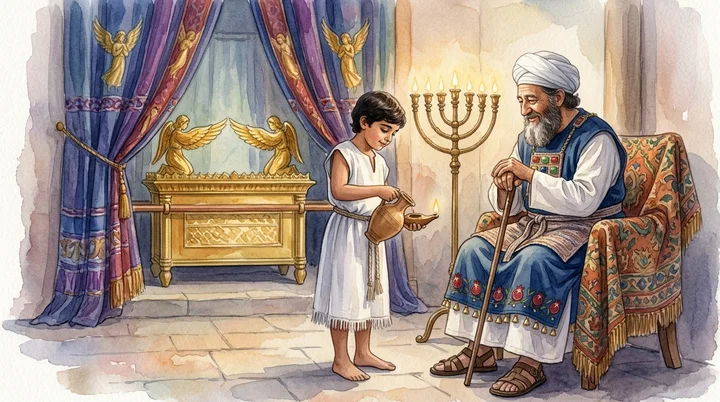
But Samuel ministered before the LORD, being a child, girded with a linen ephod.
Translations
American King James Version, King James Version, Webster Bible, Revised Version
But Samuel ministered before the LORD, being a child, girded with a linen ephod.
But Samuel ministered before the Lord, being a child, girded with a linen ephod.
But Samuel ministered before Jehovah, being a child, girded with a linen ephod.
And Samuel is ministering [in] the presence of Jehovah, a youth girt [with] an ephod of linen;
And Samuel ministered before Jehovah, a boy girded with a linen ephod.
But, as for Samuel, he was ministering before Yahweh,—a boy girded with an ephod of linen.
Berean Standard Bible, Majority Standard Bible
Now Samuel was ministering before the LORD— a boy wearing a linen ephod.
But Samuel ministered before the LORD, being a child, clothed with a linen ephod.
But Samuel did the work of the Lord's house, while he was a child, dressed in a linen ephod.
Now Samuel being a yong childe ministred before the Lord, girded with a linen Ephod.
Douay-Rheims (Challoner revision)
But Samuel ministered before the face of the Lord: being a child girded with a linen ephod.
Pictures

Cross-references
- 1 Samuel 3:13
For I have told him that I will judge his house for ever for the iniquity which he knoweth; because his sons made themselves vile, and he restrained them not.
Eli is judged because he failed to restrain his sons.
- 1 Samuel 2:22-26
Now Eli was very old, and heard all that his sons did unto all Israel; and how they lay with the women that assembled at the door of the tabernacle of the congregation.
Eli rebukes his sons for their wrongdoing, while Samuel grows in favor with God and men.
- 1 Samuel 2:26
And the child Samuel grew on, and was in favour both with the LORD, and also with men.
Both describe Samuel growing in favor with God and people.
- 1 Samuel 1:27-28
For this child I prayed; and the LORD hath given me my petition which I asked of him:
Hannah dedicates Samuel to the Lord and brings him to serve.
- 1 Samuel 1:11
And she vowed a vow, and said, O LORD of hosts, if thou wilt indeed look on the affliction of thine handmaid, and remember me, and not forget thine handmaid, but wilt give unto thine handmaid a man child, then I will give him unto the LORD all the days of his life, and there shall no razor come upon his head.
Hannah vowed before Samuel’s birth to give him to the Lord.
- 1 Samuel 2:11
And Elkanah went to Ramah to his house. And the child did minister unto the LORD before Eli the priest.
Describes the child Samuel serving the Lord before Eli.
- Jeremiah 7:12-14
But go ye now unto my place which was in Shiloh, where I set my name at the first, and see what I did to it for the wickedness of my people Israel.
Shiloh, where Samuel served as a child, is held up as a warning of judgment.
- 1 Samuel 2:27-30
And there came a man of God unto Eli, and said unto him, Thus saith the LORD, Did I plainly appear unto the house of thy father, when they were in Egypt in Pharaoh’s house?
The passage recalls the priestly office and God’s judgment on Eli’s house.
- 1 Samuel 3:15
And Samuel lay until the morning, and opened the doors of the house of the LORD. And Samuel feared to shew Eli the vision.
Says Samuel opened the doors of the Lord’s house in the morning.
- 1 Samuel 1:12-17
And it came to pass, as she continued praying before the LORD, that Eli marked her mouth.
Eli mistakes Hannah’s prayer for drunkenness.
- 1 Samuel 4:10-18
And the Philistines fought, and Israel was smitten, and they fled every man into his tent: and there was a very great slaughter; for there fell of Israel thirty thousand footmen.
Eli’s family suffers the foretold downfall.
Commentary
Each commentary is drawn from primary sources: the writings of Ellen G. White and Adventist pioneers and periodicals. Each commentary is separate. Its own words are not a quotation; follow the references to read the source passages.
Ellen G. White
12 sources
Samuel ministered before the Lord while still a child, girded with a linen ephod placed on him as a token of his consecration to the work of the sanctuary, though Levites did not normally enter their appointed services until twenty-five years of age.CE 216.1–3 His humble and sometimes unpleasant tabernacle duties were performed as well as he could and willingly, with more important trusts committed to him every year according to his capacity.CE 216.1–3 His childhood service stood amid corruption, with Eli's sons polluting the sacred service and stripping worship of its sacred meaning, while his fitness for that setting grew from faithful maternal care that taught him to distinguish good from evil and dedicated him to God's service.PP 576.3–4ST Nov 10, 18813T 472.2–3Ms 100, 1901, par. 10 The verse sets his service in contrast to Eli's failure to manage his household according to God's rules for family government, overlooking and indulging his sons' faults from childhood instead of restraining evil and executing justice upon the sinner.ST Nov 10, 1881CE 218.2–219.24T 651.1SG4 206.2 Parents are therefore required to restrain their children, since indulgence can bring judgment and ruin while young people who like Samuel love God and keep close to heaven can resist powerful temptation, and work prompted by love for God in every part of life is accepted by Him.4T 383.1CE 218.2–219.2ST Nov 24, 18813T 472.2–3
Childhood Service and Setting
Samuel ministered before the LORD while still a child, girded with a linen ephod placed upon him as a token of his consecration to the work of the sanctuary.CE 216.1–3Lt 35, 1887, par. 15–17 Though Levites did not normally enter upon their appointed services until twenty-five years of age, he was an exception, with more important trusts committed to him every year according to his capacity.CE 216.1–3 His early duties in the tabernacle were humble and at first very humble and not always pleasant, sometimes unpleasant, but he performed them to the best of his ability and with a willing heart.CE 216.1–3
That childhood service took place amid corruption, while Eli's sons polluted the sacred service and sin filled Israel.3T 472.2–3 Their irreverence stripped the worship service of its sacred meaning and led the people to despise and neglect it.PP 576.3–4 Yet surrounded by those corrupting influences Samuel remained untainted.3T 472.2–3
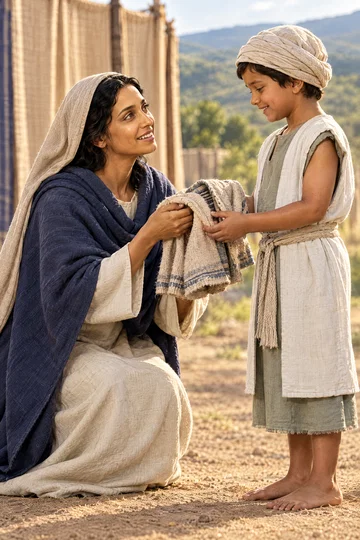
His fitness for that setting grew from faithful care that shaped his character in childhood.ST Nov 10, 1881 His mother kept faith with her vow by bringing him a coat each year, a loving act marked by her prayers. She had carefully taught him to distinguish good from evil and had dedicated him to God's service, and this early training prepared him to resist the evil influences in Eli's household.Ms 100, 1901, par. 10
The verse belongs to the history in which the Lord called Samuel in his youth and revealed to him the judgment coming on Eli's house. His early service shows that God honors and calls the young, and his growth in favor with God and people shows that God watches children and the characters they form.
Parental Contrast and Lesson
The child serving before the Lord stands in deliberate contrast to the wickedness of Eli's sons and to Eli's failure to restrain them and teach them obedience.ST Nov 10, 18814T 651.1STSE 84.1–85.2 His youth and service throw into relief a household where sacred service was polluted, and out of that contrast came the Lord's calling of Samuel and the revelation to him of judgment upon Eli's house.3T 472.2–3
Eli as priest and judge of Israel was accountable for the moral and religious standing of his people and in a special sense for the character of his sons.CE 218.2–219.2 Yet he did not manage his household according to God's rules for family government, but followed his own judgment, overlooking and indulging the faults and sins of his sons from childhood instead of first restraining evil by mild reproof and then subduing wrong by severe justice.CE 218.2–219.2 He could have restrained his wicked and rebellious sons but did not because he feared their displeasure, suffering them to go on in rebellion until they were a curse to Israel.SG4 206.2 His indulgence came from believing himself wiser than his Creator and following human wisdom and fond, indulgent affection instead of God's commands.ST Nov 24, 1881 He allowed the children to grow up from babyhood without restraint until forward, selfish, disagreeable ways became confirmed habits rendering them unloving and unlovable, while mistaken love and fondness also nourished pride and vanity through trimmings and dress that led them to think outward appearance makes character, leaving the heart void of Christian graces and filled with self-love, haughtiness, and uncontrolled passion.ST Nov 24, 1881SG4 206.2
For this he was condemned and cursed because he did not promptly and firmly restrain his sons, reprove sin, and execute justice upon the sinner.CE 218.2–219.24T 651.1STSE 84.1–85.2 By not reproving sin and executing justice upon the sinner he incurred the Lord's displeasure and could not be depended upon to keep Israel pure.CE 218.2–219.2 The account warns that parents are required to restrain their children and that the salvation of children depends very much upon the course pursued by their parents, since indulgence can bring judgment and harm a child's hope of salvation.4T 383.1SG4 206.2 That negligent, ease-loving, indulgent example brought reproach on the truth of God and extended its baleful influence to thousands of homes throughout Israel, ending in disaster and death to himself, ruin to his wicked sons, and ruin to thousands in Israel, with soul-anguish over perverse conduct for those who fail to carefully study and faithfully obey God's word.CE 218.2–219.2ST Nov 24, 1881
Though surrounded by corrupting influences while sin filled Israel, Samuel remained untainted because he loved God and kept close to heaven, showing that young people can resist powerful temptation through close connection with God.3T 472.2–3 His example shows that service to God includes every part of life, for work prompted by love for God and a sincere desire to do His will is accepted by Him and makes the worker His coworker whom He fits to accomplish a great work for His people.CE 216.1–3 His early duties in the tabernacle were humble and sometimes unpleasant, but he did them as well as he could and willingly, carrying his religion into every duty of life and regarding himself as God's servant and his work as God's work.CE 216.1–3 One who like Samuel has served God from childhood, whose childhood was not marked with grossness though having the errors of humanity, needs a very different discipline than one with a set, stubborn, selfish will and does not need agonizing conflict and trial to come to Jesus.Lt 35, 1887, par. 15–17 The mournful history proves that God Himself established family relations and His word is the only safe guide in the management of children, since the Creator who bought children with His own blood best understands their needs.ST Nov 24, 1881
Sources
Pioneers and periodicals
23 sources
Samuel as a small child served before the Lord at Shiloh in a linen ephod, the sacred garment marking consecration to sanctuary service, entrusted to him at an unusually early age though Levites did not ordinarily minister until twenty-five.ST Nov 25, 1908ST Dec 15, 1881ST Oct 10, 1895 He was not a priest and could not do priestly work, but he helped with duties suited to a child such as caring for sanctuary items, running errands, and opening the doors of the house of the Lord.ST Mar 31, 1909ST Oct 10, 1895RH Dec 30, 1902 His lowly, humble tasks done faithfully and willingly from love for God were true service to the Lord, showing that faithfulness in little things trains a child for greater responsibilities.RH Dec 30, 1902RH Mar 24, 1903RH Sep 9, 1902 His childhood ministry stands amid the corruption of Eli's sons and in contrast to Eli's failure to restrain them, warning that indulgent neglect in training children brings ruin while faithful parental care shapes character for God.ST Nov 10, 1881ST Nov 24, 1881ST Oct 23, 1884 Hannah's keeping of her vow in dedicating him before birth and bringing him his little coat year by year shows wise godly upbringing, and God honors and calls such faithful young servants, watching children with deep interest.ST Apr 23, 1912ST Sep 9, 1880ST Oct 23, 1884
Setting and Meaning
The verse belongs to the account of Samuel's birth in answer to his mother's prayer, placing his childhood service to the Lord within that answered-prayer history.ST Apr 8, 1913 It belongs to Israel's history between the judges and the kings, a time when people did what seemed right to them. It stands amid Israel's low spiritual condition and apostasy, with the corruption of Eli's sons.ST Apr 8, 1913 Their greed as corrupt priests made the people despise God's service, and their worship included heathen practices, yet the verse stands in the time from which the people were restored through the ministrations of Samuel the prophet.
It stands when the tabernacle was located at Shiloh.RH Aug 28, 1856 It stands in the melancholy record that on account of the gross wickedness of the priests and people God forsook His habitation and His sanctuary.RH Aug 28, 1856RH Jan 6, 1853 He gave His glory, the ark of His covenant and testament, into the hands of the Philistines, His enemies.RH Aug 28, 1856RH Jan 6, 1853 Israel's own sins had shorn them of strength, so when Israel went out against the Philistines to battle they were smitten before them.RH Aug 28, 1856
The linen ephod was a sacred garment marking consecration to sanctuary service, and Samuel wore it while still a child at an unusually early age.ST Nov 25, 1908ST Dec 15, 1881ST Oct 10, 1895 Although Levites were not ordinarily permitted to minister in the sanctuary until age twenty-five, with special service beginning then, Samuel was an exception because of his piety and faithfulness.ST Dec 15, 1881ST Oct 10, 1895 His duties were suited to a child and to his capacity, and increasingly important responsibilities were entrusted to him as he grew.ST Nov 25, 1908ST Dec 15, 1881ST Oct 10, 1895
Samuel was Hannah's son, whom Eli had wrongly reproved as drunken, and given to God as firstborn.ST Mar 31, 1909RH Apr 5, 1860 He was not a priest and could not perform priestly duties, but he could help the priests with duties suited to a child, such as caring for sanctuary items and running errands for Eli, and after God called him, opening the doors of the Lord's house.ST Oct 10, 1895RH Dec 30, 1902 He became a priest in Israel and was called to be a prophet in his early youth.ST Mar 31, 1909 He became the prophet who displaced Eli and his family, to whom the Lord revealed the judgment coming on Eli's house, and while still a child he foretold their ruin.RH Apr 5, 1860
Faithful Childhood Service
The verse holds up a child serving God as the goal of religious training, a work that requires patience because growth is quiet and gradual like a seed breaking ground unseen and like wheat ears filling day after day until the field is ripe.RH Oct 15, 1857 His daily duties trained him to become God's herald to a great nation, showing that faithfulness in little things prepares a person for greater responsibilities.RH Mar 24, 1903 His early duties in the tabernacle were humble, useful, lowly, and sometimes unpleasant, yet they were suited to his capacity and ability.ST Nov 25, 1908RH Dec 30, 1902RH Sep 9, 1902 He did them faithfully, willingly, and as well as he could from love for God, treating his work as God's work and every duty as part of his religion, and faithfully doing such lowly tasks was service to the Lord.ST Nov 25, 1908RH Dec 30, 1902RH Sep 9, 1902
Service to God includes every part of life, for work done from love for God and a sincere desire to do His will is accepted by Him.RH Sep 9, 1902 Such work makes the worker His coworker and can serve His purposes for His people. It shows that young people can be precious to God through faithful service in everyday duties.RH Sep 9, 1902 It is delighting in service in the house of God.ST Sep 16, 1913
Hannah had dedicated him to the Lord before his birth and kept her vow by bringing him to the tabernacle.ST Apr 23, 1912 She brought him a little coat each year as a loving gift made with prayer.ST Apr 23, 1912 His growth in favor with the Lord and with people shows that God honors and calls the young. It shows that God watches children with deep interest, noting the characters they form.ST Apr 23, 1912
His mother made the ephod and took one to him each year, making it larger year by year to fit his growth.ST Jul 21, 1881 This means the garment of righteousness for child-Christians must be fashioned the same way.ST Jul 21, 1881 It must be fitted to a child's size and enlarged as the child grows, and not cut to a pattern for people advanced in life.ST Jul 21, 1881
Parental Duty and Warning
Samuel's service before the Lord as a child stands in contrast to Eli's failure to restrain his sons and to teach them obedience.ST Nov 10, 1881 The contrast emphasizes the grave harm done when a father and priest neglects that duty. It shows the influence of faithful care in shaping a child's character.ST Nov 10, 1881 The Lord called Samuel while still a child and revealed to him the judgment coming on Eli's house.
Eli's religious observances and formal prayers did not make his conduct an effective restraint against sin and did not draw his children toward Christ and obedience.ST Oct 23, 1884 His example warns that a parent's daily influence can hinder a child's conversion.ST Oct 23, 1884 His sons as priests committed grave crimes and used their office to dishonor the worship of God.RH Jul 16, 1857 He rebuked them, but too late and too weakly, and his words lacked firm restraint.RH Jul 16, 1857ST Oct 23, 1884 They would not listen to him, and his failure to stop them brought judgment on his household.RH Jul 16, 1857ST Oct 23, 1884 Those entrusted with children must therefore restrain wrongdoing decisively, even when doing so is painful.RH Jul 16, 1857
Eli's sin was believing himself wiser than his Creator and following human wisdom and fond, indulgent affection instead of God's commands in training children.ST Nov 24, 1881 He allowed them to grow up from babyhood without restraint until their forward, selfish, disagreeable ways became confirmed habits that rendered them unloving and unlovable.ST Nov 24, 1881 The result was disaster and death to himself, ruin to his wicked sons, and ruin to thousands in Israel.ST Nov 24, 1881 God Himself established family relations, and His word is the only safe guide in the management of children.ST Nov 24, 1881 The Creator who bought children with His own blood best understands their needs, and failure to carefully study and faithfully obey God's word brings soul-anguish over the perverse conduct of wicked children.ST Nov 24, 1881
The history of Eli and his family, and the fate of Eli in 1 Samuel 2:12-36, is a warning that unfaithful and slumbering parents must reflect upon while the sword of the destroying angel hangs over their children.RH Oct 15, 1857 As parents would flee a fearful epidemic to save their children, they must much more hide them from the fast-approaching storm by removing every stumbling-block out of their way and beginning now to do just as they wish they had done.RH Oct 15, 1857 Parents cannot expect to enter the kingdom while their children are left to perish through their neglect.RH Oct 15, 1857 Correction and admonition must be done in love, with parents showing children that love requires faithfulness to the trust God has given them over children as the lambs of the Lord's flock. Parents should frankly acknowledge their own mistakes and ask their children's forgiveness, which draws children near, for to offend one of the little ones brings severe judgment.
Samuel's childhood service presents an example of wise parental training by Elkanah and Hannah and of upbringing in the faithful atmosphere of their godly home, which shaped him for service.ST Sep 9, 1880ST Oct 23, 1884 That faithful atmosphere stands in contrast to the corrupt atmosphere of Eli's household, which ruined Hophni and Phinehas.ST Sep 9, 1880
Sources