1 Samuel 2:19
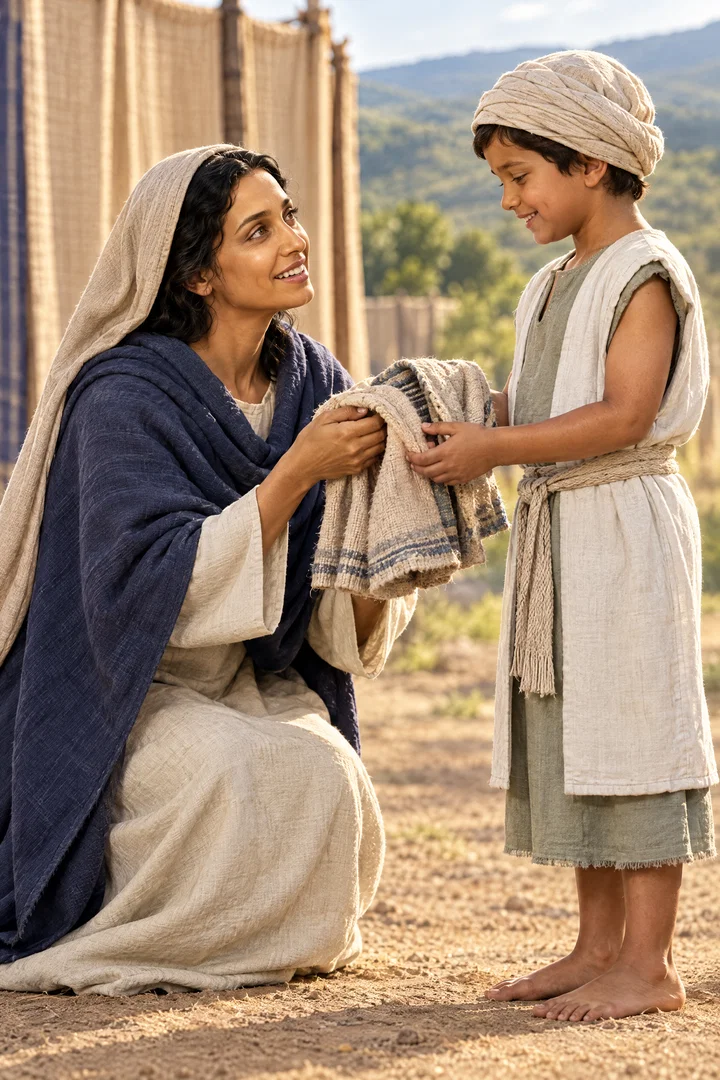
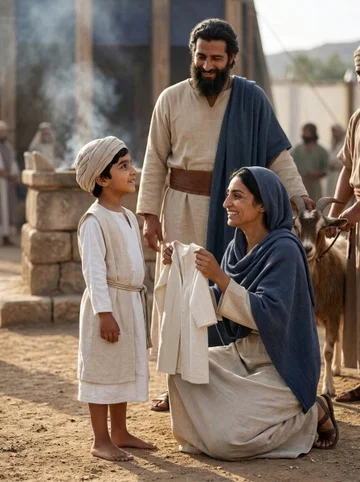
Moreover his mother made him a little coat, and brought it to him from year to year, when she came up with her husband to offer the yearly sacrifice.
Translations
American King James Version, King James Version, KJV Cambridge Paragraph Bible
Moreover his mother made him a little coat, and brought it to him from year to year, when she came up with her husband to offer the yearly sacrifice.
Moreover his mother made him a little coat, and brought it to him from year to year, when she came up with her husband, to offer the yearly sacrifice.
Revised Version, American Standard Version
Moreover his mother made him a little robe, and brought it to him from year to year, when she came up with her husband to offer the yearly sacrifice.
and a small upper coat doth his mother make to him, and she hath brought it up to him from time to time, in her coming up with her husband to sacrifice the sacrifice of the time.
And his mother made him a little coat, and brought it to him from year to year, when she came up with her husband to sacrifice the yearly sacrifice.
Also, a little robe, used his mother to make for him, and bring it up to him, from year to year,—when she came up with her husband, to offer the sacrifice of the year.
Berean Standard Bible, Majority Standard Bible
Each year his mother would make him a little robe and bring it to him when she went with her husband to offer the annual sacrifice.
Moreover his mother made him a little robe, and brought it to him from year to year when she came up with her husband to offer the yearly sacrifice.
And his mother made him a little robe and took it to him every year when she came with her husband for the year's offering.
And his mother made him a litle coat, and brought it to him from yeere to yeere, when she came vp with her husband, to offer the yerely sacrifice.
Douay-Rheims (Challoner revision)
And his mother made him a little coat, which she brought to him on the appointed days, when she went up with her husband, to offer the solemn sacrifice.
Pictures
Cross-references
- 1 Samuel 1:27-28
For this child I prayed; and the LORD hath given me my petition which I asked of him:
Hannah fulfills her vow by dedicating Samuel to the Lord’s service.
- 1 Samuel 1:11
And she vowed a vow, and said, O LORD of hosts, if thou wilt indeed look on the affliction of thine handmaid, and remember me, and not forget thine handmaid, but wilt give unto thine handmaid a man child, then I will give him unto the LORD all the days of his life, and there shall no razor come upon his head.
Hannah vowed to give Samuel to the Lord.
- 1 Samuel 3:1-14
And the child Samuel ministered unto the LORD before Eli. And the word of the LORD was precious in those days; there was no open vision.
Samuel’s childhood service continues as God speaks to him about Eli’s sons’ sin.
- 1 Samuel 2:26
And the child Samuel grew on, and was in favour both with the LORD, and also with men.
Samuel grew in favor with the Lord and with people.
- Jeremiah 7:12
But go ye now unto my place which was in Shiloh, where I set my name at the first, and see what I did to it for the wickedness of my people Israel.
Shiloh, where Hannah brought Samuel yearly, was later forsaken because of Israel’s wickedness.
Commentary
Each commentary is drawn from primary sources: the writings of Ellen G. White and Adventist pioneers and periodicals. Each commentary is separate. Its own words are not a quotation; follow the references to read the source passages.
Ellen G. White
12 sources
After she had given Samuel to the Lord's service, his mother came up each year with her husband to offer the yearly sacrifice and brought him a little coat of service made with her own hands.ST Nov 3, 1881 The yearly coat was a token of her continuing love, care, devotion and solicitude after leaving him to be trained in the house of God, with many prayers and tears stitched into every fiber that he would be pure, noble and true, good rather than great, honoring God and blessing his fellow men.ST Nov 3, 1881Lt 12, 1884, par. 8 Having taught him from the earliest dawn of intellect to love and reverence God and to regard himself as the Lord's, and continuing to make him the subject of her prayers every day while separated, she saw him grow in the love and fear of God and remain untainted and faithful though surrounded by corrupting influences.ST Nov 3, 18813T 472.2–3Lt 12, 1884, par. 8CE 214.4–215.1 Her faithful, self-denying care stands in contrast to Eli's failure to restrain and train his wicked sons, making parents responsible for their children's upbringing.ST Nov 10, 1881CE 218.2–219.2 God's rules for family government therefore require parents who see their children serving evil to restrain them promptly and firmly, first by mild measures and if these do not avail by the severest means, with His word as the only safe guide instead of indulgent human wisdom that overlooks faults and nourishes pride and vanity.CE 218.2–219.2ST Nov 24, 1881SG4 206.2STSE 84.1–85.2
Hannah's Yearly Devotion
After giving Samuel to the Lord's service, Hannah came up each year with her husband to offer the yearly sacrifice at Shiloh and brought Samuel a little coat or robe of service that she had made with her own hands.ST Nov 3, 18813T 472.2–3Lt 12, 1884, par. 8 The yearly coat was a token and reminder of her love, expressing her continuing faithful care, concern, devotion and solicitude after leaving him at the tabernacle to be trained for service in the house of God.Lt 12, 1884, par. 8CE 214.4–215.17MR 5.2 Many prayers and tears were stitched into the garment, with every stitch and fiber woven with prayer for her child.ST Nov 3, 1881Lt 12, 1884, par. 8CE 214.4–215.1
Her prayer in every fiber was that he would be pure, noble and true, that he would be good rather than great, that he would attain the greatness heaven values by honoring God and blessing his fellow men.ST Nov 3, 1881CE 214.4–215.1 She did not ask worldly greatness for her son but earnestly pleaded for that heavenly greatness, and while separated she continued to make him the subject of her prayers every day.ST Nov 3, 1881CE 214.4–215.1 From the earliest dawn of intellect she had taught him to love and reverence God and to regard himself as the Lord's, leading his thoughts by every familiar object up to the Creator.CE 214.4–215.1
Accompanied by that continuing care and prayer, Samuel grew in the love and fear of God.ST Nov 3, 1881 He remained untainted and faithful even though his childhood was surrounded by corrupting influences.ST Nov 3, 18813T 472.2–3 The yearly making and giving reflected both loving care and the pain and sacrifice of living apart from the cherished son she had given after he was weaned.Lt 12, 1884, par. 87MR 5.2 Yet she willingly gave him to serve God and was grateful and joyful that the Lord accepted her gift and offering.Lt 12, 1884, par. 87MR 5.2
The verse provides the model and example for a mother separated from her child to visit yearly and bring clothing even while he is cared for by another family.CE 214.4–215.1ST Aug 29, 1878CET 121.1–4 Her reward shows what faithfulness gains.CE 214.4–215.1 It encourages every mother to count the humble round of duties a grand and noble work, to bless the world by her influence, to make straight paths for her children to the heights above, and to form their character after the divine Pattern by following Christ's teachings and going often to the Saviour for wisdom.CE 214.4–215.1
Parents Warned by Eli
The little coat brought year by year stands in a childhood that contrasts with Eli's failure to restrain and train his sons, setting Hannah among faithful, self-denying examples and laying upon parents responsibility for their children's upbringing.ST Nov 10, 1881 Eli as priest and judge of Israel was held accountable for the moral and religious standing of his people and in a special sense for the character of his sons.CE 218.2–219.2
God's rules for family government require parents who see their children serving evil to restrain them promptly and firmly, first by mild measures and if these do not avail to subdue wrong by the severest means, to reprove sin and execute justice upon the sinner in order to purify the family and keep Israel pure.CE 218.2–219.2STSE 84.1–85.2 God's word is the only safe guide in the management of children, rather than human wisdom and self-confident indulgence, and this duty rests on the Creator's full understanding of all the needs of children and His deepest interest in their welfare, having bought them with His own blood, while the salvation of children depends very much upon the course pursued by parents.ST Nov 24, 1881SG4 206.2 Parents are therefore called to earnest, anxious prayer, Teach us, how shall we order the child, and what shall we do unto him, and careful study and faithful obedience of God's word leaves less soul-anguish over the perverse conduct of wicked children.ST Nov 24, 1881
Parents must not follow their own judgment by overlooking faults and sins in childhood, fostering wrong tendencies, indulging every wish, fondly allowing children to grow up from babyhood without restraint, or allowing youth to have their own way.CE 218.2–219.2ST Nov 24, 1881 Such mistaken love and fondness indulges children to their hurt, nourishes pride and teaches vanity about dress as if dress makes the lady or gentleman, though short acquaintance shows outward appearance cannot hide the deformity of a heart void of the Christian graces and filled with self-love, haughtiness and uncontrolled passion, until forward, selfish, disagreeable ways and wrong habits strengthen into confirmed second nature that renders them unloving and unlovable.CE 218.2–219.2ST Nov 24, 1881SG4 206.2 The destructive seed so sown springs up and bears fruit that makes children despise parental authority, and the company of such indulged children is poisonous and leads to death and must be shunned.SG4 206.2
Eli could have restrained his wicked sons but feared their displeasure and suffered them to go on in rebellion until they became a curse to Israel.SG4 206.2 The mournful history warns especially parents in holy office against such a self-confident and indulgent course, for neglect brings the Lord's displeasure, disaster and death to the parent, ruin to wicked sons and to thousands in Israel, ruin upon the household, reproach to the truth of God and disgrace on the cause of Christ, and a family example imitated with baleful results in thousands of homes.CE 218.2–219.2ST Nov 24, 1881 Parents and teachers are held accountable for evils they might have checked by parental or pastoral authority as if the acts were their own, with ten-fold greater guilt when teachers fail to control their households.CE 218.2–219.2
Sources
Pioneers and periodicals
18 sources
His mother fashioned a small garment for her dedicated child and carried it to him at Shiloh each year when the family came up for the yearly offering.ST Mar 31, 1909RH Jun 24, 1875 It was a token of faithful, self-denying maternal love, made with many prayers that he would remain pure, noble and true and grow in the love and fear of God.ST Nov 3, 1881ST Apr 23, 1912 Her yearly care stands in contrast to Eli's indulgent failure to restrain his sons, making parental faithfulness the central lesson of the account.ST Nov 10, 1881RH Jul 16, 1857ST Oct 23, 1884 Parents are therefore warned to train children by God's word rather than human wisdom, correcting first faults in love and removing every stumbling-block from their way.ST Nov 24, 1881ST Oct 23, 1884RH Jul 16, 1857ST Oct 23, 1884 Because Eli did not restrain his sons when they made themselves vile, judgment fell on his house in the death of his sons, the capture of the ark, and his own death, while Hannah's son grew to become the prophet through whom restoration came.RH Aug 28, 1856RH Jul 16, 1857
Hannah's Yearly Gift
Hannah made a little coat for Samuel and brought it to him from year to year when she came up with her husband to offer the yearly sacrifice at Shiloh.ST Mar 31, 1909RH Jun 24, 1875RH Apr 18, 1871 She had dedicated him to God from infancy and left him to serve at the tabernacle, yet she did not abandon him but remembered and cared for him while he was away.ST Apr 23, 1912ST Mar 31, 1909RH Jun 24, 1875RH Apr 18, 1871 Each annual visit at the time of sacrifice brought the handmade gift to her son as he grew.ST Nov 3, 1881RH Jun 24, 1875RH Apr 18, 1871
He served there as a child-priest, and her yearly coming showed continuing maternal love and faithful concern for him through his growth.ST Apr 23, 1912RH Jun 24, 1875RH Apr 18, 1871 He had grown up within the godly household of Elkanah and Hannah, and the spiritual atmosphere of that home shaped and produced him.RH Jun 24, 1875ST Sep 9, 1880
The little coat was a token of a mother's love and of faithful, self-denying concern and devotion.ST Nov 3, 1881ST Apr 23, 1912 She stitched many prayers into its making, praying with each stitch that he would be pure, noble, and true, and that he would be good rather than great.ST Nov 3, 1881ST Apr 23, 1912 Her care and prayers accompanied him as he grew in the love and fear of God.ST Nov 3, 1881ST Apr 23, 1912
The garment was a linen ephod for her little son serving in God's temple, made larger year by year as he grew.ST Jul 21, 1881
Shiloh's Wickedness and Judgment
The verse belongs to the account of the tabernacle at Shiloh in the first chapters of 1 Samuel.RH Aug 28, 1856 Those chapters record a backsliding of Israel, the church in the wilderness, and its restoration through the ministrations of Samuel the prophet. Its reference to 1 Samuel 2 points to the wickedness of the priests and people at Shiloh, which led to God forsaking His sanctuary and the ark being taken.RH Aug 28, 1856
In that setting Eli was God's high priest and a good man, whose two sons held the priest's office.RH Jul 16, 1857 Those sons committed flagrant and odious crimes by taking advantage of their priestly position and bringing public discredit on religion.RH Jul 16, 1857 Eli had likely treated them with undue indulgence in youth, and in their manhood they would not submit to admonition.RH Jul 16, 1857ST Oct 23, 1884 He then reproved them only with words that it was no good report that he heard and that they made the Lord's people to transgress, without firm determination to show he was in earnest.RH Jul 16, 1857 As official representative of the religion of the nation and accountable to God, he should have divested these sons of Belial of their priestly robes and positively forbidden them to minister at the altar.RH Jul 16, 1857 Such action would have atoned to the offended nation, testified to the purity of religion, cleared himself of participation, and arrested judgment.RH Jul 16, 1857 His weak, delayed rebukes could not restrain them once they were hardened in sin.RH Jul 16, 1857ST Oct 23, 1884
Because his sons made themselves vile and he restrained them not, judgment fell on his house.ST Nov 24, 1881RH Jul 16, 1857 His sons died violently in one day, the ark entrusted to their polluted hands was captured, and the aged father, overwhelmed, fell from his seat and died.RH Jul 16, 1857 God forsook His sanctuary at Shiloh because of the wickedness of priests and people.RH Aug 28, 1856 The terrible result of that self-confident and indulgent course was disaster and death to Eli himself, ruin to his wicked sons, and ruin to thousands in Israel.ST Nov 24, 1881RH Jul 16, 1857 Hannah's son is identified as the child who grew to become the prophet who foretold the ruin of Eli's family, following Eli's unjust reproof of Hannah and his failure to hold his own sons accountable.RH Apr 5, 1860
Parental Instruction and Warning
Samuel's childhood under Hannah's faithful, self-denying care stands in contrast with Eli's failure to restrain and train his sons, stressing that parents are responsible for their children's upbringing.ST Nov 10, 1881
The mournful history of Eli warns parents, especially those in holy office, against training children by human wisdom instead of God's commands.ST Nov 24, 1881 His self-confident and indulgent course ended in disaster and death to himself, ruin to his wicked sons, and ruin to thousands in Israel.ST Nov 24, 1881 God's word is the only safe guide in managing children, because the Creator best understands all their needs and feels the deepest interest in their welfare, having bought them with His own blood, so that careful study and faithful obedience leave less soul-anguish over the perverse conduct of wicked children.ST Nov 24, 1881 Parents are therefore to pray earnestly, Teach us, how shall we order the child, and what shall we do unto him, instead of fondly allowing children to grow from babyhood without restraint until forward, selfish, disagreeable ways become confirmed habits that render them unloving and unlovable.ST Nov 24, 1881
Religious observances and prayers do not restrain sin when parental conduct and influence fail to guide children toward Christ and obedience.ST Oct 23, 1884 Eli was a good man and God's high priest whose two sons held the priest's office and committed flagrant and odious crimes by taking advantage of their position and bringing public discredit on religion.RH Jul 16, 1857 He had likely treated them with undue indulgence in youth, and in their manhood reproved them only with words, Nay, my sons; for it is no good report that I hear; you make the Lord's people to transgress, without firm determination to show he was in earnest.RH Jul 16, 1857ST Oct 23, 1884 As official representative of religion and accountable to God he should have divested those sons of Belial of their priestly robes and positively forbidden them to minister at the altar, which would have atoned to the offended nation, testified to the purity of religion, cleared himself of participation, and arrested judgment, but his weak, delayed rebukes could not restrain them once they were hardened in sin.RH Jul 16, 1857ST Oct 23, 1884 Because his sons made themselves vile and he restrained them not, judgment fell on his house in the violent death of both sons in one day, the capture of the ark entrusted to their polluted hands, and the overwhelmed aged father falling from his seat and dying, showing that failure to restrain children's first errors with firm will desolates households, squanders fortunes, breaks hearts, and entails miseries.RH Jul 16, 1857 Mothers are to correct and admonish children in love and be faithful to the trust God has given them, because little ones are the lambs of the Lord's flock who must not be offended or neglected.
Samuel's home education shows a pious mother faithfully caring for and training her son for God's service, and her labor was richly rewarded.RH Sep 9, 1902 The yearly bringing of a little coat when coming up with her husband to offer the yearly sacrifice provides the model for a mother's yearly visit and gift of clothing to her child even while he is cared for by another family.ST Aug 29, 1878 The coat is also an image of the habits and character parents fashion in children through example and influence, moral garments that endure beyond the parents' lives and shape conduct.RH Jun 24, 1875 Its being made larger year by year as the child-priest grew in a linen ephod teaches that the garment of righteousness for young Christians must be fitted to their age and enlarged as they grow, rather than cut to an adult pattern that will not fit by forcing child-Christians too quickly into rules for those advanced in life.ST Jul 21, 1881
To slumber in parental unfaithfulness is to leave children with the sword of the destroying angel hanging over their heads before the fast-approaching storm.RH Oct 15, 1857 Parents must hide their children from that storm by removing every stumbling-block out of their way and by beginning now to do just as they wish they had done.RH Oct 15, 1857 Such neglect lets poor children perish, and neglecting parents cannot expect to enter the kingdom themselves.RH Oct 15, 1857
Sources