1 Timothy 5:22
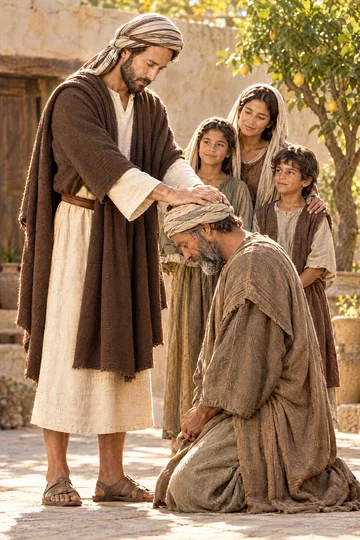
Lay hands suddenly on no man, neither be partaker of other men’s sins: keep thyself pure.
Translations
Lay hands suddenly on no man, neither be partaker of other men’s sins: keep yourself pure.
King James Version, KJV Cambridge Paragraph Bible
Lay hands suddenly on no man, neither be partaker of other men’s sins: keep thyself pure.
Impose hands hastily on no man, neither be partaker of other men's sins: keep thyself pure.
Revised Version, American Standard Version
Lay hands hastily on no man, neither be partaker of other men’s sins: keep thyself pure.
Be laying hands quickly on no one, nor be having fellowship with sins of others; be keeping thyself pure;
Lay hands quickly on no man, nor partake in others' sins. Keep thyself pure.
Hands, suddenly, upon no one, lay, neither have fellowship with sins of strangers: thyself, keep, chaste:—
Berean Standard Bible, Majority Standard Bible
Do not be too quick in the laying on of hands and thereby share in the sins of others. Keep yourself pure.
Lay hands hastily on no one. Don’t be a participant in other people’s sins. Keep yourself pure.
Do not put hands on any man without thought, and have no part in other men's sins: keep yourself clean.
Lay handes suddenly on no man, neither be partaker of other mens sinnes: keepe thy selfe pure.
Douay-Rheims (Challoner revision)
Impose not hands lightly upon any man, neither be partaker of other men’s sins. Keep thyself chaste.
Pictures

Cross-references
- Acts 13:2-3
As they ministered to the Lord, and fasted, the Holy Ghost said, Separate me Barnabas and Saul for the work whereunto I have called them.
Prayer and the laying on of hands accompany the setting apart of workers.
- 1 Timothy 4:14
Neglect not the gift that is in thee, which was given thee by prophecy, with the laying on of the hands of the presbytery.
Both concern laying on hands in ministry appointment and ordination.
- 2 Timothy 1:6
Wherefore I put thee in remembrance that thou stir up the gift of God, which is in thee by the putting on of my hands.
Timothy’s ministry gift is associated with the laying on of hands.
- Acts 6:3-6
Wherefore, brethren, look ye out among you seven men of honest report, full of the Holy Ghost and wisdom, whom we may appoint over this business.
Qualified men are chosen, prayed over, and appointed to service.
- James 1:27
Pure religion and undefiled before God and the Father is this, To visit the fatherless and widows in their affliction, and to keep himself unspotted from the world.
Both call for keeping oneself pure and unspotted from the world.
- Acts 8:17-18
Then laid they their hands on them, and they received the Holy Ghost.
Hands were laid on baptized converts, who then received the Holy Spirit.
- 2 John 1:11
For he that biddeth him God speed is partaker of his evil deeds.
It likewise warns against becoming a participant in another’s evil deeds.
- Acts 9:17
And Ananias went his way, and entered into the house; and putting his hands on him said, Brother Saul, the Lord, even Jesus, that appeared unto thee in the way as thou camest, hath sent me, that thou mightest receive thy sight, and be filled with the Holy Ghost.
Ananias laid hands on Saul in connection with his healing.
- Acts 14:23
And when they had ordained them elders in every church, and had prayed with fasting, they commended them to the Lord, on whom they believed.
Describes appointing elders in the churches.
- Titus 1:5-9
For this cause left I thee in Crete, that thou shouldest set in order the things that are wanting, and ordain elders in every city, as I had appointed thee:
Gives qualifications for elders and warns against appointing unfit leaders.
- 2 Corinthians 6:17
Wherefore come out from among them, and be ye separate, saith the Lord, and touch not the unclean thing; and I will receive you,
Commands separation from what is unclean.
Commentary
Each commentary is drawn from primary sources: the writings of Ellen G. White and Adventist pioneers and periodicals. Each commentary is separate. Its own words are not a quotation; follow the references to read the source passages.
Ellen G. White
36 sources
Laying on hands means setting men apart for sacred ministry, eldership, or other responsible church office, and it must never be done hastily or suddenly.4T 406.2GW 438.1GW92 132.1–2 Those who would teach Bible truth must first be carefully examined for conversion, character, self-government, fitness and wholehearted dedication, then after trial and experience be presented before the Lord in earnest prayer for the Holy Spirit to show whether He accepts them.4T 406.2GW 438.1GW92 132.1–2GW 438.2 To appoint or endorse a man without such due care makes the one who does so a sharer in his sins and accountable for the errors and harm his unfaithfulness brings upon the church.EDFCP 17.25MR 447.2Ms 1a, 1890, par. 38–39 Sharing in the sins of others also comes by letting wrongdoing pass without reproof, by sympathizing with the wrongdoer and excusing his sin, and by knowingly retaining and sustaining those whose influence leads away from God.Lt 136, 1906, par. 12–13STPW91 20.1RH Jul 10, 1913Lt 3, 1869, par. 8–9PP 361.2 Keeping oneself pure means purity of mind, soul and body in thought, word, action and habit, guarding the body as the temple of the Holy Spirit from all defilement and refusing to join one's influence to any unholy influence.CT 103.1Lt 145, 1897, par. 19–21EDFCP 17.2Ms 1a, 1890, par. 38–39Lt 96, 1895, par. 6
Laying Hands Deliberately
"Lay hands" means ordination to the ministry, and the command forbids doing this suddenly for sacred ministry, eldership, or other responsible church office.4T 406.2GW 438.1GW92 132.1–2Ms 1, 1878, par. 25–28STBk 93.2 No one is to be hurried into the sacred work of teaching Bible truth to the world, and the same caution governs the choice of elders and shepherds.GW 438.1GW92 132.1–2GW 438.25T 617.2STBk 93.2 Ordination must never be hasty but must follow experience, careful consideration, and prayer.4T 406.2Ms 1, 1878, par. 25–285T 617.2
Those about to teach Bible truth must first be carefully examined by faithful, experienced persons for fitness, self-government, good influence, and character.GW 438.1GW92 132.1–2GW 438.2 That examination must also establish conversion and moral refinement, wholehearted and unreserved dedication to the work, and that the candidate has taken Christ as personal Saviour and put on Christ so as to make no provision for the flesh to fulfill its lusts.5T 617.2STBk 93.2 Only such thorough proving of qualifications fits men for the solemn position of shepherds.STBk 93.2
After candidates have gained some experience, they must be presented before the Lord in earnest prayer for the Holy Spirit to indicate whether they are acceptable to Him.4T 406.2GW 438.1GW92 132.1–2 Human judgment may approve suitable men, but those choosing must not dare rely on their own judgment in selecting men for the solemn and sacred position of mouthpiece and representative for God.GW 438.1GW92 132.1–2 As the apostles chose the men their judgment approved and then placed them before the Lord to see if He would accept them to go forth as His representatives, no less thorough examination and prayerful seeking of divine approval is required now.4T 406.2GW 438.1GW92 132.1–2
Thorough work before accepting men as ministers is far better than rigid examination after they are established in position.STA 93.2ST2 36.2STBk 93.2 It is better to examine qualifications for the sacred work before ordaining than to have to investigate workers after they are established in office, have shaped and influenced the work, and have put their mold upon it.STA 93.2ST2 36.2STBk 93.2 Retaining workers who persist in imperfections of character and do not give full proof of ministry lowers the standard.STBk 93.2
Laying hands too suddenly puts unqualified men into leadership, and the church is kept in continual trouble in consequence of their defective character and bad influence.GW92 132.1–2GW 438.24T 406.3 Hands laid too hastily have placed in charge men who lacked proper government over themselves and self-control, whose influence was not good, and who were unqualified to lead.GW92 132.1–2GW 438.24T 406.3 Appointing men who still need conversion and moral refinement brings trouble upon the church, as premature ordination of unqualified men brought serious trouble to the church at Ligonier.Ms 1, 1878, par. 25–285T 617.2
Candidates must first be tested and proved, and only those whose character and service show fitness are to be chosen for responsibility.12MR 284.3–5Ms 1, 1880, par. 42–43Ms 1, 1878, par. 33–34 The church should let persons serve in turn for a suitable trial and then select its acknowledged leader by the voice of its members.12MR 284.3–5Ms 1, 1880, par. 42–43Ms 1, 1878, par. 33–34 Leadership belongs only to capable, sanctified people, appointments should be reviewed regularly rather than treated as permanent, and the acknowledged leader should serve for no more than a year before the church chooses again, whether the same person or another who has been a blessing.12MR 284.3–5Ms 1, 1880, par. 42–43
In this choosing, known character and habits must be considered, since appointing one whose conduct is wrong endorses error.EDFCP 17.2Ms 1a, 1890, par. 40–41 Judgment must be without favoritism, partiality, or misplaced sympathy, in keeping with the charge against partiality in verse 21.EDFCP 17.25MR 447.2Ms 1a, 1890, par. 38–39Ms 1a, 1890, par. 40–41 Sin must be rebuked faithfully and leaders must remain true to principle even when faithfulness brings opposition and trial, refusing to let sympathy or preference excuse wrongdoing.EDFCP 17.25MR 447.2Ms 1a, 1890, par. 38–39
Refusing Share in Sin
Appointing or endorsing a person hastily and without due care makes one share responsibility for that person's sins, accountable for the errors endorsed and for the harm done to the church by unfaithfulness in office.EDFCP 17.25MR 447.2Ms 1a, 1890, par. 38–39Ms 56, 1898, par. 56Ms 1a, 1890, par. 40–41 Such choosing requires considering character and known habits, judging without favoritism, partiality, or misplaced sympathy, rebuking sin faithfully and remaining true to principle even when faithfulness brings opposition and trial.EDFCP 17.25MR 447.2Ms 1a, 1890, par. 38–39Ms 1a, 1890, par. 40–41 One whose conduct shows sound principles and Christlike influence may be trusted with fellowship and responsibility, while one whose actions contradict his words should not be entrusted with influence.Ms 1a, 1890, par. 40–41
Letting wrongdoing pass without reproof makes a person a partaker in another's sin by strengthening the wrongdoer's evil course, sharing responsibility and punishment.Lt 136, 1906, par. 12–13RH Jul 10, 1913 Each life influences others toward good or evil, and a person is accountable for that influence when actions strengthen or bring out evil in those around them.RH Jul 10, 1913 Sympathizing with a wrongdoer, fearing his reprover is jealous or wrong, dividing the matter, and standing aloof watching lest the wrongdoer be wronged, with failure to reprove wrong, shares in his sin.Lt 3, 1869, par. 8–9 A low standard makes wrongs seem of small account, arouses no indignation and no jealousy for God's cause, lets sin not appear exceeding sinful, while fear of condemning oneself by taking a stand leaves Satan in control.Lt 3, 1869, par. 8–9
Excusing a sinner through false sympathy shares responsibility for the sinner's guilt.PP 361.2 Servants of Christ must warn those in danger and show the true character and consequences of sin, for hiding that danger works against the Holy Spirit's conviction, encourages impenitence, and can help lead people to ruin.PP 361.2 Supporting unfaithfulness by praising the unfaithful or flattering the unconsecrated instead of reproving wrongs likewise shares responsibility for sin, and avoiding this complicity belongs to keeping oneself pure.Ms 3, 1871, par. 1
Those responsible for others share the wrongdoing of people they knowingly retain, sustain, or tolerate.STPW91 20.14T 205.1–3Lt 166, 1901, par. 7 Those holding responsible positions in the publishing work are accountable for its prevailing influence and share the guilt of workers under them when through indifference they retain the insubordinate and impenitent in employment, including youth who do not respect parental authority, are ungovernable at home, and despise counsel and restraint, whose continued service brings a curse not only on themselves but on the office and perverts the young with whom they come in contact.STPW91 20.1 Leaders must not keep workers whose influence leads others away from God and truth but must remove them promptly, and all who profess the truth must watch like sleepless sentinels over the interests of the cause and sacredly guard themselves and one another from spiritual contamination.STPW91 20.14T 205.1–3 Knowingly supporting someone who leads others into sin makes a person share in that person's sins, whether sustaining a youth whose influence opposes truth and righteousness, giving youth money while knowing it will be used for evil, or sustaining a leader who leads others astray, as those who support such a one are guilty with him.Lt 166, 1901, par. 7Lt 258, 1906, par. 2 Such persons must be separated from at once, and those who act against God's decision in this face solemn judgment in which every person's actions and responsibility are measured.STPW91 20.1Ms 36, 1890, par. 2
Having no share in other men's sins means refusing to identify with unbelievers in their plans and work.FE 482.2 On temperance this requires taking a firm and unwavering stand, without wavering, firm as a rock.FE 482.2GW 394.3 Every dishonest act in business is to be reproved whether done by believers or unbelievers, and if there is no evidence of reformation Christians are to come out and remain separate and keep themselves pure.FE 482.2Lt 95, 1899, par. 25 This is not living reclusively, but mingling with worldlings to do them all possible good as Christ did when eating with publicans and sinners to bring eternal interests to their minds.FE 482.2
God's people are not to vote to place men in office when doing so makes them partakers of the sins those men commit while in office.FE 475.2 There is no safety in voting for political parties and schemes without knowing whom they elect, taking part in political schemes, and laboring to please men who will use their influence to repress religious liberty and set in operation oppressive measures to lead or compel others to keep Sunday as the Sabbath.FE 475.2 Such men exalt the first day of the week, which is not to be reverenced but is a spurious sabbath, and violate the law of God by trampling His Sabbath.FE 475.2 Burying political questions in silence and coming into unity on the pure gospel principles plainly revealed in the word of God keeps from sharing their sin.FE 475.2
Keeping Oneself Pure
Keeping oneself pure means purity of mind and soul and body, and knowing what that purity is belongs to the highest education and sums up the attainments possible for the believer.CT 103.1Lt 145, 1897, par. 19–21 The body is the temple of the Holy Spirit and must not be profaned, for profaning it defiles the soul.Lt 145, 1897, par. 19–21 This purity forbids impurity of thought or word or action in the child of God, and it extends to speech and conduct and habits and plans, requiring careful words and the rejection of anything that does not make a person pure and clean before God.CT 103.1Lt 145, 1897, par. 19–21Lt 96, 1895, par. 6 Every encouragement and the richest blessings belong to those who overcome evil practices, while the most fearful penalties fall on those who profane the body and defile the soul.CT 103.1Lt 145, 1897, par. 19–21
Keeping pure requires refusing to join one's influence to an unholy influence.EDFCP 17.2Ms 1a, 1890, par. 38–39Ms 1a, 1890, par. 40–41 Those who profess the truth are to watch like sleepless sentinels over the interests of the cause and to sacredly guard themselves and one another from spiritual contamination.STPW91 20.14T 205.1–3 This guarding includes promptly separating from and not knowingly retaining or tolerating those whose influence leads away from God and truth, lest the contamination spread to others, especially the young with whom they come in contact.STPW91 20.14T 205.1–3
Those entrusted with spiritual work must put spiritual interests first and keep the soul pure and undefiled and carefully guarded.Lt 232, 1906, par. 7–8Lt 96, 1895, par. 6 Their speech and conduct and habits and plans are to be kept pure and clean, so that their conduct gives no occasion for temptation to the youth.Lt 232, 1906, par. 7–8Lt 96, 1895, par. 6
Sources
Pioneers and periodicals
42 sources
Laying on of hands here is the church's solemn setting apart of tested officers for ministry as elder or deacon.ST Dec 1, 1909 No one is to be set apart hastily, but his calling, fitness, character and gift are first to be proved by their fruits, with new leaders serving a time of trial before ordination.CO 37.1CO 53.1–2ST Jan 8, 1885ST Jan 8, 1885 To ordain or appoint the unproved, unworthy or unready makes those who do so sharers in his sins and answerable for the injury done to him, to churches and to the cause of truth.CO 37.1CO 53.1–2ST Jan 8, 1885 That same sharing in sin comes by approving or encouraging another's wrong course, and by silence toward evil in order to protect position or popularity.ST Apr 21, 1881RH Nov 12, 1903RH Mar 12, 1861RH Nov 3, 1874 To keep oneself pure is to be clean in body and heart, renouncing all sin and surrendering body, soul and spirit to God in a life shaped into the likeness of Jesus.RH May 27, 1875RH Jul 25, 1871RH Jan 9, 1866RH Jan 14, 1915
Care in Ordination
The laying on of hands in the charge to lay hands suddenly on no man is ordination, the church's solemn setting apart of qualified officers for ministry and for specific work as elder or deacon.ST Dec 1, 1909ST Apr 9, 1896
It is not a general rite for receiving the Holy Spirit at baptism, is not required of every believer, and is not a condition for receiving the Holy Spirit or for salvation, and by itself without faith it accomplishes nothing.ST Dec 1, 1909
Ordination is a solemn recognition and setting apart of one for ministry, not a rite that by itself confers spiritual authority or guarantees that the person is called or qualified.ST Feb 26, 1885RH Feb 13, 1879
Hands are to be laid on no one suddenly, but a candidate's readiness must first be considered and his calling and gift proved by their fruits.RH Sep 24, 1901ST Sep 15, 1881
No one is to be ordained hastily, but a minister must first be proved before being ordained an elder, and church officers are to be chosen with care rather than appointed hastily.CO 37.1CO 53.1–2RH Sep 24, 1901
A newly chosen elder should serve for a time of trial before ordination, even acting as elder first and then being ordained when found faithful, since careful, impartial judgment without preference or partiality belongs to keeping oneself pure.CO 37.1CO 53.1–2ST Aug 28, 1884
Candidates must meet the required standard and show fitness, faithfulness, ability to teach, character and qualifications, and evidence of a call from the Holy Spirit.ST Jan 8, 1885ST Feb 26, 1885ST Jan 8, 1885ST Dec 12, 1878
Those entrusted with responsibility must be known to be faithful and must be proved, and the responsibility is especially great when appointing a minister or evangelist.ST Feb 26, 1885ST Jan 8, 1885
Haste especially forbids putting novices into ministry or public reform work before character and judgment have been tested, and forbids putting forward as preachers those only recently rescued from vice who have no character, virtue, or judgment for such a calling.ST Jun 5, 1879ST Jun 5, 1879
Young men are not to have hands hastily laid on them for ministry when they seek the title of elder before experience, but should first prepare through humble service and contact with the people, since one who does so has little understanding of the sacred responsibility.RH Jun 22, 1905
Laying hands on an unready minister can give him position before he has been tested and trained, fostering pride and resistance to counsel, and ordination itself does not settle whether a person is truly called or fit.ST Feb 26, 1885
Laying hands hastily on incompetent, unworthy, unready, or unproved men makes those who ordain, appoint, or encourage them partakers in their sins and responsible for their errors, failures, and reproach.CO 37.1CO 53.1–2ST Jan 8, 1885ST Feb 26, 1885ST Feb 26, 1885
The warning applies also to encouraging a person to take an office for which he is not qualified, and choosing one whose character has not been carefully established can make those who appoint him partly responsible if his influence leads others to harm themselves, fellow believers, or the cause of truth.ST Feb 26, 1885ST Feb 26, 1885
Such appointments can injure the person himself and harm individuals, churches and the cause of truth, bringing reproach upon the sacred work of God and laying an awful responsibility upon those who make them.ST Jan 8, 1885ST Feb 26, 1885ST Feb 26, 1885ST Jun 5, 1879ST Feb 26, 1885
Ministers must therefore maintain a stainless character, and churches must exercise great care over whom they place in the sacred work of the ministry.ST Jun 5, 1879ST Jun 5, 1879
Sharing in Others' Sins
To be a partaker of other men's sins is to sanction or encourage another's wrong course, and endorsing a man guilty of wrong by requesting, approving, or supporting him to lecture or to advocate the truth in any capacity whatever makes one share his sins.RH Nov 12, 1903RH Mar 12, 1861 The same warning applies to selling harmful goods when doing so encourages others to use them, for that encouragement is participation in their sin.RH Nov 12, 1903
Silence toward wrongdoing can make a person an accomplice in it, for ministers who fail to rebuke evil when called to do so share responsibility for it, as do magistrates who fail to enforce justice and shield criminals.RH Nov 3, 1874 Those who carelessly or indifferently allow sin among God's professed people to dishonor God are counted as partakers in it, and those charged with guarding the people must search out and reprove sin rather than protect their own position or popularity.ST Apr 21, 1881
Sharing another's sin is avoided by following the proper steps for addressing wrongdoing: first speaking privately with the offender, then bringing witnesses, then taking the matter to the elders who oversee the church to judge the conduct and give a fitting rebuke with authority.RH Jun 20, 1854 Once the matter has been brought to them, the one who reported it has done what is required, and if the offender persists he alone bears responsibility.RH Jun 20, 1854 Covering up another's persistent wrongdoing without trying to restore him or informing those able to restore him or to protect others makes one share in his sins, while speaking to proper authorities so they can restore the wrongdoer or protect others is not backbiting.ST Dec 3, 1885
Complicity also comes by hearing, for hearing slander makes the hearer a partaker of it, so purity requires refusing such complicity.ST Jun 16, 1898 Sympathy must not become support for the wrongdoer's case by comforting or defending those who persist in wrongdoing, especially when they admit guilt and then claim innocence.RH Oct 29, 1872 A person shares in others' sin when his actions strengthen or bring out the evil in those around him, since wrongdoing affects more than the one who commits it and each life influences others toward either good or evil, for which influence each person is accountable.RH Jul 10, 1913 Allowing others to enter the church and lead its members into sinful practices makes one share responsibility for their sin, and keeping pure includes removing such influences and refusing to join with ungodly people in the hope of achieving a good end.ST Apr 21, 1881
Keeping Oneself Pure
To keep oneself pure is to be clean in person and heart, clean in body and heart.RH May 27, 1875RH Jul 25, 1871RH Jan 9, 1866 Habitual use of tobacco is unclean and incompatible with that purity.RH May 27, 1875RH Jul 25, 1871RH Jan 9, 1866 In its full application, keeping pure means pursuing holiness by renouncing all sin, separating from the world, and surrendering body, soul, and spirit to God.RH Jan 14, 1915 Holiness is the growth of Christian virtues and the fruit of the Spirit shaping life and character into the likeness of Jesus.RH Jan 14, 1915 It is a call to live for God and not merely to be willing to die for him.RH Jan 14, 1915
Personal purity is one of the important things entrusted to believers to guard faithfully and conscientiously.ST Apr 7, 1914ST Jul 1, 1903RH Nov 18, 1902 This keeping is required of the Lord's people in response to his keeping, and faithfulness in it is tied to present and eternal salvation.ST Apr 7, 1914ST Jul 1, 1903RH Nov 18, 1902 It is the pastor's guide on the narrow pathway toward heaven as he declares the whole counsel of God and fully carries out his ministry.RH Mar 12, 1861 It is also a duty young men should actively uphold.ST Apr 15, 1903
Careful, impartial judgment without preference or partiality is part of keeping oneself pure, since appointing the unworthy makes the one who appoints a partaker in their sins.CO 37.1CO 53.1–2 No one should therefore be ordained hastily or without meeting the required standard, but only after being proved.CO 37.1CO 53.1–2 The charge to observe instructions impartially connects with rebuking those who sin before all so that others may fear.
Complicity in Daily Life
Keeping oneself pure means refusing to share in the wrongdoing of others, and if using tobacco is wrong then growing or making it for others makes the producer a partner in their wrongdoing, so its money value is no excuse for keeping or selling it.RH Jun 9, 1868RH Nov 12, 1903 The same warning against sanctioning or encouraging another person's wrong course applies to selling harmful goods when the sale encourages others to use them.RH Jun 9, 1868RH Nov 12, 1903 Habitual use of tobacco is unclean and harmful and stands opposed to that purity, which requires cleanliness in person and heart and in body and heart.RH May 27, 1875RH Jul 25, 1871RH May 28, 1908RH Jan 9, 1866 Timothy's charge to keep himself pure therefore calls for rejection of the tobacco habit as incompatible with personal cleanliness and purity of heart.RH May 27, 1875RH Jul 25, 1871RH May 28, 1908RH Jan 9, 1866
Those who set alcohol before others and thereby tempt them or help lead them into drunkenness become partners in their sin and will answer to God for it.ST Dec 11, 1884 Failing to obey God's commands, including the command to keep the seventh-day Sabbath, is itself partaking in sin.RH Sep 11, 1856 Hiring or paying men to carry the mail on Sunday, which breaks God's Sabbath, shares responsibility for that sin, while refusing to fund that work avoids complicity without forcing the carriers themselves to observe the day.RH Sep 11, 1856
Voting for an unprincipled candidate makes a Christian in some measure a participant in that person's wrongdoing, and those who help elect dishonest officials share responsibility for the harm they do, even though Christians may be mistaken about a candidate's character.ST Jun 7, 1905 Promoting infidel and corrupting publications while professing to serve in holy things is likewise a way of partaking in their sins, or sinning by proxy.RH Jun 16, 1868
Sources