2 Corinthians 9:7
Every man according as he purposeth in his heart, so let him give; not grudgingly, or of necessity: for God loveth a cheerful giver.
Translations
Every man according as he purposes in his heart, so let him give; not grudgingly, or of necessity: for God loves a cheerful giver.
King James Version, KJV Cambridge Paragraph Bible
Every man according as he purposeth in his heart, so let him give; not grudgingly, or of necessity: for God loveth a cheerful giver.
Every man according as he purposeth in his heart, so let him give; not grudgingly, or by constraint: for God loveth a cheerful giver.
Let each man do according as he hath purposed in his heart; not grudgingly, or of necessity: for God loveth a cheerful giver.
Let each man do according as he hath purposed in his heart: not grudgingly, or of necessity: for God loveth a cheerful giver.
each one, according as he doth purpose in heart, not out of sorrow or out of necessity, for a cheerful giver doth God love,
each according as he is purposed in his heart; not grievingly, or of necessity; for God loves a cheerful giver.
Each one, according as he hath purposed in his heart, not sorrowfully, nor of necessity,—for, a cheerful giver, God, loveth.
Each one should give what he has decided in his heart to give, not out of regret or compulsion. For God loves a cheerful giver.
Each one should give what he decides in his heart to give, not out of regret or compulsion. For God loves a cheerful giver.
Let each man give according as he has determined in his heart, not grudgingly or under compulsion, for God loves a cheerful giver.
Let every man do after the purpose of his heart; not giving with grief, or by force: for God takes pleasure in a ready giver.
As euery man wisheth in his heart, so let him giue, not grudgingly, or of necessitie: for God loueth a cheerefull giuer.
Douay-Rheims (Challoner revision)
Every one as he hath determined in his heart, not with sadness, or of necessity: for God loveth a cheerful giver.
Pictures

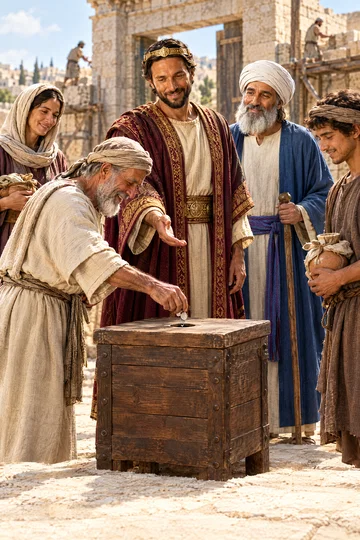

Cross-references 20 of 51
- 2 Corinthians 8:12
For if there be first a willing mind, it is accepted according to that a man hath, and not according to that he hath not.
A willing mind is accepted according to what a person has.
- Acts 20:35
I have shewed you all things, how that so labouring ye ought to support the weak, and to remember the words of the Lord Jesus, how he said, It is more blessed to give than to receive.
Jesus says giving is more blessed than receiving, reinforcing cheerful generosity.
- 1 Corinthians 16:2
Upon the first day of the week let every one of you lay by him in store, as God hath prospered him, that there be no gatherings when I come.
Both describe giving proportionately as God prospers each person.
- 2 Corinthians 8:1-5
Moreover, brethren, we do you to wit of the grace of God bestowed on the churches of Macedonia;
The Macedonians gave willingly and generously despite deep poverty.
- Mark 12:43-44
And he called unto him his disciples, and saith unto them, Verily I say unto you, That this poor widow hath cast more in, than all they which have cast into the treasury:
The widow’s offering is valued for her willing, sacrificial giving from limited means.
- Malachi 3:8
Will a man rob God? Yet ye have robbed me. But ye say, Wherein have we robbed thee? In tithes and offerings.
Withholding offerings is called robbing God.
- Luke 6:38
Give, and it shall be given unto you; good measure, pressed down, and shaken together, and running over, shall men give into your bosom. For with the same measure that ye mete withal it shall be measured to you again.
Giving is answered with abundant blessing in return.
- 2 Corinthians 8:9
For ye know the grace of our Lord Jesus Christ, that, though he was rich, yet for your sakes he became poor, that ye through his poverty might be rich.
Christ’s self-giving models the generous giving urged of believers.
- 2 Corinthians 9:11-12
Being enriched in every thing to all bountifulness, which causeth through us thanksgiving to God.
Giving supplies needs and prompts thanksgiving to God.
- Proverbs 11:25
The liberal soul shall be made fat: and he that watereth shall be watered also himself.
promises to the liberal soul
- 1 Chronicles 29:9
Then the people rejoiced, for that they offered willingly, because with perfect heart they offered willingly to the LORD: and David the king also rejoiced with great joy.
The people rejoiced because they gave willingly and wholeheartedly to the Lord.
- Exodus 25:2
Speak unto the children of Israel, that they bring me an offering: of every man that giveth it willingly with his heart ye shall take my offering.
Both call for offerings given willingly from the heart.
- Acts 4:34-35
Neither was there any among them that lacked: for as many as were possessors of lands or houses sold them, and brought the prices of the things that were sold,
Believers gave generously and distributed resources according to need.
- Exodus 35:29
The children of Israel brought a willing offering unto the LORD, every man and woman, whose heart made them willing to bring for all manner of work, which the LORD had commanded to be made by the hand of Moses.
Describes willing offerings for the work of God.
- Matthew 10:8
Heal the sick, cleanse the lepers, raise the dead, cast out devils: freely ye have received, freely give.
Freely received blessings are to be freely given.
- Proverbs 3:9
Honour the LORD with thy substance, and with the firstfruits of all thine increase:
Both call for honoring God through giving from one’s possessions.
- 1 Chronicles 29:14
But who am I, and what is my people, that we should be able to offer so willingly after this sort? for all things come of thee, and of thine own have we given thee.
Willing offerings return to God what already comes from Him.
- Acts 5:4
Whiles it remained, was it not thine own? and after it was sold, was it not in thine own power? why hast thou conceived this thing in thine heart? thou hast not lied unto men, but unto God.
Ananias had power over his gift, but deceitfully withheld part of it.
- Proverbs 11:24
There is that scattereth, and yet increaseth; and there is that withholdeth more than is meet, but it tendeth to poverty.
The passage echoes its teaching that giving can lead to increase.
- Deuteronomy 16:17
Every man shall give as he is able, according to the blessing of the LORD thy God which he hath given thee.
Each person gives according to what God has given them.
Commentary part 1 of 2
Each commentary is drawn from primary sources: the writings of Ellen G. White and Adventist pioneers and periodicals. Each commentary is separate. Its own words are not a quotation; follow the references to read the source passages.
Ellen G. White
94 sources
Every person is to give according as he purposes in his heart, with deliberate personal decision, willingly and cheerfully, not grudgingly, reluctantly or murmuringly, and not of necessity under compulsion or pressure, for God loves a cheerful giver.6T 481.4RH Feb 18, 19028T 139.1 Only freewill offerings have worth with Him, so a gift given grudgingly, unwillingly or with hard feeling is not accepted and brings no reward, and it is better not to give than to give in that spirit.Lt 63a, 1893, par. 47–485T 269.2RH May 15, 1900 The acceptability of a gift lies not in its greatness or amount but in the purpose of the heart and the spirit of gratitude, love and cheerfulness it expresses, so small sums and humble offerings from the poor and from children are pleasing to Him.ST Jul 15, 18803T 412.1Lt 175, 1904, par. 10 The verse stands in the law that he who sows sparingly reaps sparingly and he who sows bountifully and generously reaps bountifully, and God is able to make all grace abound to cheerful givers so they always have all sufficiency and are enriched and enabled to abound unto every good work.8T 139.1Ms 4, 1899, par. 67–68Ms 63, 1898, par. 24 Giving is a willing return of what He has entrusted, for all that people have belongs to the Lord as Giver and Owner and they are His stewards, and giving beyond the tithe is left wholly to what each purposes in the heart, yet once a gift is vowed the promise is sacred and no longer theirs to withhold.Lt 106, 1907, par. 1–5Lt 31, 1894, par. 9–11RH Feb 2, 1911
Words and Historical Setting
The verse belongs to Paul's appeal to the brethren at Corinth to make a contribution for the poor saints at Jerusalem.Ms 28, 1894, par. 2 In that appeal he seeks to kindle their zeal and stir them to benevolent action by presenting the example of the churches in Macedonia.Ms 28, 1894, par. 2
The phrase of necessity means with a feeling of being compelled to give, so each person is to give as he purposes in his heart, not grudgingly and not under such compulsion, for God loves a cheerful giver.Ms 99, 1893, par. 27
The acceptability of a gift does not lie in its greatness or amount but in the purpose of the heart and the spirit of gratitude, love, willingness and cheerfulness it expresses.3T 412.1Ms 99, 1893, par. 20Lt 90, 1895, par. 15–17 Gifts are pleasing when given willingly and cheerfully rather than grudgingly or under compulsion, and a poor person's humble offering is accepted when it is all that person can give.ST Jul 15, 1880Ms 99, 1893, par. 20 A willing, sacrificial gift may be more pleasing than a large gift given from abundance without personal sacrifice, and the value of an offering is decided by the spirit that prompts it.ST Jul 15, 18803T 412.1Lt 90, 1895, par. 15–17 Different persons rightly give very different amounts because giving is proportioned to income and ability, so gifts may range from pounds to mites and the poor man's tithe is a comparatively small sum.Lt 175, 1904, par. 10Lt 377, 1904, par. 14Ms 99, 1893, par. 20 The poor should not feel their gifts are too small to be worthy of notice, but should give according to ability as servants of God, and He will accept their offerings.Lt 175, 1904, par. 10Lt 377, 1904, par. 14Ms 99, 1893, par. 20 The offerings of little children are acceptable and pleasing to God, and the small sums laid by every week by the poor help swell the treasury and are wholly acceptable because they cost just as great and even greater sacrifice than the gifts of wealthier brethren.3T 412.1 Giving should be willing and thoughtful, not driven by pressure or followed by anxious regret, so that even large gifts made without due consideration may be unwise, even when intended for missionary work.Lt 90, 1895, par. 15–17
Cheerful Willing Giving
Every person is to give according as he purposes in the heart, with a deliberate, personal decision made inwardly and carried out willingly, freely and cheerfully, not grudgingly, reluctantly, murmuringly, or of necessity under compulsion or pressure, for God loves a cheerful giver.6T 481.4RH Feb 18, 19028T 139.1Ms 4, 1899, par. 67–68Lt 106, 1907, par. 1–5 That sowing which brings a bountiful harvest is unselfish and self-denying, gladly willed without being forced, and no selfish person is a Christian, for everyone who follows Christ practices genuine self-denial.Ms 68, 1894, par. 2 Giving to God's cause in this manner is a willing return of what God has entrusted to each person.Lt 106, 1907, par. 1–5
Only freewill offerings have worth with God, and a gift given grudgingly has no worth with Him and should not be given at all, even when dire and pressing necessity surrounds gifts and offerings for the Lord's work, including donations for missionary work in Australia.Lt 63a, 1893, par. 47–48 Giving without a willing spirit mocks God, who knows every thought and purpose of the heart, and it is better not to give than to give grudgingly.RH May 15, 1900 Money given with irritation, hard feeling, complaint and murmuring brings no reward, and not one cent of it is accepted by God, for what He accepts is only a freewill offering given with the feeling that it is a pleasure to be acting stewards of God, with the Lord passing means into human hands and the giver passing it out as His cause demands.21MR 246.4–248.3 Offerings brought in willing obedience and pure love binding every offering upon the altar please Him and are accepted and blessed according to ability, for He never requires more than people are able to give, while offerings given grudgingly offend Him.5T 269.2 Churches or individuals who have no heart in their offerings and would limit the cost of carrying forward His work and measure it by their own narrow views show they have no living connection with Him, are at variance with His plan and manner of working, and He will not bless them.5T 269.2
God will not accept an offering made unwillingly or grudgingly, and when the light and love of Jesus illuminates the hearts of His followers there is no need for urging or begging for money or service.5T 285.1 When they become one with Jesus they realize they are not their own, that they are bought with a price and are the Lord's property, and that all they have is entrusted to them as His stewards, so with cheerful heart and unswerving fidelity they render to God the things that are His, while making more pledges while unwilling has no virtue.5T 285.1 When a pledge has been made to God, it is to be paid willingly and to the very best of ability, walking out by faith and trusting God without murmuring, and if there is no means to pay there is to be no grumbling, for the Lord does not require what a person does not have but only the best that can be done.21MR 246.4–248.3 Giving merely from obligation, with reluctance, is not cheerful giving and brings no reward, yet people remain accountable for the resources entrusted to them until they return to God what He committed to their care, and transferring property to a wife or children does not remove that responsibility.1T 530.1–2 When believers recover from this snare, heal the breach, and realize that the needs of God's cause are as continual as His gifts to them, their works will correspond with their faith and they will receive a rich blessing from the Lord.5T 285.1
Giving to God must be purely voluntary freewill offerings, not forced and not drawn out even by eloquent appeals designed to excite sympathy, because God is not pleased to have His treasury filled with forced supplies or by offerings given unwillingly.RH Jan 1, 18753T 413.3 The plan of redemption was entirely voluntary on the part of Christ, and it is Christ's purpose that all benevolence be the same, with loyal hearts rejoicing in saving truth earnest and anxious through love and gratitude to help with their means in sending the truth to others, and the very best way to express love for the Redeemer is to make offerings to bring souls to the knowledge of the truth.3T 413.3 Each person is responsible for deciding whether to give much or little, and the responsibility is left wholly to the individual, so ministers must not be severe, single out any man, press means from him, denounce and cast him off, or urge or force money even for God's work, but must be patient and forbearing and give time for free response and development of character.1T 237.1–238.1GW92 268.4–269.1 Giving is not a yearly gift merely but a freely presented weekly and monthly offering before the Lord, a living test that develops character, manifests the true state of the heart, builds habits of generosity, brings people closer to God and into sympathy with others, counters selfishness, and keeps the heart open to generous deeds.1T 237.1–238.1GW92 268.4–269.1ST Mar 18, 1886 Christ and angels watch this development of character and weigh moral worth, and each decision is faithfully recorded, while the Lord bears long with His erring people as truth is brought to bear closer and closer to cut off one idol after another until God reigns supreme in the hearts of His consecrated people.GW92 268.4–269.1
Money raised through festivals, games, feasting, amusement, worldly amusements, or appeals to appetite does not become an acceptable offering merely because it is intended for church purposes.ST Nov 28, 1878Ms 132, 1897, par. 14–17 Giving that depends on such inducements is not willing giving from love for Christ and is not a cheerful, willing offering acceptable to God.ST Nov 28, 1878ST Sep 17, 1874Ms 132, 1897, par. 14–17 Giving to support God's work should come freely from the heart, motivated by love for God, not by pressure or by rewards that appeal to selfish pleasure, and raising money through feasting and amusement does not show that Christ's teaching on benevolence or God's grace lacks power, but shows that these inducements can move people to give when sacred concerns do not.ST Sep 17, 1874
Sowing Reaping and Blessing
The verse stands within the law that sowing sparingly brings a sparing harvest and sowing bountifully, generously and with blessings brings a bountiful harvest, and cheerful giving decided in the heart without reluctance or compulsion is the sowing that brings that harvest.8T 139.1Ms 4, 1899, par. 67–68Ms 68, 1894, par. 2Ms 63, 1898, par. 24 Such willing, glad, self-denying giving is faith working through love and a heart purified from selfishness, for no selfish person is a Christian and everyone who follows Christ practices genuine self-denial.Ms 68, 1894, par. 2Ms 62, 1894, par. 23–24 Giving willingly and cheerfully to relieve the poor and the oppressed is sowing bountifully that will reap bountifully, and kindness and love expressed in good works deepen love for God in the heart.Ms 34, 1894, par. 26Ms 62, 1894, par. 23–24 As the close of earth's history approaches with a large work to be done, inward Christian principle becomes visible in overflowing beneficence with acts of love for the needy and provision for the destitute, and those who sow bountifully reap bountifully.Ms 62, 1894, par. 23–24
God is able to make all grace abound so that cheerful givers always have all sufficiency in all things and can abound unto every good work.8T 139.1Ms 4, 1899, par. 67–68Ms 63, 1898, par. 24STMW10 14.1 He supplies seed to the sower and bread for food, multiplies what is sown, increases the fruits of righteousness, and enriches givers in everything unto all liberality.Ms 4, 1899, par. 67–68Ms 63, 1898, par. 24Lt 5, 1895, par. 24–27 Such generosity belongs to sowing bountifully, with grace and resources supplied so givers can continue doing good, helping those in need, and increasing the fruits of right doing.Lt 5, 1895, par. 24–27RH Feb 19, 1901 Cheerful giving reflects God's Spirit moving the heart, and God gives grace and sufficiency so givers can continue in good work.RH Feb 19, 1901
Liberal distribution to supply the needs of the saints, the poor and all men produces many thanksgivings to God.8T 139.1Ms 4, 1899, par. 67–68Ms 63, 1898, par. 24 It awakens thanks and praise in needy hearts that flow back to God, with angels joining the songs of praise from human lips that glorify God, proving obedience to the gospel by liberal sharing with them and with all men.Ms 4, 1899, par. 67–68Ms 34, 1894, par. 26 It brings glory to God for obedience to the gospel of Christ, calls forth prayer, and leads to thanks for His unspeakable and indescribable gift.8T 139.1Ms 4, 1899, par. 67–68Ms 63, 1898, par. 24 The generous giving of the early Christians met the needs of others and brought joy and thanksgiving to God.Lt 5, 1895, par. 24–27RH Dec 10, 1901
Even a small gift can be blessed and produce surprising results, for each is to do his best and those without money can give through self-denial by setting aside what they can.ST Aug 8, 1900 Giving what one has to help others is honest, simple reliance on Christ, and He can multiply even a small gift and make it sufficient for good work.ST Aug 15, 1916 Placed in the hands of Christ, even a little store like the five small barley loaves sufficed to feed the multitude, so resources that would feed one may feed many and what seemed meager becomes a rich feast.MH 50.1–2 With good measure pressed down and running over given back, scattering abroad and giving to the poor abides as righteousness forever.MH 50.1–2
Withholding gifts and offerings or giving reluctantly brings spiritual loss.RH May 15, 1900 A grudging disposition causes a person to give sparingly, and covetousness can make people give sparingly and with reluctance while generous giving supports Christ's work and the spread of truth.CET 171.1–3EW 227.1 Placing affection on lands and money and caring more for money than for the success of Christ's kingdom keeps means back, hinders meetings in different places, drives ministers to want and distress, weakens courage and zeal, and pushes salvation and grace back.CET 171.1–3SG1 179.2 When believers withhold needed support the Lord's work suffers and they miss the blessing giving should bring, and indulging self and neglecting souls and bodies for whom Christ died saps spirituality and leaves the soul dry and sapless and unfruitful like a tree bearing no fruit, with indifference to suffering humanity charged as indifference to Jesus Christ in the person of His suffering saints.Ms 62, 1894, par. 23–24AA 341.2SG1 179.2
The unselfish liberality of the early Christians was an expression of God's grace at work in them that met the needs of others and brought joy and thanksgiving to God.RH Dec 10, 1901 It brought wonderful blessing to the early Christian church and threw it into a transport of joy, because members knew the power of God was being borne to the needy.Ms 57, 1901, par. 23–24 Their benevolent energy proved they had not received the grace of God in vain.Ms 57, 1901, par. 23–24 Such liberality comes only by sanctification of the Spirit through the Word, and to believers and unbelievers it is a miracle of grace that causes thanksgiving to God.Ms 57, 1901, par. 23–24
Stewardship Tithes and Vows
Giving is a willing return of what has been entrusted, for all possessions, property, mind, heart and being belong to the Lord as Giver and Owner.Lt 106, 1907, par. 1–5Lt 31, 1894, par. 9–11Ms 100, 1899, par. 1–3Lt 53, 1899, par. 416MR 262.2–3 People are His stewards and almoners who must give account, and no one is compelled to give, but His requirements are revealed and each is left to purpose in the heart what to give, not grudgingly or as if forced.Lt 62, 1894, par. 13–1416MR 262.2–3Lt 168, 1896, par. 5 What is entrusted is to be made a blessing to the needy and gladly presented to support His work in the world and meet needs and advance the saving of souls.Lt 31, 1894, par. 9–11Lt 53, 1899, par. 416MR 262.2–3 Faithful stewardship that sustains every branch of the work increases love for the truth, uplifts the giver, brings watchfulness in spending with an eye single to the glory of God, conforms the will to God's will, lives in heaven's record for future reward, and leads to greater trusts.Lt 53, 1899, par. 416MR 262.2–3Lt 168, 1896, par. 5
Giving up money spent on selfish wants and placing it in the treasury brings blessing in return, and generous sowing brings proportionate harvest while laying up treasure in heaven.Lt 53, 1899, par. 4Lt 168, 1896, par. 5 Those who have received light and the heavenly gift have solemn obligation to impart light to others in darkness, especially with Jesus soon coming, and none will be approved who dwell idly on doctrine while doing very little to share what has been graciously given.Lt 62, 1894, par. 13–14 The world with its habits, practices and customs is not the standard, personal inclination does not lead to extravagance, and spending conforms to Christian principles so as to be of greatest benefit to fellow men.16MR 262.2–3
Giving beyond the tithe is voluntary and left wholly to what each purposes in the heart, with everyone free to decide how much to give beyond what God claims.RH Feb 2, 19115T 149.14T 469.1 This freedom does not permit holding back any portion of what God claims in tithing, and everyone rich and poor including parents and children should set aside God's portion first in view of His goodness.4T 469.1 Once the Spirit moves the heart and a specific gift is vowed to God, the consecrated amount is no longer theirs to withhold and the promise is a sacred obligation to help build the kingdom.RH Feb 2, 19115T 149.1 Giving with reluctance while pretending to fulfill a pledge is fraud and hypocrisy, not acceptable giving, and the sin of Ananias and Sapphira stands as perpetual warning that God searches the heart, that motives and purposes cannot be hidden, and that withholding while thinking others will never know brings guilt.RH Feb 2, 19114T 469.1
Regular, deliberate giving of weekly and monthly freewill offerings, rather than only when feelings prompt or as a yearly gift merely, is a Christian duty and a weekly, monthly, living test.1T 237.1–238.1GW92 268.4–269.1ST Mar 18, 1886ED 238.6 It develops character, manifests the true state of the heart, builds habits of generosity, brings people closer to God and into sympathy with others, counters selfishness, and keeps the heart open to generous deeds.1T 237.1–238.1GW92 268.4–269.1ST Mar 18, 1886ED 238.6 Each person is responsible for deciding whether to give much or little, offerings given willingly help advance the work, and even small weekly gifts including children's pennies help support gospel ministry, swell the treasury, bring people to faith, and are wholly acceptable because they may cost as great and even greater sacrifice than gifts of wealthier brethren.1T 237.1–238.19T 55.13T 412.1 Christ and angels watch this development of character and weigh moral worth, and each decision is faithfully recorded.GW92 268.4–269.1
Cheerful liberality follows Christ who for our sakes became poor that through His poverty we might become rich.Ms 100, 1899, par. 1–3 Acts of mercy and generosity flow from sharing His character and the divine life within, motivated by compassion for the weak and unfortunate, and this generosity condemns selfishness and covetousness and shows a higher divine will governing the giver.ST Mar 5, 1912Lt 18, 1903, par. 5 It is a grace in which believers serve God and others, the Holy Spirit moves the heart to generosity, and as grace is shared believers receive more grace, a service not depending on wealth or education, so that withholding makes a Christian incomplete.Lt 37, 1895, par. 8–11 This liberality comes from comprehending what sacrifice Christ made to save a perishing world, comes only by sanctification of the Spirit through the Word, is learned by practice through self-denial and whole-souled prayer as imitation of Christ, and calls every member to present gifts and offerings to demonstrate constant reception of heaven's gifts and to become more intelligent as a laborer together with God.Ms 68, 1894, par. 4PMMEP 3.2Lt 18, 1903, par. 5
The verse requires self-denial, self-sacrifice, economy and whole-souled prayer as necessary discipline, with everyone to do their best.Ms 68, 1894, par. 2Ms 85, 1894, par. 1–3ST Aug 8, 1900Ms 68, 1894, par. 7–8 No selfish person is a Christian, a religion built on selfishness is worthless, and all who follow Christ practice genuine self-denial in daily good works showing the virtue and power of faith.Ms 68, 1894, par. 2Ms 85, 1894, par. 1–3Ms 68, 1894, par. 7–8 Even when all are poor and unable to do large things, in hard times when money is scarce, every soul, man, woman and youth is to learn economy, practice self-denial, and give with cheerful gratitude, and those without money can give through self-denial by setting aside what they can, for even a small gift can be blessed and produce surprising results.ST Aug 8, 1900Ms 68, 1894, par. 7–8 Inward Christian principle becomes visible in overflowing beneficence with acts of love for the needy and provision for the destitute, while indulging self and neglecting souls and bodies saps spirituality, leaves the soul dry and sapless and unfruitful, and indifference to suffering humanity stands charged as indifference to Christ in the person of His suffering saints.Ms 62, 1894, par. 23–24
Under systematic benevolence the work rests equally on all according to ability, with each person acting as his own assessor and deciding for himself what to give.ST Jan 29, 18804T 469.1 Each is responsible to assess and give according to abilities, and every member is tested and proved in giving as one connected with Christ, as a free moral agent who must not consume everything in selfish indulgence and have nothing to present.ST Jan 29, 1880Ms 68, 1894, par. 4 Giving is part of the moral discipline of cooperating with God, and God requires every person to share in supporting His work even though He could supply everything needed by miracle as He supplied bread in the wilderness.ST Jan 29, 18804T 469.1Ms 68, 1894, par. 4
Practice in Church Life
The duty belongs to every member, rich and poor, man, woman, youth and child, and is to be purposed deliberately in the heart and given willingly and cheerfully, not reluctantly, grudgingly or under compulsion.ST Aug 8, 1900Ms 68, 1894, par. 7–8Ms 100, 1899, par. 1–3Lt 54a, 1894, par. 30–365T 269.2 Even in hard times when money is scarce and all are poor and unable to do large things, every soul belonging to Christ is to learn economy, practice self-denial and give with cheerful gratitude for God's unspeakable gift, doing this seriously now in the sowing time to build the kingdom and lay up treasure beforehand.ST Aug 8, 1900Ms 68, 1894, par. 7–8Ms 100, 1899, par. 1–3 Gifts are measured not by size but by what each has and is able to give according to ability and income, so one pound given out of deep poverty is generous, children's pennies and other small weekly gifts are precious, and even a small gift set aside by self-denial can be blessed to produce surprising results.ST Aug 8, 1900Lt 54a, 1894, par. 30–365T 269.2 Offerings brought in willing obedience and pure love please God and are accepted and blessed, while offerings given grudgingly or with no heart offend Him, show variance from His plan and working and no living connection with Him, and bring no blessing.Ms 68, 1894, par. 7–85T 269.2
For the destitute Southern field the lesson calls for deliberate, cheerful, liberal and unselfish giving with active interest even at personal sacrifice, and means designated for that work are to be used for it and not diverted to better-supported fields, with neglect and misuse requiring restitution.SW 112.2Ms 164, 1897, par. 12–13Ms 11, 1908, par. 7Ms 38, 1904, par. 67–68 The same willing, ungrudging spirit is to guide support for unworked fields needing funds and for building a memorial in Washington, and self-denying gifts for work among Black people are giving to the Master that brings blessing.Ms 11, 1908, par. 7Ms 38, 1904, par. 67–68Ms 144a, 1904, par. 10Lt 220a, 1904, par. 5–7
Every believer is to give something toward freeing the Washington, D.C. house of worship from debt, large or small according to ability, so that if all give the sum will soon be raised without being missed and the few poor believers there will not bear the burden alone.ST Mar 25, 1903 Giving toward the Takoma Park sanitarium and buildings and toward the Lord's work generally is a privilege and a grateful return to God of what is His, fitting in both large and small gifts, and those who so return cheerfully will be blessed.RH Mar 23, 1905Ms 36, 1905, par. 17–18Ms 50, 1905, par. 10–11Ms 32, 1905, par. 12 Gifts for rebuilding the Melrose Sanitarium are to be brought willingly and liberally until a sufficient fund is raised to erect a building worthy of the name and corresponding with the grounds.Ms 21, 1912, par. 5–7
United giving is to lift debt from heavily indebted and crowded institutions, as when a school crowded and in debt needs still other buildings, with everyone doing and giving something according to ability so that even poor believers' gifts together may amount to a substantial sum such as fifty pounds.Ms 183, 1898, par. 9–11Ms 148, 1901, par. 12–15 This united effort to fill the gap and help the institutions in Scandinavia stand free will be felt not as loss but only as receiving God's blessing.Ms 183, 1898, par. 9–11Ms 148, 1901, par. 12–15 The poor believers in Rockhampton illustrated this cheerful, self-directed generosity in supporting the school and helping others.Lt 28, 1899, par. 24–26
Willing, cheerful, generous giving sustains gospel ministry and missionary work, including sustaining workers and sending them to fields lacking means, and ministers are to keep these needs before the churches and teach them to give.RH Jan 12, 1905AA 341.2RH Jul 14, 1904 When needed support is withheld the work suffers and believers miss blessing, while faithfully placing entrusted means in God's treasury advances the work, wins souls and hastens Christ's coming.AA 341.2PMMEP 3.1RH Jul 14, 1904 In times of peace pastors who preach, visit the sick, teach children, admonish the erring, settle disputes to promote harmony, and when necessary support themselves by trade are sustained by the freewill offerings of the people.GC 68.1
Money for health work is to be raised by the same free liberality and sacrifice as for other branches, with small and large gifts coming as needed, spent wisely, charges kept as reasonable as possible, believers helping pay expenses of the suffering worthy poor, and all labor ruled by benevolence, charity, humanity, sacrifice for others' good and love of Christ and souls rather than wages, profit or paying stock.SSP 22.1SSP 12.3 Cheerful purposed giving keeps the cause healthful, supplies the treasury, aids institutions for orphans, the dependent and destitute, the infirm and aged, helps the weak and large families, and makes Christmas and New Year occasions for helping the helpless, yet it gives the able-bodied no right to live on others' produce since none who can earn a livelihood by work has that right.12MR 230.2 Christmas and the Christmas tree are to be dedicated to God with boughs laden with offerings to send truth afar, teaching children by example the blessedness of doing for Christ, and offerings must come with overflowing grateful joy and not as a niggardly task, since God poured out all heaven in giving His Son.12MR 230.2ST Dec 8, 1887 Those entrusted with God's goods must show kindness and liberality and not exact every cent, for stingy grasping methods meet contempt while God loves a cheerful giver, and aged workers grown old in self-denying liberality, often left with little surplus after hiring money to plant the standard in new fields, deserve love, honor, deepest respect and all institutions can do, with God keeping accurate account of every privation written in the books.SSP 12.3GW 429.2–430.1
Gifts and offerings beyond tithe for missionary work originated by Christ the greatest Missionary require sound principles learned and practiced from reverence for God and the sacredness of His work, with each deciding in the heart and giving willingly and gladly.Lt 82, 1894, par. 2–3 Prosperous institutions and responsible men must be reformed from selfish ambition, jealousy and centering means on their own interests to liberality looking with equal interest on every part of the vineyard, restricting their own wants to sustain less prosperous fields so brotherhood is strengthened.CH 314.1–315.1 Help for God's cause must represent Christ's character and cannot justify neglect of brethren, unrelieved suffering or unbroken yokes of oppression.Ms 34, 1894, par. 24 The present special period when a great work must be done in very short time calls members of all churches to give now in the cheerful spirit God loves.STB 410.1–2 Willingness in providing a place of worship reflects regard for sacred things and divine presence, with spiritual strength, prosperity and blessing corresponding to that regard, while unwilling meager gifts are not accepted.1SP 270.2SG4 6.1–7.1
Sources
Pioneers and periodicals
318 sources
Every person is to give what has been decided in the heart, willingly and cheerfully rather than reluctantly, grudgingly or under compulsion, because God loves a cheerful giver.RH Apr 16, 1901 In its setting this giving was the Corinthians' promised contribution for the poor believers in Jerusalem, urged as generosity rather than compulsion as part of a general collection promoted through the churches.ST Aug 19, 1897RH Nov 23, 1869RH Jul 29, 1862 Purposing in the heart means giving by definite, systematic plan made in advance, which makes duty a pleasure and sustains regular giving.ST Oct 2, 1884ST Jul 2, 1885ST Jan 1, 1885 God measures the gift not merely by its amount but by sacrifice, love and motive, accepting even the smallest offering when it is all a person has and is given gladly.ST Jan 22, 1880RH Nov 23, 1916ST Nov 16, 1876ST Jan 9, 1907 Faithful willing giving brings His blessing and increase rather than leaving the giver poorer, supplying sufficiency to continue giving and abound in every good work.RH Oct 12, 1916ST Jul 15, 1889
Words and Historical Setting
Every person is to give according to what has been decided beforehand in the heart, freely and cheerfully rather than reluctantly, grudgingly or under compulsion or pressure, because God loves a cheerful giver.RH Feb 18, 1902RH Apr 16, 1901RH Nov 29, 1864 Such settled purpose is to be carried out even when temptation or hardship makes giving difficult, and one who has purposed to give generously is not to draw back, for generous giving is linked with reaping generously. God supplies grace and sufficiency so that givers can continue in good works, liberal giving brings His blessing, the poor are not to be denied a share in it, and He may give abundance to those who use it to benefit others while allowing want to come to the stingy, so that keeping a giving purpose under loss requires faith and moral courage. The practice taught is planned and regular, with offerings laid by as prospered and made ready beforehand, proving that a regular purposed plan of supporting good work is scriptural.RH Nov 29, 1864
In its setting the collection is the Corinthians' promised contribution for the poor saints in Jerusalem, offered as generosity rather than compulsion.ST Aug 19, 1897RH Nov 23, 1869RH Jul 29, 1862 It belongs to Paul's earnest appeal for a general liberal collection promoted through the churches by regular systematic contributions, with the surrounding verses contrasting generous giving with giving sparingly or from covetousness.RH Nov 23, 1869RH Jul 29, 1862RH Dec 13, 1870 The effort followed fifteen years after the Antioch relief carried to Judea by Barnabas and Paul, to engage the Corinthians also in the benevolent work; while 1 Corinthians 16 proposes the method the churches should adopt in raising the means, 2 Corinthians 9:5-7 shows the motives that should actuate them.RH Feb 3, 1859 It succeeded when Macedonia and Achaia, Corinth being a city of Achaia, made a contribution for the poor saints at Jerusalem which Paul carried up to Jerusalem.RH Nov 29, 1864RH Feb 3, 1859
The Corinthians had promised support and Paul urged them to make it ready beforehand as bounty and not covetousness, so that promised generosity would not fail.RH Dec 10, 1903 Their reported zeal encouraged others, and reports of their example also stirred them to fulfill unpaid pledges.RH Dec 24, 1872 Making a pledge for a proper charitable purpose and reporting gifts to encourage others are not wrong in themselves when motivated by God's glory rather than desire for praise.RH Dec 10, 1903RH Dec 24, 1872
The verse belongs with the rule that he who sows sparingly shall reap sparingly and he who sows bountifully shall reap bountifully, applied to systematic benevolence in harmony with Scripture for supporting the proclamation of the Third Angel's Message, as a matter of bounty and not of covetousness.RH Nov 29, 1864RH Feb 3, 1859 Cheerful renders the Greek hilaron, which can mean hilarious, pointing to whole-hearted, spontaneous, hearty giving by one unashamed of the cause, including giving of time and money.ST Aug 19, 1897
Purposing in the heart means giving by definite plan made in advance, since obligations to God cannot be discharged without one, and such purposeful willing decision supports systematic giving.ST Jul 2, 1885 That advance decision can make duty a pleasure and is a Christian grace.ST Oct 2, 1884ST Jul 2, 1885ST Jan 1, 1885ST Apr 16, 1885
Not grudgingly or of necessity requires giving that is at once principled and cheerful and spiritual: purposed in the heart is principled, deep and steadfast giving, and not grudging or forced is cheerful giving with grace and bloom.ST Apr 1, 1897 Cold hard slavish principle alone is not accepted, nor is feeling without principle, nor gifts drawn out by fervor or picturesqueness just before the collection where the amount depends on emotional excitement and becomes a reward for skill in playing on feelings.ST Apr 1, 1897 God weighs offerings rather than counting them, testing cheer and love with exceeding sensitivity rather than amount, delighting in the glad spirit rather than the thing given; a gift lacking good cheer is only a sordid lump cast off as dross and refuse.ST Apr 1, 1897 A forced or grudging offering is no gift at all but a tax or debt, and to bring it before God who reads thoughts is vulgar, detestable and blasphemous, as base as accepting an earthly gift given without pleasure; cheerful offering bears the Spirit's character and is joyfully accepted by the Father, while forced giving would reduce His fatherly relation to His children to servitude.ST Apr 1, 1897ST Apr 1, 1897 By holding givers to this high standard He makes giving a constant means of grace, since a person must be in a gracious mood to truly give, and He expects the same delicacy in gifts to Him that people expect from friends, gifts that inspire like ozone in the air rather than scorching and withering the spirit like lightning.ST Apr 1, 1897ST Apr 1, 1897
Every man is the best judge of his own ability and gives what he thinks he is able without injury to himself and dependents, not what his neighbor says he must contribute under threat of exaction or suspension; seeking compulsory exacting systems is building counterfeits instead of knowing the true fraternity for giving met in Christianity.ST Sep 8, 1898 Outwardly giving while inwardly withholding is not true giving.RH Sep 28, 1869 Being a cheerful giver means something more than being free with money.ST Apr 17, 1893
Willing and Cheerful Heart
Giving in a cheerful spirit brings a blessing the giver would otherwise miss and lifts offerings above reluctant payment, expressing a joyful spirit that pleases God.ST Oct 29, 1885RH Mar 16, 1916ST Jul 1, 1875 Persistent refusal to share resources for Christian work calls into question whether God's love is in the heart, while withholding gifts and offerings or giving reluctantly brings spiritual loss.RH May 15, 1900ST Oct 29, 1885 Cheerful giving is the lesson of the verse, that each person should give as decided in the heart, willingly and cheerfully, not reluctantly or under compulsion.ST Oct 29, 1885RH Apr 13, 1905RH Nov 19, 1908
Giving should be guided by settled purpose in the heart, not prompted by emotional pressure, impulse, or appeals designed to stir sympathy, and should be cheerful and gracious rather than cold or grudging.RH Jan 1, 1875ST Apr 1, 1897ST Dec 3, 1874 Planned, regular offerings make giving a matter of principle and generosity rather than impulse or pressure, and a gift freely given is better than one wrung from people by pressure.ST Dec 3, 1874RH Oct 15, 1872 The manner of doing what is right should reflect grace as well as meet a need, and giving from love and gratitude supports bringing others to the truth and expresses love for the Redeemer.RH Jan 1, 1875RH Oct 15, 1872
Cheerfulness is compatible with planned, principled giving, for a person can decide beforehand to give and make giving a regular practice.ST Mar 27, 1884 As with Sabbath observance, duty can be followed faithfully and made a delight, and God gives grace to find pleasure in doing what is right.ST Mar 27, 1884 God is not pleased by offerings given unwillingly and takes no pleasure in reluctant service, and an offering given without cheerfulness is not acceptable to Him.RH Jan 1, 1875RH Apr 7, 1903ST Aug 23, 1883
Giving without a willing spirit mocks God, who knows every thought and purpose of the heart, and it is better not to give than to give grudgingly.RH May 15, 1900 Grudging charity with tears and disappointment is wrong, and giving becomes right when the giver stops crying and gives with a cheerful heart, blessed as well as the poor person who receives.ST Apr 7, 1881 Having ability to give is not enough without inclination to do so, for giving is lending to the Lord and offering sacrifices that please Him and bring joy and help to those in need.ST Jul 21, 1881 A right deed should be done cheerfully and generously as well as well, for its manner can express benevolence and make the deed pleasing as well as good.RH Oct 15, 1872
God values giving not merely by amount but by sacrifice, love, and motive, valuing the giver's spirit more than the sum, and the amount is accepted according to what a person has, not what is lacked.ST Jan 22, 1880RH Nov 23, 1916 An offering is precious because of the willing spirit behind it, and the gift is valued for the freedom and gladness with which it is given.RH Nov 23, 1916 Giving cheerfully and liberally according to means proves sincere love for God and His cause, while stingy reluctant giving reveals selfishness and lack of love.RH Mar 2, 1876 Even a small gift given with love is accepted when it is the best a person can give, and God loves a cheerful giver even when the gift is poor and small.RH Nov 17, 1910
God accepts even a gift as small as two mites when given gladly, calling those who profess truth to act by giving freely with sacrifice to advance truth and meet the cost of bringing present truth to others.RH Feb 5, 1857 A poor person's humble offering is accepted when it is all that can be given, and a willing sacrificial gift may please Him more than a large gift from abundance without personal sacrifice.ST Jul 15, 1880 Small gifts still matter, for pennies add up and modest gifts of toys, clothing, or words of comfort can help others and bring happiness, and many modest faithful gifts together accomplish great things.ST Nov 16, 1876RH Dec 7, 1916 The value of a gift is decided by what the heart gives, not merely by the amount in the collection, and giving only for show or fashion does not make a person generous.ST Jan 9, 1907 God values the love prompting the gift rather than the amount, and a gift offered cheerfully brings heaven's blessing.RH May 18, 1876
True giving has three parts: everyone gives something, each according to ability, and all willingly with a cheerful spirit.RH Apr 10, 1856 A small gift from a rich person fails though something is given, because it is not according to ability, and a valuable gift given in anger, shame, or ill temper fails though large, because it is forced and resentful rather than willing.RH Apr 10, 1856 Only a generous gift given with a smile meets all God requires, with freewill giving letting each share according to means so many gifts of different sizes support the work without burdening or oppressing anyone.RH Apr 10, 1856RH Aug 22, 1907 One who gives cheerfully and wholeheartedly from limited means is already generous, while one who claims to give only if wealthy would not become generous merely by gaining wealth, for habit matters more than size.ST Feb 16, 1882 One who gives only when shame prevents refusal and resents even a small gift lacks the cheerful spirit, and giving nothing or stingily shows lack of love and selfishness, though even a small gift may be costly like the widow's offering.ST Jan 22, 1880
God values the giver's heart more than the size of the gift, considering sacrifice cost and interest in His work, and accepts poor services offered cheerfully with self-sacrifice.RH Mar 10, 1874 Giving should be planned and willing, not forced or grudging, and even a small gift is loved by God when it represents sacrifice, helping people grow in liberality and spirituality.RH Mar 4, 1909 Unlike those who give to gain reputation for generosity, Christians give even to genuine charity with a willing heart.RH Oct 15, 1861 Giving to gain something back, for praise, prestige, approval, assurance, appearance, imitation, fear, duty, or social pressure is not genuine, and giving should be a free act of the heart, not a purchase or exchange for return with thought of earthly benefit, without reluctance or pressure.ST Jul 7, 1890ST May 16, 1911
Benevolent acts please God when the giver's heart is in the work from love of mercy and desire to help, not from desire for praise or reward, following Christ's self-giving example.RH Apr 7, 1868 Needing repeated urging and reminders shows lack of cheerful willingness, and praise or esteem from people may already be partial earthly payment for giving and lending done in hope of no earthly return.ST Aug 23, 1883RH Nov 14, 1871 A cheerful giver gives with a willing ready mind without urging because giving is a privilege loved for itself, insisting on giving even when told of inability and urged to take the gift back.ST Jul 14, 1881ST Aug 12, 1889 Such willingness is not natural but grows from receiving God's love in His Son and the Spirit's work replacing selfishness with love, and true giving grows on reflection to give more after thinking rather than less.ST Jul 14, 1881ST Aug 12, 1889
Faith in God's promises makes giving confident and active even without feeling and in difficulty, counting giving a privilege and every investment in God's work secure.ST Aug 12, 1889 Love is an abiding active principle, not passing emotion, shaping giving, and unselfish love for Christ makes giving a privilege and delight rather than unpleasant duty or mere satisfaction of conscience.ST Aug 12, 1889RH Dec 24, 1901 One should be generous even when feeling inclined to be stingy, not governed by selfish feeling.ST Apr 18, 1911 Cheerful giving shows heavenly principles ruling the heart and reflects God's own glad giving, learned from Christ for advancing God's kingdom and benefiting humanity.RH Jul 1, 1902
Such giving flows from the love that dwelt in the Father in giving His Son and in the Son in leaving heaven to suffer and die, requiring sacrifice to carry truth to perishing souls instead of grasping possessions or counting a few dollars a great sacrifice. Acts of mercy and generosity flow from sharing Christ's character and divine life within, motivated by compassion for the weak and unfortunate.ST Mar 5, 1912 A cheerful giver gives from principle and love for lost people, seeing their value and responding to need, cultivating divine love and subduing selfishness and covetousness, while even a large gift brings no such profit when moved by praise, church approval, or assurance of salvation.RH Nov 6, 1913 Giving cheerfully and liberally according to means is commended, with the Macedonians contributing beyond means as example, and generous giving in proportion to members and means is approved.ST Jan 24, 1906RH Jun 7, 1906ST Dec 21, 1882
Cheerful generosity reflects love for Christ, for one unmoved to follow His sacrifice has little sense of its magnitude and little of His love, and though giving cannot buy heaven, liberality matters for fitness for the future inheritance.ST Jan 3, 1884 Giving to support the weak and help the needy is service to the Lord, to be given freely and heartily rather than stingily or as begrudged duty.RH Aug 21, 1860 Giving serves others rather than pleasing or glorifying self, even with limited means for relief of suffering through self-denial, expressing faith working through love and a heart purified from selfishness.ST Jan 23, 1896 Each person should give as decided in the heart for those in need and for regular offerings to God, trusting Him to provide so faithful giving does not leave them poorer.ST Jul 15, 1889ST Jul 15, 1889 Giving should be joyful and generous from willing decision rather than reluctance or compulsion, applied to supporting God's work through tithes and liberal giving with giving oneself to God as foundation.ST Dec 20, 1899
Giving must be lavish, utter, and joyful like morning from heaven, like broken waves, free air and sunshine, rivers through sands, and summer showers, measured by God's giving of life lavished in Christ poured in love whether silent or songful even without reward.ST Sep 1, 1909 Not grudgingly means not giving only waste drops, faint sparks, or a pale bud.ST Sep 1, 1909 Willing joyful giving should gush like waters from an overflowing fountain, not ooze grudgingly like a drop from rock.RH Sep 25, 1856 Driving hard bargains, making collectors labor, and shaving support to the smallest sum show grasping love of the world opposite generous benevolence toward institutions and public worship.RH Sep 25, 1856 A first grudging gift can be followed by willing glad giving of food and goods that finds joy in generosity and opens a stingy heart to further kindness in the Master's service.ST Oct 31, 1906ST Mar 27, 1884
Sources