Acts 4:34
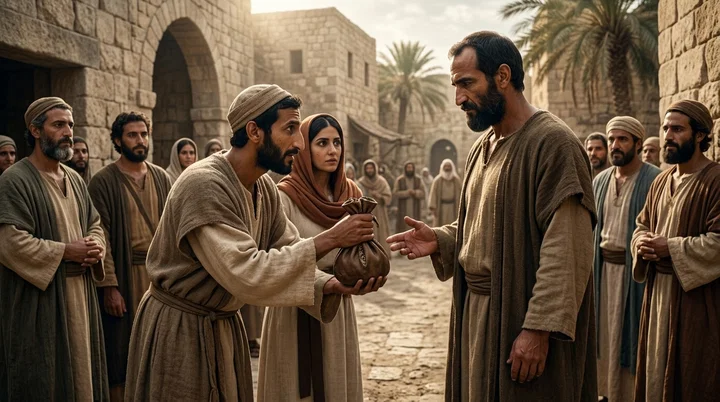
Neither was there any among them that lacked: for as many as were possessors of lands or houses sold them, and brought the prices of the things that were sold,
Translations
American King James Version, King James Version, KJV Cambridge Paragraph Bible
Neither was there any among them that lacked: for as many as were possessors of lands or houses sold them, and brought the prices of the things that were sold,
Neither was there any among them that was in want: for as many as were possessors of lands or houses sold them, and brought the prices of the things that were sold,
Revised Version, American Standard Version
For neither was there among them any that lacked: for as many as were possessors of lands or houses sold them, and brought the prices of the things that were sold,
for there was not any one among them who did lack, for as many as were possessors of fields, or houses, selling [them], were bringing the prices of the thing sold,
For neither was there any one in want among them; for as many as were owners of lands or houses, selling them, brought the price of what was sold
For there was not so much as anyone, lacking, among them; for, as many as were possessors of lands or houses, selling them, were bringing the prices of the things that were being sold,
Berean Standard Bible, Majority Standard Bible
There were no needy ones among them, because those who owned lands or houses would sell their property, bring the proceeds from the sales,
For neither was there among them any who lacked, for as many as were owners of lands or houses sold them, and brought the proceeds of the things that were sold,
And no one among them was in need; for everyone who had land or houses, exchanging them for money, took the price of them,
Neither was there any among them, that lacked: for as many as were possessours of landes or houses, solde them, and brought the price of the things that were solde,
Douay-Rheims (Challoner revision)
For neither was there any one needy among them. For as many as were owners of lands or houses, sold them, and brought the price of the things they sold,
Pictures
Cross-references
- Acts 2:44-45
And all that believed were together, and had all things common;
Believers sold possessions and distributed the proceeds according to need.
- Acts 5:1-4
But a certain man named Ananias, with Sapphira his wife, sold a possession,
Ananias and Sapphira’s deceit contrasts with the believers’ sincere sharing.
- Acts 11:29-30
Then the disciples, every man according to his ability, determined to send relief unto the brethren which dwelt in Judæa:
Disciples sent relief to needy believers in Judea during a famine.
- 2 Corinthians 8:14
But by an equality, that now at this time your abundance may be a supply for their want, that their abundance also may be a supply for your want: that there may be equality:
One person’s abundance supplies another’s need, creating equality.
- Luke 12:33
Sell that ye have, and give alms; provide yourselves bags which wax not old, a treasure in the heavens that faileth not, where no thief approacheth, neither moth corrupteth.
Selling possessions and giving to the needy lays up lasting treasure in heaven.
- Acts 6:1-6
And in those days, when the number of the disciples was multiplied, there arose a murmuring of the Grecians against the Hebrews, because their widows were neglected in the daily ministration.
The growing community appoints qualified men to oversee aid distribution and care for widows.
- Matthew 19:21
Jesus said unto him, If thou wilt be perfect, go and sell that thou hast, and give to the poor, and thou shalt have treasure in heaven: and come and follow me.
The believers give up possessions in keeping with Jesus’ call to sell and give to the poor.
- Acts 5:1-2
But a certain man named Ananias, with Sapphira his wife, sold a possession,
Ananias and Sapphira sold property but withheld part of the price.
- 1 John 3:17
But whoso hath this world’s good, and seeth his brother have need, and shutteth up his bowels of compassion from him, how dwelleth the love of God in him?
Love is shown by helping a brother in need.
- Romans 15:26
For it hath pleased them of Macedonia and Achaia to make a certain contribution for the poor saints which are at Jerusalem.
Gentile believers contribute material help to poor saints in Jerusalem.
- 2 Corinthians 8:1-5
Moreover, brethren, we do you to wit of the grace of God bestowed on the churches of Macedonia;
Macedonian believers gave generously despite poverty.
- Exodus 16:18
And when they did mete it with an omer, he that gathered much had nothing over, and he that gathered little had no lack; they gathered every man according to his eating.
Manna was gathered so each person had enough, as in the sharing of possessions.
- Acts 2:41
Then they that gladly received his word were baptized: and the same day there were added unto them about three thousand souls.
The sharing followed the response to Peter’s Pentecost preaching.
- 1 Corinthians 16:1-3
Now concerning the collection for the saints, as I have given order to the churches of Galatia, even so do ye.
Sets out a regular collection for the saints in Jerusalem.
Commentary
Each commentary is drawn from primary sources: the writings of Ellen G. White and Adventist pioneers and periodicals. Each commentary is separate. Its own words are not a quotation; follow the references to read the source passages.
Ellen G. White
20 sources
Neither was there any lack because in the Jerusalem emergency many new believers had been driven from homes, livelihoods and friends for faith in Christ, and those who owned lands, houses or money freely sold and entrusted the proceeds to the apostles to distribute to each according to need.RH Feb 2, 1911DA 551.2Ms 91, 1899, par. 34–36SLP 14.2AA 70.1–71.1 That sharing was wholly voluntary and cheerful, wrought by the outpouring of the Spirit that made them of one heart and soul, with love for souls, for one another and for the gospel far stronger than love for money or earthly inheritance.RH Feb 2, 191113MR 188.3–189.1DA 551.2 It does not require a general surrender of all property into a common stock or the sale of homes that are needed.Lt 39, 1874, par. 11–12RH Nov 26, 1857 It lays down an enduring principle for stewards of God-lent means that no claim on property is to come before Christ's claims, but houses, lands and possessions are to stand open to Him as the needs of His cause and of the worthy suffering poor require.Lt 39, 1874, par. 11–1211MR 368.2Lt 39, 1874, par. 15 What matters now is enlarged, unselfish benevolence, with each sacrificing as God moves him — those with abundance giving a portion, those in costly homes exchanging for cheaper shelter to lend the means, and even the poor and the small gift giving all at cost of self-denial to sustain truth, publish the gospel and relieve the needy.Lt 39, 1874, par. 11–122MR 41.45T 733.3RH Nov 26, 1857SG2 248.2 Such help must be given while it can do good, for later giving cannot atone for withholding in the hour of need, and it will bring lasting treasure in heaven, while selfish pretense like that of Ananias and Sapphira in keeping back part while claiming to give all meets God's condemnation.13MR 188.3–189.1Ms 91, 1899, par. 34–36SG2 248.2SG2 246.1–2Lt 232, 1899, par. 26–28
Jerusalem Emergency Sharing
Neither was there any among them that lacked because an emergency at Jerusalem had to be met.RH Feb 2, 1911AA 70.1–71.17RED 19.3–20.1 Many converts had been driven from homes and livelihoods for conscience and faith in Christ, cut off from family and friends, thrown out of business and exiled from their homes by zealous bigotry, and the large number gathered there had to be provided with food, shelter, homes and sustenance.RH Feb 2, 1911SLP 14.2AA 70.1–71.17RED 19.3–20.1 Those who had lost homes and livelihoods because of their faith were thus provided for through the willing generosity of those with possessions.SLP 14.23SP 283.1–284.1
Those who owned lands or houses or had money sold them and brought the prices of the things sold.RH Feb 2, 1911DA 551.2SLP 14.2AA 70.1–71.17RED 19.3–20.1 They laid the means at the apostles' feet, entrusting it to the apostles' care.Ms 91, 1899, par. 34–36SLP 14.27RED 19.3–20.13SP 283.1–284.1 The apostles made distribution to every person according as he had need, so that no one among them lacked necessities and no one was in want.RH Feb 2, 1911DA 551.2SLP 14.2AA 70.1–71.17RED 19.3–20.1
The sharing was voluntary, willing and cheerful, with no one compelled to give up possessions.RH Feb 2, 191113MR 188.3–189.1Ms 91, 1899, par. 34–36SLP 14.2 It was the effect of the pouring out of the Spirit of God, which made believers of one heart and soul with unity and one common interest in the mission and in the success of the work entrusted to them.RH Feb 2, 1911DA 551.2AA 70.1–71.17RED 19.3–20.1 Their love for fellow believers and for sinners, for the gospel and the cause they had espoused, was far greater than their love for money, possessions and earthly heritage.RH Feb 2, 1911AA 70.1–71.17RED 19.3–20.1
By acting out faith in works they treated earthly wealth not as their own but as means to support others and the gospel and to help others hear it.RH Feb 2, 19117RED 19.3–20.12MR 41.411MR 368.2 They called nothing they possessed their own and used all their earthly goods to support the poor believers.RH Feb 2, 19112MR 41.411MR 368.2 In this they testified that they accounted human souls of far greater value than any earthly heritage.RH Feb 2, 19117RED 19.3–20.1
Principle and Present Duty
The selling of lands and houses so that no one lacked stands as a lesson to Christians to the end of time, laying the principle for those handling means lent by God under the last message of mercy.Lt 39, 1874, par. 11–12Lt 39, 1874, par. 15 In those days each believer felt he had no claim upon his property that could make the claims of Christ secondary, but let Christ fully into houses, lands and possessions as far as the needs of His cause required and the needs of the worthy, suffering poor required.Lt 39, 1874, par. 11–12Lt 39, 1874, par. 15 Love for sinners was expressed in active benevolence to extend the truth to others and in gifts to the needy saints, with enlarged rather than contracted ideas of duty.Lt 39, 1874, par. 11–1211MR 368.27T 146.3 The same Spirit-led stewardship calls believers now to treat entrusted property not as their own but to use God's blessings and resources for the good of humanity and the advancement of His kingdom.11MR 368.27T 146.3
It does not mean a general relinquishing of all property or the forming of a community where no one had any claim above another and all property was put into a common stock fund.Lt 39, 1874, par. 11–12 It does not mean that people must sell the homes they need.RH Nov 26, 1857 What it does mean is submitting property to forward the work as the cause of Christ extends beyond expectation and is to be carried forward with unabated zeal.Lt 39, 1874, par. 11–12 It means using the Lord's goods to sustain the truth, to publish the glad tidings of the gospel, and to invest means in missionary work so that more people might be converted.Lt 39, 1874, par. 11–122MR 41.45T 733.3 It means remembering property is lent on trust and not to be used improvidently, but to relieve the needy and help the helpless, the class for whom Christ manifested the greatest pity and most tender compassion.2MR 41.411MR 368.2
Applied now, believers who recognize the urgency of saving souls and the needs of the work should sacrifice possessions freely to support God's work when God moves them to recognize its needs.HSFM 292.2–5 Those with abundance should willingly sacrifice a portion of their property, those with expensive homes can exchange them for cheaper shelter and freely lend their means to spread the truth, and even those in poverty are to invest all they have in the work of Christ rather than keep resources for themselves, feeling the world's salvation depends on their service and standing ready to follow the Lord's direction.RH Nov 26, 1857SG2 248.25T 156.3–157.1 Giving is a privilege, and even a small gift can represent great sacrifice when it requires self-denial.RH Nov 26, 1857 Those who benefit from such giving can in turn practice self-denial and give to support others, allowing the work to continue to God's glory.5T 733.3
Wealth should be used to meet people's needs while it can do good, for giving only after the needy have suffered does not make up for withholding it when help was needed.SG2 246.1–2 Such sacrifice involved real deprivation when the cause had few supporters and little money, yet it was promised lasting treasure in heaven and a great reward if endured to the end.SG2 248.2 No one was compelled to give up possessions, for the giving was voluntary and willing.13MR 188.3–189.1Ms 91, 1899, par. 34–36 Yet the generous occasion became a temptation to the selfish and covetous, showing hereditary and cultivated traits were not cleansed in all, as Ananias with Sapphira dared lying and fraud by appropriating part for themselves while representing that they had given the whole, though God would have accepted a part honestly given.13MR 188.3–189.1Ms 91, 1899, par. 34–36Lt 232, 1899, par. 26–28
Sources
Pioneers and periodicals
103 sources
Neither was there any among them that lacked, for as many as owned lands or houses sold them and brought the prices of what was sold.RH Feb 20, 1855ST Jan 15, 1902RH Nov 20, 1856 The money was laid at the apostles' feet as a common fund, and distribution was made to every person according to need for food, shelter and necessities.RH Feb 2, 1911RH Jul 22, 1909RH Apr 15, 1909RH Feb 4, 1862 The selling and giving was wholly voluntary, moved by the Spirit and love rather than by compulsion or law, and it was an extraordinary answer to urgent need at the beginning of the work, not a permanent rule requiring every believer in every age to sell all.RH Jul 29, 1862ST May 18, 1904ST Jan 15, 1902RH Mar 5, 1901RH Jul 10, 1855 Their sharing sprang from being of one heart and soul, filled with the Holy Spirit, with grace, brotherly love, self-denial and unity in Christ overcoming differences of wealth and status.ST Jul 8, 1889RH Feb 10, 1916RH Mar 25, 1915ST Apr 27, 1904RH Jan 13, 1874 That same consecration of heart and means belongs to the closing work, when believers filled with the Spirit will again sell what they have and lay all at the Master's feet to finish the worldwide proclamation in this generation.RH Mar 13, 1900RH Mar 13, 1900RH Nov 22, 1906RH Dec 23, 1902RH Nov 4, 1873
What Believers Did
No one among them was left in lack, because as many as owned lands or houses sold them and brought the prices of what was sold for distribution according to each person's need.RH Feb 20, 1855ST Jan 15, 1902RH Nov 20, 1856ST Jul 8, 1889RH Oct 8, 1861 The sharing supplied genuine need for necessities and daily supplies, not idleness, and believers were content with enough for daily needs.RH Feb 20, 1855ST Jan 15, 1902RH Nov 20, 1856ST May 18, 1904 No one treated personal ownership as a reason to deny others the use of what he had, but owners put possessions at the service of the community in practical care for others as an effect of grace and as equality in practice among the brotherhood.ST Jan 15, 1902ST Jul 8, 1889RH Oct 8, 1861 This was voluntary Christian sharing, not a compulsory system, and the condition in which no one lacks necessities could not be fully established in a selfish, sinful world.ST May 18, 1904
What was received was not sent by each seller himself to some particular family or worker according to his own notion, but was brought in and laid at the apostles' feet and placed in their care as a common fund and common treasury for the community.RH Jul 22, 1909RH Apr 15, 1909RH Mar 13, 1900ST May 6, 1897RH Mar 25, 1915 Receiving the money recognized divine authority in gifts and offices, with the apostles charged with general oversight and guidance, so that the Spirit-filled church did its work in the most orderly and systematic manner through regular channels and careful system to look after thousands.RH Apr 15, 1909 Barnabas and Ananias with Sapphira his wife were among those sellers who brought proceeds in this way.RH Jul 22, 1909 The account presents this giving as part of the church's sacred work and as the self-giving spirit of Christ, in which true Christianity shares wealth rather than increasing or hoarding it, and as a pattern for supporting those who give their lives to gospel work with a similar spirit of generous sacrifice in the closing work.ST May 6, 1897RH Dec 1, 1904
Distribution was then made to every man according as he had need, so that no one was without food, shelter and necessities.RH Feb 2, 1911ST Jul 7, 1914RH Jul 10, 1855 Many converts had been driven from homes and livelihoods and were cast out and cut off from means of support because of faith, and believers willingly sold land or houses of considerable value to provide for them from the common fund, which is what having all things in common meant.RH Feb 2, 1911ST Jul 7, 1914 The care extended to widows, to converts driven from livelihoods, and to Christians imprisoned for faith, with earthly possessions treated as common and used to support others.RH Feb 2, 1911RH Jul 10, 1855 The resources could have made the apostles wealthy, but they did not take them for themselves, and the arrangement connects with appointing deacons to manage practical needs while the apostles devoted themselves to preaching and prayer.RH Feb 4, 1862
No one said that what he possessed was exclusively his own, but owners treated property as available for common use and freely supplied the community's needs.RH Jul 10, 1855RH Nov 20, 1860ST Jan 29, 1902RH Jul 30, 1901 They remained owners, yet held what they possessed as entrusted for others and distributed it wisely according to need, out of unity in Christ and brotherly love rather than by a rule requiring them to give up ownership.RH Jul 10, 1855ST Jan 29, 1902 In this sense accumulated property was held as common stock, while members were not required to sell or surrender personal possessions.RH Feb 12, 1857 The same spirit means counting neither life nor possessions as one's own but placing all at Jesus' feet for His glory, and though the circumstances that made all things common did not last, the same love continued.RH Jul 10, 1855RH Jul 30, 1901
Setting and Causes
This took place in Jerusalem just after Pentecost, when thousands were accepting the gospel and about ten thousand believers were gathered together, with thousands being added to their numbers.RH Jul 22, 1909RH Apr 15, 1909RH May 15, 1913 That sudden growth created an emergency need for means, for funds were needed to carry the work forward and many of the converts were poor.RH Jul 22, 1909RH Apr 15, 1909 Those who owned property they could do without, possessors of lands or houses, sold them to advance the work in various ways and brought the money in and laid it at the apostles' feet.RH Jul 22, 1909RH Apr 15, 1909RH Aug 17, 1916 They did not send the money themselves to some particular family or worker according to their own notion, but brought it as a common fund and common treasury for orderly and systematic distribution through regular channels to look after the needs of the thousands gathered there.RH Jul 22, 1909RH Apr 15, 1909 Receiving the money recognized divine authority in the gifts and offices placed in the church, with the apostles charged with general oversight and guidance for administration of its affairs, so that help was given to each person according as he had need.RH Jul 22, 1909RH Apr 15, 1909RH Aug 17, 1916 The conversion of many being accompanied by such selling and bringing to the apostles is the pattern of generous giving expected to follow a widespread reception of the gospel, and that same rejoicing belongs now when rising gifts for missions and growing numbers token that God is finishing the work and cutting it short in righteousness.RH May 15, 1913
Many converts had been driven from their homes and livelihoods because of their faith, cast out and cut off from their means of support, while others were away from their homes with all men against them.RH Feb 2, 1911ST Jul 7, 1914 They faced persecution and opposition, and believers willingly sold land or houses of considerable value to provide food and shelter, putting the proceeds into a common fund from which distribution was made to those in need so that no one lacked.RH Feb 2, 1911ST Jul 7, 1914 This is what having all things in common meant: the proceeds were placed at the apostles' feet and distributed according to each person's need.ST Jul 7, 1914 The sharing was demanded by the circumstances and was a temporary community of goods, not a rule that property should be divided giving every man an equal share. A man who toils hard for years with self-denial and economy is entitled to reap and enjoy the fruit of his labors, though if he is a good man he will take delight in sharing his store with those in want, and when similar times of need and opposition come Christians should and will share goods in the same way. That prospect is no excuse for sitting down in idleness to wait for that time, and the idle do not deserve to share in it.
Believers had put away all differences, selfishness, dissension and strife and had become of one accord and of one heart and one soul in humility and love.RH Feb 10, 1916 After remaining at Jerusalem in united prayer they were filled with the Holy Spirit in fulness and power, and the power once lost through unbelief, dissension and strife was restored in even greater measure.RH Feb 10, 1916 They spoke the word with boldness, preached powerfully with thousands converted, and the sick were healed.RH Feb 10, 1916RH Mar 13, 1900 The church had been cleansed from the sin of covetousness before Pentecost as the needful preparation for receiving the Holy Spirit, with the outpouring of the Spirit for service as the result, and men and women went forth from that meeting and sold possessions and goods and laid the money at the apostles' feet for distribution to every man according to need.RH Mar 25, 1915 Their selling means buying the treasure of the kingdom of heaven, which requires all; one may find and admire the treasure for a time yet never possess it through unwillingness to sell all, while one who sees its true value makes the exchange with joy and without hardship.RH Mar 25, 1915 This was the immediate result that follows the prayer and threatening in Acts 4:27-29, when believers filled with the Holy Ghost speak the word with boldness and become of one heart and soul with all things common, so that no one lacks because owners of lands or houses sell them and bring the prices and lay them at the apostles' feet.RH Mar 13, 1900
No one said anything he possessed was his own exclusively, but pentecostal believers lived in love and oneness, of one accord and one mind with all things common, bringing the money forward and laying it down for general distribution to everyone as he had need. This was not a state policy or a system imposed by political force, but was freely chosen under the Holy Spirit's influence immediately after Pentecost, and its success depended on the believers' freedom from selfishness and the Spirit's guidance.ST Mar 16, 1904 It practiced gospel equality and Christian unity by liberally sustaining the work with means, bringing all influence to bear together in a united system against the powers of darkness.RH Jan 13, 1874 It sprang from oneness and thankfulness for being counted worthy to suffer for Christ and the gospel, and in view of that oneness God shook the place where they were assembled and gave them great power to witness, sending them forth as courageous and zealous missionaries to warn the world.RH Jan 13, 1874 That same love and oneness was seen again when the Midnight Cry fully developed the Philadelphian church of brotherly love.
Their generosity is an effect of grace shown in practical care for others, with grace expressed in Christian living through generous sharing so that no one among them lacked.ST Jul 8, 1889ST Apr 27, 1904 Those who owned land or other property sold it and freely supplied the community's needs, and this sharing arose from their unity in Christ and brotherly love.RH Jul 10, 1855 All the members lived among one another as brethren, called each other brethren, and mutually loved each other, and this mutual love as brethren is the charity belonging to the beginning of a church.RH Sep 4, 1856 In progress of time charity diminishes and at length vanishes, and as charity vanishes evils succeed and with evils falses insinuate themselves, from which arise schisms and heresies.RH Sep 4, 1856 The circumstances that made all things common did not last, but the same love continued.RH Jul 10, 1855 This is presented as an example of brotherly love, self-denial, and the cost of discipleship, and was the work of the Spirit in changed hearts, not a system that human plans could reproduce mechanically, for selfishness would defeat such a system in unregenerate people.ST Jun 4, 1874ST Dec 4, 1901
The generosity followed the preaching of the gospel and was one of its remarkable results.RH Mar 19, 1914 It followed the outpouring of the Holy Spirit and the growth of the church, accompanied the apostles' witness, and illustrates how the whole church joined in the evangelistic work.RH Jul 24, 1913ST May 8, 1901 Their unity crossed differences of wealth, status, and religious background, and their generosity displayed the gospel's power to overcome division and jealousy.ST Mar 17, 1909 The same spirit is shown in generous giving to support ministry.RH Jul 24, 1913 These favorable conditions with the church's growth did not remove the call to carry the gospel elsewhere.ST May 8, 1901
Voluntary Temporary Sharing
The selling of lands and houses and bringing of the prices so that no one lacked was wholly voluntary and freely chosen, moved by the Spirit and by love rather than by compulsion, law, political force or state policy.ST May 18, 1904ST Mar 16, 1904ST Dec 14, 1904 Believers acted as stewards of God who retained power to withhold their property, and God did not require all to give everything.RH Jul 29, 1862ST Dec 14, 1904 It was an extraordinary response to urgent need at the commencement of the work, in which they gave all they possessed at the time rather than only the part ordinarily given.RH Jul 29, 1862ST May 18, 1904RH Mar 5, 1901 The act expressed God's ownership of all things and brought possessions by faith and love into God's service for the poor and for Christians throughout the gospel field, as a manifestation of beneficence for others to learn from.RH Jul 29, 1862RH Mar 5, 1901ST Feb 4, 1886 Its success depended on freedom from selfishness under the Holy Spirit's guidance immediately after Pentecost, a condition that could not be fully established in a selfish, sinful world.ST May 18, 1904ST Mar 16, 1904
It was not a rule of permanent communal ownership nor an authoritative rule requiring every believer in every age to sell all possessions.RH Jul 29, 1862ST Feb 4, 1886ST Jan 28, 1875 The sharing met needs in particular circumstances at the beginning, when many were away from their homes and all men were against them, and the circumstances that made all things common did not last, though the same love continued.ST Jan 15, 1902RH Jul 10, 1855 The example is not imposed on other churches, but neither is it reproved.ST Jan 28, 1875 Unity remained a good example of faith, yet remaining together in Jerusalem in dependence instead of personal effort could have hindered missionary work, and persecution scattered the disciples so they could serve the wider world.ST Jan 15, 1902
The condition in which equal privileges and comforts are provided and no one lacks comes only when men are made good and changed by the grace and Spirit of God to look to the interest of others and seek one another's good.ST Sep 22, 1914STST Dec 4, 1901 It never comes by reconstructing society, by socialism, or by human plans mechanically reproducing it among selfish, unregenerate people, in whom selfishness would defeat such a system and where it lasted only while that Spirit remained.ST Sep 22, 1914STST Dec 4, 1901 The verse exemplifies Christian equality and gospel equality in practice, with possessions put at the service of the brotherhood so that no one was left in need and distribution was made to each according to need.RH Oct 8, 1861ST Aug 5, 1897RH Jan 13, 1874 All influence was thus brought together in a united system against the powers of darkness.RH Jan 13, 1874
The sharing supplied genuine need and helped the poorest and suffering, with proceeds placed in common care and distributed according to need, not to support idleness.RH Feb 20, 1855RH Nov 20, 1856RH Feb 20, 1855RH Nov 24, 1904 The idle do not deserve to share in it, and a man who toils hard for years with self-denial and economy is entitled to reap and enjoy the fruit of his labors, though if he is good he will delight to share his store with those in want. When similar times of need and opposition come Christians should and will share goods in the same way, but that prospect is no excuse for sitting down in idleness to wait for that time, and remaining together in dependence instead of personal effort would hinder missionary work.ST Jan 15, 1902 One position treats accumulated property as common stock while members were not required to sell or surrender their personal possessions, while another presents the verse as teaching communism of possessions as an ideal for the church, though not to be put into effect all at once.RH Feb 12, 1857ST Jul 20, 1904
Orderly Distribution System
Those who owned lands or houses sold what they could do without because thousands were accepting the gospel just after Pentecost, many converts were poor, persecution was scattering the church from Jerusalem, and funds were needed to carry the work forward then as now.RH Jul 22, 1909 They sold to advance the work in various ways and to meet that emergency need for means when about ten thousand believers were gathered in Jerusalem.RH Jul 22, 1909RH Apr 15, 1909 They did not send the money themselves to some particular family or worker according to their own notion, but brought it in and laid it at the feet of the apostles as a common fund and common treasury.RH Jul 22, 1909RH Apr 15, 1909 From that fund help was given to each person according as he had need, with the proceeds placed in the apostles' care and distributed to people in need rather than to support idleness.RH Jul 22, 1909RH Feb 20, 1855RH Nov 20, 1856 The same use of entrusted wealth remains the call for Christians, to support gospel workers and the spread of Bible truth instead of holding on to it or accumulating riches.RH Feb 20, 1855RH Nov 20, 1856
Bringing the money to the apostles recognized divine authority in the gifts and offices placed in the church for administration of its affairs, for the apostles were charged with general oversight and guidance of the work.RH Apr 15, 1909 Their gifts thus formed a common treasury for orderly and systematic distribution through regular channels and by careful system to look after the needs of the thousands gathered there.RH Apr 15, 1909RH Aug 17, 1916 The proceeds brought by sellers of lands or houses were distributed according to each person's need as part of that careful system for supporting the work and caring for all who were to benefit from the common treasury.RH Aug 17, 1916 In this the Spirit-filled church sought to do its work in the most systematic manner, with distribution under the apostles' responsibility.RH Apr 15, 1909RH Aug 17, 1916
By this shared provision no one among them lacked necessities, since owners of land or houses sold them and brought the proceeds to the apostles.RH Feb 4, 1862 Those resources could have made the apostles wealthy, but they did not take them for themselves.RH Feb 4, 1862 The arrangement belongs with appointing deacons to manage practical needs while the apostles devoted themselves to preaching and prayer.RH Feb 4, 1862
Later Poverty Explained
By selling lands and houses and expending their means in God's cause at the very commencement of the work, the believers at Jerusalem used up what they had so that none among them lacked at the time.RH Nov 29, 1864RH Jun 9, 1859RH Feb 3, 1859RH Nov 23, 1869 Those who owned land or houses sold them and brought the proceeds for the common need and placed them at the service of the community.RH Nov 29, 1864RH Jun 9, 1859RH Feb 3, 1859 By that liberality they were afterward reduced to poverty.RH Nov 29, 1864RH Jun 9, 1859RH Feb 3, 1859RH Nov 23, 1869 The Jerusalem church later needed relief and assistance from other churches, with collections taken up to keep them from suffering.RH Jun 9, 1859RH Feb 3, 1859RH Nov 23, 1869RH Jul 29, 1909
Christ's disciples were poor in this world's goods when they began proclaiming their message to the world, sharing all they had in common so that need was met among them.RH Jul 29, 1909RH Feb 6, 1855 When the cause required it they sold possessions and gave the proceeds to support the work and relieve suffering believers, holding wealth lightly because of their commitment to Christ.RH Jul 29, 1909RH Feb 6, 1855 Though many were poor their generosity was abundant, and despite that poverty their message went on in triumph until the then-known world had heard the gospel.RH Jul 29, 1909RH Feb 6, 1855
Stewardship and Spiritual Meaning
The selling showed that all things belong to God and believers hold property only as stewards entrusted to use it for others and for religious work.RH Jul 29, 1862ST Aug 31, 1888ST Dec 14, 1904ST Apr 19, 1883ST Jan 29, 1902 What was owned was still owned, but it was not treated as exclusively one's own; owners regarded what they had as belonging to Christ and placed it at the service of His cause and people so that no one lacked what was needed.ST Aug 31, 1888ST Dec 14, 1904ST Apr 19, 1883ST Jan 29, 1902 What remained beyond household needs was to be made available to supply destitute fellow believers, each giving according to the Lord's provision and distributing wisely according to need.ST Apr 19, 1883ST Apr 19, 1883ST Jan 29, 1902 This sharing was moved by the Spirit and by love rather than by politics, legislation, compulsion, or a rule requiring ownership to be given up, and believers retained power to withhold.ST Dec 14, 1904ST Jan 29, 1902 Thorough conversion brings faith and love to take possessions into God's service, and the same spirit of benevolence is required today.RH Jul 29, 1862ST Apr 19, 1883
The church had been cleansed from covetousness before Pentecost as the needful preparation for receiving the Holy Spirit, and the outpouring of the Spirit for service followed.RH Mar 25, 1915 Selling possessions and laying the money at the apostles' feet for distribution to every man according to need means buying the treasure of the kingdom of heaven, which requires all.RH Mar 25, 1915 One who sees its true value makes the exchange with joy and without hardship, while one who finds and admires the treasure for a time yet will not sell all never possesses it.RH Mar 25, 1915
Their giving was complete consecration and self-sacrifice for God and for others, giving themselves wholly to Jesus with heart and means.RH Dec 21, 1869RH Sep 30, 1902 Unity of heart and purpose was expressed in consecrating what was had to spreading the gospel, including farms and selves together, which made them ready to receive the Holy Spirit's power for mission.ST Jul 1, 1886 Such sacrifice evidences a call to serve and help the cause advance, and willingness to give up possessions is applied as a model for giving up cherished ornaments in obedience to truth rather than holding anything back.ST Jul 22, 1886 Clinging to property instead of using it for God's work risks being lost with one's wealth, and worsening conditions may make it harder to sell later.ST Jul 1, 1886
Care for the needy was a fruit of the Holy Spirit and evidence of genuine thorough conversion, springing from oneness and thankfulness to suffer for Christ.RH Jul 29, 1862ST Apr 19, 1883 Love for fellow believers and the gospel outweighed attachment to possessions, and faith and love brought possessions into God's service to provide food and shelter, especially for converts driven from homes and livelihoods.RH Feb 2, 1911RH Jul 29, 1862 Receiving salvation freely creates obligation to give generously toward spreading the truth rather than keeping possessions selfishly, yet giving does not pay for salvation.ST Jan 17, 1884
Earthly wealth was treated as means to support the gospel and help others hear it, to sustain ministers, missionaries, institutions, and every branch of the work until the earth is lightened with glory.RH Feb 2, 1911RH Dec 3, 1903 The shared means helped carry the gospel from Jerusalem to distant lands, and when God moves people to recognize the needs of His work self-denial leads them to give so the truth can be proclaimed.RH Sep 16, 1915 Those who could neither preach nor print furnished of their substance the means to maintain ministers and supply resources for spreading truth, illustrating the standing requirement that rich and poor, learned and unlearned, contribute as much as the condition of things in their time demands.RH Feb 6, 1879 Giving belongs to the church's sacred work as a pattern for those who support lives given to gospel work, pointing also to a similar spirit of generous sacrifice in the closing work.RH Dec 1, 1904
Believers made themselves poor by selling possessions so that none lacked and that they might do good to fellow men, believing and practicing Christ's declarations about poverty and the danger of riches.ST Aug 5, 1886RH Mar 17, 1874 This stands in contrast to seeking wealth and honor for it or to increasing and hoarding wealth.RH Mar 17, 1874 Their common interest was the success of the mission, with love for Christ and concern for people outweighing love of money and earthly possessions.RH Nov 11, 1915 When need arose, selling possessions and using the proceeds to provide for fellow believers' necessities was a practical way of trusting God to provide for the church.RH Feb 13, 1913
Money can be used for spiritual good when spent as God directs, as seen when believers used possessions unselfishly so that none lacked.ST Feb 14, 1884 Treating spiritual gifts as purchasable or holding wealth for selfish purposes brings harm.ST Feb 14, 1884 Personal consecration in the use of wealth stands in contrast to covetousness, and Christian liberality is connected with temporal and spiritual prosperity.ST Aug 19, 1875
Such liberality was the secret of the power and success of the apostolic age, part of a united system bringing all influence together against the powers of darkness.RH Jan 13, 1874 In view of that oneness God shook the place where they were assembled and gave great power to witness, sending them forth as courageous and zealous missionaries to warn the world.RH Jan 13, 1874 Willingness to give up property to support a common fund for those in need, including widows, also reflected strong conviction of Christianity's truth grounded in the evidence of miracles.ST Apr 5, 1883
The mention of their conduct connects with the limit that human rule must not take the place of conscience or God.ST Apr 23, 1912 As believers feed upon Christ today they are united and become as one family, fulfilling the type of families uniting to eat the passover lamb.RH Feb 19, 1901 Their faith in Jesus at the Father's right hand led them to give generously for the gospel work, selling property and bringing the proceeds to meet the community's needs.RH Nov 17, 1904
Ananias with Sapphira his wife and Barnabas were among those sellers who brought proceeds as a common fund from which help was given to each as he had need.RH Jul 22, 1909 Barnabas exemplifies devoted free giving, for God did not require all to give everything.ST Jul 29, 1913 Ananias and Sapphira kept back part while seeking the honor and support given to contributors, and the Spirit of God exposed their sin and guarded the church's purity.ST Jul 29, 1913
Pattern for Last Days
The same sequence belongs to the present tarrying time, for when repentant believers are filled with the Holy Ghost they speak the word with boldness and become of one heart and soul with all things common.RH Mar 13, 1900 No one lacks because owners of lands or houses sell them and bring the prices to be laid down for distribution to every man according as he has need.RH Mar 13, 1900 When believers repent and receive the gift of the Holy Ghost they come to have the same mind as Christ, so they sell what they own and lay aside private ownership.RH Mar 13, 1900 When they can be trusted with power from on high they will sell what they have, and a mighty work will be done in a short time.RH Mar 13, 1900RH Mar 13, 1900
That same love and oneness was seen again when the Midnight Cry fully developed the Philadelphian church of brotherly love, with believers of one accord and one mind where no one said anything he possessed was his own exclusively. A similar spirit of generous sacrifice belongs to the closing work of the gospel, as the Spirit-filled sharing that left none lacking is the pattern for supporting those who give their lives to gospel work.RH Dec 1, 1904 Believers preparing to carry the message to the whole world should be willing to dispose of some possessions rather than keep accumulating property, and their sacrifices to advance the message will be blessed by God.RH Jul 16, 1908 Men are to sell farms and give the money to mission funds and to education and then enter the canvassing work themselves, with others giving land and money liberally, showing consecration and a liberal spirit to meet the financial needs of the cause under the special blessing of the Lord.RH Oct 17, 1907 Its practice is expected to recur as believers give their possessions and means to support mission work.RH Aug 20, 1914
Because God's final proclamation to a perishing world is even more urgent and pressing than the message in apostolic times, consecration of lives and means now should be as great as that of those who laid possessions down and gave lives to service.RH Dec 23, 1902 Believers today too should lay property on the altar for God to use as He requires and pray Him to use it now without further delay, laying all at the Master's feet and giving lives to consecrated service to finish the worldwide work in this generation.RH Dec 23, 1902 The apostles had many centuries before them while the time is now short, the trump of God will shortly sound and probation will close, and wholehearted liberality that made themselves poor and even sacrificed life with willingness to bear stripes, imprisonment, stoning and crucifixion is the measure of zeal to be equaled and exceeded now.RH Nov 4, 1873 Property kept on earth will be destroyed with its owners unless treasure is transferred to the other world by noble acts of charity and sacrifice, and unwillingness to sell and give proves coldness, sleep and apathy.RH Nov 4, 1873 That same rejoicing belongs now when rising gifts for missions and growing numbers give evident tokens that God is finishing the work in this day and cutting it short in righteousness, as after Pentecost believers made large contributions to help carry the gospel speedily to the ends of the earth.RH Nov 26, 1903RH May 15, 1913
When the church receives a renewed measure of God's Spirit, owners of houses and lands will sell them and give the proceeds for God's work.RH Nov 9, 1916 Their giving will include not only possessions but themselves and their children for service, counting neither life nor possessions as one's own but placing all at Jesus' feet for His glory, especially when the latter rain falls.RH Jul 30, 1901RH Nov 9, 1916 Such willingness to put houses, lots and farms into God's cause provides the model of generous giving associated with scenes accompanying the latter rain.RH Sep 24, 1914 That spirit of giving when men and women sold all earthly possessions for the advancement of the cause is the standard for the present, and its return shows the church treading in the border land of those apostolic days.RH Nov 22, 1906 Such liberality is a true thermometer of the spiritual condition of the church, and its beginning is the beginning of the close of the latter rain, with pentecostal days not far distant.RH Nov 22, 1906
The pioneers of the second-advent movement likewise sold possessions and gave the proceeds to support messengers proclaiming the judgment and second-advent message, selling farms and giving means to support preaching and publishing.RH Dec 31, 1857 Their experience was one of temporal and spiritual blessing, not want. A few years after the apostolic sharing, however, the church sadly departed from that self-sacrificing love when believers sold houses and lands and even gave life itself so none lacked.ST Apr 30, 1894 The later state of seeking their own and not the things of Jesus Christ, with hearts united to the world and separated from Christ in envy, covetousness and lust, created a disparity God never designed, where some reign as kings while others are despised as the offscouring of all things.ST Apr 30, 1894
Call to Give Today
The example calls for using entrusted wealth to support gospel workers and spread Bible truth, to provide shelter, relieve suffering, and care for needy people of every class, so that none lack the necessities of life.RH Nov 26, 1857RH Feb 20, 1855RH Aug 20, 1908RH Jul 18, 1912RH Mar 9, 1911 The proceeds from property sales were placed in common care and distributed to people in need rather than to support idleness, as an example of giving means to support ministry to others.RH Feb 20, 1855RH Jul 18, 1912 The same spirit seen in early generosity, if possessed today, could quickly raise needed funds for God's work and much more.RH Aug 3, 1911
Believers are now to do something big in giving as was done big in building, by selling farms, houses, horses, cattle, lots or property of any kind and giving the proceeds to pay debts on schools and buildings, to mission funds and education.ST Jul 1, 1886RH Aug 7, 1900 This is to be done with the old-time spirit of 1844, consecrating possessions and self together to God's cause.ST Jul 1, 1886RH Aug 7, 1900 That spirit of sacrifice has been lost, and the example stands against spending that hinders rather than hastens the gospel work.ST Apr 2, 1902 Clinging to property instead of using it for God's work risks being lost with wealth, and worsening conditions may make it harder to sell later.ST Jul 1, 1886
The verse supports giving according to need but does not mean people must sell the homes they need.RH Nov 26, 1857RH Dec 2, 1858 Those with expensive homes can exchange them for cheaper ones, and those with abundance should willingly sacrifice a portion of property, with what is beyond household needs made available for others and for religious work, each giving according to the Lord's provision.RH Nov 26, 1857RH Dec 2, 1858 Giving is a privilege, and even a small gift can represent great sacrifice when it requires self-denial.RH Nov 26, 1857 Although Christians are not commanded to perform the same act, the spirit of the gospel requires self-denial for the advancement of Christ's cause and points toward much larger liberality than was required in the old Jewish church.ST Jan 28, 1889RH Apr 1, 1915RH Aug 19, 1873 Giving went beyond the tenth without abolishing the law, and after giving themselves to the Lord believers gave all they had, illustrating giving according to income where no definite New Testament amount is commanded.ST Jan 28, 1889RH Apr 1, 1915RH Aug 19, 1873
In the days of the Saviour the financial burden fell mainly on believers of less means and ability, who sold all they had and laid the money at the apostles' feet.ST May 18, 1882 Men with means generally turned away sorrowfully when called to sell and follow Christ, as the rich young ruler did.ST May 18, 1882 There were grand noble exceptions like Joseph of Arimathea using his influence in a crisis, Nicodemus finally giving his heart to God, and Zaccheus giving half his goods to feed the poor and fourfold restitution to those he had taken by false accusation.ST May 18, 1882 The same holds now for supporting God's institutions: God does not require all to sell at the present juncture, but He would accept such a sacrifice if made.ST May 18, 1882 The cause must be dearer than business interests, personal plans, pleasant homes and everything, requiring devotion, promptness, great sacrifice, and union of sentiment and action for the work to prosper.ST May 18, 1882
The prayer of faith opens the channel of the soul to accept light and to give heart and means to God, so that Spirit-filled believers with one accord surrender all to sustain ministers, missionaries, institutions and every branch of the work until the earth is lightened with glory.RH Dec 3, 1903 When God moves people to recognize the needs of His work, self-denial leads them to give so the truth can be proclaimed. When people give themselves to God, giving their possessions follows naturally.RH Sep 3, 1914 The verse is an example of generous Christian benevolence in which believers gave rather than relying on loans.RH Jun 11, 1914 That willing liberality is the spirit of sacrifice springing from faith that the work is God's work and confidence in the integrity of those entrusted with its means.RH May 6, 1873 As long as that sacrificing spirit is kept, prosperity continues and God's Spirit goes with His people, but when confidence is lost through lavish and careless use of sacred means by unconsecrated workers, liberality dries up, the spirit of sacrifice is lost, and God's Spirit and prosperity depart.RH May 6, 1873
Sources